
Published: November 2025 | Last updated: April 2026 | Editorial review and quality control: Martina N.
Is this bump herpes?
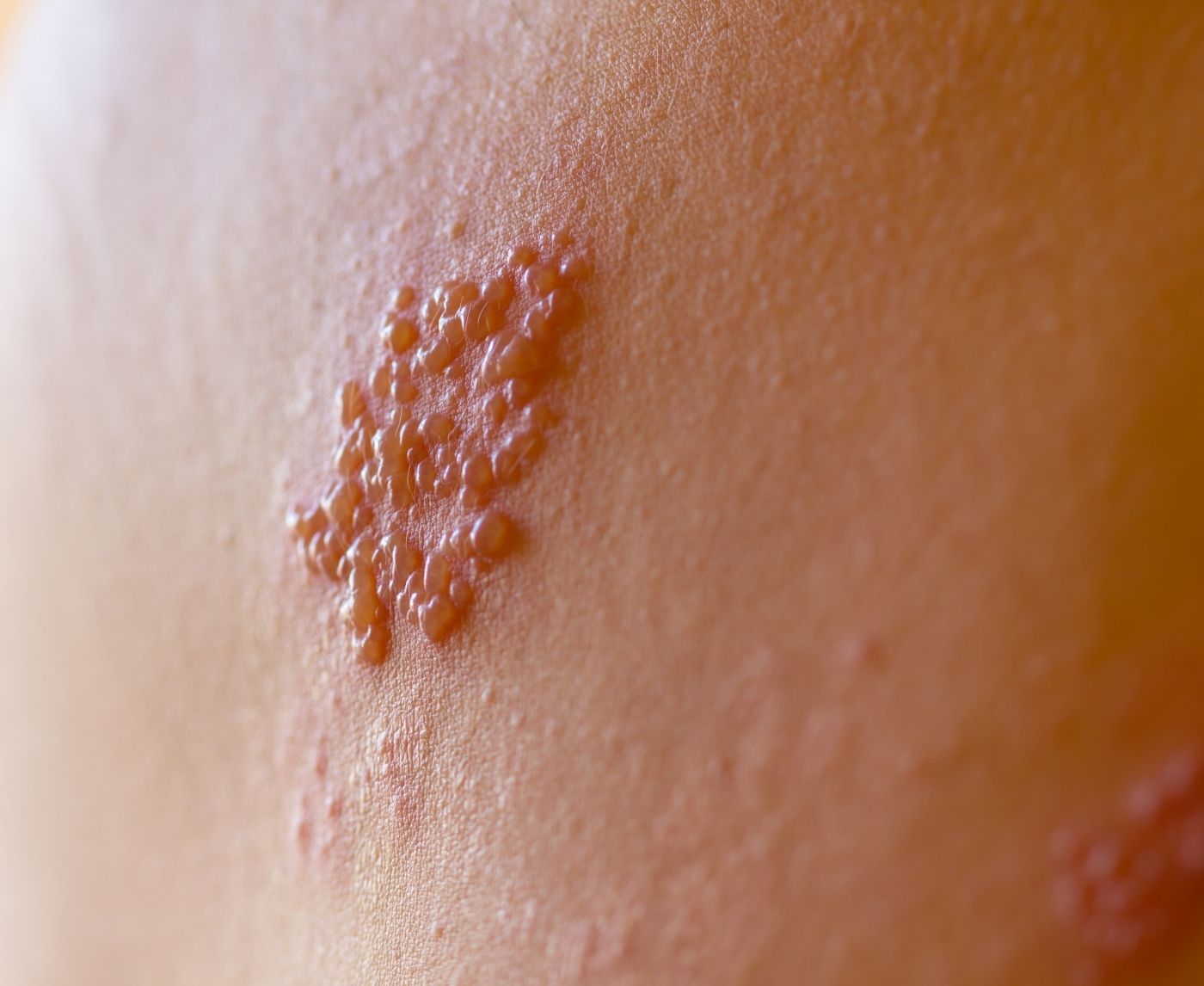
Most bumps in the genital or lip area are not herpes. The features that shift suspicion toward herpes are a tight cluster of small fluid-filled blisters, a sharp burning or tingling sensation that came before the bump, and a tendency to recur in the same exact spot. A clinic swab within the first 48 hours of a fresh blister is the gold-standard test. A fingerstick blood antibody test is right when no current sore is present and at least 12 weeks have passed since the suspected exposure.
A red spot appears in a sensitive area, and within an hour your brain has cycled through every worst-case scenario. Most genital and lip bumps are not herpes. They are pimples, ingrown hairs, irritated follicles, friction marks, contact-dermatitis spots, or yeast flares. But some are. The job here is figuring out which group your bump belongs to without spinning out, without self-popping, and without waiting weeks while it gets harder to test.
This guide walks through what herpes looks and feels like, the patterns that point away from it, when a clinic swab is the only tool that works, and when a private at-home blood test gives you the clarity you need.
Key Takeaways
- Most genital and lip bumps are not herpes. The high-yield herpes signs are a clustered vesicle pattern, a tingling prodrome before the bump appears, and same-spot recurrence over months.
- A clinic swab PCR within 48 hours of a fresh blister is the gold-standard test. An at-home fingerstick blood antibody test is the right tool 12 weeks past suspected exposure when no sore is present.
What herpes is, in plain language
Herpes simplex virus (HSV) is a common skin and nerve infection with two close cousins: HSV-1, the type most often behind cold sores around the mouth, and HSV-2, the type most often behind genital outbreaks. The two are not strictly divided by location anymore. Oral sex moves both viruses around, so HSV-1 increasingly causes genital infections in people who acquired the virus through receptive oral contact.
In 2018, the CDC estimated that more than 572,000 new genital herpes infections occurred in the U.S. among people aged 14 to 49, and the majority of people who carry the virus do not know it, per the CDC's About Genital Herpes page. The reason is structural. HSV hides in nerve roots near the spine when it is not shedding, and many people either never have a visible outbreak or have one so mild they file it away as a paper cut, friction sore, or skin flare.
What this means in practice: "never had a sore" is not the same as "does not have herpes," and "had a weird bump once that went away" is sometimes the only outbreak a person ever notices.
The <a href="https://www.who.int/news-room/fact-sheets/detail/herpes-simplex-virus" target="_blank" rel="noopener">World Health Organization</a> estimates that 3.8 billion people under age 50 carry HSV-1, and 520 million people aged 15 to 49 carry HSV-2 globally. The vast majority do not know their status because symptoms are mild, intermittent, or absent.
Why bumps look so similar in the first 48 hours
Genital and lip skin is hair-bearing, friction-prone, warm, and exposed to a lot of products and contact. That combination produces an enormous number of small bumps every day that have nothing to do with herpes: clogged pores, ingrown hairs, irritated follicles, sweat-trapped patches, yeast flares, contact-dermatitis spots, and tiny tears from sex or shaving. In the first day or two, all of these can look like the same thing: a small red raised area, sometimes tender, sometimes not.
Reviews of herpes case series have consistently shown that a meaningful fraction of patients with culture-confirmed herpes initially mistook their first lesion for an ingrown hair or a pimple. This is not a failure of attention. It is what early herpes can look like before the cluster pattern develops, before the skin breaks open, and before the prodrome is recognizable as a pattern.
The table below pulls out the most consistent differences between herpes and the conditions it mimics. None of these features are 100 percent diagnostic on their own. Several together start to suggest one cause over another.
| Condition | Shape and surface | Pain quality | Timing | Recurrence pattern |
|---|---|---|---|---|
| Herpes vesicle | Tight cluster of small fluid-filled blisters, may crust | Sharp, burning, electric, often a tingling warning before the bump | Hours to a day after a prodrome | Returns to the same nerve-root patch of skin |
| Pimple | Single raised papule, may have central whitehead | Throbbing or pressure, mostly when touched | Forms over 1 to 3 days | Random sites, rarely the exact same spot |
| Ingrown hair | Red bump with a hair visible trapped under the surface | Mild itch or tenderness | After shaving or waxing | At hair-removal sites only |
| Razor burn | Flat scattered red rash across a broad patch | Stinging or itch, not sharp | Within 24 hours of shaving | At shaved zones, clears in days |
| Folliculitis | Pus-tipped follicular bumps, follow hair pattern | Itchy or sore | Days, often after sweating or friction | Friction or warmth zones |
Side-by-side: how each bump pattern looks
Reading a comparison table only gets you so far. The four reference photos below show the visual signature of each pattern, isolated on neutral skin so the morphology stands on its own. Notice how the herpes panel groups several small vesicles tightly together, the pimple panel shows a single domed lesion, the ingrown hair panel reveals the trapped hair under the surface, and the folliculitis panel scatters pus-tipped bumps along the hair-follicle grid. These are the visual cues clinicians use first; testing then confirms.
Four clues that point toward herpes
Four features, when they appear together, shift suspicion toward herpes:
- The cluster pattern. Herpes lesions tend to appear in tight groups of three to ten small fluid-filled vesicles, each only one or two millimeters wide, often in a grape-cluster shape. A single isolated bump is less typical, though not impossible.
- Same-spot recurrence. Because HSV lives in a specific nerve root, repeat outbreaks tend to happen in the same patch of skin every time. A bump that returns to the exact same square inch over months is a strong herpes signal.
- Prodrome. Many people feel a tingling, itching, burning, or zapping sensation in the skin for several hours to a couple of days before any bump appears. This nerve-driven warning is unusual for pimples or ingrown hairs.
- Crust then heal pattern. Herpes vesicles burst, weep clear or yellowish fluid, and crust over before healing in seven to ten days. A pimple that drains thick white pus and heals within three to four days is following a different script.
None of these features alone diagnose herpes. Together they make it the leading suspect, and they make a clinic swab the right next step if you can get one within 48 hours of the bump appearing.
Studies of dermatology training show that even experienced clinicians cannot reliably distinguish herpes from look-alike conditions on appearance alone. Do not pop, scrub, or self-treat a suspicious bump, and do not rely on a photo comparison from a search result. Either get a clinic swab while the lesion is fresh, or wait the antibody window and do a blood test.
Pain, prodrome, and what your nerves are telling you
Pain quality is one of the most underused clues. Herpes pain is nerve pain. People describe it as sharp, burning, electric, or zapping, often with a tingling or itching warning before the skin shows anything visible. Pimple and ingrown-hair pain is mechanical pain. People describe it as throbbing, sore, or pressure-like, usually only when the bump is touched.
The first outbreak after a new infection is typically the worst. Beyond the local lesions, many people get systemic symptoms during a first outbreak: low-grade fever, body aches, fatigue, swollen lymph nodes in the groin or neck, and, in some genital infections, painful urination because urine touches an open sore. These flu-like signs are rare with subsequent recurrences and almost unheard of with non-herpes bumps, per the CDC's About Genital Herpes page.
If your bump is painful in a sharp, electrical way, sits in a spot where you have noticed similar symptoms before, and you also feel run-down or feverish in a way that does not match a normal cold or food bug, the pattern is worth taking to a clinic the same week.
Prodrome warning signs to know
- Tingling along the patch of skin where a bump tends to recur
- Burning or stinging sensation that arrives before any visible mark
- Localized itching at one nerve-root patch, not generalized irritation
- Brief electric or zapping nerve sensations along the affected area
Asymptomatic herpes, the invisible carrier
The hardest part of herpes science to communicate is asymptomatic shedding. The virus can release infectious particles from the skin even on days when no sore, no tingling, and no warning sign is present. The CDC's About Genital Herpes page notes that most genital herpes infections are passed by people who have no symptoms at the time, or who do not realize their mild symptoms are caused by HSV. Intermittent shedding from skin that looks normal is the main reason transmission keeps happening between partners who feel healthy.
This is the mechanism behind a scenario that comes up over and over: a partner in a long monogamous relationship tests positive for HSV-2, neither person has ever seen a sore, and the question of "how did this happen" generates real distress. One of the partners was almost certainly infected before the relationship started, never had an obvious outbreak, and shed virus on enough skin-contact days that transmission eventually happened. No one cheated. Transmission was a statistical outcome of asymptomatic shedding, not deliberate concealment.
The same logic explains the partner who tells you, with full sincerity, that they have never had herpes. They may be telling the truth as they understand it, and still be infectious.
Most people with genital herpes have no symptoms or have very mild symptoms that may go unnoticed or be mistaken for another skin condition. Because of this, most people who have genital herpes do not know it.
How clinicians confirm a herpes diagnosis
Clinical herpes diagnosis pairs symptom history with laboratory testing. The two main lab paths answer different questions and are not interchangeable.
A swab nucleic acid amplification test (NAAT, often called PCR) of fluid from a fresh blister is the laboratory gold standard. It detects herpes viral DNA directly, types the result as HSV-1 or HSV-2, and is most accurate within the first 48 hours of a vesicle appearing, before the lesion crusts. This is the right test when an active sore is present.
A blood antibody test (IgG) detects the immune response your body makes after HSV exposure. It cannot tell where on the body the infection lives, and it cannot reliably catch a brand-new infection because antibodies take weeks to build. The CDC recommends testing 12 weeks after the suspected exposure event, with some assay labels recommending up to 16 weeks for full sensitivity.
IgM antibody tests have largely been retired from herpes screening because they produce a high rate of false positives and can react to several other unrelated viruses. The CDC's 2021 STI treatment guidelines specifically advise against IgM-based herpes diagnosis. The table below puts the three options side by side. Disclosure: this site sells rapid at-home test kits, and the products linked below reflect what we carry; the recommendations in the table cover the full clinical menu, not only what we sell.
| Test method | Sample type | What it detects | Best used when | Main limitation |
|---|---|---|---|---|
| Clinic swab PCR (NAAT) | Fluid from active sore | Herpes viral DNA, HSV-1 vs HSV-2 | First 48 hours of a fresh vesicle | Cannot run without an active sore |
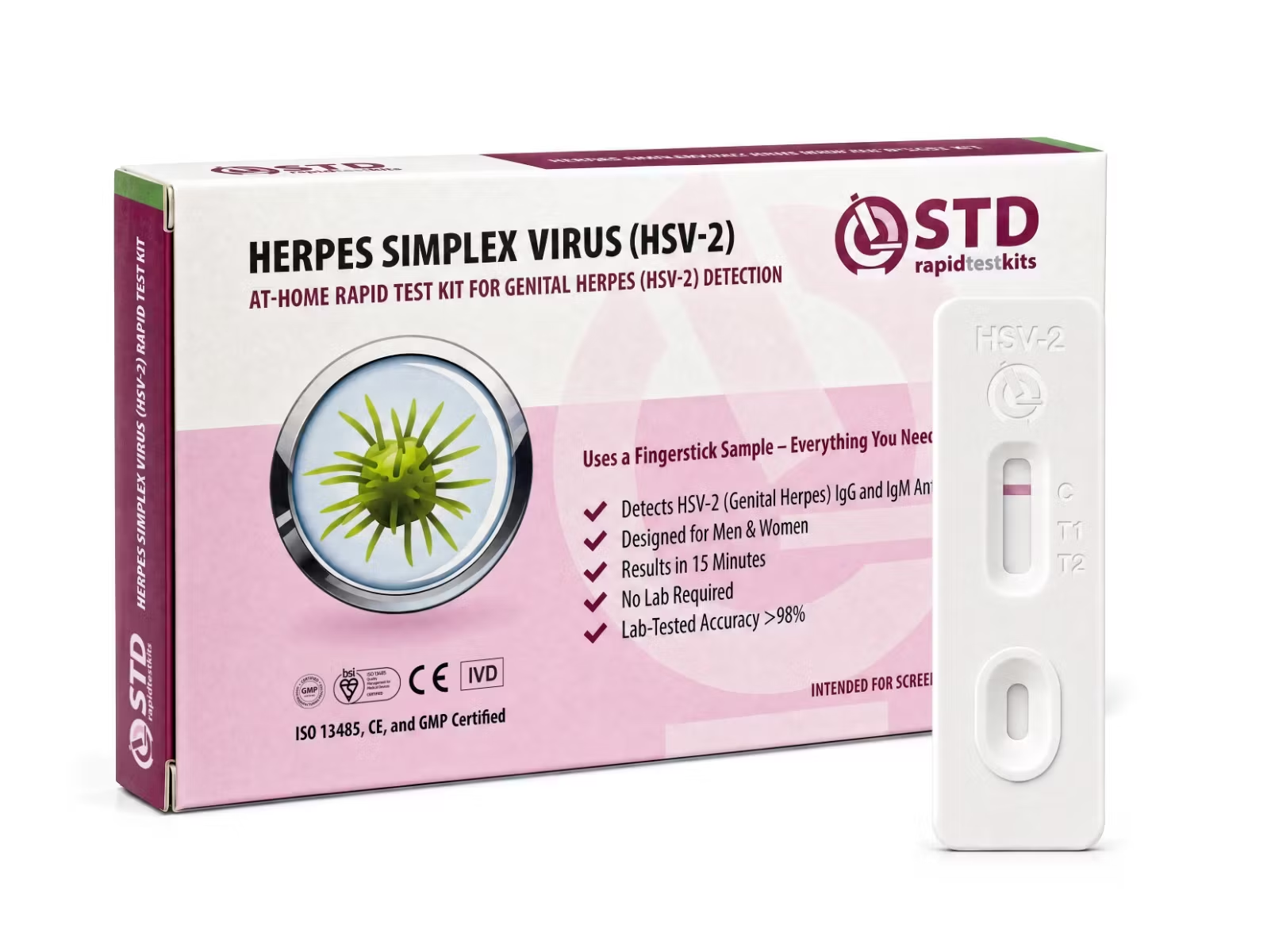
| At-home blood antibody (IgG) | Fingerstick blood sample | Past HSV antibody response | 12 to 16 weeks after suspected exposure | Misses very recent infections |
| Lab IgG antibody panel | Venipuncture blood draw | Same antibodies as the home test | Same window, with phlebotomy | Same window-period limitation |
Testing windows: when each method works
Herpes is one of the more timing-dependent infections. Test too early and a real exposure looks negative; test off the wrong sample type and you are checking for the wrong thing. The window cheat sheet below is built from the CDC's STI treatment guidelines, which set 12 weeks as the recommended antibody-test window; some assay labels extend the recommended window to 16 weeks for full sensitivity. Two practical implications you can act on today: if you have a fresh sore right now, do not wait for the antibody window, get a swab today. If you do not have a sore but you had a possible exposure event you cannot stop thinking about, mark 12 weeks on the calendar and test then. Testing earlier than that and getting a negative is not reassurance, it is a false negative waiting to be reclassified.
| Time since exposure | Best test option | Why this window |
|---|---|---|
| 0 to 7 days | None reliable yet | Antibodies have not formed; no sore yet for swab |
| 7 to 14 days | Clinic swab, only if a sore appears | Antibody blood test still too early to be informative |
| 3 to 6 weeks | Antibody test possible, plan a retest | Some people seroconvert by week 4, many do not |
| 12 to 16 weeks | Antibody blood test (best window) | Most people have detectable antibodies by this point |
What to do today if you suspect herpes
If you are reading this with a bump in front of you, here is the practical sequence.
- Do not pop, scrub, or self-medicate. Popping a herpes blister will not heal it, will not stop the outbreak, and may spread virus to nearby skin or your fingers. Antibiotic ointment is for bacterial infections, which is not what herpes is.
- Photograph and date the bump. A clear, well-lit photo on day one is useful diagnostic information whether you see a clinician this week or not. Note the day, where you are in your menstrual cycle if relevant, recent sexual contacts, and any prodrome you remember.
- If the bump is fresh and looks vesicular, meaning fluid-filled like a small blister, see a clinic in the next 48 hours. The clinic swab PCR is the only test that confirms a current outbreak in real time. Same-day appointments at most sexual-health clinics are designed for exactly this question.
- If the bump is older than 48 hours or has already crusted, plan for blood testing instead. A swab is unlikely to detect viral DNA from a healing lesion. The right tool now is a 12-week antibody test, either at a clinic or at home.
- If you have no current sore but a recent possible exposure event, run the math. Mark 12 to 16 weeks from that event on a calendar and test then. Earlier testing is acceptable as a starting point, but plan a retest at the right window.
For people who would rather skip the clinic intake form, a private fingerstick blood antibody test is a reasonable starting point at the right window. A combination screening kit can also pick up adjacent risks like HIV, syphilis, and hepatitis from the same exposure event in one shipment.
Living with herpes is not what stigma says it is
If a test does come back positive, the practical reality of life with herpes is not what cultural shorthand has trained you to expect.
Antiviral medications such as valacyclovir, acyclovir, and famciclovir reduce both the duration of outbreaks and the rate of asymptomatic shedding. Daily suppressive antiviral therapy reduces, but does not eliminate, the risk of passing HSV to a partner, per the WHO HSV fact sheet and the CDC's STI treatment guidelines. Consistent condom use during vaginal and anal sex adds further risk reduction. The CDC and WHO both classify HSV as a manageable lifelong condition, not a progressive disease. Outbreak frequency tends to decrease over the years for most people, and many adults with herpes have one or two recurrences across an entire decade.
Disclosure to a new partner is uncomfortable but not catastrophic. The script that works for most people is short and matter-of-fact: "I have HSV-2. It is common. I take medication that lowers transmission risk. Here is what we can do to make it safer." Most adult partners receive that information with curiosity and respect, not rejection. The relationships that end on disclosure usually had other problems too.
Pregnancy planning continues normally with appropriate obstetric care, and vertical transmission is preventable when the diagnosis is known. Sex life continues. Career, dating, fertility, and identity are not affected by the diagnosis itself, only by how much weight you give the cultural baggage attached to it.
Living with herpes: the practical baseline
- Daily antiviral suppressive therapy reduces outbreak frequency and lowers (but does not eliminate) the risk of passing HSV to a partner.
- Outbreak frequency typically decreases over the years; many adults with herpes have only one or two recurrences across a decade.
- Pregnancy, fertility, and dating are not derailed by an HSV diagnosis when it is known and managed.
- A short, matter-of-fact disclosure script works better than a long apology. Most partners receive the information with curiosity, not rejection.
Frequently asked questions
- Can a single bump really be herpes?
- Yes. Outbreaks vary from a textbook cluster of vesicles to one tiny ulcer or even a single split-skin crack. A single bump alone neither confirms herpes nor rules it out. The context that matters most is the surrounding pattern: did the area tingle or burn before the bump appeared, does the same spot break out repeatedly, and does it crust over and heal in seven to ten days?
- How quickly does an outbreak appear after exposure?
- A first outbreak typically shows up 2 to 12 days after exposure, per CDC guidance. A small fraction of people show symptoms sooner or later than that window, and many people never have a noticeable first outbreak at all.
- Is herpes pain different from pimple pain?
- Often yes. Herpes pain is described as sharp, burning, or electric, sometimes with a tingling sensation that precedes the bump by hours. Pimple pain is usually throbbing or pressure-like, only triggered by touch. Pain alone is not diagnostic, but the quality of the pain is a useful clue.
- I shaved and now have bumps. Razor burn or herpes?
- Razor burn appears within 24 hours of shaving, covers a broader patch, itches more than it stings, and clears within a few days. Herpes appears on a longer fuse, clusters tightly, and burns rather than itches. If shaving the same area produces the same painful bump pattern repeatedly in the exact same spot, blood antibody testing is reasonable.
- What test should I use if I have an active sore right now?
- A clinic swab PCR. Swabbing the active blister within the first 48 hours is the most accurate way to confirm herpes and identify whether it is HSV-1 or HSV-2. Our at-home product line is blood antibody, not swab PCR, so for an active sore today the right step is a clinic visit.
- Can I test at home if I have no symptoms?
- Yes, with a fingerstick blood antibody test such as our HSV-2 home kit. This works for past exposure 12 weeks or more after the suspected event. It will not detect very recent infections, and it will not localize where the virus lives on your body. It will tell you whether your immune system has seen HSV-2.
- Why does my outbreak look nothing like the photos online?
- Internet image searches return the most extreme presentations because those are the ones that get photographed. Most outbreaks are smaller and milder. A single split-skin crack, a 2 millimeter scab, or a faint cluster of pinpricks are all within the normal range. This is one reason visual self-diagnosis is unreliable.
- Can I get herpes from someone with no symptoms?
- Yes. Asymptomatic shedding lets the virus pass during periods when no sore is visible. The CDC notes that most people with HSV-2 are unaware they carry it, which is the main mechanism behind ongoing transmission in monogamous couples who otherwise feel low-risk. Regular testing matters even when neither partner has ever had a visible outbreak.
- U.S. Centers for Disease Control and Prevention. About Genital Herpes: 2018 incidence estimate, asymptomatic transmission, symptom variability, and flu-like first-outbreak signs.
- U.S. Centers for Disease Control and Prevention. STI Treatment Guidelines, 2021: Genital Herpes diagnostic testing recommendations, antiviral suppressive therapy, and IgM caveat.
- World Health Organization. Herpes simplex virus fact sheet: global prevalence (3.8 billion HSV-1, 520 million HSV-2), symptom variability, and transmission.
- MedlinePlus, U.S. National Library of Medicine. Genital herpes: symptoms, diagnosis, and treatment overview for patients.
- NHS. Genital herpes overview, symptom recognition, and self-care guidance.
- Cleveland Clinic. Genital herpes: causes, symptoms, treatment, and prevention.
