
Published: October 2025 | Last updated: April 2026 | Editorial review and quality control: Martina N.
Herpes testing is one of the most googled and most misunderstood pieces of sexual-health screening. The reason is that there is no single right answer. Two viruses, two test methods, several timing windows, and a real risk of false positives all collide in one decision. The good news is that the choice usually becomes obvious once you know which scenario you are in. If a visible sore is on your skin right now, the answer is a clinic-collected swab. If you are testing without symptoms after a known or possible exposure, the answer is a blood antibody test taken after the right number of weeks have passed. Everything else in this guide is detail on top of those two paths.
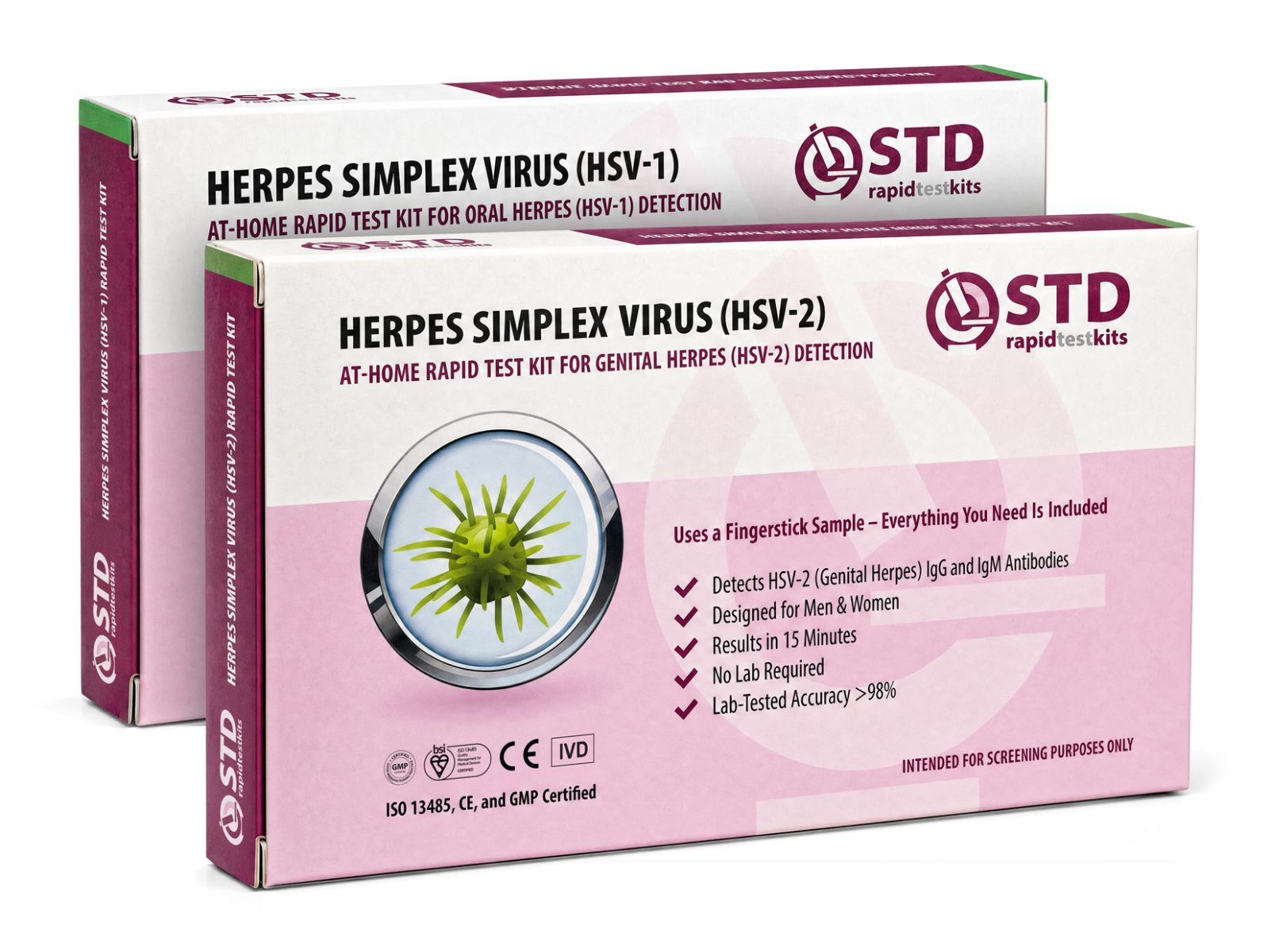
This article is published by stdrapidtestkits.com. We sell at-home blood antibody tests for herpes. We do not sell lesion-swab tests, because those need to be collected during an active outbreak by a clinician. We will be specific about which test answers which question, so you can pick the one that genuinely fits your situation rather than the one that happens to be the easiest to buy.
How do you test for herpes?
Two methods, picked by your situation. If you have an active sore, a clinician swabs the lesion and sends it for PCR or viral culture; this is the most accurate option but only works during an outbreak. If you have no visible symptoms, a blood test detects HSV-1 and HSV-2 IgG antibodies, but only after a window period of about 12 to 16 weeks from exposure. Routine screening of people without symptoms is not recommended by the U.S. Preventive Services Task Force, so testing is usually a personal decision tied to a known exposure or a partner's diagnosis.
Key Takeaways
- If you have an active sore, see a clinician for a PCR swab within 48 hours of symptoms appearing; this is more accurate than any blood test.
- If you have no symptoms, wait at least 12 weeks from exposure before a blood antibody test, and avoid IgM testing entirely (the FDA flags it as unreliable).
HSV-1 vs HSV-2: what the test is actually looking for
Two viruses cause herpes infections in humans. Herpes simplex virus type 1 (HSV-1) is most often associated with cold sores around the mouth. Herpes simplex virus type 2 (HSV-2) is most often associated with genital herpes. Both viruses can infect either site. Oral HSV-2 and genital HSV-1 are both real, the second is increasingly common, and that crossover is a major reason testing matters.
According to the World Health Organization, an estimated 3.8 billion people under age 50 are living with HSV-1 globally, and about 520 million people aged 15 to 49 are living with HSV-2 (WHO herpes simplex virus fact sheet). The U.S. Centers for Disease Control and Prevention reports that most people with genital HSV are unaware they have it, because symptoms are often mild, mistaken for something else, or absent altogether (CDC, About Genital Herpes).
What this means for testing: a good test should distinguish HSV-1 from HSV-2, because the two have different transmission patterns and different counseling implications. A combined panel that flags any HSV antibody without specifying the type tells you less. Modern type-specific blood tests look for glycoprotein G antibodies (gG1 for HSV-1 and gG2 for HSV-2) and report each result separately.
Genital HSV-1 is increasingly common, particularly among younger adults exposed through oral sex. Oral HSV-2 is less common but possible. A type-specific test still tells you which virus you have; it cannot tell you where on the body it is currently active. That is why the swab vs blood decision (location + symptoms) and the type-specific result (HSV-1 vs HSV-2) answer two different questions.
Two test methods, two situations
Herpes testing splits into two technologies that answer different questions. Picking the wrong one wastes time and money, so it is worth being clear on what each one does.
Direct virus detection (swab tests). A clinician swabs an active lesion and sends the sample to a lab. Polymerase chain reaction (PCR) is now the preferred method; viral culture is older and less sensitive. PCR detects the virus's genetic material and confirms whether it is HSV-1 or HSV-2. This is the most reliable way to confirm a current infection. The catch: it only works while a sore is present, and sensitivity drops sharply once the lesion starts to heal. The CDC's clinical guidance recommends PCR or culture from a lesion as the preferred diagnostic test in symptomatic patients (CDC STI Treatment Guidelines, Herpes).
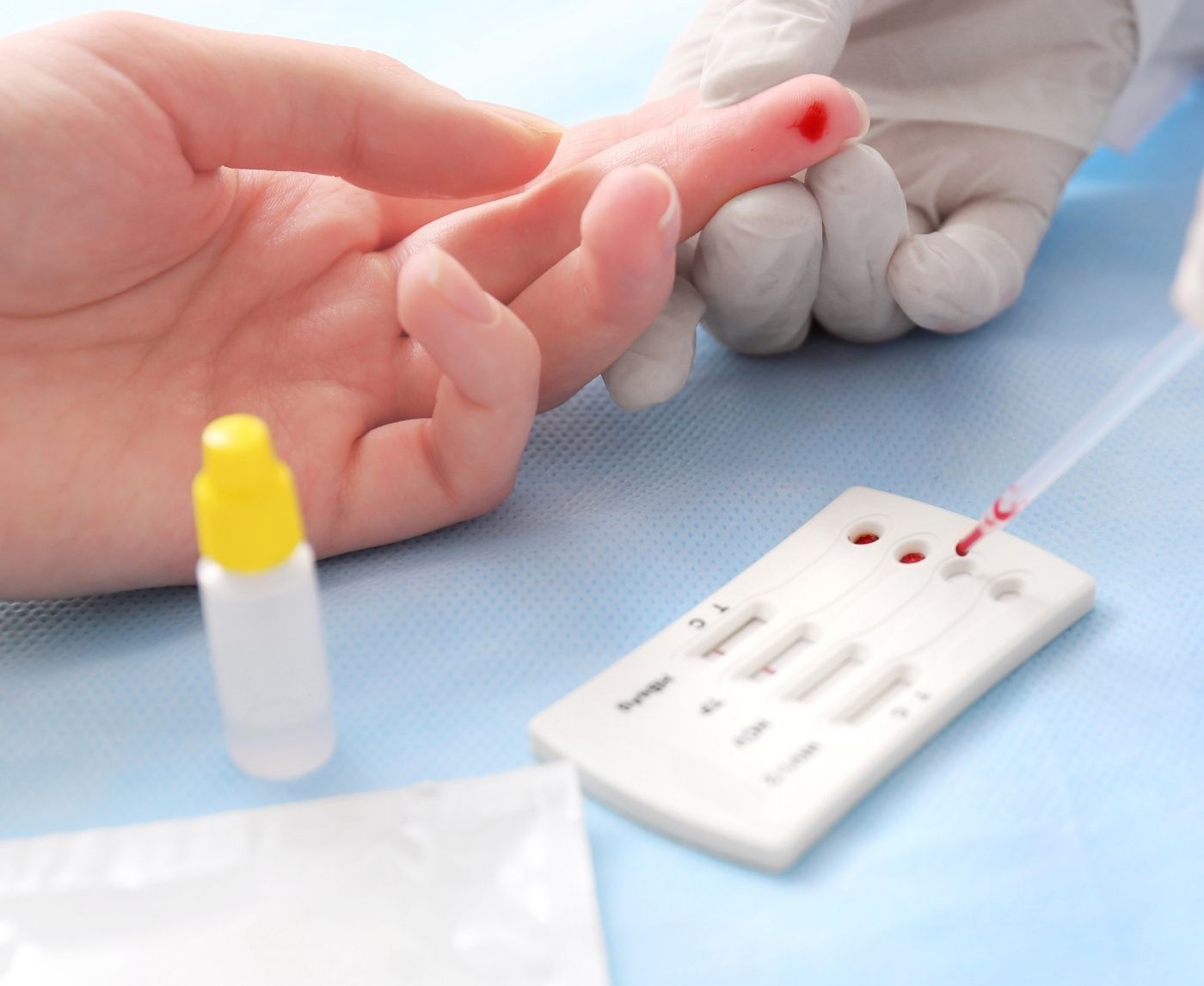
Antibody detection (blood tests). A blood sample is checked for antibodies your immune system makes after an HSV infection. IgG antibodies develop slowly and persist for life, so an IgG result tells you whether you have been infected at some point, not whether you are currently in an outbreak. Type-specific IgG (gG1 and gG2) is the standard. Antibody tests do not require an active sore, which is exactly why they exist. They are also the only practical option for at-home use.
| Question | Swab (PCR / culture) | Blood antibody (IgG) |
|---|---|---|
| What does it detect? | The virus itself in a sore | Antibodies your body has made |
| Active outbreak required? | Yes, sore must be present | No, works without symptoms |
| Best timing | Within 48 hours of sore appearing | 12 to 16 weeks after exposure |
| Distinguishes HSV-1 from HSV-2? | Yes (PCR is type-specific) | Yes (gG1 vs gG2 antibody panel) |
| Available at home? | No, clinician collected | Yes, fingerstick rapid kits exist |
| Best for | Confirming current infection | Screening after exposure or for status |
Window periods: why timing changes everything
Test timing is the single biggest reason readers get a confusing result. The two test methods have very different windows.
For a swab test, timing is short. Sensitivity is highest within the first 48 hours of a sore appearing, then falls quickly as the lesion crusts over. If you have a fresh blister or a tingling area that becomes one, that is the moment to call a clinic. Waiting a week often means the swab can no longer recover enough virus, even though the sore is still visible.
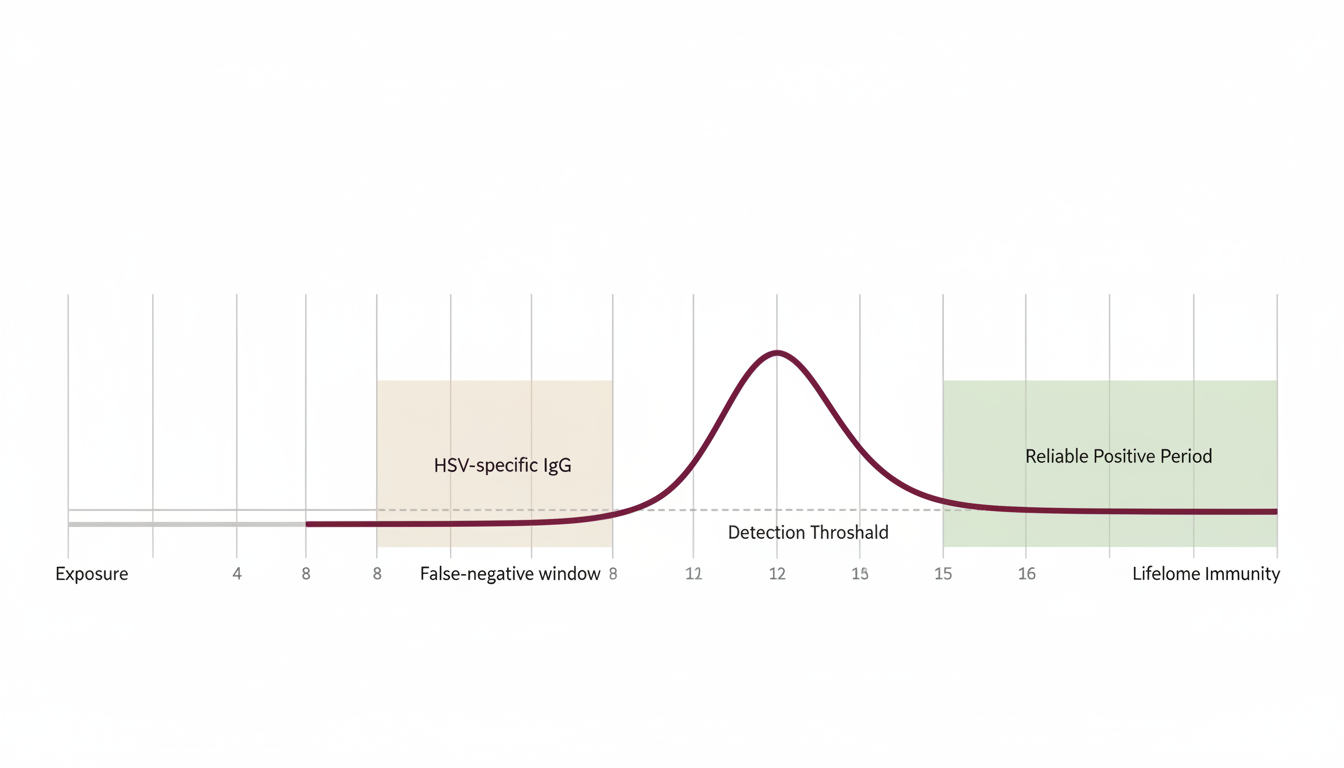
For a blood antibody test, timing is long. The CDC notes that after exposure, it can take up to 16 weeks or more for current tests to detect infection (CDC, Herpes Testing). MedlinePlus puts the lower bound clearly: your body takes up to three months to make HSV antibodies, so testing at four weeks may miss a real infection (MedlinePlus, Herpes (HSV) Test).
One rule of thumb that holds up well: if you tested at 4 to 6 weeks and got a negative result, repeat the test at 12 to 16 weeks before considering yourself in the clear. A single early negative is not the same as a confirmed negative.
The FDA and the CDC both warn against using IgM antibody tests for HSV diagnosis. IgM tests cross-react with other herpes-family viruses (including the ones that cause chickenpox and mononucleosis) and produce frequent false positives. They also cannot reliably distinguish a recent infection from a long-standing one. Stick to type-specific IgG (gG1 and gG2) antibody testing, and ask which assay your provider or kit uses if it is not stated. The FDA has issued guidance to clinical laboratory staff warning that certain HSV-2 serologic tests can produce false reactive results (<a href="https://www.fda.gov" target="_blank" rel="noopener">fda.gov</a>).
At-home vs clinic: which option fits your situation
Both options are legitimate and both have trade-offs. The right choice depends on what you are trying to find out.
A clinic visit is the right call if you currently have a sore. A clinician can collect a PCR swab from the lesion, examine the area in person, rule out other causes (such as syphilis chancres, fungal infections, or contact dermatitis), and prescribe antiviral therapy on the same visit if needed. No at-home product replaces a swab of an active sore. Urgent-care clinics, sexual-health clinics, primary-care offices, and Planned Parenthood all offer this service.
An at-home blood antibody test is the right call if you have no current symptoms but want to know your HSV status, typically after a known exposure, after a partner's diagnosis, or as part of a complete screening before a new relationship. The privacy is the point. You collect a fingerstick blood sample at home, run a rapid lateral-flow test, and read the result in minutes. There is no waiting room, no insurance paperwork, and no clinical record unless you choose to share it. The results are screening-grade: a positive should be confirmed by a clinician, and a negative within the window period should be repeated after 12 to 16 weeks.
At-home rapid tests use lateral-flow chemistry, which is less analytically sensitive than the laboratory IgG immunoassays a clinician orders. They are useful for fast, private screening, but they are not equivalent to a lab-run gG-specific assay.
How accurate are herpes tests, and what false positives mean
Test accuracy in herpes is unusually nuanced because the underlying biology causes real problems. The two figures that matter most are sensitivity (how often the test correctly identifies an infected person) and specificity (how often it correctly clears an uninfected person).
Lab-run type-specific IgG assays generally report sensitivity in the mid 90s percent range and specificity in the high 90s percent range, depending on the assay and the population studied. The CDC recommends a confirmatory test (such as Western blot or the Biokit method) before treating a low-index-value HSV-2 result as definitive (CDC STI Treatment Guidelines, Herpes). The math behind this matters: even a 98 percent specific test will throw off a meaningful number of false positives when the true prevalence is, say, 5 percent.
Two practical rules follow from this:
- A reactive HSV-2 result with a low index value should be confirmed. Talk to a clinician who can either order a confirmatory assay or interpret the result in context before treating it as definitive.
- A reactive HSV-1 result is usually unsurprising. About half of U.S. adults carry HSV-1, often acquired in childhood through non-sexual contact. The U.S. Preventive Services Task Force highlights this high background prevalence as one reason routine screening of asymptomatic adults is not recommended (USPSTF Recommendation: Serologic Screening for Genital Herpes).
None of this means home testing is pointless. It means home testing is best treated as a screening step that gives you information to bring to a clinician, not as a final diagnosis on its own.
When routine herpes screening is not recommended
This is the part that surprises most readers. The U.S. Preventive Services Task Force currently recommends against routine serologic screening for genital herpes in asymptomatic adolescents and adults, including pregnant people. The reasoning is not that herpes does not matter; it is that screening tests in low-prevalence populations produce a meaningful number of false positives, the psychological harm of a wrong-positive label is real, and there is no curative treatment that improves outcomes from screening an asymptomatic person (USPSTF, 2023).
The practical takeaway: testing is most useful when it is targeted. A targeted test after a known exposure or after a partner's diagnosis is high-information. A blanket panel run on someone with no symptoms and no exposure is low-information and is more likely to generate a confusing result than a useful one.
- It does not mean you should ignore symptoms. A new sore, tingling, or unexplained genital pain warrants a clinic visit, ideally during an active outbreak.
- It does not mean testing is wrong if you have been exposed. A known exposure to a partner with confirmed HSV is a different clinical scenario than population screening, and a deliberate post-window test makes sense.
- It does not mean partners cannot benefit from knowing each other's status. The recommendation is about asymptomatic population screening; individual testing decisions remain individual.
What to do with your result
The result of a herpes test, positive or negative, is the start of a process, not the end of one.
If your test is positive (reactive). The first step is confirmation. A reactive at-home antibody result, especially HSV-2 at a low index value, should be reviewed with a clinician who can either order a confirmatory assay or interpret the result in context. If confirmed, daily antiviral medication (acyclovir, valacyclovir, or famciclovir) reduces outbreak frequency, eases symptoms, and lowers the risk of transmission to partners. The CDC's herpes treatment guidelines describe both episodic and suppressive therapy options (CDC STI Treatment Guidelines). The NHS also provides clear consumer-level guidance on living with genital herpes (NHS, Genital herpes).
If your test is negative. Check the timing. If less than 12 weeks have passed since a possible exposure, the result is provisional and should be repeated. If you tested well past the window period and the result is negative, the result is reasonably reassuring, but no test is 100 percent. Continued safer-sex practices (condoms, antiviral therapy in a positive partner, avoiding contact during a partner's outbreak) reduce risk further.
If you tested because of a partner's diagnosis. Whether your result is positive or negative, the disclosure step matters. People who know their HSV status are statistically more likely to use protection consistently and less likely to transmit the virus during asymptomatic shedding.
Most people with genital HSV-2 infection have not been diagnosed. Many such people have mild or unrecognized infections but shed virus intermittently in the genital tract.
Common misconceptions worth clearing up
A few myths recur in almost every conversation about herpes testing. Knocking them down once saves a lot of confusion later.
Myth: Herpes is included in a standard STI panel. It usually is not. Most clinics do not include HSV serology in their default panel because of the false-positive concerns above. If you want it, you have to ask for it specifically.
Myth: You need symptoms to test. Not for blood antibody testing. The whole point of an IgG test is that it works without an active sore. Just respect the 12 to 16 week window.
Myth: A cold sore is not really herpes. It is. Most cold sores are HSV-1, and the same virus can be transmitted to a partner's genitals through oral sex. This is why a partner's casual cold sore is a legitimate exposure.
Myth: A positive result ends your sex life. It changes the conversation, not the activity. With antiviral medication, condoms, and disclosure, transmission risk drops substantially. The CDC's transmission data and patient-facing materials describe the realistic risk reductions and the protective effect of suppressive therapy (CDC STI Treatment Guidelines).
Myth: At-home tests are unreliable. At-home rapid tests are screening tools, not lab assays. A reactive result deserves clinician confirmation, and a negative result inside the window period deserves a repeat.
Frequently asked questions
- How long after exposure should I wait to test for herpes?
- For a swab test, do it within 48 hours of a sore appearing. For a blood antibody test, wait 12 to 16 weeks from the exposure date so IgG antibodies have had time to develop. Testing earlier is allowed but a negative result before the window has closed is not conclusive.
- Can I tell HSV-1 from HSV-2 with a single test?
- Yes, when the test is type-specific. A type-specific IgG blood test reports gG1 (HSV-1) and gG2 (HSV-2) results separately. Older non-specific HSV antibody tests cannot tell the two apart and are not recommended.
- Why do experts warn against IgM herpes tests?
- IgM antibodies cross-react with other herpes-family viruses, including the ones that cause chickenpox and mononucleosis, so they produce frequent false positives. They also cannot reliably distinguish recent from long-standing infection. Both the FDA and the CDC recommend type-specific IgG instead.
- How accurate is a fingerstick rapid herpes test?
- Rapid lateral-flow tests perform reasonably well for screening but are less analytically sensitive than lab-run gG-specific assays. Treat a reactive result as a strong signal worth confirming with a clinician, and treat a non-reactive result inside the 12 to 16 week window as not yet conclusive.
- Is herpes testing included in a standard STI panel?
- Herpes (HSV) serology is typically excluded from standard STI panels. Clinicians skip it by default because the high background prevalence of HSV-1 and false-positive risk at low HSV-2 prevalence make routine screening more confusing than informative for most patients. Ask specifically if you want it added to your panel.
- What does a low positive HSV-2 antibody result mean?
- A reactive HSV-2 IgG result with a low index value is the situation most likely to be a false positive. The CDC recommends confirming with a different assay (such as the Western blot, where available) or discussing the result with a clinician before acting on it.
- Can I test for herpes at home discreetly?
- Yes. At-home blood antibody kits are available for combined HSV-1 + HSV-2 panels and for each virus individually. They use a fingerstick sample, return a result in about 15 minutes, and do not require a clinic visit. They are screening tools, so a reactive result should be confirmed by a clinician.
- Does a negative herpes test mean I am definitely uninfected?
- Only if it was taken outside the window period. A negative IgG result more than 12 to 16 weeks after the last possible exposure is reasonably reassuring, but no test is 100 percent. Continued safer-sex practices reduce future risk further.
Pick the test that matches your situation
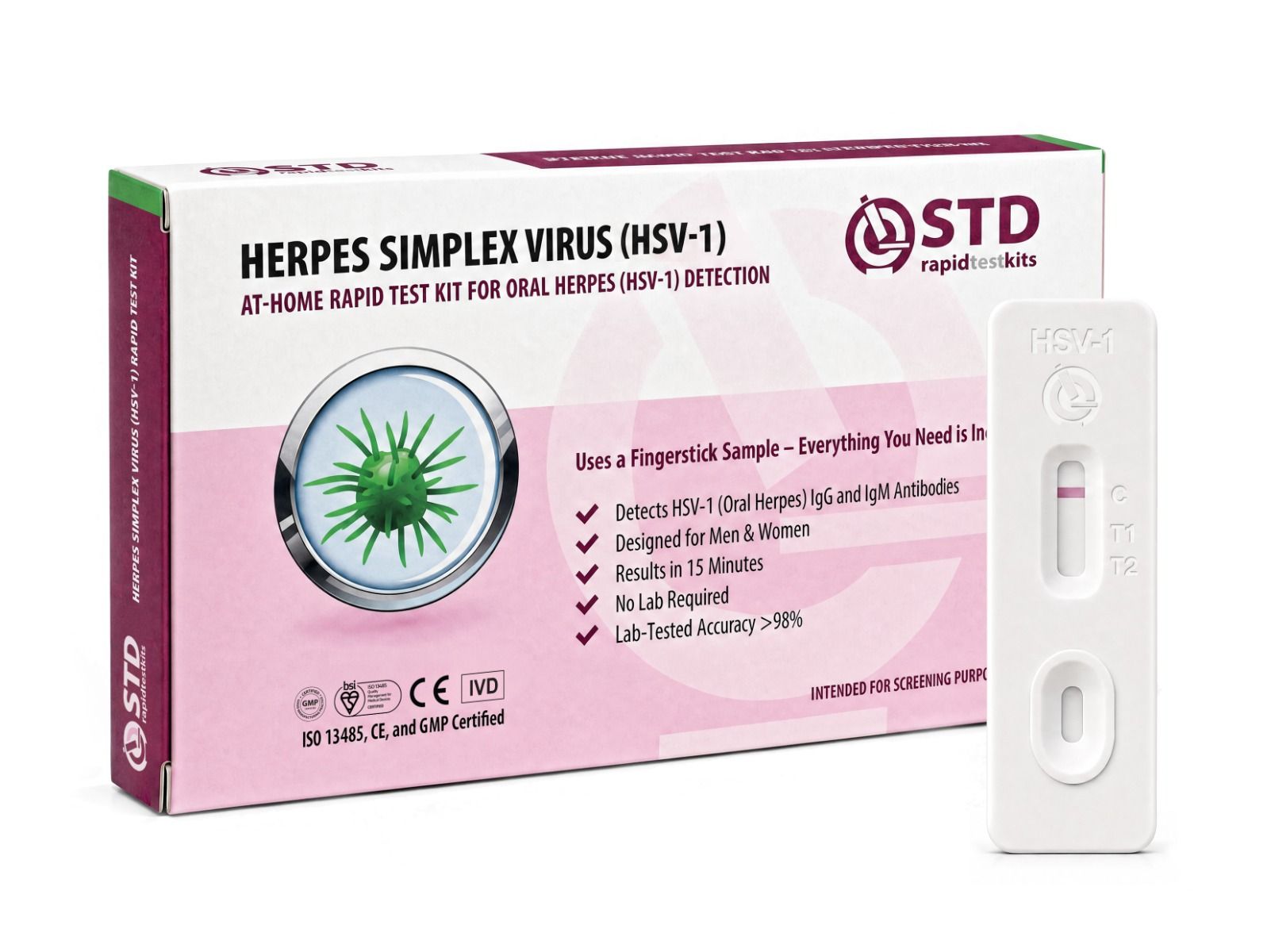
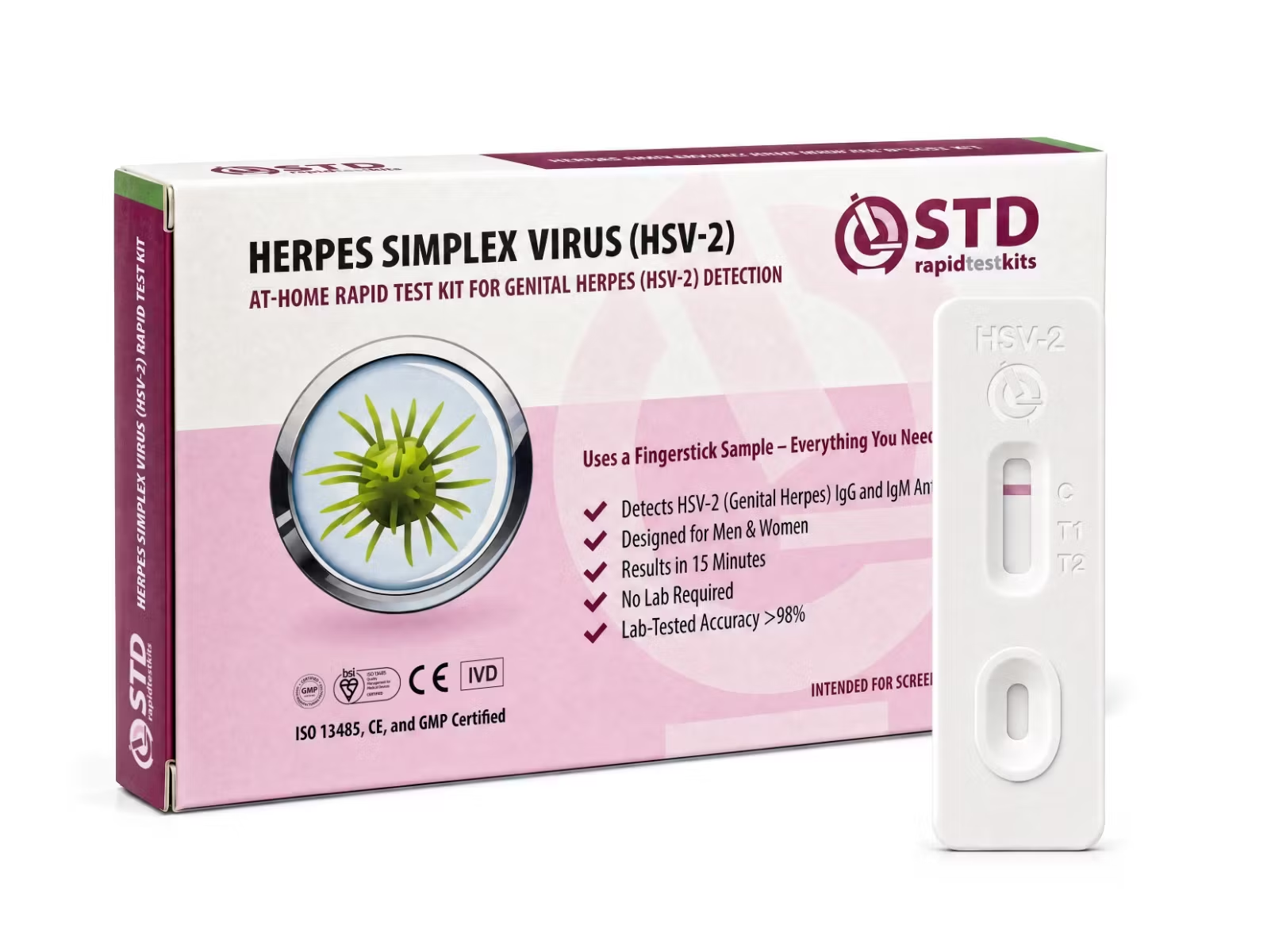
The combined HSV-1 + HSV-2 panel earlier in this article is the right choice when you want a complete picture, and the HSV-1 only kit fits when you specifically want to know about cold-sore-causing virus exposure. The HSV-2 only kit below is useful when a partner's diagnosis or a specific exposure points clearly to that virus.
- U.S. Centers for Disease Control and Prevention. Herpes testing guidance: when blood tests are appropriate, the role of PCR and viral culture in symptomatic patients, and the IgG window period.
- U.S. Centers for Disease Control and Prevention. Sexually Transmitted Infections Treatment Guidelines, Herpes section: PCR as preferred diagnostic in symptomatic patients, type-specific IgG serology, Western blot and Biokit confirmatory testing, and antiviral treatment options.
- U.S. Preventive Services Task Force. Final Recommendation Statement on Serologic Screening for Genital Herpes Infection in Asymptomatic Adolescents and Adults.
- U.S. Food and Drug Administration. Guidance to clinical laboratory staff and health care providers on HSV-2 serologic tests producing false reactive results.
- World Health Organization. Herpes simplex virus fact sheet: global prevalence estimates for HSV-1 and HSV-2.
- MedlinePlus (U.S. National Library of Medicine). Herpes (HSV) Test reference: how the test works, the up-to-three-month antibody window, and how to interpret results.
