Home Herpes Test Kit: HSV-1 vs HSV-2, Which One Do You Need?
Herpes is among the most common infections in sexual health, and most people who carry it have never been diagnosed. Whether your concern is oral or genital, the right at-home test depends entirely on the exposure route. This guide breaks down HSV-1 and HSV-2, how they differ, and which rapid test fits your situation.



- HSV-1 and HSV-2 are different viruses, and both can cause genital infection. Testing for the wrong type can return a false-clear result, so match the kit to the exposure route.
- At-home rapid blood tests detect antibodies, which take time to develop. The reliable testing window for both HSV-1 and HSV-2 is 6 weeks after exposure.
Published: November 2025 | Last updated: April 2026 | Editorial review and quality control: Martina N.
Herpes is one of the most prevalent infections in sexual health, and the majority of people carrying it have never been diagnosed. Whether you are dealing with a suspected cold sore, a genital symptom that appeared after a sexual encounter, or you simply want to know your status before a new relationship, the choice between an HSV-1 test, an HSV-2 test, and a combined panel comes down to your specific exposure route.
You are reading this because something sent you here. Whatever that something is, you are doing the right thing by looking for answers. Here is what you actually need to know.
Which home herpes test do I need, HSV-1 or HSV-2?
If your concern is oral cold sores, pick the HSV-1 test. If your concern is a genital symptom or a partner with HSV-2, pick the HSV-2 test. If oral sex was involved or you are unsure of the exposure route, the combined HSV-1 plus HSV-2 panel covers both strains in one fingerstick. All three are rapid lateral-flow blood antibody tests, with results in about 15 minutes, and reach reliable accuracy when used 6 weeks or more after exposure.
Key Takeaways
- HSV-1 and HSV-2 are different viruses, and both can cause genital infection. Testing for the wrong type can return a false-clear result, so match the kit to the exposure route.
- At-home rapid blood tests detect antibodies, which take time to develop. The reliable testing window for both HSV-1 and HSV-2 is 6 weeks after exposure.
What Is the Difference Between HSV-1 and HSV-2?
HSV-1 (herpes simplex virus type 1) is the virus traditionally responsible for oral herpes, the cold sores and fever blisters that appear on or around the lips. HSV-2 (herpes simplex virus type 2) is the virus traditionally responsible for genital herpes, the sores and blisters around the genitals, rectum, or inner thighs. Both are lifelong infections, both can shed the virus without visible symptoms, and both belong to the same herpes simplex family. They are, however, distinct viruses with different transmission patterns, different outbreak frequencies, and critically different testing needs. The location of a symptom alone cannot tell you which virus caused it. Only a type-specific test can.
HSV-1 is the older, more widespread of the two. According to the World Health Organization, an estimated 3.8 billion people under 50, around 64% of the global population, carry HSV-1. Most acquired it in childhood through non-sexual contact such as a kiss from a parent or a shared cup. In the United States, HSV-1 prevalence among adults runs between roughly 50% and 80% across age groups and demographics, per the CDC NCHS data brief on HSV prevalence. For decades, HSV-1 almost exclusively meant oral herpes. That picture is shifting, and understanding why matters for anyone choosing a test today.
HSV-2 is the virus historically linked to genital herpes. The CDC reports that genital herpes is common in the United States and is transmitted almost entirely through sexual contact. HSV-2 is more likely than HSV-1 to cause recurring genital outbreaks, and it is the strain behind the ongoing pattern of genital symptoms many people associate with herpes. It is also more likely to shed asymptomatically, which means transmission can occur without any visible sore.
| Feature | HSV-1 | HSV-2 |
|---|---|---|
| Primary location | Oral (lips, mouth, nose) | Genital (genitals, rectum, thighs) |
| Can cause genital infection? | Yes, via oral sex | Yes, primary route |
| Can cause oral infection? | Yes, primary route | Rare |
| Global prevalence (under age 50) | About 3.8 billion (64%) | About 520 million aged 15 to 49 (13%) |
| Typical acquisition route | Saliva, skin contact, often in childhood | Sexual contact, typically adult |
| Recurrence frequency | Less frequent genitally | More frequent outbreaks |
| Asymptomatic shedding | Yes | Yes, more frequent |
Can HSV-1 Cause Genital Herpes? Yes, and It Is Becoming More Common
This is the piece of information most people testing for herpes do not know, and it is increasingly important. If you have received oral sex from someone who gets cold sores, genital HSV-1 is a genuine possibility. Testing only for HSV-2 after that kind of exposure can return a completely clean result while missing the actual infection. That is a question mismatch, not a test failure.
The December 2024 WHO analysis reported that over one in five adults worldwide carry a genital herpes infection, with genital HSV-1 cases rising sharply between 2016 and 2020. The mechanism is straightforward: when someone with oral HSV-1 performs oral sex on a partner who has not previously been exposed to HSV-1, they can transmit the virus genitally, even without an active cold sore visible at the time. HSV-1 sheds asymptomatically from the mouth just as HSV-2 does genitally. In some younger populations, HSV-1 now accounts for the majority of new genital herpes diagnoses. This is a mainstream transmission route, not an edge case, and it changes which test you need.
The practical implication: anyone applying the old mental model that HSV-1 is oral and HSV-2 is genital, then testing only for HSV-2 after a genital concern, may walk away with a false negative if the exposure came from a partner with oral HSV-1. The combined HSV-1 plus HSV-2 panel removes that ambiguity by checking both strains in one test. When the transmission route involves any oral contact, both strains belong in the picture.
One important silver lining: genital HSV-1 tends to cause fewer recurring outbreaks than genital HSV-2. Some people who acquire it through oral sex have one initial outbreak and then minimal or no recurrence. The virus remains in the nervous system and can reactivate, but for most people who acquire genital HSV-1 through oral sex, the long-term symptom burden is lighter than genital HSV-2 because recurrence rates are typically lower.
If oral contact was part of your exposure, an HSV-2-only test cannot answer your question. The combined HSV-1 plus HSV-2 panel is the right tool when the exposure route is uncertain.
What Do HSV-1 vs HSV-2 Symptoms Look Like?
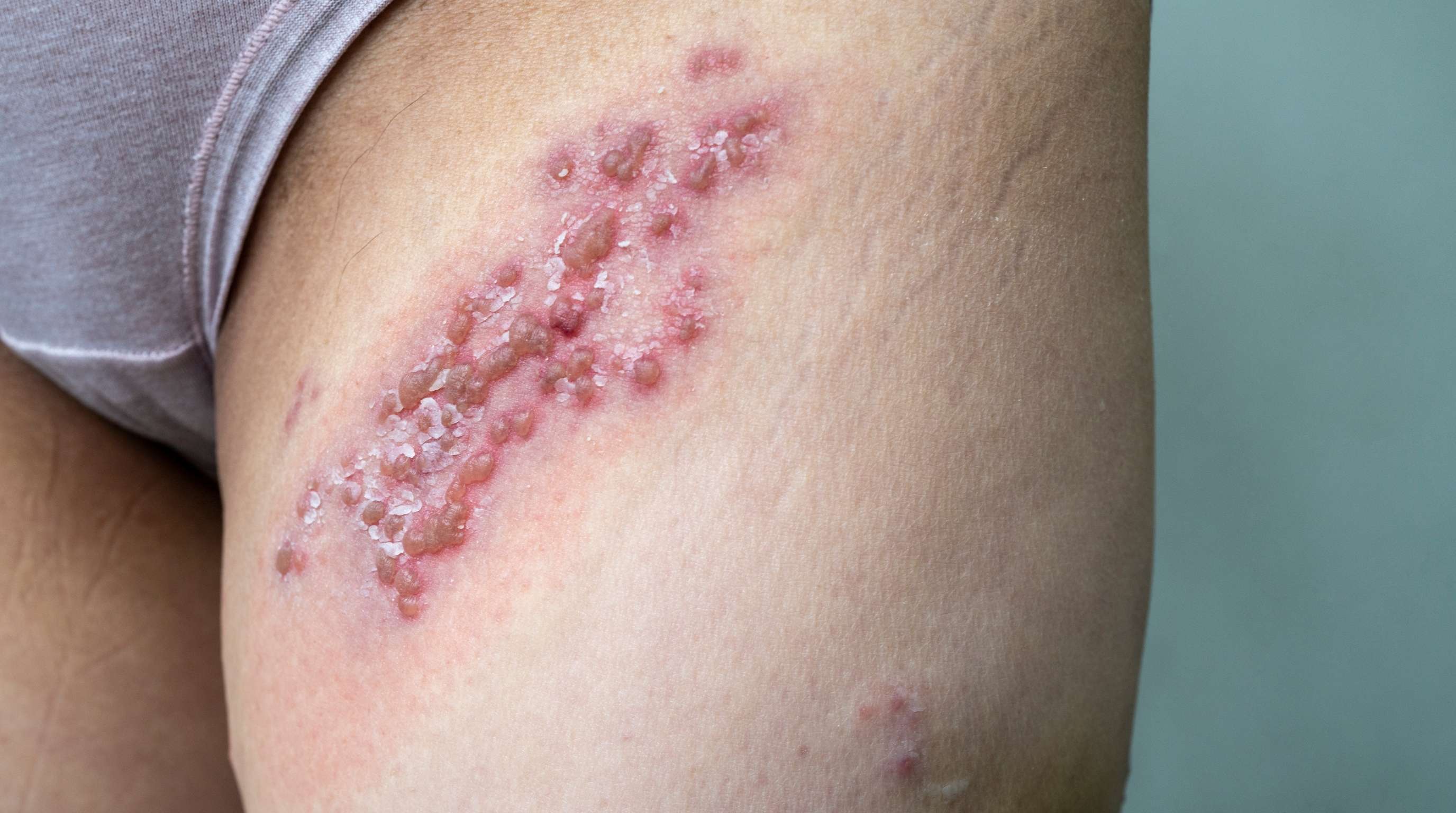
It is 2 AM, and you are on your phone, zooming in on something that was not there yesterday. You have been through three different WebMD articles and two Reddit threads, and you are somehow more confused than when you started. This is the herpes diagnosis spiral, and it is extremely common, because the symptoms genuinely overlap with a dozen other things and they vary significantly between HSV-1 and HSV-2. The short answer to whether you can reliably tell them apart by looking: usually not well enough to act on.
Oral HSV-1 typically announces itself with a tingling or burning sensation on or near the lip, followed by a cluster of small fluid-filled blisters that crust over within days. These are the classic cold sores. They may be accompanied by swollen lymph nodes or a mild flu-like feeling during a first outbreak. Subsequent outbreaks are usually milder and shorter, sometimes just a single blister that heals in under a week. Many people with HSV-1 write off mild outbreaks as chapped lips or minor skin irritation for years without connecting them to herpes at all.
Genital HSV-2 tends to produce its most intense symptoms during the first outbreak: painful blisters or open sores around the genitals, inner thighs, or rectum, sometimes accompanied by fever, body aches, and difficulty urinating. The first outbreak can last two to four weeks. Recurring outbreaks are typically shorter and less severe, and some people experience only a tingling or mild soreness with no visible sores at all. Between outbreaks, most people with HSV-2 feel completely normal, but the virus can still be shed and transmitted to partners.
Here is where it gets tricky: genital HSV-1 often produces milder symptoms than genital HSV-2, which makes it more likely to be mistaken for something else, a razor burn, an ingrown hair, a pimple. Oral HSV-2, while rare, does exist. The location of a symptom does not reliably tell you which virus caused it. A sore on the lip could theoretically be HSV-2. A blister on the genitals could easily be HSV-1.
There is also the silent carrier problem. According to the CDC, most people with genital herpes have no symptoms or only very mild ones that go completely unrecognized. This is not a small minority; it describes the majority of people carrying the infection. The virus spreads during asymptomatic shedding just as it does during an active outbreak.
Most genital herpes infections cause no symptoms or only very mild ones, and many people carry the virus without knowing it. The virus can still be passed to partners during asymptomatic shedding.
Which Home Herpes Test Kit Do You Need?
This is the question most readers arrive with, and it deserves a direct answer. The right kit depends on two things: what you are worried about, and where the potential exposure occurred.
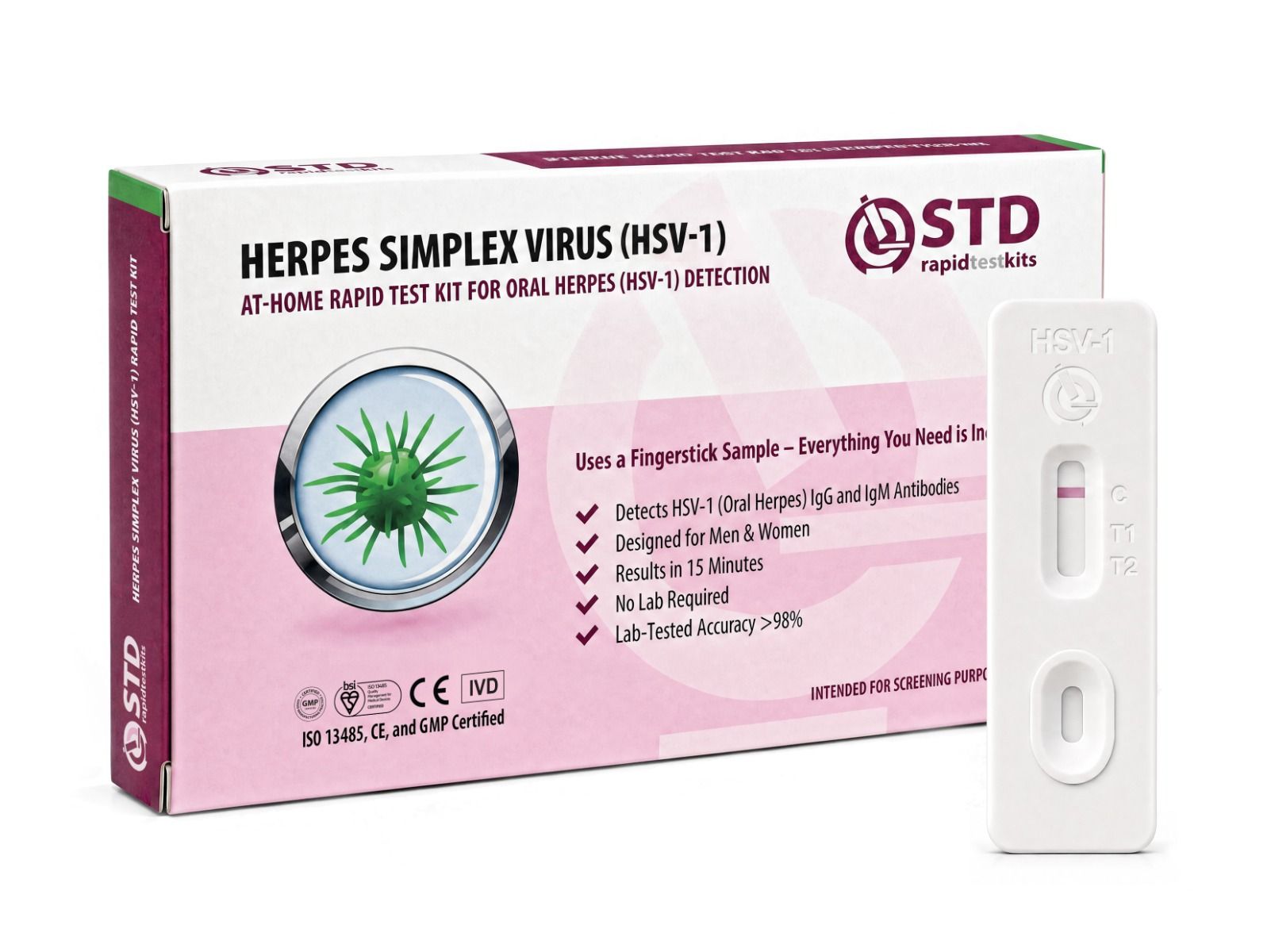
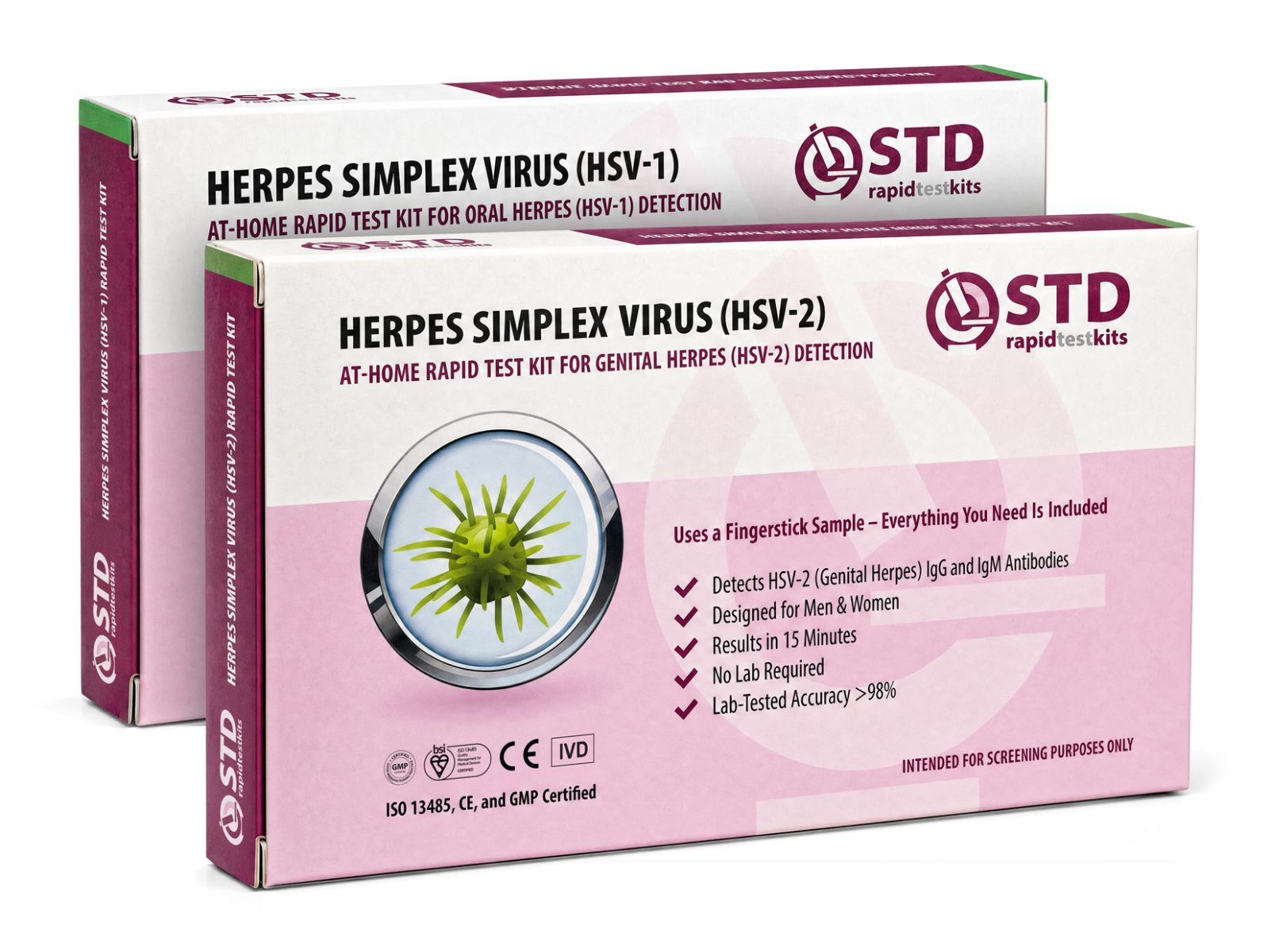
If your concern is oral herpes, a cold sore history, a recent kiss with someone who had a visible sore, or a long-standing suspicion that those lip blisters were more than chapped skin, you need an HSV-1 test. The dedicated HSV-1 rapid kit detects HSV-1 antibodies from a fingerstick blood sample and delivers results in about 15 minutes. It is the right choice when the exposure was oral and there is no reason to suspect genital involvement.
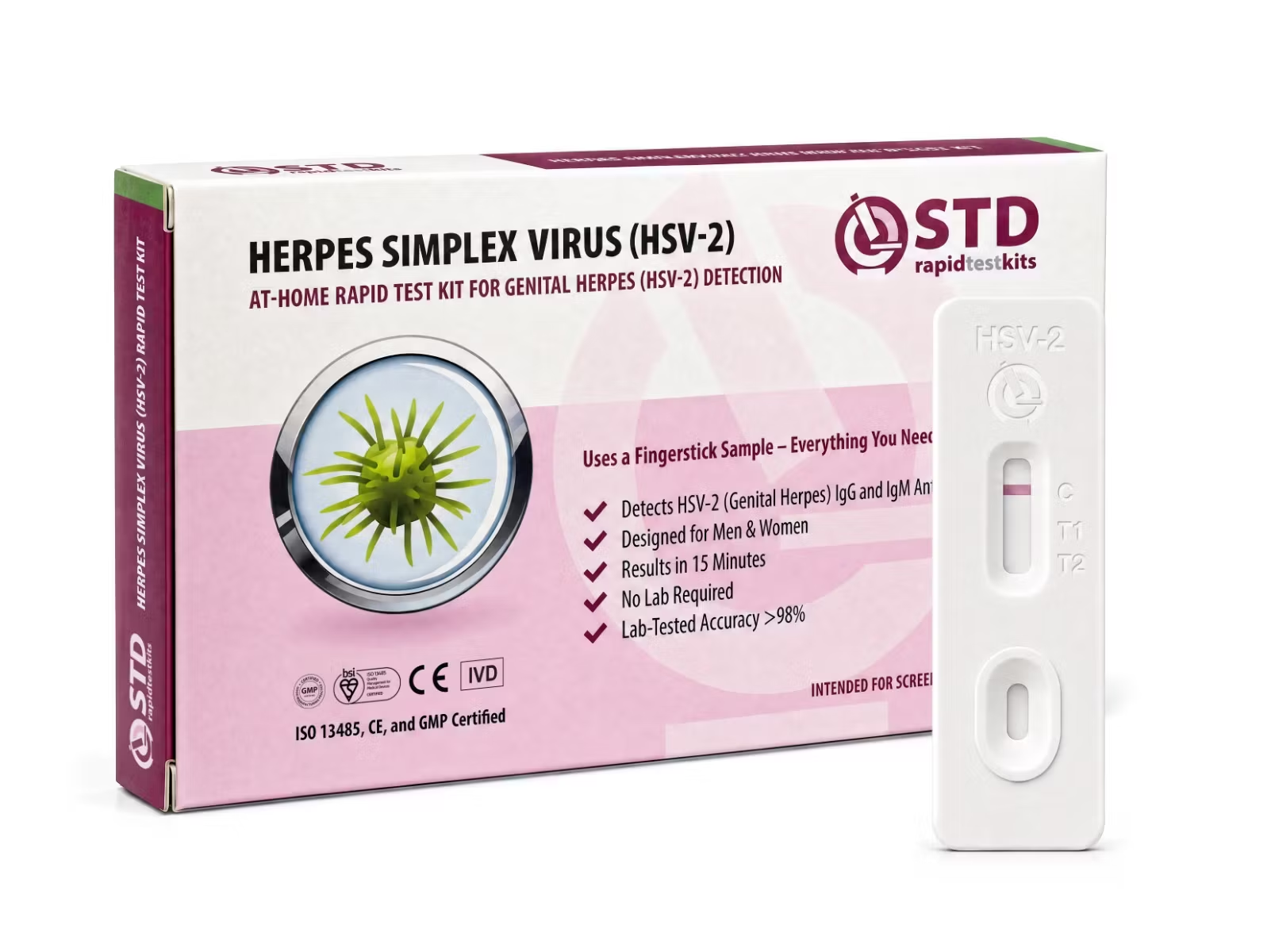
If your concern is genital herpes, a symptom that appeared after sex, a partner who disclosed HSV-2 status, or you simply want to know your baseline status before a new relationship, you need an HSV-2 test. The dedicated HSV-2 rapid kit detects HSV-2 antibodies with the same fingerstick method and gives you a clear answer about the strain responsible for the vast majority of recurrent genital infections.
| Your situation | Recommended kit | What it tests |
|---|---|---|
| Cold sore history or oral exposure only | HSV-1 rapid blood test | HSV-1 antibodies |
| Genital symptom or sexual contact exposure | HSV-2 rapid blood test | HSV-2 antibodies |
| Oral sex involved, uncertain exposure, or want full picture | Combined HSV-1 + HSV-2 panel | Both HSV-1 and HSV-2 antibodies |
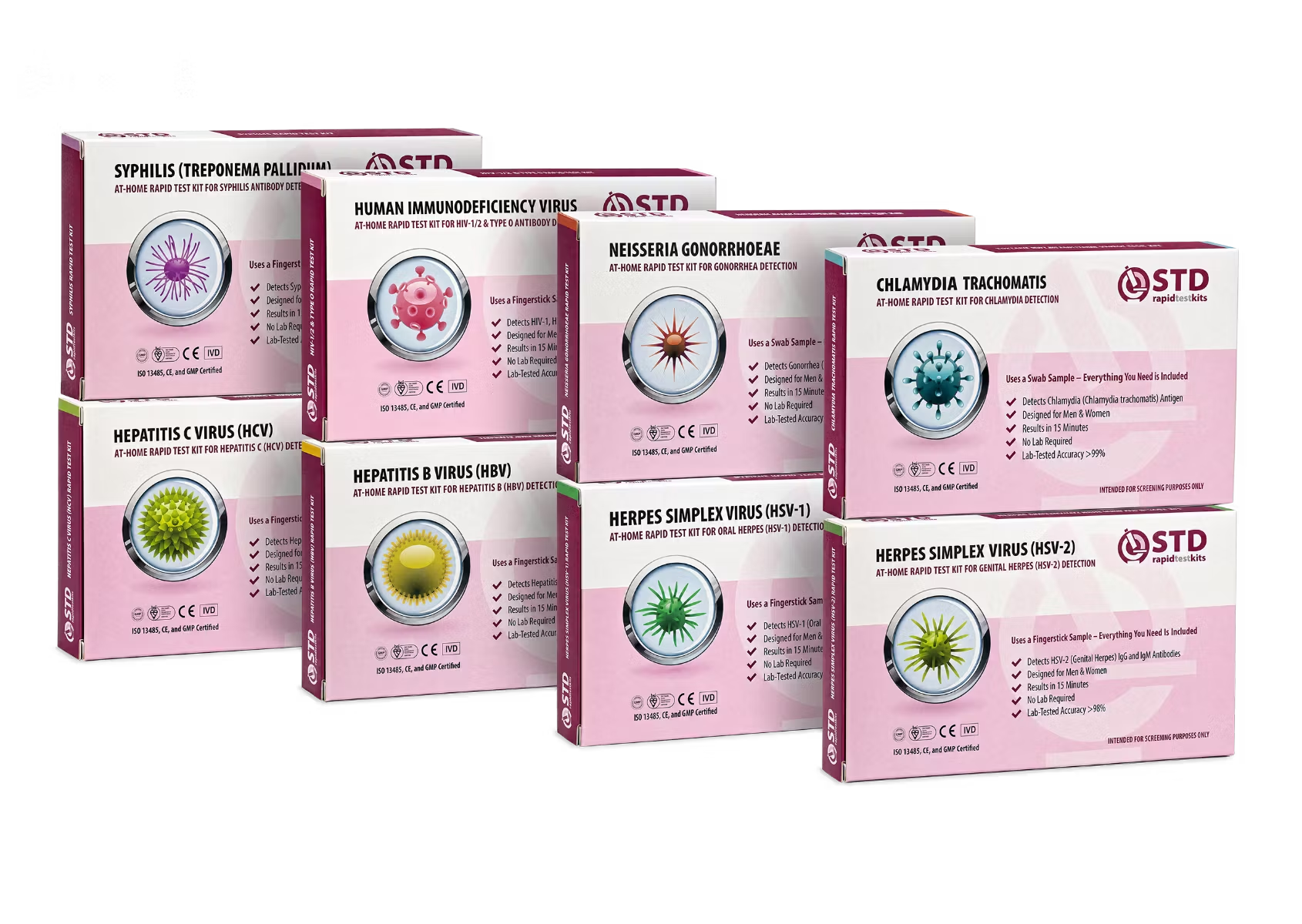
| Herpes concern plus other STI exposure | 8-in-1 multi-STI panel | Herpes plus HIV, Chlamydia, Gonorrhea, Syphilis, Hep B and Hep C |
When You Need Both Strains Tested at Once
If you are not sure which virus might be involved, perhaps a genital symptom appeared after receiving oral sex from someone who gets cold sores, or you want complete clarity, the combined panel removes the guesswork.
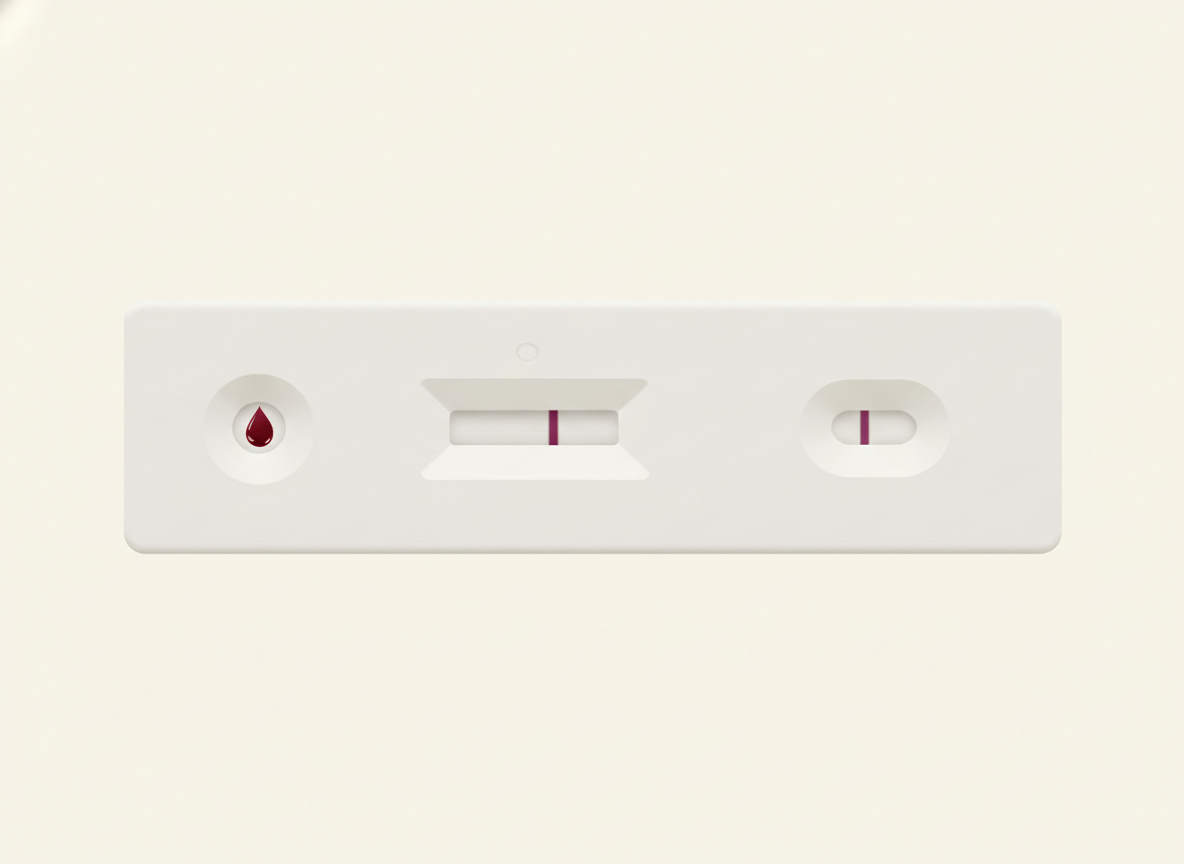
One fingerstick, independent results for both viruses within minutes. For anyone with genuine ambiguity about their exposure route, this is the test that handles both at once. And if you are concerned about other STIs alongside herpes (HIV, chlamydia, syphilis, gonorrhea, hepatitis B, and hepatitis C), the 8-in-1 panel covers everything in a single session.
How Long After Exposure Should You Test for Herpes?
Here is the piece of information most people get wrong, and it is the reason some tests come back negative despite a real exposure having occurred. Herpes rapid antibody tests detect your immune response, not the virus itself. Antibodies are the proteins your body produces in response to infection, and it takes time to build up enough of them to register on a test. Testing too soon means there may not be enough antibody signal to detect, producing a false negative even when the infection is present. This is biology, not a flaw in the test.
For both HSV-1 and HSV-2, the recommended window for at-home antibody tests is 6 weeks after exposure. At this point, antibody levels are reliably high enough for an accurate result. Testing at 3 weeks may catch some cases, but a negative at that point is not conclusive; acting on a premature negative can give a false sense of clearance that leads to unintentional transmission. If you test at 6 weeks and get a negative, that result is reliable. If you test earlier, treat any negative as preliminary and retest once the window closes.
The window matters most in two specific scenarios. First, if you have recently had oral sex with someone who has a cold sore history and are now worried about genital HSV-1, testing immediately after the encounter tells you nothing useful. Second, if a partner has just disclosed an HSV-2 diagnosis and you are unsure how long you have been exposed, the 6-week clock starts from your most recent sexual contact with them, not the date of the disclosure.
One important nuance: if you have an active sore or blister right now, a clinic can perform a swab test directly on the lesion. That method detects the virus itself, not antibodies, and can return an accurate result even in the earliest days of a first outbreak. We do not sell that swab format; for an active lesion, see a clinic. At-home rapid antibody blood tests are ideal for baseline checks, post-exposure follow-ups, and routine sexual health screening.
How Does an At-Home Herpes Test Work?
Standing in the pharmacy aisle debating whether to buy a test is a moment a lot of people know well. The box looks clinical, the instructions sound complicated, and there is always a voice in the back of your head wondering whether it is even worth doing at home or if you should just go to a clinic. Here is what actually happens when you use an at-home rapid herpes test: it is simpler than it looks.
The test requires a small blood sample from a fingerstick. A tiny lancet is included in the kit. You apply a drop of blood to the test strip, add the provided buffer solution, and wait. Within 15 to 20 minutes, the result appears on the strip in the same format as a pregnancy test, with lines indicating positive or negative. The combined HSV-1 plus HSV-2 kit runs both tests simultaneously and shows independent results for each type side by side. No lab, no waiting room, no prescription required.
The kits available at STD Rapid Test Kits are clinical, GMP, and ISO certified, manufactured to the same quality standards applied to tests used in clinical settings. The product page for each kit lists 98.2% accuracy when used after the window period and following instructions correctly. Shipping is discreet; packaging and billing carry no indication of what is inside.
At-home rapid kits use lateral-flow immunoassay chemistry, which is fast and convenient. Laboratory NAAT or PCR remains the analytical reference standard, particularly for confirmatory testing or for diagnosing an active lesion via swab. The two technologies are complementary, not equivalent. A positive at-home result is worth confirming with a clinician before disclosing to a partner.
What Do Your Herpes Test Results Mean?
The result appears on the strip and your heart rate goes up either way. A positive and a negative each come with their own follow-up questions, and understanding what each one means prevents both unnecessary panic and premature relief.
A positive HSV-1 result means your immune system has produced antibodies against HSV-1, confirming exposure to the virus at some point in your life. Given that HSV-1 is highly prevalent among U.S. adults per the CDC NCHS data brief, this is a statistically common result that does not automatically indicate a current outbreak or a genital infection. What it tells you is that the virus is in your body, that it can reactivate under stress or illness, and that oral-to-genital transmission to a partner without prior HSV-1 exposure is possible. A positive in the context of a genital concern, where you tested because of a symptom after oral sex, narrows the picture considerably and warrants a follow-up conversation with a clinician.
A positive HSV-2 result means your body has antibodies to the virus that primarily causes genital herpes. Because HSV-2 is almost exclusively sexually transmitted, this result is specific and meaningful: it confirms exposure through sexual contact. HSV-2 does not go away, but it is manageable. Most people with HSV-2 live entirely normal lives, maintain healthy relationships, and make informed decisions about disclosure and risk reduction. A positive result is the beginning of managing something, not the end of something.
A negative result at 6 weeks or beyond is reliable. If it has been fewer than 6 weeks since your potential exposure, treat the result as preliminary and retest once the window closes. False positives are uncommon at the kit's stated accuracy. If you test positive with no symptoms and no plausible exposure route, particularly for HSV-1 where general population prevalence is high, confirmatory testing with a clinician is a reasonable next step.
| Result | What it means | Recommended next step |
|---|---|---|
| Positive HSV-1 | Antibodies confirm past or present infection. Most U.S. adults carry HSV-1 from childhood, so this often indicates oral exposure rather than current illness. | Talk to a clinician if you have a current genital concern after oral sex; otherwise, note your status and manage outbreaks symptomatically. |
| Positive HSV-2 | Antibodies confirm sexual exposure to genital herpes. The infection is lifelong but manageable with antiviral medication and informed disclosure. | Speak with a clinician about suppressive antiviral options and how to discuss your status with current and future partners. |
| Negative at 6 weeks or beyond | No detectable antibodies after the window period closes. Reliable for the virus type tested. | If your exposure was unclear, consider a combined HSV-1 plus HSV-2 panel. Retest if a new exposure occurs. |
Who Should Get Tested for Herpes, Even Without Symptoms?
Most public health guidelines stop short of recommending routine herpes testing for asymptomatic adults, partly because a positive HSV-1 result is so common it rarely changes clinical management on its own, and partly because of the psychological weight of a positive result for an infection that may never cause a visible symptom. Those guidelines describe population-level policy. They do not describe your specific situation, your partner's disclosure, or the symptom that disappeared after three days and still has not left the back of your mind.
There are clear circumstances where testing makes sense regardless of symptoms. Testing is reasonable if you have had unprotected sex with a new partner and want a baseline, if a partner has disclosed an HSV diagnosis of either type, if you noticed any unusual symptom around the mouth or genitals that resolved quickly (a single mild blister that heals in a week is often exactly how a first outbreak presents), or if you and a new partner want complete information before moving forward together.
Testing is not a judgment about your behavior. It is information about your body.
Frequently Asked Questions
- Does a herpes test show which type, HSV-1 or HSV-2?
- It depends on the kit. The HSV-1 rapid kit tests only for HSV-1 antibodies. The HSV-2 rapid kit tests only for HSV-2. The combined HSV-1 plus HSV-2 kit detects both and displays independent results for each type. A generic antibody test that does not specify which strain it targets will not tell you which virus you have.
- Can you get genital herpes from someone with a cold sore?
- Yes, and this is increasingly how genital herpes spreads in younger populations. When someone with oral HSV-1 performs oral sex on a partner who has not previously been exposed to HSV-1, they can transmit the virus genitally, even without an active cold sore at the time. If this describes your exposure, the combined HSV-1 plus HSV-2 kit is the correct test; an HSV-2-only test will miss it.
- How long after unprotected sex should I test for herpes?
- Wait 6 weeks from your last potential exposure. Testing earlier may produce a negative result even if you have been infected, because antibody levels may not yet be detectable. At 6 weeks the result is reliable. A negative at 3 weeks should be treated as preliminary and confirmed with a second test at the 6-week mark.
- I tested negative for HSV-2. Does that mean I do not have genital herpes?
- A negative HSV-2 result at 6 weeks or beyond is reliable for HSV-2, but it tells you nothing about HSV-1. If your exposure involved oral sex with a partner who has cold sores, a negative HSV-2 result does not rule out genital HSV-1. To get the full picture after any ambiguous exposure, use the combined HSV-1 plus HSV-2 kit.
- Can I transmit herpes if I do not have symptoms?
- Yes. Both HSV-1 and HSV-2 shed during asymptomatic periods, meaning transmission is possible without any visible sore or blister. This is one of the main reasons herpes is so widespread: most people who spread it have no idea they are doing so. Knowing your status is the most effective way to make informed decisions about transmission risk.
- How accurate are at-home herpes rapid tests?
- The herpes test kits at STD Rapid Test Kits report 98.2% accuracy for both HSV-1 and HSV-2 when used after the 6-week window period. They are clinical, GMP, and ISO certified. These are rapid lateral-flow immunoassays, not laboratory NAAT, and a positive result is worth confirming with a clinician, especially before disclosing to a partner.
- Can I test during an active outbreak?
- If you have an active sore or blister, a clinic-administered swab test on the lesion is the most accurate option, because it detects the virus itself rather than antibodies. We do not sell that swab format; for an active lesion, see a clinic. The at-home blood test is best for screening between outbreaks, post-exposure follow-up, and baseline checks.
- What should I do if I test positive for herpes?
- Take a breath first. A positive result is a diagnosis, not a verdict on your life or your relationships. Millions of people live with herpes, most in healthy, fulfilling relationships with managed symptoms or none at all. The practical next steps are talking to a clinician about what the result means for you and understanding how to reduce transmission risk with current and future partners.
Find the Right Kit and Test Today
Herpes is not a one-size-fits-all diagnosis, and neither is testing for it. The most important step is choosing a test that actually answers the question you are asking, not a generic kit that leaves the strain ambiguous. Whether your concern is HSV-1, HSV-2, or both, testing is the only way to replace a guess with a real answer.
- World Health Organization. Herpes simplex virus fact sheet. Source for global prevalence figures (3.8 billion HSV-1 carriers under age 50, around 520 million HSV-2 carriers aged 15 to 49) and asymptomatic shedding mechanism.
- World Health Organization news release, December 2024. Over 1 in 5 adults worldwide has a genital herpes infection. Source for the rising genital HSV-1 trend cited in the comparison section.
- U.S. Centers for Disease Control and Prevention. About Genital Herpes. Source for asymptomatic shedding messaging, transmission framing, and the general prevalence of genital herpes in the United States.
- U.S. Centers for Disease Control and Prevention, NCHS Data Brief. Prevalence of HSV-1 and HSV-2 in the United States. Source for the U.S. adult HSV-1 prevalence range cited in the introductory comparison.
- NHS. Genital herpes overview. Reader-facing reference for first-outbreak duration, recurrence pattern, and clinic-administered swab testing of active lesions.