







Last updated: March 2026
Wondering how often you should get tested for STDs? The answer isn’t one-size-fits-all. Your testing schedule depends on your sex life, recent exposures, and how different infections behave in the body. This guide breaks down exactly what to test for, when to do it, and why timing matters more than most people realize.
If you’ve ever found yourself lying in bed after a hookup, replaying everything and wondering, “Do I need a test now… or later?”, you’re not alone. STD testing isn’t just about whether something feels off. It’s about understanding how infections develop, when they become detectable, and how often your lifestyle puts you at risk. Once you understand that, the whole process gets a lot less confusing.
The short answer is that there is no one "right" frequency for STD testing for everyone. You should get tested based on your level of sexual activity, number of partners, and timing of potential exposure. For some people, that means once a year. For others, it means every 3 months. The key is matching your testing schedule to real risk, not guessing or waiting for symptoms.
People are also reading: Why Early STD Tests Can Miss the Infection
How Often Should You Get Tested for STDs? (The Real Answer Depends on This)
The biggest misconception about STD testing is that it follows a universal rule, like a yearly check-up. In reality, your testing frequency depends on how often your body is exposed to potential infections. STDs don’t appear randomly; they require a transmission event, and each new partner or unprotected encounter resets that risk.
Think about a common situation: you meet someone new, things move quickly, and protection isn’t consistent. A few days later, nothing feels wrong physically, but mentally, the questions start stacking up. This is exactly where timing matters. Most infections don’t show symptoms right away, and more importantly, they aren’t immediately detectable on tests either.
Biologically, infections like chlamydia and gonorrhea need time to replicate inside mucosal cells before a test can detect their genetic material. Viruses like HIV or hepatitis trigger immune responses that take weeks to produce measurable antibodies. That’s why testing too early can give you a false sense of security, not because you’re “fine,” but because your body hasn’t reached detectable levels yet.
So instead of asking, “How often should I get tested?” the better question is: “How often am I potentially exposed?” That shift changes everything. Testing becomes a strategy, not a routine.
Your STD Testing Frequency Based on Real-Life Scenarios
Your lifestyle is the single biggest factor in determining how often you should get tested for STDs. Not your age, not your gender, your actual sexual behavior. The difference between one long-term partner and multiple new partners over a few months is a completely different biological risk profile.
For example, if you’re in a mutually monogamous relationship where both partners tested negative and no new exposures occur, your risk remains low. In that case, testing once a year or only when something changes is usually sufficient. But the moment a new partner enters the picture, that risk resets, even if everything feels completely normal.
Now picture someone who has a lot of partners in a short amount of time. Every new partner brings with them a new possible chain of exposure. Even if every encounter feels “safe,” infections can still pass through oral sex, skin contact, or imperfect condom use. In those cases, testing every 3 months isn’t excessive, it’s aligned with how infections actually spread.
| Situation | Recommended Testing Frequency |
|---|---|
| Monogamous relationship (both tested) | Once per year or after any new risk |
| New partner | Test after appropriate window period |
| Multiple partners | Every 3 months |
| Unprotected sex | Test based on exposure timing |
| Symptoms present | Test immediately + follow-up if needed |
One thing people often underestimate is how common asymptomatic infections are. According to the CDC, a large percentage of chlamydia and gonorrhea cases show no noticeable symptoms at all, which means relying on how you feel is unreliable at best. That’s why routine STD screening becomes important, not because something is wrong, but because something could be silent.
This is also where consistency matters. Testing once after a risky encounter is helpful, but building a predictable rhythm, especially if your lifestyle includes ongoing exposure, is what actually protects your health long-term.
Check Your STD Status in Minutes
Test at Home with Remedium6-in-1 STD Test Kit
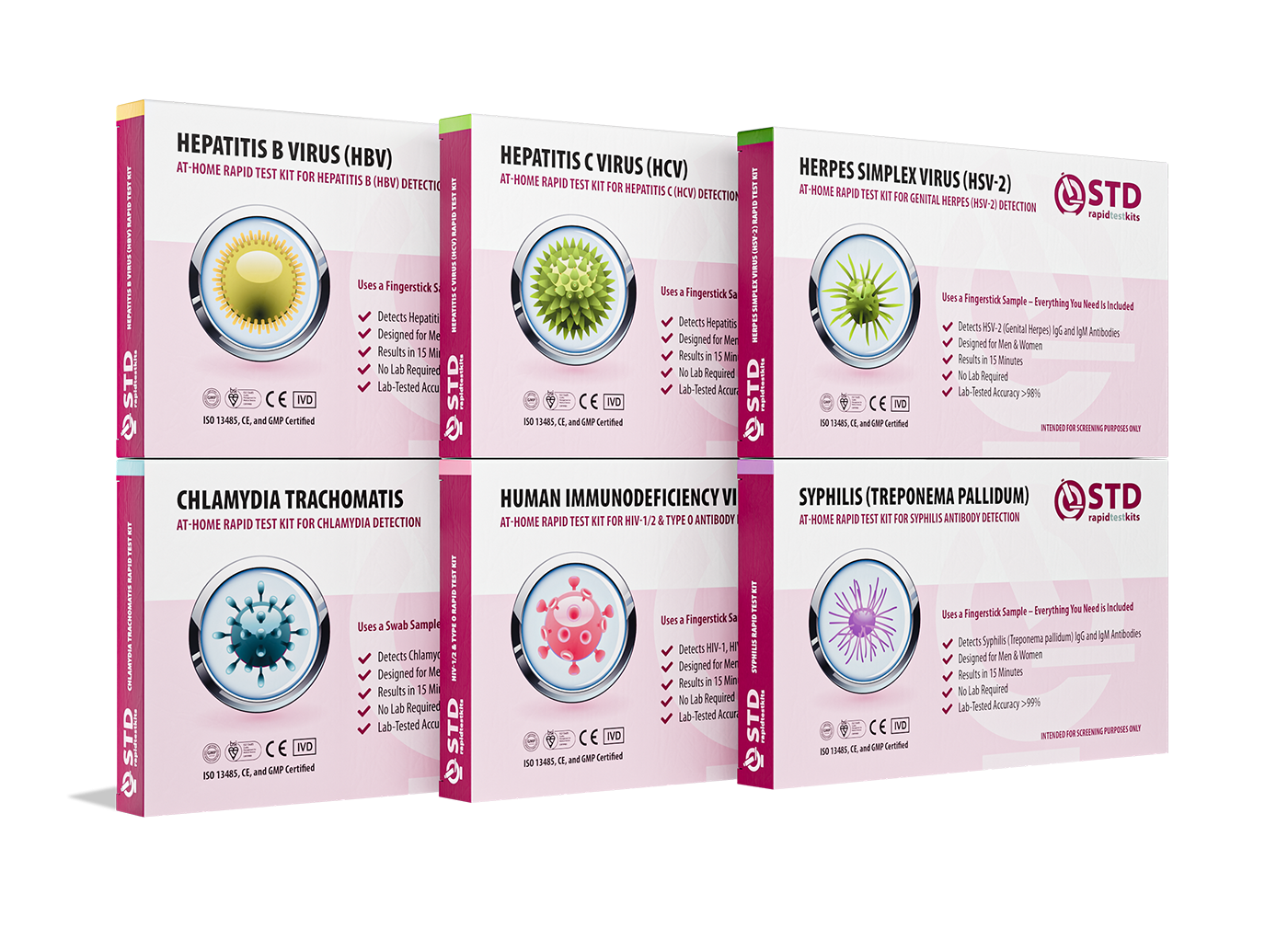
 For Men & Women
 Results in Minutes
 No Lab Needed
 Private & Discreet
Order Now $119.00 $294.00
For all 6 tests
What STD Tests Do You Actually Need? (Not All Panels Are Equal)
Another major source of confusion is what an “STD test” actually includes. A lot of people assume it’s one single test that checks for everything. It’s not. Different infections require completely different testing methods, and missing the right test means missing the infection entirely.
NAAT (nucleic acid amplification tests) are the most common way to find bacterial infections like chlamydia and gonorrhea. These tests look for the DNA of the bacteria in urine samples or swabs. They're very sensitive, but only after the bacteria has made enough copies of itself to be found.
Blood tests, on the other hand, can find infections like HIV, syphilis, herpes, and hepatitis. Most of the time, these don't find the virus or bacteria directly. Instead, they look at how your immune system reacts, like by looking at antibodies or antigens. That's why they need longer windows of time. Before the test can find anything, your body needs time to react.
| STD | Test Type |
|---|---|
| Chlamydia | NAAT (urine or swab) |
| Gonorrhea | NAAT (urine or swab) |
| HIV | Blood test (antigen/antibody) |
| Syphilis | Blood test (antibody detection) |
| Herpes (HSV-1 & HSV-2) | Blood test (antibodies) |
| Hepatitis B & C | Blood test |
This distinction matters more than most people realize. If you only take a urine test, you’re not testing for HIV or syphilis. If you only take a blood test, you’re not checking for chlamydia or gonorrhea. A complete screening requires both, especially if you want real clarity instead of partial answers.
This is exactly why comprehensive at-home kits have become a practical option. Instead of guessing which tests you need, you can use a full-panel kit that covers both bacterial and viral infections in one go. If you want a simple starting point, you can check available options here: https://www.stdrapidtestkits.com/combo-tests. It’s one of the easiest ways to make sure you’re not missing something important.
At-Home STD Testing: What to Test, When to Test, and How to Read Results
This is the part most people actually care about, what test to take, when to take it, and what the result really means. Because this is where a lot of confusion (and false reassurance) happens. Testing isn’t just about doing it, it’s about doing it at the right time with the right method.
First, the type of test matters. For bacterial infections like chlamydia and gonorrhea, you’re looking for a NAAT test, which detects the genetic material of the bacteria. These are typically done through urine samples or swabs. For viral infections like HIV, syphilis, herpes, and hepatitis, you need blood tests, which measure your immune system’s response to infection. If you skip one category, you’re not getting a full picture.
Now here’s the part most people get wrong: timing. Your body needs time to reach detectable levels after exposure. Testing too early doesn’t mean you’re clear, it just means the test couldn’t detect anything yet.
Use this exact timing guide:
- Chlamydia: test from 14 days after exposure
- Gonorrhea: test from 3 weeks after exposure
- Syphilis: test from 6 weeks after exposure
- HIV: test at 6 weeks for first indicator, retest at 12 weeks for certainty
- Herpes HSV-1 and HSV-2: test from 6 weeks after exposure
- Hepatitis B: test from 6 weeks after exposure
- Hepatitis C: test from 8–11 weeks after exposure
Here’s what a negative result actually means: if you test within the correct window period and the result is negative, it’s strong evidence that you are not infected. But if you test too early, before those timeframes, a negative result is not reliable. That’s what’s known as a false negative, and it’s one of the most common mistakes people make when they panic-test right after exposure.
A positive result, on the other hand, means the infection has been detected. It’s not a “maybe”, it indicates that the bacteria or your immune response to a virus is present in your body. The next step is confirmation (if required) and treatment or medical follow-up. The key point is clarity: you’re no longer guessing.
Retesting is sometimes necessary because of how infections develop. If your first test happens before your body reaches detectable levels, a follow-up test ensures accuracy. This is especially important for infections like HIV, where early testing gives an initial signal, but a second test at 12 weeks confirms the final result with certainty.
If you want a straightforward way to cover all major infections in one step, a full-panel kit is the most efficient option. You can explore a complete range of options here: https://www.stdrapidtestkits.com/combo-tests. It removes the guesswork and gives you a complete answer instead of partial reassurance.
Why Testing Too Early (or Too Late) Changes Your Results
One of the most frustrating things about STD testing is that your timeline and your body’s timeline are not the same. You might want immediate answers the day after sex, but biologically, that’s not how infections work.
When an infection enters the body, it doesn’t instantly become detectable. Bacteria like chlamydia first attach to cells and begin replicating. Viruses like HIV cause the immune system to respond, and this response builds over time. Tests use these biological processes to find either the organism itself or how your body reacts to it. If neither has reached a detectable level yet, the test simply can’t pick it up.
This is why someone can test negative at day 5 and positive at week 3, not because they “just got infected,” but because the infection finally reached detectable levels. According to the CDC, proper timing is essential for accurate screening, especially for asymptomatic infections.
There’s also a second issue people don’t think about as often: testing too late. If someone waits months after a risky exposure, infections may have already progressed or been unknowingly transmitted to others. Early detection isn’t just about peace of mind, it’s about interrupting that chain.
A common real-life moment: you wake up a few days after a new encounter, feel completely normal, and decide to test immediately just to be safe. The result comes back negative, and you relax. But in reality, you’ve tested before the detection window. That result didn’t confirm anything, it just arrived too early to be useful.
The takeaway is simple but important: timing isn’t a technical detail. It’s the difference between clarity and false reassurance.

People are also reading: Woke Up with Discharge from Your Penis? Here’s What Might Be Happening
Routine STD Screening vs “Something Feels Off” Testing
There are two main reasons people get tested: something feels off, or nothing feels off at all. Surprisingly, the second one is often more important.
When symptoms show up, burning during urination, unusual discharge, sores, rashes, your body is signaling that something has already developed. In that case, testing should happen immediately, followed by any necessary retesting depending on the infection timeline.
But here’s the part that catches most people off guard: many STDs don’t cause noticeable symptoms at all. Chlamydia, for example, is frequently asymptomatic, especially in women. Gonorrhea can also go unnoticed. Even HIV can go through an early phase with mild or easily ignored symptoms. According to the World Health Organization, millions of infections remain undiagnosed specifically because people rely on symptoms that never appear.
This is why people get tested for STDs on a regular basis. It's not about responding; it's about staying ahead. If your lifestyle includes ongoing exposure, regular testing ensures that nothing goes undetected for long periods.
Think of it like this: waiting for symptoms is like waiting for your car to break down before checking the engine. Routine testing is maintenance. It keeps things predictable, controlled, and far less stressful in the long run.
And importantly, routine testing removes the emotional layer. Instead of testing because you’re worried, you’re testing because it’s part of how you take care of your health. That shift alone makes the entire experience feel less intimidating.
How to Build a Personal STD Testing Schedule That Actually Makes Sense
You probably know by now that there isn't one rule that works for everyone, and that's a good thing. You can make a testing schedule that works for you instead of following a generic rule that doesn't fit your behavior.
The key is combining three factors: how often you have new partners, what kind of sex you’re having (oral, vaginal, anal), and when your last potential exposure happened. These aren’t abstract ideas, they directly influence how often your body might encounter an infection and when that infection becomes detectable.
For example, if your sex life includes occasional new partners every few months, testing every 3–6 months keeps you aligned with your actual exposure risk. If you’re in a steady relationship with no outside exposure, once a year or testing only when something changes is usually enough. And if you’ve had a specific risk event, like unprotected sex, then your testing schedule temporarily shifts to match the window periods we covered earlier.
This is also where people often overcomplicate things. You don’t need to memorize every infection timeline. You just need to remember one principle: test based on your last exposure, then maintain a rhythm based on your lifestyle.
If you want to keep things simple, many people use a quarterly approach, every 3 months, especially if they’re sexually active with different partners. It lines up well with most testing windows and removes the guesswork of “should I test now or wait?” It becomes automatic, like any other health routine.
And if convenience is the barrier, which it often is, at-home testing removes that friction completely. Instead of delaying because of appointments or awkward conversations, you can handle everything privately. You can explore full screening options here: https://www.stdrapidtestkits.com/combo-tests. It’s one of the easiest ways to stay consistent without disrupting your routine.
What Happens If You Don’t Test Regularly?
This is the part most people don’t think about until later, not testing doesn’t mean nothing is happening. It just means you don’t have visibility into what’s happening.
Many STDs are completely asymptomatic for long periods. That means an infection can be present, active, and transmissible without causing any noticeable symptoms. During that time, it can also progress internally. For example, untreated chlamydia can lead to complications affecting reproductive health, even if it never caused obvious discomfort at the start.
There’s also the relationship factor. If you’re not testing regularly, you’re relying on assumptions, about yourself and your partners. And while trust matters, biology doesn’t operate on trust. It operates on exposure and transmission.
A common situation: someone feels fine for months after a few new partners, assumes everything is okay, and skips testing. Then later, a routine check finally happens, and something shows up. At that point, the question becomes not just “What do I have?” but “How long has this been there?”
Regular testing removes that uncertainty. It shortens the timeline between exposure and clarity. And that matters, not just medically, but mentally. The longer you go without testing, the more unknowns build up in the background.
Testing isn’t about expecting something to be wrong. It’s about not leaving things to chance.
Check Your STD Status in Minutes
Test at Home with Remedium7-in-1 STD Test Kit
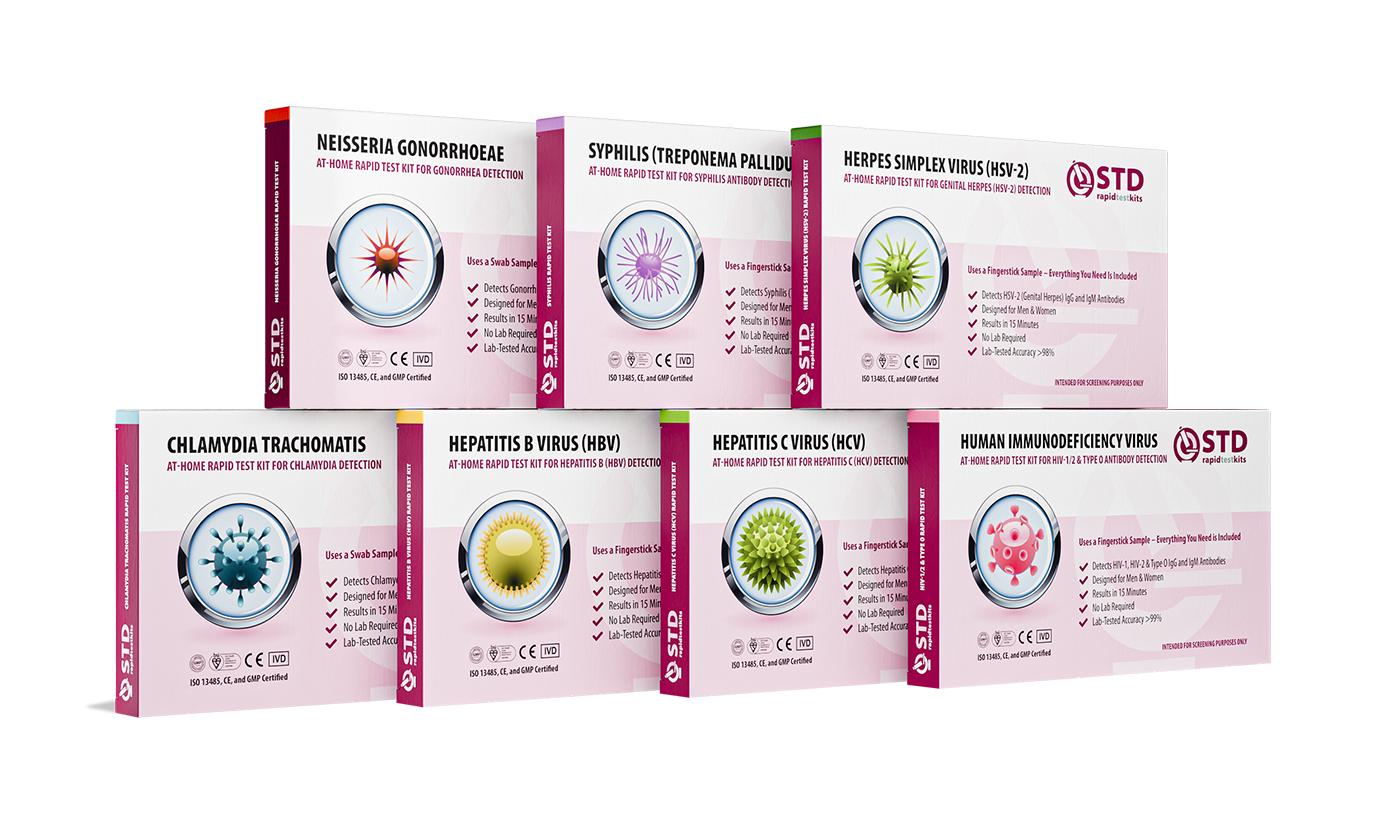 For Men & WomenResults in MinutesNo Lab NeededPrivate & Discreet
Order Now $129.00 $343.00
For all 7 tests
Why STD Testing Is Less About Fear, and More About Control
There’s a reason STD testing feels emotionally loaded for a lot of people. It’s tied to vulnerability, uncertainty, and the fear of finding something you weren’t expecting. But when you strip all that away, testing is actually one of the most straightforward health decisions you can make.
It gives you information. That’s it. And that information puts you in control, of your health, your decisions, and your relationships.
When you know your status, you’re not guessing. You’re not relying on symptoms that may never show up. You’re not stuck in that mental loop of “what if.” You have a clear answer, and you can act on it if needed.
This is why more people are shifting toward routine testing as a normal part of their lifestyle. Not because they’re worried all the time, but because they don’t want uncertainty lingering in the background.
And honestly, once you’ve done it a couple of times, it becomes just another form of self-care. Like going to the gym, getting a dental check-up, or tracking your sleep. It stops being a big deal, and starts being a smart habit.
If you’re reading this because something happened recently or you’re just overdue for a check, the next step is simple: get tested at the right time, with the right tests, and give yourself a clear answer.
That’s the whole goal here, clarity.
FAQs
1. So… how often should I actually get tested for STDs?
If your sex life includes new or multiple partners, every 3 months is a solid rhythm. It lines up with how often new exposures can happen and gives your body enough time to show accurate results. If you’re in a stable, mutually monogamous relationship, once a year, or when something changes, is usually enough.
2. Do I really need to test after every new partner, even if everything felt “safe”?
Yes, in short. Infections can still spread through oral sex, skin contact, or times when protection wasn't perfect, even when things seem safe. Testing after a new partner isn’t about paranoia, it’s about closing the loop with certainty.
3. What if I feel completely fine, do I still need testing?
This is where most people get caught off guard. Many STDs don’t cause symptoms at all, especially early on. So feeling “normal” doesn’t actually tell you much. Testing is the only way to know what’s happening beneath the surface.
4. How soon after sex can I get tested without messing up the result?
This is all about timing. For example, chlamydia becomes detectable around 14 days, while HIV needs at least 6 weeks for an initial result. Testing too early is one of the most common mistakes, it can come back negative even if an infection is present but not yet detectable.
5. What does a full STD panel actually include?
A proper full panel checks for chlamydia and gonorrhea (via NAAT tests), plus HIV, syphilis, herpes, and hepatitis through blood tests. If a test only covers one category, like urine only, you’re not getting the full picture.
6. Is testing every 3 months overkill?
Not at all, in fact, it’s one of the most practical schedules if you have ongoing exposure. Think of it less like reacting to risk and more like staying ahead of it. It keeps things simple and predictable.
7. What happens if I test too early because I panicked?
Honestly, a lot of people do this. You get anxious, test right away, see a negative result, and feel relieved. But if it’s before the detection window, that result doesn’t actually mean much. In that case, retesting at the correct time is what gives you a real answer.
8. Should couples get tested even if they trust each other?
Yes, and not because trust is an issue. Testing is about biological certainty. A lot of couples choose to test together at the start of a relationship so they both know exactly where they stand, without assumptions.
9. Are at-home STD tests actually reliable?
When used correctly and at the right time, yes. The key is making sure the test includes both NAAT (for bacterial infections) and blood testing (for viral infections), and that you follow the timing guidelines. Done properly, they’re a very effective option.
10. If a test comes back positive, what does that really mean for me?
It means you have a clear answer, which is actually a good place to be. A positive result confirms the infection is present, so the next step is medical follow-up and treatment or management. The important part is you’re no longer guessing, and you can take action immediately.
Take Control of Your STD Testing Schedule
The hardest part about STD testing is usually the uncertainty, not knowing when to test, what to test for, or whether you’re doing it right. Now you have that clarity. Testing isn’t random, and it’s not something you have to overthink. It’s a simple process once you understand the timing and your personal risk.
If you want a complete, no-guesswork option, you can explore full-panel kits that cover all major infections in one place. Start here: https://www.stdrapidtestkits.com/combo-tests. For more options, including individual tests, you can also visit the homepage: https://www.stdrapidtestkits.com/.
Getting tested doesn't mean you think something is wrong. It's about being sure of where you stand and making choices from a place of confidence instead of doubt.
How We Sourced This: Our article was constructed based on current advice from the most prominent public health and medical organizations, and then molded into simple language based on the situations that people actually experience, such as treatment, reinfection by a partner, no-symptom exposure, and the uncomfortable question of whether it “came back.” In the background, our pool of research included more diverse public health advice, clinical advice, and medical references, but the following are the most pertinent and useful for readers who want to verify our claims for themselves.
Sources
1. CDC STD Screening Recommendations
5. STD Testing (Planned Parenthood)
6. Getting Tested for STIs (CDC)
7. Sexually Transmitted Diseases (STDs) (NICHD)
About the Author
Dr. F. David, MD is a board-certified infectious disease specialist focused on STI prevention, diagnosis, and treatment. He writes with a direct, sex-positive, stigma-free approach designed to help readers get clear answers without the panic spiral.
Reviewed by: Rapid STD Test Kits Medical Review Team | Last medically reviewed: March 2026
This article is for informational purposes and does not replace medical advice.


