







Quick Answer: You can get HPV without sex because it spreads through skin-to-skin contact, not just penetration. Activities like genital touching, oral sex, and even close friction can transmit the virus. Penetration is not required.
This Is the Part Most People Get Wrong About HPV
HPV, short for human papillomavirus, isn’t like infections that require fluid exchange. It doesn’t need semen, vaginal fluids, or blood to move from one body to another. It spreads through direct skin contact, especially in areas where the virus lives: the genitals, anus, mouth, and throat.
That means the idea that “no penetration = no risk” just doesn’t hold up. It’s a myth that’s been quietly passed around for years, often because sex education focuses heavily on intercourse and barely touches everything else people actually do.
A lot of people don’t realize this until after a moment that didn’t feel like “real sex.” And by then, the question isn’t theoretical anymore, it’s personal.
“I kept thinking, ‘But we didn’t go all the way.’ That was my safety net. Finding out that didn’t matter? That messed with me.”
How HPV Actually Spreads (And Why It’s So Easy to Miss)
HPV spreads through contact with infected skin, even when there are no visible symptoms. No sores, no warts, nothing obvious. That’s part of what makes it so common, and so misunderstood.
Here’s what matters: if HPV is present on the skin, and that skin touches another person’s vulnerable area, transmission can happen. It’s that simple, and that frustrating.
| Activity | HPV Risk Level | Why |
|---|---|---|
| Vaginal or anal sex | High | Direct genital contact with friction |
| Oral sex | Moderate | Mouth-to-genital contact can transmit oral HPV |
| Genital touching (hands) | Low to Moderate | Possible if virus transfers via skin contact |
| Grinding / dry humping | Moderate | Skin-to-skin friction without penetration |
| Kissing | Very Low | Rare unless oral HPV is present |
The key takeaway here is that HPV doesn’t care how you define sex. It only cares about contact.
And because most people with HPV don’t have symptoms, you usually don’t know when exposure happens. There’s no obvious “moment” where you can point and say, “That’s when it happened.”

People are also reading: Can Vaccines Reactivate Herpes or HIV? Immune Facts vs Fear
Real-World Moments That Catch People Off Guard
This is where things start to click for people, when you move out of theory and into actual situations.
Javier, 22, had never had penetrative sex. He described himself as “careful,” someone who stayed within what he thought were safe boundaries. Mostly oral, some touching, nothing beyond that.
“I thought I was doing everything right. I even avoided intercourse because I didn’t want to risk anything. Then I got told I might have HPV, and I genuinely didn’t understand how.”
His experience isn’t unusual. It’s actually one of the most common emotional patterns around HPV: confusion first, then disbelief, then a slow realization that the rules were never what you thought they were.
Another scenario comes up a lot: two people are naked, there’s grinding, maybe some genital contact, but still no penetration. It feels “safe enough.” But that kind of skin-to-skin contact is exactly how HPV can spread.
And then there’s oral sex, which people often mentally separate from “real sex.” HPV doesn’t make that distinction. Oral HPV infections are real, and they’re part of why throat cancers linked to HPV have been rising.
Why Condoms Don’t Fully Solve This (But Still Matter)
This is another place where expectations and reality don’t quite line up.
Condoms absolutely reduce the risk of HPV, but they don’t eliminate it. That’s because they only cover part of the skin. Areas like the base of the penis, vulva, scrotum, and surrounding skin can still come into contact.
So even with protection, HPV can still move between people if infected skin touches unprotected areas.
| Method | Effectiveness Against HPV | Limitations |
|---|---|---|
| Condoms | Moderate protection | Does not cover all genital skin |
| Dental dams | Moderate protection | Limited use and coverage |
| HPV vaccine | High protection (targeted strains) | Does not cover all HPV types |
This doesn’t mean protection is pointless, it’s still incredibly important. It just means HPV plays by slightly different rules than infections that rely on fluids.
So… What Actually Counts as “Risk”?
If you’re asking yourself whether something “counts,” you’re not alone. This is one of the most common mental loops people get stuck in after a hookup.
The honest answer is that risk exists on a spectrum. It’s not just yes or no.
Higher-risk situations usually involve direct genital-to-genital contact, especially with friction. Lower-risk situations might involve hands or brief contact, but even those aren’t zero.
And that gray area is uncomfortable. People want certainty, either “I’m safe” or “I’m not.” HPV doesn’t offer that kind of clarity in the moment.
What it does offer is context: the more skin contact there is, especially in areas where the virus lives, the higher the chance of transmission.
When the Anxiety Kicks In After the Fact
This is the part no one really prepares you for. Not the biology, but the aftermath.
You start noticing everything. A bump that might have always been there. A sensation that suddenly feels suspicious. You Google things you’ve never Googled before.
And because HPV often has no symptoms, there’s nothing to confirm or deny your fears right away. That uncertainty can be louder than any diagnosis.
“It wasn’t even about symptoms. It was the not knowing. That’s what got to me.”
If this is where you are, you’re not overreacting, you’re responding to a gap in information that most people were never given clearly in the first place.
What Happens After Exposure (Even If Nothing “Happened”)
This is where things get a little uncomfortable, but also a lot more honest.
HPV doesn’t show up like a dramatic event in your body. There’s no alarm bell, no immediate symptom that tells you, “Hey, something just happened.” In fact, most people who get HPV have absolutely no idea when they were exposed.
Once the virus enters through tiny, invisible breaks in the skin, it can sit quietly. Your immune system might clear it without you ever knowing. Or it might stick around long enough to cause changes, like genital warts or, in some cases, cellular changes that only show up on screening tests.
That’s why the question “Can you get HPV without sex?” turns into something deeper: you can have HPV without ever having a clear moment of exposure.
Check Your STD Status in Minutes
Test at Home with Remedium6-in-1 STD Rapid Test Kit

 For Men & Women
 Results in Minutes
 No Lab Needed
 Private & Discreet
Order Now $119.00 $294.00
For all 6 tests
The Timeline No One Explains Clearly Enough
People want timelines. They want to know: “If something happened last week, would I know by now?”
HPV doesn’t work on a clean, predictable schedule. It has an incubation period that can stretch from weeks to months, and sometimes even longer.
| Stage | What’s Happening | What You Might Notice |
|---|---|---|
| Initial exposure | Skin-to-skin transmission occurs | Nothing |
| Weeks to months | Virus replicates in skin cells | Usually nothing |
| Possible symptom phase | Some strains cause warts | Small bumps or texture changes |
| Long-term phase | High-risk strains affect cells | Detected only through screening |
Here’s the part that surprises people: you can test positive months, or even years, after the exposure that caused it. So if you’re trying to trace it back to one specific moment, you might be chasing something that isn’t traceable.
“But I Don’t Have Symptoms…”, Why That Doesn’t Mean Much
This is one of the biggest traps people fall into.
No symptoms does not mean no HPV. In fact, most HPV infections are completely silent. No itching, no pain, no visible changes. Nothing that would make you think to check.
That’s part of why HPV is so widespread. People don’t knowingly pass it, they just don’t know they have it.
“I kept checking in the mirror like I was going to catch it forming. But there was nothing. That somehow made it worse.”
Even genital warts, when they do appear, can be subtle. Small, flesh-colored bumps that are easy to miss or mistake for something harmless.
And for high-risk strains, the ones linked to cancers, there are usually no visible signs at all. That’s why screening (like Pap tests) exists in the first place.
Testing for HPV Is… Not as Straightforward as You’d Expect
This is where a lot of people hit another wall.
There isn't one easy test for HPV that works for everyone. Your body type, how high your risk is, and what you want to find all affect how you test.
People with a cervix often get an HPV test along with a Pap smear to look for high-risk strains that can affect cervical cells. For some people, routine HPV screening isn't always done unless they show signs of the virus.
That gap can feel frustrating, especially if you’re actively looking for answers after a situation that didn’t involve penetration but still feels risky.
This is where at-home testing can play a role, especially when you’re trying to rule out other infections that do have clearer testing pathways.
Explore discreet at-home STD testing options if you’re in that in-between space, unsure, overthinking, and wanting clarity without the stress of a clinic visit.
Because even if HPV itself isn’t always directly testable in every scenario, understanding your broader sexual health status matters.
What About Specific Situations People Worry About?
This is where Google searches get very specific, very fast.
Let’s walk through some of the most common “Did that count?” moments, because this is where people tend to spiral.
Yes, there is a risk of grinding or dry humping. HPV can spread through skin-to-skin contact and friction, especially if the genitals touch each other directly without clothes.
Oral sex: Yes, this is how HPV can spread. There are oral HPV infections, and even though they are less common than genital infections, they are very real.
Fingering or hand contact: Lower risk, but not zero. If the virus is present on the skin and transferred quickly, it’s possible, just less efficient than direct genital contact.
Kissing: Very little risk. It’s not considered a common transmission route unless specific oral HPV conditions are involved.
The important thing here isn’t to memorize a list of “safe” vs “unsafe” acts. It’s to understand the pattern: HPV follows contact, not categories.
The Emotional Whiplash of “I Thought I Was Careful”
This is the part that hits hardest for a lot of people.
You made choices that felt responsible. Maybe you avoided penetration on purpose. Maybe you thought you were staying in a “lower risk” zone. And now you’re realizing the boundaries weren’t as protective as you thought.
That can feel unfair. It can feel like you were missing a piece of information everyone else somehow had.
“I wasn’t reckless. That’s what bothered me. I was trying to be smart.”
But here’s the reality: this isn’t about being careless. It’s about how incomplete most conversations around sex and risk actually are.
No one sat most of us down and said, “Hey, skin-to-skin contact can be enough.” So people fill in the gaps with assumptions, and those assumptions don’t always match the science.

People are also reading: What to Do When Someone Sleeps With You Knowing They’re Infected
What You Can Actually Do Next (Instead of Spiraling)
If you’re here because something happened and now you’re questioning everything, let’s ground this.
First: HPV is incredibly common. Most sexually active people will encounter it at some point, often without ever knowing.
Second: in many cases, your body clears it on its own without causing long-term problems.
Third: the goal isn’t to rewind the moment, it’s to understand what comes next.
That might mean monitoring your body, staying up to date with screenings if they apply to you, and getting clarity on other infections that are easier to test for.
If you want fast answers without waiting weeks or navigating appointments, a combo STD home test kit can help rule out multiple infections at once, giving you a clearer picture of what’s going on.
Because sometimes the most helpful thing you can do isn’t to keep guessing, it’s to replace uncertainty with actual information.
Protection Isn’t All-or-Nothing, Here’s What Actually Helps
One of the biggest mistakes people make after learning how HPV spreads is swinging to extremes. Either everything feels dangerous, or nothing feels worth worrying about. The truth sits somewhere in the middle, and it’s a lot more practical than that.
You don’t need perfection to reduce risk. You need awareness, consistency, and a realistic understanding of how HPV behaves.
Protection isn’t about eliminating every possible exposure, that’s not how real life works. It’s about lowering the odds in ways that actually fit how people have sex, touch, and connect.
What Actually Lowers Your Risk (Even Without Changing Everything)
HPV spreads through skin contact, so anything that reduces direct contact, especially in high-risk areas, helps. But some methods work better than others.
| Strategy | Impact | Why It Helps |
|---|---|---|
| Using condoms consistently | Moderate | Reduces exposed skin contact during sex |
| HPV vaccination | High | Protects against common high-risk and wart-causing strains |
| Limiting overlapping partners | Moderate | Reduces exposure network |
| Open communication | Moderate | Helps assess recent exposure risks |
We should pay special attention to the HPV vaccine. It doesn't protect against every strain, but it makes the ones that are most likely to cause cancer or genital warts much less likely to do so. For a lot of people, it's one of the best tools out there.
And if you’re already sexually active, it’s still worth considering. A lot of people assume they’ve “missed the window,” but that’s not how it works.
What Doesn’t Work the Way People Think
This is where expectations can quietly sabotage people.
Avoiding penetration alone doesn’t eliminate risk. Sticking to “outercourse” doesn’t guarantee safety. Even being selective about partners doesn’t fully control exposure, especially with something as common and often invisible as HPV.
There’s also a tendency to rely on visible signs, like assuming someone is “safe” if they don’t have warts. But most HPV infections don’t look like anything at all.
That means risk isn’t something you can visually screen for in the moment. It’s not something you can fully negotiate away either. It’s something you manage over time.
Reframing the Question: It’s Not “Did I Mess Up?”
After learning all of this, a lot of people default to self-blame.
“I should’ve known.” “I shouldn’t have done that.” “I thought I was being careful.”
But this isn’t about making a mistake. It’s about navigating a reality that’s more nuanced than most people were taught.
HPV is incredibly common because it’s easy to transmit and often invisible. That combination makes it less about isolated decisions and more about cumulative exposure over time.
So instead of asking, “Did I mess up?” a more useful question is: “What do I want to do with this information now?”
Check Your STD Status in Minutes
Test at Home with Remedium8-in-1 STD Test Kit
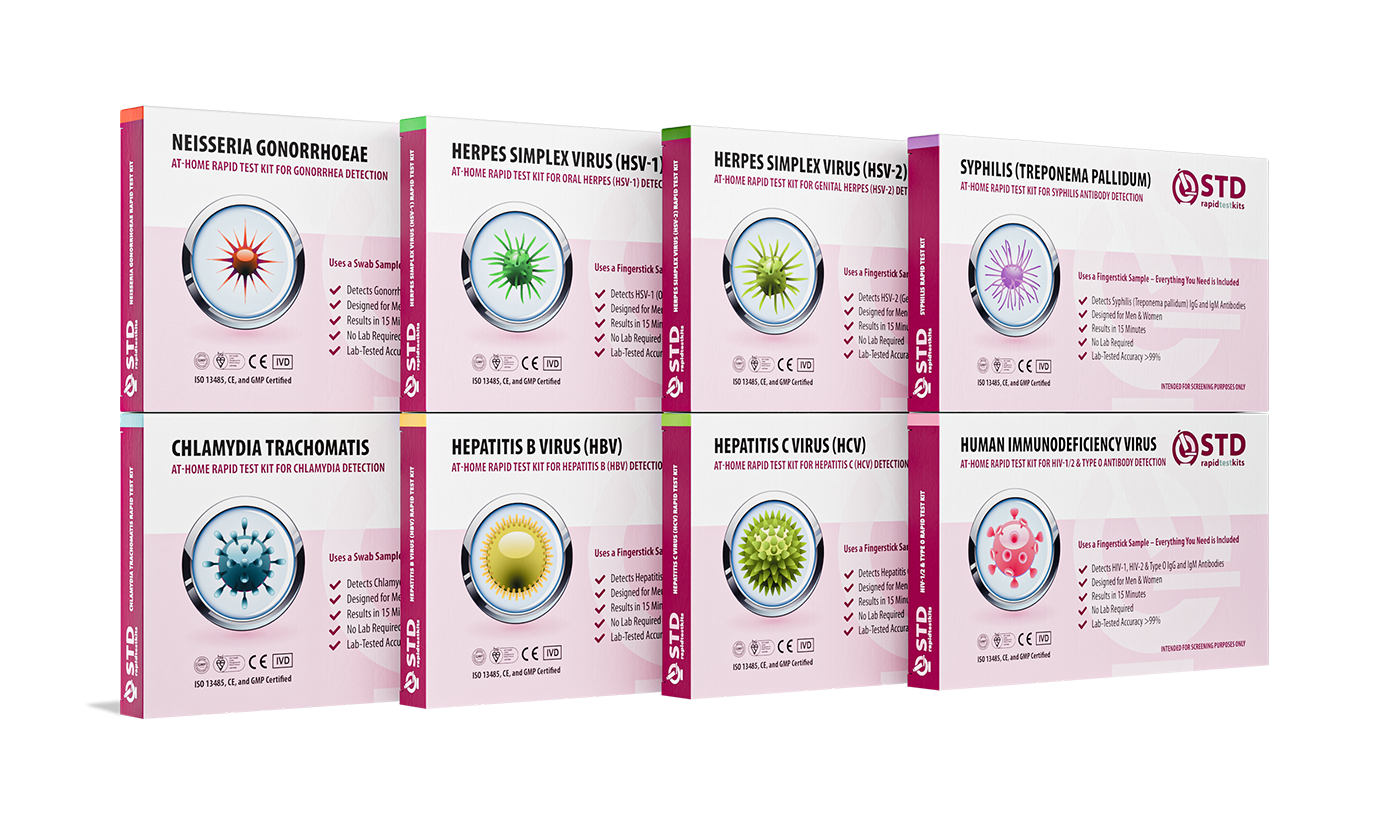 For Men & WomenResults in MinutesNo Lab NeededPrivate & Discreet
Order Now $149.00 $392.00
For all 8 tests
What Real Control Actually Looks Like
Control doesn’t mean eliminating all risk. It means making informed choices going forward.
For some people, that means getting vaccinated. For others, it means being more intentional about protection or having clearer conversations with partners. And for many, it simply means understanding that not every risk is visible or immediate.
There’s also something quietly powerful about replacing guesswork with actual data. Not assumptions, not spiraling thoughts, real information about your health.
That’s where testing, especially at-home testing, can shift the dynamic.
Browse reliable at-home STD testing kits if you want clarity without the waiting rooms, awkward conversations, or uncertainty that tends to drag things out.
Because the longer you sit in “maybe,” the louder that uncertainty tends to get.
The Bigger Picture Most Articles Skip
HPV isn’t just a medical topic, it’s a communication gap.
It sits right at the intersection of incomplete sex education, stigma, and assumptions about what counts as “real” risk. And because of that, people often learn about it backwards, after they’re already worried.
The goal isn’t to make you paranoid about every kind of contact. It’s to give you a more accurate map of how things actually work.
Once you have that, the decisions become clearer. Not perfect, not risk-free, but informed.
FAQs
1. Can you really get HPV without having sex?
Yeah, you can. HPV doesn’t wait for penetration to happen; it just needs skin contact in the right areas. So things like oral, grinding, or even just being naked together with contact can be enough. It feels unfair, but that’s how this virus moves.
2. Okay, but what about just touching, like with hands?
This one sits in the gray zone. It’s possible, especially if there’s direct contact and then immediate transfer, but it’s not the most efficient way HPV spreads. Think of it as lower risk, not zero, but not the main way people get it either.
3. I’ve never had “real sex”, so how would I even have HPV?
This is more common than people think. A lot of folks define sex as penetration, but HPV doesn’t care about definitions, it cares about contact. If there’s been oral, rubbing, or genital contact of any kind, that’s enough for exposure.
4. Does oral sex actually spread HPV, or is that overblown?
It’s real. HPV can live in the mouth and throat, and oral sex is one of the ways it gets there. It’s not something most people talk about openly, which is why it catches people off guard later.
5. We only did dry humping… should I actually be worried?
If there was direct genital contact, even without penetration, there is some risk. Clothes lower that risk a lot, but they don’t make it disappear completely, especially with thinner fabrics or a lot of friction.
6. If I don’t see anything, no bumps, no warts, am I in the clear?
Not necessarily. Most HPV infections are completely invisible. No itching, no pain, nothing obvious. That’s why so many people have it without realizing, it doesn’t announce itself.
7. How long would it take for HPV to show up if I got it?
It’s not immediate. It could take weeks, months, or you might never see anything at all. That delay is what makes people second-guess where it came from, because the timeline rarely lines up neatly.
8. Do condoms actually protect against HPV or not?
They help, a lot, but they’re not perfect. Condoms reduce contact, which lowers risk, but HPV can still spread from skin that isn’t covered. So it’s protection, just not total protection.
9. Can I get tested right now just to know for sure?
That’s the frustrating part, HPV doesn’t have a simple “test right after” option in most cases. Testing depends on your body and the type of screening available, so it’s not like a quick yes-or-no swab after one encounter.
10. I’m kind of spiraling… what should I actually do next?
First, pause. You’re not the only one who’s been here. Then focus on what you can control: watch for any changes, stay on top of regular screenings if they apply to you, and consider ruling out other infections with an at-home STD test kit so you’re not stuck guessing. Clarity helps more than overthinking ever will.
You Deserve Clarity, Not Guesswork
HPV doesn’t follow the rules most people were taught. It doesn’t need penetration. It doesn’t announce itself. And it doesn’t give you a clean moment you can point to and say, “That’s when it happened.”
The goal isn’t to panic over every kind of contact. It’s to understand how this actually works so you’re not relying on assumptions that were never accurate to begin with. Once you know that HPV spreads through skin, not just sex, the confusion starts to settle.
If something happened and it’s sitting in your head, don’t stay in that loop. Rule out what you can. Get real information where it’s available. And if there’s even a small chance of exposure, start with something concrete like a Combo STD Home Test Kit. Clarity cuts through anxiety faster than guessing ever will.
How We Sourced This Article: This guide brings together information from the CDC and WHO on how HPV spreads, as well as peer-reviewed research on how viruses spread from skin to skin and how doctors check for them. We also looked at real-life patient worries and search behavior to see how people really feel about HPV risk, especially when it comes to non-penetrative situations.
Sources
1. Centers for Disease Control and Prevention – About HPV
2. World Health Organization – HPV and Cervical Cancer
3. Planned Parenthood – HPV Overview
4. Mayo Clinic – HPV Infection Overview
5. National Cancer Institute – HPV Fact Sheet
6. NHS – Human Papillomavirus (HPV)
7. Johns Hopkins Medicine – Human Papillomavirus (HPV)
8. Cleveland Clinic – HPV (Human Papillomavirus)
About the Author
Dr. F. David, MD is a board-certified expert in infectious diseases who works to stop, find, and treat STIs. He is both clinically accurate and direct, with a sex-positive approach that puts clarity, privacy, and patient empowerment first.
Reviewed by: Dr. James Carter, MD (Infectious Disease) | Last medically reviewed: March 2026
This article is for information only and should not be used as medical advice.


