





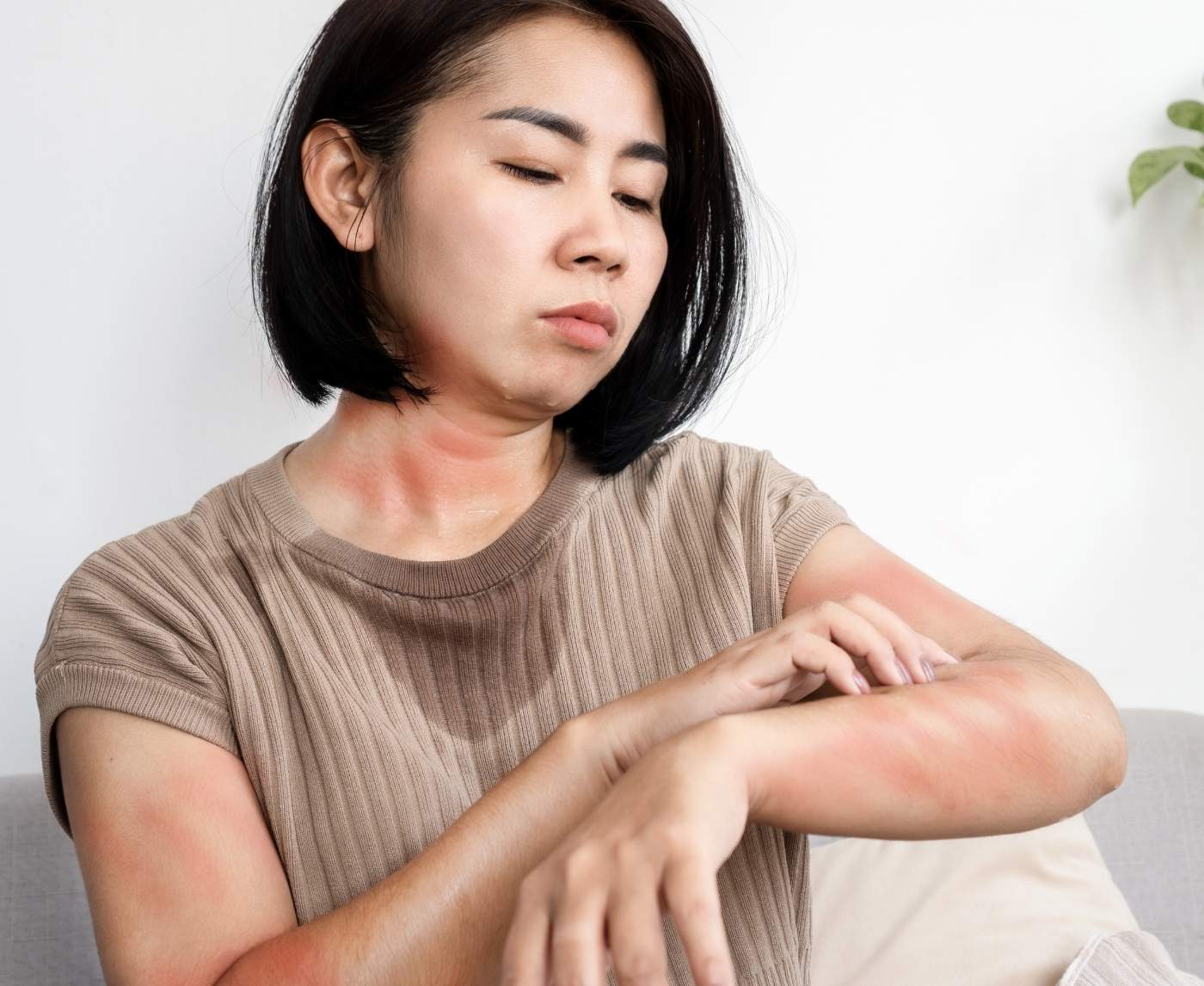

Quick Answer: STD rash vs irritation comes down to pattern and context. STD rashes often involve sores, blisters, or unusual locations like the genitals, palms, or mouth, while irritation is more likely to itch, follow friction or product exposure, and improve within a few days.
This Is the Moment Most People Spiral
“I thought it was just razor burn.” That’s how Daniel, 27, described the small cluster of bumps he noticed a few days after a hookup. He had shaved, worked out, and worn tight clothes all in the same 48-hour window. Everything about it screamed irritation, until it didn’t go away.
That moment, when something lingers longer than expected, is where anxiety takes over. People start comparing photos online, zooming in on their skin, and trying to self-diagnose based on whether something “looks like herpes” or “feels like eczema.”
The problem is, early symptoms don’t always follow clean textbook definitions. A herpes outbreak can start with mild itching. A fungal rash can look aggressive. A friction rash can feel raw and alarming. And yes, sometimes an STD rash doesn’t hurt or itch at all.
“I kept telling myself it was nothing,” said Aisha, 31. “But I couldn’t stop checking it every hour.”
This is exactly why understanding patterns, not just appearance, is what actually helps you tell the difference.
What STD Rashes Actually Tend to Look and Feel Like
Let’s get grounded in reality for a second. Not all STDs cause rashes, but the ones that do tend to follow certain patterns that your body repeats more predictably than you might expect.
Herpes, for example, rarely shows up as a flat rash. It usually starts with tingling, burning, or itching, followed by small fluid-filled blisters that eventually break into painful sores. These often appear in clusters and can come back in the same general area.
Syphilis behaves differently. The first stage is often a single painless ulcer (called a chancre), which many people miss completely. Later, it can cause a widespread rash, often not itchy, that may show up on the palms of the hands or soles of the feet, which is unusual for most skin conditions.
Here’s where it gets tricky: some STD-related skin changes don’t feel dramatic. They don’t always hurt. They don’t always itch. That’s why relying only on sensation can mislead you.
| STD | Typical Appearance | Sensation | Clues |
|---|---|---|---|
| Herpes | Clusters of blisters → sores | Pain, burning, tingling | Comes in outbreaks |
| Syphilis | Flat rash or painless ulcer | Often no pain or itch | Palms/soles involvement |
| HPV | Wart-like growths | Usually painless | Cauliflower texture |
If your rash involves open sores, fluid-filled bumps, or unusual spread patterns, that’s when it stops looking like simple irritation and starts leaning toward something that should be tested.
People are also reading: Why One “Clean” STD Test Doesn’t Always Mean You’re Safe
What “Just Irritation” Usually Looks Like (But Still Freaks People Out)
Now let’s talk about the stuff that sends people into panic mode, but isn’t an STD most of the time.
Skin irritation tends to follow a cause you can trace if you slow down enough to think it through. Shaving, sweating, tight clothing, friction during sex, new soaps, condoms, or lubricants, these all disrupt your skin barrier.
“I switched laundry detergent and thought I had an STD for two days,” said Luis, 24. “It was just a reaction.”
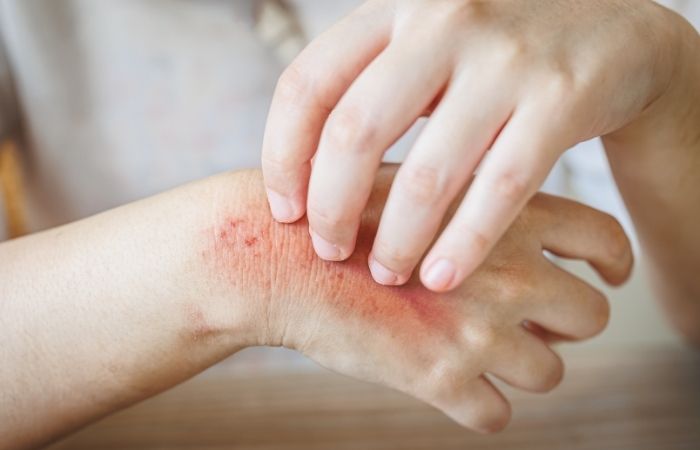
Unlike STD rashes, irritation usually comes with itching, redness, or a burning sensation that feels more surface-level. It often appears exactly where friction or exposure happened, and nowhere else.
And most importantly: irritation improves. Not instantly, but noticeably within a few days if you stop the trigger.
| Feature | Irritation | STD Rash |
|---|---|---|
| Onset | After friction/product use | After exposure (days–weeks) |
| Sensation | Itchy, irritated | Painful or no sensation |
| Appearance | Diffuse redness, small bumps | Blisters, sores, ulcers |
| Timeline | Improves in days | Persists or worsens |
This is why context matters just as much as symptoms. A rash after sex doesn’t automatically mean STD. But a rash that doesn’t fade, changes shape, or develops into sores deserves attention.
When You Should Stop Guessing and Actually Test
There’s a point where overanalyzing stops helping. If your symptoms fall into certain categories, the smartest move isn’t more Googling, it’s testing.
If you’re seeing blisters, open sores, unusual lesions, or a rash that isn’t healing after a week, don’t wait it out. If you’ve had a new partner, unprotected contact, or even just uncertainty about exposure, that adds another layer of risk.
This is where taking action actually reduces anxiety instead of feeding it.
You can start with something simple and private. Visit STD Rapid Test Kits to explore options that let you check from home without the stress of clinic visits.
If you want broader clarity, a combo STD home test kit can screen for multiple infections at once, which is often the fastest way to move from “what if” to actual answers.
“The waiting was worse than the result,” said Jordan, 29. “Once I knew, I could actually deal with it.”
That’s the shift most people need, not reassurance, but resolution.
Why Location Changes the Entire Story
Where the rash shows up matters more than most people realize. Skin conditions tend to follow logic, friction zones, sweat-prone areas, or places exposed to irritants. STD-related symptoms, on the other hand, often show up in ways that feel less predictable.
For example, irritation from shaving or tight clothing usually appears exactly where the friction happened, inner thighs, bikini line, or wherever fabric rubs repeatedly. It tends to stay contained in that zone and doesn’t suddenly spread to unrelated areas.
STD rashes don’t always follow that same pattern. A herpes outbreak will usually stay localized to the site of exposure, but syphilis can show up in places people don’t expect, like the palms of the hands or soles of the feet. That alone is a major red flag because most everyday skin conditions don’t behave that way.
If you’re noticing a rash in multiple areas, especially areas not directly exposed to friction or products, that’s when it shifts from “probably irritation” to “worth checking.”
Check Your STD Status in Minutes
Test at Home with Remedium6-in-1 STD Rapid Test Kit

 For Men & Women
 Results in Minutes
 No Lab Needed
 Private & Discreet
Order Now $119.00 $294.00
For all 6 tests
Timing Is the Clue Most People Miss
One of the biggest differences between an STD rash and simple irritation is timing, but people rarely track it clearly. They remember the symptom, but not the sequence.
Irritation tends to show up fast. You shave, you sweat, you use a new product, and within hours to a day, your skin reacts. It’s immediate, almost predictable in hindsight.
STD symptoms usually follow a delay. Depending on the infection, that could be a few days, a couple of weeks, or longer. That gap is what makes people second-guess themselves. They disconnect the symptom from the exposure because it didn’t happen right away.
“I kept thinking, ‘But that was two weeks ago,’” said Renata, 26. “I didn’t realize symptoms could show up later.”
This delay is especially common with infections like herpes or syphilis, where the body goes through an incubation period before anything visible appears.
If your rash showed up immediately after friction or product use, irritation is more likely. If it appeared days or weeks after a sexual encounter, and especially if it’s not improving, that’s when testing becomes the smarter move.
The “It Doesn’t Hurt or Itch” Trap
There’s a common assumption that if something isn’t painful or itchy, it can’t be serious. That assumption is wrong more often than people expect.
Some of the most important STD symptoms are surprisingly subtle. A syphilis rash, for example, often doesn’t itch at all. The initial sore can be completely painless, which is why so many people miss it entirely.
Even herpes doesn’t always present dramatically. Some people only notice mild irritation or a strange sensitivity before anything visible happens. Others never experience the classic painful outbreak at all.
This is why relying on sensation alone is risky. A rash that feels “like nothing” isn’t automatically harmless, it just means your body isn’t reacting in an obvious way.
If something looks unusual, persists, or doesn’t match your typical skin behavior, that’s enough reason to pay attention, even if it’s not uncomfortable.
When It’s Probably Not an STD (And Why That Still Matters)
Most genital or thigh-area rashes are not caused by STDs. That’s important to say clearly, because panic tends to erase probability.
Conditions like fungal infections (jock itch), contact dermatitis, heat rash, and folliculitis are extremely common. They thrive in warm, moist environments and often show up after sweating, workouts, or tight clothing.
These conditions usually come with itchiness, irritation, or a burning feeling that’s consistent and predictable. They may look dramatic, but they tend to respond to basic care, keeping the area dry, avoiding irritants, or using over-the-counter treatments.
But here’s the nuance: even if something is likely not an STD, you don’t have to guess your way through it. There’s nothing excessive about wanting clarity.
In fact, getting tested when you’re unsure is often the fastest way to move forward, whether the result is negative or something that needs treatment.
The Patterns Doctors Look For (That Google Doesn’t Explain Well)
When clinicians evaluate a rash, they’re not just looking at what it looks like, they’re looking at patterns over time, distribution, and behavior. That’s the part most online searches miss.
A rash that spreads symmetrically, appears in multiple unrelated areas, or evolves from bumps into sores raises a very different level of concern than something that stays localized and fades. Doctors also pay attention to whether the rash is recurring, especially in the exact same spot, which is a classic clue for herpes.
They also ask questions most people don’t think to ask themselves. Did you have a recent illness? Any swollen lymph nodes? Fever? Fatigue? These “background symptoms” can quietly point toward an infection rather than simple irritation.
And then there’s one of the biggest clues: progression. Irritation tends to stay consistent or improve. STD-related symptoms often change, new lesions, different textures, spreading patterns. If your skin story is evolving instead of stabilizing, that matters.

People are also reading: STD or Something Else? What to Do If You Have Vaginal Red Spots
The Point Where Clarity Beats Guessing
At some point, every “is this normal?” question hits a limit. You’ve compared symptoms, checked timing, thought about exposure, and you’re still not sure.
That’s the exact moment where testing becomes less about fear and more about control.
You don’t need to wait for symptoms to get worse or more obvious. You don’t need to be 100% certain it’s an STD. You just need enough uncertainty that guessing is stressing you out more than solving it would.
That’s where something like a combo STD home test kit can actually change the experience. Instead of spiraling through possibilities, you get real information, quickly, privately, and without the friction of scheduling a clinic visit.
Because the truth is, most people don’t regret testing. They regret waiting.
“I wish I had just checked sooner,” said Mateo, 34. “It would’ve saved me days of overthinking.”
Case Study: “I Thought It Was Just Heat Rash”
Carla, 28, noticed a faint rash on her inner thighs after a weekend trip. It was hot, she had been walking a lot, and she assumed it was just sweat and friction. It didn’t itch much, which made it feel even less concerning.
“It didn’t look dramatic. Just kind of… there. I figured it would go away.”
But it didn’t. A few days later, the rash had spread slightly and developed a different texture, less like irritation, more like small lesions. Still, there was no pain, no itching, nothing that screamed “serious.”
“That’s what confused me. I thought STDs were supposed to hurt.”
She eventually got tested and was diagnosed with syphilis in its secondary stage. What she had dismissed as heat rash was actually one of the most well-known, but often overlooked, STD rash patterns.
The takeaway isn’t fear. It’s awareness. Not all STD symptoms feel urgent, and not all harmless rashes feel mild.
How to Think About Your Situation (Without Spiraling)
If you’re trying to figure out whether what you’re seeing is an STD rash or irritation, zooming out is more helpful than zooming in. Instead of obsessing over how it looks under harsh lighting, ask yourself a few grounded questions.
- Did something trigger this? (shaving, friction, new product)
- Is it improving or changing?
- Is it staying in one place or spreading?
- Did this appear days or weeks after a sexual encounter?
- Are there any other symptoms, even mild ones?
These questions won’t give you a diagnosis, but they will give you direction. They help you move from panic to pattern recognition, which is exactly how clinicians approach this in real life.
And if your answers are mixed, or you’re still unsure, that’s not failure. That’s the signal to stop guessing and get clarity.
What Actually Helps Your Skin While You Figure It Out
While you’re deciding whether to test or wait, there are a few simple things that can help your skin without interfering with potential diagnosis.
Keep the area clean and dry. Avoid new products, fragrances, or anything that could irritate the skin further. Wear loose, breathable clothing and give your skin a break from friction whenever possible.
What you don’t want to do is aggressively treat something you haven’t identified. Overusing antifungal creams, steroid creams, or random treatments can actually blur symptoms and make things harder to interpret.
This is one of those situations where doing less, while staying observant, is often smarter than doing more.
Check Your STD Status in Minutes
Test at Home with Remedium7-in-1 STD Test Kit
 For Men & WomenResults in MinutesNo Lab NeededPrivate & Discreet
Order Now $129.00 $343.00
For all 7 tests
Where This All Lands: You Don’t Have to Be 100% Sure
There’s a quiet pressure people put on themselves to “figure it out” before taking action. To be certain it’s an STD before testing. To be sure it’s harmless before ignoring it.
But certainty isn’t the requirement, clarity is.
You don’t need to diagnose yourself. You just need to recognize when something doesn’t fully make sense or isn’t resolving the way normal irritation would.
And when you hit that point, the next step isn’t more analysis, it’s answers.
FAQs
1. How do I actually tell if this is an STD rash or just irritation?
Start with the story your skin is telling, not just how it looks. If it showed up right after shaving, sweating, or trying a new product, and it itches like crazy, it’s probably irritation. If it appeared days later, isn’t improving, or is doing something weird like turning into sores or spreading, that’s when it stops being a guessing game and starts being a “just test” situation.
2. I keep checking it every hour… does that mean it’s serious?
No, that means you’re human. People fixate on skin changes because they’re visible and tied to a lot of anxiety. The behavior (checking constantly) says more about your stress level than the rash itself. What matters is whether the rash is changing, healing, or doing something new.
3. What if it doesn’t itch or hurt at all? That feels like a good sign… right?
Not always. Some of the most important STD symptoms are weirdly quiet. Syphilis, for example, can show up as a rash that just… exists. No itch, no pain, nothing dramatic. So “it doesn’t hurt” isn’t a green light, it just means your body isn’t making noise about it.
4. Could this just be from shaving or sex friction?
Very possibly. Skin gets irritated easily, especially in areas with heat, moisture, and movement. If the timing lines up (like within a day of shaving or sex), and it looks like small bumps or redness, irritation is the usual suspect. The key is whether it starts calming down after a few days or keeps acting suspicious.
5. How long should I wait before I start worrying?
You don’t need to panic, but you also don’t need to wait forever. If it’s not clearly improving after about a week, or if it changes (new bumps, sores, spreading), that’s your cue to stop watching and start checking. Waiting longer doesn’t give you more clarity, it just stretches out the uncertainty.
6. What does a herpes outbreak actually feel like in real life?
For a lot of people, it starts subtly. A little tingling, maybe some sensitivity, like your skin is “off” before anything shows up. Then small blisters can appear and eventually open into sores. But not everyone gets the dramatic version, some cases are mild enough to second-guess.
7. Can stress mess with my skin enough to fake an STD scare?
Absolutely. Stress can trigger hives, flare up existing skin conditions, or make you hyper-aware of normal skin texture. But stress doesn’t create STDs. So if there’s any real exposure risk, it’s still worth ruling things out instead of assuming it’s “just stress.”
8. If it’s on my inner thighs, does that make it less likely to be an STD?
Usually, yes, but not guaranteed. Inner thigh rashes are often from friction or fungal infections, especially if you’ve been sweating or wearing tight clothes. But if the rash starts changing character, like turning into sores or spreading, it deserves a second look.
9. What’s the biggest mistake people make with this?
Waiting for it to become “obviously bad.” A lot of people think an STD has to look extreme to be real. In reality, the early stages can be subtle, confusing, and easy to dismiss. By the time it’s obvious, you’ve usually just delayed getting answers.
10. Be honest, should I just get tested and stop overthinking?
Yeah. If you’re here, comparing symptoms and second-guessing yourself, you’re already past the point where guessing is helpful. Testing isn’t overreacting, it’s how you get your brain out of the loop and back into real information.
You Deserve Clarity, Not Guesswork
A rash can feel small, but the uncertainty around it rarely is. It turns something physical into something mental, looping thoughts, constant checking, quiet panic. The goal isn’t to assume the worst. It’s to stop guessing and figure out what your body is actually telling you.
If the timing points to irritation, give your skin space to recover. If the pattern feels off, if it’s not improving, or if there’s even a question about exposure, don’t sit in that gray area. Testing isn’t dramatic, it’s how you move forward with facts instead of fear.
Don’t wait and wonder. If infection is even a small possibility, start with a discreet screen like the Combo STD Home Test Kit. Your results are private. Your next steps are clear. And clarity always feels better than guessing.
How We Sourced This Article: This guide brings together clinical advice on STIs and dermatological research on common skin problems like contact dermatitis, fungal infections, and folliculitis. We looked at resources, as well as peer-reviewed studies, to make sure that the differences between STD rashes and non-infectious irritation are medically correct and still match how people actually feel.
Sources
1. Centers for Disease Control and Prevention – Genital Herpes Fact Sheet
2. Centers for Disease Control and Prevention – Syphilis Fact Sheet
3. Mayo Clinic – Genital Herpes Symptoms and Causes
5. World Health Organization – Sexually Transmitted Infections Fact Sheet
6. National Library of Medicine – STI Research Database
About the Author
Dr. F. David, MD is a board-certified infectious disease doctor who specializes in preventing, diagnosing, and treating STIs. He has a direct, sex-positive approach that puts clarity, privacy, and patient empowerment first, along with clinical accuracy.
Reviewed by: Dr. Michael R. Levin, MD, Infectious Disease Specialist | Last medically reviewed: March 2026
This article is just for information and shouldn't be used in place of medical advice.


