Published: October 2025 | Last updated: May 2026 | Editorial review and quality control: Martina N.
Red spots near the vulva or vaginal opening are alarming, and the alarm is reasonable. The skin there is sensitive, the area sees friction and sexual contact, and a fresh red bump rarely arrives without context. Most of the time the cause traces back to something benign: a recent shave, a new fabric, a yeast infection, or contact dermatitis from a soap or lubricant. Sometimes, though, those same red spots are the first visible sign of an STI that benefits from early treatment.
The challenge is sorting one from the other before guesswork turns into a sleepless week of late-night searches. The patterns matter. The timing matters. And the test you reach for has to match what is actually on your skin and how recently the exposure happened. This guide walks through both halves: the non-STD causes that account for most cases, and the infections worth ruling out when something does not fit the irritation pattern.
Key Takeaways
- Most red spots in the genital area come from friction, shaving, or skin irritation, not infection. Pattern and timing decide when testing makes sense.
- If a red spot follows sexual exposure, lasts more than a few days, or comes with itching, tingling, fever, or discharge, plan a test that matches the window period for HSV-2, syphilis, or HIV.
Why Red Spots Trigger Alarm Bells
The skin around the vulva and vaginal opening is thinner and more reactive than skin elsewhere on the body. It responds visibly to small inputs: a new soap, a synthetic fabric, a fresh shave, even a long bike ride. So a red spot is the body's way of signaling that something interacted with that skin in a way it did not appreciate. The alarm response is doing exactly what it is supposed to do.
The same area also sits at the intersection of sexual contact, sweat, and friction. That overlap is what makes interpretation hard. Red bumps near the labia could mean an ingrown hair, contact dermatitis from a new lubricant, or the early stage of a herpes outbreak. Visible appearance alone rarely settles the question.
What matters next is context. Have you started a new product? Shaved or waxed in the last few days? Had unprotected sex with a new partner? Each detail adds a piece to the diagnostic puzzle. The MedlinePlus reference on female genital sores notes that genital lesions can come from infection, irritation, or chronic skin conditions, and that pinpointing the cause usually requires both a brief history and either a physical exam or a test (MedlinePlus genital sores reference).
Skipping evaluation costs more than peace of mind. A simple yeast infection treated as a viral outbreak wastes a week of antivirals. An early syphilis sore mistaken for a razor bump can heal on its own while the underlying infection continues unnoticed. The sensible response to an unexplained red spot is to read the pattern, set a testing plan, and let the calendar guide what comes next.
Likely irritation: new product, fabric, shave, or wax in the last few days, and the spot is fading.
Plan a test: recent unprotected sex, spots lasting more than three days, blistering, fever, swollen lymph nodes, unusual discharge, or pain on urination.
Common Non-STD Causes of Vaginal Red Spots
Most red spots in the genital area trace back to a handful of skin reactions that have nothing to do with sexual contact. Understanding these first prevents unnecessary panic and helps narrow what to test for.
Friction comes up often. Tight underwear, new synthetic gym shorts, shaving without a fresh blade, or sex without enough lubrication can produce small red dots or patches that look alarming and feel raw. Switching to cotton, rinsing with cool water, and removing the trigger usually clears these within a few days.
Contact dermatitis is the next likely culprit. The vulvar skin reacts to detergents, fragrances, intimate washes, and even fabric softeners. The reaction often shows as patches of red, sometimes itchy, sometimes scaling. Vulvar dermatitis can closely resemble early herpes lesions, though it does not transmit and clears once the trigger is removed.
Yeast infections produce redness with itching and often a thick white discharge. The CDC describes vaginal candidiasis as one of the most common fungal infections, with standard symptoms including itching, soreness, pain during sex or urination, and abnormal vaginal discharge; severe cases can also involve vulvar redness and swelling (CDC candidiasis symptoms). Bacterial vaginosis presents differently: thin grayish discharge and a fishy odor are the primary signs, and any vulvar redness usually reflects secondary irritation rather than the infection itself. The CDC's BV treatment guidelines describe BV as a shift in vaginal flora (dysbiosis) rather than yeast overgrowth (CDC bacterial vaginosis treatment guidelines).
Shaving brings ingrown hairs, folliculitis, and small infected hair follicles into the picture. These usually have a visible central hair, sit at follicle depth, and come and go with shaving routines. If the spot appeared in the days after a shave or wax, the timing alone usually points at the cause.
Inflammatory skin conditions round out the non-STD list. Lichen sclerosus, eczema, and psoriasis can all show on vulvar skin in patterns that mimic infection. They tend to recur, follow no exposure pattern, and respond to topical treatment under a dermatologist's care.
When Red Spots Signal an STD Instead
Some red spots in the genital area do mean an active sexually transmitted infection. The patterns that separate them from irritation usually involve timing relative to sexual exposure, the lesion's behavior over a few days, and additional symptoms.
Genital herpes (HSV-1 or HSV-2) often starts as clusters of small red or pinkish spots that feel itchy or tingly before the spots themselves appear. Within a day or two, the spots can become fluid-filled vesicles that break open into shallow ulcers. The first outbreak is typically the most pronounced, with recurrences appearing milder, sometimes only as red papules that never blister. The CDC notes that many people who carry HSV never recognize their symptoms as herpes, which is part of why diagnosis usually relies on a test rather than visual inspection alone (CDC About Genital Herpes).
Primary syphilis presents differently. The first symptom is a single painless ulcer, called a chancre, that appears at the site of infection between 10 and 90 days after exposure. The chancre often looks like a shiny red sore with a firm, raised border. It does not itch, does not hurt, and heals on its own within three to six weeks. Many people miss it entirely, especially when it sits inside the vagina or on the cervix where it is not visible. The infection continues silently if untreated and progresses to secondary syphilis weeks later.
HPV produces genital warts that typically look flesh-colored or pinkish, raised, and sometimes clustered. The bumps are usually painless and can take weeks or months to appear after exposure. Most HPV infections clear on their own without ever causing visible warts, and not all warts indicate cancer-causing strains.
The pattern that should push toward testing: red spots that appear after a sexual exposure, last more than a few days, are accompanied by fever, swollen lymph nodes, unusual discharge, or burning during urination, or behave differently from any irritation pattern you have experienced before.
| Infection | Typical Red Spot Appearance | Time From Exposure | Best Test |
|---|---|---|---|
| Herpes (HSV-1, HSV-2) | Clusters of red or pink spots, may evolve into vesicles or shallow ulcers, often itchy or tingly | 2 to 12 days (average 4 days) | Lesion swab if active, or HSV-2 IgG blood antibody test at 12+ weeks |
| Syphilis (primary) | Single painless ulcer with a firm raised border, often a shiny red color | 10 to 90 days (average 21) | Blood (RPR plus treponemal antibody) |
| HPV / Genital Warts | Painless raised bumps, flesh-colored or pinkish, sometimes clustered | Weeks to months | Visual exam plus biopsy if unclear; HPV swab in women only |
Matching Your Test to the Timing
Testing too early gives false reassurance. STIs only become detectable on tests after the body has had time to either build antibodies or accumulate enough viral or bacterial material to register on the assay. The interval between exposure and detectability is the window period, and it differs by infection and by test type.
Consider this scenario: a single red spot appears four days after unprotected sex with a new partner. A blood test that day would likely come back negative; the immune system simply has not yet built detectable antibodies, regardless of whether infection is present. A week later, more spots and tingling develop. A swab from the active lesion at that point can detect HSV directly, and a follow-up blood test at three to four weeks can confirm seroconversion.
For active sores or blisters, a swab test at the lesion is the most accurate option in the first week or two after onset. The swab collects viral DNA directly from the sore, which lab PCR or rapid lateral-flow tests can detect well before antibodies appear in blood. This window closes once the lesion crusts over, usually within 48 to 72 hours of healing.
For blood-based detection, the timeline depends on the infection. HSV-2 IgG antibody tests typically become reliable around 12 to 16 weeks after exposure, with most cases detectable by 6 to 12 weeks. Syphilis blood tests (RPR, VDRL, treponemal assays) can detect antibodies as early as 2 to 3 weeks after exposure, with peak reliability between 6 and 12 weeks. According to CDC guidance on HIV testing windows, fourth-generation antigen-antibody tests detect most infections by 18 to 45 days, while NAAT testing can typically detect HIV RNA between 10 and 33 days after exposure (CDC HIV testing reference).
If you are unsure when the exposure happened, a layered approach works best. Take a baseline test now. Schedule a follow-up at 6 weeks for syphilis and HIV. Plan a final repeat at 12 weeks for HSV-2 IgG and HIV antibody confirmation.
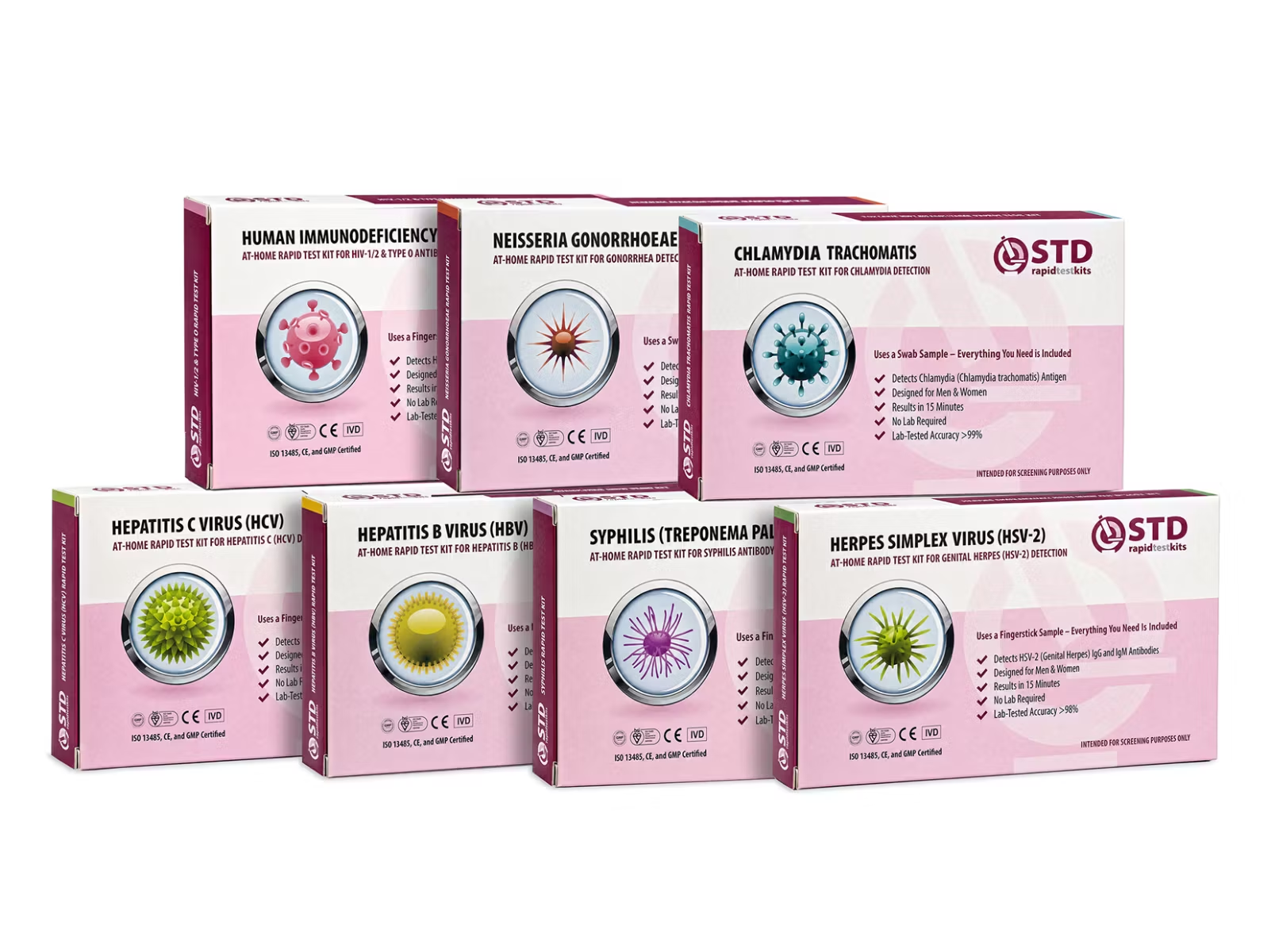
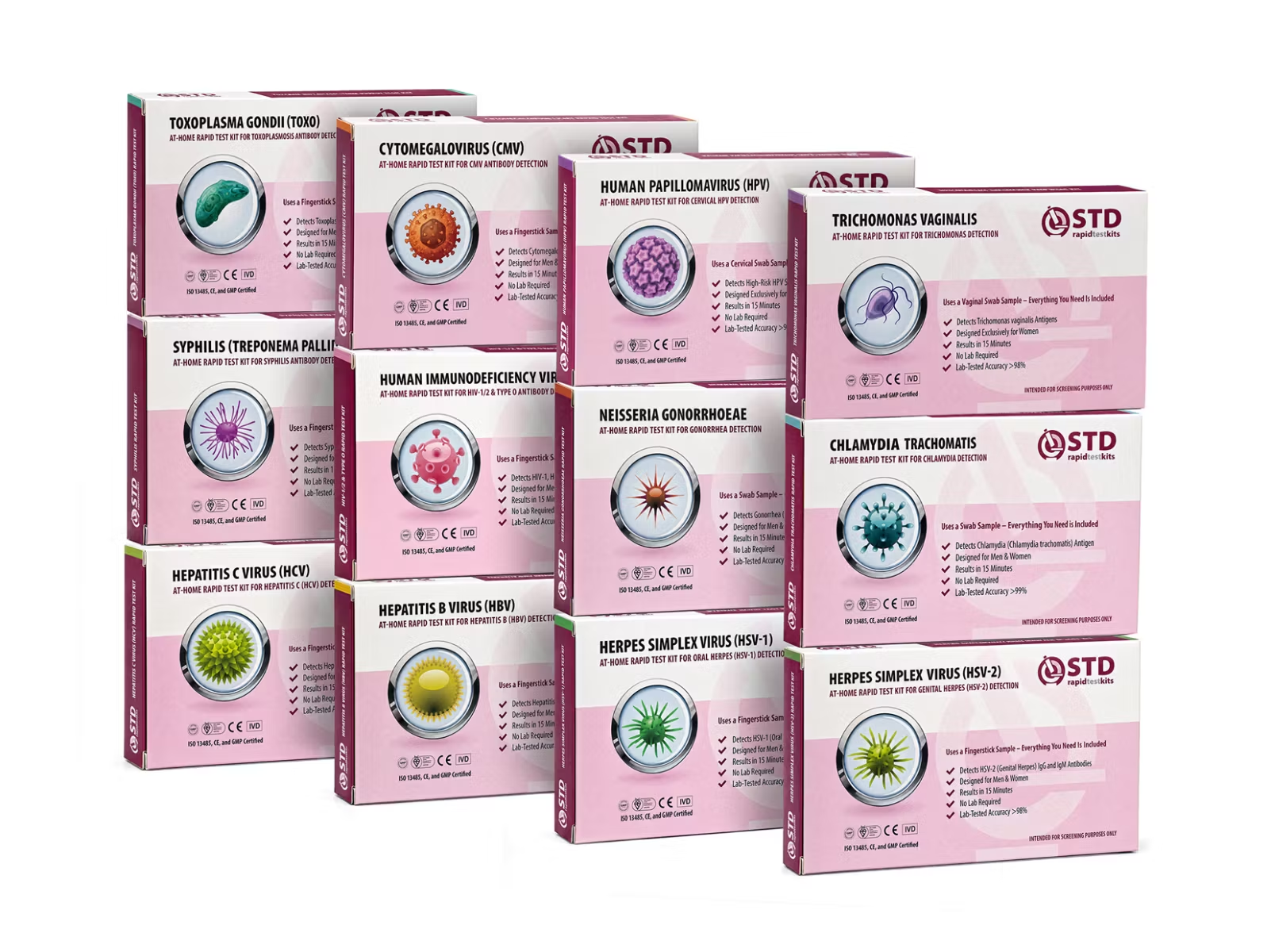
This site sells the rapid test kits described below; kit descriptions reflect manufacturer-reported sample types and coverage windows, and the panel choice depends on your exposure timing and which infections fit your symptom pattern.
| Infection | Detection Window | Best Test Date | Method |
|---|---|---|---|
| HSV-2 (active lesion) | Day of lesion onset | First 48 to 72 hours of an active sore | PCR or lateral-flow swab |
| HSV-2 (no active lesion) | 6 weeks (most cases) | 12 to 16 weeks (full sensitivity) | IgG blood antibody |
| Syphilis | 2 to 3 weeks | 6 to 12 weeks | RPR plus treponemal blood test |
| HIV (NAAT) | 10 to 33 days | 4 weeks | Lab NAAT |
| HIV (Ag/Ab) | 18 to 45 days | 6 weeks | Fourth-generation antigen-antibody |
Which test should I take if I see red spots?
If the spots are open sores or blisters right now, a clinic visit for direct lesion swabbing within 48 to 72 hours gives the most accurate result. If the spots are closed, healed, or you saw them more than two weeks ago, an at-home blood test for HSV-2 antibodies, syphilis, and HIV is the more useful next step. Active lesion: clinic swab. Everything else: blood test, with a confirmation retest at 6 to 12 weeks.
Choosing the Right Test: At-Home vs Clinic
The right test depends on what you are seeing, when you were exposed, and whether there is an active lesion to swab. There is no single best option for every red spot.
If you have an open sore or blister right now, a clinic visit for direct lesion swabbing is the strongest first move. The swab can be sent for HSV PCR, syphilis darkfield microscopy, or both, and gives a result well before antibodies appear in blood. This window of opportunity closes once the lesion crusts and heals, usually within a few days, so timing matters.
If the spots are not open, or the exposure was more than two weeks ago, blood-based home tests become useful. At-home rapid lateral-flow tests for HSV-2 antibodies, syphilis, and HIV use a fingerstick blood drop and produce a result in about 15 minutes. These tests detect immune-system response rather than the pathogen itself, which is why they need the body to have had enough time to respond. Lab NAAT tests have higher analytical sensitivity than home rapid tests; the two are complementary screening and confirmation tools rather than equivalents.
Visual inspection plays a role for warts and other distinctive lesions. A trained provider can identify classic genital warts, secondary syphilis rashes, and lichen sclerosus on appearance alone, often saving the cost of confirmatory testing.
| What You Have | Try This First | Then Consider |
|---|---|---|
| Red spots with itching or tingling, no open sore | HSV-2 IgG blood test (home or lab) at 12+ weeks | Clinic swab at next active outbreak |
| Active open ulcer or blister | Clinic lesion swab in 48 to 72 hours | HSV-2 IgG retest at 12 weeks |
| One painless red sore | Syphilis blood test (lab or at-home) | Retest at 6 weeks if first result is negative |
| Multiple unexplained red bumps after recent exposure | Combo panel (HSV-2, syphilis, HIV) | Clinic follow-up if any result is reactive |
What to Do When a First Test Is Negative but Symptoms Persist
A negative result on a too-early test does not mean the all-clear. False negatives are most common when testing happens before the body has built detectable antibodies or before a lesion has produced enough viral material to register on the assay.
Imagine this pattern: someone tests two weeks after noticing a single ulcer. Results come back clean. Three weeks later, the ulcer has healed, but a follow-up blood test at 6 weeks comes back positive for syphilis. The first test was not wrong; it was just early in the antibody response.
Most public-health agencies recommend a layered testing approach with confirmation visits at three weeks, six weeks, and three months after a known exposure. The exact interval depends on the infection, the test generation, and the clinical picture. A swab of an active lesion gives faster information than a blood test in the first two weeks, while blood tests become more sensitive as time passes.
If symptoms evolve before the next planned test, with new spots, blisters, fever, or flu-like symptoms, do not wait for the calendar. Contact a provider sooner and ask for direct lesion testing if anything is still active. Listen to the body first; let the calendar guide the routine retests.
Most people with genital herpes have no symptoms or have very mild symptoms. Herpes sores usually appear as one or more blisters on or around the genitals, rectum, or mouth.
If You Test Positive: What Happens Next
A positive result is information rather than a verdict. Most STIs that present with red spots are either fully curable or well-managed with available treatment, and most cases are far less disruptive than the worst-case scenarios people worry about while waiting for results.
Syphilis treats with a single intramuscular penicillin injection in early-stage cases. The CDC's STI treatment guidelines recommend follow-up blood tests at 6 and 12 months to confirm that titers drop appropriately. Partner notification for the past 90 days helps prevent reinfection and lets others access early treatment. Local public health departments offer anonymous notification services in most US states, so disclosure does not have to be a personal phone call if it is easier to handle through the health department.
Genital herpes has no cure, but daily antiviral medication (acyclovir, valacyclovir, or famciclovir) shortens outbreak duration, reduces pain, and lowers transmission risk to partners. Many people experience only one or two recognizable outbreaks in a lifetime. Disclosure to sexual partners is part of responsible health practice, and the conversation is usually less dramatic than people expect, especially when handled calmly and with current information about transmission rates.
HPV-related warts have multiple treatment options: topical creams, cryotherapy (freezing), surgical removal, or simple monitoring if the warts are not bothersome. Most low-risk HPV strains clear on their own within two years. High-risk strains that cause cervical cell changes are screened through routine Pap tests and HPV co-testing.
A negative result still has value. It rules out the most concerning causes and lets you focus on non-infectious explanations like contact dermatitis, yeast, lichen sclerosus, or skin-fold irritation, which respond to different treatments and often resolve quickly once identified.
Syphilis: single intramuscular penicillin injection in early stages, with follow-up blood titers at 6 and 12 months.
Herpes: daily antiviral medication reduces outbreak frequency and transmission risk; episodic dosing for occasional flares is also an option.
HPV warts: topical creams, cryotherapy, surgical removal, or watchful monitoring depending on size, number, and bother.
Discreet Testing and Support Without Shame
The hardest part of testing for many people is the social weight, not the swab or the fingerprick. At-home rapid kits are designed around that reality. They ship in unmarked envelopes, allow private sample collection at any pace you want, and either give a result in about 15 minutes (lateral-flow rapid tests) or mail back to a certified lab for processing.
For those who want a remote conversation after a positive result, telehealth platforms and most state public-health departments offer counseling, prescription, and partner-notification support without requiring an in-person visit. The clinicians on these platforms see STI cases every shift; the conversation tends to be matter-of-fact and far less judgmental than people fear before they pick up the phone.
If a result is positive and overwhelming, support communities for newly diagnosed HSV or HPV patients exist on Reddit, Discord, and dedicated nonprofit sites. Social support measurably reduces the anxiety associated with an STI diagnosis and improves long-term adherence to treatment plans, especially for chronic conditions like herpes.
Frequently Asked Questions
- Should I worry if I notice red spots after sex?
- Pay attention, do not panic. Red spots after sex often come from friction, latex sensitivity, or shaving irritation that healed unevenly. They can also be the early sign of HSV-2 or primary syphilis. If the spots fade in two to three days, the cause was probably mechanical. If they last longer, change shape, or come with itching, tingling, fever, or discharge, plan a test that matches the exposure window.
- How can I tell shaving irritation from herpes?
- Shaving bumps usually appear in a clear line where hair grows, often with a visible ingrown hair or small white head, and they correspond to the timing of a recent shave or wax. Herpes lesions tend to appear in clusters, often feel itchy or tingly before they show, do not follow a hair-removal pattern, and may evolve into shallow ulcers within a day or two. Pattern, distribution, and timing usually separate them more reliably than appearance alone.
- I tested negative but the spot is still there. What now?
- Two possibilities: the cause is not an STI (consider yeast, dermatitis, or lichen sclerosus and see a dermatologist or OB-GYN), or the test was too early to detect anything. HSV-2 IgG blood tests are not fully reliable until 12 to 16 weeks after exposure. Syphilis blood tests need at least 2 to 3 weeks. Plan a retest at the appropriate window if exposure could have happened recently.
- Can herpes show up without pain?
- Yes, and this is one of the reasons many infections go undiagnosed. The CDC notes that many people with HSV never recognize their symptoms as herpes. Some outbreaks present only as red papules that never blister, with no itching or pain at all. Visibility and timing are more reliable diagnostic markers than discomfort, which is why testing rather than appearance is the standard for confirmation.
- When should I go to a clinic instead of testing at home?
- Go to a clinic when there is an active sore or blister, when symptoms include fever or swollen lymph nodes, when you have multiple sores at once, or when there is pain with urination. Clinic lesion swabs collected within 48 to 72 hours of an active sore give the highest-sensitivity result. At-home blood tests are best for screening after the active lesion has cleared or when the exposure window is past 6 weeks.
- Will an at-home rapid test work for red spots?
- Yes, for most blood-based screening, with timing caveats. Reliable detection windows differ by infection: syphilis from 2 to 3 weeks, HIV antigen/antibody from 4 to 6 weeks, and HSV-2 IgG from 6 to 12 weeks for most detectable results. At-home lateral-flow tests are screening tools; a positive result is worth confirming with a lab test, and a negative result before the window closes warrants a retest. They are not designed to swab an active lesion; that needs a clinic.
- Do I need to tell my partner before testing?
- No, you do not need to disclose mid-panic. Test first, get a result, and then decide what to share. If a result is positive, partner notification helps prevent reinfection and gives others access to early treatment. Most US public-health departments offer anonymous notification, so the conversation does not have to be a personal phone call if that feels easier.
- Can stress or friction really cause these red spots?
- Yes, both are common triggers. Stress can suppress immune function and make existing skin conditions flare. Friction from tight clothing, exercise gear, prolonged sex, or new fabrics produces visible irritation in sensitive vulvar skin. The differentiator is duration: friction-related red spots usually clear within a few days once the trigger is removed. If they persist, change pattern, or appear after exposure, plan a test.
Take the Next Step Toward Clarity
Red spots in the genital area do not signal anything about a person's character or hygiene. They signal that something interacted with sensitive skin in a way that produced visible inflammation. Whether the cause is friction, allergy, yeast, or an early infection, the answer comes from pattern recognition, well-timed testing, and a willingness to act on the result.
If the spot appeared after a sexual exposure, has lasted more than a few days, or comes with itching, tingling, fever, or unusual discharge, the next move is a test that matches the exposure window. The longer you wait, the harder it becomes to distinguish a healed-but-active infection from cleared irritation. Test now, retest at the recommended interval, and if the window period has not yet passed, set a calendar reminder before you close this tab: a calendared plan converts anxiety into action.
Retest calendar at a glance
- Syphilis: retest at 6 weeks if the first blood test was negative within the first 2 to 3 weeks of exposure.
- HIV antigen/antibody: retest at 6 weeks for confirmation; lab NAAT can detect earlier (10 to 33 days) but the antibody test at 6 weeks closes the window for most readers.
- HSV-2 IgG: retest at 12 weeks for full antibody-based sensitivity; clinic lesion swabs remain the fastest path during an active outbreak.
How we sourced this article: Our editorial team summarized current guidance from the U.S. Centers for Disease Control and Prevention, the World Health Organization, and the U.S. National Library of Medicine's MedlinePlus reference, then framed it for the practical questions readers ask when they notice a new red spot. Citations are linked inline at the point of claim. This article does not provide individual diagnosis; for symptoms that concern you, see a licensed provider.
- U.S. Centers for Disease Control and Prevention. About Genital Herpes (HSV-1, HSV-2): typical lesion presentation, prevalence, and the high rate of unrecognized infection.
- U.S. Centers for Disease Control and Prevention. Symptoms of vaginal candidiasis: itching, soreness, and discharge as the standard presentation; redness and swelling in severe cases.
- U.S. Centers for Disease Control and Prevention. Bacterial Vaginosis STI treatment guidelines: dysbiosis-driven flora shift, primary signs of discharge and odor.
- U.S. Centers for Disease Control and Prevention. HIV testing reference: window periods showing NAT detection between 10 and 33 days and fourth-generation antigen-antibody detection by 18 to 45 days.
- World Health Organization. Herpes simplex virus fact sheet: transmission, presentation, and global epidemiology.
- U.S. National Library of Medicine, MedlinePlus. Genital sores in females: differential diagnosis and when to seek care.
