






Quick Answer: Can soap ruin an STD swab test? Yes, depending on timing and location, soap can temporarily reduce detectable bacteria or viruses and increase the risk of a false negative, especially for vaginal, oral, or urethral swabs.
This Panic Is More Common Than You Think
There’s a very specific kind of anxiety that hits after an STD test. Not before, the before is just nerves. It’s after, when your brain starts replaying everything you did wrong. And one of the most common thoughts people spiral on is: “I shouldn’t have washed.”
A lot of people assume being clean will make the test more accurate. It feels logical. You’re trying to be responsible, respectful, even. But STD testing doesn’t work the way most people think it does, and sometimes “cleaning” can actually interfere with what the test is trying to find.
One patient once put it bluntly: “I thought I was doing the right thing. Now I feel like I sabotaged my own test.” That feeling, of accidentally messing up something important, is exactly what we’re going to unpack here.
What a Swab Test Is Actually Looking For
Swab tests don’t look for “dirt” or visible symptoms. They’re looking for microscopic evidence, bacteria like Chlamydia or Gonorrhea, or viral particles like Herpes. These organisms live on mucosal surfaces: inside the throat, cervix, urethra, or rectum.
When you use soap, especially right before testing, you’re not sterilizing the body, but you may be temporarily reducing the concentration of what the test is trying to detect. That’s where things get tricky. It’s not that the infection disappears, it’s that the sample might not pick it up.
It's like cleaning fingerprints off of something. You didn't erase the person, but you made it harder to show they were there.
| Test Target | What It Means | Effect of Soap |
|---|---|---|
| Bacteria (e.g., Chlamydia) | Living organisms on tissue surfaces | May temporarily reduce detectable load |
| Viruses (e.g., Herpes) | Active shedding from skin or mucosa | May disrupt surface presence |
| DNA/RNA fragments | Genetic traces of infection | Less affected, but dilution still possible |
People are also reading: Tried It So You Don’t Have To: The Best Gonorrhea Tests for 2025
So… Can Soap Actually Ruin Your Test?
“Ruin” is a strong word, but yes, in certain situations, soap can interfere enough to increase the risk of a false negative. That doesn’t mean it always happens. It means the conditions matter: how recently you washed, how aggressively, and what type of test you took.
If you showered hours before, you’re probably fine. If you used strong antibacterial soap directly on the testing area minutes before collecting a swab, that’s where accuracy can drop.
One clinician described it this way: “We don’t worry about people being clean, we worry about people being freshly scrubbed right before sampling.”
This is especially relevant for at-home testing, where you’re in control of timing. If you’re using something like a discreet at-home STD test kit, the instructions around washing and timing matter more than most people realize.
Where Soap Matters Most (And Where It Doesn’t)
Not all swab tests are affected equally. The location of the sample changes everything. Some areas are more sensitive to recent washing than others.
| Test Type | Impact of Soap | Why It Matters |
|---|---|---|
| Vaginal Swab | High | Soap can disrupt natural bacterial environment |
| Oral Swab | Moderate | Brushing teeth or mouthwash can reduce detectable organisms |
| Urethral Swab | Moderate to High | Recent washing may dilute sample |
| Rectal Swab | Moderate | Cleaning can alter detectable presence |
The key takeaway is this: soap doesn’t “cure” anything. But it can make the test temporarily less sensitive if used right before sampling.
The Real Risk: False Negatives That Feel Like Relief
This is the part people don’t talk about enough. A false negative doesn’t feel like a problem, it feels like relief. You exhale. You move on. You stop thinking about it.
But if the result was affected by something like recent washing, that relief can be misleading. The infection didn’t disappear, it just wasn’t detected at that moment.
One person described it like this: “I got a negative result, but something still felt off. I almost ignored it. I’m glad I didn’t.”
This is why it's so important to be on time, ready, and follow the instructions, especially with at-home kits where there isn't a clinician there to help you in real time.
If You Already Washed… Don’t Panic, Do This Instead
First, take a breath. Washing doesn’t automatically invalidate your test. It just introduces a variable. What matters now is what you do next.
If your test comes back negative but you had a clear exposure or symptoms, retesting is the safest move. Give your body time to naturally restore detectable levels, usually 24 to 48 hours without heavy washing in the test area is enough before retesting.
If you haven’t tested yet, the best move is simple: avoid washing the specific test area right before collecting your sample. You don’t need to be “unclean”, just not freshly scrubbed.
And if you want to remove the guesswork entirely, using a guided option like a combo STD home test kit with clear prep instructions can make a huge difference in accuracy and peace of mind.
What No One Tells You About “Cleaning Before Testing”
There’s this unspoken rule people carry into STD testing: be as clean as possible. It’s not just hygiene, it’s emotional. You want to show up feeling in control, not exposed. But the biology of testing doesn’t care about that instinct, and sometimes it quietly works against you.
The truth is, your body already holds the evidence a test needs. Swab tests rely on what’s naturally present, bacteria, viral shedding, cellular material. When you wash aggressively right before sampling, especially with soap, you’re not helping the test, you’re potentially diluting that evidence.
One tester explained it in a way that sticks: “You don’t need to prepare your body for the test. You need to let the test meet your body as it is.”
Order Now $129.00 $343.00 Check Your STD Status in Minutes
Test at Home with Remedium
7-in-1 STD Test Kit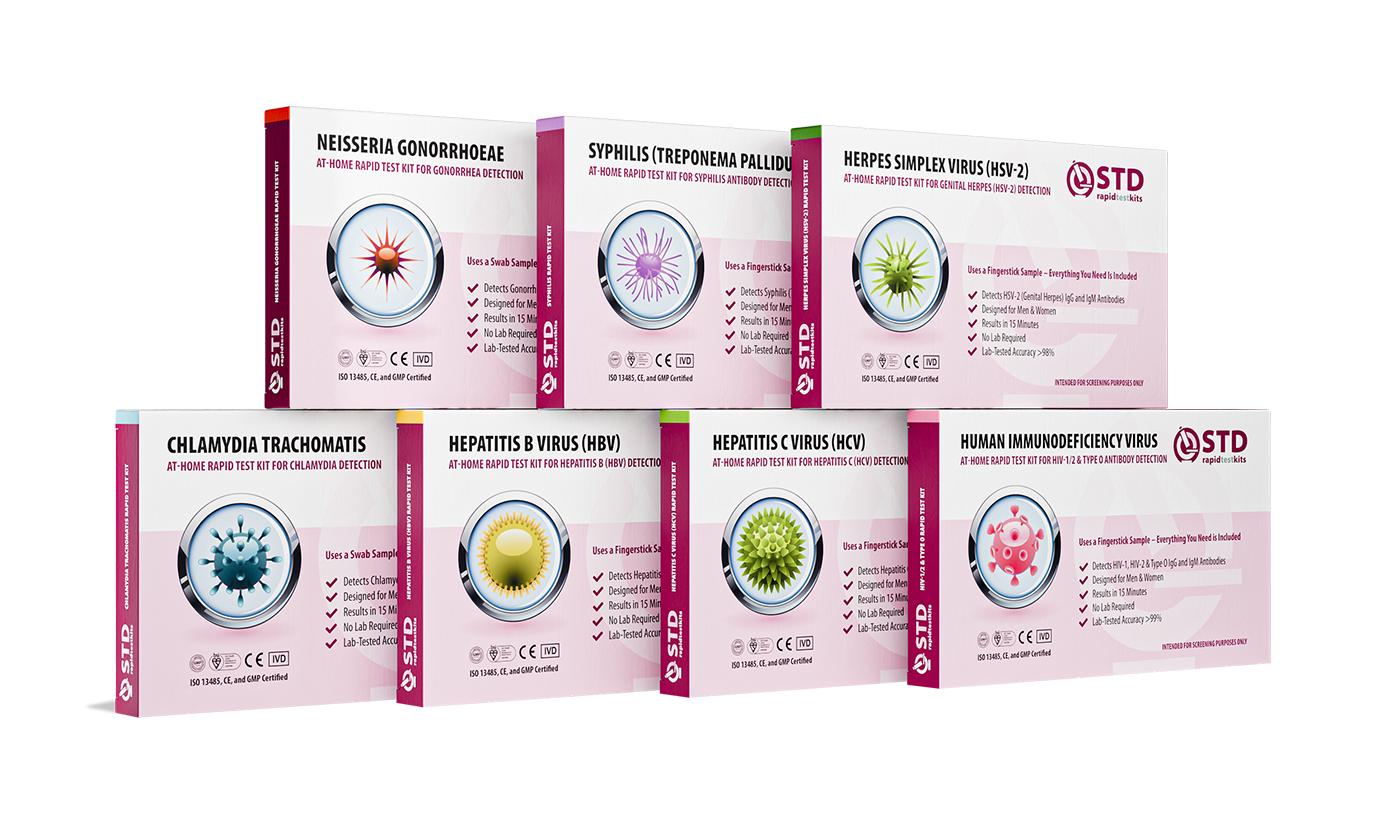
 For Men & Women
 Results in Minutes
 No Lab Needed
 Private & Discreet
For all 7 tests
Timing Matters More Than the Soap Itself
Soap isn’t some magic eraser. It doesn’t wipe out an infection. What matters is timing, how close the washing happened relative to when you collected the sample. That’s where accuracy can shift.
If you showered the night before, that’s usually not a problem. If you washed the exact area minutes before swabbing, especially with antibacterial products, that’s when the test may have less material to detect.
This is why most testing instructions quietly include guidelines like avoiding urination, douching, or brushing teeth right before certain swabs. It’s not about being “dirty”, it’s about preserving what the test needs to see.
| Timing of Washing | Impact on Test | Recommendation |
|---|---|---|
| 12–24 hours before | Minimal impact | Generally safe |
| 2–6 hours before | Low to moderate impact | Avoid if possible |
| Immediately before | Highest risk of interference | Delay testing if possible |
The Overlooked Culprit: Antibacterial and “Intimate” Soaps
Not all soaps behave the same way. Basic soap and water can rinse away surface material, but antibacterial soaps are designed to actively reduce microbes. That’s literally their job.
And then there are “intimate washes,” which are often marketed as pH-balancing or odor-reducing. These can disrupt the natural environment of areas like the vagina, which already maintains a delicate microbial balance.
Using these products right before a swab doesn’t just clean, it can temporarily shift the microbial landscape. That makes it harder for a test to detect organisms like Chlamydia or Gonorrhea, especially if the infection is early or low-level.
One user put it this way: “I thought I was helping by using a special wash. Now I realize I might’ve just made the test less accurate.”
Oral Swabs, Toothbrushing, and Mouthwash, Same Problem, Different Area
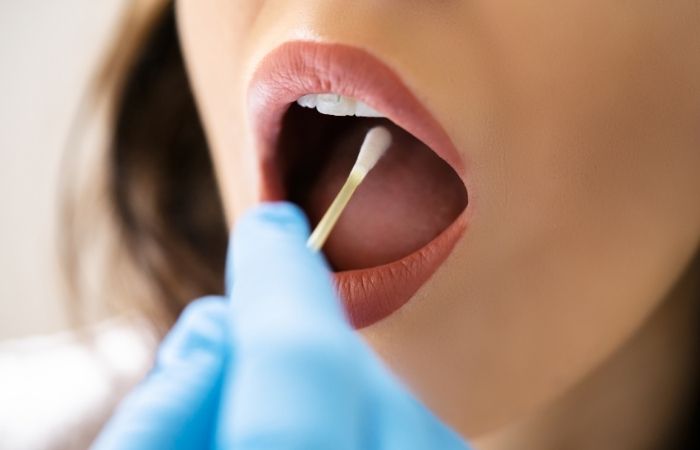
This question doesn’t just apply to genital testing. Oral swabs come with their own version of the same issue. Brushing your teeth, using mouthwash, or even drinking certain liquids right before a throat swab can reduce detectable organisms.
It’s not about your breath, it’s about what’s present on the surface of your throat and mouth at the moment of sampling. If you’ve just rinsed everything out, the swab may come back cleaner than reality.
This is why many instructions recommend avoiding eating, drinking, or brushing for a short window before testing. Again, it’s not about being “gross.” It’s about accuracy.
What About At-Home Tests vs Clinic Tests?
The science behind the test doesn’t change, but the environment does. In a clinic, timing is often more controlled. At home, you’re making those decisions yourself, which is why prep instructions matter even more.
At-home tests are designed to be accurate, but they rely on proper collection. That includes when you wash, when you urinate, and how you handle the sample. Small details can shift results, especially for swab-based testing.
That’s why it’s worth taking a minute to actually read the instructions, something most people admit they skip. As one person said: “I rushed through it because I was nervous. Looking back, I wish I slowed down.”
If you want the simplest path to reliable results, following prep guidance from a trusted provider like STD Rapid Test Kits helps reduce those “did I mess this up?” moments.

People are also reading: Syphilis in the Mouth: What It Looks Like, Feels Like, and Means
When You Should Seriously Consider Retesting
Not every situation calls for retesting, but some absolutely do. If you combined recent washing with other risk factors, it’s worth taking a second look.
You should strongly consider retesting if your situation includes recent high-risk exposure, ongoing symptoms, or a negative result that doesn’t match how your body feels. Tests are powerful tools, but they’re not immune to timing issues.
In those cases, retesting isn’t overreacting, it’s being thorough. And in sexual health, thorough is always better than guessing.
Other Easy Ways People Accidentally Mess Up a Swab Test
Soap gets most of the attention, but it’s not the only thing that can interfere with a swab test. In reality, there are a handful of small, everyday habits that can quietly affect accuracy, especially when they happen right before sampling.
And the frustrating part? Most of them come from trying to be “clean,” “prepared,” or just going about your normal routine. No one is trying to sabotage their test. It just happens.
Here are a few of the most common ones that show up again and again in real testing scenarios.
| Habit | Why It Matters | Better Approach |
|---|---|---|
| Urinating right before test | Flushes out bacteria in urethra | Wait at least 1–2 hours before testing |
| Douching | Disrupts vaginal environment | Avoid completely before testing |
| Using lubricants or creams | Can dilute or coat sample area | Avoid before swab collection |
| Brushing teeth or mouthwash | Reduces detectable oral bacteria | Wait at least 30–60 minutes |
| Recent antibiotics | Suppresses infection levels | Test after completion if possible |
None of these automatically “invalidate” a test, but they can stack the odds against detection, especially if the infection is early or mild.
Why “Doing Everything Right” Can Still Feel Confusing
This is where people get stuck. You try to be responsible. You test. You follow instructions (mostly). And then afterward, your brain starts second-guessing everything, especially small things like whether you washed too recently.
That mental loop is incredibly common. The test isn't the only thing that matters; the results also have an effect on your body, your relationships, and your sense of control.
One person described it like this: “It wasn’t just about the result. It was about trusting the result. That’s what I was really struggling with.”
And honestly, that’s the deeper issue here. Accuracy isn’t just scientific, it’s emotional. You want to believe what you’re seeing.
How to Get the Most Accurate Result Next Time
If there’s one thing to take away from all of this, it’s not “don’t wash ever.” It’s about timing and intention. You don’t need to change your entire routine, you just need to avoid disrupting the test window.
Here's what really works:
- Give it a buffer:Don't wash the area where the test will be done right before taking the sample.
- Pause certain habits:vBefore the test, don't pee, brush your teeth, or use any products for a short time.
- Follow kit instructions: Each test has slightly different prep needs, those details matter.
That’s it. No extremes. No overthinking. Just small adjustments that keep the sample as accurate as possible.
And if you’re someone who tends to spiral after testing (you’re not alone), choosing a kit that walks you through timing and prep step-by-step, like a comprehensive at-home STD test kit, can remove a lot of that uncertainty upfront.
Check Your STD Status in Minutes
Test at Home with Remedium6-in-1 STD Rapid Test Kit
 For Men & WomenResults in MinutesNo Lab NeededPrivate & Discreet
Order Now $119.00 $294.00
For all 6 tests
Let’s Be Honest, This Isn’t Really About Soap
At the surface, this question sounds technical: can soap ruin a swab test? But underneath it, there’s something else going on. It’s about control. It’s about wanting to do everything right in a situation that already feels vulnerable.
Testing can bring up a lot, fear, shame, confusion, even guilt. And when something as small as washing feels like it might have “ruined” your effort, it can hit harder than it should.
But here’s the grounded truth: one imperfect step doesn’t erase your responsibility or your effort. You showed up. You tested. That matters more than doing everything perfectly.
If anything, this question shows you’re paying attention, and that’s exactly what protects your health long-term.
FAQs
1. I literally just showered before my STD test… did I mess it up?
Probably not completely, but yeah, timing matters here. If you scrubbed the exact area right before collecting the sample, especially with soap, it could lower what the test can pick up. If your result comes back negative but something still feels off, trust that instinct and consider retesting.
2. Okay but be real, how long should I wait after washing before testing?
If you can, give it a few hours minimum, and ideally closer to a day for peace of mind. Your body naturally “resets” the surface environment pretty quickly. You don’t need to overthink it, just avoid that fresh-out-the-shower-to-swab pipeline.
3. Does soap actually kill the STD or just hide it from the test?
It doesn’t cure anything, at all. Soap might reduce what’s sitting on the surface temporarily, but the infection is still there doing its thing. So it’s less “problem solved” and more “harder to detect right now.”
4. I brushed my teeth before an oral swab… same issue?
Yeah, same concept, different location. Brushing or mouthwash can lower what’s detectable in your mouth or throat for a short window. It doesn’t mean your test is useless, but if you’re testing right after, it’s not ideal timing.
5. What’s worse, washing or peeing right before a test?
Honestly? Both can interfere, just in different ways. Washing can dilute surface bacteria, and peeing can flush out organisms from the urethra. Neither guarantees a bad result, but stacking them right before testing isn’t doing you any favors.
6. If my result is negative but I feel symptoms, should I trust it?
Not blindly. Tests are useful, but not always accurate, especially if the timing or preparation was off. It's better to listen to your body and retest than to ignore it.
7. Do I need to be “dirty” for the test to work?
No, and let’s kill that myth right now. You don’t need to avoid hygiene altogether. You just don’t want to freshly scrub the exact area right before sampling. There’s a big difference between normal clean and “just aggressively sanitized five minutes ago.”
8. Are antibacterial soaps worse than regular ones for testing?
Usually, yes. They’re designed to reduce microbes, which is literally what the test is trying to detect. Using them right before a swab can make detection harder, especially if levels are already low.
9. Why does this feel so easy to mess up?
Because no one really teaches this part. People are told to “get tested,” but not always how small prep details affect results. So you end up doing what feels right, like cleaning, without realizing it might complicate things.
10. What’s the safest move if I’m unsure about my test?
Retest with better timing. Seriously. It’s not dramatic, it’s just being thorough. Give yourself a clean window (no pun intended), follow the prep steps, and get a result you can actually trust.
You Deserve Clarity, Not Second-Guessing
Washing before a test shouldn’t turn into a full-blown spiral, but it often does. It takes a simple moment, something you’ve done your whole life, and suddenly it feels like you might’ve compromised something important. That tension isn’t really about soap. It’s about wanting a result you can trust.
If you tested under less-than-ideal timing, don’t guess, adjust. Give your body a clean window, avoid over-prepping, and retest if needed. Most of the time, it’s not about starting over, it’s about tightening the process so your result actually reflects what’s going on.
Don’t sit in that gray area longer than you have to. If there’s even a small doubt, use something like the Combo STD Home Test Kit to get a clearer answer on your terms. Private, fast, and designed to give you confidence, not confusion.
How We Sourced This Article: This article combines CDC and WHO testing guidelines with clinical literature on how to collect specimens and how sensitive they are for diagnosis. We looked at research on how the timing of samples, hygiene practices, and microbial load affect the detection of STDs, as well as real-world testing behaviors that often cause confusion or false negatives.
Sources
1. Centers for Disease Control and Prevention: Suggestions for STD Testing
2. NHS – Sexually Transmitted Infections Guide
3. Fact Sheet from the World Health Organization on STIs
4. What You Need to Know About Planned Parenthood and STD Testing
5. NCBI – Sexually Transmitted Infections Overview
6. CDC – STD Screening Recommendations (Detailed Guidelines)
About the Author
Dr. F. David, MD is a board-certified infectious disease specialist who works to prevent STIs, make sure tests are accurate, and put the needs of patients first. His work emphasizes practical, stigma-free guidance that helps people make confident, informed decisions about their sexual health.
Reviewed by: Michael R. Levin, MD, Infectious Disease | Last medically reviewed: March 2026
This article is only for informational purposes and should not be used instead of professional medical advice, diagnosis, or treatment.


