Published: October 2025 | Last updated: May 2026 | Editorial review and quality control: Martina N.
You're here because something happened, or you're worried something might have, and a clinic visit feels harder than it should be. The promise of an at-home gonorrhea test is simple: get a real answer at home, on your own time, without a waiting-room conversation you've been dreading.
The catch is that not every kit gives you the same kind of answer. Some are rapid lateral-flow strips that read in 15 minutes on a self-collected swab. Others are mail-in kits that send your sample to a certified lab for NAAT or PCR processing. They cover different exposure sites, run on different chemistry, and give you confidence in different ways. This guide walks through what each kind really does, when each kind is the right pick, and where the at-home option runs out and a clinic becomes the better tool.
Key Takeaways
- Rapid at-home kits use lateral-flow chemistry on a self-collected genital swab and read in 15 minutes. Lab-mailed kits use NAAT or PCR on the same swab type plus throat or rectal swabs and take 2 to 5 days.
- Test at least 14 days after the exposure that worries you. Earlier testing is fine for symptoms, with a follow-up test later if the first comes back negative.
What an at-home gonorrhea test actually is
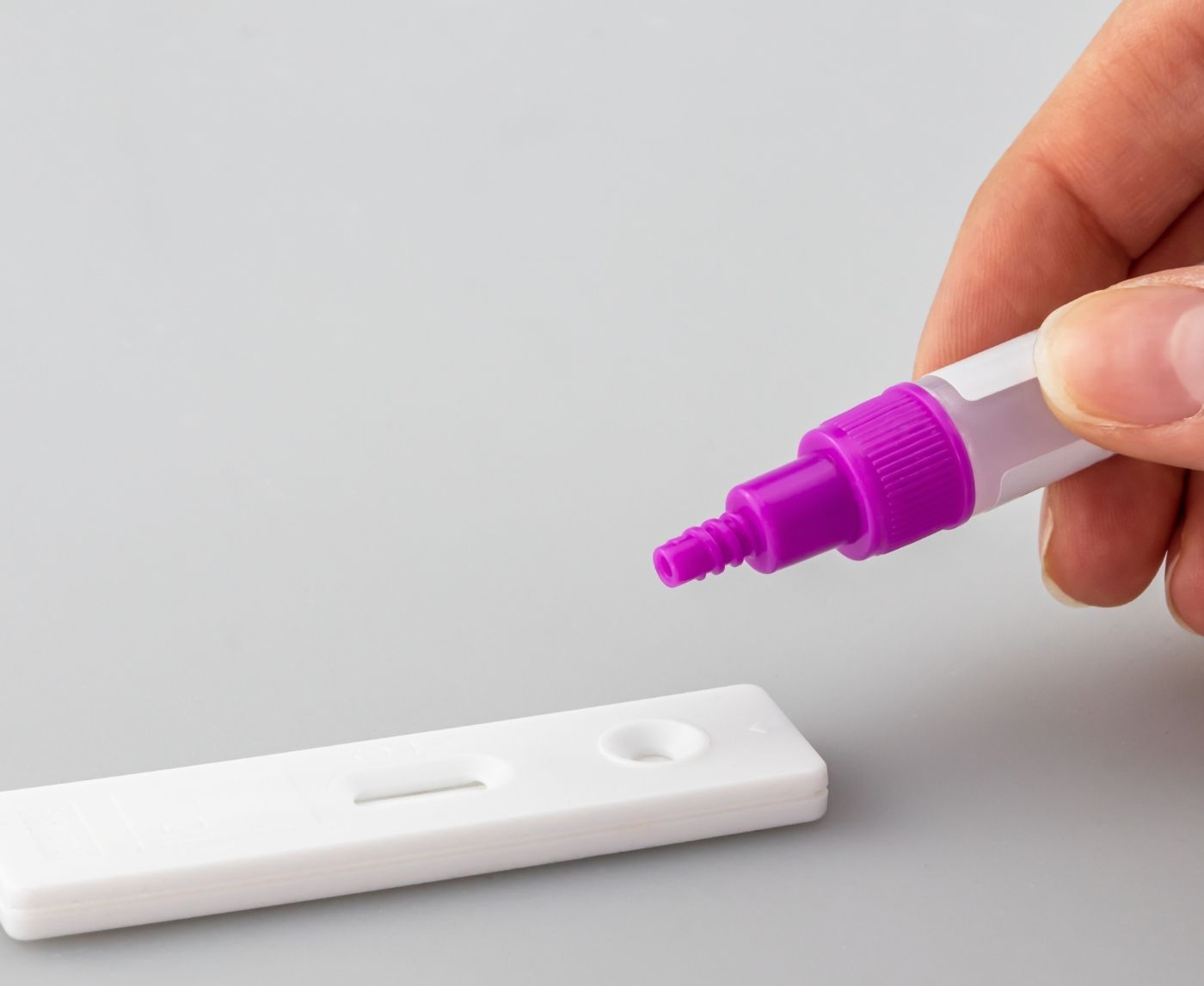
At-home gonorrhea testing falls into two product categories that often get lumped together as one. The first is the rapid lateral-flow kit. You collect a swab yourself, run the swab through a buffer, drop the buffered fluid onto a test cassette, and read a colored line in about 15 minutes. The chemistry behind that line is the same antigen-detection technology used in pregnancy tests and at-home COVID kits, just calibrated for Neisseria gonorrhoeae rather than hCG or SARS-CoV-2.
The second category is the lab-mailed kit. You collect a sample at home, ship it to a partner laboratory, and receive results through a secure portal a few days later. The lab runs a nucleic acid amplification test, often a PCR, that detects the bacteria's DNA rather than its proteins. The CDC's gonorrhea treatment guidelines describe NAAT sensitivity for detecting N. gonorrhoeae as superior to culture across both urogenital and nongenital anatomic sites.
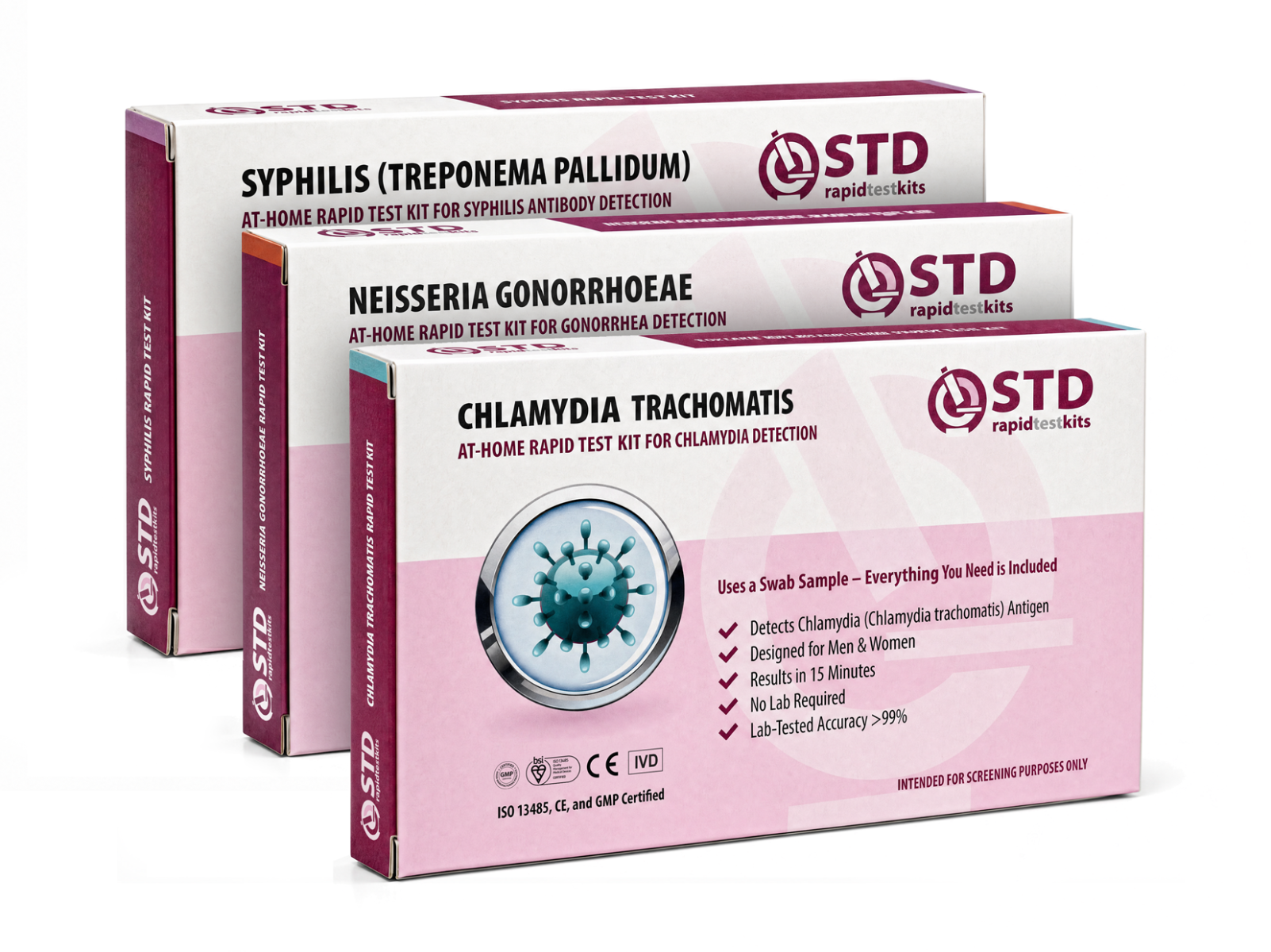
Both categories have a place. Our rapid kit is built for the genital-exposure case where you want a real answer fast and privately. A lab-mailed NAAT kit is a different tool for a different question: when you want laboratory-grade sensitivity across multiple body sites, and you can wait a few days for the result.
Rapid lateral-flow (at-home): self-collected genital swab, antigen detection, result in about 15 minutes at home.
Lab-mailed NAAT: self-collected genital, throat, or rectal swab, DNA detection in a CLIA-licensed lab, result in 2 to 5 days.
How rapid lateral-flow tests differ from laboratory NAAT
Lateral-flow and NAAT are different chemistries, and they answer slightly different questions. Calling them interchangeable, the way some marketing copy does, hides where each one is strongest.
Laboratory NAATs work by amplifying the bacteria's nucleic acid until it can be detected at very low concentrations. CDC treatment guidelines describe NAAT sensitivity as superior to culture for detecting N. gonorrhoeae from urogenital and nongenital anatomic sites, particularly in asymptomatic infections where bacterial load is low. The trade-off is the lab. You ship a sample, you wait two to five days, you get back a result certified by a CLIA-licensed facility.
Rapid lateral-flow tests work on antigen detection. The strip has antibodies bound to it that latch onto Neisseria gonorrhoeae proteins from your swab buffer. If enough bacterial protein is present, a visible line appears in 15 minutes. The strength here is speed and privacy. A negative rapid test in a person without symptoms is good evidence the genital site you tested is probably not actively shedding gonorrhea, though it does not match the analytical sensitivity of a lab NAAT.
The two tools work well as a stack. Use the rapid test for the immediate question: is there evidence of an active genital infection right now? If you get a positive, a clinic NAAT confirms it before antibiotics. If you get a negative but symptoms persist or the exposure was recent, a follow-up lab NAAT is the safer next step.
| Test type | Sample collected | Covers throat or rectal sites? | Sensitivity profile | Result speed |
|---|---|---|---|---|
| Rapid lateral-flow (at-home, our kit) | Self-collected genital swab | No, clinic NAAT for those sites | Screen-grade for genital sites; confirm positives with lab NAAT | About 15 minutes |
| Lab-mailed NAAT | Self-collected genital, throat, or rectal swab | Yes, when the kit ships those swabs | Laboratory-grade DNA detection | 2 to 5 days |
| Clinic-collected NAAT | Provider-collected swab or urine | Yes, any site | Laboratory-grade DNA detection | Same day to 3 days |
What's the best at-home gonorrhea test in 2026?
Pick by sample type and timing. Rapid lateral-flow kits are the fastest, most private option for genital exposures and read in 15 minutes from a self-collected swab. Lab-mailed NAAT kits give the highest analytical sensitivity and can include throat or rectal swabs. Either way, wait at least 14 days after exposure for the most reliable read, and confirm any positive with a clinic-collected NAAT before starting treatment.
Match the test to your exposure
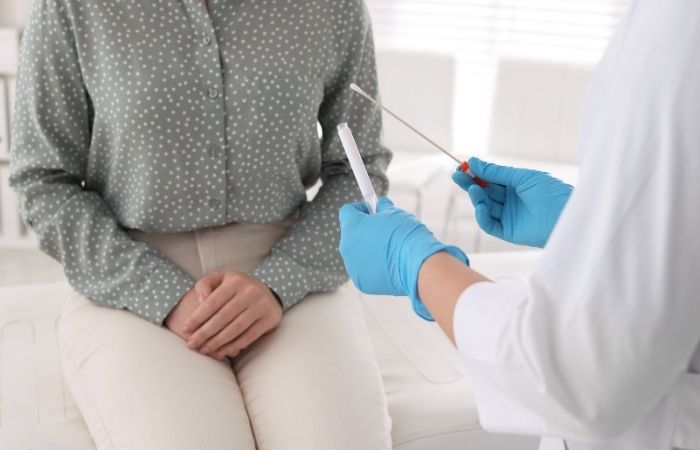
Gonorrhea is a site-specific infection. The bacteria colonize the tissue they reach. Genital sex deposits them in the urethra, the cervix, or the vaginal canal. Receptive oral sex deposits them in the pharynx. Receptive anal sex deposits them in the rectum. The CDC's gonorrhea treatment guidelines describe pharyngeal infection as commonly asymptomatic among people who have receptive oral sex. Rectal infections carry the same pattern, frequently without symptoms, and likewise require tissue-specific sampling to detect.
That last word matters. A throat infection can be entirely silent. A rectal infection can be entirely silent. The only reliable way to find them is to test the actual tissue, with a swab collected from that site, processed by a lab that can detect gonococcal DNA at very low load. A urine sample from a throat-exposed person catches very little. A genital swab from a rectum-exposed person catches very little.
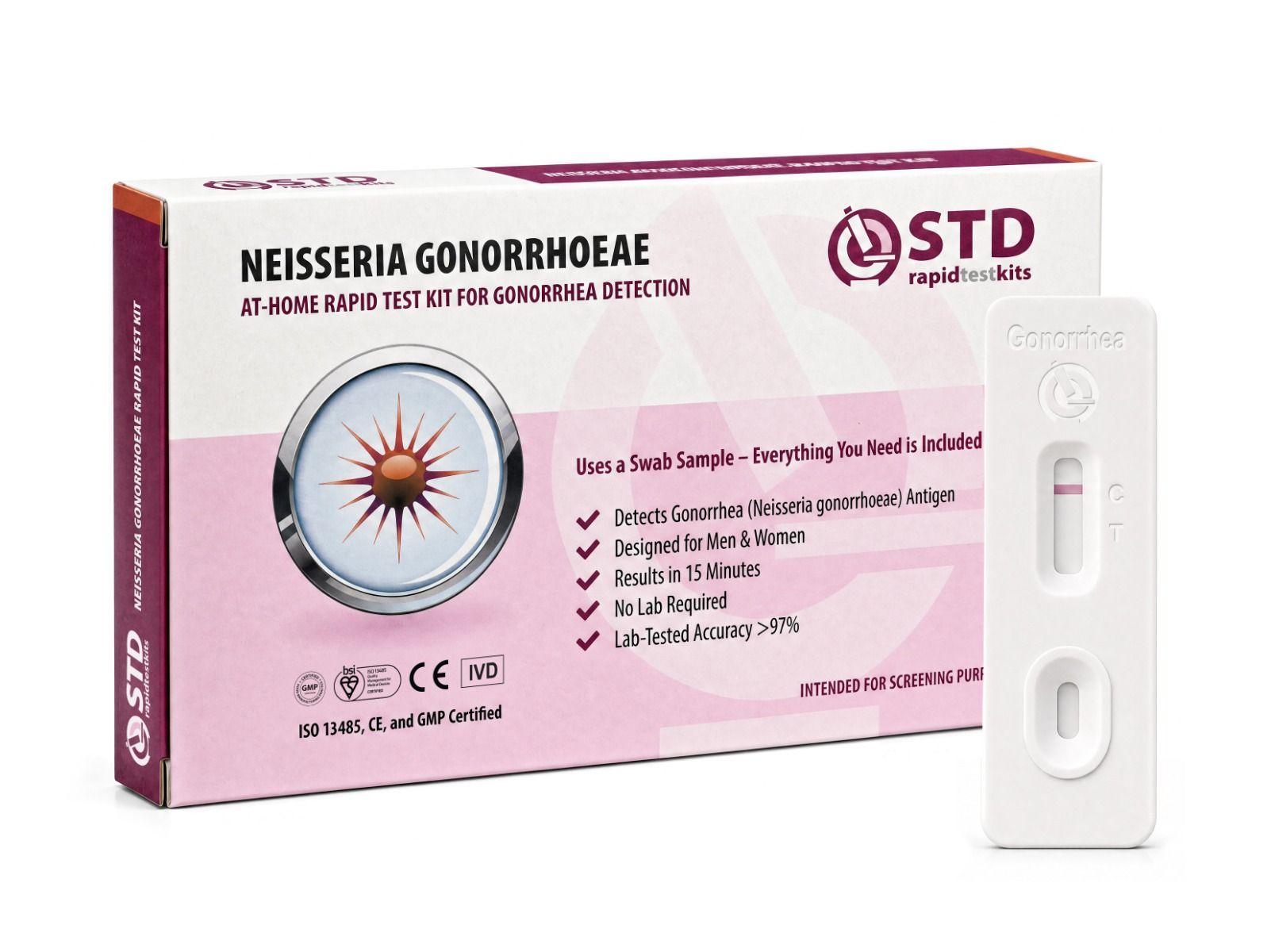
Our kit is a self-collected genital swab and tests genital sites only. It works when the exposure that worries you was vaginal, penile, or shared genital contact. For a pharyngeal or rectal exposure, you need a clinic visit or a lab-mailed NAAT kit that includes the right swab. We do not sell a throat-swab home test, and we do not sell a rectal-swab home test.
A negative result from a kit that does not test your exposure site does not rule out infection at the exposure site.
| Exposure type | Sample needed | Why it matters |
|---|---|---|
| Vaginal or penile sex | Genital self-swab (our rapid kit) or genital NAAT | Most common exposure; rapid genital swab is a fast, private screen |
| Receptive oral sex | Pharyngeal swab (clinic or lab-mailed NAAT) | Throat infections often have no symptoms and are not detectable from a genital sample |
| Receptive anal sex | Rectal swab (clinic or lab-mailed NAAT) | Rectal infections can be asymptomatic and need tissue-specific sampling |
| Multiple exposure sites | Combination panel covering each affected site | Single-site testing misses infections at other sites |
stdrapidtestkits.com sells the rapid at-home STI kits referenced in this article. Recommendations below are based on which kit fits the reader's exposure type, not commercial benefit.
When to test: the gonorrhea window period
There is a gap between an exposure and the moment a test can reliably detect it. For gonorrhea, that gap is shorter than for many other STIs but it is real. Bacterial load needs time to build before either the antigen on a lateral-flow strip or the DNA in a NAAT can be picked up at confidence-level concentrations.
The general guidance most clinicians follow is that gonorrhea is detectable from about a week after exposure, with confidence climbing through 14 days. Test on day 3 with no symptoms, and a negative result is genuinely uncertain. Test on day 14 with a clean collection, and the result is meaningful.
There are two scenarios where you should not wait. The first is symptomatic concern: painful urination, unusual discharge, pelvic pain, or a sore throat after recent oral exposure. Test promptly and consider going to a clinic where they can test and treat empirically the same visit. The second is a known-positive partner. If someone you had recent contact with tests positive, the conservative move is to test now and again at the 14-day mark, or to be treated presumptively.
If you test before the window closes and the result is negative, do not file the worry away as resolved. Re-test at the 14-day mark, or have a clinic confirm.
Reading your result and what to do next
The result you actually receive is one of three things: positive, negative, or invalid. Each one has a defined next step.
A positive result on a rapid lateral-flow test means the strip detected gonococcal antigen above its threshold. The next step is confirmation with a clinic NAAT, then antibiotic treatment. Lateral-flow tests are reliable screens, and a positive is a strong signal worth acting on. The decisions that follow (antibiotic prescription, partner notification, abstaining from sex until treated) carry enough weight that a confirmatory clinic NAAT is worth the small extra step. CDC guidance on next steps after a positive gonorrhea test is to start treatment promptly and inform recent sexual partners so they can be tested and treated.
A negative result is meaningful only when three conditions are true: you tested at least 7 to 14 days after the exposure, you collected the sample correctly, and the test covered the site of exposure. Miss any of those, and the negative is more like a question mark than an answer. If symptoms persist after a negative result, retest or go to a clinic. Symptoms outrank tests.
An invalid or unclear result (no control line, no clear test line, or a test that simply did not run) gets repeated. Do not interpret an invalid result as negative. The chemistry did not complete, so there is no answer to interpret. Use a fresh kit and a fresh sample, or visit a clinic.
Telling a current or recent partner is the part most people delay. There are reasons it feels hard, including reasons that have nothing to do with you, but the public-health math is unambiguous: untreated partners reinfect treated patients, and silent infections spread. Most jurisdictions have anonymous partner-notification services that let you send a heads-up without identifying yourself.
| Result | What it means | What to do |
|---|---|---|
| Positive | Lateral-flow detected gonococcal antigen above threshold | Confirm with a clinic NAAT, start antibiotic treatment, notify recent partners |
| Negative | No antigen detected at this site, this time | Trust only if the timing, collection, and site were right; otherwise retest at 14+ days |
| Invalid or unclear | The test did not complete, or no control line appeared | Repeat with a fresh kit or visit a clinic; do not read as negative |
False negatives, bad swabs, and user error
A test is only as good as the sample you give it. The most common reasons an at-home result lands wrong come from sampling, not chemistry. The swab does not reach the right tissue. The buffered fluid sits too long before being added to the cassette. The test was run before the window period closed. The user peed within an hour of running a urine NAAT, washing out the sample.
The fix for most of this is to read the kit's instructions completely before opening anything, and to follow them exactly the first time. Kits with video walk-throughs see far fewer user-error reports than kits with paper-only inserts. If your kit ships with a QR code to a how-to video, watch it.
A specific example that comes up often: a vaginal self-swab too soon after douching. The wash dilutes any antigen present and can produce a falsely negative read. Same idea for a urine sample within an hour of urinating: too dilute, not enough material. The test runs, the result reads negative, the infection is still there.
If the result you get does not match what your body is telling you, the symptoms outrank the result. Retest, or go to a clinic. A 99-dollar kit cannot override the experience of pelvic pain or a fever.
| Common error | What happens | How to avoid it |
|---|---|---|
| Testing too early | Bacterial load too low to detect; result reads falsely negative | Wait at least 7 days, ideally 14, after the exposure |
| Sample too dilute | Antigen below detection threshold; cassette reads negative | Avoid douching, brushing teeth, or peeing within an hour of collection |
| Shallow or rushed swab | Not enough material on the swab for the cassette | Follow the depth and rotation instructions in the kit insert exactly |
| Reading too early or too late | Lines have not developed, or have faded past the read window | Read at the time stated in the kit, usually 15 minutes after applying the sample |
Privacy, cost, and accessibility
For a lot of readers, the at-home option is the only realistic option. Many people skip testing entirely when it requires a face-to-face conversation they are not ready to have.
Most at-home kits arrive in plain packaging with no visible branding. Results, when they are lab-processed, come through a secure portal rather than insurance billing. There is no chart note that follows you. For people in shared housing, in small towns where the receptionist knows your last name, or in jobs where the time-off conversation would itself be a disclosure, that matters.
Cost varies by kit type and panel coverage. Insurance rarely covers at-home STI testing, though it covers clinic visits. If money is the constraint, the cheapest reliable path is a free public-health clinic. Many cities run them, and most metropolitan areas have at least one walk-in option. Most county and city health departments list free walk-in STI clinic locations on their websites.
| Testing path | Typical cost (USD) | Speed and trade-offs |
|---|---|---|
| Rapid lateral-flow at-home kit (single test) | About 30 to 50 | Result in 15 minutes; genital site only; confirm any positive with a clinic NAAT |
| Lab-mailed NAAT kit (multi-site panel) | About 100 to 200 | 2 to 5 days; throat or rectal swabs available; lab-grade sensitivity |
| Public-health clinic walk-in | Often free or low-cost | Same-day or next-day; clinic visit required; some areas have wait times |
What to do with what you know
Pick the test that matches your exposure. For genital concerns where you want a fast, private screen, our rapid lateral-flow kit is the right tool. For throat or rectal exposures, you need a clinic visit or a lab-mailed NAAT panel that includes those swabs.
Wait the window. Test at 7 days at the earliest, 14 days for confidence. If you test early and the result is negative, retest at the 14-day mark before deciding the worry is over.
Take a positive seriously. Confirm at a clinic, get treated, abstain from sex until your provider clears you, and let recent partners know so they can test too. Gonorrhea is curable with the right antibiotic regimen, and most people who get caught early are back to baseline quickly. Anonymous notification services exist in most regions for situations where direct contact feels too hard.
NAAT sensitivity for detecting N. gonorrhoeae from urogenital and nongenital anatomic sites is superior to culture but varies by NAAT type.
FAQs
- How accurate are at-home rapid gonorrhea tests compared to a clinic NAAT?
- Lab-based NAATs are the analytical gold standard and outperform culture methods for detecting Neisseria gonorrhoeae across both urogenital and nongenital sites, per CDC treatment guidelines. Rapid at-home lateral-flow kits use a different chemistry and give you a fast, private screen rather than a laboratory-grade result. The pragmatic stack is to use the rapid test for the immediate question and confirm any positive with a clinic NAAT before starting treatment. A negative rapid result with no symptoms after the window has closed is good evidence the site you tested is not actively shedding.
- Can I test for throat gonorrhea with an at-home kit?
- Not with our kit, and not with most rapid kits on the market. A throat infection has to be tested with a pharyngeal swab processed by a lab that runs NAAT on it. Some lab-mailed kits include a throat swab in the panel; clinic visits also handle this directly. If you had receptive oral sex with a partner who tests positive, the right move is a clinic visit or a lab-mailed NAAT kit that ships a throat swab.
- What is the gonorrhea window period?
- Test at 14 days for a reliable read. Testing earlier (around 7 days) is reasonable if you have symptoms or a known-positive partner, but follow up at 14 days before ruling anything out. Inside the window with no symptoms, treat a negative result as preliminary rather than definitive.
- I tested positive at home. Do I really need to confirm at a clinic?
- Yes, when possible. Lateral-flow tests are good screens, and a positive is a strong signal worth acting on. The decisions that follow (antibiotic regimen, partner notification, abstaining until treated) carry enough weight that a confirmatory clinic NAAT is worth the extra step. Many clinics will start treatment the same visit. CDC guidance is to begin treatment promptly when gonorrhea is detected.
- Can I use an at-home gonorrhea kit during pregnancy?
- Yes, in most cases. Pregnancy makes screening more important, not less, because untreated gonorrhea can pass to the baby during delivery. Talk to your prenatal provider about which test makes sense at which point. Many providers run gonorrhea screening at the first prenatal visit and again in the third trimester for those at higher risk.
- How soon after antibiotic treatment can I retest?
- Wait at least three to four weeks before re-testing. NAAT-based tests detect bacterial DNA, including DNA from dead bacteria, for some time after a successful course of treatment, which can produce a falsely positive result. The CDC recommends a test of cure for pharyngeal gonorrhea specifically, typically two weeks after treatment ends; for genital infections, retesting around three months later checks for reinfection rather than treatment failure.
- Is at-home testing really private?
- Yes, in the ways that matter most. Reliable kits arrive in plain unbranded packaging. Results, when lab-processed, are delivered through a secure portal rather than billed through insurance, so there is no chart note tied to your medical history. The kit itself does not require a name on file in your local primary-care system. For people who would skip testing entirely if it required an in-person visit, the at-home option is what makes the test happen at all.
How we sourced this article: This guide pulls together current public-health and medical-organization guidance and translates it into plain English for at-home decisions. Claims about gonorrhea testing chemistry, sample-site coverage, post-test next steps, and treatment timing are aligned with current CDC, WHO, and NHS guidance. Specific clinical claims are linked inline to the source page that supports them. Where our rapid lateral-flow chemistry differs from laboratory NAAT, we say so explicitly rather than implying equivalence.
- U.S. Centers for Disease Control and Prevention. Gonococcal infection treatment guidelines covering NAAT diagnostic recommendations, sample-site coverage for genital, pharyngeal, and rectal infections, and antibiotic treatment regimens.
- U.S. Centers for Disease Control and Prevention. STI testing index providing general guidance on at-home and clinic-based screening pathways for sexually transmitted infections.
- U.S. Centers for Disease Control and Prevention. Next steps after a positive gonorrhea or chlamydia test, including treatment, partner notification, and retesting timelines.
- UK National Health Service. Gonorrhoea overview covering symptoms, testing access, treatment, and complications.
- World Health Organization. Sexually transmitted infections fact sheet covering global epidemiology, screening recommendations, and the public-health rationale for accessible testing.
