

Published: September 2025 | Last updated: April 2026 | Editorial review and quality control: Martina N.
Gonorrhea is the second most commonly reported bacterial sexually transmitted infection in many high-income countries, behind chlamydia. The pattern that catches most people off-guard is how often it shows no symptoms at all, especially in women and at non-genital sites. By the time discharge or pain appears, the infection has often already had a chance to be passed on, which is a big part of why public-health agencies call it a stubborn epidemic despite gonorrhea being curable with antibiotics.
This guide walks through what gonorrhea actually feels like in men and women, what to expect at the throat, rectum, and eye, when symptoms typically appear after exposure, the complications that follow if it is left untreated, and when an at-home rapid swab test makes sense.
What are the most common symptoms of gonorrhea?
In men, gonorrhea most often causes painful urination and a yellow, white, or green discharge from the penis, usually starting within 1 to 14 days of exposure. In women, common signs include unusual vaginal discharge, painful urination, or bleeding between periods, but most cervical infections cause no obvious symptoms at all, according to the CDC. Pharyngeal (throat) and rectal infections are even more frequently silent. Because so many cases are asymptomatic, regular testing is the only reliable way to rule gonorrhea out.
Key Takeaways
- Most women with cervical gonorrhea, and a meaningful share of men with urethral gonorrhea, have no noticeable symptoms, so testing is the only reliable way to rule it out.
- When symptoms do appear, they usually start within 1 to 14 days after exposure, with painful urination and unusual genital discharge as the two most common signs.
What is gonorrhea?
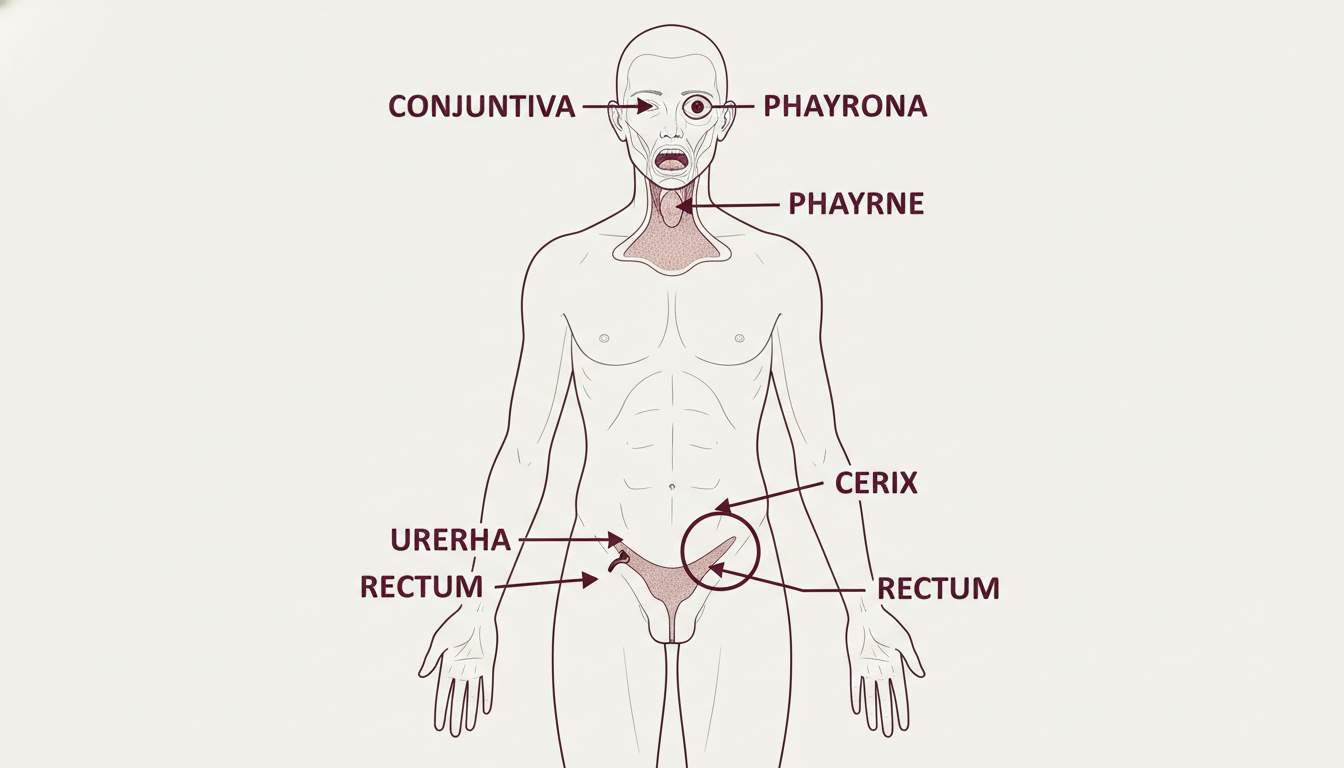
Gonorrhea is a bacterial infection caused by Neisseria gonorrhoeae, sometimes called the gonococcus. The bacterium thrives on warm, moist mucosal surfaces of the body, which means it can colonize the urethra, the cervix, the lining of the rectum, the back of the throat, and even the conjunctiva of the eye. It does not survive long outside the body, so the infection spreads almost exclusively through direct sexual contact: vaginal, anal, or oral.
Gonorrhea is one of the most reported bacterial STIs in the United States, the United Kingdom, and most of Europe. According to the CDC's gonorrhea page, reported case rates climbed steadily through the late 2010s before plateauing in the early 2020s. Public-health agencies worldwide track it closely because of growing concern about antibiotic resistance, especially to ceftriaxone-based first-line regimens.
You do not need ejaculation, penetration, or visible symptoms in your partner for the bacterium to transfer. A previous infection also does not protect you from being reinfected. Pregnant individuals can pass gonorrhea to a newborn during vaginal delivery, which is why prenatal screening for gonorrhea (and chlamydia) is part of routine antenatal care in many countries.
The highest reported case rates fall in the 15 to 24 age group, but anyone sexually active can be infected. Risk goes up with new partners, multiple partners, condomless sex, and a previous STI in the past year. Men who have sex with men are screened more often because pharyngeal and rectal infections are more common in this group and are frequently silent.
When do gonorrhea symptoms typically appear?
For people who develop symptoms, onset is usually within 1 to 14 days after exposure. Most men who become symptomatic notice something within the first week. Women who develop symptoms often take a little longer, and even then the signs can be mild enough to be confused with a urinary tract infection or a yeast infection. The CDC fact sheet on gonorrhea is explicit that an absence of symptoms does not mean an absence of infection.
The window where the bacterium is detectable on a swab or urine sample is shorter than the window for some other STIs. Laboratory NAAT (nucleic acid amplification) testing can typically detect N. gonorrhoeae within a few days of exposure. Rapid lateral-flow swab tests, including the kits sold on this site, use a different chemistry and are designed to detect bacterial antigens once the infection has had time to establish, generally from about a week after exposure onward. The two technologies are complementary: at-home rapid tests are useful for fast, private screening, and laboratory NAAT remains the analytical gold standard for confirming a positive or ruling out a recent exposure that is still inside the rapid-test window.
Symptoms also vary by where the bacterium has set up. The next sections walk through the typical pattern by site.
| Site of infection | Typical incubation | Most common signs |
|---|---|---|
| Urethra (men) | 1 to 7 days | Painful urination, white or yellow-green penile discharge |
| Cervix (women) | Up to 14 days | Unusual discharge, intermenstrual bleeding, pelvic discomfort |
| Rectum | 5 to 14 days | Anal discharge, soreness, painful bowel movements |
| Throat (pharynx) | Often silent | Mild sore throat, redness, swollen neck nodes |
| Eye (conjunctiva) | 1 to 14 days | Severe purulent conjunctivitis, eye pain, swelling |
Symptoms of gonorrhea in men
Men are more likely than women to develop noticeable symptoms when infected, but it is not universal. Estimates summarized by the CDC and the NHS gonorrhoea page suggest a meaningful share of men with urethral gonorrhea remain asymptomatic, though the majority do experience at least one of the following within 14 days of exposure:
- A burning or painful sensation when urinating, often the first symptom noticed
- White, yellow, beige, or green pus-like discharge from the tip of the penis (gonococcal urethritis)
- Increased frequency or urgency of urination
- Pain, swelling, or tenderness in one or both testicles, which can signal that the infection has spread to the epididymis
- Itching, redness, or mild swelling at the urethral opening
If the infection has been transmitted through anal sex, men can also develop rectal symptoms (covered separately below) without any genital signs at all. The same is true of throat infections from oral sex. Many men assume they would notice if something were wrong, but a clean-feeling urethra does not rule out a pharyngeal or rectal infection from the same exposure event.
Untreated urethral gonorrhea in men can ascend to the epididymis and, more rarely, to the prostate or seminal vesicles, sometimes leaving residual fertility consequences. Disseminated gonococcal infection (where the bacterium reaches the bloodstream) is uncommon but serious, and can present with joint pain, fever, and a characteristic pustular rash on the limbs.
Pharyngeal and rectal gonorrhea from oral or anal exposure cause no urethral symptoms at all. If your possible exposure included oral or anal sex, treat the absence of urethral discharge as reassuring for the urethra only, not as a rule-out for the other two sites. Clinic-administered swabs of the throat or rectum are the right path for those concerns; our at-home kit covers the genital exposure on the same encounter.
Symptoms of gonorrhea in women
The single most important fact about gonorrhea in women is that most cervical infections produce no noticeable symptoms at all, according to both the CDC and the WHO fact sheet on gonorrhoea. When signs do appear, they are often mild, dismissed as a normal cycle change, or mistaken for a yeast infection or a urinary tract infection. That is why annual screening is recommended for sexually active women under 25 and for older women with new or multiple partners.
When women do develop symptoms, the most commonly reported are:
- Unusual vaginal discharge that can be thin, watery, creamy, or slightly yellow-green
- Pain or burning when urinating, often the symptom that first prompts a clinic visit
- Bleeding between periods or heavier than usual menstrual flow
- Bleeding after sex, particularly when the cervix is inflamed (cervicitis)
- Mild lower-abdominal or pelvic discomfort, which can intensify if the infection ascends to the upper reproductive tract
- Painful intercourse
Severe pelvic pain, fever, or a feeling of being generally unwell can indicate that the infection has progressed to pelvic inflammatory disease (PID). PID is a serious complication of untreated gonorrhea or chlamydia that can lead to infertility, per NHS guidance on gonorrhoea. The CDC's page on pelvic inflammatory disease separately describes scar-tissue formation in and around the fallopian tubes that can lead to tubal blockage and ectopic pregnancy.
Severe pelvic pain, fever, or feeling generally unwell after a possible exposure: treat that as a clinic-priority situation, not something to wait out. This pattern can indicate pelvic inflammatory disease, which needs prompt evaluation and antibiotic treatment. The longer PID goes untreated, the higher the risk of permanent fallopian-tube damage.
Throat, rectal, and eye symptoms of gonorrhea
Gonorrhea is not just a genital infection. The same bacterium can colonize the throat after oral sex, the rectum after receptive anal sex, and the conjunctiva of the eye if infected secretions reach it (most often via hand-to-eye contact). These extragenital infections matter for two reasons. First, they are even more likely to be silent than genital infections. Second, our at-home rapid swab kit is designed for genital self-collection, not for pharyngeal or rectal sampling. If you have a specific throat or rectal concern from a known exposure event, a clinic-administered swab is the right path; our kit is most useful for the urethral or cervical exposure on the same encounter.
Pharyngeal (throat) gonorrhea
The vast majority of throat infections cause no symptoms. When symptoms do appear, they are usually mild and easy to dismiss: a sore throat, redness, or swollen lymph nodes in the neck. Pharyngeal gonorrhea is a particular concern as a reservoir for antibiotic-resistant strains and is most common among men who have sex with men.
Rectal gonorrhea
Rectal infections can be entirely silent, but when symptoms occur they include anal itching, soreness, mucous or pus-like discharge, light bleeding, painful bowel movements, and a feeling of needing to pass stool when nothing comes (tenesmus).
Gonococcal conjunctivitis
If infected genital secretions are transferred to the eye, gonorrhea can cause a severe purulent conjunctivitis with thick yellow discharge, eye pain, and significant swelling. In newborns, this can be transmitted during vaginal delivery and is potentially sight-threatening if not treated promptly. Most countries provide routine eye prophylaxis at birth specifically to prevent this complication.
Why so many gonorrhea infections are silent
The asymptomatic-carrier problem is the main reason gonorrhea has remained common despite being curable. According to the CDC's gonorrhea page, most women with the infection do not have any symptoms, and an even larger share of pharyngeal and rectal infections in any sex stay silent.
Two features of N. gonorrhoeae explain this. The bacterium can colonize mucosal surfaces without triggering the kind of inflammation that drives obvious discharge or pain. And when the immune response does engage, it often produces vague systemic feelings (mild discomfort, low-grade lymph node tenderness) rather than the specific signs people associate with an STI.
The practical consequence is that anyone sexually active outside a long-term mutually monogamous relationship has a non-trivial chance of carrying gonorrhea without knowing it. That is the case the public-health system makes for routine screening, and it is the case for at-home testing as a low-friction option between clinic visits.
If you had a possible exposure, do not let the absence of symptoms persuade you that you are in the clear. Most pharyngeal and rectal infections cause nothing noticeable, and most cervical infections in women are silent too. The only way to rule gonorrhea out is to test, then retest at the appropriate window if your first test was very early in the exposure window.
When should you test for gonorrhea?
Two situations call for a gonorrhea test. The first is a known or suspected exposure: a partner who has tested positive, condomless sex with a new partner, or any sexual contact you are uncertain about. In this case, test about 7 to 14 days after the exposure event. Earlier than that and a rapid antigen test may not yet detect enough bacterial antigen on the swab; later than that and you have given the infection time to spread or progress.
The second is routine screening when you have no specific exposure in mind. The CDC recommends annual gonorrhea screening for all sexually active women under 25 and for older women with risk factors (new partner, multiple partners, partner with an STI). Sexually active men who have sex with men should be screened at least annually, and more frequently with multiple partners. Men who are heterosexually active are not part of the routine annual-screening recommendation in the US, but should test promptly after any new exposure.
If symptoms are present, do not wait. Painful urination, abnormal discharge, or pelvic pain after a possible exposure should prompt either an at-home test or a clinic visit within the next few days. If a rapid test comes back positive, see a clinician for confirmation and treatment with the current antibiotic regimen.
Note: stdrapidtestkits.com sells at-home rapid test kits, and the kit recommendations below are from our catalog. The editorial guidance in this article is written independently of the commerce side, and we do not recommend a kit when a clinic visit is the better path.
What happens if gonorrhea is left untreated?
Most untreated gonorrhea infections do not stay limited to the original site. Given enough time, the bacterium ascends or disseminates, and the consequences are different by sex.
In women, the most common complication is pelvic inflammatory disease. The CDC's page on pelvic inflammatory disease describes scar-tissue formation in and around the fallopian tubes that can cause tubal blockage, ectopic pregnancy, infertility, and long-term pelvic pain. PID can be silent or only mildly symptomatic, which is part of why gonorrhea screening is built into routine well-woman care under 25. Untreated infection during pregnancy also raises the risk of premature labor and of passing the bacterium to the newborn during delivery, which can cause severe eye infection in the baby.
In men, untreated urethral gonorrhea can spread to the epididymis (epididymitis), occasionally causing pain, swelling, and potential fertility consequences. Spread to the prostate or seminal vesicles is rarer but possible.
In any sex, untreated gonorrhea can disseminate into the bloodstream, producing disseminated gonococcal infection: fever, joint pain, tendon inflammation, and a characteristic pustular rash on the hands and feet. This is a medical emergency that needs intravenous antibiotics.
Gonorrhea and HIV transmission risk
HIV is one of the top fears that brings people to articles like this one, so it is worth a clear answer rather than a footnote. The CDC's gonorrhea page is explicit that untreated gonorrhea increases the chances of both getting and giving HIV. The mechanism in plain terms is that gonococcal infection inflames the genital, rectal, or pharyngeal mucosa, which creates more entry points for the virus and increases viral shedding at the same site for someone already living with HIV. The risk runs in both directions: an HIV-negative person with gonorrhea is more vulnerable to acquiring HIV from a partner, and an HIV-positive person with untreated gonorrhea is more likely to transmit it. The practical takeaway is simple: if you test positive for gonorrhea, getting tested for HIV at the same visit is a sensible precaution, and treating the gonorrhea promptly reduces both transmission directions.
The WHO has flagged Neisseria gonorrhoeae as a high-priority pathogen on its antimicrobial-resistance watch list. Several drug classes that worked in the 2000s no longer do, and resistance to ceftriaxone (the current first-line treatment) has been reported in a handful of countries. This is one more reason to test promptly after exposure: the longer an infection persists, the more chances the bacterium has to acquire resistance under suboptimal selective pressure.
How at-home gonorrhea testing works
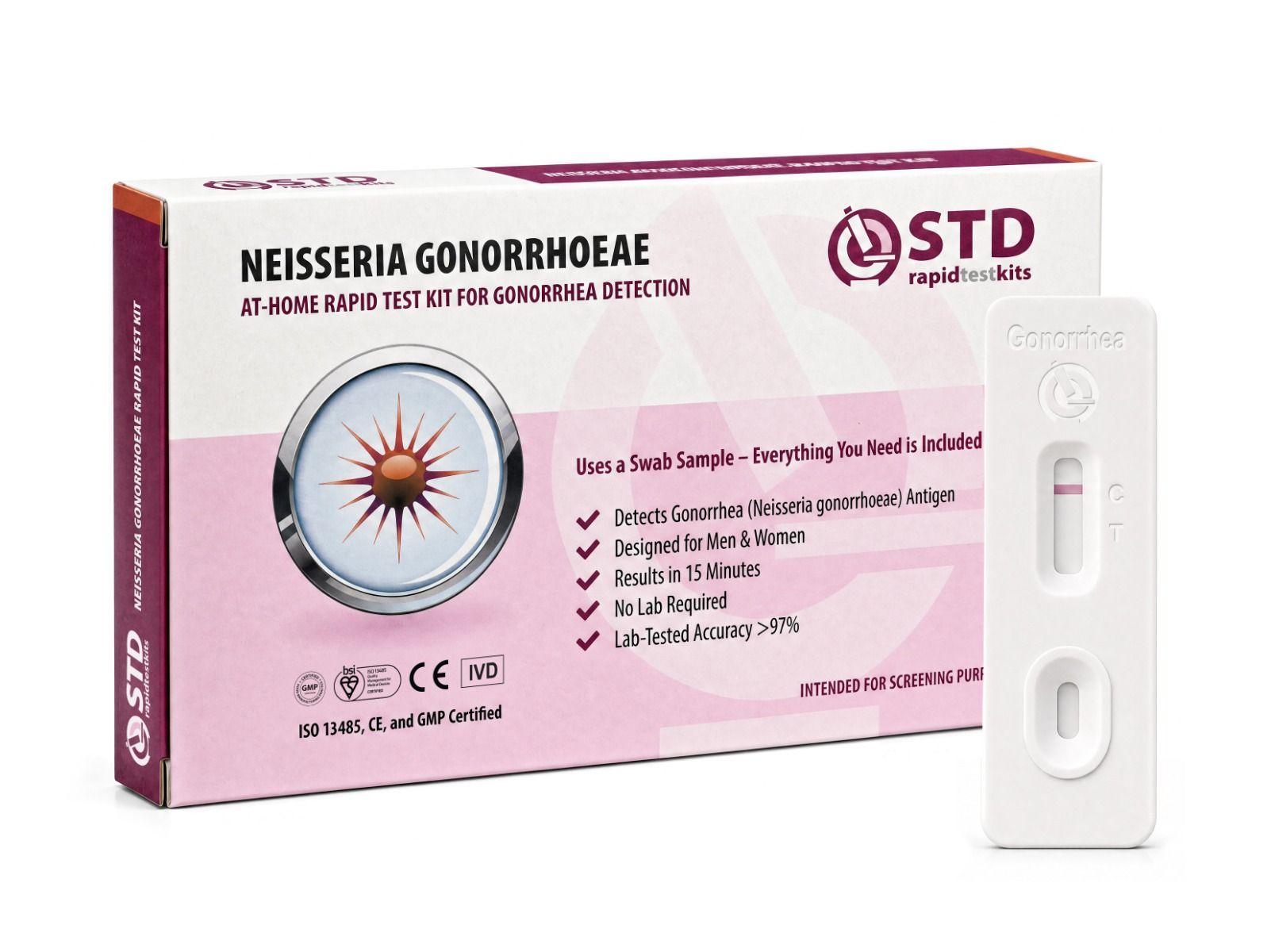
An at-home rapid gonorrhea kit uses lateral-flow immunoassay chemistry, the same general technology behind home pregnancy tests and rapid covid antigen tests. You collect a self-swab from the vaginal opening (women) or just inside the urethral opening of the penis (men), introduce the swab into a buffer solution, and apply a few drops to the test cassette. A control line confirms the test ran correctly. A second line, if it appears, indicates detected gonococcal antigen. Read the result at the time window stated on the kit, usually around 15 minutes.
What at-home rapid tests are good for: fast, private, low-friction screening; confirming a suspicion early; testing partners after a positive result; periodic check-ins between annual clinic screenings. What they are not a substitute for: clinic NAAT testing for definitive diagnosis before antibiotic treatment, pharyngeal or rectal sampling (which we do not currently sell as a home kit), or evaluation when you have severe pelvic pain, testicular pain, or systemic symptoms suggesting disseminated infection. In all of those situations, see a clinician.
Sensitivity of rapid lateral-flow gonorrhea tests is reasonable for symptomatic genital infections but lower than laboratory NAAT for asymptomatic carriage. That gap is why a negative rapid result, particularly after a known high-risk exposure or in someone with persistent symptoms, is worth following up with a clinic NAAT.

Most women with gonorrhea have no symptoms, and even when they do, the signs are often mild and easy to mistake for a bladder or vaginal infection. Untreated gonorrhea can cause serious permanent damage.
The bottom line on gonorrhea symptoms
If you take one thing away from this guide, let it be that the absence of symptoms is not a reliable rule-out for gonorrhea. Most women with cervical gonorrhea, and a smaller but still meaningful share of men, feel nothing. Throat and rectal infections are silent more often than not. The only way to know is to test.
If you have specific symptoms after a possible exposure, painful urination, unusual discharge, pelvic or testicular pain, or unexplained spotting, take that signal seriously and test or see a clinician within a few days. If you have no symptoms but a partner has tested positive or you are due for a routine screen, the at-home rapid test is a reasonable starting point, ideally followed by a clinic NAAT confirmation if positive.
Frequently asked questions
- How soon after sex can gonorrhea symptoms appear?
- For men, symptoms typically appear within 1 to 7 days; for women, the window can extend to 14 days, and in many cases symptoms are mild enough to go unnoticed. Absence of symptoms in the first two weeks does not rule out infection, particularly in women and at the throat or rectum.
- Can gonorrhea go away on its own without treatment?
- No. Gonorrhea will not clear on its own. Untreated infections may become less symptomatic over time as initial inflammation settles, but the bacterium remains present and can be passed to partners or progress to complications such as pelvic inflammatory disease in women or epididymitis in men. Treatment with appropriate antibiotics is required.
- What does gonorrhea discharge look like?
- In men, gonococcal urethral discharge is usually pus-like and ranges from white to yellow, beige, or green. In women, cervical gonorrhea discharge is more variable: thin and watery, creamy, or slightly yellow-green, and often only mildly increased compared with normal. Discharge alone is not enough to diagnose any STI: only a test can confirm what is causing it.
- Can you have gonorrhea without any symptoms?
- Yes, and this is common. Most cervical gonorrhea infections in women cause no symptoms, according to the CDC. Pharyngeal (throat) and rectal infections are silent in the majority of cases regardless of sex. A meaningful minority of men with urethral gonorrhea also have no symptoms. This is why public-health agencies recommend annual screening for sexually active women under 25 and for men who have sex with men, regardless of how someone feels.
- How is gonorrhea different from chlamydia?
- Chlamydia and gonorrhea are caused by different bacteria (Chlamydia trachomatis and Neisseria gonorrhoeae), but they share a lot of features: similar transmission, frequently silent, similar symptoms when present (painful urination, abnormal discharge), and overlapping complications such as pelvic inflammatory disease. Co-infection is common, which is why combined chlamydia and gonorrhea testing is a routine screen.
- Are at-home rapid gonorrhea tests reliable?
- At-home rapid lateral-flow gonorrhea tests provide a usable screening result for symptomatic genital infections, with reasonable sensitivity and high specificity when used inside the recommended exposure window. They are less sensitive than laboratory NAAT for asymptomatic carriage, particularly at non-genital sites which they are not designed to test. A positive rapid result should be confirmed at a clinic before starting antibiotics, and a negative result after a known high-risk exposure is worth following up with a NAAT.
- Does gonorrhea raise my risk of HIV?
- Yes. The CDC notes that untreated gonorrhea increases both the chance of acquiring HIV from an infected partner and the chance of transmitting HIV if you are already living with the virus. The mechanism is local inflammation, which creates more entry points for the virus and increases viral shedding. If you test positive for gonorrhea, testing for HIV at the same visit is a sensible precaution.
- What happens if gonorrhea is left untreated for years?
- Long-term untreated gonorrhea can cause irreversible complications. In women, repeated or prolonged pelvic inflammatory disease scars the fallopian tubes and is a leading preventable cause of tubal-factor infertility and ectopic pregnancy. In men, chronic epididymal infection can affect fertility. In any sex, the bacterium can disseminate into joints and the bloodstream. Antibiotic treatment is curative when given, so the goal is to find the infection earlier rather than later.
- U.S. Centers for Disease Control and Prevention. Gonorrhea fact sheet: symptoms, asymptomatic presentation in women, complications, HIV co-transmission risk, and screening recommendations.
- World Health Organization. Fact sheet on gonorrhoea (Neisseria gonorrhoeae infection): global burden, transmission, symptoms, complications, and antimicrobial resistance.
- U.K. National Health Service. Gonorrhoea condition page: symptoms in men and women, transmission, link with pelvic inflammatory disease and infertility, and treatment.
- U.S. Centers for Disease Control and Prevention. Sexually transmitted infections treatment guidelines: current recommended regimens for uncomplicated and disseminated gonococcal infection.
- U.S. Centers for Disease Control and Prevention. Pelvic inflammatory disease (PID): link with untreated gonorrhea and chlamydia, scar-tissue formation in fallopian tubes, ectopic pregnancy, infertility, and long-term pelvic pain.
