Chlamydia vs. Gonorrhea: Symptoms, Testing, and Treatment Compared
Chlamydia and gonorrhea are the two most commonly reported bacterial STIs in the U.S. They spread through the same routes, share most of the same risk factors, and both are fully curable with antibiotics when caught early. This guide walks through both infections side by side: what causes them, how they differ in symptoms and timing, how testing works at home and in a clinic, and what current CDC treatment guidance recommends in 2026.




- Chlamydia and gonorrhea are different bacterial infections with different incubation windows (1 to 3 weeks vs 2 to 14 days) and different first-line antibiotics, but they often appear together and are screened for as a pair.
- Most women with either infection have no early symptoms, which is why CDC recommends annual screening for sexually active women under 25 and for anyone with new or multiple partners.
Published: December 2025 | Last updated: May 2026 | Editorial review and quality control: Martina N.
What is the main difference between chlamydia and gonorrhea?
They are different bacteria with different incubation windows (1 to 3 weeks for chlamydia, 2 to 14 days for gonorrhea) and different first-line antibiotics: doxycycline for chlamydia, a single ceftriaxone injection for gonorrhea. Gonorrhea also carries antibiotic-resistance concerns that chlamydia does not.
Chlamydia and gonorrhea sit side by side on almost every sexually transmitted infection (STI) screening panel, and for good reason. They are caused by different bacteria, but they spread through the same kinds of contact, share most of the same risk factors, and a striking percentage of people who carry either one feel completely fine. That last point is why routine testing matters: you can carry chlamydia or gonorrhea for months without symptoms while it quietly damages reproductive tissue, raises HIV transmission risk, or passes to a partner.
If you are not dealing with a current exposure, the baseline to remember is simple: the CDC recommends annual chlamydia and gonorrhea screening for sexually active adults under 25 and for anyone with new or multiple partners. For a recent exposure, the testing section below explains when to test and which sample type fits.
If you have had a possible exposure or you are weighing whether to test, what follows lays out what each infection is, where they overlap, where they meaningfully differ, and what current public-health and clinical guidance recommends for testing and treatment in 2026. It is also honest about what at-home rapid lateral-flow tests can answer and where they need to hand off to a clinic NAAT or an in-person provider visit.
Key takeaways
- Chlamydia and gonorrhea are different bacterial infections with different incubation windows (1 to 3 weeks vs 2 to 14 days) and different first-line antibiotics, but they often appear together and are screened for as a pair.
- Most women with either infection have no early symptoms, which is why CDC recommends annual screening for sexually active women under 25 and for anyone with new or multiple partners.
What causes each infection: the bacteria behind them
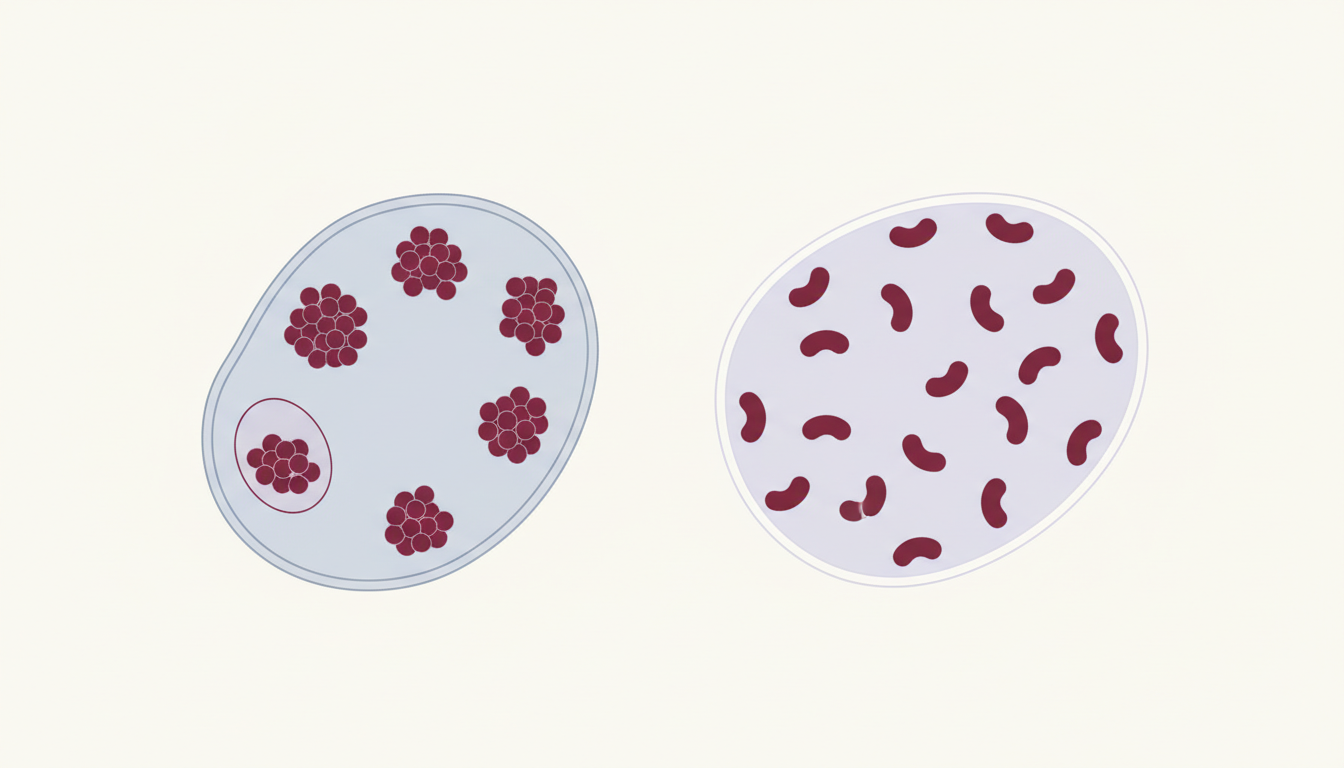
Chlamydia is caused by Chlamydia trachomatis, a small bacterium that lives and reproduces inside the cells of mucous membranes. It infects mucous membranes in the cervix, urethra, rectum, throat, and (rarely) the eyes. Because it hides inside cells, it grows slowly and often produces no obvious symptoms in the first weeks after exposure. It is the most commonly reported notifiable infection in the United States.
Gonorrhea is caused by Neisseria gonorrhoeae, a gram-negative paired bacterium that prefers the moist linings of the urethra, cervix, rectum, throat, and (rarely) the conjunctiva of the eye. It tends to multiply faster than chlamydia and is more likely to produce noticeable discharge, especially in men. Reported case counts have been climbing for several years as antibiotic resistance has spread.
Both bacteria can co-infect a single person at the same exposure event, which is why CDC clinical guidelines recommend testing for both whenever either is suspected. Coinfection rates among people who test positive for one of the two are high enough that most clinical labs run a combined chlamydia/gonorrhea panel as the default order.
Transmission for both happens through unprotected vaginal, anal, or oral sex with an infected partner, including from a partner who has no symptoms. Either organism can colonize multiple sites in the same person at the same time. Both also can pass from a pregnant person to a newborn during vaginal delivery, which is why every routine prenatal panel screens for both infections. Neither bacterium survives long outside a warm, moist mucosal environment, so transmission through toilet seats, swimming pools, or shared towels is not a realistic concern.
Where the two infections overlap
If you only looked at how they spread and how often they go undetected, chlamydia and gonorrhea would be hard to tell apart. Both share these features:
- Same transmission routes. Vaginal, anal, and oral sex with an infected partner. Sharing sex toys without cleaning or covering them between users also transmits both.
- Both are commonly asymptomatic. The majority of women infected with either bacterium have no early symptoms, and a substantial share of men with chlamydia also have no symptoms. People can transmit either infection without knowing they have it.
- Both increase HIV transmission risk. Active infection compromises the mucosal barrier and recruits immune cells to the area, which makes it both easier to acquire HIV from an infected partner and easier to transmit HIV if the person is already living with it. The per-act risk of HIV transmission stays low in absolute terms when neither STI is active, but the relative-risk increase when chlamydia or gonorrhea is active is well documented in the public-health literature. Anyone treated for chlamydia or gonorrhea after a higher-risk exposure may want an HIV test on the appropriate window schedule: a fourth-generation antigen-antibody test reliably detects HIV from about 28 days after exposure (CDC HIV testing guidance).
- Both can cause pelvic inflammatory disease (PID) in women. When the bacteria spread upward from the cervix into the uterus and fallopian tubes, they can cause scarring that affects fertility, raises ectopic-pregnancy risk, and produces chronic pelvic pain.
- Both require partner notification and treatment. Treating one partner without treating the others creates a ping-pong reinfection cycle that public-health teams routinely break by offering expedited partner therapy in many U.S. states.
- Neither produces lasting immunity. Clearing one infection with antibiotics does not protect against future exposure. Reinfection from a subsequent unprotected encounter is common.
Syphilis travels the same routes as these two, which is why a recent unprotected exposure is rarely a reason to test for just one infection. When clinicians work up a possible chlamydia or gonorrhea exposure, syphilis is usually checked on the same visit. (This site sells at-home rapid-test kits for these infections, and we recommend them only where they fit your concern; relevant kits appear below at the natural decision points in this guide.)
| Shared feature | What both infections have in common |
|---|---|
| Transmission | Vaginal, anal, or oral sex with an infected partner; vertical transmission to a newborn at vaginal delivery |
| Asymptomatic profile | Most infected women have no early symptoms; chlamydia is also frequently silent in men |
| HIV risk | Both compromise the mucosal barrier and increase HIV acquisition and transmission risk |
| Reproductive complication | PID, fallopian tube scarring, ectopic pregnancy risk, and infertility if untreated |
| Partner management | Partners from the prior 60 days should be tested and treated; expedited partner therapy is available in many U.S. states |
| Immunity after treatment | None. Reinfection from an untreated partner is common |
Where they differ: symptoms, timing, and discharge patterns
You cannot reliably tell chlamydia and gonorrhea apart by symptoms alone. Most women with chlamydia have no symptoms at all, and a substantial portion of women with gonorrhea are also asymptomatic. Many men with chlamydia are likewise asymptomatic. When symptoms do appear, the most reliable clinical differences show up in incubation period, the look of the discharge, and how often each infection is symptomatic by sex.
Incubation period. Chlamydia symptoms, when they appear at all, typically show up 1 to 3 weeks after exposure. Gonorrhea is faster: symptoms usually appear within 2 to 14 days, with most symptomatic men noticing changes within a week. The faster onset is one reason gonorrhea is more often caught at the first-symptom stage in men.
Discharge character. Chlamydia tends to produce clear or cloudy discharge from the penis, vagina, or rectum when discharge appears at all. Gonorrhea more often produces thick, opaque, yellow or yellowish-green discharge, especially from the male urethra, often described as pus-like rather than watery. The texture and color difference is suggestive but not diagnostic; only a lab test confirms which bacterium is present.
Asymptomatic rates by sex. Per the CDC chlamydia overview and the CDC gonorrhea overview, chlamydia often has no symptoms even though it can cause serious health problems. Most women with gonorrhea have no symptoms either; symptomatic men with gonorrhea more often notice urinary burning and discharge, while gonorrhea in women tends to be silent and can spread to the upper reproductive tract before any signs appear.
Pain on urination. Both infections can cause urethral irritation. Gonorrhea more often produces a sharp burning sensation, while chlamydia urethritis is sometimes described as mild discomfort that gets confused with a urinary tract infection.
Throat and rectal infection. Both bacteria can colonize the pharynx and rectum after oral or anal sex. Pharyngeal gonorrhea sometimes causes a sore throat; pharyngeal chlamydia is usually silent. Rectal infections of both kinds are most often asymptomatic, which is why anyone at risk of rectal exposure should request a rectal swab specifically. Urine and genital swabs do not reach those sites.
Site limitation in our home tests. Our at-home swab kits sample the genital site (vaginal or penile self-swab). They do not detect throat or rectal infection. If your exposure was specifically oral or anal, see a clinic for a pharyngeal or rectal NAAT.
Chlamydia vs. Gonorrhea at a glance
| Feature | Chlamydia | Gonorrhea |
|---|---|---|
| Causative organism | Chlamydia trachomatis (intracellular) | Neisseria gonorrhoeae (gram-negative diplococcus) |
| Incubation period | 1 to 3 weeks | 2 to 14 days; symptomatic men often within a week |
| Discharge when present | Clear or cloudy | Thick, opaque, yellow or yellowish-green |
| Asymptomatic in women | Most cases | Most cases |
| Asymptomatic in men | Substantial share have no symptoms | Less common; urinary burning and discharge usually noticed |
| First-line antibiotic | Doxycycline 100 mg twice daily for 7 days | Ceftriaxone 500 mg IM single dose |
| Antibiotic resistance | Not a clinical concern in 2026 | Major and growing concern; surveillance-tracked |
| Common complication | PID and fallopian tube scarring (often silent) | Epididymitis in men; rarely disseminated gonococcal infection |
The textbook differences are useful clues, but real-world symptom overlap is common. Only a lab test confirms which bacterium is present.
Both infections share most of the same symptoms when they appear at all, and most carriers feel nothing. Clinical diagnosis by symptom alone is unreliable for either chlamydia or gonorrhea, which is why every screening protocol depends on a swab or urine sample rather than physical exam.
What happens when these infections go untreated
Both infections can be cured with the right antibiotics. The damage they cause when treatment is delayed is what makes early testing matter.
Pelvic inflammatory disease in women. Untreated chlamydia or gonorrhea can ascend from the cervix into the uterus, fallopian tubes, and ovaries, causing PID. Per the CDC's pelvic inflammatory disease overview, roughly 1 in 8 women with a history of PID later experience difficulty getting pregnant. Between the two infections, chlamydia accounts for the larger share of STI-related infertility cases in surveillance data, partly because its silent course gives the bacteria more time to scar tissue before anyone notices. Gonorrhea-driven PID is more often caught at the symptomatic stage before permanent tubal damage accumulates.
Epididymitis in men. Either infection can spread from the urethra into the epididymis, the coiled tube that stores sperm at the back of the testis. Symptoms include pain, swelling, and tenderness in the scrotum. Treated promptly, epididymitis resolves without lasting effect; left untreated, it can cause local scarring and (rarely) affect sperm production (Mayo Clinic, chlamydia and gonorrhea complications).
Ectopic pregnancy risk. Scarring of the fallopian tubes from prior PID raises the chance that a fertilized egg implants in the tube rather than the uterus. Ectopic pregnancy is a medical emergency and a known long-term consequence of untreated chlamydia in particular.
Disseminated gonococcal infection. Untreated gonorrhea can rarely spread through the bloodstream and cause fever, characteristic skin lesions, joint pain, septic arthritis, and (very rarely) endocarditis or meningitis. Disseminated gonococcal infection is uncommon but serious, and is one reason any new joint pain in someone with a recent gonorrhea exposure deserves prompt evaluation.
Reactive arthritis after chlamydia. A small percentage of people develop reactive arthritis (joint inflammation triggered by the immune response to the bacteria) in the weeks after a chlamydia infection. It typically resolves but can recur.
Neonatal transmission. Babies born vaginally to a person with active untreated infection can develop conjunctivitis (both organisms) and, in chlamydia specifically, neonatal pneumonia. U.S. hospitals routinely apply antibiotic eye ointment at birth as one part of the response to this risk.
Chlamydia is a leading preventable cause of female infertility in the U.S. The mechanism is simple: the infection is silent for weeks, scarring the fallopian tubes during that time, before anyone notices anything is wrong. Annual screening prevents this by catching the infection while treatment can still keep tubes open.
Pregnancy and fertility: why prenatal testing exists
If you are pregnant, this section is the most important one. Both infections can pass from a pregnant person to a newborn during vaginal delivery, and the consequences range from manageable to serious. Newborns exposed to gonorrhea at birth can develop ophthalmia neonatorum, a severe conjunctival infection that can cause permanent vision loss if it is not treated promptly. Babies exposed to chlamydia can develop conjunctivitis and pneumonia in the first weeks of life. Antibiotic eye ointment is given routinely at birth in the United States precisely to prevent gonococcal eye infection in newborns.
The good news is that both infections can be treated safely during pregnancy. Chlamydia is treated with azithromycin during pregnancy because doxycycline is avoided in pregnancy due to its potential effect on fetal bone and tooth development. Gonorrhea is treated with the same ceftriaxone injection used in non-pregnant adults. The CDC STI treatment guidelines recommend testing for both infections at the first prenatal visit, with a repeat test in the third trimester for anyone at higher risk. The UK's NHS chlamydia guidance similarly covers testing and pregnancy-safe treatment for these infections.
Outside pregnancy, the long-term fertility impact of either infection is mostly mediated through PID and tubal scarring. People who have had PID once are at meaningfully higher risk of ectopic pregnancy and tubal infertility, and the risk rises with each subsequent episode. The single most effective fertility-preservation step is annual screening for sexually active women under 25, which catches most asymptomatic infections before they have time to scar.
Antibiotic switch in pregnancy. Doxycycline is avoided in pregnancy because of potential effects on fetal bone and tooth development, so azithromycin replaces it as the treatment for chlamydia. Ceftriaxone for gonorrhea is used at the same dose as in non-pregnant adults.
Newborn eye ointment. Antibiotic eye ointment applied at birth is the routine U.S. prevention for gonococcal ophthalmia neonatorum, the severe newborn eye infection that can otherwise cause permanent vision loss.
How testing works at home and in a clinic
The rest of this section explains how each sample type works so you can decide whether a home kit, a clinic NAAT, or both fits your situation.
Three sample types are used in current STI testing:
- Urine. First-catch urine works well for chlamydia and gonorrhea in men with urethral symptoms. It misses cervical, rectal, and pharyngeal infections.
- Genital swab. Self-collected vaginal swab in women, urethral or penile swab in men. CDC considers vaginal self-swab as accurate as a clinician-collected sample for chlamydia/gonorrhea NAAT.
- Throat or rectal swab. Required to detect pharyngeal or rectal infection, since urine and genital samples do not reach those sites.
Lab gold standard: NAAT. Nucleic acid amplification testing detects bacterial DNA or RNA at very low concentrations. NAAT runs in a clinical lab and is the most sensitive available test for both infections (typically above 95 percent sensitivity in peer-reviewed evaluations per the CDC treatment guidelines). Results typically come back in 1 to 3 days, and most U.S. clinics order a combined chlamydia/gonorrhea NAAT on a single sample.
At-home rapid testing. Home rapid kits use lateral-flow chemistry on a self-collected swab. They produce a visual result within about 15 minutes. The technology is genuinely different from lab NAAT: lateral-flow tests have lower analytical sensitivity, especially during the early window before bacterial loads are high. They are useful for screening, for getting a quick read on a recent exposure, and for people who would otherwise put off a clinic visit entirely. A positive result on a rapid test is worth confirming with a lab NAAT when you can.
Window period. For both chlamydia and gonorrhea, testing accuracy improves with time after exposure. Most authoritative guidance points to a 1 to 2 week minimum after a known exposure for reliable detection, with 14 days being the conservative line for chlamydia and slightly shorter (5 to 7 days) for symptomatic gonorrhea. Testing too early in the window can produce a false negative.
How often should you test? CDC recommends at least annual chlamydia and gonorrhea screening for all sexually active women under 25, for women 25 and older with new or multiple partners, and for anyone living with HIV. Men who have sex with men should test every 3 to 6 months at all relevant exposure sites, including quarterly screening for anyone on HIV pre-exposure prophylaxis. Pregnant people should be tested at the first prenatal visit and again in the third trimester if risk factors are present. If you are starting a new relationship or moving away from condoms with an existing partner, a one-time screening for both of you clears the air cleanly. After a known exposure, wait 2 to 3 weeks before testing to avoid a false negative.
Treatment: why the antibiotics differ
Both infections are curable, but the antibiotics that work on each are different, and the gap has widened over the last decade.
Chlamydia first-line treatment. Per the most recent CDC STI treatment guidelines, doxycycline 100 mg taken twice a day for 7 days is the preferred regimen for uncomplicated chlamydia in non-pregnant adults. Doxycycline replaced single-dose azithromycin as the preferred drug in the 2021 guideline update because the 7-day course produces higher cure rates, especially for rectal chlamydia. Azithromycin 1 g as a single dose remains listed as an alternative when doxycycline cannot be used (in pregnancy, for example).
Gonorrhea first-line treatment. The current recommendation is ceftriaxone 500 mg as a single intramuscular injection (1 g for people weighing 150 kg or more). The dose was updated upward from 250 mg in the 2021 CDC guideline revision in response to concern about reduced cephalosporin susceptibility. Oral antibiotics are no longer recommended as monotherapy for gonorrhea because of resistance. The injection-only route reflects how aggressively the CDC has tightened gonorrhea protocols as resistance has spread; Neisseria gonorrhoeae has developed resistance, one drug class at a time, to almost every oral antibiotic that used to work. Ceftriaxone-resistant strains have been detected in several countries, and public-health authorities are watching the trend closely.
What about co-infection? If gonorrhea is confirmed and chlamydia has not been ruled out by a NAAT, doxycycline 100 mg twice daily for 7 days is added to the ceftriaxone injection to cover possible chlamydia. This empirical co-treatment was the longstanding default and is still common in practice.
Course completion and partner notification. Whichever regimen is prescribed, finishing the full course matters even if symptoms clear early. Sexual contact should be avoided for 7 days after a single-dose treatment or until completion of a 7-day course, and any partners from the prior 60 days should be notified and treated. Most U.S. states allow expedited partner therapy, where the clinic can provide treatment for the partner without requiring a separate visit.
Test of cure and reinfection. Re-testing about 3 months after treatment is standard practice, because reinfection from an untreated partner is a more common cause of a positive follow-up test than treatment failure of the original infection. The 3-month timing also avoids false positives from leftover bacterial DNA that NAATs can sometimes detect if tested too soon.
The emergence of cephalosporin-resistant Neisseria gonorrhoeae would significantly limit treatment options. Continued surveillance, prudent use of antibiotics, and adherence to current CDC treatment recommendations are essential.
Antibiotic resistance and why gonorrhea is the bigger concern
Chlamydia is, in clinical terms, a relatively simple infection to treat. The standard antibiotics still work reliably and resistance is not a meaningful concern for first-line therapy in 2026.
Gonorrhea is the opposite story. Neisseria gonorrhoeae has shown a steady track record of developing resistance to whatever class of antibiotic is in widest use against it. Penicillin resistance emerged in the 1970s, tetracycline resistance through the 1980s, fluoroquinolone resistance in the 2000s, and reduced susceptibility to macrolides (azithromycin) and even cephalosporins (ceftriaxone) over the last decade. The World Health Organization identifies drug resistance as a major threat to reducing the burden of gonorrhea worldwide and runs a global surveillance program that has reported high rates of resistance to multiple antibiotic classes, including extended-spectrum cephalosporins, the current last-line treatment.
What that means for someone treated today: ceftriaxone monotherapy still works for the overwhelming majority of U.S. cases, and the larger 500 mg dose was designed to stay ahead of the resistance trend. Public-health surveillance programs in the U.S. and U.K. track every isolate that fails first-line treatment, and a positive follow-up test after a course of ceftriaxone should always be retested with antibiotic-susceptibility data, not retreated empirically.
Practical takeaway: if you are treated for gonorrhea, do the test of cure your clinician orders, and report any persistent symptoms after the injection. Treatment-failure cases are rare but matter for the broader resistance picture.
Gonorrhea resistance timeline
- 1970s: penicillin resistance emerged and ended penicillin's role as first-line therapy.
- 1980s: tetracycline resistance spread through the U.S. case isolates.
- 2000s: fluoroquinolone resistance forced removal of fluoroquinolones from first-line guidance.
- 2010s onward: reduced susceptibility to macrolides (azithromycin) and extended-spectrum cephalosporins (ceftriaxone) prompted the 2021 CDC dose increase to 500 mg IM.
Prevention: what actually reduces your risk
The interventions with real evidence behind them are also the most boring ones.
- Consistent and correct condom use. Condoms substantially reduce transmission risk for both infections when used every time and used correctly (whole-event coverage, no breakage, no sliding off). Risk is reduced substantially, though not eliminated.
- Mutual testing before unprotected sex. Both partners testing negative on a current panel before moving away from condoms turns a vague worry into a concrete one-time step. Home test kits make this easier for couples reluctant to book a clinic appointment together.
- Routine screening on the recommended schedule. Annual chlamydia and gonorrhea screening for sexually active women under 25 and for anyone with new or multiple partners catches the silent infections that cause most fertility complications.
- Partner conversations before sex with a new partner. A direct, low-drama conversation about recent testing is the single largest behavioral factor in catching infections before they spread further. Public-health communicators have stopped trying to make this conversation feel romantic and started framing it as basic logistics.
- Doxycycline post-exposure prophylaxis (doxy-PEP). CDC issued guidance in 2024 supporting doxy-PEP for gay, bisexual, and other men who have sex with men, and for transgender women, who have had a bacterial STI in the prior 12 months. A 200 mg dose taken within 72 hours of condomless sex reduces chlamydia and (to a lesser degree) gonorrhea acquisition (CDC STI treatment and prevention guidance). Talk to a clinician about whether doxy-PEP fits your situation.
No vaccine exists for chlamydia or gonorrhea as of 2026, though early-phase trials of gonorrhea vaccines (some piggybacking on the meningococcal B vaccine) are ongoing per the WHO STI fact sheet. Vaccines that prevent other STIs (HPV vaccine, hepatitis B vaccine) are still worth keeping current; they do not protect against either of these two but reduce the broader STI risk picture.
One framing worth keeping: feeling fine is not the same as being clear. Both chlamydia and gonorrhea routinely sit silently while doing real damage, and a single negative screening result is the cleanest reassurance available.
The two prevention steps with the highest individual impact
- Consistent, correct condom use during vaginal, anal, and oral sex with any new or non-monogamous partner.
- Routine screening on the CDC schedule: annually for sexually active women under 25 and for anyone with new or multiple partners; every 3 to 6 months for men who have sex with men or anyone on PrEP.
When to see a clinician
Most uncomplicated chlamydia and gonorrhea can be screened, treated, and followed up in primary care or a sexual-health clinic without a specialist visit. Some scenarios warrant in-person attention:
- Pelvic pain, fever, or abdominal tenderness in a woman with a recent positive test or known exposure. These are warning signs for PID and need same-day evaluation.
- Testicular pain or swelling in a man with a recent exposure or positive test. Possible epididymitis; needs prompt antibiotics and sometimes ultrasound.
- Persistent symptoms after a complete antibiotic course. Could be reinfection, treatment failure, or a different cause; needs retesting.
- Pregnancy or planning to conceive. Both infections affect prenatal care and neonatal outcomes; testing and any needed treatment should be coordinated with the obstetric team.
- Positive home test result. A clinic confirmation with NAAT plus the appropriate prescription is the right next step. The home result is the trigger; the clinic visit is the action.
- Specific exposure to oral or rectal infection. Our home swab kits sample the genital site only. If the exposure was oral or anal, the throat or rectal swab needs to be taken at a clinic with the right collection device.
Pelvic pain or fever in a woman with a recent positive test or known exposure can be the first sign of PID; same-day evaluation prevents tubal damage.
Testicular pain or swelling in a man with a recent exposure can be epididymitis and needs prompt antibiotics, sometimes alongside ultrasound to rule out testicular torsion.
Persistent symptoms after a completed antibiotic course can mean reinfection, treatment failure, or a separate cause, and warrants retesting rather than waiting it out.
What to do next
If you are weighing whether to test at home, go straight to a clinic, or wait a little longer, the quick decision guide below maps the most common situations to a clear next step. It is general guidance, not a substitute for a provider's advice about your specific case.
Should you test, and how?
Do you have severe symptoms right now, such as a high fever, severe pelvic pain, or testicular pain and swelling?
Yes: See a clinician or urgent care the same day. These can signal PID or epididymitis, which need an exam and prompt antibiotics rather than a home screen.
Was your only possible exposure oral or anal, or are you currently pregnant?
Yes: Book a clinic visit. Throat and rectal infections need a site-specific swab our home kit does not cover, and testing in pregnancy should be coordinated with prenatal care.
Has it been at least 14 days since a possible genital exposure, with no severe symptoms?
Yes: An at-home rapid swab is a reasonable first step. Confirm any positive with a lab NAAT and start treatment with a provider; notify partners from the prior 60 days.
No: Wait until the 14-day window closes before testing, or retest then, because testing too early can produce a false negative.
Guidance only. A healthcare provider can advise based on your specific situation.
Frequently asked questions
- Can I have chlamydia or gonorrhea without any symptoms?
- Yes, and this is the most important fact about both infections. Most women with chlamydia have no early symptoms, and a substantial share of men do not either. Gonorrhea is more often symptomatic in men but commonly silent in women. Routine screening is the only reliable way to catch silent infections before they cause complications.
- How long after a possible exposure should I test?
- For a home rapid lateral-flow test, 14 days is the practical minimum for both infections, because earlier tests risk a false negative while bacterial loads are still below the kit's detection threshold. Symptomatic gonorrhea sometimes builds to detectable levels faster, with symptomatic men often testing accurately within 5 to 7 days, but symptomless cases benefit from waiting the full two weeks. A negative result before the 14-day mark should be followed with a retest once the window closes, especially if a known exposure occurred.
- Can I test for both at home?
- Yes. <a href="https://www.stdrapidtestkits.com/chlamydia-gonorrhea-home-test-kit">Our combined chlamydia + gonorrhea swab kit</a> screens for both bacteria from a single self-collected genital swab and gives a result in about 15 minutes. The kit samples the genital site only; if your exposure was oral or anal, you need a clinic-collected throat or rectal swab to detect infection at those sites.
- Are at-home rapid tests as accurate as lab NAATs?
- No, the two technologies are different. Lab NAATs detect bacterial DNA and are more sensitive, especially for very early or very low-burden infections. At-home lateral-flow rapid tests are useful screening tools and a positive result is worth acting on, but a negative home result close to the time of exposure does not fully rule the infection out. Confirm any positive with a lab NAAT when possible.
- What should I do if my home test result is positive?
- See a clinician within a few days. The clinic will confirm the result with a lab NAAT and write the appropriate antibiotic prescription. Avoid sex until you have been treated and the course is complete. Notify any partners from the prior 60 days so they can also be tested and treated.
- Can I get reinfected after treatment?
- Yes. Treatment clears the current infection but provides no lasting immunity against future exposure. If a partner was not treated at the same time, a single unprotected encounter with that person re-exposes you immediately. This is why CDC recommends both notifying partners before resuming sex and retesting at three months: most positive follow-up results reflect reinfection rather than antibiotic failure.
- Can these infections spread through oral sex?
- Yes, both chlamydia and gonorrhea can transmit during oral sex and can establish infection in the throat. Pharyngeal gonorrhea sometimes causes a sore throat; pharyngeal chlamydia is usually silent. Throat infections are missed by urine and genital swabs, so a pharyngeal swab is needed if oral exposure is the concern.
- Will an untreated infection make me infertile?
- Treated promptly, either infection carries essentially no long-term fertility risk. The damage builds up when infection is left in place long enough to cause pelvic inflammatory disease and fallopian-tube scarring. CDC data puts PID-related infertility at roughly 1 in 8 women who have had PID at least once, and the risk rises with each repeat episode. Untreated chlamydia is the more common culprit because its silent course gives the bacteria more time to scar tubes before anyone notices; gonorrhea-driven PID tends to produce symptoms earlier and is caught more often before lasting damage sets in.
- Can chlamydia or gonorrhea go away on their own?
- Not reliably. A small share of very mild cases may clear spontaneously, but most untreated infections persist for months or years, with rising risk of pelvic inflammatory disease, infertility, and ongoing transmission. Antibiotic treatment is the only dependable cure.
- What if I test positive and my partner tests negative?
- Two possibilities. Your partner may have tested during the window before the infection became detectable (the usual advice is to retest 2 to 3 weeks after the exposure), or the partner involved in your exposure was someone else. Most providers will still recommend treating a current partner empirically to break the transmission chain.
- U.S. Centers for Disease Control and Prevention. About Chlamydia: symptoms, asymptomatic-rate language, screening, complications, and treatment.
- U.S. Centers for Disease Control and Prevention. About Gonorrhea: symptoms, asymptomatic-rate language by sex, complications, and treatment.
- U.S. Centers for Disease Control and Prevention. Sexually Transmitted Infections Treatment Guidelines, 2021 (current as of 2026), including the updated ceftriaxone 500 mg dosing for gonorrhea, the doxycycline-preferred regimen for chlamydia, doxy-PEP guidance, the empirical co-treatment for coinfection, and screening cadence recommendations.
- U.S. Centers for Disease Control and Prevention. About Pelvic Inflammatory Disease, including the 1-in-8 figure for women with a history of PID who later experience fertility difficulties and the link between PID and untreated chlamydia or gonorrhea.
- Mayo Clinic. Chlamydia and gonorrhea overview pages, referenced via the Mayo Clinic root domain. Background on PID, epididymitis, the link between chlamydia and female infertility, and disseminated gonococcal infection.
- World Health Organization. Sexually transmitted infections (STIs) fact sheet. Identifies drug resistance as a major threat to reducing the burden of gonorrhea worldwide and describes the Gonococcal AMR Surveillance Programme, plus context on vaccine development.
- NHS UK. Chlamydia: symptoms, testing, and treatment for the United Kingdom population, including testing and pregnancy-safe treatment.