






Quick Answer: STD test too soon results may be inaccurate because infections take time to become detectable. Most early tests can return false negatives, so retesting at the correct window period is essential.
The Part No One Tells You After You Test Early
There’s a quiet moment after testing that no one really prepares you for. You’ve done the responsible thing, you’ve taken action, but now you’re stuck questioning whether it even mattered.
Jordan, 26, described it like this:
“I tested three days after hooking up. When it came back negative, I wanted to believe it, but I didn’t. It felt too easy.”
That feeling? It’s not paranoia. It’s your intuition picking up on something real: timing matters more than most people realize.
Testing early doesn’t mean you messed up. It just means you caught the timeline mid-process instead of at the end.
Why “Too Soon” Actually Changes the Result
When people hear “false negative,” they often think something went wrong with the test. But in most cases, nothing failed. The test did exactly what it was designed to do, it just didn’t have anything to detect yet.
After exposure, your body needs time to build up enough of the infection for a test to catch it. That might mean bacteria multiplying, viral particles increasing, or your immune system producing antibodies.
If you test before that threshold is reached, the result comes back negative, not because you’re clear, but because the signal isn’t visible yet.
This is what’s known as the window period, and it’s the entire reason early testing can feel misleading.
What’s Happening in Your Body During the Window Period
The window period isn’t just a technical delay, it’s an active phase where your body is reacting, adapting, and sometimes already showing subtle signs.
But those signs don’t always line up with what a test can detect. You might feel completely normal, or you might notice something off, and neither guarantees accuracy at that stage.
Alina, 31, shared her experience:
“I had symptoms within a week, but my test was negative. I thought I was imagining things. Two weeks later, it came back positive.”
This mismatch, between what you feel and what the test shows, is where most confusion comes from.

People are also reading: Common Hepatitis B Rapid Test Mistakes and How to Avoid Them
When Early Testing Still Helps (Even If It’s Not Final)
It’s easy to think early testing was pointless. It wasn’t.
An early test gives you something incredibly valuable: a baseline. It tells you what was already in your system before this specific exposure fully developed.
That matters more than people realize, especially if you need to compare results later or talk to a provider about timelines.
It also helps rule out previous infections you may not have known about. So even if it doesn’t answer your current question, it clears up part of the bigger picture.
The Retesting Timeline That Actually Makes Sense
If there’s one thing to take away from all of this, it’s that timing, not urgency, is what leads to clarity. Testing again too soon just repeats the same uncertainty.
The goal is to retest when the infection is most likely to be detectable. That window varies depending on the STD.
| STD | Too Early Testing Window | Best Retest Timing |
|---|---|---|
| Chlamydia | 1–4 days | 7–14 days |
| Gonorrhea | 1–4 days | 7–14 days |
| HIV | < 10 days | 18–45 days |
| Syphilis | < 3 weeks | 6 weeks+ |
| Herpes | < 2 weeks | 4–12 weeks |
This table isn’t about memorizing dates. It’s about understanding that each infection moves at its own pace, and your testing strategy needs to match that pace.
You Don’t Need to Guess, You Need a Plan
This is where a lot of people spiral. They test early, get a negative result, and then bounce between anxiety and denial.
The better move is simple: turn uncertainty into a timeline.
That means identifying when the exposure happened, matching it to the right testing window, and committing to a follow-up test that actually answers the question.
If you’re retesting at home, choosing the right timing matters just as much as choosing the right test. You can look at your options right at Rapid STD Test Kits, which has kits that are made for specific infections and time frames.
For example, if you're within the correct window for bacterial infections, a focused option like a Chlamydia & Gonorrhea Test Kit can give you much clearer answers than repeating an early test.
“But I Feel Fine…”, Why Symptoms Don’t Always Line Up
One of the biggest traps after testing too early is trusting how your body feels. No symptoms? You assume you're good. Mild symptoms? You assume the test should have caught something.
Neither of those assumptions is reliable.
Some infections stay completely silent for weeks. Others create symptoms so subtle they’re easy to dismiss. And in some cases, your body reacts quickly, but the infection still isn’t detectable on a test yet.
Diego, 29, put it bluntly:
“I kept checking myself every day like I’d suddenly ‘know.’ But nothing changed. It didn’t make me feel better, it just made me more confused.”
That’s the reality: symptoms are inconsistent, and testing is about detection, not how your body feels in the moment.
Why Testing Again Too Soon Just Repeats the Same Problem
After realizing a test might have been too early, a lot of people rush to take another one immediately. It feels logical, like you’re correcting the mistake.
But if the timing hasn’t changed, the outcome probably won’t either.
Testing at day 3 and then again at day 5 doesn’t suddenly create accuracy. You’re still inside the same biological window where detection is limited.
This is where patience becomes part of the strategy. Not passive waiting, but intentional timing.
Think of it this way: testing too soon twice doesn’t equal certainty. It just doubles the same uncertainty.
Check Your STD Status in Minutes
Test at Home with Remedium6-in-1 STD Rapid Test Kit

 For Men & Women
 Results in Minutes
 No Lab Needed
 Private & Discreet
Order Now $119.00 $294.00
For all 6 tests
The Difference Between “Reassurance Testing” and Real Answers
There’s a type of testing people rarely talk about: reassurance testing. It’s when you take a test not because it’s the right time, but because you need immediate relief.
That’s human. It makes sense. But it doesn’t always give you truth.
Real answers come from testing at the point where the infection can actually be detected. That’s what turns a result into something you can trust.
Samira, 24, described the shift like this:
“The first test was for my anxiety. The second one, at the right time, was for clarity. And that felt completely different.”
Understanding that difference helps you stop chasing reassurance and start building certainty.
Common Mistakes People Make After Testing Too Early
Most confusion after early testing doesn’t come from the test itself, it comes from what people do next.
| What People Do | What It Leads To |
|---|---|
| Assume negative = safe | False reassurance during the window period |
| Retest immediately | Same unreliable result |
| Ignore mild symptoms | Delayed diagnosis or treatment |
| Wait too long out of fear | Prolonged uncertainty and possible spread |
Each of these comes from the same place: trying to resolve uncertainty quickly instead of strategically.
A Simple Way to Think About Your Timeline
If everything feels confusing, strip it down to this: your result only becomes meaningful when enough time has passed for detection.
That means your job isn’t to guess, it’s to track.
Start with the day of exposure. Count forward. Match that timeline to the infection you’re concerned about. Then plan a test that actually lands inside the reliable window.
You don’t need to memorize every STD timeline. You just need to stop relying on random timing and start using intentional timing.
What If You’re in That Waiting Period Right Now?
This is the hardest part. You’ve already tested. You know it might have been too early. And now you’re stuck waiting for the right time to test again.
That space in between can feel louder than the test itself.
People often cope by overchecking symptoms, replaying the exposure, or Googling the same question in different ways. None of that changes the biology, it just amplifies the anxiety.
A better approach is grounding yourself in what’s actually happening:
- Reality: Your body is still within the detection window
- Action: You already took a baseline test
- Next Step: You have a defined retesting point
That’s not uncertainty, it’s a process in motion.
When It’s Time to Test Again, Make It Count
When you reach the right window, that test hits differently. You’re no longer guessing. You’re actually checking.
This is where accuracy increases, confidence builds, and the result, whatever it is, becomes something you can act on.
If you’re planning that follow-up, make sure you’re using a test aligned with timing and exposure type. You can browse reliable options through STD Rapid Test Kits, including multi-panel kits if you’re unsure what to check for.
For broader screening after a higher-risk exposure, a Combo STD Home Test Kit can help you cover multiple infections at once, especially useful when timing has finally moved into a reliable range.
At that point, you’re not just testing again. You’re testing with purpose.
People are also reading: They Ghosted Me and Left Me With Gonorrhea
Not All STDs Follow the Same Clock, and That Changes Everything
One of the biggest reasons people get tripped up after testing too soon is assuming all STDs behave the same way. They don’t. Each infection has its own pace, its own detection markers, and its own testing window.
That means a test that’s “too early” for one infection might actually be fine for another. And if you don’t know that, it’s easy to misread your results.
For example, bacterial infections like Chlamydia and Gonorrhea tend to show up sooner on tests. Viral infections like HIV or Herpes can take longer because the body needs time to produce detectable antibodies or reach a measurable viral load.
This isn’t about memorizing science, it’s about understanding that timing depends on what you’re testing for.
A Side-by-Side Look at Why Timing Feels So Confusing
To make this clearer, here’s how different infections behave when it comes to testing too early:
| STD Type | What the Test Detects | Why Early Testing Fails |
|---|---|---|
| Bacterial (Chlamydia, Gonorrhea) | Presence of bacteria | Bacteria haven’t multiplied enough yet |
| Viral (HIV) | Antigens or antibodies | Immune response hasn’t developed |
| Viral (Herpes) | Antibodies or lesion swab | No detectable antibodies or active lesion yet |
| Bacterial (Syphilis) | Antibody response | Body hasn’t produced enough antibodies |
This is why someone can test negative across the board early on and still later test positive for one specific infection. It’s not contradiction, it’s timing catching up with biology.
The Emotional Spiral No One Talks About (But Everyone Feels)
Testing too early doesn’t just create a medical gray area, it creates a mental one.
You start replaying the encounter. You second-guess the protection you used. You wonder if you missed something, if you’re overreacting, or if you’re about to find out something you don’t want to know.
Rafael, 34, described it like this:
“The test said negative, but my brain didn’t. I kept thinking, what if I just checked too soon and I’m about to find out the real answer later?”
That “in-between” feeling is one of the hardest parts of this process. And it’s completely normal.
But here’s the shift: instead of treating that feeling like uncertainty, you can treat it like a countdown. Because that’s what it actually is.
How to Handle the Waiting Without Making It Worse
There’s no shortcut through the window period, but there are ways to move through it without making it heavier than it already is.
The first is recognizing that Googling the same question repeatedly doesn’t change your timeline. It just keeps your brain in a loop.
The second is understanding that your next test already has a purpose. It’s not random, it’s scheduled based on biology, not fear.
And the third is giving yourself boundaries around what you do during this period. That might mean avoiding constant symptom checking or limiting how often you revisit the situation mentally.
You’re not stuck. You’re in a process that has a clear next step.
What If the Next Test Comes Back Positive?
This is the question sitting in the background for most people. And it deserves a direct answer.
If your follow-up test comes back positive, it doesn’t mean you failed. It means the timing finally aligned with detection.
Most common STDs are treatable, manageable, and far more common than people talk about openly. The real shift happens when you move from guessing to knowing, because that’s when you can actually do something about it.
Testing too early doesn’t create the outcome. It just delays clarity about it.
Check Your STD Status in Minutes
Test at Home with Remedium8-in-1 STD Test Kit
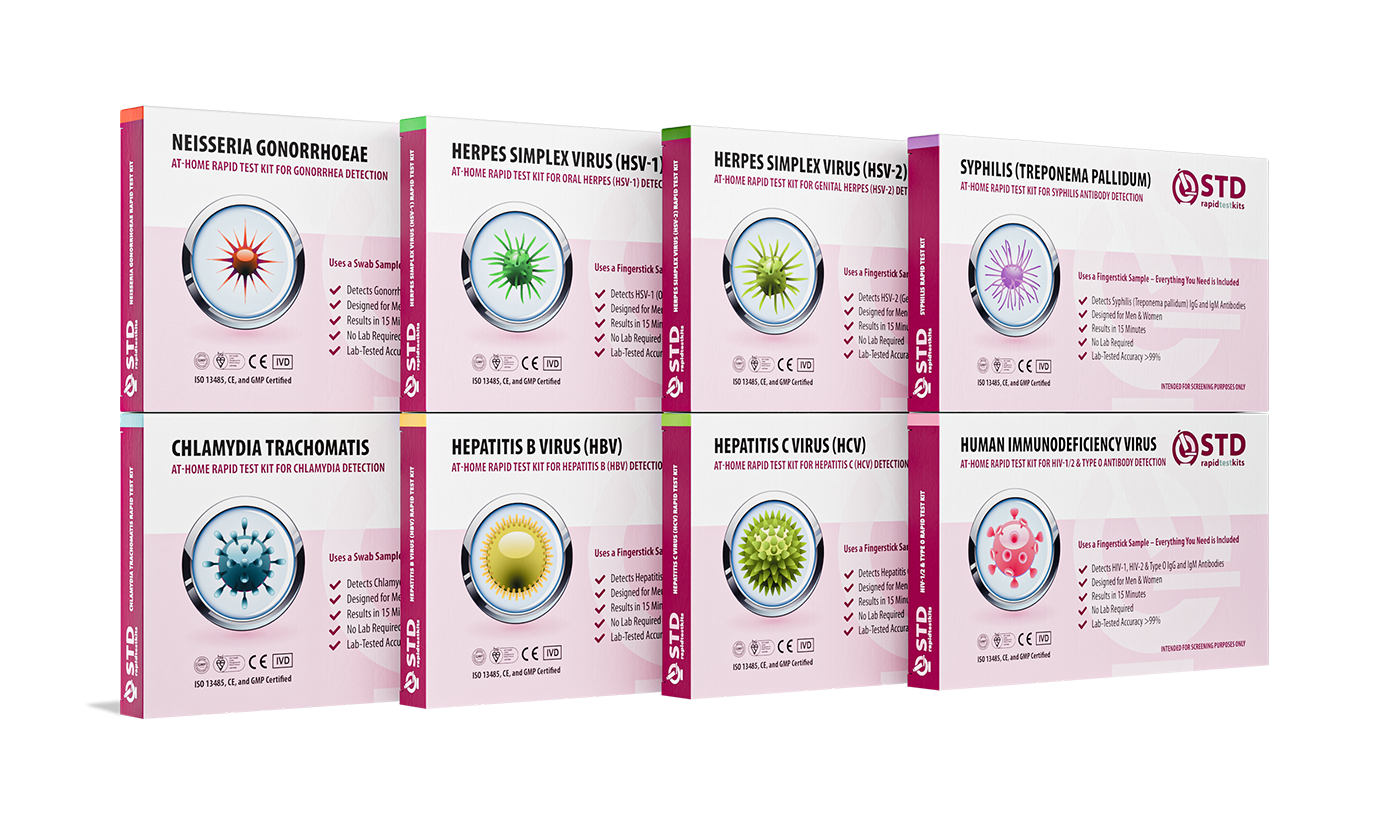 For Men & WomenResults in MinutesNo Lab NeededPrivate & Discreet
Order Now $149.00 $392.00
For all 8 tests
And If It’s Negative Again, Here’s What That Means
When you test at the correct time and get a negative result, that’s when it actually means something.
That’s the moment where you can start to exhale a little. Not because you got lucky, but because the timing supports the accuracy.
At that point, your result isn’t based on hope or guesswork, it’s based on biology lining up with detection.
And that’s the difference between a result that feels uncertain and one you can trust.
FAQs
1. I tested like 2 days after sex and it was negative… am I overthinking this?
You’re not overthinking, you’re just early. Two days is usually too soon for anything to show up, so that result doesn’t really answer the question yet. Think of it like checking your phone before the message is delivered, it’s not wrong, it’s just not there yet.
2. You can say what you want... Did I mess up by testing too soon?
No, you didn't do anything wrong. It's good that you acted quickly because you care about your health. All you have to do is make sure that your next test gives you a real answer.
3. Why would the test be negative if I really have something?
The test can't find the infection yet because your body hasn't made enough of it. It’s not about the test failing, it’s about the infection still being in its early, low-key phase. It’s there, just not loud enough to be detected.
4. I feel completely normal… shouldn’t that mean I’m fine?
Not necessarily. A lot of STDs are quiet at first, and some stay quiet the whole time. Feeling normal doesn’t confirm anything, it just means your body isn’t giving obvious signals right now.
5. Okay but what if I do feel something and the test was negative?
That’s actually a common situation. Symptoms can show up before a test turns positive, depending on timing. If something feels off, trust that instinct, but back it up with a properly timed retest.
6. Can I just take another test right now to be sure?
You can, but if you’re still in the same early window, it’s probably going to tell you the same thing. It’s like rechecking the oven two minutes after you just checked it, nothing’s changed yet. Waiting a bit is what makes the next test count.
7. How do I stop stressing while I wait to retest?
You probably won’t stop completely, and that’s okay. But it helps to remind yourself that you already have a plan in motion. You’re not guessing anymore, you’re just waiting for the right timing to catch up.
8. Can I still pass something on even if my test was negative?
Yeah, that’s possible during the window period. A negative test doesn’t always mean non-contagious if it was taken too early. If you’re unsure, it’s smart to use protection or pause until you retest.
9. What if my next test is positive… does that mean I had it the whole time?
It means the test finally caught it, not that something suddenly changed. The infection was likely there already, just below detection levels. That’s why timing matters more than the first result.
10. And if my next test is negative too?
That’s when you can actually trust it. A negative result at the right time hits differently, it’s backed by biology, not just hope. That’s the moment where most people finally feel that real sense of relief.
You Don’t Need to Panic, You Need the Right Timing
Testing too soon doesn’t mean you did anything wrong. It just means you asked your body a question before it was ready to answer. That in-between space can feel uncomfortable, but it’s not uncertainty, it’s timing still catching up.
If you’ve already tested, you’re not starting over. You’ve already taken the first step. Now it’s about following through at the point where the result actually means something. That’s where clarity replaces second-guessing.
Don’t wait and wonder. When the timing is right, get answers you can trust with a discreet option like the Combo STD Home Test Kit. Your results are private. Your next step is clear. And knowing always feels better than guessing.
How We Sourced This Article: This guide brings together clinical STD testing guidelines and peer-reviewed research on window periods, false negatives, and the best time to get tested. We reviewed data from public health authorities and infectious disease literature, alongside real-world patient behavior patterns, to explain not just the science, but how people actually experience testing too early.
Sources
1. Centers for Disease Control and Prevention – Getting Tested for STDs
2. An Overview of HIV Testing by the Centers for Disease Control and Prevention
3. NHS – Sexually Transmitted Infections (STIs)
4. Planned Parenthood: The Basics of STDs
5. PubMed—Studies on STI Detection and Window Period
6. Centers for Disease Control and Prevention – STD Screening Recommendations
7. World Health Organization – Sexually Transmitted Infections Overview
About the Author
Dr. F. David, MD is a board-certified infectious disease doctor who specializes in preventing, diagnosing, and treating STIs. His direct, sex-positive approach puts clinical accuracy, clarity, privacy, and patient empowerment first.
Reviewed by: Dr. Michael R. Levin, MD | Last medically reviewed: March 2026
This article is for information only and should not be taken as medical advice.


