







Quick Answer: Symptoms 3 days after sex are rarely caused by most STDs. At this stage, irritation, friction, UTIs, or anxiety are far more likely, though a few infections like Herpes or Gonorrhea can begin early in some cases.
This Is the 72-Hour Panic Window, And It’s Real
There’s a very specific kind of anxiety that shows up around day two or three after sex. It’s not immediate panic, and it’s not long-term clarity either. It’s that in-between space where your body feels different, but you don’t have answers yet.
People often describe it the same way: “I wasn’t worried right after. But then I started noticing things.” That shift, from not thinking about it to suddenly scanning every sensation, is where confusion takes over.
“I kept checking in the mirror. I didn’t even know what I was looking for, I just felt like something had changed.”
And here’s the truth most blogs skip: your body does react quickly after sex. But that doesn’t automatically mean infection. In fact, most of what people feel in the first 72 hours has nothing to do with an STD at all.
What Your Body Can Actually Feel After 3 Days (That Isn’t an STD)
Let’s ground this in reality. Sex, especially new, rougher, longer, or less lubricated sex, can leave your body temporarily irritated. That irritation doesn’t always show up immediately. Sometimes it builds over a day or two.
By day three, a lot of people start noticing:
- Light itching: Often from friction, microtears, or pH imbalance
- Mild burning: Especially during urination if tissue is irritated
- Sensitivity: Skin that feels “aware” or slightly inflamed
- Discomfort during movement: From healing tissue or dryness
None of these automatically point to an STD. In fact, they’re often your body recovering from something completely mechanical, like friction or a shift in vaginal or penile environment.
This is where people get tripped up. The timing feels suspicious, so the conclusion jumps straight to infection. But biologically, most STDs simply don’t move that fast.
People are also reading: STD Risk in Open Love: What Polyamorous People Need to Know
The Timeline Reality: What Can (and Can’t) Show Up This Early
Here’s where we need to separate internet panic from actual biology. Every infection has what’s called an incubation period, the time between exposure and when symptoms start. And most of them take longer than three days.
| STD | Earliest Symptoms | Common Timeline | 3-Day Symptoms Likely? |
|---|---|---|---|
| Chlamydia | 7 days+ | 1–3 weeks | No |
| Gonorrhea | 2–5 days | 5–10 days | Possible |
| Herpes | 2–4 days | 4–7 days | Possible |
| Syphilis | 10 days+ | 3 weeks | No |
| HIV | 10–14 days | 2–4 weeks | No |
This table is where things start to calm down for most people. Because when you actually look at the data, the list of infections that can realistically cause symptoms at day three is very short.
That doesn’t mean “ignore everything.” But it does mean your body is far more likely reacting to something immediate, like irritation or a non-STD condition, than a newly established infection.
So What Could Be Causing That Feeling Right Now?
Let’s zoom in on the most common culprits behind that “something feels off” sensation at day three. These are the things clinicians see constantly, and they’re often mistaken for early STD symptoms.
1. Friction irritation
Even if sex felt fine in the moment, microscopic irritation can show up later. This happens more often when you have longer sessions, less lubrication, or new partners and your body isn't used to them yet.
2. pH imbalance or bacterial shift
Semen, saliva, lubricants, and even new microbiomes can temporarily disrupt your natural balance. That can lead to itching, mild odor changes, or discomfort within a few days.
3. Early UTI symptoms
Urinary tract infections can begin quickly, sometimes within 24–72 hours. Burning during urination, urgency, or pelvic discomfort can easily be mistaken for an STD.
4. Yeast imbalance
Especially after sex, antibiotics, or hormonal shifts, yeast can overgrow. The timeline fits perfectly with the “3 days later” pattern people worry about.
5. Anxiety-driven body scanning
This one is real, and powerful. When you’re anxious, your brain heightens sensitivity. Normal sensations suddenly feel louder, sharper, and more suspicious.
“The more I focused on it, the worse it felt. I couldn’t tell what was real anymore.”
That doesn’t mean symptoms are “in your head.” It means your awareness is turned all the way up, and without context, everything feels like a signal.
When It Actually Could Be an STD This Early
Let’s be clear: while most STDs don’t show symptoms this fast, there are a couple exceptions where early signs can appear around the 3-day mark.
Gonorrhea is one of the infections that spreads the fastest. Some people, especially men, may feel a burning sensation or see discharge when they pee a few days later.
Herpes can also show early symptoms, often starting with tingling, itching, or sensitivity before visible sores appear. But those symptoms usually progress noticeably, not just stay vague.
The key difference is progression. STD-related symptoms tend to intensify or become more specific over time. Irritation or anxiety-driven sensations often stay mild or fluctuate.
And that distinction matters more than the clock itself.
Check Your STD Status in Minutes
Test at Home with Remedium6-in-1 STD Test Kit
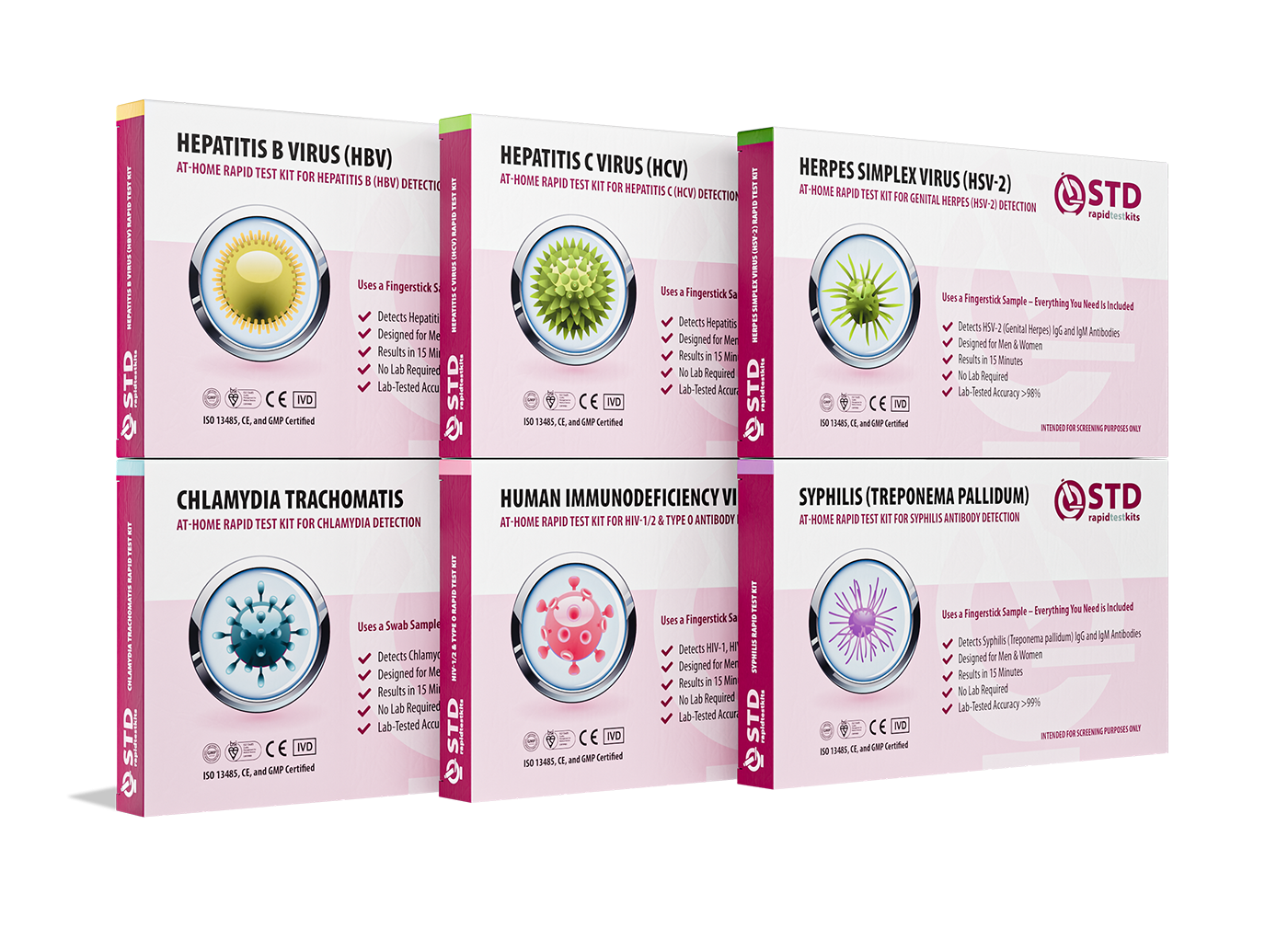
 For Men & Women
 Results in Minutes
 No Lab Needed
 Private & Discreet
Order Now $119.00 $294.00
For all 6 tests
The Difference Between “Feeling Something” and Real Symptoms
This is where things get tricky, and where most people spiral. Because “feeling something” is real. Your body is giving you input. But not all sensations are symptoms of infection.
Clinically, real STD symptoms tend to have structure. They follow patterns. They don’t just appear as vague discomfort and stay there. They evolve, intensify, or become more specific over time.
What people feel at 3 days is often more like static than a signal. It’s there, it’s noticeable, but it doesn’t clearly point to anything yet.
| What You Feel | More Likely Cause | How It Behaves |
|---|---|---|
| Mild itching that comes and goes | Irritation / pH shift | Fluctuates, may fade |
| Light burning once or twice | Friction / early UTI | Triggered by urination |
| Constant discharge with odor | Infection (possible STD) | Persistent, increasing |
| Tingling that becomes painful sores | Herpes | Clearly progresses |
This is the piece most people miss. It’s not just about when something shows up, it’s about what it does next.
If something stays vague, mild, and inconsistent, it’s usually not an aggressive infection taking hold. If it sharpens, worsens, or becomes visually obvious, that’s when you pay closer attention.
Case Study: “I Thought I Had Something After 2 Days”
Daniel, 27, noticed a tingling sensation two days after a new sexual encounter. By day three, he was fully convinced something was wrong.
“I kept Googling ‘STD symptoms after 3 days’ and everything matched if I looked hard enough. I barely slept that night.”
He described a mix of light itching, awareness, and occasional warmth. No visible changes. No discharge. Just the feeling that something wasn’t normal anymore.
By day five, the sensation had mostly disappeared. No progression. No new symptoms. When he eventually tested at the appropriate window, everything came back negative.
“What freaked me out the most wasn’t my body, it was not knowing what was real.”
This story isn’t rare. It’s the pattern. Early sensation, rising anxiety, no clear progression, and then resolution. That doesn’t invalidate the fear, but it reframes what your body was actually doing.
Why Your Brain Turns Volume Up After Sex
There’s a biological reason this happens. After a sexual encounter, especially one with uncertainty, your brain shifts into monitoring mode. It starts scanning for threat.
This isn’t weakness. It’s protective wiring. But it has a side effect: normal sensations suddenly feel amplified.
Things you would’ve ignored a week ago, slight dryness, minor irritation, subtle shifts, now feel like evidence. Your brain starts connecting dots that may not actually be connected.
And once that loop starts, it feeds itself. You check more. You notice more. You worry more. And the body responds by becoming even more sensitive.
“Every time I checked, I found something new. I couldn’t tell if it was getting worse or if I was just paying more attention.”
This is why “STD symptoms or anxiety” is such a common search. Because in the early days, the line between the two can feel almost impossible to separate without context.

People are also reading: Can You Trust an At-Home HIV Test? Here’s What You Need to Know
Testing at 3 Days: What It Can, and Can’t, Tell You
This is where people try to shortcut the uncertainty. You feel something, so you want to test immediately. It makes sense emotionally. But biologically, timing matters more than urgency.
At 3 days, most STD tests are simply too early to give reliable results. This is called the “window period”, the time your body needs to build detectable levels of the infection.
If you test too early, you risk a false negative. Not because you’re fine, but because it’s too soon for the test to catch anything.
Here’s a simplified breakdown:
| Time After Sex | Test Accuracy | What to Expect |
|---|---|---|
| 1–3 days | Very low | High chance of false negatives |
| 5–7 days | Moderate (some STDs) | Early detection possible for Gonorrhea |
| 10–14 days | High | Most common infections detectable |
This is why testing strategy matters more than testing speed. The goal isn’t just to test, it’s to test at the right time so you can actually trust the result.
If you’re feeling something at day three, the move isn’t panic-testing. It’s planning your testing window while watching how your symptoms evolve.
If It’s Not an STD, Why Does It Feel So Specific?
This is the part that messes with people the most. Because the sensation doesn’t feel random, it feels targeted. It’s in a specific spot. It showed up after a specific event. It feels connected.
And that’s exactly why your brain locks onto it.
But the body doesn’t work in neat cause-and-effect timelines like we want it to. Just because something appeared after sex doesn’t mean it was caused by an infection from that moment. Timing can overlap without being the same story.
For example, a mild yeast imbalance might have already been developing. A UTI might have been triggered by bacteria introduced during sex, but not an STD. Or simple irritation might just now be noticeable as tissues settle.
The body is constantly adjusting, rebalancing, and reacting. Sex just happens to be a moment that makes you pay attention.
The “Watch, Don’t Spiral” Window (Days 3–7)
If you’re sitting at day three feeling something, this is your real job right now: observe without jumping to conclusions. Not ignore. Not panic. Just track what actually happens next.
This window, days three through seven, is where patterns reveal themselves. And those patterns matter more than the initial sensation.
Here’s what to pay attention to:
- Is it getting stronger? Real infections usually intensify
- Is it becoming more specific? Clear symptoms replace vague ones
- Is anything visible? Sores, discharge, or redness change the picture
- Is it fading? Irritation often improves, not worsens
This isn’t about dismissing your concern. It’s about gathering better data from your own body instead of reacting to the first signal.
“Once I stopped checking every hour and just waited a couple days, it either got clearer, or it went away.”
What Real Early STD Symptoms Usually Look Like
When an STD does show symptoms early, it rarely stays subtle for long. That’s the key difference. It moves. It declares itself.
For example, early Gonorrhea symptoms often involve noticeable discharge or consistent burning during urination, not just a one-off sensation.
Early Herpes tends to follow a pattern: tingling, then sensitivity, then visible sores. It’s not just a vague itch that lingers without change.
And importantly, many infections don’t cause any symptoms at all in the early stage. Which is why trying to “feel your way” to a diagnosis at day three is unreliable.
This is where people get stuck, they assume “no clear symptom” means something is hiding. But often, it just means nothing has developed yet.
Check Your STD Status in Minutes
Test at Home with Remedium8-in-1 STD Test Kit
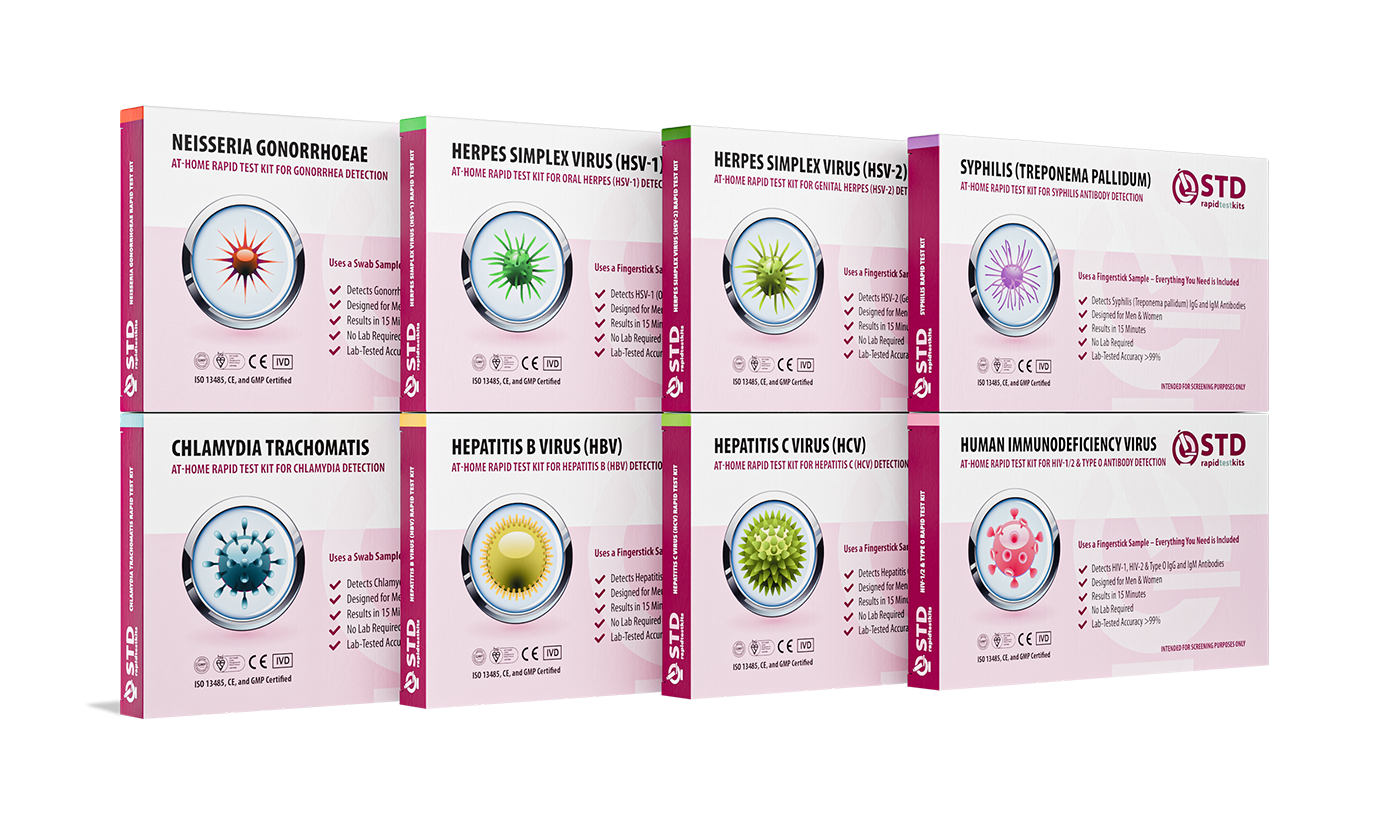 For Men & WomenResults in MinutesNo Lab NeededPrivate & Discreet
Order Now $149.00 $392.00
For all 8 tests
What to Do Right Now (Without Overreacting or Ignoring It)
You don’t need to panic. But you also don’t need to sit in uncertainty without a plan. There’s a middle ground here that actually works.
First, give your body a few days.
Watch how things evolve. If symptoms fade, that’s meaningful. If they intensify or become specific, that’s also meaningful.
Second, plan your test timing.
Instead of testing immediately, aim for the window where results are accurate, usually around 7 to 14 days depending on the infection.
Third, avoid self-diagnosing too early.
Google will always give you a worst-case scenario. Your body needs time before it tells a clear story.
Fourth, take care of the basics.
Hydration, gentle hygiene, avoiding further irritation, these small things can reduce symptoms that aren’t infection-related.
The Part No One Says Out Loud
Most people who feel something 3 days after sex don’t end up having an STD from that encounter. That’s not a comforting platitude, it’s a pattern seen over and over again.
What they do experience is a mix of body awareness, temporary irritation, and uncertainty colliding all at once. And without context, that combination feels like danger.
“I thought I had ruined everything over one night. It turned out to be nothing, but the waiting was the hardest part.”
The waiting is real. The fear is real. But the conclusion your brain jumps to in the first 72 hours is often not.
FAQs
1. I felt something 3 days after sex… did I mess up?
Probably not. Three days is usually too early for most STDs to show symptoms, even though your brain is ready to convict you. What you’re feeling is often irritation, a pH shift, or just your body being a little louder than usual after sex.
2. Why does it feel so real if it’s “probably nothing”?
Because it is real, you’re not imagining it. But real doesn’t always mean dangerous. A tiny imbalance, a bit of friction, or even just paying closer attention can make normal sensations feel way more intense than they actually are.
3. How do I know if this is irritation or something like herpes?
Watch what it does next. Irritation tends to hover or fade, like background noise. Herpes, on the other hand, usually escalates, tingling turns into soreness, then visible blisters. It doesn’t stay subtle for long.
4. Can anxiety really make symptoms feel worse?
Absolutely. Once your brain flips into “something’s wrong” mode, it starts scanning nonstop. That light itch you’d ignore any other week suddenly feels like a headline. The sensation didn’t necessarily get worse, you just started listening to it.
5. What’s the fastest STD that could show symptoms this early?
Gonorrhea and herpes are the two that can show up quickly, sometimes in just a few days. But even then, they usually become clear, not just a vague "something feels wrong."
6. Should I go get tested right now just to be safe?
You can, but here’s the catch: 3 days is often too early for accurate results. Testing now might give you a false negative, which feels reassuring but doesn’t actually answer the question. Timing matters more than urgency here.
7. What if it’s burning when I pee, should I worry?
It’s worth paying attention, but it’s not automatically an STD. That kind of burning shows up all the time with UTIs, especially after sex. If it sticks around or gets worse, that’s your cue to act, not just the first twinge.
8. Is it normal to keep checking and overthinking everything?
Completely. People do mirror checks, Google deep dives, symptom comparisons, it’s basically a ritual at this point. The trick is knowing that more checking doesn’t give you more clarity, it just feeds the loop.
9. If it goes away in a couple days, can I relax?
That’s usually a really good sign. Symptoms tied to irritation or imbalance often fade once your body resets. But if you want full peace of mind, testing at the right time is still the gold standard.
10. What should I actually do tonight if I’m stuck in my head about this?
Step away from the symptom spiral for a minute. Hydrate, avoid irritating products, and give your body a few days to show a pattern. You don’t need to solve everything at day three, you just need to stay grounded until the picture gets clearer.
You Deserve Clarity, Not a 3AM Spiral
Feeling something 3 days after sex can mess with your head fast. It turns a small sensation into a full-blown story, one where every itch means something and every thought feels urgent. But your body doesn’t work on panic timelines. It works on patterns, progression, and time.
The goal isn’t to dismiss what you’re feeling. It’s to understand it. If symptoms stay vague or fade, that tells you something. If they sharpen, persist, or become visible, that tells you something too. And when the timing is right, testing turns all of that uncertainty into a clear answer.
Don’t stay stuck guessing. If infection is even on your mind, start with something private, fast, and reliable like the Combo STD Home Test Kit. You don’t need to panic, but you do deserve to know.
How We Sourced This Article: This guide combines current clinical guidance on sexually transmitted infections with peer-reviewed research on incubation periods, symptom onset, and testing accuracy. We reviewed data from public health authorities alongside real-world symptom reporting patterns to reflect both the science and the lived experience of early post-exposure anxiety. The goal is simple: separate what feels urgent from what is medically plausible.
Sources
1. Centers for Disease Control and Prevention – STD Overview
2. Mayo Clinic – Sexually Transmitted Diseases Overview
3. NHS – Sexually Transmitted Infections Guide
4. World Health Organization – STI Fact Sheet
5. National Library of Medicine – STI Incubation Research
6. Planned Parenthood – STD Education
About the Author
Dr. F. David, MD is a board-certified infectious disease specialist focused on STI prevention, testing strategy, and early symptom interpretation. His work centers on cutting through misinformation while helping people make calm, informed decisions about their sexual health.
Reviewed by: Dr. Elena Ramirez, MD, Infectious Disease Specialist | Last medically reviewed: March 2026
This article is for informational purposes only and does not replace medical advice, diagnosis, or treatment.


