







Quick Answer: You should avoid sex while waiting for STD results if possible. If you do have sex, use protection every time and avoid any contact with symptoms, since many STDs can spread even before results come back.
This Is the Part No One Talks About
The waiting period is weirdly quiet, but mentally loud. You don’t feel sick. You might not have any symptoms at all. But suddenly every decision feels loaded, especially sex. A lot of people assume that if nothing feels wrong, nothing is wrong. That’s the trap.
Javier, 26, described it like this: “I felt completely normal. That’s what made it confusing. Like… if I’m fine, why would I stop my life?”
This is exactly where most transmission happens. Not when someone is obviously sick, but when everything feels normal and no one thinks twice. The reality is that many infections, like Chlamydia or Gonorrhea, often show no symptoms at all, especially early on.
Why “Feeling Fine” Doesn’t Mean You’re in the Clear
Here’s the part that can feel unfair: you can absolutely pass an STD before you test positive, and before your body shows any obvious signs. That’s because infections have two overlapping timelines, when you become contagious, and when a test can actually detect it.
These don’t always line up.
So you might be in that exact window where:
- You’re contagious, but
- Your test hasn’t caught it yet
That’s what people mean when they talk about the “window period.” It’s not just about testing accuracy, it’s about transmission risk too.
Ashley, 22, put it bluntly: “I thought the risk started after a positive result. I didn’t realize I could pass something before that.”

People are also reading: Tested Positive for HIV? What to Do in the First 24 Hours
What’s Actually Happening in Your Body Right Now
To make this less abstract, here’s a simplified breakdown of what might be happening biologically while you’re waiting for STD results:
| Stage | What It Means | Risk Level |
|---|---|---|
| Exposure | Contact with infected fluids or skin | Risk begins |
| Early incubation | Infection developing silently | Often contagious |
| Window period | Test may still be negative | Still potentially contagious |
| Detectable infection | Test turns positive | Confirmed contagious |
This is why the question isn’t just “do I feel sick?”, it’s “where am I in the timeline?”
So… Can You Have Sex While Waiting for STD Results?
Technically, yes. Medically safest? No.
Here’s the honest breakdown, without judgment:
| Scenario | Risk Level | Why |
|---|---|---|
| No sex at all | Lowest | No transmission possible |
| Protected sex (condoms/dams) | Lower | Reduces fluid-based transmission |
| Unprotected sex | High | Direct exposure risk |
| Sex with visible symptoms | Very high | Active infection likely |
If you’re asking what doctors would recommend in a perfect-world scenario, it’s simple: pause sex until results are clear. But real life isn’t always perfect, and that’s where harm reduction matters.
If You’re Not Going to Wait, Read This First
Let’s be honest, people still have sex while waiting for STD results. Not because they don’t care, but because intimacy, relationships, and real life don’t always pause on command.
If that’s where you are, the goal shifts from “perfect” to “safer.”
- Use protection every single time
- Avoid contact with any sores, rashes, or unusual discharge
- Skip sex entirely if symptoms show up
- Be honest with your partner if there’s a known risk
Devin, 29, said: “We decided to use condoms and just be upfront. It wasn’t awkward, it was actually kind of relieving.”
This is what sex-positive, responsible decision-making looks like. Not perfection. Just awareness.
When Waiting Feels Worse Than the Risk
Sometimes the hardest part isn’t the physical risk, it’s the mental loop. You start googling things like “can you spread STD before test results” or “no symptoms STD contagious,” and suddenly everything feels uncertain.
That anxiety can push people into two extremes: either avoiding everything completely or convincing themselves there’s zero risk. The truth lives in the middle.
You’re not “reckless” for wanting closeness. But you also deserve clear information to make choices that don’t create bigger problems later.
Check Your STD Status in Minutes
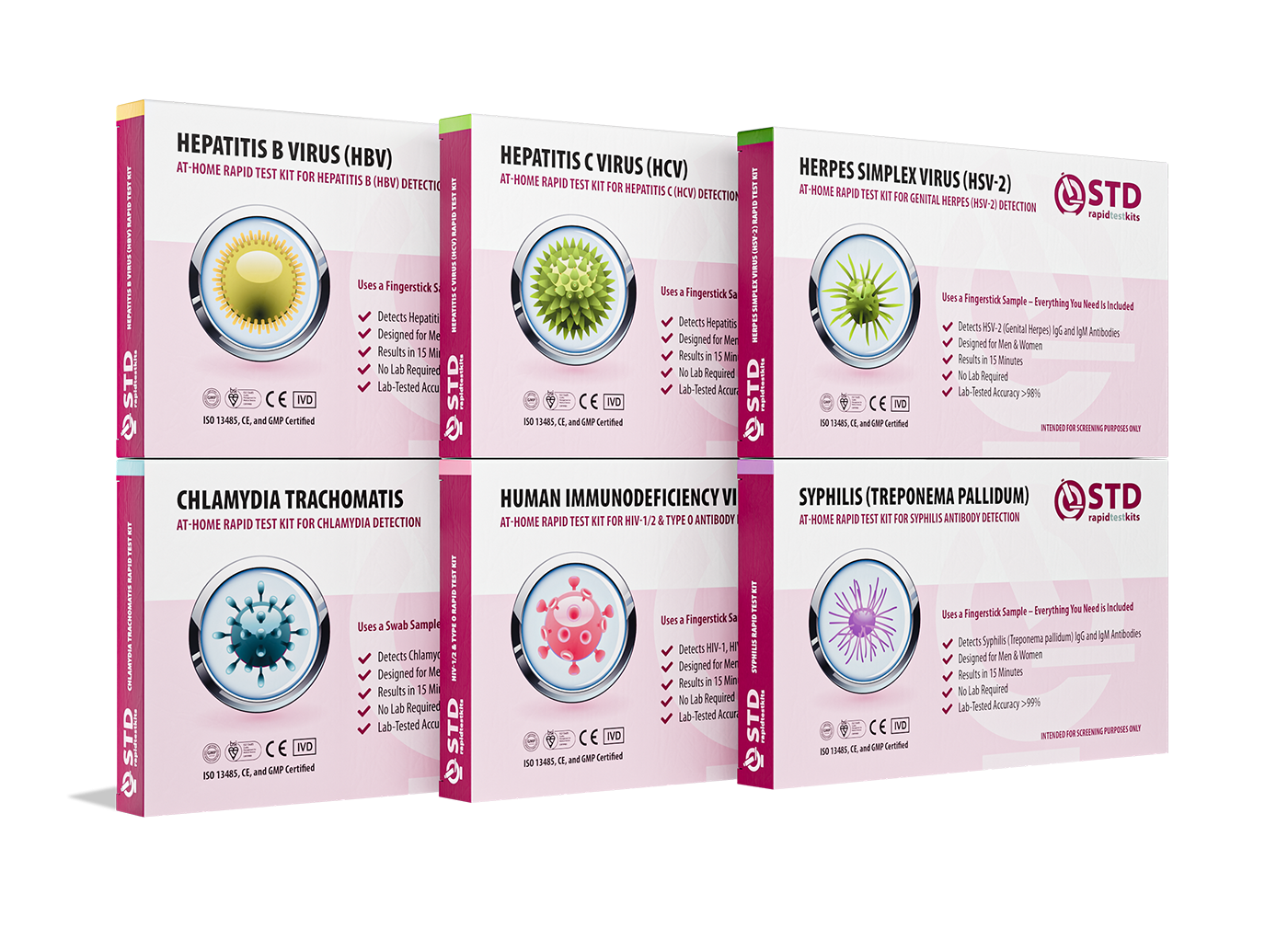
Test at Home with Remedium6-in-1 STD Test Kit
 For Men & Women
 Results in Minutes
 No Lab Needed
 Private & Discreet
Order Now $119.00 $294.00
For all 6 tests
You Don’t Have to Guess, You Can Actually Know
If you’re stuck in that waiting phase, one of the most empowering things you can do is shorten it. Testing doesn’t have to mean days of uncertainty or awkward clinic visits.
Take back control of your health and your timeline. You can explore discreet, fast options at STD Rapid Test Kits, including comprehensive panels that check multiple infections at once.
Whether it’s a question mark or just peace of mind, an at-home combo STD test kit gives you answers quickly, without putting your life on hold longer than necessary.
What No One Tells You About “Protected Sex” During This Window
Many people think that "just use a condom" will solve all their problems. And yes, condoms and dental dams are very useful. They lower the risk of getting a lot of infections, especially those that are spread through fluids, like gonorrhea and chlamydia. But they don't make sex completely safe until you get your test results.
Some infections can spread through skin-to-skin contact, not just fluids. That means that places that aren't covered by a condom, like the base of the penis, the vulva, or the skin around them, can still spread infections like Herpes or HPV.
Rina, 24, shared: “We used a condom, so I thought we were good. Later I found out that doesn’t fully protect against everything. That part honestly surprised me.”
This doesn’t mean protection is useless, it just means it’s not absolute. It lowers risk, but it doesn’t erase it.
Different STDs, Different Rules (And Why That Matters Right Now)
Not all STDs behave the same way during the waiting period. Some become contagious very quickly. Others take longer to show up on tests but can still spread in the meantime. That’s why a one-size answer doesn’t really work here.
| STD | Symptoms Early On | Contagious Before Positive Test? | Key Risk Insight |
|---|---|---|---|
| Chlamydia | Often none | Yes | Commonly spread unknowingly |
| Gonorrhea | Sometimes mild | Yes | Can infect throat/genitals |
| Herpes | Sores (or none) | Yes | Skin-to-skin spread possible |
| Syphilis | Painless sore | Yes | Often missed early |
| HIV | Flu-like or none | Yes | High viral load early on |
The pattern is clear: most infections can be passed on before you ever see a positive result. That’s why the “I’ll just wait for confirmation” mindset can be misleading.
The Partner Question Everyone Avoids
This is where things get real, not clinical, not theoretical, but human. Do you tell someone you’re waiting on STD results before having sex with them? Or do you keep it to yourself because you’re “probably fine”?
There’s no script that works for everyone, but there is a principle: informed consent matters. Not in a scary, legal way, but in a basic respect way. The other person deserves to know what level of uncertainty is in the room.
Imani, 27, said: “I was nervous to bring it up, but once I did, it actually made things feel safer, not just physically, but emotionally too.”
You don’t have to overshare or panic anyone. But a simple, honest heads-up can change everything about how a decision feels, for both of you.
Why At-Home Testing Changes This Entire Situation
One of the biggest reasons this question even exists is because traditional testing can take time, appointments, labs, waiting days for results. That delay puts you in an awkward gray area where you don't know what to do.
At-home testing changes that timeline completely. Instead of waiting and wondering, you can get answers faster and with more privacy.
Don’t wait and guess. You can get clarity from home with options like the STD Rapid Test Kits combo panel, which checks multiple infections at once and helps you move out of that uncertain phase quicker.
Because honestly, the sooner you know, the sooner this question disappears.

People are also reading: Mouth Ulcers After Oral Sex? It Might Be More Than a Canker Sore
What to Do While You’re Waiting (That Actually Helps)
The waiting period doesn’t have to be passive. You’re not just stuck in limbo, you can actively reduce risk, shorten uncertainty, and make smarter decisions in real time.
Here’s what actually makes a difference:
- Track your timeline: Know when your exposure happened and when your test is most accurate
- Watch for symptoms: Even subtle changes matter, don’t ignore them
- Avoid new partners: The more variables you add, the harder it gets to trace anything later
- Consider retesting: Especially if your first test was very early
This isn’t about fear, it’s about control. The more you understand what’s happening, the less power that uncertainty has over you.
This Isn’t About Being “Careful”, It’s About Being Informed
There’s a quiet kind of pressure around this topic. People think they’re supposed to either be perfectly responsible or completely carefree. But most people are somewhere in between, trying to make the best decision with incomplete information.
You’re allowed to want intimacy. You’re also allowed to want clarity. Those two things don’t cancel each other out, they just require a little more awareness in moments like this.
The goal isn’t perfection. It’s making choices that don’t leave you with more stress, more risk, or more unanswered questions later.
Let’s Talk About the “I’ll Just Wait Until Results” Myth
A lot of people assume that once they’ve taken a test, they’re basically in a holding pattern, like nothing really counts until the result comes back. But your body doesn’t pause just because you’re waiting. Infection timelines keep moving, whether you’ve tested or not.
This is where confusion creeps in. People think the test is what defines whether they’re contagious, when in reality, it’s the infection itself. The test is just catching up to what’s already happening inside your body.
Daniela, 31, explained it like this: “I thought I was being responsible just by getting tested. I didn’t realize that didn’t automatically make things safe in the meantime.”
Testing is a powerful step, but it’s not a shield. It’s information. And until that information is complete and timed correctly, there’s still uncertainty in play.
When It’s Actually Safer to Resume Sex
So when does the green light really come back on? Not just emotionally, but medically?
The safest point to resume sex is when:
- Your results are back and clearly negative
- You tested outside the window period (meaning the result is reliable)
- You have no symptoms
If any of those pieces are missing, there’s still some level of unknown risk. That doesn’t mean you’ve done anything wrong, it just means you’re still in that gray zone.
And if a result does come back positive, the next step isn’t panic, it’s treatment, follow-up, and temporary pause until you’re no longer contagious. Most common STDs are treatable, and many are curable. The situation is manageable, but only if you actually know what you’re dealing with.
The Emotional Side No One Prepares You For
There’s a reason this question comes up so often, it’s not just about risk. It’s about closeness, connection, and not wanting to disrupt something that feels good or important.
Waiting can feel isolating. You might pull back, overthink every sensation, or question every past decision. Or you might do the opposite, lean into normalcy and try to ignore the uncertainty completely.
Both reactions are human.
Leo, 25, said: “I kept going back and forth. One minute I was like ‘just wait,’ and the next I was like ‘I’m probably fine.’ It was exhausting.”
This is why having clear, grounded information matters. It cuts through that mental noise and gives you something solid to stand on.
Check Your STD Status in Minutes
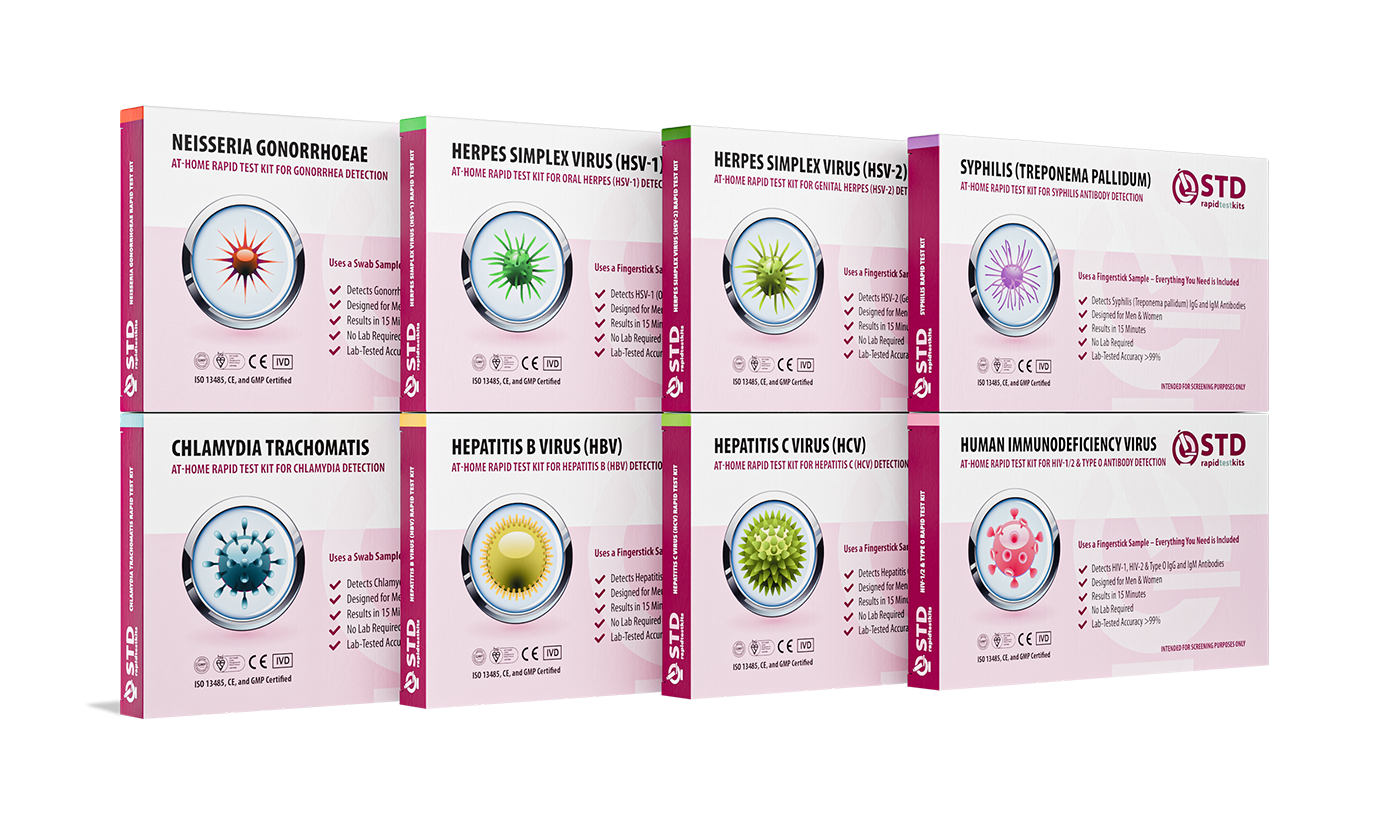
Test at Home with Remedium8-in-1 STD Test Kit
 For Men & WomenResults in MinutesNo Lab NeededPrivate & Discreet
Order Now $149.00 $392.00
For all 8 tests
How to Make the Decision Without Regretting It Later
If you’re stuck in that “should I or shouldn’t I” moment, here’s a simple way to think about it:
- If avoiding sex feels manageable: that’s the safest route, no risk, no second-guessing
- If you choose to have sex: use protection and be honest about the situation
- If symptoms appear: stop immediately and follow up with testing or care
The goal isn’t to eliminate all risk, that’s not always realistic. The goal is to avoid decisions that create bigger stress later, like wondering if you passed something or missed an early sign.
Clarity now saves a lot of anxiety later.
FAQs
1. Can I still have sex while waiting for STD results if I feel totally fine?
You can, but “feeling fine” is honestly one of the biggest traps here. A lot of STDs don’t show symptoms at all in the early stages, so your body can feel normal while something is quietly active. That’s why doctors lean toward caution during this window.
2. If we use a condom, are we basically safe?
Safer, yes. Completely safe? Not quite. Condoms are great at blocking fluids, but they don’t cover everything, skin-to-skin infections like herpes can still sneak through. Think of it as lowering the volume of risk, not muting it entirely.
3. Can I actually pass something before my test even says I have it?
Yeah, and this surprises a lot of people. Tests don’t detect infections instantly, so there’s this weird overlap where you might be contagious before anything shows up on paper. That’s the window period doing its thing.
4. What if it’s the same person I hooked up with, does it still matter?
It feels like it shouldn’t, right? But it still does. You can pass things back and forth or even make an infection worse depending on timing. It’s not about blame, it’s just how transmission works.
5. Is oral sex or kissing okay while I’m waiting?
It depends on what you might’ve been exposed to. Some infections live in the throat or mouth, so oral isn’t automatically “safe.” Kissing is lower risk overall, but not zero, especially with things like herpes.
6. Do I have to tell someone I’m waiting on STD results?
“Have to” is a strong word, but being upfront changes the whole vibe. It gives the other person a choice, which is kind of the baseline for good sex anyway. Most people handle it better than you expect when it’s said casually and honestly.
7. What if my results come back negative, am I good to go immediately?
Usually, yes, but timing matters. If you tested too early, that negative might not mean much yet. That’s why knowing your exposure date is just as important as the result itself.
8. How long should I realistically wait before having sex again?
The safest answer is: until your results are back and you’re outside the window period. In real life, that might mean a few days or a couple of weeks depending on the test. It’s temporary, even if it feels long in the moment.
9. What if I already had sex while waiting, did I mess up?
No, you didn’t “mess up.” You made a decision with the information you had at the time. Now it’s just about being aware, maybe using protection going forward, and following through with your results and any next steps.
10. Is it really that serious to just wait?
It’s less about “serious” and more about avoiding unnecessary stress later. Waiting removes the guesswork, no wondering, no second-guessing, no awkward conversations after the fact. It’s the cleanest way through an already confusing moment.
You Don’t Need to Guess, You Need a Clear Next Step
Waiting for STD results can mess with your head more than your body. One minute you feel completely fine, the next you’re replaying every detail and questioning what’s safe, what’s risky, and what you should do next. The goal isn’t to overreact, it’s to remove the uncertainty that’s driving all that second-guessing.
If you can wait, that’s the cleanest option. No risk, no wondering, no awkward “what if” conversations later. If you choose not to, protection and honesty go a long way. Either way, this moment isn’t about perfection, it’s about making a decision you won’t have to revisit with regret.
Don’t stay stuck in the gray zone longer than you need to. If there’s even a small chance of exposure, start with a discreet option like the Combo STD Home Test Kit. Fast answers, private results, and one less thing living rent-free in your mind.
How We Sourced This Article: This guide combines clinical guidance on STD transmission, window periods, and testing accuracy with peer-reviewed infectious disease research and real-world patient concerns. We examined both the scientific aspects and the practical decisions individuals make while awaiting results by analyzing public health guidelines and behavioral research.
Sources
1. Centers for Disease Control and Prevention – STD Overview
2. Sexually Transmitted Infections from the World Health Organization
3. Planned Parenthood: Testing for STDs and preventing them
5. PubMed – STD Transmission and Window Period Research
6. Mayo Clinic – STD Symptoms and Causes
About the Author
Dr. F. David, MD is a board-certified expert in infectious diseases who works to stop STIs, test for them, and teach patients about them. His approach blends clinical precision with clear, stigma-free communication that helps people make informed decisions without fear or confusion.
Reviewed by: Dr. Elena Marquez, MD, Infectious Disease Specialist | Last medically reviewed: March 2026
This article is only for informational purposes and should not be used instead of professional medical advice, diagnosis, or treatment.


