
Published: October 2025 | Last updated: April 2026 | Editorial review and quality control: Martina N.
A positive HIV test result hijacks the room. The screen, the line, the words on the printout take everything else hostage. Thoughts arrive sounding like verdicts: "My life is over." "No one will want me." "I should have been more careful." None of these are true. All of them feel true.
The next 24 hours matter, just not in the way panic suggests. The right moves are calmer and more boring than the catastrophes the mind constructs: confirm the result through a laboratory test, call a clinician, and let the science of modern HIV care do the heavy lifting. None of this guide is a substitute for talking to a provider. All of it is meant to give the spiral a place to land.
I tested positive for HIV. What should I do in the first 24 hours?
Get the result confirmed through a laboratory blood test. Every positive HIV screening result, whether at home or at a clinic, requires confirmatory testing as standard CDC protocol. Then contact a healthcare provider to schedule baseline labs (viral load, CD4 count) and discuss starting antiretroviral therapy. Modern HIV treatment is typically one pill once daily, and people who reach an undetectable viral load cannot transmit HIV sexually (U=U). Avoid major decisions about disclosure, work, or relationships in the first hours. Clarity comes after confirmation, not before.
Key Takeaways
- A positive HIV screening test is preliminary; lab confirmation is standard protocol, not a sign the first test was wrong.
- Modern antiretroviral therapy can suppress HIV to undetectable levels, where the virus cannot be sexually transmitted (U=U).
The first hour: stabilize before you decide anything
The nervous system after a positive result runs a familiar loop of shame, blame, and catastrophe. Sitting with that loop without acting on it is the first task. The most useful thing to do in the first hour is almost nothing. Don't post about it. Don't text every recent partner. Don't book three follow-up tests with three different services. Sit somewhere physically supported. Slow the breathing.
Exhales longer than inhales (counts of four in, six out) calm the autonomic nervous system within a few cycles. The extended exhale activates the parasympathetic branch and buys back the cognitive bandwidth needed to make the next decisions well. A few minutes of slower breathing matters more in this window than it sounds like it should.
Shock can present as numbness, crying, anger, or eerie calm. None of these reactions mean anything is wrong with the person experiencing them. Once the body has stabilized somewhat, two specific actions take priority over everything else: confirm the result, and contact a healthcare provider.
The U.S. 988 Suicide and Crisis Lifeline operates 24 hours a day by call or text and handles medical-diagnosis-related crises specifically. Outside the U.S., Samaritans (UK and Ireland), Lifeline (Australia), and the IASP directory list equivalent services. Reaching out during an emotional spike after diagnosis is a clinical step, not a weakness.
Why a positive result isn't a final diagnosis
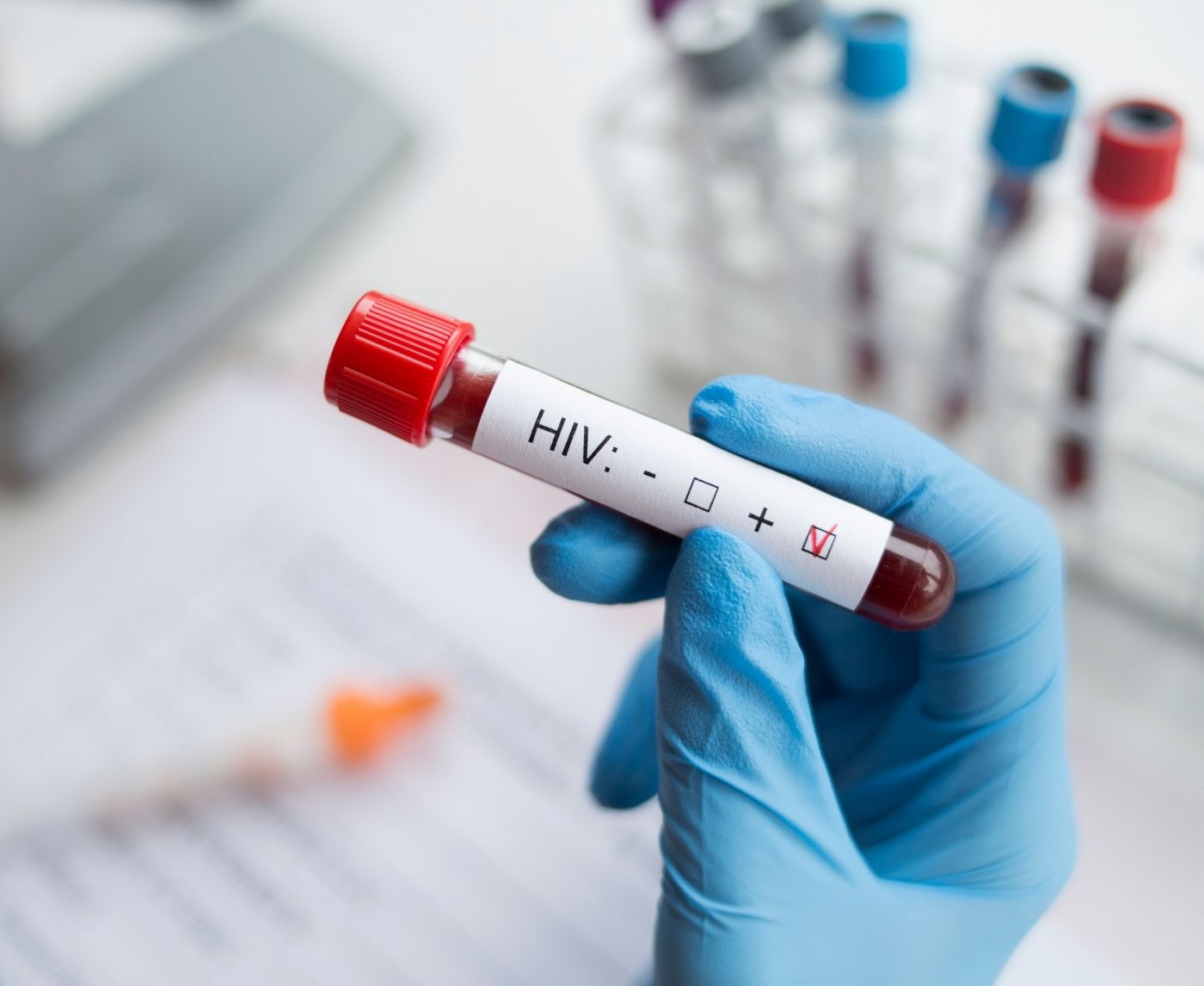
HIV testing in the United States follows a two-step protocol that the CDC has recommended for more than a decade. The first test is a screening test, run at home or at a clinic. A reactive (positive) screening result is preliminary, not definitive. The second test, performed in a laboratory, confirms or rules out the first.
Confirmatory testing is not a comment on the first test's quality. The standard exists because medicine treats high-stakes diagnoses with redundancy. False positives on screening tests do happen, at very low rates. Cross-reactivity with other antibodies, recent vaccination, autoimmune conditions, and rare technical errors can all produce a reactive screening result in someone who is not actually infected. Confirmatory testing exists exactly to catch these cases.
The implication for the next 24 hours: the first test starts a process; it does not end one. The right next step is a single phone call to a clinic that can run a confirmatory blood test, not panic, not over-testing with another at-home brand, and not life-altering decisions made on incomplete information.
Understanding your test type and what comes next
Different HIV tests detect different things and become reliable at different times after exposure. The window period (the gap between infection and the point at which a test can detect it) varies by test technology. Knowing which test produced the positive result helps make sense of what confirmation will involve.
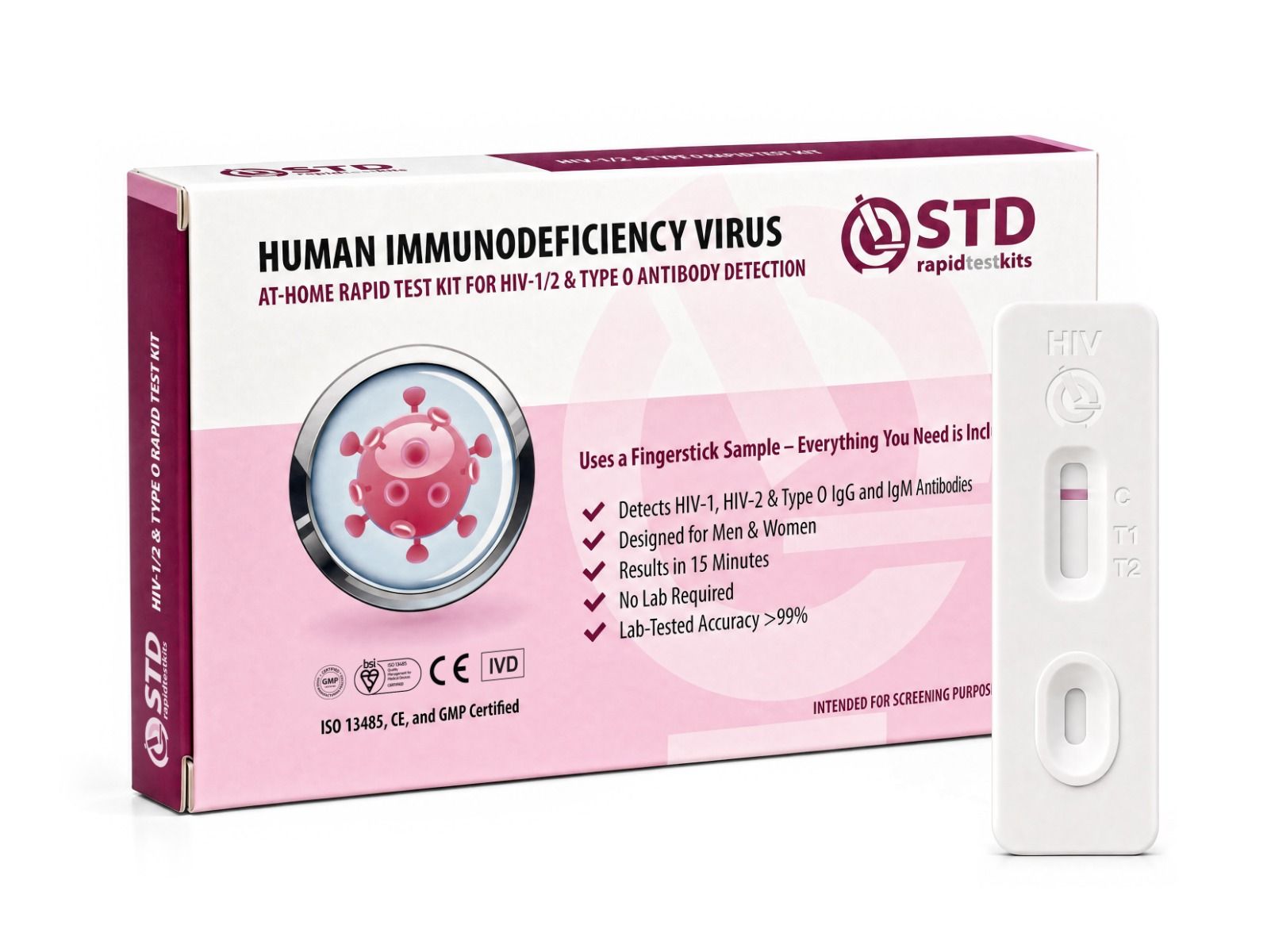
At-home rapid tests typically detect HIV antibodies, the immune response the body mounts to the virus. Antibody-only tests become reliable roughly 23 days to 90 days after exposure, depending on the kit. Lab-based fourth-generation tests detect both antibodies and the p24 antigen, a viral protein that appears earlier; these can detect HIV roughly 18 to 45 days after exposure per CDC testing guidance. Nucleic acid tests (NAATs) detect viral RNA directly and can identify HIV as early as 10 to 33 days after exposure, though NAATs are usually reserved for very early infection or for confirmation of an ambiguous result.
Confirmation after a positive screening test is most often done with an antigen and antibody differentiation immunoassay, sometimes followed by a NAAT if the differentiation result is unclear. The Western blot, which dominated confirmation for decades, has been retired by most U.S. labs in favor of these newer assays.
| HIV test type | Detects | Reliable from (after exposure) | Typical role |
|---|---|---|---|
| At-home antibody rapid test | HIV antibodies | About 23 days to 3 months | First-line screening at home |
| Lab fourth-generation antigen and antibody test | Antibodies plus p24 antigen | About 18 to 45 days | Standard clinic screening, also confirmation |
| Nucleic acid test (NAAT) | HIV viral RNA | About 10 to 33 days | Early-infection detection, confirmation of ambiguous results |
| Antigen and antibody differentiation immunoassay | Distinguishes HIV-1 from HIV-2 antibodies | After a positive screen | Modern confirmatory test (replaces Western blot in most U.S. labs) |
Hours 1 to 24: connecting with care
The single most useful action in the first 24 hours, after grounding, is reaching a healthcare provider who can order confirmatory testing and start the conversation about treatment. This does not require a primary care doctor, insurance, or an appointment days in advance.
Several lower-friction options exist. Local public-health departments offer free or low-cost HIV testing and care navigation in most U.S. counties. Planned Parenthood centers handle confirmatory testing and same-day referrals to HIV care. Federally Qualified Health Centers (FQHCs) provide care on a sliding scale regardless of insurance status. Telehealth services that specialize in sexual health can frequently offer same-day virtual visits with prescription handoffs to local labs.
For people without an existing relationship with a provider, the CDC's GetTested locator (gettested.cdc.gov) maps testing and care sites by zip code. Many sites also handle linkage-to-care, where a coordinator connects newly diagnosed individuals to an HIV specialist within days of a positive result. Linkage-to-care within the first month of diagnosis is associated with significantly better long-term outcomes than going it alone.
The phone call itself is short. A typical opening: "I had a positive HIV screening test and I need confirmatory testing and follow-up care." That sentence is enough. Clinic staff handle these calls every day; the response is logistical, not dramatic.
What modern HIV treatment actually looks like
The mental image many people carry of HIV treatment dates from the 1990s: handfuls of pills, severe side effects, frequent hospitalization. That image is roughly thirty years out of date. Modern antiretroviral therapy (ART) for most people is a single pill taken once daily. Side effects, when they occur, tend to be mild and transient (sleep disturbances, mild nausea, vivid dreams) and typically resolve within the first weeks.
U.S. treatment guidance from HHS and NIH recommends starting ART as soon as possible after a confirmed HIV diagnosis, regardless of CD4 count. This rapid-start approach is associated with faster viral suppression, better long-term immune health, and lower transmission risk during the period before suppression is achieved.
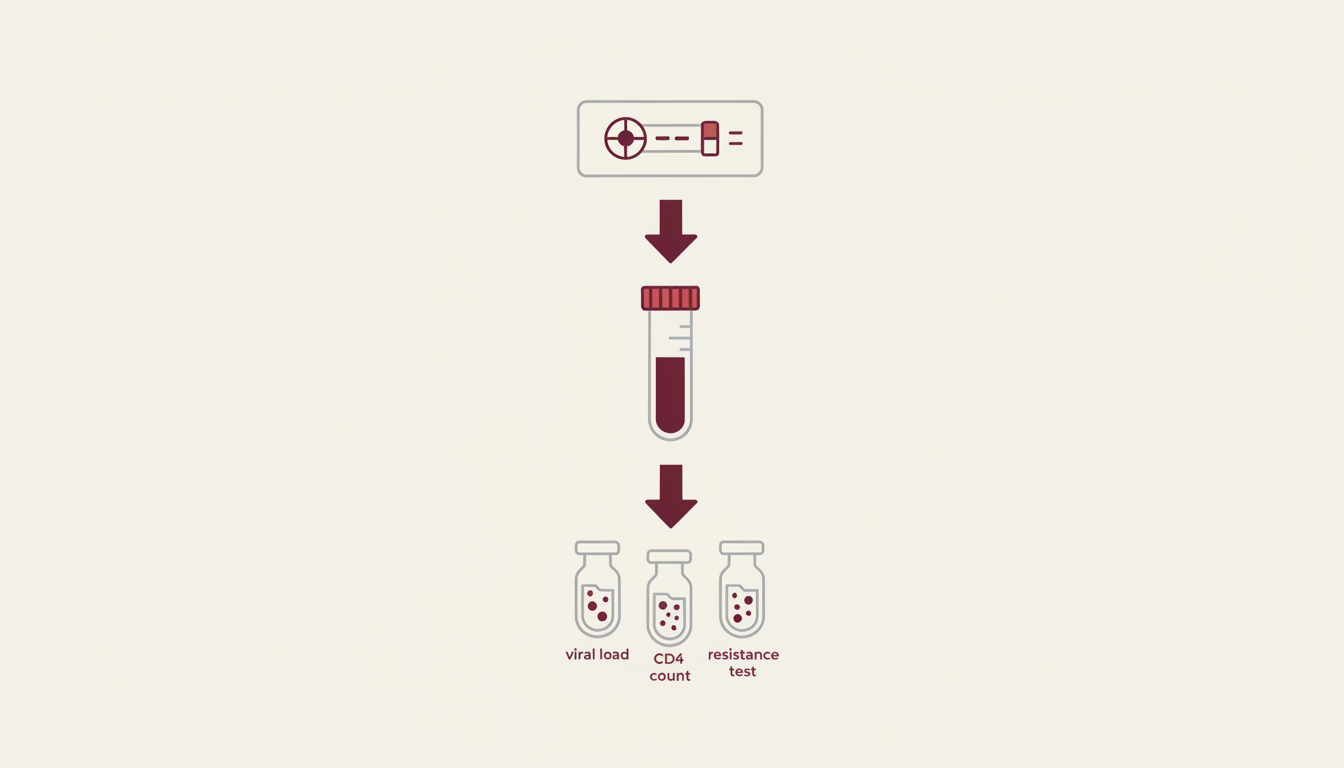
Initial labs at the start of care typically include a viral load (the amount of HIV RNA in blood), a CD4 count (a measure of immune-cell health), and resistance testing (which medications the specific viral strain is sensitive to). These results shape the choice of regimen. They are not pass or fail grades. They are practical inputs that calibrate treatment.
Most people who start ART within a few weeks of diagnosis reach an undetectable viral load (commonly defined as fewer than 200 copies of HIV RNA per milliliter of blood) within one to six months. Once stable on suppression, monitoring shifts to roughly every six months.
| 1990s perception | 2026 reality |
|---|---|
| Multiple pills, multiple times a day | Often a single pill once daily, or a long-acting injection every two months |
| Severe, persistent side effects | Mild and typically transient side effects for most regimens |
| Significantly shortened life expectancy | Near-normal life expectancy when treatment starts early and is sustained |
| Transmission risk persists despite treatment | Sustained undetectable viral load = no sexual transmission (U=U) |
Mild fatigue, vivid dreams, or low-grade nausea in the first weeks of ART are common and usually fade. They are not signs the medication is failing. Telling a provider about side effects matters; modern regimens have multiple effective alternatives, and switching is straightforward when needed.
U=U: the science behind "undetectable equals untransmittable"
The single most important clinical fact for someone newly diagnosed with HIV is U=U. People living with HIV who take antiretroviral therapy as prescribed and maintain an undetectable viral load do not transmit HIV to sexual partners. This is the consensus of the CDC, the World Health Organization, and major HIV research consortia, supported by three large prospective studies (PARTNER, PARTNER2, and Opposites Attract) that followed thousands of mixed-status couples over years and recorded zero linked transmissions during periods of sustained viral suppression.
The implications for the first 24 hours are emotional more than practical. The diagnosis does not end intimacy, dating, marriage, or sexual life. It does not require permanent celibacy or lifelong condom use within a relationship where both partners are informed and viral suppression is maintained. Pregnancy is also possible; with viral suppression and standard prenatal care, the risk of mother-to-child transmission falls below 1% per CDC reporting.
The qualifier in U=U is real. The principle holds during sustained viral suppression. In the gap between diagnosis and reaching undetectable status (typically one to six months on treatment), transmission risk is reduced but not zero. Condoms or other barrier methods remain useful during this window. Once sustained suppression is established, barrier methods become a personal choice within an informed relationship rather than a transmission-risk requirement.
People who take HIV medicine as prescribed and get and keep an undetectable viral load have effectively no risk of sexually transmitting HIV to an HIV-negative partner.
Disclosure: who, when, and how
Disclosure decisions feel urgent in the first hours. They are not. The right approach is to wait until the result is confirmed, basic facts are in hand, and treatment is started before having most disclosure conversations. This is preparation, not avoidance.
Recent sexual partners are different. Public-health practice in the U.S. and most other countries supports notifying recent partners so they can test and access care. This does not require a confrontational conversation. Many state and local health departments offer anonymous partner-notification services, where staff contact partners on the diagnosed person's behalf without revealing identity. Tools like TellYourPartner.org provide template messaging for anyone choosing to notify directly.
Beyond recent partners, disclosure is personal and contextual. There is no obligation to disclose to employers, schools, friends, family, or social media. HIV status is protected health information under HIPAA in the U.S. and equivalent privacy laws in most other jurisdictions. Anti-discrimination protections under the Americans with Disabilities Act cover HIV-related discrimination in employment, housing, and most public services.
The conversation with a primary partner, when it happens, benefits from preparation. Naming the facts simply ("I had a positive HIV test, I'm starting treatment, here's what U=U means for us") tends to land better than a long preamble. Most partners respond with concern and curiosity, not rejection. The catastrophic responses people imagine in the worst hours of fear tend to overpredict the worst case.
Most U.S. state and county health departments offer free anonymous partner services: trained staff contact recent partners on your behalf without disclosing your identity, give them testing information, and connect them to care. Web tools like TellYourPartner.org and the CDC's GetTested locator (gettested.cdc.gov) provide template messaging and clinic listings for anyone choosing to notify partners directly. Either route is valid; using a tool is not a sign of bad faith.
Protecting mental health through the first days
The mental load of a new HIV diagnosis is real and, for many people, harder to manage than the medical load. The biology has well-defined treatment pathways. The shame, the fear of disclosure, the spiraling worst-case imagination do not have a single pill.
The most reliable way out of the spiral is contact with someone who has either lived through it or is professionally trained in chronic-illness adjustment. Online communities including POZ.com and TheBody.com offer immediate, low-friction connection with people years past their own diagnoses. Reading without posting is a valid first step. Many local AIDS service organizations also offer peer-counseling programs at no cost.
If thoughts of self-harm or suicide appear, the U.S. 988 Suicide and Crisis Lifeline operates 24/7 by call or text. Mental-health support during the first weeks of an HIV diagnosis is associated with better long-term treatment adherence and outcomes; reaching out is a clinical step.
Sleep, food, hydration, and movement matter more in this window than they feel like they do. Skipping meals, pulling all-nighters scrolling for reassurance, or chain-Googling symptoms amplifies emotional volatility. A practical baseline: regular meals, regular sleep, walks outside, and limiting search activity to once or twice per day from authoritative sources rather than continuous scanning.
988 Suicide and Crisis Lifeline (U.S., call or text 988, 24/7) handles medical-diagnosis crises specifically. POZ.com and TheBody.com host long-running peer forums where people years past diagnosis answer questions about meds, dating, disclosure, and side effects. Local AIDS service organizations (search by zip on hiv.gov) provide free peer counseling and care navigation. Reading without posting counts as participation in the early days.
Coinfection screening and follow-up testing
A new HIV diagnosis is usually accompanied by a broader infectious-disease workup. The CDC recommends testing newly diagnosed individuals for syphilis, chlamydia, gonorrhea, hepatitis B, and hepatitis C at minimum, with additional tests (tuberculosis, hepatitis A, varicella) added based on risk factors. Coinfection is common and treatable; finding and addressing it improves both HIV outcomes and overall health.
Vaccination becomes a more active conversation as well. People living with HIV are recommended to receive or update hepatitis A and B vaccines, the HPV vaccine through age 26 (with shared clinical decision-making through age 45 per ACIP guidance), pneumococcal vaccines, annual influenza vaccine, and the mpox vaccine where indicated. The HIV care team typically coordinates vaccination scheduling alongside ART initiation.
Ongoing monitoring follows a predictable rhythm. After starting ART, viral load is usually rechecked at four to six weeks, again at three months, and then every six months once suppression is established. CD4 count is tracked alongside, with frequency tapering once it normalizes. The follow-up cadence is structured to catch any treatment-response issues early, not to prove anything to anyone.
| Coinfection test | Why it's recommended at HIV diagnosis |
|---|---|
| Syphilis (RPR or treponemal antibody) | High coexistence rate with HIV; untreated syphilis accelerates HIV-related complications |
| Chlamydia and gonorrhea (urine NAAT, plus throat or rectal swabs by exposure site) | Often asymptomatic; treatment is short-course antibiotics once detected |
| Hepatitis B (HBsAg, anti-HBs, anti-HBc panel) | Coinfection changes ART regimen choice and triggers vaccination if non-immune |
| Hepatitis C (HCV antibody, with reflex RNA if positive) | Curable in most cases with 8 to 12 weeks of direct-acting antivirals |
| Tuberculosis (interferon-gamma release assay or skin test) | Latent TB is common; HIV raises the risk of progression to active TB without treatment |
Prevention for partners: PrEP, PEP, and practical tools
For partners of someone newly diagnosed, two prevention tools matter beyond the U=U principle. Pre-exposure prophylaxis (PrEP) is a daily oral medication or every-two-month injection that, when taken as prescribed, reduces the risk of acquiring HIV from sex by about 99% per CDC clinical guidance. PrEP is FDA-approved, available through most insurance and through state-level financial-assistance programs, and increasingly available via telehealth without an in-person clinic visit.
Post-exposure prophylaxis (PEP) is a 28-day medication course taken after a possible HIV exposure. It is most effective when started within 72 hours of exposure and is available from emergency rooms, sexual-health clinics, and many primary-care providers. PEP is for episodic exposure (sexual assault, condom failure, occupational exposure) rather than ongoing risk; people with recurring exposure are typically transitioned to PrEP.
For the partner of someone newly diagnosed, the pathway depends on timing. If a recent unprotected encounter falls within the past 72 hours, PEP is appropriate and the clock matters. Outside the 72-hour window, baseline HIV testing followed by PrEP if negative is the standard approach. The conversation with a clinician usually takes less than 30 minutes; medication can typically be started the same day.
If a partner had a possible HIV exposure within the past 72 hours, post-exposure prophylaxis (PEP) can substantially reduce the risk of infection, but only if started inside that window. Effectiveness drops sharply after 72 hours and PEP is no longer recommended past that point. Emergency rooms, sexual-health clinics, urgent-care centers, and many primary-care providers can initiate PEP the same day. If in doubt about timing, call rather than wait.
What the first week actually feels like
The intensity of the first hours fades, sometimes faster than expected. Within the first week most people have completed confirmatory testing, met an HIV care provider, started or scheduled ART, and had at least one conversation with someone they trusted. The diagnosis stops being the only fact of the day.
Common patterns through the first week: appetite returns by day three or four, sleep gradually normalizes, an initial emotional flatness softens into more familiar feelings, and attention slowly shifts from "what is happening to me" to "what am I doing about it." The timing varies. For most people, the future stops feeling cancelled within seven to ten days.
Practical milestones in the first month: confirmation labs back, ART started, first follow-up viral load drawn. Practical milestones in the first three to six months: undetectable viral load, monitoring cadence eased, life-plans (work, relationships, travel) returning to ordinary status. Most of what felt unsurvivable in the first hours becomes routine clinical follow-up by month six.
- Days 1 to 3: Lab confirmatory test drawn; baseline workup ordered (viral load, CD4 count, resistance testing).
- Week 1 to 2: Confirmation results back; first appointment with an HIV care provider; ART regimen selected.
- Weeks 2 to 6: ART started; first follow-up viral load drawn at 4 to 6 weeks to confirm response.
- Months 1 to 6: Viral load typically reaches undetectable status; coinfection screening and vaccinations completed; monitoring cadence eases to roughly every six months.
Frequently asked questions
- Can a positive HIV screening test be a false positive?
- Schedule a laboratory confirmatory blood test before drawing any conclusions. False positives on rapid screening tests do happen at low rates, usually because of cross-reactivity with antibodies from a recent vaccination, an autoimmune condition, or a rare technical error. CDC protocol requires a second, lab-based test exactly to catch these cases. The first test starts a process; the lab test finishes it.
- How quickly should I start HIV treatment after diagnosis?
- Often within days of a confirmed diagnosis. The current U.S. approach is called rapid-start ART (sometimes test-and-treat): treatment begins as soon as confirmation is in hand, regardless of CD4 count. Earlier starts mean faster viral suppression, better long-term immune health, and lower transmission risk during the suppression window.
- Can I still have sex after an HIV diagnosis?
- Yes. Once antiretroviral therapy has produced a sustained undetectable viral load, the risk of sexual transmission is effectively zero. This is U=U, supported by three large prospective studies tracking thousands of mixed-status couples. In the months between diagnosis and reaching undetectable status, condoms or other barrier methods reduce transmission risk significantly. After sustained suppression, sexual life can return to whatever shape it had before.
- Do I have to tell my employer or school?
- In the U.S. and most other countries, no. HIV status is protected health information; employers, schools, and most third parties have no right to it. The Americans with Disabilities Act prohibits HIV-related discrimination in employment, housing, and public services. Narrow exceptions exist for specific roles (some surgical, military, or aviation positions), and a clinician handles those conversations when relevant.
- What does undetectable mean, and how do I get there?
- Fewer than 200 HIV RNA copies per milliliter of blood, often reported by labs as "not detected." In plain English: the virus is still in the body, but at levels too low for standard assays to measure and too low to transmit through sex. Most people reach that threshold within one to six months of taking daily antiretroviral therapy as prescribed. Provider check-ins are built into the timeline; this is not a willpower test.
- What if my partner just tested positive too?
- Both people can begin care in parallel. Each person needs confirmatory testing, baseline labs, and an ART starting plan. Coinfection screening (syphilis, hepatitis, other STIs) is recommended for both. Many clinics have couples-care pathways. The diagnosis order rarely matters clinically; what matters is that both partners reach sustained viral suppression. The relationship continues.
- Can people with HIV have biological children?
- Yes. With antiretroviral therapy and standard prenatal care, the risk of mother-to-child transmission falls below 1% in U.S. reporting. For couples where one partner is HIV-positive and trying to conceive, sustained viral suppression in the positive partner combined with PrEP for the negative partner makes natural conception safe in most cases. Reproductive-health specialists experienced with HIV can map the specifics.
- Is HIV the same as AIDS?
- No. HIV is the virus. AIDS is a late-stage condition that can develop when HIV goes untreated for years and the immune system becomes severely weakened (CD4 count below 200, or specific opportunistic infections). With modern antiretroviral therapy, most people diagnosed with HIV today never develop AIDS. The two terms are not interchangeable, and the distinction matters.
- U.S. Centers for Disease Control and Prevention. Living with HIV: care, treatment, and U=U guidance for newly diagnosed individuals.
- U.S. Centers for Disease Control and Prevention. HIV testing protocol, including window periods, fourth-generation tests, and confirmatory pathways.
- U.S. Centers for Disease Control and Prevention. HIV treatment overview, viral suppression thresholds, and transmission-as-prevention framing.
- U.S. Centers for Disease Control and Prevention. PrEP clinical guidance for healthcare providers, including the about-99% effectiveness figure for sexual exposure when taken as prescribed.
- World Health Organization. HIV/AIDS fact sheet on global prevalence, treatment access, and transmission prevention.
- National Health Service (UK). HIV and AIDS overview, including diagnosis pathway and treatment expectations.
- U.S. National Institutes of Health (HIVinfo). HIV treatment basics, including the recommendation to start antiretroviral therapy as soon as possible after diagnosis.
