







Quick Answer: You should test for STDs even without symptoms if you’ve had a new partner, unprotected sex, or any exposure risk, typically 1–2 weeks for some infections and up to 3 months for others like HIV. Timing matters because testing too early can miss infections.
“I Feel Completely Fine… So Why Am I Still Worried?”
A lot of people expect STDs to feel obvious. Burning, itching, pain, something dramatic enough to signal that something’s wrong. But in reality, many of the most common infections are quiet.
Someone named Luis once described it like this: “I kept waiting for a symptom that would tell me I needed to act. It never came. I only tested because I couldn’t stop thinking about it.” That’s more common than you’d think.
The uncomfortable truth is that infections like chlamydia, gonorrhea, and even early HIV often don’t cause noticeable symptoms right away, or at all. You can feel completely normal and still have something that needs attention.
This is why testing isn’t just about reacting to symptoms. It’s about understanding risk. And risk doesn’t always come with a warning sign.
The Silent Reality: Why “No Symptoms” Doesn’t Mean “No STD”
There’s a reason public health experts call many infections “silent.” It’s not to scare people, it’s because the body doesn’t always respond in ways you can feel.
For example, chlamydia is often asymptomatic in both men and women. Gonorrhea can sit quietly in the throat after oral sex. Even herpes can show up so mildly that it’s mistaken for irritation or goes unnoticed entirely.
One person shared, “I only found out because my partner tested positive. I had zero symptoms. None. I would have never known.” That’s the part most people don’t expect.
And this isn’t rare. Large-scale studies have shown that a significant percentage of STD transmissions happen from people who don’t know they’re infected, because they don’t feel anything.
So when you ask yourself, “Do I need an STD test if I feel fine?”, what you’re really asking is whether your body is giving you reliable information. And sometimes, it just isn’t.

People are also reading: How to Tell Someone You’re HIV Positive (Without Shame or Panic)
Timing Is Everything: When to Test After Exposure
This is where things get more practical. Because even if you decide to test, doing it at the wrong time can give you a false sense of security.
There is a "window period" for every STD. That is the time between when someone is exposed and when a test can be sure to find the infection. Test too early, and the result might come back negative, even if the infection is there.
| STD | Earliest Testing Window | Most Accurate Timing |
|---|---|---|
| Chlamydia | 5–7 days | 2 weeks |
| Gonorrhea | 5–7 days | 2 weeks |
| HIV | 10–14 days (RNA) | 45–90 days |
| Syphilis | 3 weeks | 6 weeks+ |
| Herpes (HSV-1/2) | 2–3 weeks | 4–12 weeks |
What this means in real life is simple: if you test too soon, you might miss something. That’s why many providers recommend testing once early for peace of mind, and then again later for accuracy.
If you’re unsure where you fall, using a reliable at-home option like a trusted STD testing provider can help you stay on track without overthinking every step.
Real-Life Scenarios: When You Should Test Even Without Symptoms
Not every situation carries the same level of risk. But there are certain moments where testing is simply the smart move, even if you feel completely fine.
| Situation | Why Testing Matters |
|---|---|
| New sexual partner | You don’t know their recent testing status |
| Unprotected sex | Higher risk of transmission |
| Condom broke or slipped | Unexpected exposure |
| Oral sex with new partner | Some STDs spread through oral contact |
| Partner tested positive | Direct exposure risk |
Even something that felt low-risk in the moment can carry uncertainty afterward. And that uncertainty tends to linger longer than the actual testing process.
One person put it bluntly: “The test took 15 minutes. The worrying took two weeks.” That’s usually how it goes.
Testing Too Early vs Waiting Too Long: Finding the Balance
This is where people tend to get stuck. Test too early, and you risk a false negative. Wait too long, and you spend weeks or months in your head.
The middle ground is often the healthiest approach. Many clinicians suggest an initial test around the 1–2 week mark for common infections like chlamydia and gonorrhea, followed by a second test later if needed.
For infections like HIV or syphilis, waiting longer before relying on a final result is important. That doesn’t mean you do nothing in the meantime, it just means you understand that one early negative doesn’t always close the case.
If you want a practical, private way to handle this without scheduling delays, options like a combo STD home test kit can give you a starting point while you plan follow-up testing if needed.
The goal isn’t perfection. It’s clarity, step by step.
The Part No One Talks About: Anxiety Without Symptoms
There’s a specific kind of stress that comes from not knowing. Not because something feels wrong, but because nothing does. It leaves you in this strange in-between, where your body says one thing and your brain keeps asking questions.
Someone named Aisha once said, “I kept checking for symptoms that never came. Every time I felt normal, I’d think, ‘Okay, I’m fine.’ Then an hour later, I’d spiral again.” That loop is incredibly common, especially after a new partner or a situation that felt slightly uncertain.
What makes it harder is how often people dismiss their own concerns. If nothing hurts, it’s easy to tell yourself you’re overreacting. But testing isn’t about panic, it’s about closing the loop. It’s a way to move from guessing to knowing.
And for most people, that shift, from uncertainty to clarity, is where the real relief happens.
Check Your STD Status in Minutes
Test at Home with Remedium7-in-1 STD Test Kit
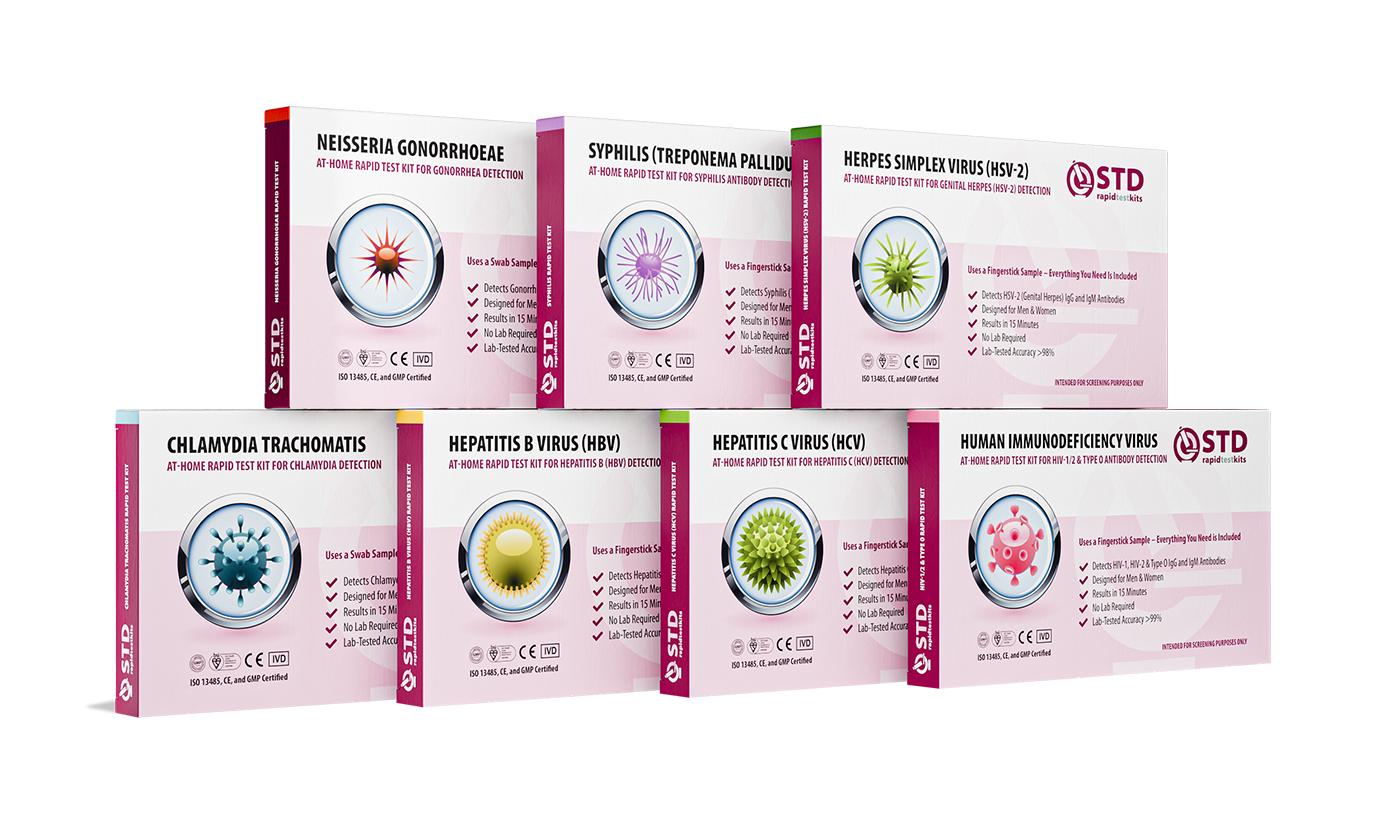
 For Men & Women
 Results in Minutes
 No Lab Needed
 Private & Discreet
Order Now $129.00 $343.00
For all 7 tests
Protected Sex, No Symptoms… Do You Still Need to Test?
This is one of the biggest gray areas. You used protection. Everything seemed fine. So does testing still matter?
The honest answer is: sometimes, yes.
Condoms are incredibly effective at reducing risk, especially for infections like HIV and chlamydia. But they don’t cover everything. Skin-to-skin infections like herpes or HPV can still spread through areas not covered by a condom.
There are also real-life variables people don’t always think about. Condoms can slip, break, or be used incorrectly. Oral sex often happens without protection, even when everything else is careful.
One person explained it this way: “We used a condom, so I told myself I didn’t need to test. But I couldn’t shake the feeling. Getting tested wasn’t about assuming the worst, it was about not leaving it unanswered.”
That’s a useful way to think about it. Testing isn’t an accusation. It’s just information.
What If It Was Just Oral Sex?
This is another moment where people tend to underestimate risk, not because they’re careless, but because no one really explains it clearly.
Oral sex can transmit infections like gonorrhea, chlamydia (less commonly), and herpes. The tricky part is that throat infections often have no symptoms at all. No pain, no visible signs, nothing that would prompt you to check.
That means someone can carry and even pass an infection without ever realizing it. And because throat testing isn’t always included in standard screening unless you ask for it, it can be missed entirely.
If oral sex is part of your experience, especially with a new partner, it’s worth factoring into your decision. Not out of fear, but out of accuracy.
How Often Should You Test If You Feel Fine?
Even outside of specific situations, there’s a broader question: how often should you be testing if you don’t have symptoms at all?
For many sexually active adults, routine screening is recommended at least once a year. But that baseline shifts depending on your situation. More frequent testing can make sense if you have new or multiple partners, or if your relationship status changes.
Some people think of testing as something they do all the time, like going to the dentist or getting a physical once a year. It's not so much about doing something because you're scared as it is about staying up to date.
That change, from seeing testing as something that happens in response to something bad to something that happens all the time, can change the whole experience. You don't just do it when you're scared anymore; you do it because you want to stay healthy.
What Happens If You Wait Too Long?
Delaying testing doesn’t always lead to immediate consequences, but it can extend uncertainty, and in some cases, allow infections to progress or spread.
Chlamydia and gonorrhea can cause problems over time if you don't treat them. This is especially true for people with reproductive organs, since infections can move up. Syphilis can get worse over time if you don't get treatment for it. With HIV, finding it early makes a big difference in how healthy you will be in the long run.
But beyond the medical side, there’s also the emotional cost. Waiting often makes you think too much, doubt yourself, and spend more time in that "what if" space that makes you feel bad.
Testing, even when everything feels fine, shortens that cycle. It replaces speculation with something concrete.
You Don’t Need a Symptom to Take Yourself Seriously
There’s a quiet but important shift that happens when people stop waiting for symptoms as permission to act. It’s the realization that your concern is valid, even if your body feels completely normal.
Testing isn’t about assuming something is wrong. It’s about giving yourself a clear answer so you can move forward, whatever that answer is.
One person summed it up simply: “I didn’t get tested because I thought I had something. I got tested because I didn’t want to keep wondering.”
And that’s really what this comes down to. Not fear. Not shame. Just clarity.
People are also reading: Scared to Test for HIV? Here’s How to Do It at Home Safely
How to Test Without Overthinking Every Step
Once you decide to test, a new kind of stress can creep in: doing it “wrong.” Testing too early, picking the wrong test, misreading results, it can feel like there’s a lot to get right.
But in reality, the process is more forgiving than people think. What matters most is that you start somewhere and understand what your result actually means.
At-home testing has made this much easier. You don’t have to coordinate schedules, sit in a waiting room, or explain your situation out loud if you don’t want to. You can test privately, on your own time, and still get clinically reliable results.
For many people, that privacy changes everything. It removes the barrier between “I should get tested” and actually doing it.
A Simple Testing Timeline You Can Actually Follow
If you’re feeling stuck on timing, here’s a straightforward way to think about it, without turning it into a science project.
| Time After Exposure | What to Do | Why It Matters |
|---|---|---|
| 1–7 days | Wait or test cautiously | Too early for many infections to show up |
| 7–14 days | Test for chlamydia/gonorrhea | Common infections become detectable |
| 3–6 weeks | Consider syphilis testing | Antibodies begin to show reliably |
| 6–12 weeks | Final HIV/syphilis confirmation | Highest accuracy window |
This kind of timeline helps you avoid the two biggest mistakes: testing too early and assuming one negative result is the final answer.
It also gives you something more valuable than just information, it gives you a plan. And having a plan tends to quiet a lot of the mental noise.
Common Mistakes People Make When They Feel “Fine”
When there are no symptoms, people often rely on assumptions instead of timelines. And those assumptions can lead to missed infections or unnecessary stress.
- Testing immediately after exposure: It feels proactive, but it’s often too early to detect anything.
- Skipping testing because of protection: Condoms reduce risk, but they don’t eliminate it entirely.
- Only testing once: A single early negative result doesn’t always mean you’re clear.
- Ignoring oral exposure: Throat infections can happen without symptoms and often go untested.
None of these come from carelessness. They come from trying to make sense of incomplete information. Once you understand how timing works, these mistakes become much easier to avoid.
What a Negative Test Actually Means (And What It Doesn’t)
A negative result can feel like instant relief, and sometimes, it is. But context matters.
If you test within the right window period, a negative result is usually reliable. But if you tested very early, it might only mean that the infection wasn’t detectable yet.
This is where a lot of confusion happens. People think in terms of “positive vs negative,” but the real question is: Was this test taken at the right time?
Understanding that difference turns testing from a one-time event into a process. And that process is what gives you confidence in your result.
Check Your STD Status in Minutes
Test at Home with Remedium6-in-1 STD Test Kit
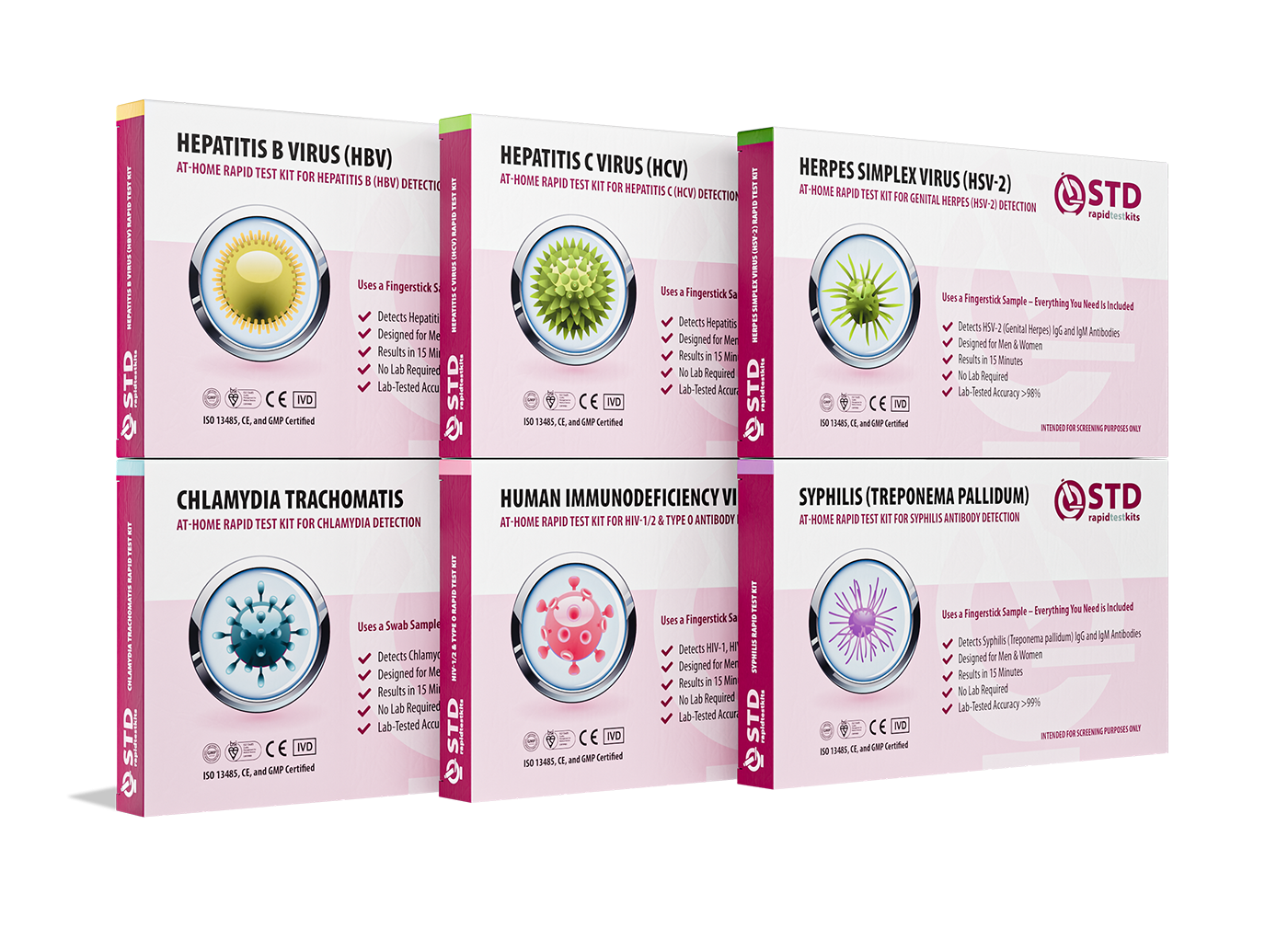 For Men & WomenResults in MinutesNo Lab NeededPrivate & Discreet
Order Now $119.00 $294.00
For all 6 tests
Taking Control Without Spiraling
There’s a difference between being proactive and getting stuck in a loop of constant testing and worry. The goal isn’t to test endlessly, it’s to test intelligently.
Start with your most recent potential exposure. Use a timeline that makes sense. Follow up if needed. Then allow yourself to trust the results you’ve taken at the right time.
Testing should reduce anxiety, not feed it. And when done thoughtfully, it usually does.
FAQs
1. Can you actually have an STD and feel completely normal?
Yeah, and this is the part that catches people off guard. A lot of infections don’t come with a dramatic “something’s wrong” moment. You can go about your day, feel totally fine, and still have something like chlamydia or gonorrhea quietly sitting there. That’s why testing isn’t about symptoms, it’s about what happened and when.
2. I feel fine… so why is my brain still telling me to test?
Because your brain is trying to close a loop your body didn’t. That lingering “what if” feeling usually isn’t random, it’s tied to a real moment, like a new partner or something that felt slightly uncertain. Testing isn’t feeding anxiety; it’s usually the thing that ends it.
3. How long should I wait to test if nothing feels wrong?
Most people start around the 1–2 week mark for common infections, even without symptoms. That’s when things like chlamydia and gonorrhea are usually detectable. But for something like HIV, you may need to circle back weeks later for a fully reliable result.
4. If I tested early and it came back negative, am I good?
Maybe, but it depends on timing. An early negative can be reassuring, but it’s not always the final word if you tested before the window period. Think of it like checking too soon, sometimes you just need to confirm later to be sure.
5. We used protection the whole time, do I still need to test?
Probably lower risk, but not zero. Condoms are great, but they don’t cover everything, especially skin-to-skin infections like herpes. A lot of people test in this situation not because they think something went wrong, but because they’d rather know than guess.
6. What if it was just oral sex, does that even count?
It counts more than people think. Infections like gonorrhea can live in the throat without any symptoms at all. So even if everything felt “low risk,” it’s still worth considering in your testing decision.
7. Can you pass something to someone else without knowing you have it?
Yes, and this is actually how a lot of transmission happens. People aren’t being reckless; they just don’t know. That’s why testing is less about suspicion and more about responsibility, both for yourself and anyone you’re with.
8. What’s the biggest mistake people make when they feel fine?
Waiting for a sign that never comes. A lot of people think, “If something was wrong, I’d know.” But with STDs, that’s not always how it works. The absence of symptoms can be misleading.
9. How often should I test if I don’t have symptoms?
At least once a year is a solid baseline if you’re sexually active. But if your situation changes, new partner, casual dating, anything like that, testing more often just makes sense. Some people treat it like routine maintenance, not a crisis response.
10. Are at-home STD tests actually reliable if I feel fine?
Yes, when used at the right time. The test doesn’t care whether you have symptoms, it’s looking for the infection itself. As long as you follow the timing and instructions, they can be a really solid, private way to get answers.
You Deserve Clarity, Not Guesswork
Feeling fine after a sexual experience can be reassuring, but it can also be misleading. The absence of symptoms doesn’t always mean the absence of risk. The goal isn’t to assume something is wrong. It’s to remove the uncertainty that keeps looping in the background.
If there’s been a recent exposure, test within the right window. If that first result is early, follow up at the appropriate time. If everything comes back negative, you can actually trust it, and move on without second-guessing every sensation or memory.
Don’t wait and wonder. If there’s even a small chance, start with a discreet screen like the Combo STD Home Test Kit. Private, fast, and built for real life, not waiting rooms. Clarity always feels better than guessing.
How We Sourced This Article: This guide combines CDC and WHO screening recommendations, peer-reviewed research on asymptomatic STD transmission, and clinical testing window data. We also incorporated real-world patient behavior patterns to reflect how people actually make testing decisions when symptoms are absent. The goal was accuracy without clinical distance, clear, usable information grounded in evidence.
Sources
1. Centers for Disease Control and Prevention – STD Screening Recommendations
2. World Health Organization – Sexually Transmitted Infections Fact Sheet
3. NHS – Sexually Transmitted Infections Overview
4. Planned Parenthood – STD and Safer Sex Guide
5. PubMed – Sexually Transmitted Infection Research Database
6. Mayo Clinic – STDs Symptoms and Causes
About the Author
Dr. F. David, MD is a board-certified expert in infectious diseases who works to stop, diagnose, and treat STIs. He has a direct, sex-positive approach that puts clarity, privacy, and patient empowerment first, along with clinical accuracy.
Reviewed by: Board-Certified Infectious Disease Specialist | Last medically reviewed: March 2026
The only thing this article is meant to do is give you information. You shouldn't use it instead of getting medical advice, a diagnosis, or treatment from a qualified professional.


