STD in the Throat? Signs You Might Have an Oral STD
It usually starts with something small. A scratchy throat. A weird white spot on your tonsil. Maybe a sore that doesn’t quite feel like a normal canker sore. For a lot of people, that moment happens a day or two after oral sex, and suddenly Google becomes the worst place on Earth.
People often assume oral sex is “safer” or that sexually transmitted infections only affect genitals. But several infections can live quietly in the mouth and throat. The tricky part is that many oral STDs cause mild symptoms, or none at all.
14 March 2026
16 min read
904
Quick Answer: Several STDs can infect the mouth and throat through oral sex, including gonorrhea, chlamydia, syphilis, herpes, and HPV. Symptoms may include sore throat, swollen tonsils, mouth sores, or white patches, but many oral STDs cause no symptoms at all.
The Quiet Reality of STDs in the Mouth and Throat
When doctors talk about oral STDs, they’re usually referring to infections that settle in the throat after oral sex. The medical term you’ll sometimes see is pharyngeal infection. It simply means the bacteria or virus is living in the throat tissue.
For many people, nothing feels different at first. In fact, oral infections are often discovered during routine screening rather than because someone felt sick. A person might carry an infection for weeks without realizing it.
That’s why throat infections from oral sex can spread quietly between partners. Someone may test negative through a urine test but still have bacteria in the throat, which only shows up through a swab.
“I thought testing meant peeing in a cup,” one patient once told a clinician during a sexual health consult. “Nobody told me the throat could be infected too.”
It’s a common misunderstanding. And once you understand which infections can affect the mouth, the symptoms start making a lot more sense.
Which STDs Can Infect the Throat After Oral Sex?
Several sexually transmitted infections can live in the throat. Some are bacteria that respond well to antibiotics. Others are viruses that behave differently and may stay in the body longer.
The table below summarizes the most common infections that can appear in the mouth or throat after oral sex.
Common sexually transmitted infections that can affect the mouth and throat.
STD
How It Reaches the Throat
Common Oral Symptoms
Often Asymptomatic?
Gonorrhea
Oral contact with infected genitals
Sore throat, swollen tonsils, redness
Very common
Chlamydia
Oral exposure during sex
Mild throat irritation
Extremely common
Syphilis
Contact with sores
Painless mouth ulcer
Sometimes
Herpes (HSV-1 / HSV-2)
Skin-to-skin oral contact
Painful blisters or sores
Possible
HPV
Oral contact with infected skin
Warts or small growths
Often
The two infections doctors see most often in the throat are gonorrhea and chlamydia. They’re common, usually treatable, and frequently asymptomatic.
That doesn’t mean viral infections like herpes or HPV don’t occur, they simply behave differently. Viral infections often appear as visible sores, blisters, or growths rather than just a sore throat.
When symptoms do show up, they’re usually subtle. Most people expect dramatic signs, but the early stages often look like everyday throat irritation.
Someone might wake up with a mild sore throat and assume it’s allergies or dry air. Others notice swollen tonsils or patches that resemble strep throat.
A patient once described the moment this way:
“I kept thinking it was a cold. But the sore throat lasted almost two weeks and antibiotics from urgent care didn’t change anything.”
Situations like that often lead to STD testing, especially if symptoms appear shortly after oral sex.
Some signs that you might have an STD in your throat are:
Sore throat: persistent irritation that doesn’t improve.
Redness in the throat: swelling around the tonsils.
Swollen tonsils: People sometimes think it's strep.
White patches: spots that look like tonsillitis.
Mouth sores: ulcers or blisters.
Swollen lymph nodes: tenderness under the jaw.
Still, it’s important to remember something surprising: the majority of oral infections cause no symptoms at all.
That’s why testing after potential exposure can matter more than waiting for signs.
Oral Gonorrhea: The Infection That Hides in Plain Sight
Among all oral STDs, gonorrhea is probably the most common infection doctors find in the throat. It spreads easily during oral sex and frequently produces few or no symptoms.
When symptoms do occur, they can resemble ordinary throat infections. Someone might notice redness in the throat, swollen tonsils, or mild discomfort when swallowing.
In some cases, doctors see a yellowish discharge or patches on the tonsils. But even that doesn’t always happen.
The frustrating part is that throat infections don’t always respond to standard antibiotics prescribed for common respiratory infections. If someone receives treatment for strep throat and symptoms persist, clinicians sometimes consider testing for sexually transmitted infections.
Another complication is that oral gonorrhea can spread between partners even when neither person notices symptoms.
“The throat is one of the quietest places gonorrhea can live,” a sexual health physician once explained during a public health lecture. “People don’t feel it, so they don’t test for it.”
Not every oral STD causes throat pain. Some infections appear as sores on the lips, gums, or inside the mouth instead.
The herpes simplex virus is a good example. It happens a lot all over the world, and kissing or oral sex can spread it.
The first outbreak can feel intense. People sometimes develop clusters of painful blisters, fever, or swollen glands. But many infections are mild and mistaken for regular cold sores.
Later outbreaks are usually shorter and less dramatic. A small blister might appear on the lip, gumline, or roof of the mouth and heal within days.
Many people are surprised to learn that herpes can spread even when there are no sores. The virus sometimes leaves the skin without making a sound.
This is why doctors tell people with cold sores not to touch their mouths.
Can Chlamydia Live in the Throat?
Yes, chlamydia can infect the throat after oral sex, although it’s less common than gonorrhea. Most people are surprised to hear that because chlamydia is usually associated with genital infections.
When chlamydia affects the throat, symptoms are often extremely mild. Many people feel nothing at all. If symptoms do appear, they may include slight throat irritation, redness, or mild discomfort when swallowing.
Because symptoms are subtle, oral chlamydia is frequently discovered only during screening. Someone may test negative through urine testing but still carry bacteria in the throat if a swab isn’t performed.
That’s why many sexual health clinics now recommend throat swabs when someone reports oral sex exposure.
“People think they’re fully tested,” one nurse explained during a routine screening visit. “But if the throat wasn’t swabbed, we may not have checked the place the exposure actually happened.”
When White Spots or Ulcers Raise Questions
One of the most common panic searches people make is about white spots in the throat after oral sex. These spots can look alarming, especially if they appear suddenly.
The truth is that many conditions can cause them. Tonsillitis, strep throat, viral infections, and even minor irritation can create patches that resemble STD symptoms.
However, some sexually transmitted infections can also cause visible sores or ulcers in the mouth.
Conditions that can cause sores in the mouth or spots in the throat.
Symptom
Possible STD Cause
Other Common Causes
White patches on tonsils
Gonorrhea
Strep throat, tonsillitis
Single painless ulcer
Syphilis
Canker sore
Painful blister clusters
Herpes
Cold sores
Small growths or warts
HPV
Benign oral lesions
This overlap is why visual symptoms alone rarely confirm an STD. Doctors usually rely on testing rather than appearance.
If something in the mouth or throat doesn’t heal within a couple of weeks, or if symptoms appear after a sexual exposure, testing is often the simplest way to remove uncertainty.
How Testing for Oral STDs Actually Works
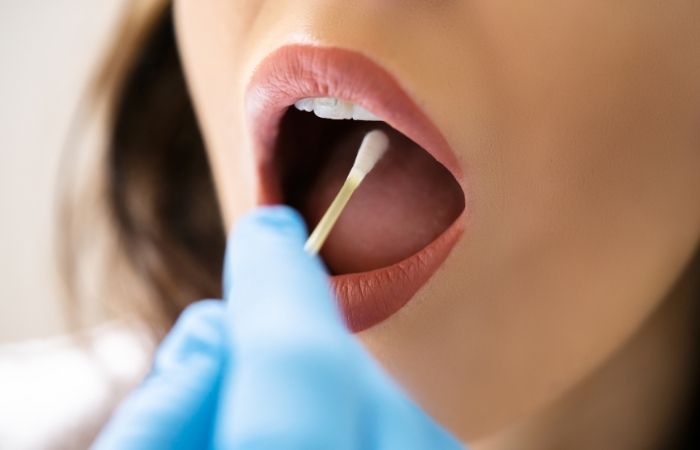
Testing the throat for sexually transmitted infections is surprisingly simple. In most cases, it involves a swab similar to the one used for strep throat testing.
A doctor gently swabs the back of the throat and the tonsils. Then, a lab looks at the sample to find bacterial DNA.
This method is highly accurate for infections like gonorrhea and chlamydia.
Testing may involve:
Throat swab: detects gonorrhea and chlamydia.
Blood test: used to check for syphilis or HIV.
Visual exam: doctors may identify herpes or HPV lesions.
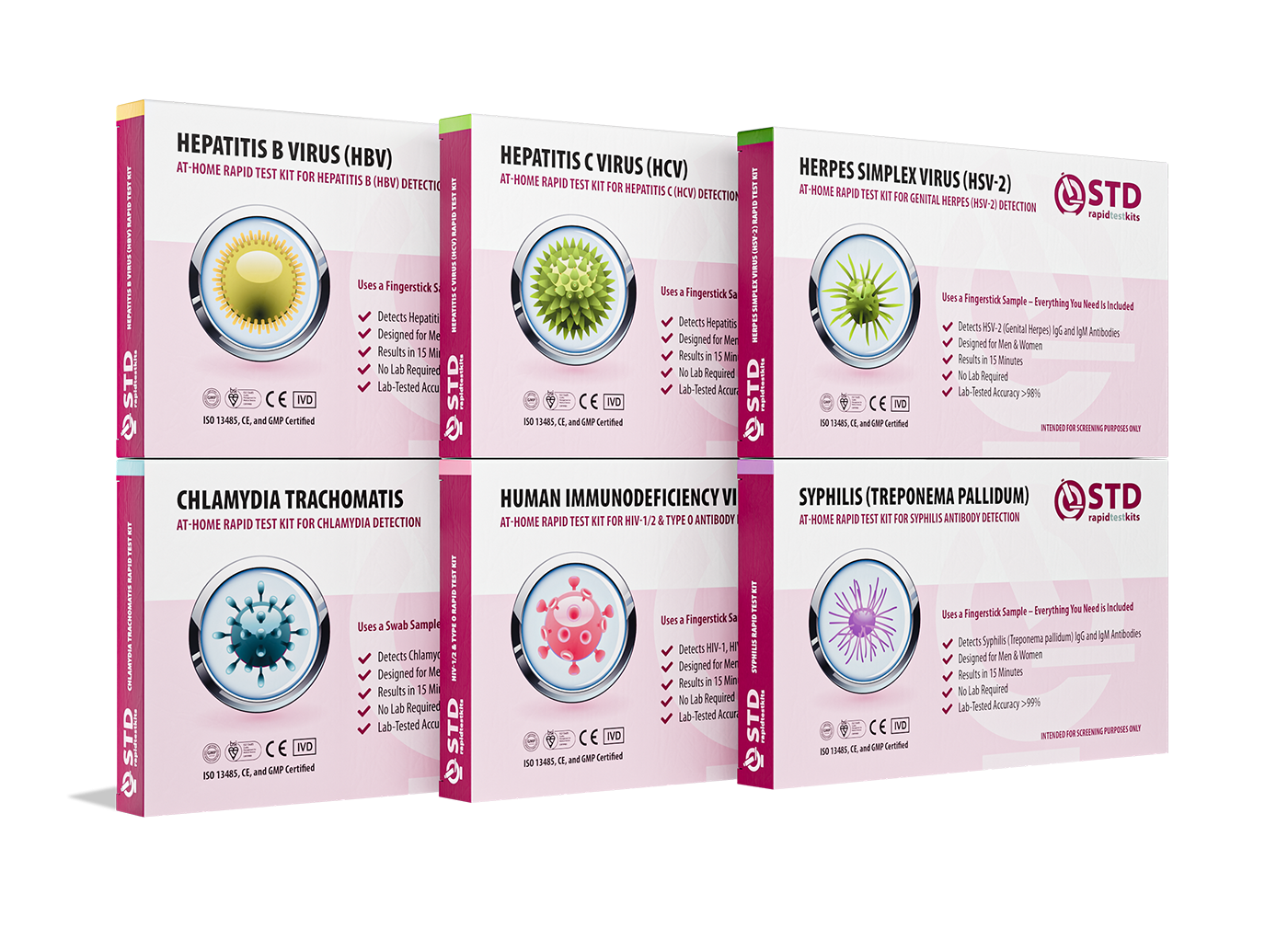
Many people prefer screening privately at home before visiting a clinic. Discreet options like the Combo STD Home Test Kit allow individuals to check for several infections quickly and confidentially.
The most important thing is making sure the test matches the exposure. If oral sex occurred, throat testing should be part of the conversation.
There are a few reasons infections in the throat slip under the radar.
First, there are often no symptoms. Someone may feel completely normal even while carrying bacteria in the throat.
Second, many people assume oral sex carries little risk. It is generally less risky for some infections than other types of sex, but it still lets bacteria and viruses spread.
Finally, traditional STD screening doesn’t always include throat swabs unless someone specifically requests them or reports oral exposure.
That combination creates a perfect situation for infections to move quietly between partners.
“People often think an STD would feel obvious,” a sexual health counselor once explained. “But the throat is one of the easiest places for infections to hide.”
When It’s Time to Consider Testing
If you’ve recently had oral sex and are experiencing unusual symptoms, testing can provide clarity. But symptoms aren’t the only reason people choose to get screened.
Many clinicians recommend testing after new partners, unprotected encounters, or if a partner reports a recent infection.
Situations where testing may make sense include:
Persistent sore throat lasting longer than a typical cold.
White patches or unusual spots in the mouth.
Mouth ulcers that don’t heal.
Swollen lymph nodes after sexual exposure.
Routine sexual health screening with new partners.
Testing doesn’t mean something is wrong. In many cases, it simply offers peace of mind.
And if an infection is detected, most bacterial STDs are treatable with straightforward medication.
The hardest part for most people isn’t the treatment, it’s the uncertainty beforehand.
Why Some Oral STDs Cause No Symptoms at All
One of the most confusing things about infections in the throat is how quiet they can be. Many people expect a sexually transmitted infection to cause obvious symptoms. In reality, the throat often behaves differently.
Bacteria like gonorrhea and chlamydia frequently live in the throat without triggering pain, swelling, or visible changes. Someone might feel perfectly healthy and still carry the infection for weeks.
This happens because the tissues in the throat respond differently than genital tissue. The immune system sometimes keeps inflammation low, which means the infection doesn’t create dramatic symptoms.
From a public health perspective, this is exactly why oral infections spread so easily. If nothing feels wrong, people rarely think to test.
“The absence of symptoms doesn’t mean the absence of infection,” one clinician often reminds patients during screenings. “The throat is one of the most silent places an STD can live.”
That’s why testing after potential exposure can matter more than waiting for symptoms.
Talking about STDs sometimes makes people feel like the only safe option is avoiding intimacy altogether. In reality, sexual health professionals focus on practical risk reduction rather than fear.
Oral sex carries a lower risk for certain infections compared to vaginal or anal sex, but it still allows bacteria and viruses to move between partners. Small adjustments can lower that risk significantly.
Some strategies people use include barrier protection, regular testing with new partners, and avoiding contact when visible sores are present.
Practical ways people reduce the risk of oral STD transmission.
Risk Reduction Method
How It Helps
Notes
Barrier protection
Limits direct skin contact
Includes condoms or dental dams
Routine testing
Identifies infections early
Important with new partners
Avoiding contact with sores
Reduces herpes transmission
Cold sores are highly contagious
Open communication
Encourages shared testing
Normalizes sexual health conversations
Sexual health conversations can feel awkward at first, but they often become easier once partners realize the goal is simply taking care of each other.
Before You Spiral: What to Do If You’re Worried
Discovering an unusual symptom in your mouth or throat can trigger a wave of anxiety. It’s easy to jump to the worst possible explanation. But most of the time, throat irritation after oral sex is caused by something simple like allergies, irritation, or a mild viral infection.
Still, if symptoms last longer than expected or appear soon after sexual contact, testing can provide clarity. Many bacterial infections are easily treatable once identified.
The important thing is not to sit with uncertainty for weeks while stress builds. Knowing your status allows you to make informed decisions about treatment and partners.
Don’t wait and wonder. You can find discreet screening options like the at-home combo STD test kit, which checks for several common infections without having to go to a clinic, if you want quick, private answers.
Sexual health shouldn’t feel like a mystery. Testing simply turns uncertainty into information.
FAQs
1. Can you really get an STD in your throat from oral sex?
Yes, and it happens more often than people realize. Infections like gonorrhea, chlamydia, syphilis, herpes, and HPV can all spread through oral contact. The confusing part is that the throat often doesn’t react dramatically, so someone might carry an infection and feel completely fine.
2. What does an STD in the throat actually feel like?
Sometimes it feels like… nothing at all. When symptoms do show up, people usually describe a stubborn sore throat, swollen tonsils, or a strange spot that doesn’t heal the way a typical mouth sore would. One patient once said, “It just felt like a mild cold that refused to leave.”
3. I woke up with a sore throat after oral sex. Should I panic?
No, most sore throats still come from normal things like viruses, allergies, or irritation. But if the timing lines up with a recent hookup and the symptoms stick around longer than a week or two, it’s reasonable to get checked. Testing turns that spiral of guessing into a clear answer.
4. Is gonorrhea in the throat common?
Surprisingly, yes. Doctors see throat infections from gonorrhea fairly often, especially in people who have oral sex. The twist is that many people don’t feel anything unusual, which is why throat swabs are sometimes the only way to detect it.
5. Can chlamydia live in the throat too?
It can, although it’s less common than gonorrhea. Most people with oral chlamydia don’t notice symptoms at all. If anything shows up, it’s usually mild throat irritation that feels almost identical to a minor cold.
6. What about those white spots in the throat, could that be an STD?
Possibly, but white patches are incredibly common with non-sexual infections like tonsillitis or strep throat. Gonorrhea can sometimes make spots on the tonsils, but how they look isn't the only thing that matters. That's why doctors use swab tests instead of looking at things.
7. Can herpes show up inside the mouth?
Absolutely. Oral herpes can cause small blisters on the lips, gums, tongue, or the roof of the mouth. The first outbreak can feel intense, fever, sore gums, swollen glands, but later flare-ups are usually smaller and heal within a week or so.
8. If I don’t see sores or spots, am I probably fine?
Maybe, but symptoms aren’t a reliable indicator. A lot of oral infections are completely silent. Someone can test positive while feeling perfectly normal, which is why screening after new partners is often recommended.
9. How do doctors test the throat for STDs?
It’s simpler than most people expect. A clinician uses a soft swab to collect a sample from the tonsils and back of the throat, very similar to a strep test. The lab then checks that sample for bacterial DNA.
10. Is testing after oral sex really necessary?
Not after every encounter, but it’s a smart idea with new partners or if something feels off. Think of testing less as a sign that something is wrong and more as routine maintenance, like checking your car before a long road trip.
You Deserve Clarity, Not Guesswork
A sore throat after oral sex can send your mind spinning. One minute it feels like a normal cold, and the next you’re deep in late-night searches wondering if something more serious is going on. The goal isn’t to assume the worst. The goal is to replace uncertainty with real information.
If symptoms linger, test. If the results are negative, you can be sure that you don't have an infection and move on with your life. If something does show up, most bacterial STDs are treatable and manageable once identified. Either way, the moment you test, the guessing stops.
Don’t wait and wonder. If infection is even a small possibility, start with a discreet screen like the Combo STD Home Test Kit. Your results are private, the process is simple, and knowing your status always feels better than guessing.
How We Sourced This Article: This guide combines current clinical guidance on sexually transmitted infections with peer-reviewed infectious disease research and real-world patient experiences reported in sexual health clinics. We reviewed medical literature on oral transmission of STDs, throat infections such as pharyngeal gonorrhea and chlamydia, and symptom presentation in the mouth and throat. Only reputable medical authorities and established research publications informed the clinical explanations presented here.
Dr. F. David, MD is a board-certified infectious disease specialist focused on STI prevention, diagnosis, and treatment. His work centers on making sexual health information clear, stigma-free, and practical so patients can make informed decisions about testing and care.
Reviewed by: Clinical Infectious Disease Specialist | Last medically reviewed: February 2026
This article is for informational purposes and does not replace professional medical advice, diagnosis, or treatment.









 For Men & Women
 Results in Minutes
 No Lab Needed
 Private & Discreet