







Quick Answer: Yes, oral sex can transmit several STDs from the mouth or throat to the genitals. The most common infections that spread this way include Herpes (HSV-1), Gonorrhea, Syphilis, and sometimes Chlamydia or HPV. Transmission happens when infected saliva, sores, or throat bacteria come into contact with genital skin or mucous membranes.
The Short List: STDs That Can Spread From Mouth to Genitals
If someone with an oral infection performs oral sex, certain bacteria or viruses can transfer directly to genital tissue. The mouth and throat are full of soft mucous membranes, which makes them a comfortable place for several sexually transmitted infections to live.
The genitals have similar tissue. When those two environments come into contact during oral sex, transmission can happen surprisingly easily. Some infections move this way often. Others are technically possible but relatively uncommon.
| STD | How Transmission Happens | How Common It Is |
|---|---|---|
| Herpes (HSV-1) | Cold sores or oral HSV-1 infect genital skin during oral sex | Very common |
| Gonorrhea | Throat infection passes bacteria to urethra, vagina, or penis | Common |
| Syphilis | Contact with a syphilis sore in the mouth or lips | Less common but possible |
| Chlamydia | Oral infection spreads through genital exposure | Possible but less efficient |
| HPV | Skin-to-skin contact transfers the virus | Possible |
One thing that surprises people is how often genital herpes actually starts with oral sex. Many people carry oral HSV-1, the virus that causes cold sores, from childhood or casual contact. When that virus is transferred during oral sex, it can cause genital herpes even if the person giving oral didn’t realize they were contagious.
A patient once explained it this way during a clinic interview: “I thought herpes only spread through sex. He just had a cold sore.” That’s the moment a lot of people realize the mouth can absolutely be part of STD transmission.
Why the Mouth Can Carry STDs in the First Place
It helps to understand something basic about sexual infections: most of them aren’t picky about location. They thrive anywhere the body has soft, moist tissue.
The throat, gums, inner cheeks, and tongue all contain mucous membranes. Those tissues can host bacteria and viruses just like the cervix, urethra, or rectum. When an infection lives in the throat, doctors call it an oropharyngeal infection.
Some of these infections are surprisingly common. Throat gonorrhea, for example, is regularly diagnosed in sexual health clinics. Many people never notice symptoms because the throat infection can feel like a mild sore throat, or nothing at all.
That silence is what makes oral transmission tricky. A person may feel completely healthy while still carrying bacteria capable of infecting someone else.
Public health doctors sometimes describe this as the “hidden reservoir” problem. The infection lives quietly in the throat and spreads during oral sex without anyone realizing it.
It’s one of the reasons modern sexual health guidelines emphasize testing after potential exposure. Organizations like the CDC have documented that oral infections can contribute to the spread of gonorrhea, particularly in sexually active adults.
People are also reading: What’s in the Box? The Truth About STD Test Deliveries
The Infection That Spreads This Way Most Often: Herpes
If there’s one infection most strongly associated with oral-to-genital transmission, it’s Herpes Simplex Virus type 1 (HSV-1).
HSV-1 is the virus responsible for cold sores. Millions of people carry it, often acquiring it during childhood from casual contact like kissing relatives.
For decades, HSV-1 was mostly known as an oral infection. But sexual behavior has shifted over time. Oral sex has become extremely common, especially among younger adults. As a result, HSV-1 has increasingly become a cause of genital herpes.
Transmission typically happens when someone with an active cold sore performs oral sex. The virus travels through saliva or direct skin contact and enters small breaks in genital skin.
What makes herpes particularly tricky is something called viral shedding. Even when there are no visible sores, the virus can occasionally be present on the skin.
That’s why someone might say something like:
“There wasn’t even a cold sore that day. I had no idea it could still spread.”
In fact, many cases of genital HSV-1 start exactly that way. A person receives oral sex from someone who feels completely fine.
Symptoms That Might Appear After Oral Transmission
Symptoms after oral-to-genital transmission depend on the infection involved. Some people notice changes within days. Others may not see anything unusual at all.
Here are a few signs doctors commonly hear about after oral sex exposures:
| Symptom | Possible Cause |
|---|---|
| Painful blisters or sores | Herpes (HSV-1 or HSV-2) |
| Burning during urination | Gonorrhea or Chlamydia |
| Genital rash or ulcer | Syphilis |
| Unusual discharge | Gonorrhea or Chlamydia |
| No symptoms at all | Very common with multiple STDs |
The last row matters the most. A large percentage of sexually transmitted infections cause no symptoms early on.
People often assume they’re fine simply because nothing hurts. But infections like chlamydia and gonorrhea can exist quietly for weeks or months.
This is exactly why sexual health professionals encourage testing after new partners or possible exposures.
If you’re trying to figure out your risk after oral sex, one practical step is using a discreet testing option. Many people now use at-home STD test kits to check common infections privately rather than waiting for symptoms.
When Oral Sex Is More Likely to Spread an Infection
Not every encounter carries the same risk. Transmission becomes more likely when certain factors are present.
The biggest one is visible sores. Cold sores, syphilis ulcers, or irritated gums can dramatically increase the chance of infection spreading. These lesions contain high concentrations of viruses or bacteria.
But even without obvious sores, several other conditions can raise risk:
- Recent dental work or bleeding gums
- Mouth cuts or ulcers
- Active throat infections
- Multiple partners without testing
The genitals themselves can also make transmission easier. Tiny skin abrasions, sometimes invisible, allow pathogens to enter the body.
This is why sexual health educators often say oral sex is “lower risk, not zero risk.”
Check Your STD Status in Minutes
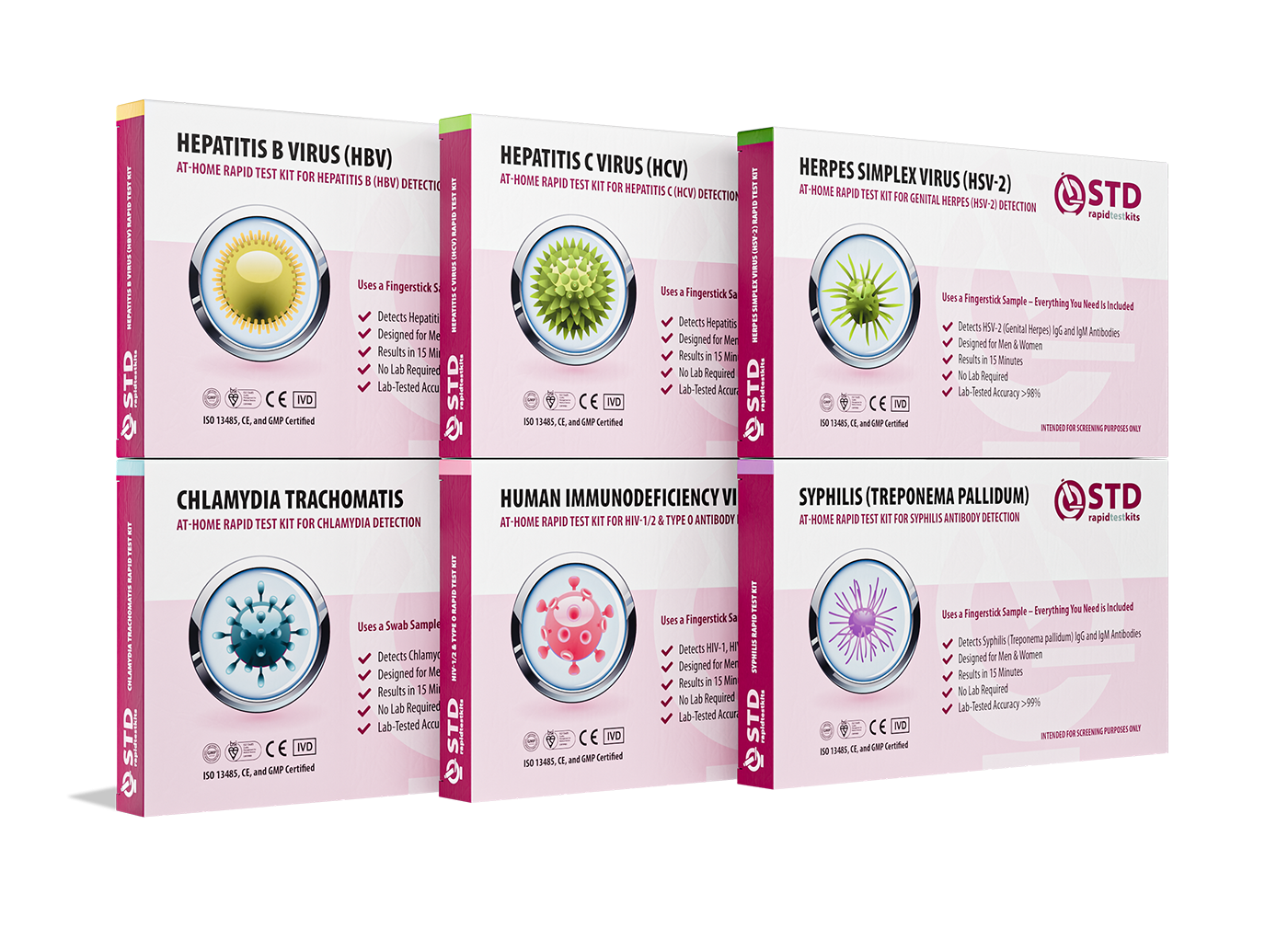
Test at Home with Remedium6-in-1 STD Test Kit
 For Men & Women
 Results in Minutes
 No Lab Needed
 Private & Discreet
Order Now $119.00 $294.00
For all 6 tests
What Doctors Recommend After Possible Oral STD Exposure
If someone is worried about a possible STD from oral sex, the next steps are usually straightforward.
Testing is the most reliable way to get clarity. Different infections have different detection windows, but many common tests can detect infections within days to weeks of exposure.
Healthcare providers usually recommend testing for infections that are mainly spread through oral contact:
- Herpes
- Gonorrhea
- Chlamydia
- Syphilis
You can get tested at a clinic, through telehealth, or in private at home. For instance, you can use a Combo STD Home Test Kit to check for several common infections at once without having to go to a clinic.
For many people, the biggest relief comes from simply knowing the answer. One patient described the feeling after finally testing:
“The anxiety was worse than the test. Once I knew what was going on, everything felt manageable.”
The Bottom Line: Oral Sex Is Safer, But Not Risk-Free
Oral sex is generally considered lower risk than other types of sexual contact, but it isn’t immune from STD transmission.
Infections like herpes, gonorrhea, syphilis, and sometimes chlamydia or HPV can move from the mouth or throat to the genitals. Often the person carrying the infection doesn’t even realize it.
That's why being aware is more important than being scared. People can make better choices when they know how infections really spread instead of just guessing.
If something feels off after oral sex, unusual irritation, sores, discharge, or even just a nagging sense of uncertainty, testing is the easiest way to remove the guesswork.
Discreet options like rapid at-home STD testing make it possible to check your health privately and quickly, without waiting weeks for answers.
When Someone Says “It Was Only Oral”
In sexual health clinics, there’s a sentence doctors hear constantly: “But we only had oral sex.” It’s usually said with relief, as if that detail automatically rules out infection. For a long time, people were taught to think of oral sex as a loophole, something intimate but medically insignificant.
Reality is a little more complicated. Oral sex does carry lower overall risk compared with vaginal or anal intercourse, but it still creates direct contact between two areas of the body where infections can live. Mouth tissue, throat lining, and genital skin are all built from delicate mucous membranes. Viruses and bacteria move through those surfaces far more easily than through regular skin.
Clinicians sometimes see this misunderstanding play out in very predictable ways. Someone receives oral sex from a partner who has a small cold sore they assumed was harmless. A week later, they notice tenderness or small blisters. Another patient develops burning urination and assumes it must be dehydration or irritation, only to discover a throat-transmitted gonorrhea infection.
None of this means oral sex is inherently dangerous. It simply means it isn’t biologically separate from the rest of sexual activity. When bodies are exchanging fluids and touching mucous membranes, infections can move between them.
Sexual health experts often frame the issue in terms of awareness rather than alarm. Understanding the possibility of transmission allows people to respond quickly if something changes in their body. That awareness tends to reduce anxiety rather than increase it, because uncertainty is usually the most stressful part.
One clinician described it bluntly during a sexual health workshop:
“The problem isn’t oral sex. The problem is people assuming oral sex can’t transmit anything.”
Once that myth disappears, the rest of the conversation becomes much simpler.

People are also reading: At-Home STD Testing in Ireland: Faster, Private, and Now Legal
Why Many Oral STDs Go Completely Unnoticed
Another reason oral-to-genital transmission surprises people is that infections in the throat often feel invisible. The throat simply doesn’t react the same way genital tissue does.
Take gonorrhea as an example. In the genitals, it may cause discharge or burning during urination. In the throat, however, the same bacteria might cause only mild irritation, something that feels like seasonal dryness or the beginning of a cold.
Sometimes there are no symptoms at all.
This asymptomatic pattern shows up in several infections. Chlamydia, HPV, and even early syphilis infections can sit quietly in the mouth or throat for long periods. A person may genuinely believe they are perfectly healthy while still carrying bacteria capable of spreading to someone else.
This doesn't mean that people are careless or irresponsible. This is just how these infections work in living things. Some pathogens can live in the throat without causing strong immune responses.
Because of that, sexual health guidelines emphasize testing rather than relying on symptoms alone. Many infections that spread through oral contact are discovered during routine screening rather than because someone felt sick.
The good news is that most of these infections are easily treated once detected. Early identification usually means straightforward treatment and quick resolution.
Situations That Make It More Likely for Oral Transmission
Not every oral encounter carries the same risk. Some situations simply make it easier for infections in the mouth or throat to pass to the genitals.
Comprehending these scenarios elucidates the reasons for transmission occurring even when individuals are exercising caution.
| Risk Factor | Why It Matters |
|---|---|
| Visible cold sores | Cold sores contain high concentrations of the herpes virus |
| Bleeding gums or mouth cuts | Open tissue allows bacteria or viruses easier entry |
| Untreated throat infections | Throat gonorrhea or chlamydia can spread through oral contact |
| Multiple recent partners | Higher probability someone carries an undiagnosed infection |
| Lack of recent testing | Many infections spread unknowingly when screening is delayed |
It’s important to remember that these factors simply influence probability. Transmission can still occur without them, and in many cases it does not occur even when they are present.
Sexual health professionals focus less on assigning blame and more on recognizing patterns. When someone understands what increases risk, they gain the ability to make informed decisions about protection, testing, and communication with partners.
And perhaps most importantly, understanding the mechanics of transmission helps remove shame from the conversation. STDs are biological events, not moral ones.
Check Your STD Status in Minutes
Test at Home with Remedium7-in-1 STD Test Kit
 For Men & WomenResults in MinutesNo Lab NeededPrivate & Discreet
Order Now $129.00 $343.00
For all 7 tests
Testing Removes the Guesswork
When people worry about infections after oral sex, the stress often comes from uncertainty rather than symptoms. A small irritation can send someone into hours of searching, comparing photos, and reading conflicting information.
The simplest way to end that spiral is testing.
Modern STD screening can detect many infections quickly and accurately. Some tests look for antibodies the immune system produces, while others detect the bacteria or virus directly. Depending on the infection, reliable results can appear within days to a few weeks after exposure.
Many people prefer to start with private screening before visiting a clinic. Discreet options like the Combo STD Home Test Kit allow individuals to check several common infections from home, which removes the logistical and emotional barriers that sometimes delay testing.
The real benefit of testing isn’t just diagnosis. It restores a sense of control. Instead of imagining every possibility, you move from speculation to evidence.
And once you have real information, the next steps, whether treatment, follow-up testing, or simple reassurance, become much easier.
FAQs
1. Wait… so can oral sex really give you an STD?
Yes, it can. Oral sex is often treated like the “safe loophole,” but infections like herpes, gonorrhea, and syphilis can absolutely move from the mouth to the genitals. It doesn’t mean every encounter is risky, but the mouth and throat can carry infections just like the genitals can.
2. What STD spreads this way the most?
The one doctors see most often is HSV-1, the virus behind cold sores. When someone with oral herpes goes down on a partner, that same virus can set up shop in the genital area. That’s why many new genital herpes cases today actually start with oral sex.
3. If someone doesn’t have a visible cold sore, am I still at risk?
Sometimes, yes. Herpes can shed from the skin even when nothing looks wrong. It’s a little like a virus “whispering” instead of shouting, invisible, but still capable of spreading.
4. Can gonorrhea really live in someone’s throat?
It can, and many people don’t feel it at all. Throat gonorrhea might feel like a mild sore throat… or nothing. That’s why someone can unknowingly pass it to a partner’s genitals during oral sex.
5. What signs would I have if I got something from oral sex?
It depends on the infection. Some people notice blisters, unusual discharge, or burning when they pee. Others notice absolutely nothing, which is honestly the most common situation. Many STDs are quiet at first.
6. How long after oral sex would symptoms show up?
It varies. Herpes sores can appear within a few days, while infections like chlamydia or gonorrhea may take a week or two, and sometimes never cause symptoms at all. That’s why testing matters more than guessing.
7. Is oral sex still safer than other kinds of sex?
Generally, yes. The overall risk for many infections is lower than vaginal or anal sex. But “lower risk” doesn’t mean “no risk,” especially if someone has sores in their mouth or an untreated throat infection.
8. What should I do if I’m worried after oral sex?
First, take a breath. Anxiety is common here. The next practical step is testing so you’re not stuck wondering. A lot of people now use discreet options like at-home STD testing kits to check for common infections without anyone knowing.
9. Do condoms or dental dams actually help with oral sex?
They do. Barriers reduce direct contact between the mouth and genitals, which lowers the chance that bacteria or viruses move between partners. They’re not perfect, but they’re a strong layer of protection.
10. So should people avoid oral sex entirely?
Not at all. It's not about being scared; it's about being aware. People can make smart choices without feeling ashamed or scared if they know how infections spread, pay attention to symptoms, and get tested when they need to.
You Deserve Clarity, Not Guesswork
Oral sex sits in a strange place in our collective imagination. It’s treated like the “safe option,” the thing people do when they want intimacy without risk. And compared to other types of sex, the risk really is lower. But lower risk isn’t the same thing as zero.
If something feels off after oral sex, a sore, irritation, burning, or even just that quiet nagging thought in the back of your mind, the goal isn’t to spiral into worst-case scenarios. The goal is clarity. Separate the signal from the noise. Rule out the infections that can move from mouth to genitals and move forward with real information instead of guesswork.
Don’t sit with the anxiety longer than you have to. If infection is even a small possibility, start with a discreet screen like the Combo STD Home Test Kit. Your results stay private, the process is simple, and knowing the truth always feels better than wondering.
How We Sourced This Article: This guide combines current clinical guidance on sexually transmitted infections with peer-reviewed research on oral-genital transmission. We reviewed public health resources from the CDC, WHO, and NHS alongside academic literature on herpes, gonorrhea, and syphilis transmission patterns. The goal was to translate medical evidence into clear, stigma-free language that reflects both clinical reality and real patient experiences.
Sources
1. Centers for Disease Control and Prevention – Sexually Transmitted Diseases Overview
2. Fact Sheet on Sexually Transmitted Infections from the World Health Organization
3. NHS: STIs (sexually transmitted infections)
4. PubMed – Research on STI Transmission
5. Mayo Clinic – Sexually Transmitted Diseases Overview
6. Planned Parenthood – STD Basics
About the Author
Dr. F. David, MD is a board-certified infectious disease physician specializing in sexually transmitted infections, prevention strategies, and public health education. His work focuses on translating complex sexual health science into clear, practical guidance people can actually use.
Reviewed by: Clinical Sexual Health Review Panel | Last medically reviewed: February 2026
This article is just for informational purposes and should not be used as a substitute for professional medical advice or diagnosis.


