Are At-Home STI Tests Discreet? What's Actually in the Box
Will the box give you away? Will your parents or roommate see it and ask questions? Reputable at-home STI test kits arrive in plain, unmarked packaging with no STI references on the outside. But privacy reaches further than the doorstep, into payment records, insurance statements, and how you handle the kit once it arrives. Here is what discreet testing actually looks like, end to end.
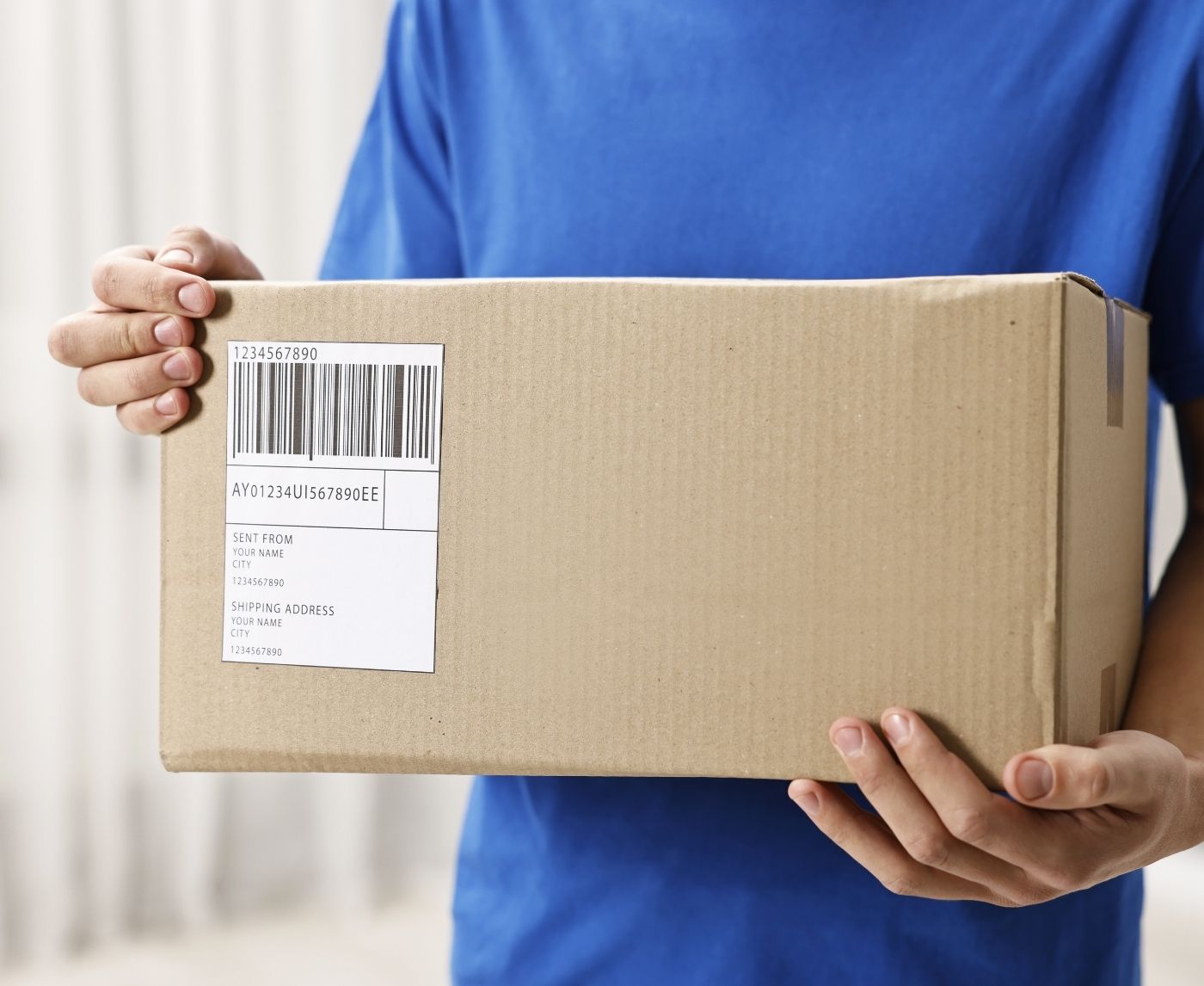



- Reputable at-home STI test kits ship in plain, unbranded packaging with no STI references anywhere on the outer box, return address, or carrier tracking page.
- Privacy reaches further than the box itself: pay out-of-pocket rather than through a parent's insurance, pick an alternative delivery address if needed, and check the provider's billing-name policy before you order.
Published: October 2025 | Last updated: May 2026 | Editorial review and quality control: Martina N.
Ordering an STI test online raises a question almost everyone asks before clicking purchase: what will the box actually look like when it shows up at the door? Will it be obvious? Will a parent, partner, or roommate take one look at the packaging and figure out what it is? The short version: no. Reputable at-home STI test kits arrive in plain, unmarked packaging, with no mention of STIs on the label, the return address, or the carrier tracking page.
That is the answer to the surface question. The longer answer is worth understanding, because privacy at the mailbox is only one piece of the privacy puzzle. Insurance statements, payment records, the internal packaging of the kit, and how you handle the result all sit alongside the outer box. This guide (published by stdrapidtestkits.com, which sells at-home rapid STI test kits; products are recommended by fit, not by margin) walks through each layer, with concrete examples of what reputable providers do, what to watch for in less careful ones, and the practical workarounds for readers who genuinely cannot afford to be seen ordering.
What an at-home STI test delivery actually looks like
When a reputable at-home STI test kit ships from a service like STD Rapid Test Kits, the package on your doorstep looks like any other small parcel from a standard online retailer. The outer box is plain brown corrugated cardboard or a padded mailer in white or gray. There is no logo, no color graphic, no medical cross, no testing language anywhere on the exterior. The return address is a generic fulfillment company name rather than anything that hints at sexual health, and the shipping carrier (UPS, USPS, FedEx) does not publish package contents on the tracking page.
This is not marketing fluff. The U.S. Food and Drug Administration granted its first marketing authorization for a fully at-home STI self-test in 2023, opening the door to a wider category of consumer self-test kits that now ship directly to homes (see the U.S. Food and Drug Administration for current device authorizations). The providers building these supply chains know discretion is the deciding factor for many buyers. They have designed their packaging around the worst-case fear: a package opened by someone else.
For context, here is a side-by-side breakdown of what different shipping options look like in practice.
| Delivery Type | Outer Box Appearance | Sender Name on Label | Tracking Page Visibility |
|---|---|---|---|
| Standard discreet shipping (default) | Plain brown or white box, no logos or color graphics | Generic fulfillment name (for example, a neutral company name with no health reference) | Carrier tracking shows shipping status only, no product details or category |
| Express or overnight | Unmarked padded mailer or envelope, no exterior branding | Abbreviated sender name or initials only | Carrier does not list contents on the tracking page |
| Locker pickup (Amazon Hub, UPS Access Point) | Package never enters your home address space | Locker code sent to your phone or email for self-retrieval | Only you see the pickup notification |
| Workplace or alternate address | Same plain outer box, addressed to you at a non-home address | Same generic sender name | Tracking page accessible only with your account login |
What if someone opens the package before you?
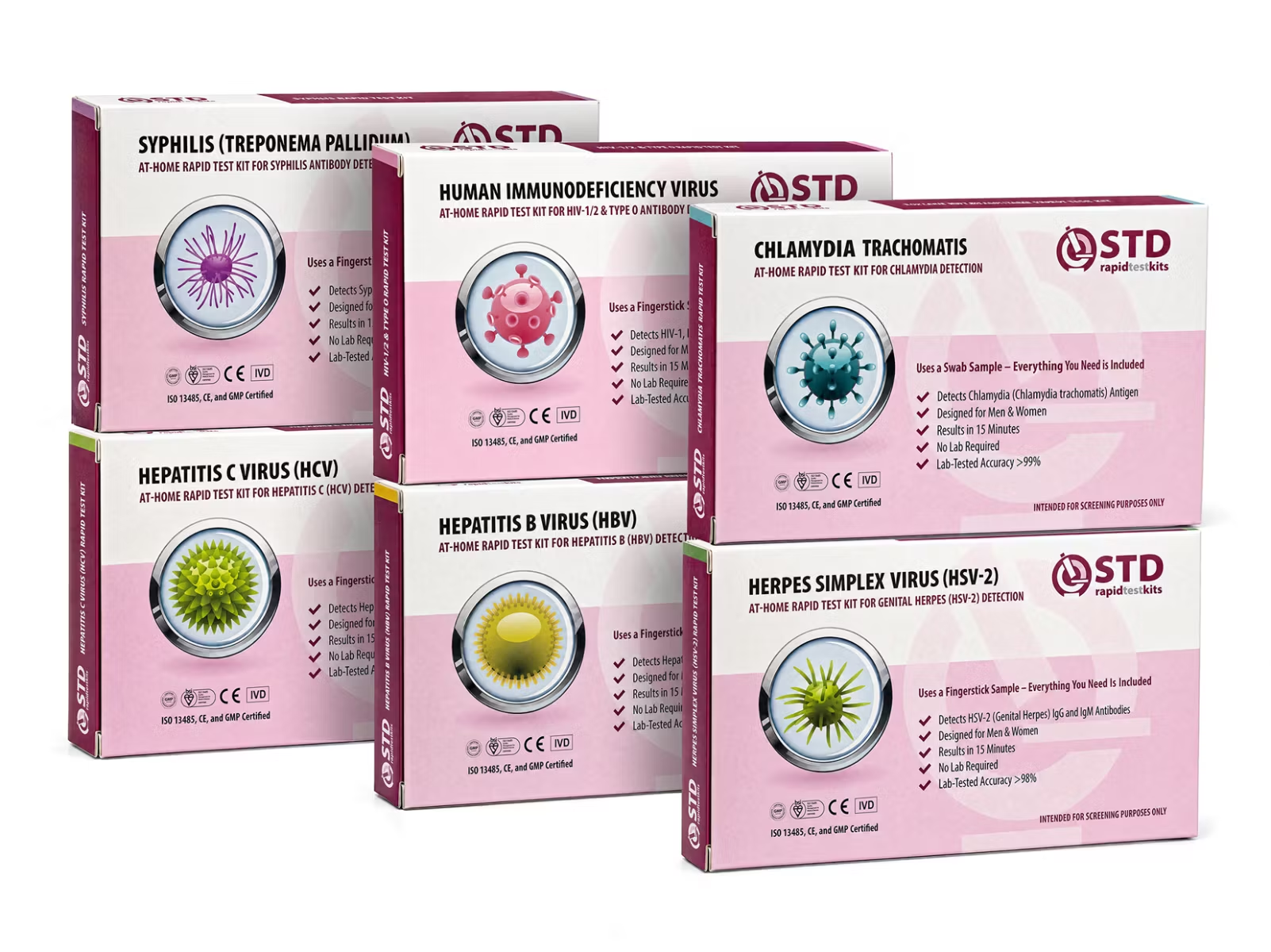
This is one of the most common fears, and it deserves a calm, honest answer. Packages do sometimes get opened by parents, partners, or roommates. The good news is that even when the outer box is opened, what is inside a reputable kit is not a billboard. The internal kit box typically shows a brand name, an FDA-cleared product label, and language about a self-test, but the framing is clinical and generic enough that someone glancing at it is more likely to think allergy panel, gut health screen, or COVID test than anything else. The branding on the kit itself is the trade-off providers make to comply with FDA labeling rules that require clear product identification on the device package (CDC STI testing resources).
The deeper the layer you look at, the more direct the language becomes. The instruction leaflet inside the kit will name the infections it tests for (chlamydia, gonorrhea, HIV, syphilis, and so on), since clear instructions are the whole point of a self-test. So the practical question is not whether the kit's inner contents could be identified by a determined snoop, but whether the typical person who opens a package out of curiosity is going to dig that deep. In almost all cases, they are not.
Here is how the exposure layers stack up.
| Packaging Layer | Exposure Risk If Seen | What Someone Would Notice |
|---|---|---|
| Outer shipping box | Low | No STI references, no medical branding, no logos that identify the contents |
| Internal kit box (the product itself) | Medium | Brand name and product category (for example, rapid self-test); FDA-cleared label language |
| Instruction leaflet or pamphlet | High if opened and read | Names of the infections the test covers, sample collection steps, result interpretation |
| Test device (cassette, lancet, swab) | Medium | Generic medical device appearance; not obviously sexual-health specific without the leaflet |
Insurance, EOBs, and the paper trail you do not see
Sometimes the box itself is the smallest part of the privacy story. If you pay for an at-home STI test using a parent's, partner's, or employer's health insurance, the insurer typically sends an Explanation of Benefits (EOB) statement to the primary policyholder. The EOB lists what service was billed, often using clinical procedure codes that an attentive reader can decode. In most states, dependents under 26 on a parent's plan have no automatic confidentiality protection for STI testing on the EOB, although a small but growing number of states (California, Washington, Colorado, and others) now require insurers to suppress EOB details for sensitive services on request.
The simplest workaround is to skip insurance entirely and pay out-of-pocket. At-home rapid test kits in the consumer market typically cost from roughly twenty to a few hundred dollars depending on how many infections are screened, which is meaningfully cheaper than the deductible plus copay path many readers would pay through insurance anyway. The charge that appears on your credit card, debit card, or digital wallet from a reputable provider uses a generic billing descriptor rather than the words STD test or STI test. If you are worried about anyone with access to your bank statement, a prepaid Visa or Mastercard purchased with cash adds another layer of separation between your name and the order.
For readers who specifically want the confidentiality and free or low-cost testing that public-health clinics provide, the CDC maintains a directory of confidential testing services alongside its guidance on self-testing. Many community health centers offer free STI screening that does not generate an insurance claim at all.
How to order discreetly while living with family
If you live at home, in a shared apartment, or in any environment where mail visibility is genuinely a problem, the answer is not to skip testing. It is to control the delivery surface. The most reliable options:
Carrier lockers. Amazon Hub Lockers, UPS Access Points, and FedEx OnSite locations let you ship a package to a public locker. You get a code on your phone, you pick it up at your convenience, and the package never touches your home address. This is the most foolproof option for anyone living with people who open mail.
Alternate addresses. Many at-home STI test providers, including stdrapidtestkits.com, let you enter a separate shipping address at checkout that does not need to match your billing address. A trusted friend's apartment, a college mailroom, or a workplace mail receiving area all work. The package is yours; the delivery location does not need to be your home.
P.O. boxes. A short-term P.O. box at the post office costs less than twenty dollars per month and gives you a separate physical mailing address with no link to your home. Useful if you anticipate ordering more than once, or if you want a longer-term private mail solution for other reasons too.
Timing and tracking. Tracking the package and being the one to retrieve it from the doorstep is a low-tech but effective option if locker delivery is not available. Most reputable providers offer one to three day shipping in the U.S.; you can plan the order for a window when you will be home or able to intercept the package at the door before anyone else handles it.

What to look for in a truly discreet test service
Not every at-home STI test provider treats discretion the same way. Some advertise plain packaging but use return-address labels that name the parent company in a way a curious reader could Google. Others hide the contents on the tracking page but mail follow-up paperwork in branded envelopes. Before you order, check the provider's website (or their customer service line) for clear answers on the five privacy features below.
| Privacy Feature | What to Look For | Why It Matters |
|---|---|---|
| Unmarked outer packaging | Plain box or mailer, no exterior logos, no language identifying the contents | Prevents identification if someone sees the package before you do |
| Neutral return-address and sender name | Generic fulfillment company name on the shipping label, no medical or health keywords | A determined searcher cannot reverse-lookup the sender to discover what was inside |
| Generic billing descriptor | The credit card charge uses a neutral company name, not the words STD or STI | Protects you on bank statements visible to a parent, partner, or anyone with shared account access |
| Tracking page contents privacy | Carrier tracking displays only shipping status, not product category or item name | Prevents exposure through digital tracking apps that family members might use |
| Alternate-address support at checkout | Provider allows shipping address to differ from billing address | Gives you control over the delivery location, supports locker and workplace pickup |
Confidentiality after the test arrives
Privacy does not end when the kit lands on your doorstep. The next privacy question is how your result is delivered and who, if anyone, sees it. For rapid lateral-flow at-home kits (the kind sold by stdrapidtestkits.com and the broader consumer rapid-test category), the answer is the most private possible: you read the test cassette yourself, on the spot, in about fifteen minutes. No portal, no email, no provider needs to be involved unless you choose to bring one in. The result lives inside your bathroom and inside your head.
Mail-in self-collection kits (a different category, where you ship a sample to a lab) work differently. Results from those kits are typically delivered through a password-protected online portal, with optional email or text notifications. Reputable providers do not mail paper results, do not leave voicemails with diagnostic information, and do not contact emergency contacts unless explicitly required by state public-health law (a narrow exception for a handful of infections, and even then the contact is with you, not with your family).
If a result is positive, what happens next is in your control. Most rapid kits include instructions for next steps: confirming the result with a clinic, accessing treatment, and notifying partners. Treatment for most bacterial STIs (chlamydia, gonorrhea, syphilis, trichomoniasis) is straightforward and curative, typically a single course of antibiotics per current CDC treatment guidelines (CDC STI Treatment Guidelines, 2021). Viral infections (HIV, HSV, HPV, hepatitis B and C) are managed rather than cured, but modern treatment is highly effective and confidential clinical care is available regardless of insurance status.
One important note on the confidentiality of the test itself: an at-home rapid lateral-flow kit screens with a specific chemistry that is faster and more private than a clinic visit, but its analytical sensitivity is meaningfully different from the laboratory NAAT (nucleic acid amplification test) or PCR tests a clinic would run. A positive rapid result is informative and worth acting on. A negative rapid result during a known window period (the time after exposure when an infection is not yet detectable) should be repeated with a clinic-grade test if the exposure was recent, per the CDC's guidance on HIV self-testing.
HIV self-tests are a great way to learn your HIV status on your own time and in your own space.
The bottom line on discreet STI testing
The fear that a brown box on the doorstep will out you to a parent, partner, or roommate is the single most common reason people delay STI testing they otherwise want. That fear deserves a direct, honest answer rather than reassurance theater. The answer: a reputable at-home STI test kit ships in plain, unbranded packaging with no STI references on the outside, the carrier tracking page does not name the contents, the credit card charge uses a neutral billing descriptor, and the result is yours to see first. The internal kit box does identify the product (FDA labeling rules require it), so for high-stakes household situations the right move is to control the delivery location with a locker, an alternate address, or a P.O. box rather than relying on outer packaging alone.
Most importantly, testing is not the thing that creates a problem worth hiding. Untreated STIs are. The CDC recommends annual screening for sexually active women under 25 and for anyone with a new partner or multiple partners in the past year, exactly because most STIs cause no symptoms in their early stages (CDC STI screening recommendations). Asymptomatic screening has been standard public-health guidance for two decades, and the delivery logistics around at-home kits have caught up to it.
If you are weighing whether to order, the practical recommendation is straightforward: pick a kit that covers the infections relevant to your recent exposures or your screening interval, ship it to wherever you feel most comfortable receiving it, and trust the privacy-by-design that the supply chain has been built around.
Frequently asked questions
- Does the outer box actually say STD anywhere?
- No. Reputable at-home STI test providers ship in plain corrugated boxes or padded mailers with no STI language, no medical cross, no provider logo, and no color graphics. The return address is a generic fulfillment company name. The carrier tracking page shows shipping status only, never product category.
- What happens if a parent or roommate opens the package before I see it?
- The internal kit box does identify the product (FDA labeling rules require clear product identification on a self-test device), so a determined reader who opens the kit and reads the instruction leaflet would learn what it is. A casual observer who opens the outer box is more likely to assume an allergy panel, gut health test, or COVID kit. If household privacy is a serious concern, the better move is to control the delivery location (locker, alternate address, P.O. box) rather than rely on internal packaging alone.
- Will the purchase show up on a bank or credit card statement in an identifiable way?
- Reputable providers use a neutral billing descriptor, typically a generic fulfillment or health-services company name, not the words STD test or STI test. If anyone with access to your bank statement is a concern, a prepaid Visa or Mastercard bought with cash adds another layer of separation between your name and the order.
- If I am on my parents' insurance, will an STI test show up on the EOB?
- Possibly yes, if you bill it through insurance. Most state laws still let the policyholder see the Explanation of Benefits for dependents under 26. A small number of states (California, Washington, Colorado, and others) now require confidential EOB handling on request for sensitive services, but coverage is uneven. The simplest workaround is to pay out-of-pocket for an at-home kit, which is often cheaper than the deductible-plus-copay path through insurance anyway.
- How fast do at-home STI test kits arrive, and what if I am not home to receive the package?
- Most reputable providers ship within one to three business days in the U.S. Carriers do not require a signature for these packages. If you cannot be home, shipping to an Amazon Hub Locker, UPS Access Point, workplace mailroom, or a trusted friend's address is supported by most providers at checkout.
- Are at-home rapid tests as accurate as a clinic test?
- Rapid lateral-flow at-home tests use a different chemistry from the laboratory NAAT (nucleic acid amplification test) or PCR tests a clinic would run. They are useful screening tools, particularly outside the early window period after a recent exposure, and they are FDA-cleared for the infections they cover. A positive result is worth acting on. A negative result during a known window period should be confirmed with a clinic-grade test, per <a href="https://www.cdc.gov/stophivtogether/hiv-testing/self-testing.html" target="_blank" rel="noopener">CDC guidance on self-testing</a>.
- What do I do if I test positive at home?
- First, do not panic. Most bacterial STIs (chlamydia, gonorrhea, syphilis, trichomoniasis) are curable with a single course of antibiotics. The kit's instruction leaflet will direct you to confirm the result with a clinic and access treatment. Treatment is confidential. Reporting of positive results to public-health authorities is handled by the treating clinic in a small number of cases for surveillance purposes, but is never communicated to family members or partners without your consent.
- Is it worth testing if I do not have any symptoms?
- Absolutely. The CDC's annual-screening recommendation exists because most STIs produce no symptoms in their early stages. Waiting until something feels wrong means waiting until the infection has had time to cause complications. Annual screening is the standard guidance for sexually active women under 25 and anyone with a new or multiple partners; it is not a precaution reserved for high-risk situations.
- U.S. Centers for Disease Control and Prevention. STI testing and screening recommendations, including guidance on at-home self-testing and confidential testing resources.
- U.S. Centers for Disease Control and Prevention. Sexually Transmitted Infections Treatment Guidelines, 2021 (MMWR Recommendations and Reports).
- U.S. Food and Drug Administration. Authoritative source for current FDA-cleared and FDA-authorized at-home and self-test diagnostic devices.
- U.S. Centers for Disease Control and Prevention. HIV self-testing guidance, useful as a model for thinking about any rapid at-home STI test.
- American Sexual Health Association (ASHA). Overview of at-home STI testing options, available test types, and accuracy considerations for self-collection kits.
- Planned Parenthood. Guidance on STI testing: when to get tested, common infections, and a tool to locate a nearby health center.