







Quick Answer: Yes. You can get an STD from oral sex even if you didn’t swallow. Many infections spread through skin contact or small amounts of fluid you may not notice, especially Gonorrhea, Chlamydia, Syphilis, Herpes, and HPV.
The Part Most People Get Wrong About Oral Sex and STD Risk
People often focus on swallowing as the defining moment of risk. If semen never reached the mouth, the assumption is that infection couldn’t happen. But medically speaking, swallowing isn’t the key factor in transmission. Most sexually transmitted infections spread much earlier in the encounter.
When someone performs oral sex, the mouth, tongue, lips, and throat come into direct contact with genital skin and natural genital fluids. Even before ejaculation occurs, the penis releases small amounts of fluid known as pre-ejaculate. This fluid can carry infectious organisms in certain circumstances. And even when fluids are minimal, some infections spread through skin-to-skin contact alone.
Think of the mouth like a gateway rather than a sealed container. The lining of the mouth and throat is soft tissue with tiny microscopic breaks that happen during everyday activities like brushing teeth or eating crunchy food. These tiny openings can allow bacteria or viruses to enter the body during oral sex.
A sexual health nurse once explained it this way to a patient worried about swallowing:
“People think infection happens when semen is swallowed. In reality, transmission usually happens during the contact itself, before ejaculation even occurs.”
In other words, the question isn’t really “Did you swallow?” The better question is simply: Did oral sex happen?
Which STDs Can Actually Spread Through Oral Sex?
Not every sexually transmitted infection spreads easily through oral sex, but several of the most common ones absolutely can. The mouth and throat can act as both an entry point and a place where infections live silently.
Some infections infect the throat directly, while others spread through skin contact around the lips and mouth.
| STD | How Transmission Happens | Common Oral Symptoms | Can Happen Without Swallowing? |
|---|---|---|---|
| Gonorrhea | Bacteria infect throat tissue | Sore throat, redness, often none | Yes |
| Chlamydia | Bacterial exposure to throat | Usually no symptoms | Yes |
| Syphilis | Contact with infected sores | Mouth ulcers or painless sores | Yes |
| Herpes | Skin-to-skin viral contact | Cold sores or genital lesions | Yes |
| HPV | Skin contact with infected area | Often none | Yes |
The key point here is that most of these infections don’t require ejaculation. In fact, for viruses like herpes or HPV, fluids are not necessary at all. Skin contact alone can transmit them.
This is why healthcare providers often recommend STD testing after new sexual partners, even when the sexual activity involved only oral contact.

People are also reading: Sexual Health Gets Silenced in Crisis, And Refugees Pay the Price
A Realistic Scenario Many People Recognize
Jordan, 24, remembers the moment the worry started. The hookup itself seemed simple, oral sex, no ejaculation, and it lasted only a few minutes. At the time, it didn’t feel risky at all.
“I didn’t swallow anything. I figured that meant there was basically no chance of catching anything.”
About a week later Jordan developed a mild sore throat. It felt like a normal cold, but the timing was enough to spark a Google search spiral. Eventually Jordan went to a clinic and asked for testing.
The result surprised him: throat gonorrhea. No severe symptoms, no obvious exposure to semen, and no clear warning signs.
“The doctor told me it happens more often than people think. You don’t have to swallow anything for that bacteria to reach your throat.”
Stories like this aren’t rare. In fact, throat infections from oral sex are often discovered accidentally because many people have no symptoms at all.
Why You Might Not Notice Any Fluid at All
Another common misconception is the idea that if nothing obvious entered the mouth, exposure didn’t occur. But sexual transmission rarely involves large, noticeable amounts of fluid.
Pre-ejaculate can be present long before ejaculation happens. It’s typically clear and produced in very small quantities, which means many people never notice it during sexual activity.
Even beyond fluids, skin contact itself can be enough for viruses like herpes or HPV. The outer genital skin may carry infectious viral particles even when there are no visible sores.
This explains why people sometimes develop oral or throat infections despite believing the encounter involved minimal exposure.
How Often Do Oral STDs Actually Happen?
While the risk exists, it’s also important to keep perspective. Oral sex generally carries a lower risk of STD transmission than vaginal or anal sex. However, “lower risk” does not mean “no risk.”
Public health researchers have found that certain infections, especially Gonorrhea, are particularly well adapted to infect the throat.
| Sexual Activity | Relative STD Risk | Common Infections |
|---|---|---|
| Oral sex | Lower but real risk | Gonorrhea, Herpes, Syphilis, HPV |
| Vaginal sex | Moderate risk | Chlamydia, Gonorrhea, HIV |
| Anal sex | Highest risk | HIV, Gonorrhea, Chlamydia |
Another challenge is that throat infections rarely produce symptoms. A person may carry bacteria in the throat without realizing it and potentially transmit it to partners later.
This silent nature is exactly why routine testing matters after new sexual exposures.
If you’re unsure about a recent encounter, discreet testing options are available. You can explore testing resources and at-home screening kits through the STD Rapid Test Kits homepage, which offers confidential options for several common infections.
Check Your STD Status in Minutes
Test at Home with Remedium7-in-1 STD Test Kit

 For Men & Women
 Results in Minutes
 No Lab Needed
 Private & Discreet
Order Now $129.00 $343.00
For all 7 tests
Why Throat STDs Often Go Completely Unnoticed
One of the strangest parts of oral STD transmission is how quietly it can happen. Many people assume that if something infected their mouth or throat, they would immediately feel pain, see sores, or develop obvious symptoms. In reality, the throat is one of the most silent places an STD can live.
Bacteria like Gonorrhea and Chlamydia can infect the lining of the throat without causing noticeable discomfort. The immune response in the throat often doesn’t produce the dramatic symptoms people expect. Instead, the infection may simply sit there until it’s discovered during routine testing or until it spreads to another partner.
This silent pattern is the reason healthcare providers sometimes test the throat specifically when someone reports oral sex exposure. A urine test alone may not detect infections that are living in the throat.
A sexual health clinician once described it bluntly during a public health training:
“If someone only had oral sex and you only test their urine, you can miss the infection entirely. The throat needs its own swab.”
That’s why many STD screening guidelines now include throat testing for people who regularly give oral sex.
Symptoms That Can Happen After Oral STD Exposure
Although many oral infections are silent, symptoms do sometimes appear. The tricky part is that they often look exactly like common illnesses such as a mild cold, seasonal allergies, or a typical sore throat.
Because of that overlap, most people would never guess an STD could be responsible.
| Symptom | Possible Infection | How Common |
|---|---|---|
| Sore throat | Gonorrhea | Occasional |
| Swollen tonsils | Gonorrhea or Chlamydia | Uncommon |
| Mouth ulcers or sores | Syphilis | Rare but distinctive |
| Cold sores or blisters | Herpes | More noticeable |
| No symptoms | Most oral infections | Very common |
The most important takeaway is that symptoms are not a reliable way to rule out infection. Many people with throat infections feel completely normal.
This can lead to an awkward discovery months later when a routine STD test identifies an infection that had been present all along.
When Should You Actually Get Tested After Oral Sex?
If someone performs oral sex and later starts worrying about exposure, the next question usually becomes timing. Testing too early can produce a false negative result because the infection has not reached detectable levels yet.
This period is known as the window period. It’s the time between exposure and when a test can reliably detect the infection.
Different infections have different timelines. Some bacteria become detectable within days, while viruses may take longer.
| STD | Earliest Reliable Test | Best Testing Window |
|---|---|---|
| Gonorrhea | 3–5 days | 1–2 weeks |
| Chlamydia | 5–7 days | 2 weeks |
| Syphilis | 2–3 weeks | 4–6 weeks |
| Herpes | Varies | Test if symptoms appear |
For many people, testing around the two-week mark after oral exposure provides reliable results for the most common bacterial infections.
If symptoms appear earlier, such as unusual mouth sores, painful swallowing, or swollen tonsils, it’s worth seeing a healthcare provider sooner.
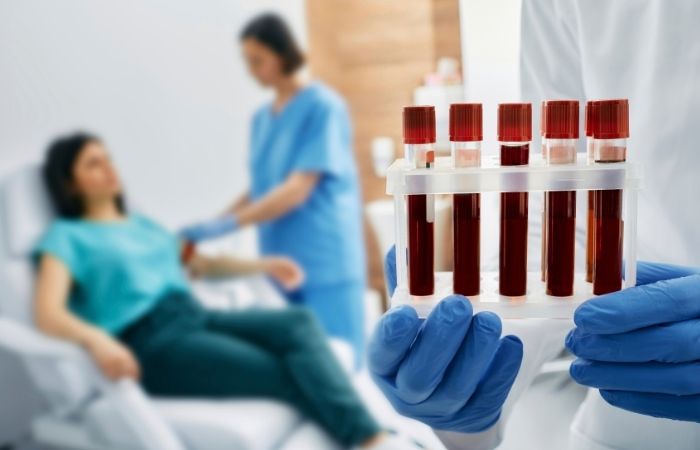
For people who prefer privacy, many screening options are now available outside of traditional clinics. Discreet at-home screening kits, including multi-panel tests, can be found through the STD Rapid Test Kits Combo Home Test Kit, which allows people to check several infections confidentially.
People are also reading: Too Far to Test: What Happens When Clinics Are Out of Reach
Why People Often Assume Oral Sex Is Risk-Free
Culturally, oral sex has long been treated as a “safe alternative” to intercourse. In some ways that idea is rooted in truth, the risk of certain infections, particularly HIV, is significantly lower during oral sex than during vaginal or anal sex.
But lower risk gradually evolved into the idea of no risk, which isn’t accurate.
Sex educators often hear the same line from patients who are surprised by a diagnosis after oral exposure:
“I thought oral didn’t count.”
The misunderstanding partly comes from how STDs are discussed in school health classes. Lessons often focus heavily on intercourse while barely mentioning oral transmission.
In reality, oral sex sits in a middle category. It’s safer than penetrative sex in many cases, but it still carries real pathways for infection.
The encouraging news is that the infections most commonly spread through oral contact, particularly gonorrhea and chlamydia, are usually treatable when detected early.
What Actually Reduces Risk During Oral Sex
Understanding that oral sex can transmit infections doesn’t mean people should panic about every encounter. Sexual health professionals tend to focus less on fear and more on realistic ways to reduce risk while maintaining a healthy sex life.
Oral sex protection is not as common as condoms for sex, but it can make a big difference. Barriers limit direct contact between the mouth and genital skin, which is where most transmission occurs.
Several strategies can lower the likelihood of infection without drastically changing the experience.
| Strategy | How It Helps | Effectiveness |
|---|---|---|
| Condoms during oral sex | Prevents skin and fluid exposure | High |
| Dental dams | Barrier for oral–vaginal contact | High |
| Avoiding sex with visible sores | Reduces herpes and syphilis transmission | Moderate to high |
| Regular STD testing | Detects silent infections early | Very effective for prevention |
Another important factor is communication. Many people assume their partner would disclose an infection if they knew about it, but the reality is that most STDs produce no symptoms. A partner may simply not realize they carry one.
One of the best ways to stay safe is to get tested often, especially if you have new partners.
When Testing Makes the Most Sense
You don't have to get tested for STDs every time you have sex. But there are times when testing is better for your health.
Testing is commonly recommended if oral sex occurred and one of the following factors applies:
- New partner: When you don’t know a partner’s recent testing history.
- Multiple partners: Increased network exposure raises overall risk.
- Symptoms appear: Sore throat, mouth ulcers, or unusual lesions.
- Partner reports infection: Known exposure to an STD.
- Routine screening schedule: Many sexually active adults test every 3–12 months.
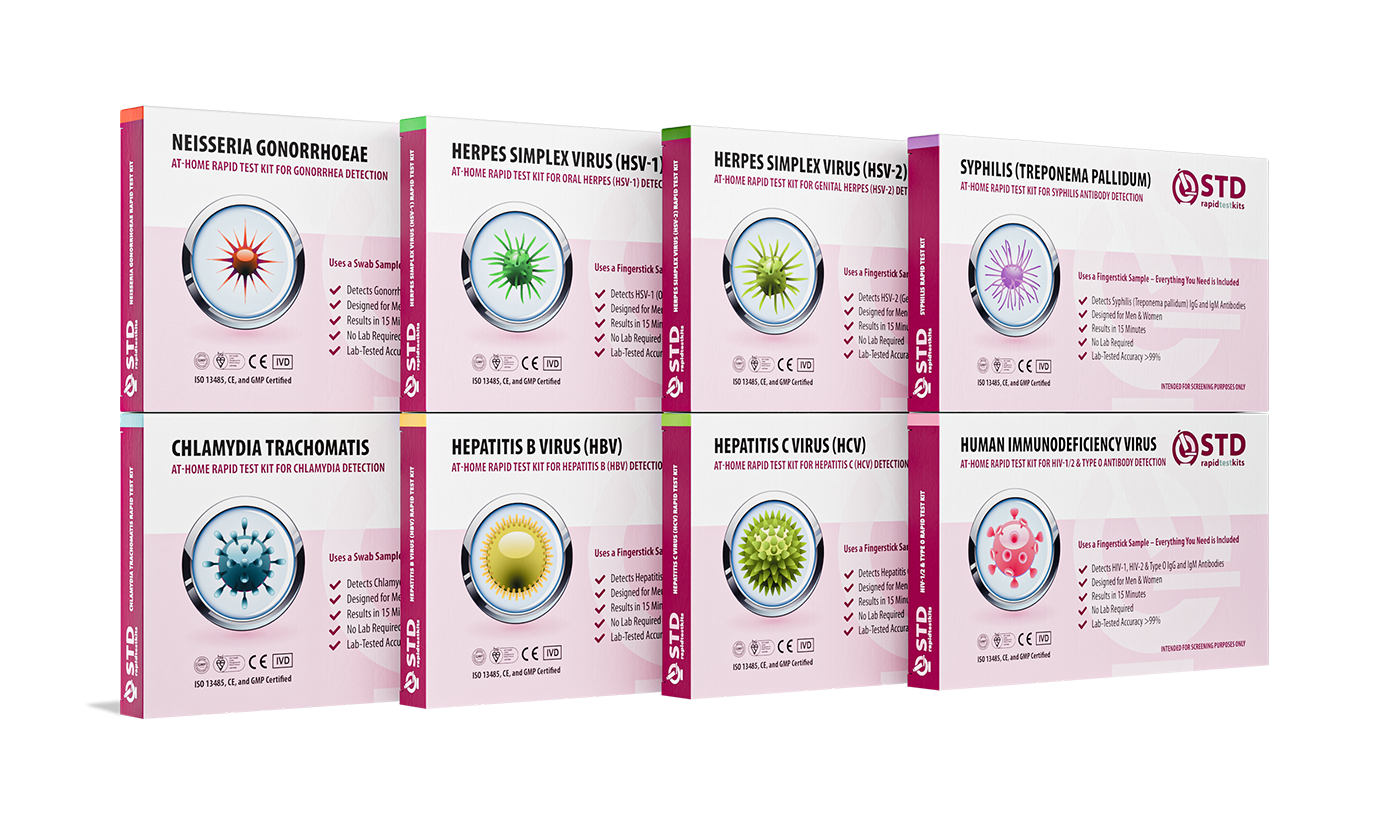
For people who want answers quickly without scheduling a clinic appointment, home screening has become increasingly common. Mail-in and rapid screening kits allow individuals to test privately and receive results without visiting a public clinic.
More information about discreet testing options and available screening kits can be found at STD Rapid Test Kits, which offers testing options designed for privacy and convenience.
Check Your STD Status in Minutes
Test at Home with Remedium8-in-1 STD Test Kit
 For Men & WomenResults in MinutesNo Lab NeededPrivate & Discreet
Order Now $149.00 $392.00
For all 8 tests
Why This Question Comes Up So Often
The specific question, “Am I safe if I didn’t swallow?”, usually appears during the anxious period after a new sexual encounter. It often shows up in online searches late at night, when someone is replaying the experience in their head and trying to estimate the real risk.
The good news is that many of these encounters do not result in infection. Oral transmission is possible, but it does not occur every time exposure happens.
Sexual health experts often frame it this way: risk exists on a spectrum rather than in absolute yes-or-no categories. Oral sex falls into a lower-risk category compared to other forms of sexual activity, but it still sits within the overall landscape of STD transmission.
The most balanced approach is simply awareness. Knowing that oral exposure carries some risk allows people to make informed decisions about testing, protection, and communication with partners.
FAQs
1. So… if I didn’t swallow anything, am I basically safe?
Not necessarily. Most STD transmission during oral sex happens before ejaculation even enters the picture. Skin contact, tiny amounts of pre-ejaculate, and simple mouth-to-genital contact are usually what matter, not whether you swallowed. A lot of people focus on the wrong moment.
2. Wait, pre-ejaculate can carry STDs too?
It can. Pre-ejaculate is a small amount of fluid released before orgasm, and it can contain bacteria like Gonorrhea or Chlamydia if the person has an infection. You usually won’t see it or feel it, which is why people often assume nothing entered their mouth.
3. I gave oral for like 30 seconds. Does that still count as exposure?
Yep, duration doesn’t matter as much as people think. Transmission can happen very quickly if infectious bacteria or viruses are present. That said, a short encounter still doesn’t mean infection is likely, just that the possibility exists.
4. If I had gotten an STD in my throat, wouldn’t I feel it right away?
Surprisingly, most people don’t feel anything at all. Throat infections from Gonorrhea or Chlamydia often produce zero symptoms. When symptoms do appear, they usually feel like a mild sore throat, which is easy to dismiss as allergies or a cold.
5. Can my throat give someone else an STD later?
It can. If an infection is living in the throat, it can potentially be passed to a partner’s genitals during oral sex. That’s one reason routine testing matters, people can carry infections silently without realizing it.
6. If there were no visible sores or bumps, does that mean my partner was clean?
Not always. A lot of infections don't show any signs at first. Someone can carry Herpes, HPV, or bacterial infections without any outward signs at the time.
7. Would mouthwash or brushing my teeth afterward help prevent infection?
Unfortunately, not really. Mouthwash can kill some bacteria for a short time, but it doesn't always stop STDs from spreading after you've been exposed. Think of it more like freshening breath than disinfecting an infection risk.
8. If I’m worried now, when should I actually get tested?
For most bacterial infections linked to oral sex, testing around two weeks after the encounter gives reliable results. If symptoms show up earlier, unusual sores, painful swallowing, swollen tonsils, it’s smart to get checked sooner.
9. Is oral sex still considered lower risk overall?
Yes, compared to vaginal or anal sex it’s generally lower risk for many infections. But “lower risk” isn’t the same as “zero risk.” The safest mindset is simply staying aware, testing periodically, and communicating openly with partners.
10. Be honest… how often do doctors hear this exact question?
Constantly. Sexual health clinics hear versions of “I didn’t swallow, am I okay?” almost every day. It’s an incredibly common worry, and the good news is that most of the time testing ends up bringing relief rather than bad news.
You Deserve Clarity, Not Guesswork
It’s easy for the mind to spiral after a hookup. A moment that felt casual suddenly turns into a late-night search history full of questions: Did anything actually get in my mouth? Was there fluid? Did I just expose myself to something? The truth is, oral sex sits in that confusing middle ground, lower risk than intercourse, but not risk-free either.
The key takeaway is simple: swallowing isn’t the deciding factor. Transmission usually happens through contact, not the moment people imagine in their heads. Once you understand that, the situation becomes easier to evaluate calmly. Most encounters don’t lead to infection, but testing removes the guesswork entirely.
If there’s even a small chance you were exposed, a quick screen can give you real answers. The Combo STD Home Test Kit is a private way to check for several common infections without having to wait weeks or sit in a clinic lobby. Your results are private, and it's always better to know the truth than to guess.
How We Sourced This Article: This guide combines clinical guidance from major sexual health authorities with peer-reviewed research on oral STD transmission. We reviewed medical literature on throat infections caused by gonorrhea and chlamydia, viral transmission through oral contact, and modern STD testing timelines. Public health recommendations from organizations such as the CDC, WHO, and NHS informed the clinical explanations, while real patient experiences helped shape the practical advice presented here.
Sources
1. Centers for Disease Control and Prevention – Sexually Transmitted Diseases Overview
2. Centers for Disease Control and Prevention – Gonorrhea Fact Sheet
4. World Health Organization – Sexually Transmitted Infections Fact Sheet
5. PubMed – Sexually Transmitted Infection Research Database
6. Planned Parenthood – STDs and Safer Sex
About the Author
Dr. F. David, MD is a board-certified infectious disease specialist focused on STI prevention, diagnosis, and treatment. His work centers on translating complex sexual health science into clear, stigma-free guidance so people can make informed decisions about testing, treatment, and protection.
Reviewed by: Michael R. Levin, MD, Urology | Last medically reviewed: February 2026
This article is only for informational purposes and should not be used instead of professional medical advice, diagnosis, or treatment.


