

Published: August 2025 | Last updated: April 2026 | Editorial review and quality control: Martina N.
Picture a mobile clinic at the edge of a refugee settlement. The line outside stretches past the latrines. The clinician inside has eight minutes per patient, a half-empty box of paracetamol, and a triage form that asks about fever, diarrhea, malaria exposure, and tuberculosis. Questions about sexual exposure, assault history, or any STI go unasked.
Standard refugee health intake leaves a gap where sexual health screening should sit. Few camp protocols set out to skip the topic; the absence shows up reliably regardless of the agency running the clinic, and it widens at the worst possible time, when displacement, sexual violence, disrupted antibiotic treatment, and crowded shared housing all push sexually transmitted infection (STI) risk upward in the same population at the same time.
Why does sexual health get missed in refugee care?
Crisis triage prioritizes injuries that bleed and infections that kill in days, not weeks. STIs are largely invisible in the moment, and asking about sexual exposure takes time, trust, and trained staff that overstretched clinics rarely have. The U.S. Centers for Disease Control and Prevention now formally recommends offering STI screening as part of the domestic medical examination for newly arrived refugees, but in practice most refugees never receive it unless they ask first.
Key Takeaways
- Standard refugee health intake rarely includes STI screening, even though sexual violence and disrupted health systems raise the risk during transit and displacement.
- Self-collected at-home rapid testing can fill some of the gap after resettlement, but it works best alongside trauma-informed clinical follow-up, antibiotic treatment, and partner notification.
When Survival Replaces Sexual Health
Acute crisis care follows a clear hierarchy. Bleeding gets stitched. Severe dehydration gets fluids. A child with respiratory distress jumps the queue. Sexual health questions, by contrast, depend on a private space, a willing patient, a trained interviewer, and a follow-up plan. In a tent clinic running on volunteer rotation, three of those four ingredients are usually missing.
That hierarchy makes sense in the first 72 hours of an emergency. The problem is that it tends to set the template for the months and years that follow. Once a refugee settlement transitions from acute response to protracted operation, sexual and reproductive health services are supposed to scale up alongside primary care. In practice, they often remain bolted on as a separate line item, funded by a different donor, staffed by a different agency, located behind a different door.
Field reports from displaced populations consistently describe the same pattern: an intake form that asks about tuberculosis exposure but skips sexual exposure, a vaccination program that reaches every child but no STI screening for the same child's mother, and a primary care queue where mentioning a vaginal symptom triggers a referral to a clinic across the camp instead of a swab on the spot. The CDC's published guidance for clinicians treating newly arrived refugees explicitly addresses this gap, recommending STI screening as part of the standard medical examination after arrival (CDC Domestic Medical Examination Guidance).
Untreated chlamydia and gonorrhea progress to pelvic inflammatory disease and infertility. Untreated syphilis crosses the placenta and damages newborns. Undiagnosed HIV becomes AIDS without antiretroviral therapy. These outcomes start as silent infections in the first weeks after exposure, when an intake-form question or a routine swab would catch them.

What Crisis Intake Forms Leave Out
Most camp medical intake forms were designed during major outbreaks: cholera, measles, meningitis. Their structure reflects what mattered then. Tuberculosis screening, malaria exposure, vaccination history, and basic nutritional assessment dominate the questionnaire. Sexual health usually appears, if at all, as a single optional question buried in a reproductive health section that gets used during prenatal care and ignored otherwise.
The pattern looks roughly like this in primary intake settings:
| Health area | Standard screening included | Why STI screening is often missed |
|---|---|---|
| Tuberculosis and malaria | Yes | High visibility, established protocols, donor-funded |
| Vaccination and nutrition | Yes | Child-focused, supported by global immunization programs |
| Mental health | Sometimes | Recognition has grown since the 2010s, coverage still patchy |
| Sexual health and STIs | Rarely | Stigma, underfunding, sparse trained staff, no surveillance data |
Sexual Violence and the Hidden STI Burden
Sexual violence is a documented feature of armed conflict and forced displacement. The World Health Organization estimates that nearly one in three women globally have experienced physical or sexual violence in their lifetime, with rates rising in conflict-affected populations (WHO violence against women fact sheet). Field surveys in some crisis zones report assault rates well above the global average, and the numbers for men, boys, and LGBTQ+ refugees are widely understood to be undercounts.
Post-rape clinical care protocols typically focus on emergency contraception and HIV post-exposure prophylaxis (PEP). Both matter. Both also stop short of the full STI picture. Gonorrhea, chlamydia, syphilis, and trichomoniasis often go untreated after assault because the on-shelf test kits, the clinical training, or the consent infrastructure are not in place. A single PEP prescription does not detect a syphilis chancre or treat a chlamydial infection.
The barriers compound for survivors who fall outside the assumed-victim profile. Adolescents face parental consent rules that prevent independent testing. LGBTQ+ refugees navigate host countries where same-sex contact is criminalized, which makes a candid sexual history medically impossible. Trans refugees encounter clinics segregated by sex on the form. In each case the missing test is the same: a swab, a fingerstick, or a sample that would take twenty minutes and prevent years of harm.
The World Health Organization reports that nearly 1 in 3 women globally have experienced physical or sexual violence in their lifetime, and that rates rise in conflict-affected populations. Reported assault rates among men, boys, and LGBTQ+ refugees are systematically lower in the data and systematically understood to be undercounts in the field.
Resettled Is Not the Same as Recovered
Displacement does not end when a refugee crosses an international border or signs a resettlement contract. The next phase has its own friction: an unfamiliar healthcare system, a new language, a new payment model, a new set of unwritten rules about which symptoms are worth raising at the GP and which are not.
Resettlement medical examinations in receiving countries do screen for several infectious diseases, but coverage of STI screening varies. CDC clinician guidance recommends screening for chlamydia, gonorrhea, syphilis, and HIV in newly arrived refugees based on age, history, and risk factors. Uptake at the practice level depends on individual clinicians, language access, and whether the patient knows to ask. Patients arriving from health systems that delivered routine STI testing without conversation often assume it has already been done. Patients arriving from systems where sexual health was never discussed often assume it is not done at all.
The result, documented in resettled migrant cohort studies, is that years can pass between arrival and a first STI test, and that test usually happens because a symptom forces it rather than because the system offered it. By that point primary syphilis has progressed to secondary, untreated chlamydia has scarred the fallopian tubes, and HPV-related cervical changes have advanced past the early-stage window.
If you arrived in your host country recently and are not sure what was tested at intake, ask directly: "Was I screened for chlamydia, gonorrhea, syphilis, and HIV?" The CDC's domestic medical examination guidance lists those four as the recommended STI screen for newly arrived refugees, but coverage at the individual clinic level varies widely. A written request, in any language, often bypasses the awkward verbal moment.
How Trauma Changes the Testing Conversation
Sexual health screening is never purely physical. For survivors of sexual violence, intimate partner violence, or any sustained period of coercion, the request to undress, to disclose a sexual history, or to be examined can trigger a cascade of avoidance: missed appointments, vague answers, abrupt walk-outs, refusal of follow-up care. Standard intake protocols, designed for compliance rather than safety, often interpret this as the patient being uncooperative.
Trauma-informed care reframes the same behavior as a predictable response to a flooded nervous system. The practical adjustments are small: explaining each step before any contact, offering self-collection where the assay allows it, providing a same-language same-gender provider when possible, accepting partial examination over no examination, and pairing sexual health screening with mental health support delivered in the same visit rather than as a separate referral.
Five low-cost adjustments that consistently raise screening uptake in displaced populations: (1) explain every step before any physical contact, (2) offer self-collected samples wherever the assay allows it, (3) match a same-language same-gender provider when staffing permits, (4) accept a partial examination over none, (5) co-locate mental health support with sexual health screening rather than referring out.
Testing Windows: When Negative Means "Not Yet"
The most common reason for a missed STI diagnosis after trauma or transit exposure is testing too soon. Each infection has a window period, the time between exposure and the moment a test can reliably detect it. Tests run inside that window can return negative results in genuinely infected patients, which is the worst possible outcome: false reassurance followed by silent progression.
The table below summarizes the windows for the four infections most relevant to crisis-care testing. Figures reflect current CDC and WHO testing guidance for adult populations (CDC STI Treatment Guidelines; CDC HIV Testing).
| Infection | Earliest reliable detection | Standard retest window |
|---|---|---|
| Chlamydia (urogenital) | Around 7 to 14 days post-exposure | Retest at 2 weeks if first test was earlier; repeat at 3 months after treatment |
| Gonorrhea (urogenital) | Around 7 to 14 days post-exposure | Retest at 2 weeks if first test was earlier; repeat at 3 months after treatment |
| Syphilis (RPR or treponemal antibody) | Around 3 to 6 weeks post-exposure | Retest at 12 weeks to confirm a negative early test |
| HIV (lab combination test or home antibody) | Lab antigen-antibody combination: around 18 to 45 days post-exposure. Antibody-only home tests: around 23 to 90 days (see product note below). | Retest at 12 weeks for antibody confirmation; sooner with NAT |
What This Means for Refugees in Practice
Two practical implications follow from the windows above. First, an early test is still useful: it establishes a baseline, captures pre-existing infections, and triggers prophylaxis where indicated. Second, an early test is not a final test. Anyone tested within the first two weeks after a known exposure should retest at six and twelve weeks to close the window properly.
Refugee populations who interact with health systems infrequently are particularly vulnerable to single-test reasoning, where the first negative is treated as definitive because it is the only one likely to happen. A trauma-informed retest schedule, ideally explained in the patient's first language and supported by self-collected at-home options between clinic visits, is the closest thing the literature offers to a workable fix.
Disclosure: STD Rapid Test Kits sells several of the lateral-flow kits discussed in this article; the product links below go to our own product pages.

What At-Home Testing Can Solve, And What It Cannot
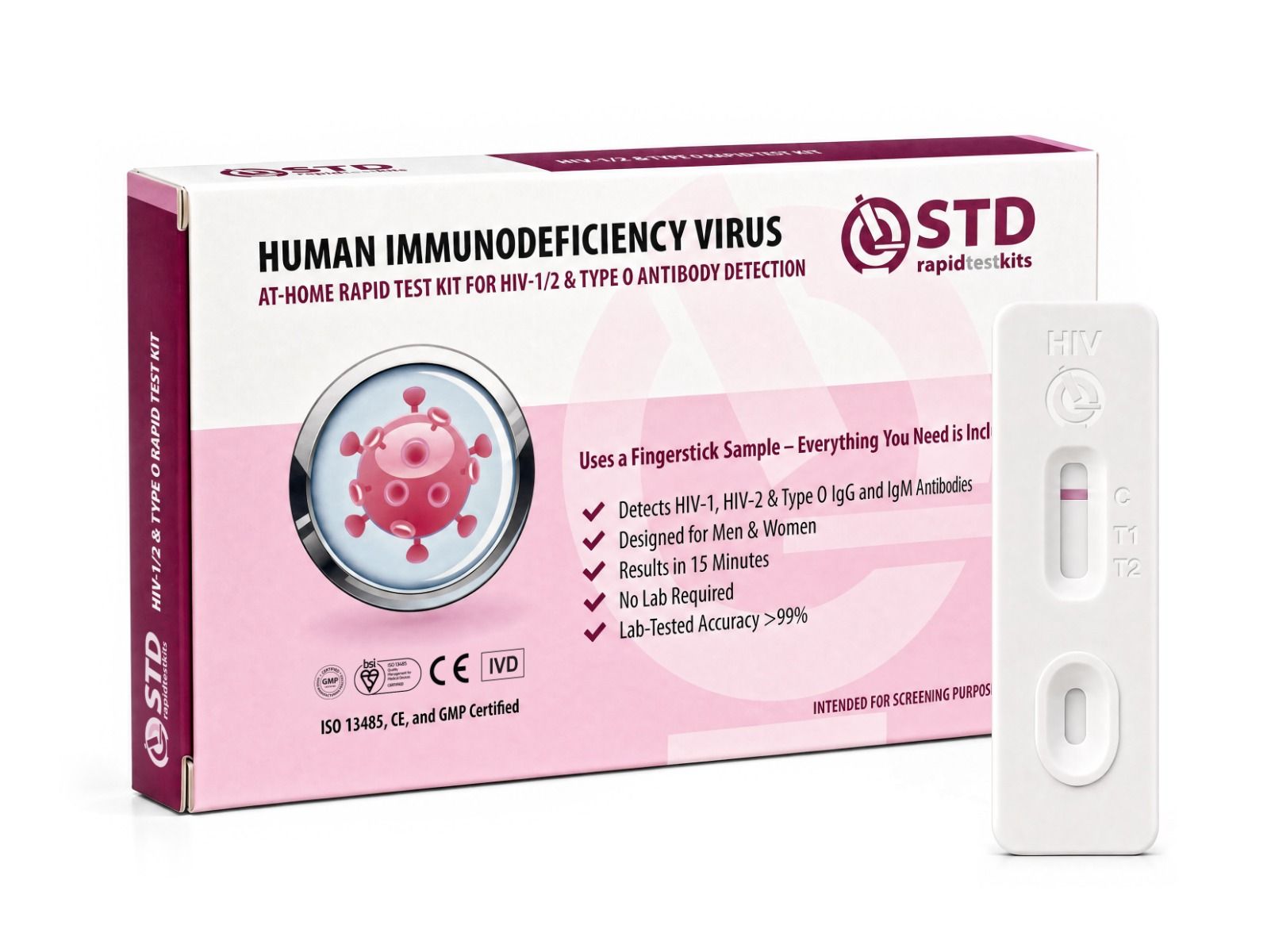
At-home rapid lateral-flow testing has a specific niche in refugee sexual health: the post-resettlement window where someone has access to mail or a stable address but cannot or will not enter a clinic. The kit ships in unmarked packaging, requires no provider interaction, returns a result in around fifteen minutes, and costs less than most clinic visits in the absence of public coverage. For survivors who have been failed by clinics in the past, that combination can matter more than any single technical feature.
The limits matter equally. Rapid lateral-flow tests use immunoassay chemistry, which is different from the laboratory NAAT (nucleic acid amplification test) that public-health screening programs rely on. Both have their place. The lateral-flow assay is a screening tool with strong specificity and adequate sensitivity for symptomatic and high-risk patients. A positive result still warrants laboratory confirmation when accessible, and a negative result inside the window period should be retested before being treated as definitive.
At-home testing fills a narrow, specific gap in the post-resettlement window. It lowers the threshold for a first test, removes some of the trauma-related friction of clinic-based screening, and creates a private starting point for someone who would otherwise wait years before a first conversation about sexual health.
What Better Crisis Care Looks Like
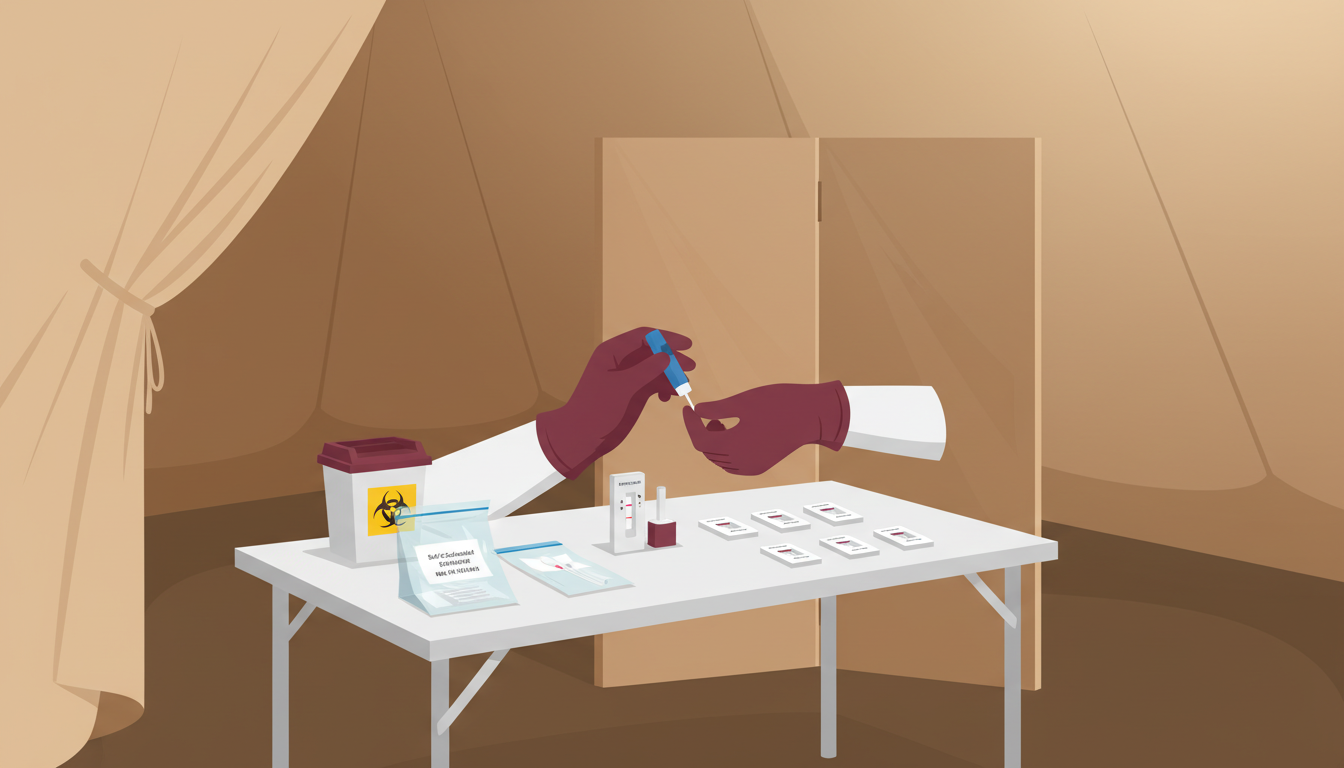
The interventions that move sexual health from optional add-on to standard offering in displaced populations are not exotic. Mobile clinics that bring rapid test kits to camp medical tents have measurably increased screening uptake in pilot programs documented in humanitarian health literature. Peer education delivered by trained refugee health workers, in the patient's first language, consistently outperforms outside-the-camp clinical outreach for hard-to-reach groups. Trauma-informed protocols that integrate mental health support with sexual health screening raise both attendance and follow-through.
Faith-based and community organizations are part of the picture. In settlements where they provide the bulk of frontline care, training clergy and aid staff to deliver fact-based, stigma-reduced sexual health information turns a potential barrier into a delivery channel. The conversation does not require ideological alignment, only accurate information and a willingness to refer.
Adolescents and unaccompanied minors deserve specific design attention. Standard intake forms rarely create a safe pathway for a teenager to disclose a sexual history, which means the highest-risk subgroup gets the lowest screening coverage. Youth-friendly clinics, staffed by trained counselors and protected by clear consent frameworks, are an evidence-based fix that the WHO's broader sexual and reproductive health work has long supported.
Peer education delivered by trained refugee community workers consistently raises STI testing uptake more than outside-the-camp outreach in the same populations. The reason is mechanical: shared language, shared experience, and the absence of perceived government or aid-agency authority lower the threshold for someone to disclose symptoms or accept a swab.
Frequently Asked Questions
- I had a health check when I arrived. Was STI testing included?
- Often not by default. Refugee arrival exams in most receiving countries focus on tuberculosis, hepatitis B, and selected vaccinations. STI screening is recommended by current CDC clinician guidance, but in practice it is offered inconsistently and frequently depends on whether the patient raises sexual health themselves. If you are unsure, ask your provider directly: "Was I screened for chlamydia, gonorrhea, syphilis, and HIV?"
- I was assaulted during transit and tested negative right after. Should I test again?
- Yes. Most STIs have a window period of weeks before they show up reliably on a test. Chlamydia and gonorrhea need around 1 to 2 weeks, syphilis needs 3 to 6 weeks, and HIV antibody confirmation can take up to 12 weeks. A test taken in the first days after exposure is a baseline rather than a final answer. Schedule a retest at 6 weeks and again at 12 weeks if you can.
- Can I get an STI without having sex?
- Yes, in narrow circumstances. The dominant route for the infections covered here is sexual contact, but transmission can also occur through shared needles, contaminated medical equipment, and from mother to baby during birth. In camp settings where sterile equipment is scarce or where forced sexual contact is common, the line between "with sex" and "without sex" can be more complex than the question implies.
- I am scared a clinic will judge me for asking about STI testing. What can I do?
- That fear is grounded in real experience for many refugees. Two practical paths help. First, write the request down before the appointment, in any language: "I would like to be screened for STIs." A written request bypasses the awkward verbal moment. Second, consider a self-collected at-home rapid kit as a first step. It removes the clinic encounter entirely. Follow up with a clinician for any positive result so treatment and partner notification can happen properly.
- I do not speak the local language well. How do I ask for an STI test?
- Most resettlement clinics have interpreter services, often by phone, and you have the right to one. Ask for an interpreter at check-in, ideally a same-gender interpreter where possible. If interpreters are unavailable or feel unsafe, an at-home rapid kit lets you test without a clinical conversation. Just keep the result and any symptoms documented for later medical follow-up.
- I am LGBTQ+ and worried about safety in the local clinic. Are at-home options safe?
- At-home rapid testing is a legitimate safety tool in this situation. The kit ships in unmarked packaging, requires no ID, and removes the clinical-conversation step that can expose patients to discrimination or, in some host countries, legal risk. Use it as a private screening step, then seek a trauma-informed clinic for confirmatory testing and treatment when one is accessible. Online directories run by LGBTQ+ refugee organizations can point to safer providers.
- My first test was negative but my symptoms continue. What now?
- A negative result inside the window period is not a final answer. It can also be a different condition entirely, such as a yeast infection, a bacterial vaginosis, or a urinary tract infection, none of which a standard STI rapid test will detect. Persistent symptoms warrant a clinical visit even when the test reads negative. Do not let one negative result close the question.
- Is requesting STI care selfish when other refugees need food or shelter?
- No. Sexual and reproductive health is recognized by the United Nations and the WHO as a fundamental human right rather than a luxury that comes after housing. Untreated STIs cause infertility, chronic pain, increased HIV transmission, and severe newborn complications. None of those are individual problems. Asking for testing is a community-level health intervention that protects future partners, future children, and the public-health system around you.
- U.S. Centers for Disease Control and Prevention. Sexual and Reproductive Health Guidance for Immigrant and Refugee Health Providers. Domestic Medical Examination guidance covering STI screening recommendations for newly arrived refugees.
- World Health Organization. Violence against women fact sheet. Global prevalence of physical and sexual violence against women, including elevated rates in conflict-affected populations.
- U.S. Centers for Disease Control and Prevention. Sexually Transmitted Infections Treatment Guidelines. Window periods, screening intervals, and retesting recommendations for chlamydia, gonorrhea, and syphilis.
- U.S. Centers for Disease Control and Prevention. HIV testing overview. Window periods for antibody, antigen-antibody combination, and nucleic acid HIV tests.
- United Nations High Commissioner for Refugees. UNHCR public health and refugee protection programs, including sexual and reproductive health service standards for displaced populations.
