






Quick Answer: A partner having no symptoms does not mean they are free of STDs. Many infections like Chlamydia, Gonorrhea, and HPV often show no symptoms at all, which means people can carry and transmit them without realizing it. Testing, not appearance, is the only reliable way to know.
Start Here: What To Do If Your Partner Has No Symptoms
When people panic about possible STD exposure, they often start by examining their partner’s body for clues. It’s an understandable instinct. Humans are wired to look for visible signs of illness. But sexually transmitted infections rarely follow the rules we expect from other diseases.
If a partner seems perfectly healthy, the smartest response isn’t reassurance or denial. It’s simply taking a few practical steps that give you real information instead of assumptions.
The first step is recognizing that symptoms are unreliable indicators of infection. A person can carry Chlamydia, HPV, Herpes, or even early-stage HIV with absolutely no noticeable changes to their body. Doctors see this every day in clinics, where patients test positive despite feeling completely normal.
The second step is understanding testing windows. Most infections need a certain amount of time in the body before a test can detect them accurately. Testing immediately after exposure may produce a false negative, which can lead people to believe they are safe when the infection is still developing.
The third step is deciding how to test. Clinics remain a reliable option, but many people prefer discreet testing at home. That’s why services like STD Rapid Test Kits exist. They allow individuals and couples to check their status privately without scheduling appointments or waiting rooms.
Finally, the fourth step is having a conversation with your partner if testing becomes necessary. This conversation doesn’t have to be accusatory or dramatic. In many cases, it sounds more like two adults deciding to handle a shared health question together.
“I remember thinking, we both look healthy, so it probably doesn’t matter,” one patient once told a clinician during a routine screening. “Then my test came back positive for chlamydia. I was shocked because neither of us had symptoms.”
Stories like that are more common than people realize.
The Silent Reality of STDs
Sexual health educators sometimes call certain infections “silent STDs.” It’s not a dramatic nickname meant to scare people. It’s simply a description of how these diseases behave inside the body.
Many infections cause little or no immediate discomfort. Instead of producing obvious symptoms, they quietly replicate within the reproductive system or bloodstream. The person carrying the infection may feel completely normal while still being able to pass it to others.
Medical research consistently demonstrates that significant percentages of infections are asymptomatic, indicating that symptoms either do not manifest or appear with such mildness that they remain unrecognized.
| STD | Estimated Asymptomatic Rate | Notes |
|---|---|---|
| Chlamydia | Up to 70–80% of cases | Often detected only through testing |
| Gonorrhea | Around 50% of infections | Symptoms may be mild or mistaken for other issues |
| HPV | Majority of infections | Often clears naturally without symptoms |
| Herpes | Large portion of carriers | Many people never recognize outbreaks |
People often don't believe these numbers when they first hear them. If infections are this common without symptoms, how are people supposed to protect themselves?
The answer isn’t constant suspicion of partners. It’s something much simpler: routine testing and honest communication.
Healthcare providers emphasize this point constantly. Symptoms can help confirm an infection once they appear, but the absence of symptoms tells doctors almost nothing about a person’s STD status.

People are also reading: Can You Have an STD Without Knowing? The Truth About Asymptomatic Infections
A Quick Story Doctors Hear All the Time
A couple in their late twenties once came into a sexual health clinic after a routine annual checkup revealed something unexpected. The woman had tested positive for Chlamydia. She felt fine. No pain, no unusual discharge, no obvious warning signs.
The first reaction was confusion. Then came suspicion. She wondered if her partner had cheated. He insisted he hadn’t and said he’d never had symptoms either.
When both partners were tested, the results revealed something surprising: he had the infection too. Neither of them had noticed any symptoms, and the infection had likely been present for months.
Moments like that illustrate a reality many people don’t consider. STDs are not always dramatic events marked by visible rashes or sudden illness. Often they are quiet biological processes that unfold without announcement.
That silence is exactly why testing exists.
Why Your Eyes Can’t Diagnose an STD
People tend to rely heavily on visual cues when assessing health. A fever makes someone look flushed. A cold produces coughing and sneezing. Even skin infections often create redness or swelling that signals something is wrong.
Sexually transmitted infections frequently don’t behave that way.
Inside the body, many STDs infect areas that aren’t easily visible. Bacteria may live inside the cervix, urethra, or throat. Viruses may remain dormant in nerve cells for long periods before causing noticeable outbreaks.
Because of this, visual inspection is almost useless as a screening method.
| Reason | Explanation |
|---|---|
| Hidden infection sites | Many infections occur inside the body where symptoms are not visible |
| Mild symptoms | Symptoms can be so subtle they are mistaken for irritation or normal body changes |
| Delayed symptoms | Some infections take weeks or months before noticeable effects appear |
| Dormant viruses | Viruses like herpes can stay inactive for long periods |
In other words, the idea that you can “tell” if someone has an STD by looking at them is closer to a myth than a medical strategy.
And that myth has quietly shaped sexual decision-making for decades.
That’s why many people now choose to test proactively rather than rely on guesswork. Tools like the Combo STD Home Test Kit allow people to screen for multiple infections privately, often within minutes.
Testing isn’t about mistrust. It’s simply about replacing assumptions with real information.
When “Nothing Seems Wrong” Is Actually the Risk
Imagine a typical Saturday night. Two people meet at a friend’s birthday party, end up talking for hours, and eventually leave together. There’s laughter, chemistry, maybe a conversation about past relationships, but rarely a detailed exchange of medical records. Instead, people rely on shortcuts. One of the most common shortcuts is the visual check.
If someone looks healthy, smells fine, and doesn’t mention any symptoms, the brain quietly relaxes. It files the situation under “probably safe.” That mental shortcut is deeply human, but it’s also medically unreliable.
The reason is simple: most infections don’t announce themselves right away. They operate on timelines that are invisible to both partners. A person can be infectious long before their body shows any outward sign that something is happening.
Clinicians call this period the incubation phase. It’s the stretch of time between exposure and detectable infection or symptoms. During that time, a person can unknowingly carry and spread an STD even if they feel fine.
The Invisible Timeline: Incubation vs. Testing Windows
Many people believe that everything is okay if they or their partner don't show any signs of being sick within a few days. In fact, infections have their own biological clocks that tell them when to leave. Some appear quickly, while others can remain undetected for weeks.
That timeline is why healthcare providers emphasize the difference between two important concepts: incubation periods and testing windows. The incubation period refers to how long it takes symptoms to appear. The testing window refers to how long it takes for a test to reliably detect the infection.
Those two timelines don’t always match, and that mismatch is where confusion often happens.
| STD | Earliest Reliable Test Window | Symptoms May Appear |
|---|---|---|
| Chlamydia | 7–14 days | Often no symptoms |
| Gonorrhea | 5–14 days | Sometimes mild symptoms |
| Syphilis | 3–6 weeks | Initial sore may go unnoticed |
| HIV | 18–45 days depending on test | Early symptoms often resemble flu |
| Herpes | 2–12 days | Some people never recognize outbreaks |
This timeline explains why someone might honestly say they have no symptoms and still carry an infection. Their body may simply be earlier in the timeline than they realize.
It also explains why testing after exposure is sometimes repeated. One test might be accurate immediately for certain infections, while others require a few weeks before the results are reliable.
Check Your STD Status in Minutes
Test at Home with Remedium8-in-1 STD Test Kit
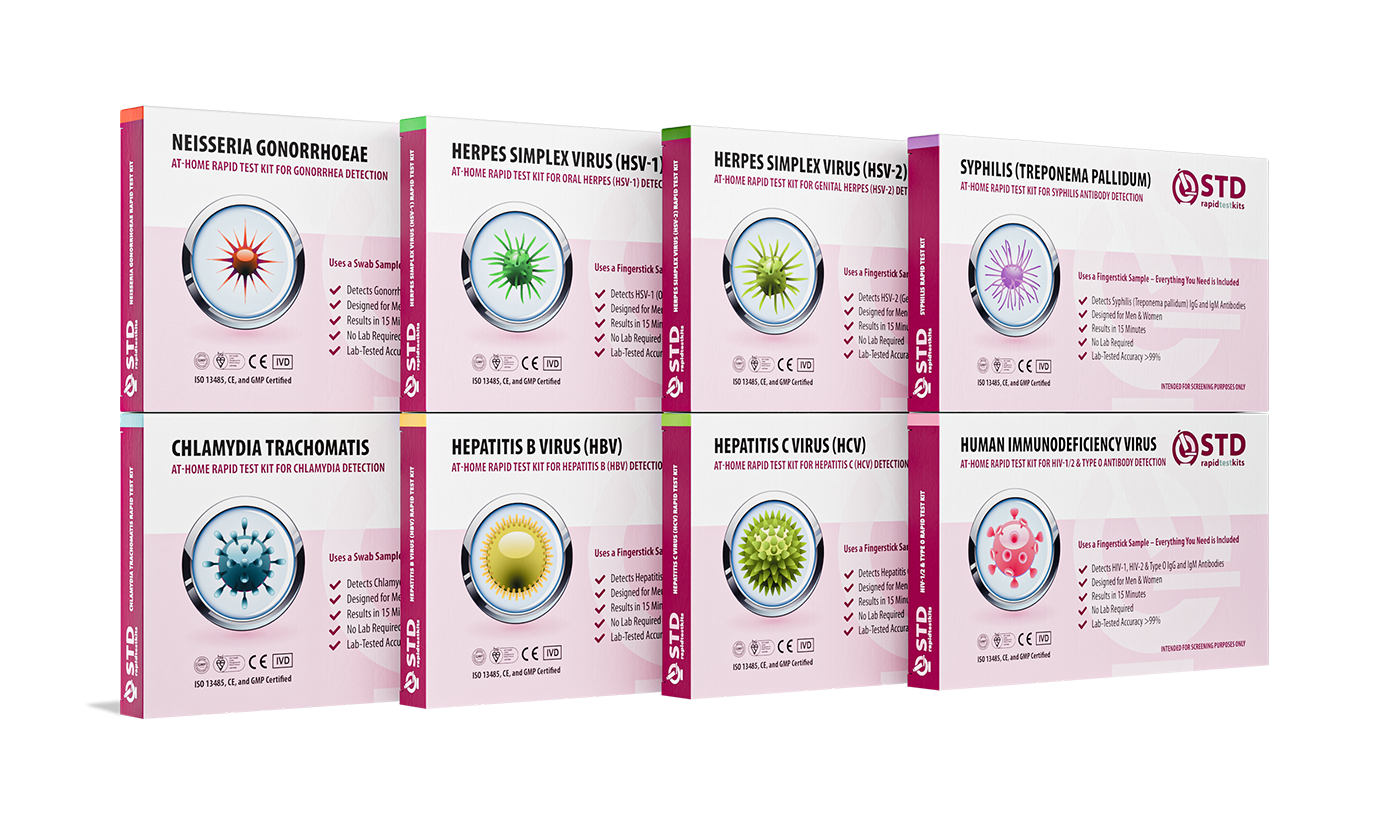
 For Men & Women
 Results in Minutes
 No Lab Needed
 Private & Discreet
Order Now $149.00 $392.00
For all 8 tests
The Moment Doubt Appears
For many people, concern about STDs doesn’t start in a doctor’s office. It begins with a small moment of uncertainty. Maybe a friend casually mentions testing after a new relationship. Maybe someone reads an article online about asymptomatic infections. Suddenly, that reassuring thought, “they looked healthy”, doesn’t feel quite as solid anymore.
A man named Daniel once described this moment during a sexual health workshop. He had been dating someone new for about two months, and everything seemed fine. Neither of them had symptoms. Neither of them had talked about testing.
Then one night, a coworker mentioned that chlamydia often has no symptoms at all. The comment lingered in his mind. It wasn’t panic exactly, but curiosity mixed with a little unease.
“I realized I had never actually been tested between relationships,” he said. “I just assumed everything was fine because nothing felt wrong.”
When he eventually decided to test, the result surprised him. The infection had likely been present long before his current relationship even began.
Stories like this are not rare. They’re part of why routine testing is recommended even when people feel perfectly healthy.
Why Some STDs Stay Silent for So Long
To understand the lack of symptoms, it is advantageous to analyze the interactions of diverse infections with the body. Chlamydia and gonorrhea are two kinds of bacterial infections that often affect the mucous membranes in the reproductive system. These tissues can keep bacteria in check without making the immune system react right away.
Viruses act differently, but they all cause the same silence. For instance, herpes can live in nerve cells and stay dormant for a long time. During this time, a person might not have any outbreaks that are easy to see.
Human papillomavirus, commonly known as HPV, is even more subtle. Most people who carry it never develop visible warts or symptoms. The immune system often clears the virus naturally, which means many carriers never realize they had it.
This quiet interaction between pathogen and host is what makes symptom-based assumptions unreliable. The infection is present, but the body isn’t sending obvious signals yet.
In practical terms, that means someone can be honest when they say they feel healthy, and still unknowingly carry an infection.
When Couples Discover the Truth Together
One of the most constructive moments in many relationships happens when testing becomes a shared decision rather than an accusation. Couples sometimes assume that bringing up testing will create tension, but the opposite often happens.
Consider a couple who had been together for six months before deciding to get tested together. Neither partner had symptoms, and neither believed there was any reason for concern. They simply wanted peace of mind.
The appointment turned into an unexpectedly meaningful experience. Sitting in the waiting room, they realized how rarely people discuss sexual health openly. By the time the results came back negative for both of them, the process had strengthened their sense of trust.
“Honestly, it was reassuring,” one of them later said. “We realized testing isn’t about mistrust. It’s just normal health care.”
That mindset is slowly becoming more common as awareness about asymptomatic infections spreads.
Replacing Assumptions With Information
For decades, sexual health messaging focused heavily on visible symptoms. Posters warned about sores, rashes, or unusual discharge. While those symptoms can certainly occur, they represent only part of the picture.
Modern public health guidance takes a broader approach. It encourages people to get tested before they show symptoms, especially after they have sex with a new partner or without protection.
That approach shifts the focus away from guesswork. Instead of asking whether someone looks healthy, the question becomes much simpler: when was the last time either of you tested?
Answering that question honestly is far more useful than trying to read the body for signs that may never appear.
For people who prefer privacy or convenience, at-home options like the Combo STD Home Test Kit allow individuals to screen for several infections discreetly. The goal isn’t to replace professional care but to make testing easier to access when questions arise.
Because ultimately, the healthiest relationships are built on information, not assumptions.
The Myth That Keeps Spreading Infections
One of the most persistent beliefs in sexual health is the idea that you can “tell” when someone has an STD. People imagine obvious sores, dramatic symptoms, or visible illness. If those signs aren’t present, the assumption is that everything must be fine.
This belief doesn’t come from ignorance so much as instinct. Humans naturally use visual cues to judge health. When someone looks energetic, smells clean, and acts normally, the brain quietly categorizes them as safe. Unfortunately, sexually transmitted infections rarely cooperate with that instinct.
In reality, the most common infections circulate precisely because they don’t announce themselves.
Doctors often describe this as the silent spread. Someone acquires an infection from a previous partner. They feel normal, so they assume nothing happened. Months later they enter a new relationship, still symptom-free, and unknowingly pass the infection forward.
By the time anyone notices a problem, the infection may have moved through multiple relationships.

People are also reading: STD Tests Came Back Clear But the Discharge Won’t Stop
A Quiet Transmission Story
Picture a young couple who meet through mutual friends. They start dating casually, spending weekends together and slowly building trust. Neither of them feels sick. Neither has any visible symptoms.
At some point, protection becomes less consistent. It happens gradually, often without a dramatic conversation. The relationship feels stable, and both people assume that if something were wrong, they would notice.
Months later, one partner schedules a routine health check. The doctor recommends a full STD screening. The result comes back positive for Gonorrhea.
The reaction is usually the same: confusion first, then concern. The infected partner often says the same sentence clinicians hear again and again.
“But neither of us has symptoms.”
That statement is almost always true. Many infections remain mild or invisible for long stretches of time. The infection didn’t suddenly appear. It had simply been there quietly.
When both partners test, they often discover that the infection has been shared between them without either person realizing it.
How Asymptomatic Transmission Actually Happens
To understand why symptoms are unreliable, it helps to look at how transmission works biologically. Most sexually transmitted infections spread through microscopic organisms, bacteria or viruses, that live in bodily fluids or mucous membranes.
These microorganisms don’t need visible symptoms to move between partners. They simply require contact with the right tissues during sexual activity.
That means transmission can occur during vaginal sex, anal sex, oral sex, or even certain forms of skin-to-skin contact, depending on the infection. The body might not show any outward signs at all while this process is happening.
For example, chlamydia bacteria can live in the cervix or urethra without causing any obvious problems. The bacteria can still move from one person to the other during sex, even if neither person has any symptoms.
Herpes viruses can also leave the skin without causing sores that are easy to see. One reason the virus spreads even when there aren't any outbreaks is that it can be shed without any symptoms.
The key point is simple: transmission depends on biology, not appearance.
Why People Delay Testing
If testing is the only reliable way to know someone’s STD status, a natural question follows: why don’t more people test regularly?
The answer often comes down to psychology rather than access. Many people associate testing with suspicion or shame. They worry that asking a partner to test might sound like an accusation.
Others assume testing is only necessary when symptoms appear. Because they feel healthy, they postpone the decision indefinitely.
Public health experts see this pattern repeatedly. People who eventually test positive often say the same thing in retrospect.
“I didn’t think I needed a test because nothing seemed wrong.”
This delay allows silent infections to circulate longer than they otherwise would.
What Routine Testing Actually Looks Like
Contrary to popular belief, routine STD testing is rarely dramatic. In most cases it’s a simple, straightforward process that takes only minutes. The test might involve a urine sample, a small blood sample, or a swab depending on the infection being screened.
Clinics do these tests every day, usually as part of a regular checkup. A lot of people also choose to test at home because it makes it easier to schedule appointments or wait in a clinic.
Services such as STD Rapid Test Kits allow individuals to screen themselves privately and quickly. For people who feel anxious about visiting a clinic, this option can make testing far more approachable.
The important thing isn’t where testing happens. What matters is replacing assumptions with actual information.
Once people know their status, they can make informed decisions about treatment, protection, and communication with partners.
Check Your STD Status in Minutes
Test at Home with Remedium7-in-1 STD Test Kit
 For Men & WomenResults in MinutesNo Lab NeededPrivate & Discreet
Order Now $129.00 $343.00
For all 7 tests
The Emotional Side of STD Conversations
One reason the “they looked healthy” myth persists is that conversations about sexual health can feel uncomfortable. People worry that raising the topic might disrupt the mood or imply distrust.
In reality, these conversations often become easier once they begin.
A woman named Sofia once described how she approached the topic with a new partner after reading about asymptomatic infections. She waited until they were discussing past relationships and simply mentioned that she tries to test between partners.
“I told him I’d feel more relaxed if we both tested,” she explained. “He actually said he had been meaning to do the same thing.”
Instead of creating conflict, the conversation created a shared sense of responsibility.
That’s increasingly how sexual health professionals frame testing. It isn’t about mistrust or suspicion. It’s simply part of caring for your body and respecting your partners.
When Silence Isn’t Safety
The absence of symptoms can feel reassuring, but medically it doesn’t mean very much. A person can feel perfectly healthy while carrying infections that remain invisible for weeks, months, or sometimes longer.
That doesn’t mean every partner carries an STD, and it certainly doesn’t mean people should approach relationships with fear. It simply means that appearance alone cannot answer the question.
The only reliable answer comes from testing.
Once people understand this, their mindset often shifts. Instead of asking whether someone “looks safe,” they begin thinking about timing, communication, and shared responsibility.
And that shift, from guessing to knowing, is what actually reduces risk.
FAQs
1. My partner looks completely healthy. Am I overthinking this?
Probably not. This is one of the most common questions people ask after a new hookup or early in a relationship. The tricky part is that many STDs don’t change how someone looks or feels at all. A person can be charming, energetic, and symptom-free while still carrying something like Chlamydia or HPV. So that little voice in your head isn’t paranoia, it’s your brain asking for actual information instead of guessing.
2. How common is it for people to have an STD and not know it? Much more common than people realize. In clinics, it’s routine for someone to come in feeling completely fine and leave with a positive result. Chlamydia is famous for this, most cases show no obvious symptoms. That’s why sexual health professionals often say the same thing: if you wait for symptoms before testing, you might wait forever.
3. If someone had an STD, wouldn’t they feel sick or notice something? Sometimes, yes. But many infections are surprisingly quiet. Instead of dramatic symptoms, they might cause very mild changes, slight irritation, a little burning once in a while, something easy to dismiss as dehydration or friction. Other infections simply stay silent. The body doesn’t always wave a red flag when bacteria or viruses move in.
4. Can you really catch an STD from someone who has zero symptoms? Yes, and that’s exactly how many infections spread. Think of it less like catching a cold and more like sharing microscopic passengers. If bacteria or viruses are present in the body, they can transfer during sex whether symptoms are visible or not. In other words, transmission depends on biology, not whether someone “seems fine.”
5. How long can someone carry an STD without realizing it? Sometimes weeks. Sometimes months. In a few cases, even longer. People occasionally discover an infection during a routine screening and realize it likely came from a past relationship they’d almost forgotten about. That doesn’t mean anyone lied, it simply means the infection stayed quiet long enough to go unnoticed.
6. Okay, but what if both of us feel totally normal? Feeling normal is great, but unfortunately it doesn’t answer the STD question. Many couples discover infections together during routine testing, even though neither person noticed symptoms. The healthiest mindset is treating testing like dental cleanings or annual physicals, just part of staying on top of your health.
7. When should someone actually get tested after sex? Timing matters. Some infections can be detected within about a week, while others take a few weeks before tests become reliable. If you’re unsure, many clinicians recommend testing after the appropriate window period and sometimes repeating the test later just to be certain. It’s less about panic and more about patience and good timing.
8. Is it awkward to ask a partner to get tested? It can feel awkward in your head, but in reality it’s often surprisingly normal. A lot of people are relieved when someone brings it up because they were thinking about it too. The tone matters. Instead of sounding suspicious, it can be as simple as saying, “Hey, I usually test between partners, want to do it together?”
9. What happens if a test actually comes back positive? First: breathe. Most bacterial STDs are very treatable with medication, especially when caught early. Viral infections can usually be managed effectively with medical care. The important thing is knowing your status so you can handle it properly instead of letting the infection quietly stick around.
10. So what’s the takeaway if a partner has no symptoms? It means exactly one thing: you don’t have enough information yet. No symptoms doesn’t equal infection, but it doesn’t equal safety either. The only real answer comes from testing. Once you have that, the guessing game ends and you can move forward with clarity.
You Deserve Answers, Not Assumptions
Most people who start worrying about STDs begin with the same thought: my partner looked healthy, so it’s probably nothing. It’s a comforting assumption, but sexual health doesn’t work like a visual inspection. Many infections move quietly through the body for weeks or months without any obvious signs.
The good news is that uncertainty doesn’t have to linger. You don't have to guess; you can just check. Waiting for the right time to take the test and using a reliable test gives you clear information instead of anxiety. The goal is the same whether you go to a clinic or use a discreet option like the at-home Combo STD Test Kit: to find out your status so you can move forward with confidence.
There should never be a question mark about your health after sex. When you have answers, talking to your partner is easier, making choices is clearer, and the stress of not knowing goes away. Testing isn’t about mistrust, it’s about taking care of yourself and the people you’re intimate with.
How We Sourced This Article: This article was developed using current clinical guidance from major public health organizations, peer-reviewed research on asymptomatic sexually transmitted infections, and patient education materials used in sexual health clinics. We also incorporated real questions commonly asked in clinics and online forums about partners who have no symptoms, because these concerns often drive people to seek testing and information in the first place.
Sources
1. Centers for Disease Control and Prevention – Sexually Transmitted Diseases
2. World Health Organization – Sexually Transmitted Infections Fact Sheet
4. Research on STI transmission and asymptomatic infection that has been peer-reviewed in PubMed
5. Planned Parenthood – STD Education and Prevention
6. CDC Sexually Transmitted Infections Treatment Guidelines
7. Planned Parenthood – STD Testing Information
About the Author
Dr. F. David, MD is a physician and sexual health educator specializing in sexually transmitted infection prevention, testing, and public health education. His work focuses on translating complex medical research into practical, stigma-free guidance so people can understand symptoms, testing timelines, and treatment options with clarity.
Reviewed by: Clinical Review Team | Last medically reviewed: March 2026
This article is only meant to give you information and should not be used instead of professional medical advice, diagnosis, or treatment.


