Published: October 2025 | Last updated: May 2026 | Editorial review and quality control: Martina N.
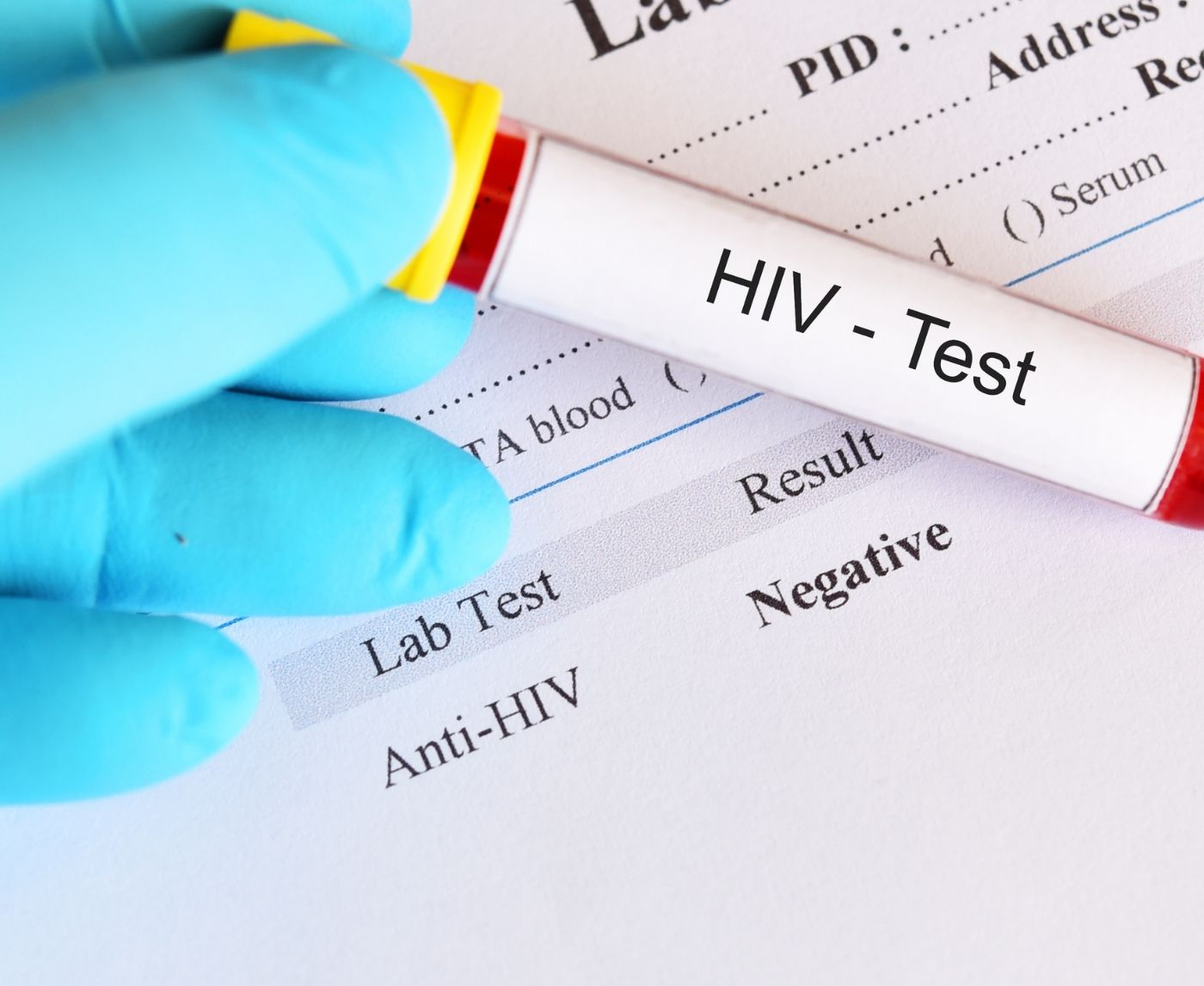
The contradiction is exhausting. Your test results say nothing was found, yet your underwear says something is going on. Discharge that started before testing is still there, or new discharge has shown up since, and the reassurance you came in for hasn't actually arrived.
This is one of the most common patterns clinicians see in walk-in STI clinics: a negative panel, persistent symptoms, and a patient quietly wondering whether the lab missed something. Often the lab didn't miss anything. The test answered exactly the question it was asked, but the question wasn't the right one for what's actually causing the symptoms.
By the end of this article you'll know which scenario fits your situation, whether that's a window-period mismatch, an infection that wasn't on the panel, a hormonal shift mimicking infection, or a test type too coarse for the specific pathogen. You'll also know what the reasonable next step looks like.
Key Takeaways
- A negative STI panel rules out what was tested for, not everything that can cause discharge. Bacterial vaginosis, yeast, UTIs, and Mycoplasma genitalium are common discharge causes that standard chlamydia and gonorrhea panels skip entirely.
- Window periods for accurate detection run two weeks or longer for most STIs. Testing within 1 to 7 days of exposure is often too early, so when symptoms continue despite an initial negative result, retesting at the right interval is the standard recommendation (CDC STI Treatment Guidelines, 2021).
Why a Negative Test Doesn't Always Mean "No Problem"
A test result is a snapshot, not a verdict. Every STI test has a defined target list (which infections it's designed to detect) and a defined window period (when those infections become detectable after exposure). If your discharge is being driven by something outside that target list, or if you tested before the relevant window had closed, the result will read negative even though something is genuinely going on.
Many people walk out of a clinic visit feeling more confused than reassured: the lab found nothing, but the body is still sending signals. The signals are real. The lab just wasn't asked the right question, or wasn't asked early enough to answer it.
The next step in that situation is rarely a third identical test. It's usually a different test, or the same test at a different time, or a clinical exam looking for the things a swab-and-send screening panel never checks for. The next several sections walk through how to figure out which of those applies.
A negative STI panel tells you what wasn't found among the infections tested. It does not rule out infections outside the panel's scope (bacterial vaginosis, yeast, UTIs, Mycoplasma genitalium), and it does not rule out infections you may have tested for too early in the window period. "Not found" and "not present" are different statements.
Why is my discharge still there if my STD test was negative?
Three explanations cover most cases. First, you tested before the window period closed and a real infection wasn't yet detectable; retesting at 14 or more days resolves this. Second, the discharge is from a non-STI cause like bacterial vaginosis, yeast infection, or a UTI, none of which appear on a standard STD panel. Third, a hormonal shift around ovulation, birth-control changes, or pregnancy is driving the change. If symptoms persist past two weeks post-exposure, retest with a broader panel and ask explicitly about BV and yeast.
Window Periods: When the Test Looked Too Soon
For most STIs, the pathogen needs time to replicate enough that diagnostic tests can reliably pick it up. Testing before that window closes can produce a false negative driven by timing rather than test failure. The biology hasn't caught up to the math yet.
If your discharge began within a few days of a new sexual encounter, and you tested within 72 hours of that exposure, you almost certainly tested too soon for chlamydia or gonorrhea to be reliably detectable, and far too early for HIV. That doesn't mean the test was defective. It means a retest at the right interval is the next reasonable step.
The CDC's STI treatment guidelines recommend follow-up evaluation when symptoms persist despite a negative initial result, rather than treating the first negative as a final answer. The table below summarizes typical window periods for the most commonly tested STIs based on standard CDC guidance.
| STI | Typical Window Period | When Retesting Is Advised |
|---|---|---|
| Chlamydia (NAAT) | 1 to 2 weeks | After 14 days if symptoms persist |
| Gonorrhea (NAAT) | 1 to 2 weeks | After 14 days if initial test was early |
| Trichomoniasis | 5 to 28 days | After 14+ days with a sensitive swab-based test |
| HIV (NAAT) | 10 to 33 days | At 6 weeks, then 3 months for high-risk exposures |
| HIV (Ag/Ab combo) | 18 to 45 days | At 90 days for high-risk exposures |
| Syphilis (antibody) | 3 to 6 weeks | At 3 months if exposure was high-risk |
Common Non-STI Causes of Discharge
The most frequent cause of unexplained discharge in people with vulvas is often not an STI at all. It's bacterial vaginosis or a yeast infection. Both are missed by every standard STI panel because neither pathogen is sexually transmitted in the strict sense, and neither is included in chlamydia, gonorrhea, or trichomoniasis screening.
Per the CDC's STI treatment guidelines on bacterial vaginosis, BV is the most common cause of vaginal discharge. It produces a thin gray or white discharge with a distinct fishy odor, often more noticeable after sex. The CDC also notes that the majority of women with BV are asymptomatic, which means BV can drive discharge in people who never had any prior warning signs. Yeast infections produce thick white discharge with itching and swelling and commonly flare after antibiotic use, hormonal shifts, or any disruption to vaginal pH.
Urinary tract infections cause burning urination and sometimes cloudy urine, but require a urine culture rather than an STI panel to diagnose. In men, non-specific urethritis (NSU) presents as clear or whitish discharge and is often diagnosed by exclusion when chlamydia and gonorrhea are negative but symptoms persist. Mycoplasma genitalium is a sexually transmitted bacterium that causes discharge similar to chlamydia, and is rarely included in standard screening panels unless specifically requested.
Cervicitis (inflammation of the cervix) can produce discharge with or without an identified pathogen, and is sometimes triggered by friction, irritants like spermicide, or low-grade infection that isn't picked up on screening swabs. The Cleveland Clinic's overview of vaginal discharge covers the broader differential in detail.
| Condition | Typical Symptoms | On a Standard STI Panel? |
|---|---|---|
| Bacterial vaginosis | Thin gray/white discharge, fishy odor | No (vaginal swab + lab evaluation needed) |
| Yeast infection | Thick white discharge, itching, swelling | No (fungal culture or wet mount needed) |
| UTI | Burning urination, urgency, cloudy urine | No (urine culture needed) |
| Non-specific urethritis (men) | Clear or white discharge | Sometimes (diagnosed by exclusion) |
| Mycoplasma genitalium | Discharge similar to chlamydia, mild symptoms | Rarely (requires specific NAAT request) |
| Cervicitis | Mild discharge, contact bleeding | Sometimes (depends on workup) |
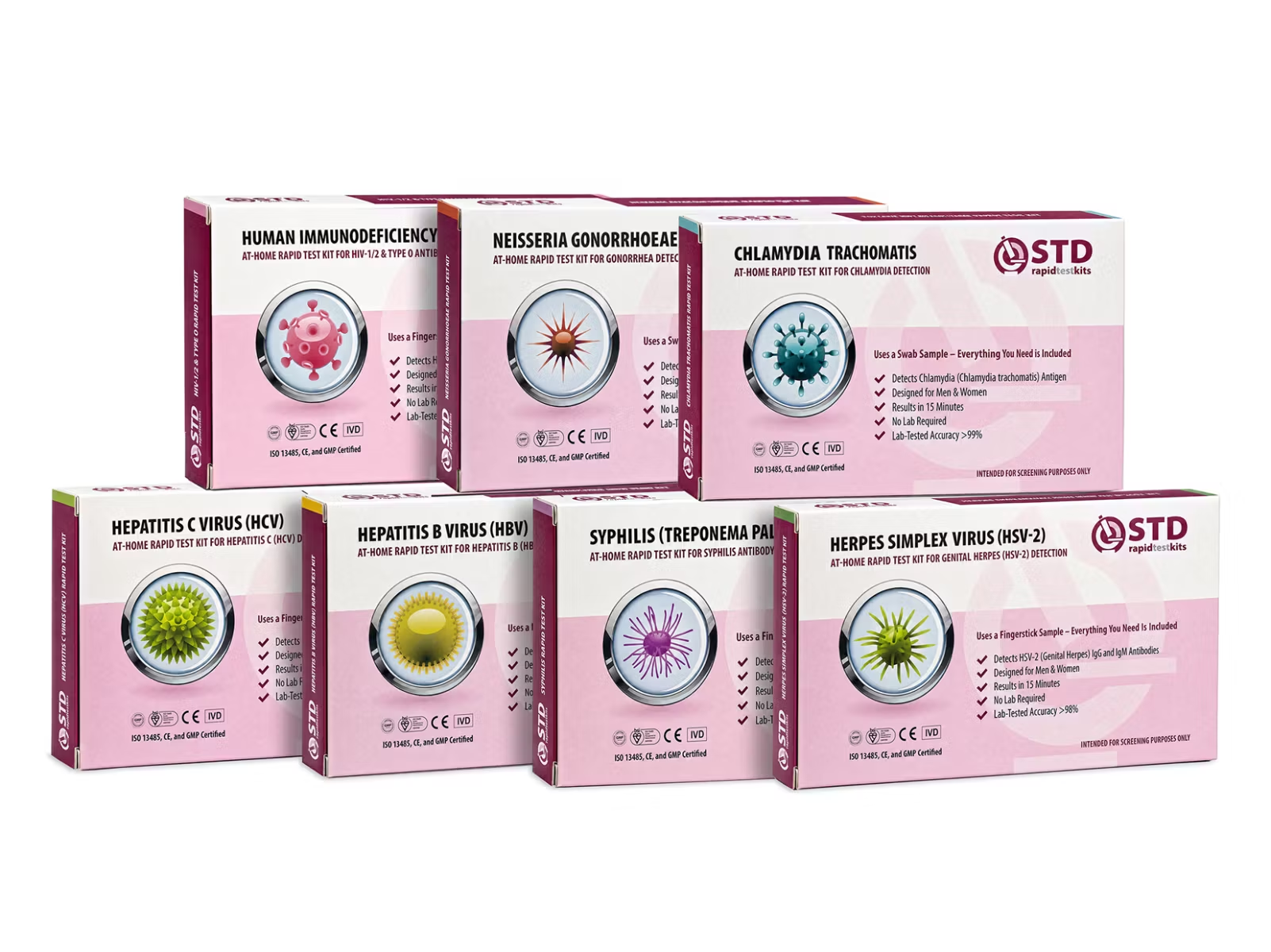
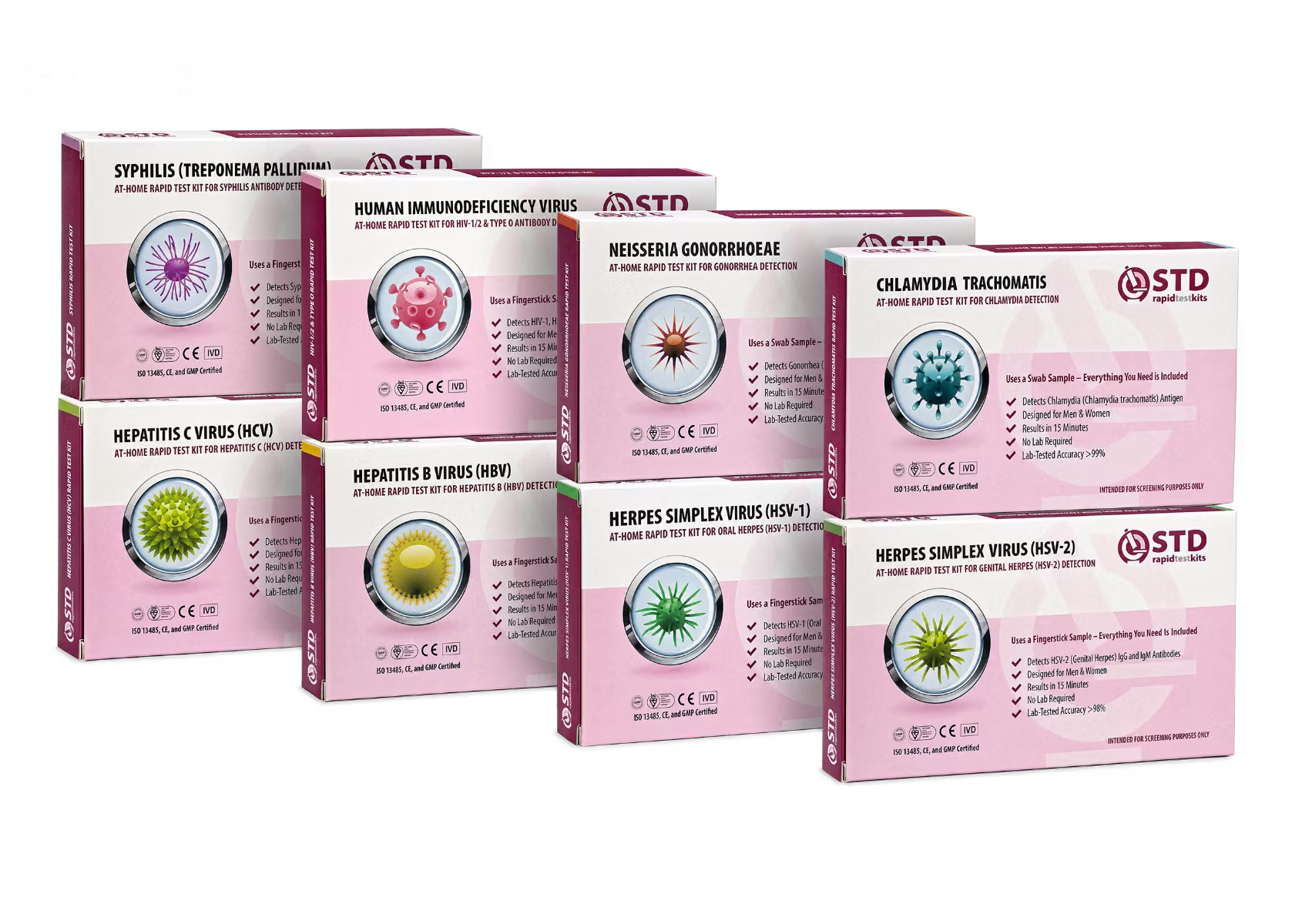
This article is published by stdrapidtestkits.com, which sells at-home STI screening kits. Recommendations match the reader's concern, not commercial benefit. The combo panels described below cover the STIs they list but do not detect bacterial vaginosis, yeast, UTI, or Mycoplasma genitalium. Those still need a clinic swab or culture.
When Hormones, Not Infection, Are Driving the Change
Not every discharge change is an infection. Estrogen drives mucus production throughout the menstrual cycle, and what shows up around ovulation looks dramatically different from what shows up the week before a period. Around mid-cycle, discharge typically becomes clear, stretchy, and noticeably wetter (the classic "egg-white" pattern). After ovulation, it shifts to thicker and creamier under progesterone influence.
Birth control changes are a frequent trigger for "where did this come from" discharge questions. Starting, stopping, or switching hormonal contraception can shift baseline secretions for several cycles before the body settles into a new rhythm. Hormonal IUDs, the implant, the patch, the ring, emergency contraception, and combined-pill switches each have a different shift pattern. Pregnancy raises mucus volume in early weeks; perimenopause can shift discharge in either direction depending on where in the transition someone is.
Stress doesn't directly cause infection-style discharge, but it affects estrogen and cortisol balance enough to disrupt the vaginal microbiome. The same stretch of weeks where someone is sleep-deprived, training hard, or moving through a major life event can correlate with BV flares, yeast flares, or just a baseline change in vaginal secretion that isn't pathological at all.
The clinical question worth asking yourself: does the discharge follow the cycle, or does it persist regardless of cycle stage? Cyclical changes that come and go in time with ovulation, periods, or contraception timing are usually physiologic. Discharge that ignores the cycle, has a strong odor, comes with itching or burning, or doesn't resolve over multiple cycles is more likely to be a treatable infection or imbalance worth a clinical workup. The Mayo Clinic's discharge cause overview outlines which patterns warrant a visit.
Hormonal triggers worth tracking
- Starting, stopping, or switching hormonal birth control (pill, IUD, implant, patch, ring) can shift baseline discharge for several cycles before the body resettles.
- Discharge that closely tracks the cycle (wettest mid-cycle, thicker before a period) is usually physiologic; discharge that ignores the cycle or has a strong odor is more likely infectious.
- Pregnancy and perimenopause both shift discharge volume and consistency; new patterns in either context are worth raising with a provider rather than waiting out.
At-Home vs Lab Testing: Picking the Right Tool
The kind of test that ran the first time matters for figuring out the next move. Rapid lateral-flow at-home tests use a strip-based immunoassay to detect antibodies (for blood-borne STIs like HIV, syphilis, HSV, and hepatitis) or antigens (for chlamydia and gonorrhea swab kits). They're fast, private, and inexpensive, and the same swab biology underpins both home and lab samples.
Lab-based NAAT (nucleic acid amplification testing) detects the pathogen's genetic material directly rather than the antibodies your body produces in response. NAAT is more sensitive than antibody tests in early-window infections and is the laboratory gold standard for chlamydia, gonorrhea, and trichomoniasis. The CDC's STI treatment guidelines explicitly identify NAAT as the preferred diagnostic for these three.
Practical implication: at-home rapid tests are screening tools, not lab-grade diagnostics. A positive result is informative; a negative result with persistent symptoms is a flag to follow up with a NAAT lab test rather than a final answer. The two technologies are complementary, not equivalent. The table below summarizes the trade-offs.
| Test Type | Privacy | Sensitivity | Best Use Case |
|---|---|---|---|
| At-home rapid lateral-flow | High | Moderate to high | Initial screening, repeat screening, partner testing |
| Mail-in lab NAAT | High | High (NAAT-grade) | Confirmation when symptoms persist after a screen |
| Clinic visit (NAAT + microscopy + culture) | Lower | Highest, plus immediate workup | Persistent symptoms, complex picture, possible non-STI cause |
When to Push for Additional Testing
If your provider ran a chlamydia/gonorrhea panel and called it normal, the most useful follow-up is asking explicitly about the things that aren't on that panel: bacterial vaginosis, yeast, trichomoniasis (sometimes included, sometimes not, depending on the lab), and Mycoplasma genitalium (rarely included in standard screens).
For people with persistent discharge despite negative results, additional in-clinic options include vaginal pH testing (a quick chair-side check; pH above 4.5 suggests BV), wet-mount microscopy (looks at vaginal cells under a microscope to identify trichomonads, yeast, or BV's clue cells), and culture testing for less common pathogens. A pelvic exam can identify cervicitis or other anatomic findings that no lab swab alone will pick up.
If symptoms persist after a second-line workup, referral to a gynecologist or urologist is the right next step. Some discharge has non-infectious causes that mimic infection: lichen sclerosus, vulvar eczema, contact dermatitis from soaps or laundry detergent, and contact reactions to spermicide or condoms can all produce burning, irritation, and changes in secretion. A specialist can sort the differential when first-line testing has come up empty.
Calmly insistent advocacy is the right move when a clinic dismisses ongoing symptoms with "your tests are normal." A pH test, a wet mount, a swab for BV, or a referral to a specialist are all reasonable asks. None of them mean a patient is being dramatic, and most of them are quick to add to a follow-up visit.
Trusting Your Body When the Tests Say "Normal"
A negative test answers a specific question. Trichomoniasis NAAT negative means trichomoniasis is unlikely. Chlamydia NAAT negative means chlamydia is unlikely. Neither result means "nothing is wrong." The reasonable mental model: each test rules out something specific, and persistent symptoms mean the next test should rule out something different.
If the original test was an at-home rapid kit, the most common upgrade path is a broader at-home panel followed by a NAAT-based lab confirmation if results stay equivocal or symptoms persist beyond two weeks. If the original test was a clinic chlamydia/gonorrhea panel, the next step is asking specifically for BV, yeast, and Mycoplasma genitalium evaluation rather than a repeat of the same panel.
Discharge that has any of the following warrants in-person evaluation rather than another at-home retest: a strong fishy or foul odor, blood-tinged appearance, pelvic pain, fever, painful urination, or symptoms that have lasted longer than four weeks. Those are clinical-exam findings, not screening-test findings.
BV is the most common cause of vaginal discharge. The majority of women with BV are asymptomatic.
Frequently asked questions
- Why is my discharge still there when all my STD tests came back negative?
- A standard panel checks for chlamydia and gonorrhea but skips BV, yeast, UTI, and Mycoplasma genitalium entirely. If the test was also run within 7 days of exposure, a window-period false negative is a second possibility. The fastest practical next step is asking your provider specifically for a BV swab and a vaginal pH test, both quick chair-side procedures that aren't part of standard STI screening.
- How long should I wait before retesting after a negative result?
- If you tested within 1 to 3 days of exposure, retest at 14 days for chlamydia and gonorrhea. For trichomoniasis, wait at least 14 days with a sensitive swab-based test. For HIV with a NAAT, retest at 6 weeks; with an antigen/antibody combo test, retest at 90 days if the original exposure was high-risk.
- Could this be BV or yeast even though my STD test was negative?
- Yes, and often it is. The CDC identifies bacterial vaginosis as the most common cause of vaginal discharge, and yeast is close behind. Neither shows up on a standard STI panel. Thin gray-white discharge with a fishy odor leans BV; thick white discharge with itching leans yeast. A clinic wet mount, vaginal pH test, or fungal culture can confirm in minutes.
- Can stress cause discharge?
- Stress doesn't directly cause discharge, but it shifts cortisol and estrogen balance enough to disrupt the vaginal microbiome. That can trigger BV or yeast flares, or change baseline secretions in ways that feel like infection. If discharge has a clear odor, itching, or burning, treat it as a possible infection rather than just a stress response.
- I told my provider and they said everything looks normal. What now?
- Ask explicitly: "Can you check vaginal pH, run a wet mount, or swab for BV and yeast?" Those tests aren't part of an STI panel and won't run unless requested. If symptoms persist after that, ask for a gynecology referral. Persistent discharge that doesn't respond to first-line workup may have a non-infectious cause that a specialist can identify.
- Are at-home rapid tests reliable for figuring this out?
- At-home rapid kits are good screening tools, especially for repeat or partner testing. They use lateral-flow chemistry and are less sensitive than lab NAAT in early-window infections. For ongoing discharge after a previous negative rapid result, the right next step is a broader panel or a NAAT-based lab confirmation, not a third identical rapid test. Match the test type to the question being asked.
- Is it possible the test missed an infection that's actually there?
- Yes, in two scenarios. First, the test was run too early in the window period, before the pathogen could be detected. Second, the test didn't cover the relevant pathogen (a chlamydia/gonorrhea panel won't catch trichomoniasis or Mycoplasma genitalium, for example). Retest at the right interval with a broader panel if the suspicion is real.
- Should I avoid sex while figuring this out?
- If discharge is new, has a strong odor, or comes with itching, burning, or pain, pause sexual activity until you've been evaluated. Even non-STI causes (BV, yeast) can be passed to a partner or made worse by sex. Once a diagnosis is confirmed and treated, sex is usually fine again on a timeline your provider gives you.
- U.S. Centers for Disease Control and Prevention. STI Treatment Guidelines: vaginal discharge syndromes, diagnostic and retesting guidance.
- U.S. Centers for Disease Control and Prevention. Bacterial Vaginosis (BV) STI Treatment Guidelines: prevalence and asymptomatic-rate data.
- U.S. Centers for Disease Control and Prevention. STI Treatment Guidelines (root): window periods and retesting recommendations.
- Mayo Clinic. Vaginal discharge: causes, symptom classification, and when to seek care.
- Cleveland Clinic. Vaginal discharge: overview of physiologic and pathologic causes.
- World Health Organization / NCBI Bookshelf. Guidelines for the management of symptomatic sexually transmitted infections (2021), Chapter 8: Vaginal Discharge Syndrome.
