





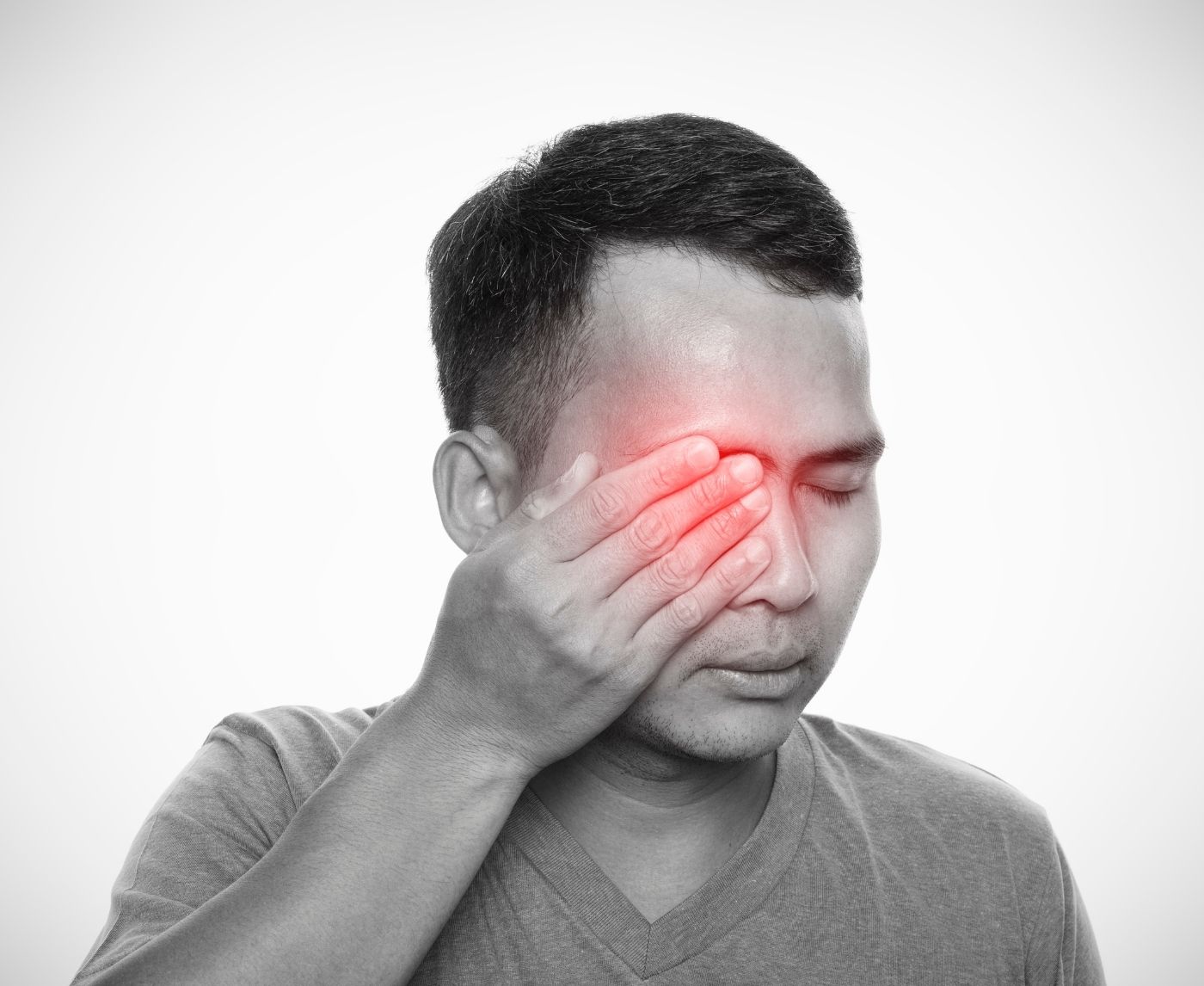

Quick Answer: Herpes in the eye can affect vision and, in severe untreated cases, lead to vision loss, but permanent blindness is rare with prompt antiviral treatment and medical care.
First, Let’s Get Clear on What “Herpes in the Eye” Actually Means
When people search “herpes in the eye,” they’re usually talking about HSV-1, the same virus that causes cold sores. This infection is medically known as herpes keratitis, and it affects the cornea, the clear front surface of your eye.
The Centers for Disease Control and Prevention explains that herpes simplex virus can reactivate after lying dormant in the body. It doesn’t always stay in the mouth area. Sometimes it travels along nerve pathways and resurfaces in the eye. That’s how ocular herpes happens.
And no, this doesn’t mean you did something reckless. You don’t need to have rubbed a cold sore and then poked your eye five seconds later. Sometimes the virus reactivates internally. That part surprises people.
How Ocular Herpes Affects Vision (And When It Becomes Serious)
Most first episodes of herpes keratitis affect only the surface layer of the cornea. This can cause redness, tearing, eye pain, light sensitivity, and blurry vision. It feels intense, but surface infections usually heal without permanent scarring when treated.
The real risk comes with deeper infections. If the virus penetrates into the stromal layer of the cornea, inflammation can cause scarring. Corneal scarring is what can interfere with vision long term.
Repeated flare-ups increase that risk. Ocular herpes is known for recurrence. Some people have one episode and never deal with it again. Others have periodic reactivations over years.
| Stage of Infection | What’s Happening in the Eye | Vision Impact | Blindness Risk |
|---|---|---|---|
| Surface (Epithelial) Keratitis | Virus infects outer corneal layer | Temporary blurriness, light sensitivity | Very low with treatment |
| Stromal Keratitis | Deeper inflammation and immune response | Possible corneal scarring | Low but higher if untreated |
| Chronic/Recurrent Disease | Repeated flare-ups over time | Increased scarring risk | Rare, typically preventable |
The key pattern here is untreated and repeated inflammation. That’s what shifts the conversation from “annoying and scary” to “potentially vision-threatening.”

People are also reading: Why That Faint Line on Your STD Test Might Not Be Nothing
So… Can You Actually Go Blind?
Here’s where we separate internet panic from medical reality.
According to ophthalmology research published in peer-reviewed journals, herpes simplex virus is one of the leading infectious causes of corneal blindness worldwide. That statistic sounds terrifying, until you understand context. Most severe outcomes occur in cases where infections are untreated, misdiagnosed, or recurrent without proper management.
In countries with access to antiviral medications and ophthalmology care, permanent blindness from ocular herpes is uncommon. Vision impairment can happen. Severe loss can happen. Total irreversible blindness in both eyes is rare.
Dr. Lena Ortiz, an ophthalmologist who treats recurrent corneal infections, puts it bluntly: “The virus itself isn’t what blinds people. It’s inflammation and delayed treatment that cause the damage.”
That distinction matters. If you recognize symptoms early and seek care, outcomes are dramatically better.
What Eye Herpes Symptoms Feel Like in Real Life
People often confuse ocular herpes with pink eye. Both can cause redness and tearing. But herpes keratitis often comes with sharper pain, sensitivity to light, and a gritty or foreign-body sensation.
One patient described it this way: “It felt like there was glass in my eye. I couldn’t keep it open in bright light.”
Common symptoms include:
Eye redness that doesn’t improve quickly. Blurry vision in one eye. Excess tearing. Light sensitivity. Eye pain. Sometimes a small blister on the eyelid.
What’s tricky is that some cases are mild at first. That’s why self-diagnosing “just pink eye” can delay antiviral treatment.
How Do People Get HSV-1 in the Eye?
This is where shame tends to creep in, and we’re not doing that here.
Yes, the virus can spread from touching a cold sore and then touching your eye. That’s called autoinoculation. It’s more common in children than adults.
But many adult cases happen because the virus reactivates from within. If you’ve ever had oral herpes, even once, the virus stays dormant in nerve cells. Stress, illness, or immune changes can trigger reactivation.
So if you’re thinking, “Did I do something gross?” the answer is almost certainly no.
Transmission through kissing or oral sex can spread HSV-1 to a partner’s mouth or genitals, but ocular herpes is usually about reactivation, not a dramatic contamination event.
When Vision Loss Becomes a Real Concern
Let’s talk about actual risk factors that increase the chance of long-term vision damage.
| Risk Factor | Why It Matters | Action to Reduce Risk |
|---|---|---|
| Delayed treatment | Allows deeper corneal inflammation | Seek care at first signs of pain or blurriness |
| Repeated flare-ups | Increases cumulative scarring | Discuss suppressive antivirals with doctor |
| Use of steroid drops without antivirals | Can worsen viral replication | Only use medications prescribed by eye specialist |
| Compromised immune system | Harder to control viral activity | Close monitoring and early treatment |
Notice what’s not on that list: “having herpes.” The virus itself isn’t a guaranteed path to blindness. Management and timing are the variables that matter.
And if reading this made your stomach drop, pause. Most cases resolve without permanent damage. The fear often outweighs the statistical risk.
What Treatment Actually Looks Like (And Why It Works)
If you’re picturing emergency surgery and permanent damage, take a breath. Most cases of ocular herpes are treated with antiviral medications, either prescription eye drops, oral antivirals, or both. These medications don’t “cure” the virus, but they stop it from replicating and limit inflammation.
When treatment starts early, surface infections often clear within one to two weeks. Blurry vision caused by swelling typically improves as inflammation goes down. The goal isn’t just symptom relief, it’s preventing deeper corneal involvement that could lead to scarring.
An ophthalmologist may also use special dye drops to look for what’s called a dendritic ulcer, a branching pattern on the cornea that’s classic for herpes keratitis. It sounds dramatic, but it’s simply a diagnostic sign that helps guide treatment.
One patient described the relief this way: “I thought I was losing my vision. Two days after starting antivirals, the pain dropped by half.”
Order Now $129.00 $343.00 Check Your STD Status in Minutes
Test at Home with Remedium
7-in-1 STD Test Kit
 For Men & Women
 Results in Minutes
 No Lab Needed
 Private & Discreet
For all 7 tests
What Happens at the Eye Doctor When You’re Worried About Blindness
If you walk into urgent care saying, “I think I have herpes in my eye,” the first step isn’t panic, it’s evaluation. A clinician checks your visual acuity, examines the cornea under magnification, and looks for signs of infection or inflammation.
They’re assessing depth. Surface infection? Manageable. Stromal involvement? Closer monitoring. Severe scarring? Rare, but it changes the conversation.
This is why self-diagnosing pink eye can be risky. Bacterial conjunctivitis and viral conjunctivitis behave differently from herpes keratitis. Using leftover steroid drops without antiviral coverage can actually worsen HSV replication.
And here’s something reassuring: most ophthalmologists are very familiar with this condition. It’s not exotic. It’s not unheard of. It’s treatable.
Recovery Timeline: When Does Vision Go Back to Normal?
For uncomplicated epithelial herpes keratitis, symptoms often improve within days of treatment. Most of the time, when the cornea swells, it makes vision better. If there is no scarring, long-term vision usually stays the same.
Stromal keratitis may take longer to calm down. Some patients require weeks of treatment and careful tapering of medications. In more severe or recurrent cases, suppressive antiviral therapy may be recommended to reduce flare-ups.
Permanent changes in vision are usually caused by repeated inflammation that causes scarring on the cornea. Even then, modern ophthalmology offers options like corneal transplantation in advanced cases, though this is uncommon.
| Type of Infection | Symptom Improvement | Full Healing Estimate | Long-Term Vision Impact |
|---|---|---|---|
| Surface (Epithelial) | 3–5 days after antivirals | 1–2 weeks | Usually none |
| Stromal | 1–2 weeks | Several weeks | Possible mild scarring |
| Recurrent Episodes | Varies | Ongoing management | Higher risk if unmanaged |
What you should take from this isn’t fear. It’s timing. Early treatment protects vision.
Why Recurrence Is the Bigger Story, Not Blindness
Here’s the part many people don’t realize: herpes keratitis can come back. The virus stays in the nervous system. Stress, illness, even sun exposure can trigger reactivation.
But recurrence doesn’t equal blindness. It means that management is important. Doctors may give people with repeated episodes long-term low-dose antiviral therapy to help keep flare-ups from happening.
Research shows that suppressive antiviral therapy can significantly reduce recurrence rates. That directly lowers the risk of cumulative corneal damage over time.
One patient who had three episodes in two years shared: “Once I started daily antivirals, it stopped being this constant fear. I got my life back.”
Is Ocular Herpes Contagious?
This question carries a lot of anxiety. If you have herpes in your eye, are you a danger to everyone around you?
The virus can spread through direct contact with infected secretions. During an active outbreak, avoiding touching the eye and practicing careful hand hygiene matters. But casual proximity, sitting next to someone, sharing air, does not transmit HSV.
Ocular herpes itself is usually a reactivation of your own virus. It is not typically something you “catch” from someone coughing near you.
If you have active oral herpes and eye symptoms, being cautious about touching your face and washing hands thoroughly reduces spread risk. That’s prevention, not shame.
What This Means for People Who Already Have Oral or Genital Herpes
If you’ve had cold sores before, your risk of ocular herpes is not zero, but it is still relatively low. Millions of people carry HSV-1. A small percentage ever develop eye involvement.
If you live with genital HSV-2, ocular infection is even less common. HSV-2 can affect the eye, but HSV-1 is the more typical cause of herpes keratitis.
The bigger takeaway is awareness. If you experience eye pain, light sensitivity, or blurry vision, especially in one eye, don’t dismiss it as allergies. Early evaluation makes outcomes dramatically better.
Testing, Diagnosis, and Peace of Mind
There isn’t a home swab you can use to confirm herpes in the eye yourself. Diagnosis requires an eye exam. But knowing your overall herpes status can still matter, especially if you’ve never been tested and you’re dealing with recurring oral or genital outbreaks.
If you’re unsure about your HSV status, you can explore discreet options at STD Rapid Test Kits. Understanding whether you carry HSV-1 or HSV-2 doesn’t diagnose eye disease, but it can answer bigger questions about your health.
For people who want broader screening, the at-home combo STD test kit offers private, convenient testing for multiple infections. Peace of mind matters, especially when anxiety starts filling in worst-case scenarios.
You deserve clarity, not late-night spirals.
People are also reading: How Soon Is Too Soon? Why Your Chlamydia Test Might’ve Missed It
When Blindness Does Happen, And Why It’s Rare
Let’s not avoid the hard truth. Yes, herpes simplex virus is one of the leading infectious causes of corneal blindness worldwide. That statement is medically accurate. It is also often misunderstood.
Most severe vision loss occurs in settings where access to antiviral medication and ophthalmologic care is limited. In places with early treatment and follow-up care, permanent blindness from herpes keratitis is uncommon.
Blindness risk increases when deep stromal inflammation leads to dense corneal scarring, when infections recur repeatedly without suppression, or when treatment is significantly delayed. Even then, vision loss is often partial, not total darkness.
Dr. Amir Hassan, a corneal specialist, explains it this way: “We see vision-threatening complications when inflammation is ignored or mismanaged for weeks. But when patients come in early, outcomes are overwhelmingly good.”
The difference between “can happen” and “likely to happen” matters. The internet tends to flatten that distinction. Medicine does not.
What Severe Cases Look Like (So You Know When to Act Fast)
There are symptoms that deserve immediate evaluation. Sudden worsening blurry vision. Severe light sensitivity that makes it impossible to open your eye. Persistent eye pain that feels deep rather than surface-level. A visible white or cloudy area on the cornea.
These are not symptoms to monitor casually for a week while hoping they fade. These are “call a doctor today” signs.
That doesn’t mean you’re going blind. It means you need professional assessment. Early antiviral therapy dramatically reduces the chance of permanent corneal damage.
| Symptom | What It Could Signal | Action |
|---|---|---|
| Rapid vision decline | Deep corneal inflammation | Same-day ophthalmology visit |
| Severe light sensitivity | Corneal ulcer involvement | Immediate medical evaluation |
| Persistent sharp pain | Active epithelial ulcer | Urgent antiviral treatment |
| Cloudy or white corneal spot | Scarring or ulceration | Emergency eye care |
Notice again what’s missing: panic. The action step is evaluation, not spiraling.
Can a Corneal Transplant Restore Vision?
If scarring makes it very hard to see, a corneal transplant may be an option. This procedure takes tissue from a donor and replaces damaged corneal tissue. It sounds dramatic, and it is a major surgery, but it’s also a well-established treatment.
Transplants are not the standard outcome for ocular herpes. They are reserved for advanced scarring that significantly limits sight. Even then, doctors carefully manage antiviral therapy to reduce recurrence risk after surgery.
The takeaway here isn’t that herpes in the eye leads to transplant. It’s that modern medicine has options, even in severe cases. Blindness is not an inevitable endpoint.
The Emotional Spiral Is Often Worse Than the Medical Reality
There’s something about eyes that hits differently. Vision feels sacred. The idea of losing it taps into primal fear.
Many people who search “can HSV cause blindness” are not currently blind. They are anxious. They felt a twinge, saw redness, remembered a cold sore, and the brain filled in the worst-case scenario.
One reader once shared: “I convinced myself I was going to wake up blind. I barely slept.”
Anxiety is powerful. But data matters more. With prompt treatment, most cases of herpes keratitis resolve without permanent vision loss. That’s the reality physicians see every day.
Check Your STD Status in Minutes
Test at Home with Remedium6-in-1 STD Rapid Test Kit
 For Men & WomenResults in MinutesNo Lab NeededPrivate & Discreet
Order Now $119.00 $294.00
For all 6 tests
If You’re Experiencing Symptoms Right Now
If your eye is red, painful, light-sensitive, and blurry, especially in one eye, the smartest move is evaluation, not guessing. Even if it turns out to be something simple like viral conjunctivitis, ruling out herpes keratitis protects your sight.
If you also experience recurring cold sores or suspect undiagnosed HSV-1, understanding your status can be empowering. You can explore confidential testing options through STD Rapid Test Kits to get clarity about your herpes status overall.
And if you want broader screening for peace of mind, the Combo STD Home Test Kit provides discreet testing for multiple infections from home. Knowledge reduces fear. Clarity reduces catastrophizing.
Your results are private. Your health decisions are yours. And getting answers is proactive, not dramatic.
What Most People Get Wrong About Eye Herpes
There’s a myth that once herpes reaches the eye, blindness is almost guaranteed. That is not supported by modern clinical outcomes in treated patients.
Another misconception is that ocular herpes spreads easily through casual contact. It does not. Direct contact with infected secretions during active outbreaks is the main transmission route.
And perhaps the biggest misunderstanding: that having herpes means you’re reckless or unclean. HSV-1 is incredibly common worldwide. The majority of adults carry it. Most never experience eye involvement.
Herpes is a virus. Not a moral judgment.
FAQs
1. Be honest, can you actually go blind from herpes in the eye?
It’s possible, but it’s not common, especially if you get treated early. Most people with herpes keratitis recover without permanent vision loss. Blindness tends to show up in stories where infections were ignored for weeks, mismanaged, or repeatedly inflamed over years. If you’re paying attention to symptoms and seeing a doctor, you are already drastically lowering your risk.
2. How would I know it’s herpes and not just pink eye?
Pink eye usually feels irritating. Herpes keratitis often feels sharp, painful, and light-sensitive, like you can’t comfortably open your eye in daylight. Blurry vision in one eye is a bigger red flag than simple redness. When in doubt, get it checked. Guessing is what gets people into trouble.
3. If I’ve had cold sores before, does that mean I’m doomed to get this?
Not at all. Millions of people carry HSV-1. Only a small percentage ever develop ocular involvement. Having cold sores doesn’t mean eye infection is inevitable. It just means awareness matters. If something feels off in your eye, you don’t brush it off.
4. Can I wake up blind overnight from this?
That’s the nightmare scenario people imagine, but no, herpes doesn’t silently steal vision overnight without warning. Severe cases usually involve escalating symptoms: worsening pain, increasing blur, visible corneal changes. There are signs. And those signs give you time to act.
5. What does eye herpes pain actually feel like?
People describe it as gritty, sharp, or like there’s sand or glass in the eye. It’s often deeper than simple irritation. Light sensitivity is common. Some say it feels disproportionate, like the discomfort is bigger than what you see in the mirror.
6. If I touch a cold sore and then my eye, is it guaranteed I’ll infect it?
No. Autoinoculation can happen, but it’s not automatic. Good hand hygiene during active outbreaks lowers the risk significantly. Most adult cases of ocular herpes are actually due to internal viral reactivation, not a single accidental touch.
7. Can herpes in the eye be cured?
The virus itself stays in your body, just like oral herpes. But eye infections can absolutely be treated and controlled. Antivirals stop replication. Suppressive therapy reduces recurrence. “Managed” is the right word, and managed well, the long-term outlook is usually good.
8. Is it contagious to people around me?
During an active outbreak, direct contact with infected secretions can spread the virus. Sitting next to someone? Not a risk. Sharing air? Not a risk. Touching your eye and then rubbing someone else’s eye? That’s the kind of contact that matters, and it’s avoidable with simple hygiene.
9. If it scars my cornea, is that permanent?
Mild scarring may not even affect vision. More severe scarring can affect clarity, but ophthalmology has options, such as specialized treatments and, in rare cases, corneal transplant. That’s not the typical path. It’s the advanced, unmanaged path.
10. I’m spiraling right now. What’s the smartest first move?
Stop doom-scrolling. Book an eye exam if you have pain, blur, or light sensitivity. If you’re also unsure about your herpes status overall, get tested so you’re operating from facts, not fear. Information is stabilizing. Panic isn’t protective, action is.
Before You Panic, Here’s What to Do Next
If you’ve made it this far, you probably came here scared. Maybe your eye hurts. Maybe your vision feels off. Maybe you read one alarming sentence online and your brain ran with it.
The truth is that herpes in the eye can affect vision, but permanent blindness is rare when it is treated right away. Delay is the biggest risk factor, not the virus itself. Early testing keeps your vision safe. Early antivirals lower swelling. Taking action early changes the results.
Testing can help you figure out if you have herpes or if you keep getting outbreaks. At STD Rapid Test Kits, you can look into private options, such as the Combo STD Home Test Kit, which tests for more than one STD at a time. You shouldn't have to guess about your health. It’s something you can take control of, privately, confidently, and without shame.
How We Sourced This Article: This article combines information from important public health groups, ophthalmology books, and peer-reviewed studies on herpes simplex keratitis. We made sure that this guide is both medically sound and emotionally supportive by looking at clinical data on recurrence rates, the risk of corneal scarring, and treatment outcomes, as well as what patients said about their experiences. We chose each of the sources below because they were reliable, easy to understand, and useful for current clinical practice.
Sources
1. Centers for Disease Control and Prevention – Genital Herpes Fact Sheet
2. American Academy of Ophthalmology – Herpes Keratitis Overview
3. World Health Organization – Herpes Simplex Virus
4. EyeWiki – Herpes Simplex Epithelial Keratitis
5. MedlinePlus – Corneal ulcers and infections
6. NCBI Bookshelf (StatPearls) – Herpes Simplex Keratitis
7. Johns Hopkins Medicine – Keratitis (Corneal Inflammation)
8. Cochrane Library – Interventions for herpes simplex virus epithelial keratitis
About the Author
Dr. F. David, MD is a board-certified infectious disease specialist focused on STI prevention, diagnosis, and treatment. He combines clinical precision with a stigma-free, sex-positive approach to patient education.
Reviewed by: Sarah Klein, OD | Last medically reviewed: February 2026
This article is for informational purposes and does not replace medical advice.


