







Quick Answer: If your partner refuses STD testing, you are not wrong to question the relationship. Staying is a personal choice, but your health boundaries and emotional safety must come first.
This Isn’t Just About a Test
When someone refuses STD testing, it can feel like rejection. But what’s actually happening is bigger than a urine sample or a swab. Testing in relationships is about shared responsibility. It’s about saying, “Your health matters to me.”
Imagine this scene. You’ve been dating for three months. Things are good. You’ve stopped using condoms because you both said you were exclusive. One night you bring up testing before fully ditching protection. They roll their eyes. “I told you, I don’t have symptoms.”
That sentence sounds reassuring. It isn’t.
Many common STDs, including Chlamydia and Gonorrhea, frequently cause no symptoms at all, especially in early stages. Someone can feel completely fine and still transmit infection. The absence of symptoms does not equal the absence of risk. That’s not paranoia. That’s biology.
So when your partner refuses testing, the question becomes layered. Is it fear? Shame? Misinformation? Or a deeper unwillingness to prioritize mutual safety?
What Are Your Actual Risks If Only One of You Tests?
Let’s step out of the emotional swirl for a moment and look at what happens medically when only one partner tests. This is where a lot of people get confused. “I got tested. I’m negative. So we’re fine.”
Not necessarily.
If your partner refuses STD testing and you continue sexual contact, your negative result only reflects your body at that moment in time. It does not guarantee that your partner is infection-free. If they are unknowingly carrying something, exposure can still occur after your test.
| Scenario | Your Test Result | Partner Tested? | Ongoing Risk? |
|---|---|---|---|
| You test before sex, partner refuses | Negative | No | Yes, future exposure possible |
| You test after unprotected sex, partner refuses | Negative (early) | No | Yes, window period may mask infection |
| You test negative and use condoms consistently | Negative | No | Reduced but not eliminated (skin-to-skin infections still possible) |
| Both partners test after window period | Negative | Yes | Lowest risk scenario |
Notice something in that table. The only scenario that significantly reduces uncertainty is mutual testing after appropriate window periods. Everything else involves layers of trust and probability.
This doesn’t mean panic. It means clarity.
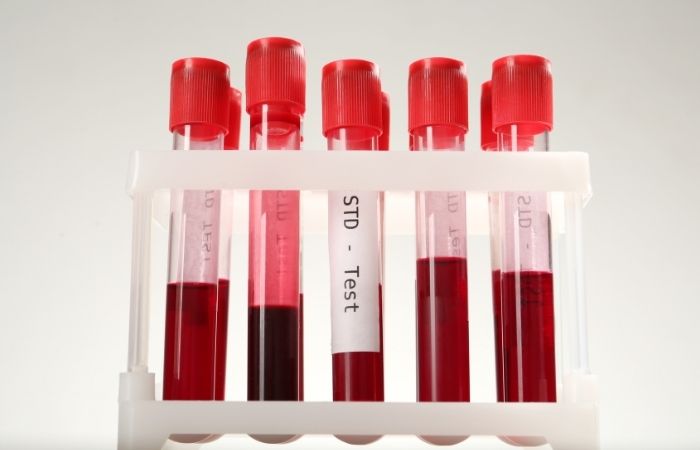
People are also reading: Does Your STD Test Really Include Everything? Check for Hep B
Why Someone Might Refuse STD Testing
Before you decide whether to stay, it helps to understand what might be driving the refusal. Not to excuse it. But to contextualize it.
Picture another scene. You suggest testing. Your partner stiffens. Their voice changes slightly. “I’ve never needed that before.” There’s tension there. Not necessarily guilt. Sometimes just shame.
For many people, STD testing is tangled up with stigma. They hear “test” and translate it to “accusation.” They equate being tested with being dirty. That language still lingers socially, even though it’s medically outdated and harmful.
Other times, the refusal is about avoidance. Some people would rather not know. Ignorance can feel safer than confirmation. Especially if they’re scared of what a positive result might mean.
And occasionally, yes, refusal can signal concealment. A past infection they never disclosed. A recent encounter they don’t want to explain. That possibility hurts to consider, but pretending it never happens doesn’t protect you either.
The key question becomes this: is their refusal rooted in fear you can work through together, or in disregard for your wellbeing?
Can Condoms Protect You If They Won’t Test?
If you decide to stay, your next instinct may be harm reduction. “Fine. We’ll just use condoms.” That’s a reasonable step. But it’s not the whole picture.
Condoms significantly reduce the risk of infections transmitted through fluids, including HIV and Gonorrhea. They are highly effective when used consistently and correctly. But infections that spread through skin-to-skin contact, like herpes and HPV, can still spread from places that aren't covered by a condom.
| Protection Strategy | Reduces Fluid-Based STD Risk | Reduces Skin-to-Skin STD Risk | Requires Mutual Cooperation? |
|---|---|---|---|
| Consistent condom use | High reduction | Partial reduction | Yes |
| Mutual testing + exclusivity | Very high reduction | Very high reduction | Yes |
| One-sided testing only | No reduction after exposure | No reduction after exposure | No |
If your partner refuses STD testing but agrees to barrier protection consistently, that is one form of compromise. But if they resist both testing and condoms, that’s not a compromise. That’s risk transfer, and you’re the one absorbing it.
That distinction matters.
Is This a Red Flag, Or a Fear Response?
Let’s go back to that moment. You’re sitting across from them. You explain that testing would make you feel safer. They get quiet. Or irritated. Or suddenly affectionate in a way that feels like deflection. Your brain starts scanning for meaning.
When a partner refuses STD testing, it can mean different things depending on context. The behavior alone matters less than the pattern around it. Do they shut down all health conversations? Do they mock the idea of testing? Or do they admit they’re scared and embarrassed?
Fear can be worked through. Contempt usually cannot.
One reader once described it this way: “He said testing was pointless because he felt fine. When I tried to explain window periods and asymptomatic infections, he laughed and said I was being dramatic.” That laughter wasn’t about science. It was about dismissal.
There is a difference between someone who says, “I’m nervous about testing, can we talk about it?” and someone who says, “Drop it.” The first is discomfort. The second is control.
If your partner refuses STD testing and also minimizes your concerns, reframes them as distrust, or pressures you into unprotected sex anyway, you’re not dealing with a testing issue. You’re dealing with a respect issue.
Trust Is Not the Same as Proof
People often say, “If you trust me, you don’t need a test.” That sounds romantic. It isn’t medically sound.
Trust is emotional. Testing is biological. They operate in different lanes.
You can trust someone deeply and still acknowledge that infections don’t always announce themselves. You can love someone and still say, “I need documentation.” Those two truths are not opposites.
Picture this: you both decide to stop using condoms. It feels intimate. Like a milestone. But intimacy without clarity can quietly morph into anxiety. You find yourself Googling “STD symptoms but partner refuses test” after noticing something small and ambiguous. A mild irritation. A change in discharge. Maybe nothing at all, just your imagination running.
The stress doesn’t come from distrust alone. It comes from uncertainty.
| Behavior | Possible Meaning | What It Signals for the Relationship |
|---|---|---|
| “I’m scared to test but I want us safe.” | Anxiety or stigma | Workable with support and education |
| “You don’t trust me.” | Deflection | Conversation needs deeper trust repair |
| Refuses testing and condoms | Risk disregard | Serious boundary violation |
| Agrees to condoms but not testing | Partial compromise | Short-term harm reduction possible |
| Makes you feel irrational for asking | Gaslighting | Emotional safety concern |
Notice how the concern shifts from infection probability to emotional climate. Testing conversations reveal how someone handles accountability. That is often more predictive of relationship health than the lab result itself.
Check Your STD Status in Minutes
Test at Home with Remedium7-in-1 STD Test Kit
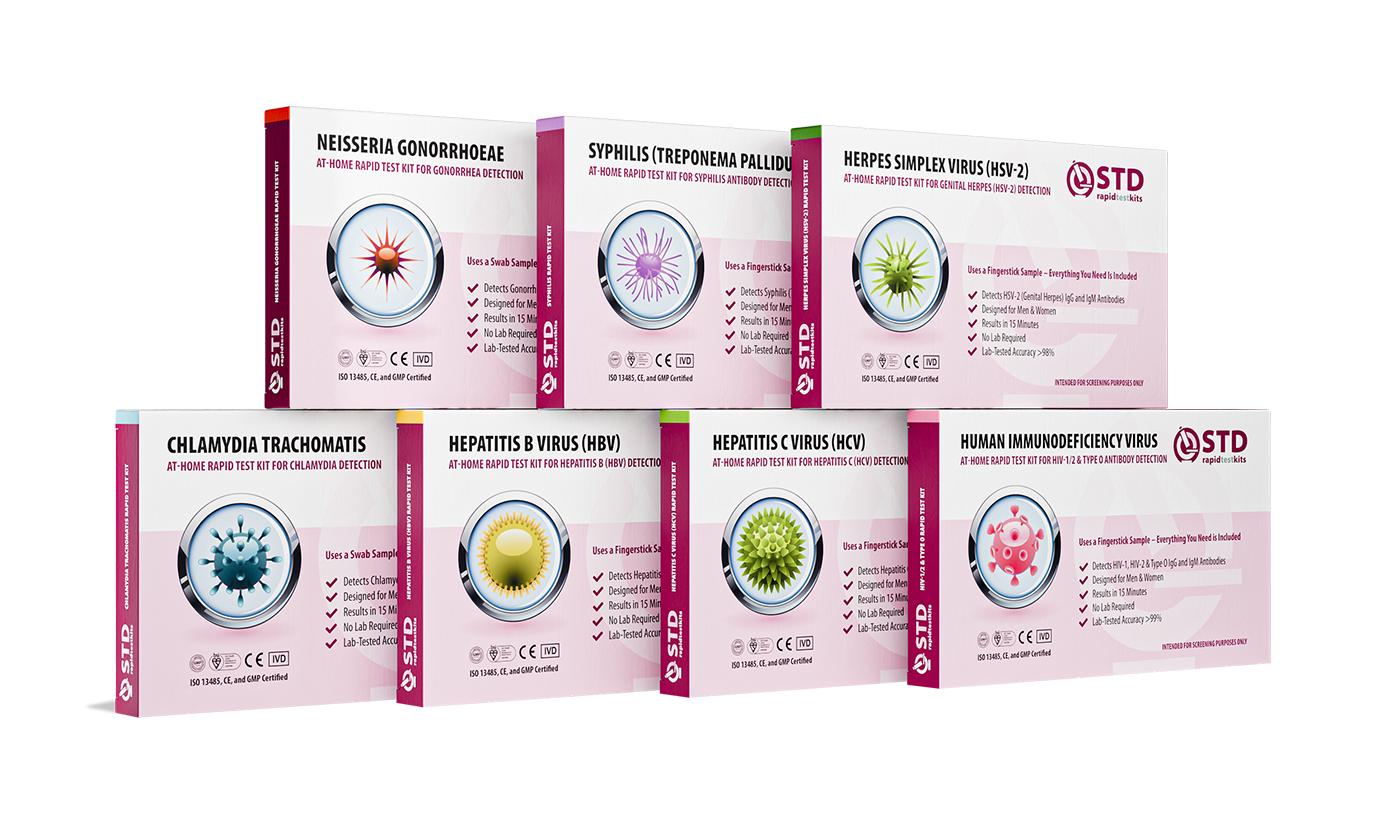
 For Men & Women
 Results in Minutes
 No Lab Needed
 Private & Discreet
Order Now $129.00 $343.00
For all 7 tests
If You Stay, Here’s What That Actually Means
Staying doesn’t automatically make you naive. Leaving doesn’t automatically make you strong. The decision is rarely that simple.
If you stay with someone who refuses STD testing, you are consciously accepting a degree of uncertainty. The question becomes whether that uncertainty is temporary and improving, or chronic and dismissive.
Imagine you decide to stay but insist on consistent condom use. Weeks pass. They comply. No eye rolling. No pressure. Just quiet acceptance. That’s one trajectory. It suggests your boundary, even if imperfectly met, is respected.
Now imagine the opposite. They “forget” condoms. They sigh dramatically when you mention protection. They accuse you of paranoia every time you bring up health. That pattern isn’t about testing anymore. It’s about erosion.
Long-term stress over exposure risk can take a psychological toll. It's tiring to always wonder if you can get an STD if your partner won't get tested. When you're anxious, it can be hard to get close to someone. Sex stops feeling safe. You start dissociating from your own body during moments that used to feel connected.
That’s not sustainable.
How to Reopen the Conversation Without Starting a War
If you want to try again before making a final decision, timing matters. Don’t bring it up mid-argument. Don’t bring it up during foreplay. Bring it up during neutral ground. A walk. A drive. A calm Sunday afternoon.
You might say something like, “This isn’t about accusing you. It’s about how I feel safest in my body.” Notice the shift there. You’re centering your needs, not attacking their character.
Another approach: “I can’t move forward sexually without mutual testing. It’s not negotiable for me.” That sentence is steady. Not dramatic. Not pleading. Just clear.
If they respond with curiosity, there’s room to grow. If they respond with anger or ridicule, that’s information too.
One woman once described trying this. “I told him I loved him, but I wouldn’t have unprotected sex without testing. He sulked for two days. Then he booked an appointment.” She said the appointment mattered less than the fact that he eventually chose cooperation over ego.
That shift told her something about their future.
The Quiet Cost of Ignoring Your Instincts
Sometimes the real question isn’t “Should I stay?” It’s “Why am I afraid to leave?”
If your partner refuses STD testing and you feel small bringing it up, that feeling deserves attention. Health boundaries are not unreasonable demands. They are basic adult expectations in sexually active relationships.
You are allowed to want transparency. You are allowed to want proof. You are allowed to protect yourself.
And if you decide to test on your own for peace of mind, that is not betrayal. That is self-care.
Discreet at-home options exist precisely because conversations like this can be complicated. If you need clarity without conflict, you can explore confidential testing through STD Rapid Test Kits. Knowing your own status won’t solve their refusal, but it does anchor you in facts instead of fear.
When Staying Starts to Cost You More Than Leaving
There’s a moment in some relationships where the question quietly shifts. It stops being “Can I make this work?” and becomes “Why am I the only one bending?”
If your partner refuses STD testing and months go by with no movement, no compromise, and no willingness to revisit the conversation, that stagnation matters. You may find yourself shrinking your needs to avoid tension. You may stop bringing it up altogether. You may convince yourself it’s “not that serious.”
But health isn’t trivial. Sexual health isn’t optional. And the emotional labor of carrying all the responsibility alone is heavy.
Imagine this: you’re lying next to them after sex. You used a condom, but it slipped for a second. You don’t say anything. You don’t want to ruin the mood. Later that night, you’re back on your phone searching “how long to wait after exposure test” and calculating window periods in your head. That spiral is not just about microbes. It’s about imbalance.
When someone refuses testing, they’re not just declining a medical procedure. They’re declining shared accountability.
The Window Period Anxiety Loop
One of the hardest parts of staying in this situation is the mental math. If exposure happens, you start tracking days. Day three. Day seven. Day fourteen. You wonder if you tested too early. You wonder if symptoms would even show.
Many infections have window periods where testing too soon may not detect infection. For example, Chlamydia and Gonorrhea are typically detectable within one to two weeks, while blood-based infections like HIV may require longer for certain tests to reach peak accuracy. This isn’t obscure medical trivia. It directly affects how long uncertainty lingers.
Here’s how timing plays out when only one partner tests.
| Time After Potential Exposure | What You Might Feel | Testing Reality | Emotional Impact |
|---|---|---|---|
| 0–5 Days | Panic, regret, urgency | Too early for many tests to detect infection | False reassurance risk if testing immediately |
| 7–14 Days | Hyper-awareness of symptoms | Many bacterial infections detectable | Moderate relief if negative |
| 3–6 Weeks | Lingering background anxiety | Blood-based tests more accurate | Stress may persist if partner still untested |
| Beyond 6 Weeks | Decision fatigue | High accuracy window for most screenings | Clarity possible, but only about your status |
Notice the last column. Emotional impact doesn’t disappear simply because you test. If your partner refuses STD testing, uncertainty resets every time intimacy occurs.
Some people can tolerate that. Others find it erodes trust slowly, like water against stone.

People are also reading: Babies at Risk for Hepatitis C? What Most Hospitals Still Don’t Do
What Leaving Actually Means
Walking away because someone won’t test doesn’t make you dramatic. It makes you someone who prioritizes bodily autonomy.
That doesn’t mean it’s easy. You might love them. You might share a lease. You might be entangled in ways that make leaving feel disruptive or painful. The grief of ending something over what looks, on the surface, like “just a test” can feel embarrassing to explain to friends.
But it’s rarely just a test.
It’s about whether your health concerns are respected. Whether your voice is taken seriously. Whether compromise flows both directions.
One man described breaking up over this. “It wasn’t that she wouldn’t test. It was that she mocked me for caring. I realized I’d be negotiating my safety forever.” He said the breakup hurt, but the constant anxiety stopped immediately.
Relief can be a signal too.
If You Stay, Protect Yourself Strategically
Some people choose to stay while holding firm boundaries. That path requires clarity and consistency. If your partner refuses STD testing but agrees to protection and transparency moving forward, structure matters.
Testing yourself at appropriate intervals becomes essential. Understanding window periods becomes practical, not theoretical. Reducing overlapping risk behaviors, like multiple concurrent partners without disclosure, becomes non-negotiable.
If you need discreet reassurance, at-home options can reduce friction. The Combo STD Home Test Kit allows you to screen for multiple common infections privately, without waiting rooms or confrontation. It doesn’t solve relational dynamics, but it gives you control over your own information.
Control matters when trust feels uneven.
The Decision Isn’t Binary, It’s Threshold-Based
Instead of asking, “Should I stay?” consider asking, “What would need to change for me to feel safe?” That reframes the conversation from ultimatum to criteria.
If the answer is mutual testing within a reasonable timeframe, communicate that clearly. If the answer is consistent condom use plus future openness to testing, state that. If the answer is simply respect in conversation, observe whether it appears.
Staying without criteria leads to resentment. Staying with clearly defined boundaries creates accountability.
And if those criteria are never met, your decision may become clearer on its own.
Check Your STD Status in Minutes
Test at Home with Remedium6-in-1 STD Test Kit
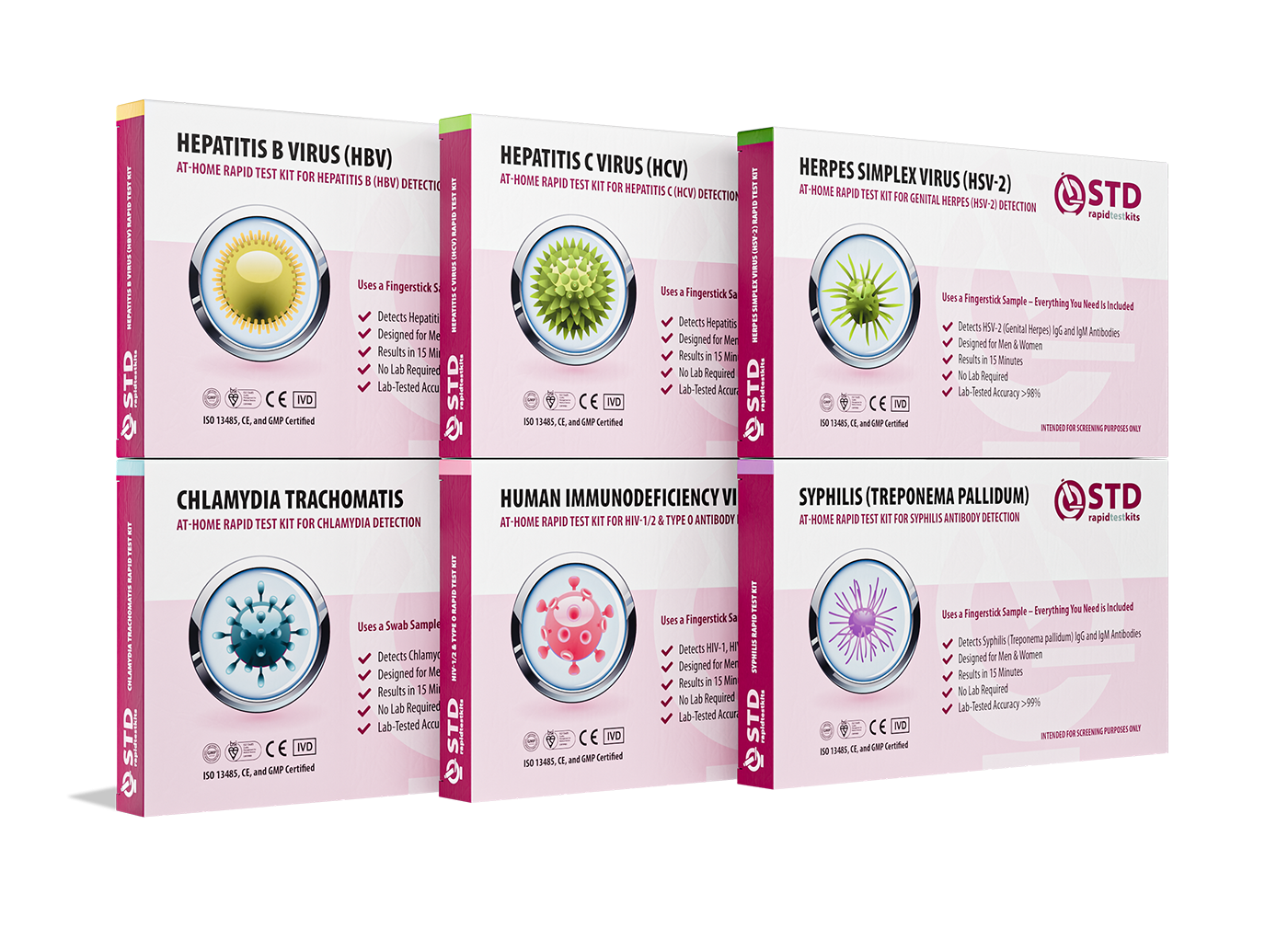 For Men & WomenResults in MinutesNo Lab NeededPrivate & Discreet
Order Now $119.00 $294.00
For all 6 tests
You’re Not Asking for Too Much, You’re Asking for Safety
If you’ve read this far, you’re not looking for drama. You’re looking for clarity. You’re trying to figure out whether love and health can coexist when one person refuses a basic step toward mutual protection.
When a partner refuses STD testing, the question “Should I stay?” isn’t really about morality. It’s about alignment. Do your values match? Does your definition of responsibility match? Does your understanding of risk match?
You are not unreasonable for wanting documentation. You are not paranoid for understanding that many infections are asymptomatic. And you are not disloyal for wanting proof before removing protection.
If you stay, stay with structure. If you leave, leave with self-respect. Either path can be strong when it’s chosen consciously.
What to Do Next, Practically
If you’ve recently had exposure and feel unsettled, start with your own clarity. Testing at the appropriate window period gives you factual ground to stand on. Even if your partner refuses STD testing, you do not have to operate in uncertainty alone.
Discreet options allow you to screen privately and quickly. Visiting STD Rapid Test Kits lets you explore confidential at-home testing without waiting rooms or awkward explanations. Knowledge shifts the power dynamic back into your hands.
If your partner eventually agrees to test, that’s progress. If they continue to refuse while expecting unprotected sex, that’s information. The clarity may hurt. But it’s still clarity.
Your body is not a negotiation tool. It is yours.
FAQs
1. Am I being dramatic for caring this much about STD testing?
No. You’re being informed. There’s a difference. Dramatic is flipping a table over a text message. Asking for mutual health transparency before unprotected sex is adult behavior. If anything, the more you understand about asymptomatic infections, the calmer and clearer your boundary becomes.
2. What if they say, “You don’t trust me”?
That line gets used a lot. But testing isn’t about trust, it’s about verification. You can trust someone’s intentions and still acknowledge biology. Viruses and bacteria do not care how loyal someone feels. If they frame your request as an accusation instead of a health precaution, that’s a communication issue worth paying attention to.
3. They say they’ve “never had symptoms.” Shouldn’t that count for something?
It counts for comfort. It does not count for certainty. Many infections, especially Chlamydia and Gonorrhea, can sit quietly without obvious symptoms. People can feel completely fine and still pass something along. “I feel normal” is reassuring emotionally. It’s not diagnostic.
4. What if I love them and this feels like such a small thing to lose the relationship over?
It feels small because it’s a single action. But what it represents can be big. Testing is about shared accountability. If you feel respected in every other way and this is fear-based resistance, that may be workable. If this refusal fits into a pattern of dismissing your needs, that’s not small at all.
5. Is using condoms enough if they won’t test?
Condoms are powerful. They significantly reduce the risk of fluid-based infections like HIV. But they don’t cover every inch of skin, which means infections like Herpes or HPV can still transmit through uncovered contact. So yes, condoms reduce risk, sometimes dramatically, but they don’t replace clarity.
6. What if I just test myself regularly and leave it at that?
You can absolutely prioritize your own testing schedule. That’s proactive and smart. But remember: your negative result only reflects your body at the time you tested. If exposure continues, your risk timeline resets. Regular testing helps you stay informed, but it doesn’t solve the imbalance if your partner refuses shared responsibility.
7. I’m scared to bring it up again. What if they get angry?
That fear matters. If asking for health safety triggers anger, that’s information. You can try reframing the conversation around your feelings, “I need this to feel safe” instead of “You need to do this.” But if anger or mockery shows up again, it’s worth asking yourself why basic care feels confrontational in this dynamic.
8. Could they be hiding something?
Possibly. But not always. Some people avoid testing because they’re afraid of stigma, afraid of needles, or afraid of what a result might mean. Others avoid it because they genuinely don’t want to confront uncomfortable truths. The key question isn’t just whether they’re hiding something. It’s whether their avoidance becomes your burden.
9. How do I know if staying is self-compromise?
Pay attention to your body. Do you feel calmer after conversations, even if imperfect? Or smaller? If you’re constantly calculating window periods in your head, feeling anxious after intimacy, or avoiding sex altogether to dodge stress, your nervous system is telling you something. Long-term anxiety is a cost.
10. If I decide to leave, am I overreacting?
Leaving because someone won’t respect your health boundary is not overreacting. It’s alignment. Relationships are built on shared responsibility. If that foundation isn’t there, walking away may feel painful, but it can also feel steady. Relief is often quieter than drama.
You Deserve Answers, Not Assumptions
When a partner refuses STD testing, what lingers isn’t the test itself. It’s the uncertainty. The quiet mental math after sex. The wondering. The second-guessing.
You deserve steadiness in your own body. You deserve to ask for proof without being made to feel paranoid. Testing isn’t an accusation. It’s clarity. It replaces “probably” with “confirmed.”
If they agree, that’s shared responsibility. If they don’t, you still have options. You can require protection. You can test on your own timeline. You can walk away. None of those choices make you dramatic. They make you informed.
If what you need right now is clarity without confrontation, discreet options through STD Rapid Test Kits can give you answers privately. The Combo STD Home Test Kit tests for several common infections in one step, on your schedule.
Whether you stay or leave, one truth holds: your health is not negotiable. And asking for certainty before vulnerability isn’t mistrust, it’s maturity.
How We Sourced This Article: This guide blends current public health guidance on asymptomatic transmission, window periods, and barrier effectiveness with lived-experience narratives and relationship psychology research.
Sources
1. Centers for Disease Control and Prevention: A Look at Sexually Transmitted Infections
2. Fact Sheet on Sexually Transmitted Infections from the World Health Organization
3. Mayo Clinic: Symptoms and Signs of Sexually Transmitted Diseases
4. Planned Parenthood: Information and Testing for Sexually Transmitted Diseases
6. Getting Tested for STIs – CDC
7. Condom Use: An Overview – CDC
8. Sexually Transmitted Infection (STI) Tests – MedlinePlus
About the Author
Dr. F. David, MD is a board-certified infectious disease specialist focused on STI prevention, diagnosis, and treatment. He combines clinical precision with a sex-positive, stigma-aware approach to help readers make informed decisions about their health.
Reviewed by: Angela Ruiz, RN, MPH | Last medically reviewed: February 2026
This article is only for information and should not be taken as medical advice.


