
Published: November 2025 | Last updated: May 2026 | Editorial review and quality control: Martina N.
Hepatitis C can pass from parent to baby during pregnancy or delivery, and in the United States there is no national protocol that automatically catches every exposed newborn. About 6 in 100 babies born to hepatitis C-positive parents will acquire the infection at birth, with the risk rising in co-infection cases or with high maternal viral load (CDC MMWR perinatal HCV recommendations, 2023). Yet many hospitals still discharge these babies without a documented testing plan.
If you are pregnant, recently delivered, or caring for a baby whose parent has hepatitis C, you deserve clarity about what should happen next. This guide walks through the current CDC guidance, the testing windows that actually work for infants, and the specific questions to bring to your pediatrician so the follow-up does not get lost in the shuffle.
Key Takeaways
- About 6 in 100 babies born to hepatitis C-positive parents acquire the infection at birth, and early testing can find it long before liver damage starts.
- The CDC recommends an HCV RNA test for exposed infants between 2 and 6 months of age, with antibody follow-up after 18 months.
Why Hepatitis C Testing Isn't Routine for Newborns
There is no national mandate requiring hospitals to test infants born to hepatitis C-positive parents. Pediatricians are expected to flag exposed babies for follow-up at 2 to 6 months and again at 18 months. In practice, that handoff depends on accurate documentation, provider awareness, and parental follow-through. When any one of those links breaks, the baby slips through the gap.
Historically, hepatitis C was framed as a disease of older adults and people who inject drugs. The rise of opioid-related infections in young adults, including people who are pregnant, has shifted the landscape since 2015. Many hospital systems have not yet adapted their newborn protocols to that change in epidemiology.
Federal surveillance and pediatric research consistently find that fewer than a third of exposed infants in the U.S. receive appropriate follow-up testing, with the gap widening in rural and underfunded settings (CDC MMWR perinatal HCV recommendations, 2023). That is a paperwork failure, but it is also a health-equity failure: the babies most likely to be missed are usually the ones with the fewest resources to push the system.
How Hepatitis C Can Pass From Parent to Baby
Vertical transmission, the passing of hepatitis C from pregnant person to child, happens in roughly 6% of births where the parent has chronic HCV. That figure climbs to around 10% when the parent is co-infected with HIV, and higher still when viral load is high at the time of delivery (CDC MMWR perinatal HCV recommendations, 2023).
Transmission generally happens in two windows:
- During pregnancy: rare but documented; the virus can cross the placenta in some cases.
- At delivery: the majority of perinatal cases happen during labor, especially with prolonged rupture of membranes or the use of internal fetal scalp monitoring.
Breastfeeding does not typically transmit hepatitis C. The CDC and WHO both support breastfeeding for hepatitis C-positive parents in most situations (WHO hepatitis C fact sheet). The one common caveat is cracked or bleeding nipples, where temporary pumping-and-discarding on the affected side is advised until the skin heals.
Even with these transmission pathways well established, routine infant follow-up testing still lags. Many hospitals simply do not include HCV testing in their newborn protocols unless someone specifically asks for it.
About 6 in 100 babies born to hepatitis C-positive parents acquire HCV at birth. Co-infection with HIV roughly doubles the rate to about 10 in 100. The single biggest predictor is maternal viral load at the time of delivery.
Who's Most at Risk, and Why It's Not Always Who You Think
One core problem is how risk has been defined. Universal hepatitis C screening in pregnancy only became official CDC guidance in 2020 (CDC MMWR universal HCV screening recommendations, 2020). Before that, screening was risk-based, a stigmatizing approach that often excluded people who were infected through outdated medical care, unregulated tattoos, or early-life exposures they never knew about.
Many pregnant individuals went without screening, and their babies went without testing as a result. Today more OB-GYNs are testing during prenatal visits, yet many still skip it when a parent appears low risk. Several states still do not require HCV testing during pregnancy at all.
The result is that babies born to undiagnosed parents enter the world with no flag on their chart. Untreated hepatitis C in children can lead to liver inflammation, scarring, and eventually serious liver disease, even though chronic infection in children often stays silent for years before producing any obvious symptoms.
Until 2020, hepatitis C testing during pregnancy was triggered only by self-reported risk factors, a system that missed people infected through old medical procedures, unregulated tattoos, or unknown early-life exposures. That year, the CDC moved to universal screening for every pregnant person, regardless of stated history.
Why Testing Timing Matters, and How It Often Gets Missed
One of the most confusing parts of newborn hepatitis C testing is timing. Babies born to hepatitis C-positive parents carry their parent's antibodies in the blood for up to 18 months. An early antibody test can look positive even when the baby is not actually infected.
To work around the maternal-antibody window, clinicians have two options:
- Use a viral RNA test at 2 to 6 months, which detects the virus itself rather than antibodies.
- Wait and run an antibody test after 18 months, to see whether the maternal antibodies have cleared.
Most exposed infants benefit from the earlier RNA test, but few pediatricians order viral-load testing in infancy as a routine. A common pattern is the family that does not return for the 18-month follow-up, often because of postpartum upheaval, insurance changes, or a move. The infection then goes undetected for years until a routine blood draw or unrelated illness flags it.
This silent gap explains why so many older children and young adults are first diagnosed with hepatitis C through incidental testing rather than the perinatal pathway that should have caught them.
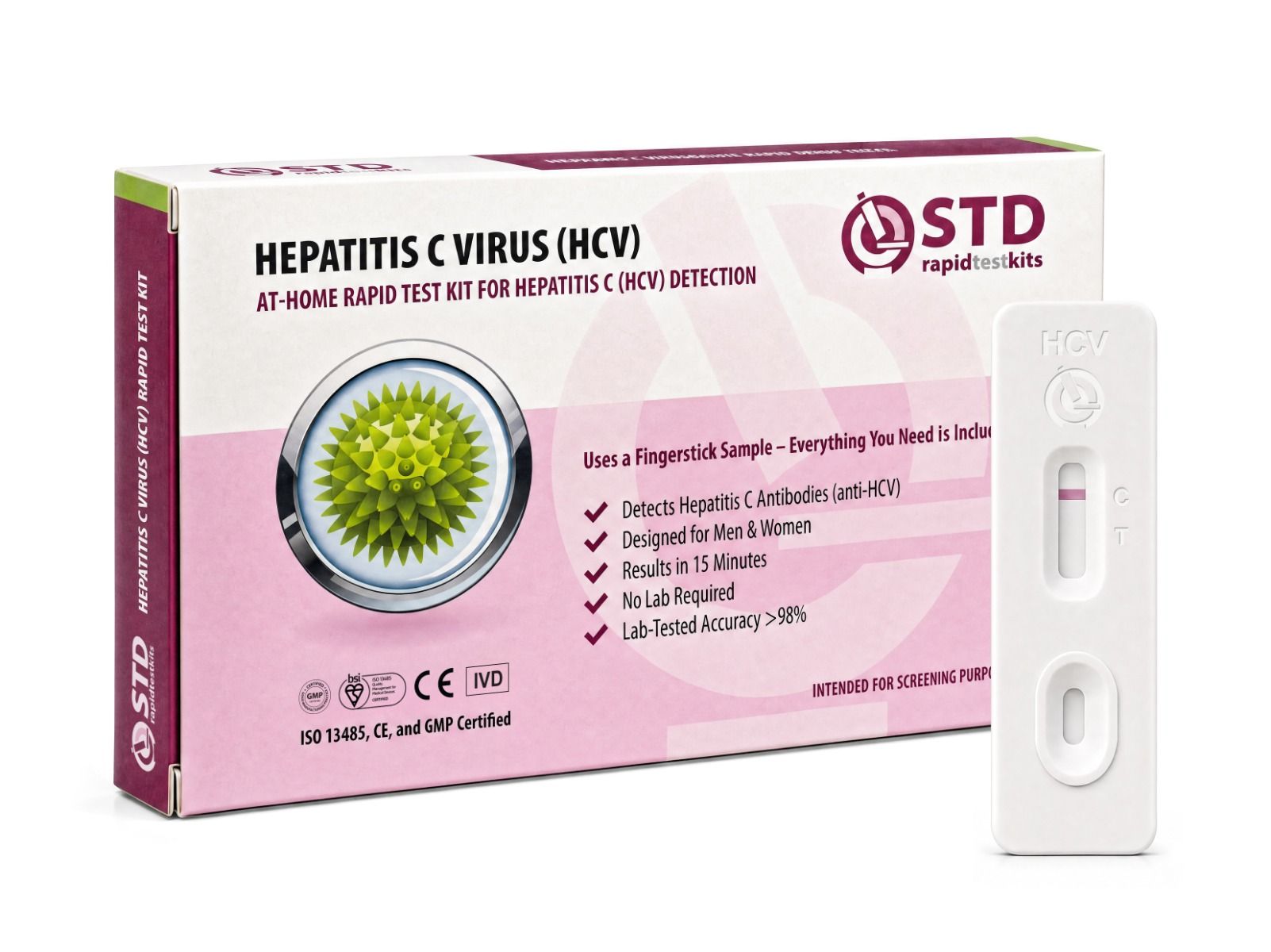
This article is published by stdrapidtestkits.com, which sells at-home rapid testing kits. Products are recommended only when they fit the reader's specific concern; the kit linked below is offered for adults who want to confirm their own HCV status before discussing infant follow-up with a clinician.
What Most Hospitals Still Don't Do (But Should)
Vertical transmission of hepatitis C happens, and chronic infection can follow. Yet most U.S. hospitals still lack standardized newborn protocols for HCV follow-up. The reasons are structural rather than intentional. Hospitals are overstretched, electronic records are not always synced between prenatal and pediatric units, and OB and pediatric teams often each assume the other has handled the follow-up plan.
Many hospitals fail to flag babies born to hepatitis C-positive parents automatically. Some still rely on verbal disclosure from the parent, which is unreliable in moments of exhaustion, fear, or perceived stigma. Other staff have not been updated on the 2023 CDC guidance, which now calls for early RNA testing for exposed infants rather than relying solely on the 18-month antibody window.
The discharged-as-healthy result is common: a newborn leaves the hospital without any testing plan, parents do not hear about follow-up until months later (if at all), and because hepatitis C rarely causes symptoms in infancy, families assume no news is good news. That assumption can delay critical care.

The Emotional Toll of Not Knowing
When parents learn after the fact that their baby should have been tested, the fallout can be heavy. Many describe a sense of betrayal, believing the hospital had handled everything. Others feel guilt, even when nothing they did caused the gap. Conversations with patient advocacy groups suggest the most common parental experience is being left to figure out the follow-up plan on their own, often years after the right window has closed.
The emotional weight is often compounded by stigma. Parents may hesitate to ask clarifying questions if they fear judgment about past drug use, medical history, or sexual exposure. Some avoid discussing hepatitis C with pediatricians out of fear of being reported or misunderstood. Trauma-informed care matters here, both for the parent navigating the system and for the baby who needs timely evaluation.
The purpose of this guide is clarity, not shame. Testing is a routine medical follow-up, no different in spirit from a hearing screen or metabolic panel. Asking for it is protection, never an accusation.
Patient advocacy networks consistently hear the same parent experience: discovering the need for infant follow-up months or years after the right window had closed, usually because no one at the hospital handed them a concrete next step.
The Science Behind Early Infant Testing
Early testing matters because hepatitis C is now highly treatable in children. Detection before liver damage starts opens the door to monitoring and, when needed, treatment. The current gold-standard test for exposed infants is the HCV RNA test, which looks for the virus directly rather than relying on maternal antibodies. It can be used as early as two months of age, and when repeated, gives a reliable picture of infection status (CDC 2023 infant-testing recommendations).
By contrast, waiting until 18 months for an antibody test creates a long stretch of uncertainty. Postpartum life is rarely steady, and families who fully intend to come back for follow-up often lose track of it. Children who might have cleared the virus naturally, which does happen in some infants during the first two to three years, are never fully evaluated either way.
For those who do test positive, ongoing monitoring is recommended. Direct-acting antivirals (DAAs) approved for pediatric use have made cure realistic for many children diagnosed early, with treatment durations as short as eight to twelve weeks for most regimens.

Why Universal Screening During Pregnancy Is a Game Changer
Risk-based screening did not work. Many people with hepatitis C do not know how or when they were exposed. Some do not feel safe disclosing past drug use or trauma. Others were infected through medical or cosmetic procedures years before pregnancy and have no reason to suspect it.
In 2020, the CDC moved to universal hepatitis C screening during every pregnancy. The shift acknowledges that anyone, regardless of history or perceived risk, can carry hepatitis C. When parents know their status before birth, infants can be flagged for proper follow-up and monitored appropriately. The same recommendation extends to all adults 18 and older at least once in their lifetime (CDC MMWR 2020).
Implementation has been uneven. Some states adopted universal screening immediately. Others lagged. Many clinics still run outdated protocols, and overburdened medical teams miss the new guidelines entirely. Until universal screening becomes universal practice, exposed babies will continue to slip through.
2020: CDC recommends universal hepatitis C screening for every pregnant person, regardless of perceived risk factors.
2023: CDC adds detailed guidance for testing perinatally exposed infants, including an HCV RNA test at 2 to 6 months of age.
How Documentation Failures Lead to Missed Cases
A surprising share of missed diagnoses happen because the parent's hepatitis C status never makes it onto the baby's chart. That documentation gap can occur for many reasons: electronic record mismatches, incomplete prenatal histories transferred at delivery, or the assumption that someone else has handled it. In busy labor-and-delivery units, communication errors are almost inevitable without a strong protocol in place.
If the baby's pediatrician does not see hepatitis C flagged in the electronic record, they are unlikely to order the necessary follow-up tests. And unless the parent knows the exact timing and test type needed, the opportunity can quietly slip away. This is especially common in hospitals where pediatric teams rotate frequently or where postpartum discharge is rushed.
These documentation breaks are systemic, not rare. Fixing them requires nationwide standardization. Until that happens, parents often carry the burden of ensuring their newborn gets the right follow-up tests at the right age.
All perinatally exposed infants should be tested for HCV infection with a nucleic acid test for detection of HCV RNA at age 2 to 6 months.
How Testing Works: What Parents Should Know
If you tested positive for hepatitis C during pregnancy, or if you suspect a past exposure that was never screened, it helps to know how infant testing actually works. There are two main pathways for evaluating a baby exposed to HCV at birth.
The first is an HCV RNA test between 2 and 6 months of age, which detects the virus itself and avoids the maternal-antibody confusion. The second is an antibody test after 18 months, which shows whether the baby's immune system has cleared the antibodies passed from the parent.
Figure 1 below summarises both test pathways, including when each is run, what each detects, and why timing is what keeps maternal antibodies from being misread as infant infection.
| Test Type | When It's Done | What It Detects | Why It Matters |
|---|---|---|---|
| HCV RNA Test | 2 to 6 months | Viral RNA (the virus itself) | Early detection of infection; not confused by maternal antibodies |
| HCV Antibody Test | After 18 months | Infant or maternal antibodies | Confirms whether maternal antibodies have cleared or chronic infection is present |
How to Bring This Up with Your Pediatrician
Most experts now recommend an HCV RNA test between 2 and 6 months of age. If that test is negative and the baby remains healthy, no further follow-up is usually needed. If it is positive, a second RNA test is used to confirm. By 18 months, an antibody test can show whether the baby's immune system has cleared the virus or whether chronic infection is present and warrants treatment planning.
You have every right to ask your baby's pediatrician: "Was my baby tested for hepatitis C?" or "Can we schedule an HCV RNA test?" Framing the request as a routine follow-up tends to normalize the conversation and sidestep any unnecessary discomfort. Bringing a printout of the CDC 2023 perinatal testing guidance can help if the pediatrician is unfamiliar with the current schedule.
Where Policy Meets Parenthood
Policy is shifting in the right direction, but until those changes become routine, gaps will continue. The CDC now recommends universal hepatitis C screening during every pregnancy and pediatric follow-up for every exposed infant. This flags at-risk newborns and prompts timely follow-up, although implementation lags in underfunded or rural healthcare settings.
What this means for parents is direct: even when policies shift, vigilance still helps. If your OB-GYN has not offered hepatitis C testing during pregnancy, ask. If your pediatrician has not mentioned follow-up after delivery, raise the question. And if you are navigating this without consistent provider support, screening is available through clinics, public-health departments, and at-home test kits.
The current system still asks parents to do too much legwork. Future pediatric hepatitis C care could look very different, with universal screening, integrated documentation between OB and pediatric records, and viral-load testing in infancy ending the era of lost follow-ups. Until that changes, knowing your own HCV status and your baby's testing schedule is the most direct step available.

You Know Your Baby Best: Trust That Instinct
Every missed case of vertical transmission is the same story of assumptions: that someone else documented the maternal status, that someone else would flag the chart, that someone else would remember to order the follow-up months later. Sometimes the assumption is that hepatitis C is not a serious issue in infancy.
Research tells a different story. When infants with hepatitis C go undiagnosed, liver damage can progress silently. Severe outcomes such as early childhood cirrhosis or liver transplant remain rare, but they are documented in pediatric hepatology literature, and even when a child stays asymptomatic the emotional toll of a late diagnosis is real for the family.
If this article made your stomach sink, take a breath. It is not too late to act. Whether you are weeks postpartum or still preparing to give birth, hepatitis C screening can still make a meaningful difference. Ask your provider whether you have been tested. Ask your pediatrician whether your baby has. If something feels off about the discharge instructions you received, follow that instinct and bring it up at the next visit.
Testing for hepatitis C is about giving babies the healthiest possible start in life, never about assigning blame to the parent. If your hospital missed the follow-up plan, you are far from alone. Many parents have stepped into the gap the system left behind, and the testing options available now are easier and more accessible than they were even five years ago.
Frequently Asked Questions
- Can a baby really get hepatitis C from their parent?
- Yes. Perinatal HCV transmission is documented in roughly 1 in 17 births to HCV-positive parents, with the risk rising if HIV co-infection is present or maternal viral load is high at delivery. Because most infected infants show no symptoms, testing at 2 to 6 months is the only reliable way to know whether the baby is in the small group that actually needs follow-up.
- Why don't hospitals automatically test newborns for hep C?
- There is no national mandate, and the responsibility for follow-up falls between the OB and pediatric teams. Many hospitals rely on paperwork handoffs between departments, and if no one flags the baby's chart, the testing often does not happen. Some staff also have not been updated on the 2023 CDC guidance that recommends early HCV RNA testing for exposed infants.
- When should a baby be tested?
- Two main windows. The first is an HCV RNA test between 2 and 6 months of age, which detects the virus itself and avoids the maternal-antibody confusion. The second is an antibody test after 18 months, which shows whether the baby's immune system has cleared the antibodies passed from the parent. Ask your pediatrician about the RNA test if your baby is under 6 months old.
- What happens if my baby tests positive?
- First, do not panic. Some babies clear the virus on their own in the first two to three years of life. If the virus persists, your pediatrician will refer you to a pediatric liver specialist. Direct-acting antiviral medications approved for pediatric use have cure rates of approximately 90% or higher in published studies, with short treatment courses (often eight to twelve weeks) and few side effects.
- Can a baby look healthy and still have hepatitis C?
- Yes. Most infected infants show no signs at all. No fever, no rash, no yellowing of the eyes. Testing is the only reliable way to know. Some parents only find out years later through routine blood work, by which point silent liver inflammation may already have begun.
- I wasn't tested for hep C during pregnancy. Should I get tested now?
- Yes. The CDC recommends universal hepatitis C screening for every pregnant person and for all adults at least once in their lifetime. If your provider skipped it, you can still get tested at a clinic, at a community health center, or with an at-home antibody test kit. A positive result is always confirmed with a follow-up lab HCV RNA test.
- Is it safe to breastfeed if I have hepatitis C?
- Yes, in almost all cases. Hepatitis C is not transmitted through breast milk. The CDC and WHO both support breastfeeding for HCV-positive parents. The one practical caution is cracked or bleeding nipples; on that side, pumping and discarding milk until the skin heals is the standard recommendation.
- My baby had an antibody test at birth and it was negative. Are we in the clear?
- Not necessarily. Antibody tests before 18 months can be misleading because babies carry their parent's antibodies for a long stretch. A negative antibody result that early does not rule out infection. If you are unsure what kind of test was done and when, ask for an HCV RNA test through your pediatrician to get a clear answer.
How we sourced this article: Our article was constructed based on current advice from the most prominent public health and medical organizations, and then molded into plain language based on the situations parents actually experience. Primary references include the U.S. Centers for Disease Control and Prevention, the World Health Organization, MotherToBaby, and the U.K. National Health Service. Every specific transmission rate, testing window, and policy date in this guide traces back to one of the linked sources below.
- U.S. Centers for Disease Control and Prevention. CDC Recommendations for Hepatitis C Screening Among Adults, including pregnant people: universal screening guidance issued in 2020.
- U.S. Centers for Disease Control and Prevention. CDC Recommendations for Hepatitis C Testing Among Perinatally Exposed Infants and Children, 2023, including the approximate 6% perinatal transmission rate, the elevated rate with HIV co-infection, and the HCV RNA test at 2 to 6 months.
- World Health Organization. Hepatitis C fact sheet covering global epidemiology, general transmission routes, and breastfeeding guidance.
- MotherToBaby. Hepatitis C fact sheet, a plain-language overview of HCV during pregnancy for the general public.
- U.S. Centers for Disease Control and Prevention. Hepatitis C overview, including symptoms, testing, and treatment pathways.
- U.K. National Health Service. Hepatitis C overview, including transmission, symptoms, and testing pathways for the public.
