

Published: November 2025 | Last updated: April 2026 | Editorial review and quality control: Martina N.
The answer is yes, with caveats that matter. Hepatitis C lives in blood, and a razor that has nicked someone with the virus can carry enough viral particles to start an infection in the next person who uses it. That does not mean every shared razor leads to transmission. It means the risk is real enough that public-health agencies put razors on the same don't-share list as needles and toothbrushes.
What follows is the practical version of that conversation. We will cover what hepatitis C is, how it actually moves between people, why razors and a handful of other everyday items deserve their own spot on the risk list, what timelines testing follows after a possible exposure, and what treatment looks like now that direct-acting antivirals have changed the prognosis. The goal is one clean explanation that lets you decide whether to test, when to test, and what to do with the result.
Can sharing a razor really give you hepatitis C?
Yes. Hepatitis C spreads through blood-to-blood contact, and razors can carry tiny blood particles even when they look clean. The risk per single shared shave is low, but the route is documented enough that the CDC lists razors and toothbrushes among personal items to never share if anyone in the household has the virus. If you have shared a razor with someone whose status is unknown, an HCV RNA test can detect infection as early as 1 to 2 weeks after exposure, and an HCV antibody test gives a definitive answer at 8 to 11 weeks, with a follow-up at 6 months for the highest-confidence negative.
Key Takeaways
- Hepatitis C is bloodborne, not airborne. Razors and similar tools become risky only when they have moved blood from one person to another, which is why hugging, kissing, and sharing food do not transmit the virus.
- Modern oral antivirals cure more than 95 percent of hepatitis C cases in 8 to 12 weeks. That is why early testing matters more than worrying in retrospect about how you might have been exposed.
How Hepatitis C Actually Moves Between People
Hepatitis C is caused by a virus (HCV) that lives in the liver and circulates in the blood of infected people. Spread happens when blood from someone who has the virus reaches the bloodstream of someone who does not. The CDC's transmission ranking is consistent year to year: shared injection drug equipment is the dominant route in the United States, followed by perinatal transmission from mother to baby during birth, accidental needlesticks in healthcare settings, and unscreened blood transfusions in regions where blood supplies are not screened. Sexual transmission is documented but uncommon outside of specific scenarios. Personal-item sharing, including razors and toothbrushes, sits in the less-common-but-real category.
The reason razors keep showing up in clinical guidance is mechanical, not statistical. Razor blades nick skin during routine use, and the same blade then runs over the next person's skin. If the previous user has hepatitis C and bled into the blade, even microscopically, the virus can ride the blade into the next person's bloodstream through a fresh nick. The amount of blood needed is tiny because HCV is a robust virus that survives outside the body better than most.
Between 2.4 and 4 million Americans were estimated to be living with hepatitis C from 2017 to 2020, per CDC data, with a large share undiagnosed. Hepatitis C is also meaningfully tougher on environmental surfaces than HIV, which is why healthcare guidance on cleaning shared instruments treats it more strictly.
Where new hepatitis C infections come from
- In the United States, shared injection drug equipment is the dominant transmission route, by a wide margin.
- Perinatal transmission from mother to baby during birth is the second-most-common route domestically.
- Globally, unsafe healthcare injections and unscreened blood products remain a major driver per WHO data.
- Personal-item sharing (razors, toothbrushes, glucose lancets) is less common than the routes above but documented enough to land on the CDC's don't-share list.
The Razor Question: What Raises the Risk and What Doesn't
Not every shared razor carries hepatitis C, and not every shared razor that touches HCV-positive blood transmits the virus. Several factors decide whether a single shave becomes a transmission event:
- Whether the previous user has hepatitis C. With between 2.4 and 4 million Americans estimated to be living with hepatitis C, a large share of whom do not know it, the base rate matters. Most razors are uncontaminated simply because most people do not carry the virus.
- Whether the previous user bled while shaving. A clean shave with no nicks leaves little blood on the blade. A nick or two leaves more.
- How much time passed between shaves. HCV survives on dry surfaces for days to weeks under laboratory conditions, but viral viability declines with time, temperature, and humidity. A shared razor used minutes apart carries more risk than one passed back to a roommate three weeks later.
- Whether the next user breaks skin. A nick in the second user's skin is the entry route. Without a break in the skin, even a contaminated blade has nowhere to deposit virus.
Stack those factors together and you can see why "yes, it is possible" and "no, it is not common" are both true at once. The CDC's stance is the practical one: do not share razors, full stop, because the cost of separation is zero and the consequences of a single transmission event are not.
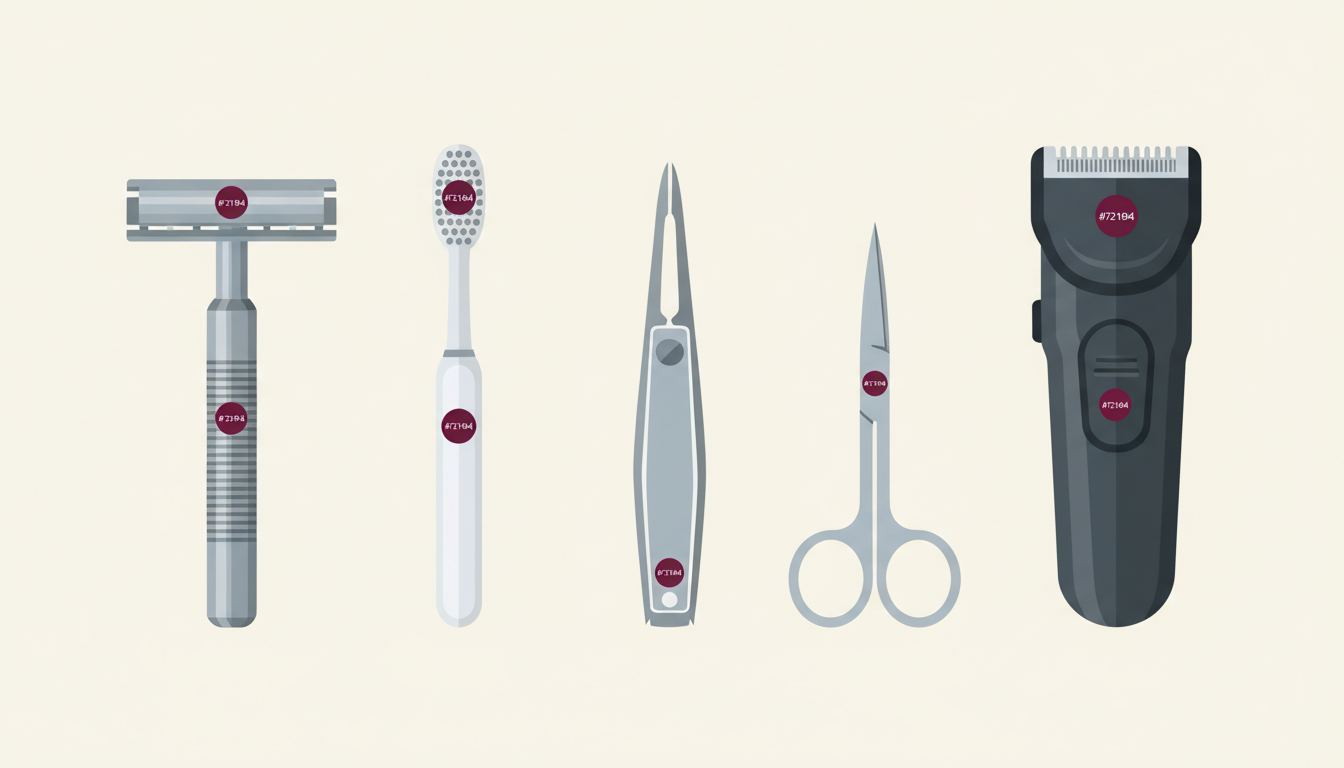
The same logic extends to electric trimmers, especially heads with metal teeth that scrape skin, and to straight razors used for traditional barbering. Disposable safety razors are usually the lowest-risk shared item because the blade gets replaced often. Multi-blade cartridge razors and straight razors are higher-risk because the same metal sees many shaves before it is changed.
The amount of blood needed to transmit hepatitis C is microscopic. A razor that looks clean to the eye can still carry viable virus in the seams of the blade. Cleaning with soap and water is not the same as disinfection. If you have shared an item with someone whose hepatitis C status you do not know, treat that as a real exposure and plan to test, even if neither of you saw any blood.
How Long Hepatitis C Survives on a Razor and Other Surfaces
The most-cited number in this conversation comes from a 2014 study in the Journal of Infectious Diseases that found HCV remained infectious on inanimate surfaces for up to six weeks at low room temperatures. Earlier laboratory work suggested up to three weeks under more typical conditions. The shared takeaway is that hepatitis C is not a virus that dies the moment blood dries.
That does not mean every old blood smear is infectious. Viral viability decays over time, and decay accelerates with heat, drying, and exposure to disinfectants. A razor wiped clean and stored in a hot, dry bathroom is less risky than one with visible dried blood sitting in a cool drawer.
| Item or environment | Documented survival range | Why it matters |
|---|---|---|
| Razor blade (metal, dry) | Several days to weeks | Microgrooves trap blood; reused without disinfection |
| Toothbrush bristles | Roughly 1 to 5 days | Bleeding gums leave blood on bristles |
| Nail clippers and cuticle scissors | Several days | Cuticle nicks bleed; tools reused without sterilization |
| Tattoo and piercing equipment | Up to 21 days | Hollow components hold blood; reuse without an autoclave is the issue |
| Snorting equipment (straws, rolled bills) | Hours to days | Nasal lining tears; blood transfers between users |
Beyond Razors: Other Everyday Items and Settings That Matter
Razors get the headlines because they are universal, but they are not the only household item that can carry hepatitis C between people. The CDC's prevention guidance lists personal items not to share if anyone in the household has the virus:
- Toothbrushes (gum bleeding is common and underrated)
- Nail clippers, cuticle scissors, tweezers
- Glucose monitors, lancets, finger-stick devices
- Razors, electric trimmers, beard-shaping tools
- Any drug-snorting equipment
Outside the home, the higher-risk settings are barbershops that use straight razors without single-use blade replacement, tattoo and piercing studios that do not autoclave their reusable equipment, and nail salons that reuse cuticle tools without sterilization. Healthcare settings are tightly regulated in most countries, but unsterile injections in low-resource regions remain a major global driver of new infections per WHO data.
Group-living environments where personal grooming supplies can get mixed up (dorms, military barracks, prisons, halfway houses) carry slightly elevated household-style risk.
Why Symptoms Won't Tell You: Hepatitis C is Usually Silent
The most important fact about hepatitis C symptoms is that most people do not have any for years. The CDC estimates that a substantial share of people with hepatitis C in the United States are unaware of their infection, and the WHO reported that as of 2022, only about 36 percent of people living with hepatitis C globally knew their diagnosis. The virus can sit in the liver doing slow damage long before any outward signs appear.
When acute hepatitis C symptoms do appear (typically 2 to 12 weeks after exposure), they are usually mild and easy to mistake for something else: fatigue, mild fever, low appetite, nausea, joint pain, or upper-right abdominal discomfort. Jaundice, the yellowing of the skin or eyes, and dark urine show up in a minority of cases. Most acute infections become chronic hepatitis C without the person ever feeling clearly sick.
That silence is exactly why testing is the right move after any plausible exposure, even when you feel fine. Symptoms are a late and unreliable signal. Bloodwork is an early and reliable one.
Acute hepatitis C symptoms (when they show up at all)
- Fatigue, low appetite, mild nausea, or joint pain, usually 2 to 12 weeks after exposure
- Upper-right abdominal discomfort or low-grade fever
- Jaundice (yellowing of the skin or eyes) or dark urine in a minority of cases
- Most people feel nothing and only learn of the infection through routine screening or unrelated bloodwork
When to Test After a Possible Razor Exposure
Hepatitis C testing comes in two main types and they detect infection at different points in time. Knowing which test to ask for, and when, prevents the false reassurance of a too-early negative result.
The HCV RNA test (also called HCV PCR or viral load) looks for the virus's genetic material directly. It can detect HCV in the blood as early as 1 to 2 weeks after exposure. This is the fastest path to a definitive answer, but it is more expensive than antibody testing and is usually used as a confirmation step or in high-suspicion cases.
The HCV antibody test looks for the antibodies your immune system produces in response to the virus. Antibodies typically become detectable around 8 to 11 weeks after exposure, with most infections detectable by 6 months. A reactive antibody test indicates that you have been infected at some point. An HCV RNA test then confirms whether the infection is still active.
| Test type | What it detects | Earliest detection | Best follow-up window |
|---|---|---|---|
| HCV RNA (PCR) | Virus genetic material | 1 to 2 weeks | Confirm at 4 to 6 weeks if early result is unclear |
| HCV antibody (lab) | Immune-system antibodies | 8 to 11 weeks (most by 6 months) | Retest at 6 months if first result is negative and exposure date is uncertain |
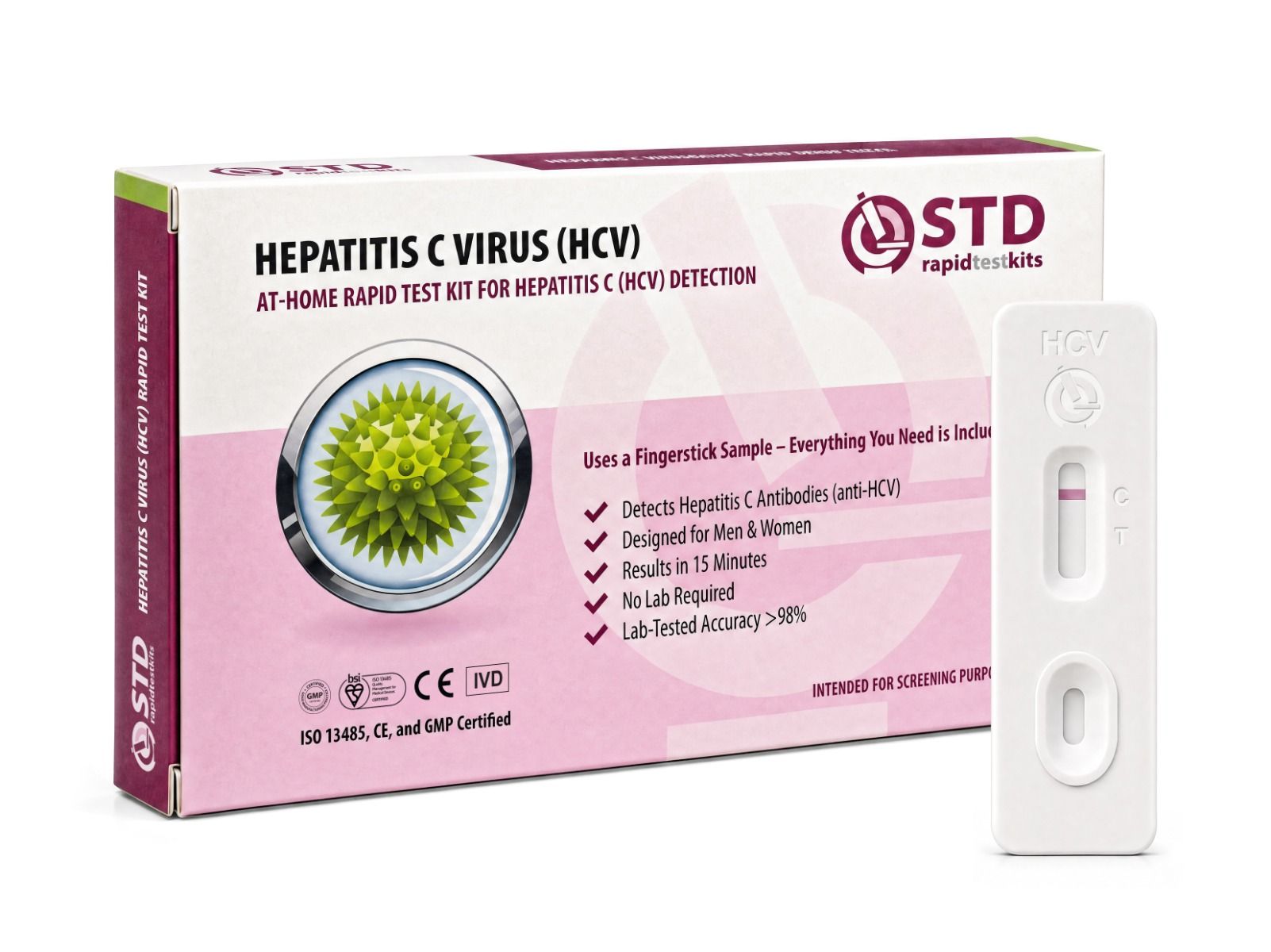
| At-home rapid HCV antibody | Immune-system antibodies | 8 to 12 weeks | Retest at 6 months for high-confidence negative |
Universal Screening Is Now the Standard
Even without a known exposure, the CDC recommends one-time hepatitis C screening for all adults aged 18 and older, and screening during every pregnancy. People with ongoing risk factors (shared injection drug use, partner with hepatitis C, certain occupational exposures, regular dialysis, certain medical conditions) should be screened periodically rather than once.
The screening shift is recent and meaningful. Older guidance focused on the 1945 to 1965 birth cohort, where pre-1992 unscreened blood transfusions and other historical exposures created an infection bulge. Universal screening replaced that targeted approach because too many infections were being missed in people who did not see themselves as at risk. If you have not been screened since age 18, the answer to "should I test?" is yes, regardless of any razor incident.
When the CDC says to screen for hepatitis C
- All adults aged 18 and older: at least once in a lifetime
- All pregnant people: every pregnancy
- Anyone with ongoing risk factors (shared injection equipment, partner with HCV, regular dialysis, certain occupational exposures): periodically rather than once
Hepatitis C and Sex: Less Risky Than People Think, Not Zero
Hepatitis C is not classified as a sexually transmitted infection in most public-health frameworks, but sexual transmission does happen in specific scenarios. The CDC notes that sexual transmission of HCV is inefficient between heterosexual monogamous partners, with risk estimated at well under 1 percent per year. The risk increases with multiple partners, presence of other STIs, sex during menstruation, rough sex that causes mucosal trauma, and anal contact.
Among men who have sex with men, particularly those living with HIV, sexual transmission of hepatitis C is documented at meaningfully higher rates and is treated as a real screening priority. For most monogamous partners in lower-risk sexual configurations, the household razor and toothbrush are statistically a bigger concern than the bedroom.
If you or your partner has hepatitis C, condoms reduce risk during higher-risk activity, and routine partner testing is the practical step. The conversation with a partner is easier when it is framed as mutual care rather than blame: hepatitis C is a virus, not a moral failing.
| Sexual scenario | Documented hepatitis C risk |
|---|---|
| Monogamous heterosexual couple, no concurrent STIs, no blood involved | Well under 1 percent per year per CDC; lowest-risk band |
| Multiple partners or other concurrent STIs | Elevated; risk rises with mucosal trauma and STI co-infection |
| Anal sex or sex during menstruation | Higher than vaginal sex due to mucosal trauma or blood exposure |
| Men who have sex with men, especially with HIV co-infection | Documented at meaningfully higher rates; treated as a screening priority |
What Hepatitis C Looks Like Inside a Household
When one person in a household has hepatitis C, the practical guidance is consistent and modest: do not share anything that can carry blood. Each adult and adolescent owns their own razor, toothbrush, nail clippers, cuticle scissors, and any glucose-monitoring or lancet equipment. Keep first-aid supplies separate or wear gloves when helping with someone else's wound. Wipe up blood spills with diluted bleach (1 part bleach to 9 parts water) rather than just water.
According to NHS guidance, hepatitis C does not spread through hugging, kissing, or sharing food or drinks. The CDC's About Hepatitis C page adds that casual contact such as sneezing, coughing, sharing eating utensils, or holding hands does not transmit the virus either. Children of HCV-positive parents are not at risk from normal household contact. Breastfeeding is generally safe unless nipples are cracked and bleeding.
The household-transmission rate, even before any precautions, is low. With these precautions, it is very low. The reason to take them seriously is not paranoia. It is that the cost of separate razors is nothing and the cost of a missed transmission is years of slow liver damage you might not catch in time.
Don't share, even briefly
- Razors and electric trimmers (the original culprit)
- Toothbrushes and floss picks (gum bleeding is common)
- Nail clippers, cuticle scissors, and tweezers
- Glucose monitors, lancets, and finger-stick devices
- Anything used for drug snorting (straws, rolled bills, shared spoons)
Treatment Has Changed: Hepatitis C is Curable in Most Cases
One reason early testing matters so much is that hepatitis C treatment has been transformed in the last decade. Direct-acting antivirals (DAAs), the standard since the mid-2010s, cure more than 95 percent of hepatitis C cases per the CDC's clinical overview. Treatment usually lasts 8 to 12 weeks, is taken as oral pills (no injections), and has minimal side effects compared with the older interferon-based regimens.
Cure in this context means a sustained virologic response, defined as no detectable HCV in the blood 12 weeks after finishing treatment. Once cured, the virus is gone. Long-term liver outcomes depend on how much damage occurred before treatment. Catching the infection early, before significant fibrosis or cirrhosis develops, gives the liver the best chance to recover fully.
Many people with hepatitis C do not look or feel sick and do not know they are infected.
Reinfection After Treatment: Still Possible
Curing hepatitis C does not produce lasting immunity. The antibodies your body developed during the first infection do not reliably protect you from a second one, and reinfection through repeat exposure is documented. The same routes that caused the original infection (shared injection equipment, unsterile tattoo or piercing tools, shared razors in close-quarters households) can cause it again.
Post-treatment guidance is the same as pre-test guidance: avoid shared blood-contact items, use single-use needles for any injection, vet tattoo and piercing settings for autoclave use, and keep a personal grooming kit. A clean bill of health after treatment is real, but it is not a license to drop the practices that protect against future infection.
There is also no vaccine for hepatitis C, unlike hepatitis A and hepatitis B.
- Own your own razor, toothbrush, nail clippers, cuticle scissors, and tweezers. Keep them separate from housemates' equivalents.
- At a barbershop, ask whether straight-razor blades are single-use and replaced for every customer.
- At a tattoo or piercing studio, ask whether reusable equipment is autoclaved and how single-use components are disposed of.
- At a nail salon, bring your own cuticle tools or confirm they autoclave between clients.
- If anyone in your household has hepatitis C, wipe blood spills with 1 part bleach to 9 parts water.
- If you are over 18 and have not been screened for hepatitis C, schedule one screening, regardless of risk factors.
What to Do With This Information
If you are reading this because of a specific worry (you used someone's razor, you got a tattoo at a place that felt off, you found out a partner is HCV-positive), the action sequence is short. Note when the possible exposure happened. Pick the test that matches the timing: an HCV RNA test after 1 to 2 weeks for an early answer, or an HCV antibody test after 8 to 11 weeks for a definitive lab-confirmed answer, with a follow-up at 6 months if the first test is negative and the exposure date is uncertain. Order the test from a clinic or use a discreet at-home kit if that lowers the barrier to actually doing it.
If you are reading this because hepatitis C runs in your family or household, the action is structural rather than urgent. Each person gets their own razor, toothbrush, and grooming tools. First-aid supplies are personal. Anyone who has not had a hepatitis C screen since age 18 is overdue for one, regardless of perceived risk. Universal screening is the new standard for a reason.
The right way to think about hepatitis C is not as a disease that hunts you. It is a virus that travels through specific routes you can identify and close. Once you know what those routes look like, the day-to-day risk drops to near zero, and the testing-and-treatment path is short and effective if exposure does happen.
Action sequence after a possible exposure
- Note the date the possible exposure happened
- If under 2 weeks: order an HCV RNA test (detectable from roughly 7 to 14 days)
- If 8 to 11 weeks or longer: order an HCV antibody test, with a 6-month retest if the exposure date is uncertain
- If you are an adult who has never been screened, schedule one screening regardless of any specific incident
Frequently asked questions
- Can you really get hepatitis C from a single shared shave with a razor?
- Yes, the route is real, though the per-incident probability is low. The risk depends on whether the previous user has hepatitis C, whether they bled into the blade, how recently the razor was used, and whether your skin breaks during the shave. The CDC's guidance is to treat shared razors as a meaningful exposure even when the chance of transmission on any single shave is small.
- How long does hepatitis C live on a razor blade or other dry surface?
- Up to several weeks under controlled lab conditions. A 2014 study found HCV infectious on dry surfaces for up to six weeks at cool temperatures; warmer, drier conditions accelerate decay. Practical rule: treat any razor used by an HCV-positive person as potentially contaminated until it has been disinfected with a bleach solution, regardless of how dry it looks.
- Should I test if I shared a razor once and there were no visible nicks?
- Yes, if the other person's hepatitis C status is unknown or known to be positive. Visible blood is not the threshold for transmission, since the virus can transfer in microscopic amounts. Order an HCV antibody test for 8 to 11 weeks after the exposure, with a 6-month retest if you want a high-confidence negative.
- Is hepatitis C a sexually transmitted infection?
- Hepatitis C is not classified as an STI in most public-health frameworks, but it can be transmitted sexually in higher-risk scenarios: multiple partners, other concurrent STIs, sex during menstruation, rough sex that causes bleeding, or anal contact. Among men who have sex with men living with HIV, sexual transmission of HCV is documented at meaningfully higher rates.
- Does kissing or sharing food spread hepatitis C?
- No. Hepatitis C does not spread through saliva, sneezing, coughing, sharing food or drinks, hugging, or holding hands. The virus needs blood-to-blood contact, which casual contact does not provide. The exception is anything that puts blood in play, such as a shared toothbrush when one person has bleeding gums.
- How accurate are at-home hepatitis C tests?
- FDA-cleared at-home hepatitis C antibody tests use the same lateral-flow chemistry as clinic rapid tests and report similar accuracy when used after the antibody window has closed (typically 8 to 12 weeks after exposure). A reactive at-home result should be confirmed with a lab HCV RNA test to determine whether the infection is current. A non-reactive result inside the window period can still be a false negative; retest at 6 months for a high-confidence answer.
- Can hepatitis C be cured?
- Yes. Direct-acting antivirals (DAAs) cure more than 95 percent of hepatitis C cases in 8 to 12 weeks. Treatment is oral pills with minimal side effects, a major change from the older interferon-based regimens. Cure means no detectable virus in the blood 12 weeks after finishing treatment. Catching infection early, before significant liver damage develops, gives the liver the best chance to recover fully.
- Should every adult get tested for hepatitis C even without a known exposure?
- Yes, once. The CDC recommends one-time hepatitis C screening for all adults aged 18 and older, and screening during every pregnancy. People with ongoing risk factors (shared injection drug use, partner with hepatitis C, certain occupational exposures, regular dialysis) should be screened periodically rather than once. Universal screening replaced older birth-cohort screening because too many infections were being missed in people who did not see themselves as at risk.
If you want to screen for hepatitis C alongside several other common infections in a single kit, the option below includes hepatitis C and five other STIs.
Product: STD-6KIT-ATH-2025
- U.S. Centers for Disease Control and Prevention. About Hepatitis C: transmission routes, casual-contact safety, asymptomatic nature, and basic epidemiology in the United States including the 2.4 to 4 million prevalence range from 2017 to 2020.
- U.S. Centers for Disease Control and Prevention. Hepatitis C Prevention: personal items not to share including razors and toothbrushes, household precautions, and tattoo and piercing safety guidance.
- U.S. Centers for Disease Control and Prevention. Hepatitis C Clinical Overview: direct-acting antiviral cure rates above 95 percent, treatment duration of 8 to 12 weeks, sustained virologic response, and clinical outcomes.
- U.S. Centers for Disease Control and Prevention. Hepatitis C Testing: universal one-time screening recommendation for all adults aged 18 and older, antibody and RNA test timing, and retest guidance.
- World Health Organization. Hepatitis C Fact Sheet: global prevalence, transmission routes including unsafe healthcare injections, undiagnosed-case estimates (around 36 percent diagnosed as of 2022), and treatment availability.
- United Kingdom National Health Service. Hepatitis C: patient-facing guidance on transmission, the explicit casual-contact safety statement (hugging, kissing, sharing food or drinks), and treatment access.
