







Quick Answer: Yes, you can get an STD in your eye after oral sex or contact with infected fluids. Gonorrhea, chlamydia, herpes, and syphilis can infect the eye, causing redness, discharge, pain, or light sensitivity. Prompt testing and treatment are important to prevent complications.
How Does an STD End Up in Your Eye?
Most people think of STDs as strictly genital infections, but that’s not how bacteria and viruses work. If infected semen, vaginal fluid, or saliva makes contact with the eye, even indirectly through hands, transmission is possible. The eye is a mucous membrane. That means it absorbs pathogens in a similar way the mouth, urethra, or cervix does.
Picture this: someone finishes performing oral sex. There’s fluid on their hand. They rub their eye without thinking. Or semen splashes during ejaculation. Or there’s close face-to-face contact during intimacy. None of this makes someone reckless or irresponsible. It makes them human.
Infections that can spread to the eye include Gonorrhea, Chlamydia, Herpes (HSV-1 or HSV-2), and less commonly Syphilis. Each behaves differently. Each has different timing and risk levels. And not every red eye after sex is sexually transmitted, which is why context matters.
Which STDs Can Infect the Eye, and What Do They Feel Like?
Symptoms can range from mild irritation to intense swelling and discharge. Some infections look almost identical to routine bacterial conjunctivitis. Others are more painful and aggressive. Understanding the differences can help you decide whether you need urgent care or simply testing.
| Infection | Common Eye Symptoms | Typical Onset After Exposure | Urgency Level |
|---|---|---|---|
| Gonorrhea | Thick yellow or green discharge, severe redness, swelling, pain | 2–7 days | High, can progress quickly |
| Chlamydia | Redness, irritation, watery or mucous discharge, mild swelling | 5–14 days | Moderate |
| Herpes (HSV) | Pain, light sensitivity, tearing, possible eyelid blisters | 2–12 days | High, needs antiviral care |
| Syphilis | Blurred vision, redness, eye pain, visual changes | Weeks to months | High, medical evaluation required |
Symptoms can overlap with common conjunctivitis. Timing, exposure history, and severity help narrow the cause.
Gonorrhea in the eye is the one that makes doctors move fast. It can produce heavy discharge and intense swelling within days. In rare cases, untreated infection can damage the cornea. That’s why severe pain or thick pus-like discharge after sexual exposure is not something to wait out.
Chlamydia conjunctivitis in adults tends to be milder but persistent. It may linger for weeks if untreated. It doesn’t usually explode overnight, but it doesn’t quietly disappear either.
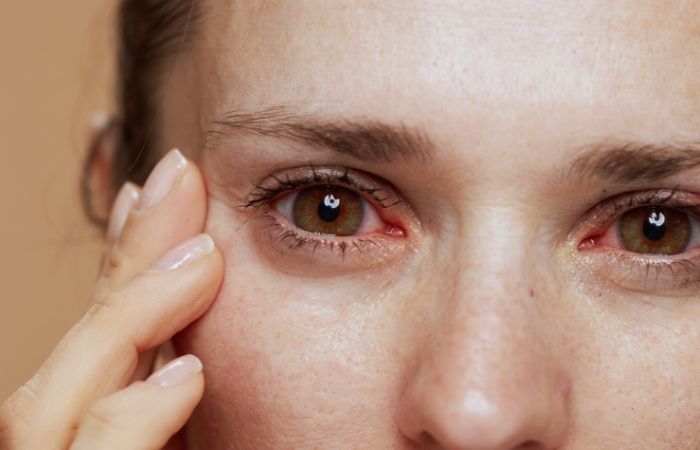
Herpes in the eye, often called ocular herpes, can be particularly uncomfortable. People describe sharp pain, light sensitivity, and a feeling like something is stuck under the eyelid. Sometimes small blisters appear near the eye. This isn’t about hygiene. It’s about viral behavior.
People are also reading: No Symptoms, No Warning: The STDs That Hurt Your Sperm Count
STD Eye Infection vs Regular Pink Eye: Why It’s So Easy to Confuse Them
Here’s the tricky part. Most cases of pink eye are not sexually transmitted. They’re viral, allergic, or caused by routine bacteria. That’s why people second-guess themselves. “Am I overreacting?” “Is this just allergies?” “Did I get soap in my eye?”
Avery, 26, ignored her symptoms for a week. “I thought it was mascara irritation,” she said. “It just wouldn’t go away. Then I realized I’d had unprotected oral sex right before it started.” Testing later confirmed chlamydia in both her throat and eye. It wasn’t dramatic. It was persistent.
| Feature | STD-Related Eye Infection | Common Viral/Allergic Pink Eye |
|---|---|---|
| Exposure history | Recent oral sex or contact with sexual fluids | No sexual exposure link |
| Discharge | Thick, yellow/green (especially gonorrhea) | Watery or clear |
| Duration | Persistent without treatment | Often improves within days |
| Other STD symptoms | May include throat or genital symptoms | Usually isolated to eye |
This table isn’t meant to scare you. It’s meant to ground you. Context matters. If your eye irritation started two days after oral sex and includes thick discharge, that’s different from waking up with watery eyes during allergy season.
Can Semen or Saliva Really Cause Pink Eye? Let’s Slow That Down
This is usually the moment where panic spikes. Someone types, “can semen cause pink eye?” and ends up spiraling through worst-case forums. The truth is more measured than the internet makes it sound. Semen itself does not automatically cause infection. It’s not inherently dangerous to the eye. The risk is based on whether it has an active sexually transmitted infection.
If a partner has untreated Gonorrhea or Chlamydia, those bacteria can live in semen and genital secretions. If those fluids contact the eye directly or indirectly through hands, transmission becomes possible. That does not mean it’s guaranteed. It means it’s biologically plausible.
Saliva can also play a role, particularly with Herpes (HSV-1). HSV-1 commonly lives in the mouth, even in people who have never had noticeable cold sores. If oral sex involved close facial contact and then eye contact followed, the virus can spread to the cornea. It’s rare. But rare doesn’t mean imaginary.
What matters most is this: a single exposure does not equal infection. Transmission requires enough infectious material and the right conditions. Washing your hands. Avoiding eye rubbing. Seeking care when symptoms appear. These are practical protections, not moral judgments.
Check Your STD Status in Minutes
Test at Home with Remedium6-in-1 STD Rapid Test Kit

 For Men & Women
 Results in Minutes
 No Lab Needed
 Private & Discreet
Order Now $119.00 $294.00
For all 6 tests
Can You Go Blind From an STD in the Eye?
This is the question people whisper to themselves but rarely say out loud. They imagine worst-case scenarios. They picture permanent damage. They google late at night with one eye half open.
Severe complications from sexually transmitted eye infections are uncommon, especially when treated quickly. However, untreated Gonorrhea in the eye can damage the cornea, and ocular Herpes can cause scarring if antiviral therapy is delayed. These are not scare tactics. They are reminders that early evaluation matters.
Jamal, 31, described waking up with intense swelling two days after a sexual encounter. “It felt like my eye was glued shut,” he said. “I kept hoping it would just clear up.” It didn’t. Urgent care testing confirmed gonococcal conjunctivitis. Antibiotic treatment worked quickly. His vision returned to normal. What changed the outcome was speed, not luck.
If your eye is severely painful, extremely swollen, producing heavy pus-like discharge, or if you notice vision changes, that’s not the moment to debate. That’s the moment to seek immediate medical care. Most cases resolve fully with proper treatment. Delays are what create risk.
How Long After Exposure Do Eye STD Symptoms Start?
Timing is often the clearest clue. When people search “how long after exposure do eye STD symptoms start,” they’re trying to line up cause and effect. Was it that encounter? Or something else entirely?
For bacterial infections like Gonorrhea, symptoms can appear quickly, sometimes within two to five days. Chlamydia tends to take a little longer, often about a week or more. Viral infections like ocular Herpes may show up within several days, sometimes with pain before visible redness.
The timeline doesn’t have to be exact to be meaningful. If eye irritation starts within two weeks of oral sex exposure, it deserves attention. If it begins months later without other risk factors, an STD becomes less likely and other causes should be explored.
What complicates things is that many people have no genital symptoms at all. Someone can carry chlamydia in their throat without knowing it. They can feel perfectly fine. That’s why context and testing matter more than guessing.
Testing After Oral Sex: What Actually Helps?
Here’s where things become practical instead of hypothetical. If you suspect an STD-related eye infection, testing should focus on likely exposures. That may include throat testing, genital testing, and sometimes direct swabbing of the eye if symptoms are present.
Most clinicians use nucleic acid amplification tests, commonly called NAATs or PCR tests, for bacterial infections like chlamydia and gonorrhea. These tests detect genetic material and are highly sensitive. According to guidance from the Centers for Disease Control and Prevention, NAATs are the preferred method for diagnosing these infections because of their accuracy.
If you are not experiencing severe eye symptoms but are anxious about exposure after oral sex, broader STD screening can offer clarity. Many people choose discreet at-home options for privacy and speed.
You can explore confidential testing options through STD Rapid Test Kits, which provide rapid and mail-in solutions designed for home use. For people concerned about multiple infections after oral sex, a comprehensive option like the Combo STD Home Test Kit can screen for several common infections at once.
Testing does not mean you’re guilty of something. It means you want information. That distinction matters.
| Infection | Earliest Reasonable Test Time | Optimal Testing Window | Common Test Method |
|---|---|---|---|
| Gonorrhea | 3–5 days | 7–14 days | NAAT (urine or swab) |
| Chlamydia | 5–7 days | 14 days | NAAT (urine or swab) |
| Herpes (HSV) | When symptoms appear | 2–12 days after exposure | Swab of lesion or blood test |
| Syphilis | 3 weeks | 6 weeks+ | Blood antibody test |
Testing too early can produce false reassurance. If initial testing is negative but symptoms persist, retesting may be recommended.
For many people, the hardest part isn’t the test itself. It’s the waiting. It’s the mental loop. Taking action interrupts that spiral. Even if results come back negative, you regain control.

People are also reading: The Casual Sex That Changed Everything: Real STD Stories
If the Test Is Positive: What Actually Happens Next
This is the part most people dread. The moment when a result flips from uncertainty to confirmation. Your heart pounds. Your brain jumps ten steps ahead. You imagine worst-case outcomes before you’ve even taken a full breath.
Pause there.
Most sexually transmitted infections that affect the eye are treatable. Bacterial infections like Gonorrhea and Chlamydia respond well to antibiotics. Symptoms often begin improving within days of treatment. Viral infections like Herpes require antiviral medication, but early therapy dramatically reduces complications and discomfort.
When diagnosed promptly, long-term damage is uncommon. That’s the part that gets lost in panic-driven searches.
If your result is positive, a clinician may recommend systemic treatment even if symptoms are limited to the eye. That’s because the infection usually exists elsewhere in the body as well. An eye infection is often a signal, not the only site involved.
Imagine this scenario: someone tests positive for gonorrhea after eye irritation. They assume it’s localized. A throat swab later confirms infection there too. Treatment addresses both. That’s not a failure. That’s medicine working the way it’s supposed to.
Talking to a Partner Without Turning It Into a Crisis
This part can feel harder than the symptoms. You worry about blame. You worry about judgment. You worry about what it says about you.
Here’s what it actually says: infections spread when people are human. Many STDs cause no noticeable symptoms. Someone can carry Chlamydia or Gonorrhea in the throat without ever knowing. Transmission during oral sex doesn’t require recklessness. It requires biology.
One approach that lowers defensiveness is sticking to facts rather than accusations. “I developed an eye infection after our encounter and tested positive for gonorrhea. You may want to get tested too.” It’s direct. It’s calm. It centers health instead of shame.
If the thought of that conversation makes your stomach flip, remember that testing is mutual care. The goal is prevention and treatment, not confession or punishment.
What If the Test Is Negative but Your Eye Still Feels Wrong?
Negative results can bring relief. They can also create confusion if symptoms linger. A negative STD test doesn’t mean your discomfort is imaginary. It means the likely cause may be something else.
Pink eye, dry eye syndrome, and even irritation from contact lenses can all look like signs of STDs. If the redness doesn't go away after a few days or gets worse, you should see an eye doctor in person. An eye doctor can look at the cornea and rule out issues like keratitis.
Sometimes anxiety amplifies normal sensations. After a sexual encounter, every itch feels suspicious. Every blink feels loaded. Getting evaluated can quiet both infection and fear.
Reducing Risk Without Eliminating Pleasure
This isn’t about telling you to stop having oral sex. It’s about making informed choices that protect you while preserving intimacy.
Barrier methods like condoms and dental dams reduce exposure to infected fluids. Washing hands before touching your eyes after sex is simple but powerful. Avoiding eye rubbing immediately after contact decreases risk. These are small habits with measurable impact.
Regular screening matters too, especially if you or your partner have multiple partners. Many throat infections go unnoticed because they don’t cause pain. Testing catches what symptoms miss.
Protecting your eyes doesn’t require fear. It requires awareness.
Check Your STD Status in Minutes
Test at Home with Remedium7-in-1 STD Test Kit
 For Men & WomenResults in MinutesNo Lab NeededPrivate & Discreet
Order Now $129.00 $343.00
For all 7 tests
When Eye Symptoms Mean Urgent Care, Not Google
There is a difference between mild irritation and an emergency. Severe pain, extreme swelling, heavy pus-like discharge, light sensitivity that makes it difficult to open your eye, or sudden vision changes warrant immediate medical attention. These signs suggest deeper involvement, particularly with gonococcal or herpetic infections.
If your eye feels glued shut with thick discharge or your vision becomes blurry, skip the forums. Go to urgent care or an emergency department. Early antibiotic or antiviral treatment protects the cornea and preserves vision.
Most people do not experience severe complications. But when they do, fast action makes the difference.
Putting It All Together: A Realistic Scenario
Let’s walk through a composite scenario that mirrors what many people experience.
Day zero: unprotected oral sex. No immediate issues. Day three: mild eye irritation. Day four: redness increases. There is thicker discharge than usual. Anxiety sets in. A search for “STD in the eye” leads to concern about gonorrhea. Testing occurs on day five. Results return positive for gonorrhea in the throat and urine. Eye symptoms are related. Antibiotic treatment begins the same day. By day eight, discharge decreases significantly. By day ten, redness fades.
Now imagine the same thing, but with care that is late. Without treatment, the symptoms last for two weeks. Discomfort intensifies. The emotional stress compounds the physical irritation. Eventually treatment still works, but the journey becomes more distressing than it needed to be.
The difference is not morality. It’s timing.
If you’re stuck in that early phase of uncertainty, confidential screening can offer clarity. Whether you prefer clinic-based care or a discreet option from home, taking action interrupts the spiral. If privacy matters deeply to you, exploring at-home testing through STD Rapid Test Kits can provide answers without waiting rooms or awkward conversations.
Information reduces fear. Treatment restores control.
FAQs
1. Okay, be honest, can you really get an STD in your eye from oral sex?
Yes. It’s not the most common route of transmission, but it’s absolutely possible. If infected fluids make contact with your eye, directly or through your hands, bacteria like Gonorrhea or Chlamydia, and viruses like Herpes, can infect the eye’s mucous membrane. It doesn’t mean you were reckless. It means biology doesn’t respect body part boundaries.
2. If I woke up with pink eye the day after sex, is that too fast for an STD?
Usually, yes. Most bacterial STDs take at least a couple of days to cause symptoms. If your eye is irritated the very next morning, allergies, viral conjunctivitis, or simple irritation are statistically more likely. But if redness worsens over the next few days, especially with thick discharge, that’s when timing starts to matter.
3. What does gonorrhea in the eye actually look like?
People describe it as intense. Thick yellow or green discharge. Swelling that makes the eye feel heavy. Sometimes it feels glued shut in the morning. It’s not subtle, and it usually doesn’t quietly fade. That’s why rapid treatment is important.
4. How would I know if it’s herpes in my eye instead?
Ocular Herpes tends to hurt more than standard pink eye. Light sensitivity can make you squint in normal indoor lighting. Some people feel sharp, scratchy pain like there’s sand trapped under the lid. Occasionally small blisters appear near the eyelid. If pain feels out of proportion to redness, that’s a clue.
5. Can I just wait it out for a few days and see what happens?
Mild irritation without discharge or pain can be observed briefly. But worsening redness, thick pus-like discharge, increasing pain, or blurry vision are not “wait and see” symptoms. The difference between inconvenience and complication is often how quickly you act.
6. If my STD test is negative, does that mean I imagined the connection?
Not at all. A negative test means that specific infection wasn’t detected. It doesn’t invalidate your symptoms. Plenty of non-STD causes can show up right after a sexual encounter simply because you’re paying closer attention. Anxiety amplifies awareness. Testing clarifies it.
7. Can rubbing my eye after touching semen really transmit infection?
It can, but only if the semen contains an active infection. Transmission isn’t automatic. It requires live bacteria or virus reaching the eye. Washing hands after sexual contact dramatically lowers risk. Small hygiene habits matter more than panic.
8. Do I need to test my throat or genitals if my eye is infected?
In many cases, yes. Eye infection is often part of a larger picture. Someone can have throat gonorrhea with zero soreness. Comprehensive testing ensures treatment covers all sites and prevents reinfection.
9. Could this hurt my eyesight for good?
Permanent vision problems are rare when treatment happens early. Untreated infections, particularly severe gonococcal or herpetic cases, carry higher risk. The reassuring truth is that most people recover completely with timely antibiotics or antivirals.
10. I feel embarrassed even asking about this. Is that normal?
Completely. Sexual health anxiety is powerful because it mixes intimacy, vulnerability, and fear of judgment. But eye infections don’t care about shame. They care about bacteria and viruses. Getting tested isn’t an admission of guilt. It’s an act of care, for you and anyone you’re intimate with.
You Deserve Clarity, Not Catastrophe
An irritated eye after sex can send your mind spiraling into worst-case scenarios. The reality is usually far less dramatic than your anxiety suggests. Yes, sexually transmitted infections can infect the eye. Yes, they require treatment. But most are manageable and resolve completely with prompt care.
If you’ve had recent oral sex and your symptoms don’t feel typical, take the guesswork out of it. Whether through a clinic visit or a discreet option like the Combo STD Home Test Kit, testing transforms fear into information. And information is power.
You don’t need to panic. You don’t need to hide. You need answers. Taking action protects not just your vision, but your peace of mind.
How We Sourced This Article: This guide is based on the most up-to-date advice from the Centers for Disease Control and Prevention, peer-reviewed research on infectious diseases, ophthalmology guidelines, and first-hand accounts of what it's like to live with the disease.
Sources
1. CDC Sexually Transmitted Infections Treatment Guidelines
2. Mayo Clinic – Pink Eye (Conjunctivitis)
3. World Health Organization – Sexually Transmitted Infections Fact Sheet
4. CDC – Gonococcal Infections Treatment Guidelines
5. CDC – Chlamydial Infections Treatment Guidelines
6. CDC – Genital Herpes Treatment Guidelines
7. American Academy of Ophthalmology – Conjunctivitis (Pink Eye)
About the Author
Dr. F. David, MD is a board-certified infectious disease specialist focused on STI prevention, diagnosis, and treatment. He blends clinical precision with a sex-positive, stigma-aware approach to expand access to clear, reliable sexual health information.
Reviewed by: L. Martinez, OD | Last medically reviewed: February 2026
This article is only meant to give you information and should not be used instead of medical advice.


