






Quick Answer: Getting a full STD panel with every new partner is not medically required for everyone, but it can be a smart strategy depending on your risk level, testing history, and relationship goals. For many people, targeted testing based on exposure timing and symptoms is enough, while others benefit from routine full panels for peace of mind and prevention.
The Emotional Math Behind “Am I Being Paranoid?”
Testing isn’t just medical. It’s emotional. It’s about trust, control, anxiety, and sometimes shame.
I once had a patient, we’ll call her Marissa, who got a full STD panel after every new partner. Not because she had symptoms. Not because a condom failed. But because she needed to sleep at night. “If I don’t test,” she told me, “my brain invents symptoms.”
On the other side, I’ve seen people who avoided testing for years because they didn’t want to seem dramatic. They equated asking for a panel with accusing someone of being reckless. They thought responsible meant relaxed.
Neither extreme is automatically wrong. But both are worth examining.
Here’s the grounded truth: sexually transmitted infections do not care about how trustworthy someone seems, how exclusive things feel, or how good the vibe was. Many infections, including Chlamydia, Gonorrhea, and even early HIV, can exist without symptoms. In fact, a large percentage of common STDs are asymptomatic in the early stages.
That means feeling fine is not proof of being infection-free. But it also means that testing strategy should be thoughtful, not purely fear-driven.
What a “Full STD Panel” Actually Includes (And What It Often Doesn’t)
Here’s something most people don’t realize. A “full STD panel” is not standardized. It sounds comprehensive, but the actual infections tested vary by provider.
In many clinics, a standard panel may include screening for Chlamydia, Gonorrhea, HIV, and Syphilis. Some panels add Hepatitis B and Hepatitis C. Fewer routinely include Trichomoniasis. And HPV testing is usually not included for men at all, and for women it’s often bundled with cervical screening rather than general STI testing.
So when someone says, “I just got a full panel,” that phrase may not mean what you think it means.
| Infection | Commonly Included in Standard Panel? | Often Requires Separate Request? |
|---|---|---|
| Chlamydia | Yes | No |
| Gonorrhea | Yes | No |
| HIV | Yes | No |
| Syphilis | Yes | No |
| Hepatitis B | Sometimes | Often |
| Hepatitis C | Sometimes | Often |
| Trichomoniasis | Not always | Yes |
| HPV | Rarely (men) | Yes |
| Herpes (HSV-1 & HSV-2) | Not routine without symptoms | Yes |
Notice something important. Herpes blood testing is not routinely recommended for everyone without symptoms. That’s because antibody tests can produce false positives and can’t always distinguish oral from genital infection clearly. Many clinicians reserve herpes testing for people with symptoms or specific exposure concerns.
This is where “full panel every time” becomes complicated. You might be repeating tests that are low yield for you, or skipping ones that matter based on your sexual practices.
People are also reading: HIV Stigma Is Still Costing Lives, But At‑Home Testing Could Change That
Risk Isn’t Moral, It’s Mathematical
Let’s talk about actual exposure risk without judgment. Because this is where the answer to “is it overkill?” starts to take shape.
Imagine two different scenarios.
Jordan has one new partner every two years. They use condoms consistently. Both partners test before going condom-free. There are no overlapping relationships. In this scenario, getting a full STD panel before becoming exclusive makes sense. Repeating a full panel every few months with no new exposure likely adds little medical value.
Now imagine Alex, who dates casually and has multiple new partners over the course of a year. Condom use is consistent for penetrative sex but not always for oral sex. In that case, routine testing every three to six months, potentially including a full panel, may be medically appropriate.
Frequency of new partners, condom use, types of sex, and whether partners overlap all influence how often you should get tested. The Centers for Disease Control and Prevention recommend at least annual screening for sexually active individuals at higher risk, and more frequent testing for those with multiple partners.
That doesn’t mean panic testing after every kiss. But it does mean your dating pattern matters more than your anxiety level.
When a Full Panel Makes Practical Sense
There are moments when a comprehensive panel is not overkill at all. It’s strategic.
One is before you stop using condoms in a new relationship. That conversation, the “are we exclusive?” talk, is often where testing becomes an act of mutual care. It is not distrust. It is partnership.
Another is after a known risk event. A condom break. A partner disclosing they tested positive. An episode where you’re not entirely sure what protection was used. In those moments, a full panel offers clarity across multiple infections rather than chasing one test at a time.
And for people in non-monogamous relationships or who date frequently, scheduled comprehensive screening every three to six months can function as maintenance, like dental cleanings for your sex life.
But maintenance testing is different from fear-based testing. And that distinction matters.
When It Might Actually Be Over-Testing
There’s a quieter side to this conversation that doesn’t get enough airtime.
Some people test compulsively. They test after every encounter, even if protection was used correctly and no new risk occurred. They retest before window periods are complete. They chase reassurance rather than accuracy.
I’ve seen people take three HIV tests within two weeks of the same exposure, even though modern tests require a certain window period to detect infection reliably. Testing too early can produce false negatives that increase anxiety rather than reduce it.
Below is where timing becomes critical.
| Infection | Earliest Detection Window | Optimal Testing Time |
|---|---|---|
| Chlamydia | About 7 days after exposure | 14 days after exposure |
| Gonorrhea | About 7 days | 14 days |
| Syphilis | 3–4 weeks | 6 weeks or later |
| HIV (4th gen test) | 18–21 days | 6 weeks for high confidence |
| Hepatitis C | 2–6 weeks | 8–12 weeks |
If you’re testing before these windows, you’re not being extra responsible. You’re just testing too soon for reliable results.
So if you find yourself asking for a full STD panel after every new partner within days of exposure, the better question might be about timing, not frequency.
Check Your STD Status in Minutes
Test at Home with Remedium7-in-1 STD Test Kit

 For Men & Women
 Results in Minutes
 No Lab Needed
 Private & Discreet
Order Now $129.00 $343.00
For all 7 tests
How Doctors Actually Think About “How Often Should I Get Tested?”
When clinicians decide how often someone should get an STD test, we do not start with the word “overkill.” We start with patterns. Patterns of exposure, patterns of protection, and patterns of partner change.
I once sat across from a patient named Leo who asked, almost defensively, “So am I being ridiculous?” He had two new partners in the last six months. Condoms were used for intercourse but not consistently for oral sex. He had no symptoms. He wanted a full STD panel “just in case.”
That wasn’t ridiculous. That was proportional.
Now compare that to someone in a monogamous relationship for two years, both partners tested before going exclusive, no new exposures since. Running a full panel every time a random wave of anxiety hits is unlikely to change medical outcomes.
Clinicians think in terms of risk categories. Not labels. Not morality. Just exposure probability.
| Dating Pattern | Suggested Testing Frequency | Full Panel Each Time? |
|---|---|---|
| One new partner per year, condoms used consistently | Before going condom-free or annually | Usually no, unless new risk |
| Multiple partners per year, consistent protection | Every 3–6 months | Often reasonable |
| Multiple partners, inconsistent protection | Every 3 months | Yes, comprehensive testing recommended |
| Open or non-monogamous relationship | Every 3 months or per agreement | Common practice |
| Long-term monogamous relationship, both tested | Only with new exposure or symptoms | No |
This table is not a moral scoreboard. It is a probability map. The more variables involved, the more comprehensive routine screening makes sense.
The Peace-of-Mind Factor No One Talks About
Here’s where it gets human again.
Some people are not just managing infection risk. They are managing anxiety. And those are different things.
I’ve met people who did everything right. Condoms used. Communication clear. Partner had recent negative tests. Still, three weeks later, they were convinced they felt a phantom symptom.
Testing can be grounding. It can turn spiraling thoughts into numbers on a page. For some, that alone makes a full STD panel worthwhile, even if the statistical risk is low.
But here’s the nuance. If testing is happening repeatedly within the same exposure window, before accuracy improves, it stops being grounding and starts feeding anxiety. Peace of mind works best when it aligns with biology. Testing after the appropriate window period. Testing when new risk actually occurred. Not testing as a reflex.
The goal is empowerment, not obsession.
What About Testing Before Going Exclusive?
This is one of the healthiest uses of a full STD panel.
You’re on the couch. Things are getting serious. Someone says, “So… are we still seeing other people?” There’s a pause. You both nod. You both want this to feel intentional.
That is the perfect moment for mutual testing.
Getting a comprehensive panel before stopping condom use is not paranoia. It is collaborative prevention. It shifts testing from suspicion to partnership. You’re not saying, “I don’t trust you.” You’re saying, “Let’s start clean and transparent.”
And here’s something subtle but powerful. When both partners test at the same time, it removes hierarchy. It prevents the dynamic where one person is interrogated and the other assumes immunity.
In these cases, yes, a full STD panel makes practical and emotional sense.
Cost, Access, and the Reality of Modern Dating
Let’s talk about something practical. Full STD panels cost money. In clinics, they can be expensive without insurance. Even with coverage, copays add up. For people who date frequently, testing every few weeks can become financially unsustainable.
This is where home-based options have changed the game. People can test for multiple infections on their own time with discreet panels that don't require waiting rooms or confusing billing codes.
If you date a lot and want to get tested regularly without making it too hard to do, STD Rapid Test Kits can help you find options that work for you.
For people who prefer a comprehensive approach, a combo STD home test kit allows you to screen for multiple common infections at once, without scheduling separate appointments.
Testing should be accessible. It should not feel like punishment for having an active sex life.
Condoms Change the Equation, But Not to Zero
A lot of people ask, “If we used a condom, do I still need a full STD panel?”
Condoms dramatically reduce risk for infections transmitted through bodily fluids, like HIV and Chlamydia. They are one of the most effective tools we have.
But they do not eliminate risk entirely. Infections transmitted through skin-to-skin contact, such as Herpes or HPV, can spread through areas not covered by a condom. That does not mean condoms are pointless. It means they are protective, not magical.
If condom use was consistent and correct, and this was a single encounter, a targeted testing approach may be enough. A full panel every single time is not automatically required.
But if condom use was inconsistent, slipped, broke, or you are unsure, then broader testing may be justified.

People are also reading: Why Acting Fast After HIV Exposure Could Change Everything
So… Is It Overkill?
The answer is annoyingly unsatisfying and refreshingly honest: it depends.
If you have frequent new partners, overlapping relationships, or inconsistent protection, a full STD panel every few months, and sometimes with each new partner, is not overkill. It is aligned with risk.
If you are in a stable monogamous relationship with no new exposures, repeating a full panel after every date-night anxiety spiral probably does not add medical value.
If you are testing before the appropriate window period, frequency is not the problem. Timing is.
And if what you are really managing is fear rather than exposure, that deserves compassion too. Sexual health lives at the intersection of biology and emotion. Responsible does not mean reckless. Calm does not mean careless.
The Myth of “I’m Clean” and Other Dating Scripts We Need to Retire
There is a phrase that floats around early dating conversations that sounds reassuring but means almost nothing medically: “I’m clean.”
I once watched two people negotiate this in real time at a friend’s birthday party. One said they were clean. The other nodded, visibly relieved. No one asked when the last test was. No one asked what was included. No one asked whether there had been partners since.
“Clean” is not a test result. It is a feeling. And feelings do not detect Chlamydia, Gonorrhea, or early Syphilis.
This is where full panels sometimes become symbolic. They stand in for certainty. But certainty in sexual health comes from timing, transparency, and proportional testing, not from vague language.
A better script sounds like this: “I tested in June. It was a panel for HIV, chlamydia, gonorrhea, and syphilis. I’ve had one partner since, we used condoms.” That gives you information you can actually use.
Building a Testing Rhythm Instead of Testing Reactively
One of the healthiest approaches to sexual health is creating a rhythm. Not reacting after every single encounter, but setting a baseline schedule that matches your dating life.
Think of it like changing the oil in your car. You do it at intervals based on mileage, not because you drove to the grocery store once.
If you date casually or have multiple partners per year, a three-to-six-month full STD panel may be your rhythm. If you date infrequently, testing before exclusivity or annually may be sufficient. The point is consistency.
When testing becomes routine rather than crisis-driven, it stops feeling like damage control and starts feeling like maintenance.
For people who want discretion and autonomy, ordering a comprehensive panel through STD Rapid Test Kits allows you to keep that rhythm without navigating clinic schedules. A single combo STD home test kit can simplify regular screening if your dating pattern makes broader testing reasonable.
Testing is not an emergency response system. It is part of adult sexual infrastructure.
Micro-Scene: The Spiral vs. The Strategy
Picture two different mornings.
In the first, Sam wakes up after a first date that turned into sex. They used a condom. Sam feels fine. By noon, Sam has searched three symptoms, convinced themselves their throat feels “different,” and scheduled a same-day full panel, five days after exposure. The results will likely be negative because the window period is not complete. Sam will test again in two weeks. Anxiety remains.
In the second scenario, Taylor also had sex with someone new. Condoms were used. Taylor checks when their last panel was done. It was four months ago. They decide to schedule their next routine screening at the three-month mark, unless symptoms appear sooner. They sleep that night.
Both care about their health. One is spiraling. One is strategizing.
The difference is not morality. It is pacing.
Check Your STD Status in Minutes
Test at Home with Remedium6-in-1 STD Test Kit
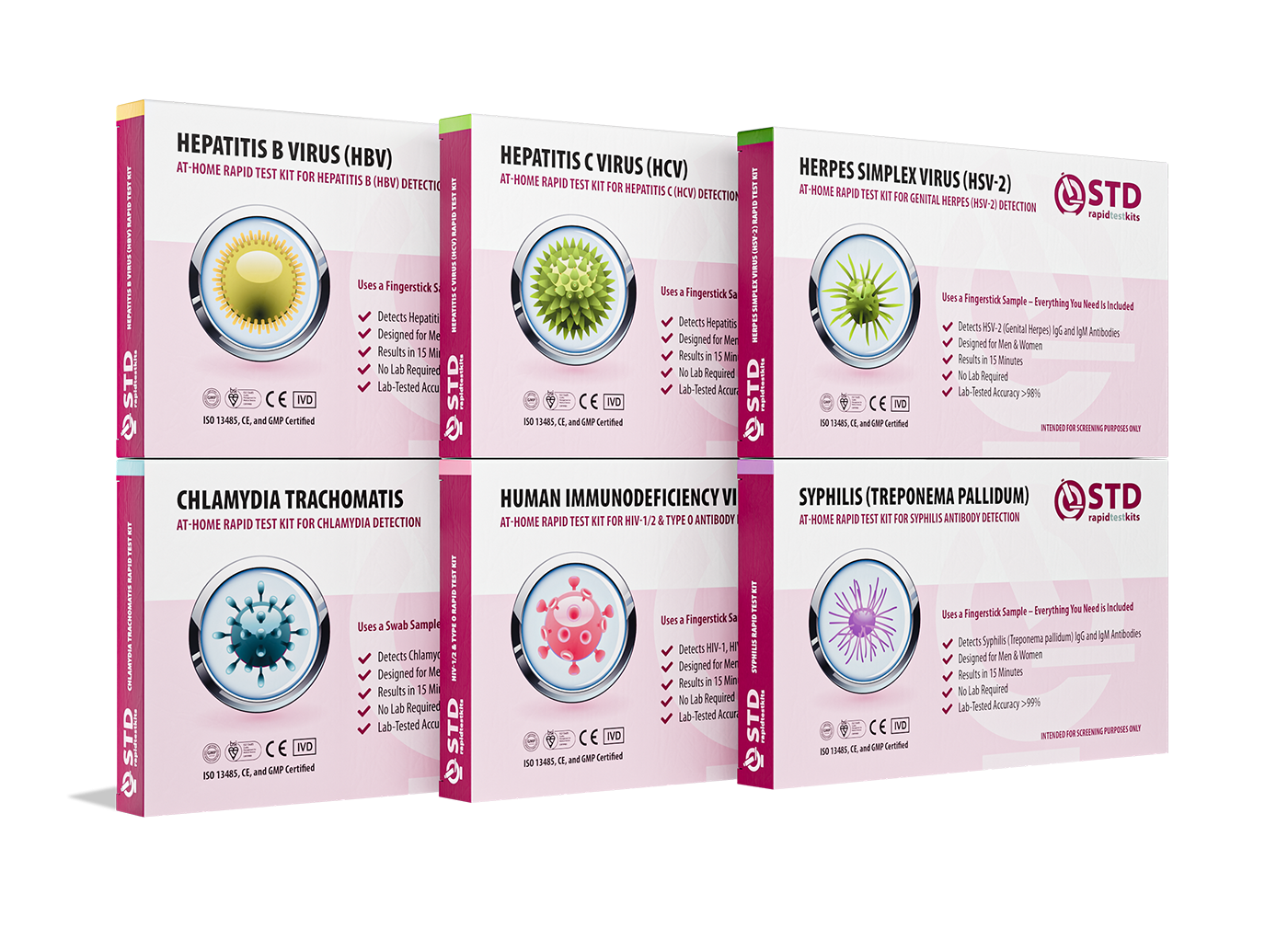 For Men & WomenResults in MinutesNo Lab NeededPrivate & Discreet
Order Now $119.00 $294.00
For all 6 tests
When a Targeted Test Is Enough
There are situations where a full STD panel after every new partner is unnecessary because the exposure was specific.
If the only risk was unprotected oral sex, for example, a throat swab for Gonorrhea and Chlamydia might be more appropriate than repeating blood work for infections unrelated to that exposure. If you had a condom-protected encounter and no skin-to-skin lesions were present, broad herpes testing without symptoms may not add clarity.
This is where individualized testing matters more than blanket panels. Medicine works best when it is specific.
A thoughtful approach can reduce both cost and unnecessary stress while still protecting you and your partners.
What Actually Happens If You Miss Something?
This question drives a lot of over-testing. The fear is not just infection. It is the fear of unknowingly harming someone else.
Most common bacterial STDs like Chlamydia and Gonorrhea are treatable with antibiotics. Early detection prevents complications and transmission. HIV, while chronic, is highly manageable with modern treatment, and early diagnosis dramatically improves outcomes. The same applies to Hepatitis C, which now has curative therapies.
Regular screening, even if not after every single partner, drastically reduces the chance of unknowingly carrying an infection long term.
Perfection is not the goal. Participation is.
Creating Your Personal Decision Framework
Instead of asking, “Is it overkill?” ask three better questions.
How many new partners have I had since my last test? Were condoms used consistently and correctly? Has enough time passed for accurate detection?
If the answers point toward meaningful exposure, a full STD panel is not dramatic. It is appropriate.
If the answers reveal low exposure and recent testing within window periods, waiting for your next routine screening may be equally responsible.
You do not need to test after every spark of attraction. You need to test in alignment with your behavior.
FAQs
1. Do I really need a full STD panel after every new partner?
Not always. If you’ve had three new partners in the last six months, then yes, routine comprehensive testing makes sense. But if this is your first new partner in a year, you used condoms consistently, and you tested recently within proper window periods, you may not need to sprint to the lab. Responsible doesn’t mean reactive. It means proportional.
2. But what if I feel anxious anyway?
Anxiety is real. It doesn’t disappear just because statistics say your risk is low. If testing helps you sleep, that matters. The key is timing it correctly. Testing five days after exposure won’t calm your brain if the result isn’t reliable yet. Wait for the appropriate window, then test once, not five times.
3. Is it weird to ask someone to test before we stop using condoms?
It’s only weird if we keep pretending sex doesn’t carry shared responsibility. Framing matters. Try: “I really like where this is going. Want to test together so we can both feel good about ditching condoms?” That’s not interrogation. That’s collaboration.
4. If they say they’re ‘clean,’ should I just trust that?
Trust is good. Data is better. “Clean” doesn’t tell you when they tested, what was included, or whether there were partners after that test. You’re allowed to ask follow-up questions. You’re also allowed to suggest testing together instead of turning it into a cross-examination.
5. What if we used a condom the whole time?
Condoms are excellent protection against fluid-based infections like HIV and chlamydia. They reduce risk dramatically. But they don’t eliminate every possibility, especially for skin-to-skin infections like herpes or HPV. If protection was consistent and no condom issues occurred, you may not need a full panel immediately, but keeping a regular screening schedule is still smart.
6. Is monthly testing too much?
For most people, yes. Unless you’re in a high-frequency, higher-risk dating pattern, monthly testing often reflects anxiety rather than exposure. Three-to-six-month intervals are common for people with multiple partners. Testing every few weeks without new risk usually doesn’t improve safety, it just drains your wallet and your nerves.
7. Can I have an STD and truly feel nothing?
Absolutely. Many people with chlamydia, gonorrhea, or even early HIV have zero symptoms. No discharge. No pain. No rash. That’s why testing decisions shouldn’t be based solely on how your body feels. Silence is not the same as negative.
8. What if I test negative but still feel off?
First, check timing. Was it within the detection window? If yes and symptoms persist, see a clinician, not every genital irritation is an STD. Yeast infections, UTIs, friction irritation, and even anxiety can mimic symptoms. Testing is one tool. Clinical evaluation is another.
9. Do doctors secretly think I’m dramatic if I test often?
No. We think in patterns. If your behavior supports routine screening, we’re on board. If you’re testing repeatedly before window periods close, we’ll gently steer you toward better timing. Our goal is clarity, not judgment.
10. So what’s the healthiest mindset here?
Build a rhythm. Test when new risk happens. Test before exclusivity. Test every few months if you date frequently. Don’t test to punish yourself. Don’t avoid testing to seem chill. Sexual health is maintenance, not confession.
You’re Not Dramatic. You’re Navigating Risk.
Dating is vulnerable. Sex is vulnerable. Testing is vulnerable. None of that makes you paranoid.
A full STD panel with every new partner is not automatically overkill, and it is not automatically necessary. It becomes appropriate when your exposure pattern supports it. It becomes excessive when it replaces strategy with fear.
If you want clarity without chaos, build a rhythm. Use comprehensive panels when your dating life calls for them. Use targeted testing when exposure is specific. And when in doubt, choose information over assumption.
Peace of mind is not about testing constantly. It is about testing intelligently.
How We Sourced This Article: This guide combines current screening guidance from leading public health authorities, peer-reviewed infectious disease research, and clinical experience in STI prevention and counseling.
Sources
1. CDC's Suggestions for STI Testing
2. CDC's Advice on STD Prevention and Screening
3. Fact Sheet on Sexually Transmitted Infections from the World Health Organization
4. Planned Parenthood – STD Basics and Testing
7. National Institute of Allergy and Infectious Diseases – Sexually Transmitted Infections
About the Author
Dr. F. David, MD is a board-certified infectious disease specialist focused on STI prevention, diagnosis, and treatment. He combines clinical precision with a sex-positive, stigma-aware approach to help readers make informed and empowered decisions.
Reviewed by: Jordan Lee, PA-C | Last medically reviewed: February 2026
This article is meant to give you information, not to give you medical advice.


