
Published: November 2025 | Last updated: May 2026 | Editorial review and quality control: Martina N.
The headlines came fast in late 2025: start HIV drugs within days of infection, and the immune system bounces back to near-normal. Three years later, the same researchers took another look. The story turned out to be more complicated, and more useful, than the first wave of coverage suggested.
Researchers at Amsterdam UMC followed people who started antiretroviral therapy (ART) during the first few weeks of HIV infection. At six months, the inflammation markers that usually flag a chronically activated immune system looked close to normal. By year three, those same markers had drifted back into dysregulation, even though the virus was still suppressed below detectable levels in the blood (Amsterdam UMC, 2025).
For anyone who tests at home, that nuance matters. Rapid home HIV kits give privacy and speed, but they operate inside a biological window that no medication can shortcut. The difference between a result that means something and a result that gives false reassurance often comes down to timing: when the test was taken relative to the exposure, what the test actually measures, and whether the next step is a confirmatory lab test, a PEP conversation, or a routine retest. This guide walks through that timing, the new evidence on ultra-early treatment, and where rapid home tests legitimately fit.
Key Takeaways
- Early antiretroviral therapy started within days of HIV infection preserves immune function in the short term, but a 2025 Amsterdam UMC study found that some immune dysregulation returns by year three despite full viral suppression.
- Antibody-only rapid home HIV tests become reliable at about 90 days after exposure (CDC). A negative result inside that window does not rule out infection; lab-based 4th-generation testing or a NAAT detects HIV earlier.
What the Amsterdam UMC study actually shows about ultra-early treatment
Late in 2025, Amsterdam UMC reported follow-up data on people who had started antiretroviral therapy during the first few weeks of HIV infection. The headline finding at six months looked like a breakthrough. Monocyte activation markers, the bloodwork signals that flag an immune system under chronic viral pressure, looked close to those of HIV-negative controls. Inflammation, in other words, had not yet set up shop the way it usually does in untreated HIV (Amsterdam UMC, 2025).
By the three-year follow-up, the picture had changed. Even with the virus suppressed below detectable levels on standard assays, the same monocyte dysregulation patterns had drifted back. The probable mechanism is the HIV reservoir: long-lived immune cells that quietly harbor integrated viral DNA and reactivate at a low background rate. Ultra-early ART shrinks that reservoir dramatically but does not erase it (Amsterdam UMC, 2025).
The practical translation: starting ART within days of infection is still meaningfully better than starting weeks or months later. Smaller reservoirs mean lower long-term inflammation, better odds for any future cure strategy, and faster movement toward an undetectable viral load that prevents onward transmission. It just falls short of the full immune do-over that early reporting on the six-month data suggested. Some immune scarring appears to be the price of any HIV infection, even one treated almost immediately.
That distinction matters for at-home testing because ultra-early ART requires ultra-early diagnosis. Most rapid home antibody tests cannot deliver that. A test taken five days after a high-risk exposure will not detect a brand-new infection regardless of how strong the immune response will eventually become. The treatment opportunity the Amsterdam study describes is built on lab-grade testing inside the first few weeks, or on knowing that PEP is the right intervention until the body has time to seroconvert.
How soon can HIV be detected? Window periods by test type
HIV does not follow a single timeline. The virus replicates rapidly in the first days after a successful exposure, but each diagnostic test measures a different signal, and each signal becomes detectable at a different point. The CDC defines the window period as the time between exposure and the earliest day a given test can reliably detect HIV, with separate windows for antibody tests, lab-based antigen/antibody assays, and nucleic acid amplification tests (NAATs) (CDC HIV, 2024). The numbers vary by test type:
| Test Type | What It Detects | Earliest Detection | Reliable Detection |
|---|---|---|---|
| Antibody rapid (home fingerstick) | Antibodies to HIV | About 23 days after exposure | About 90 days after exposure |
| 4th Generation (lab antigen/antibody) | p24 antigen plus antibodies | About 18 days after exposure | About 45 days after exposure |
| NAAT (nucleic acid amplification test, HIV RNA) | HIV RNA directly | About 10 days after exposure | About 33 days after exposure |
Why the test type and the timing matter together
Three things to take from the table above. First, lab-based NAAT and 4th-generation tests detect HIV earlier than any rapid home kit because they look for the virus itself or one of its proteins, not the antibodies the immune system takes weeks to build. Second, antibody-only rapid tests, the kind used in this site's home kits and at many walk-in clinics, are built for the routine-screening end of the window. They are not designed to rule out a recent exposure event. Third, "earliest detection" and "reliable detection" describe different things. A 4th-generation test can pick up some infections by day 18, but the CDC does not consider a negative antigen/antibody result conclusive for ruling out HIV until about 45 days post-exposure.
What that means in practice: a negative rapid home test 10 days after a risk event tells the reader very little. The same negative result at 90 days carries weight. If an early answer is medically important because PEP eligibility or partner notification is on the table, a clinic-administered 4th-generation test or a NAAT, not a home antibody test, is the right tool. The home test becomes the right tool later, at the 12-week follow-up that closes out most exposure-event screening protocols.
At 10 days post-exposure, even a lab NAAT may miss an early infection. At 90 days, a home antibody test is conclusive for that exposure. The test type and the timing have to match the question being asked, which is why a single negative result inside the first few weeks does not close the door on testing.
Symptoms of acute HIV in the first weeks
About two-thirds of people newly infected with HIV develop symptoms in the first two to four weeks, a constellation that clinicians call acute retroviral syndrome (CDC, About HIV). The symptoms look almost identical to other viral illnesses: fever, fatigue, sore throat, swollen lymph nodes in the neck and armpits, a non-itchy rash on the torso, muscle aches, and headache. The list overlaps so heavily with mononucleosis, flu, and several routine respiratory viruses that acute retroviral syndrome is missed in the majority of new HIV cases.
The remaining third develop no symptoms at all. Absence of symptoms does not rule out a new HIV infection, which is one of the reasons clinicians do not rely on symptom screening for diagnosis. The virus is highly transmissible during this acute period because viral load in the blood and genital fluids peaks before the immune system catches up, often weeks before the person feels anything is wrong.
An antibody test can usually detect HIV 23 to 90 days after exposure. If you test during the window period and get a negative result, you should test again after the window period has ended.
Where at-home rapid tests fit, and where they do not
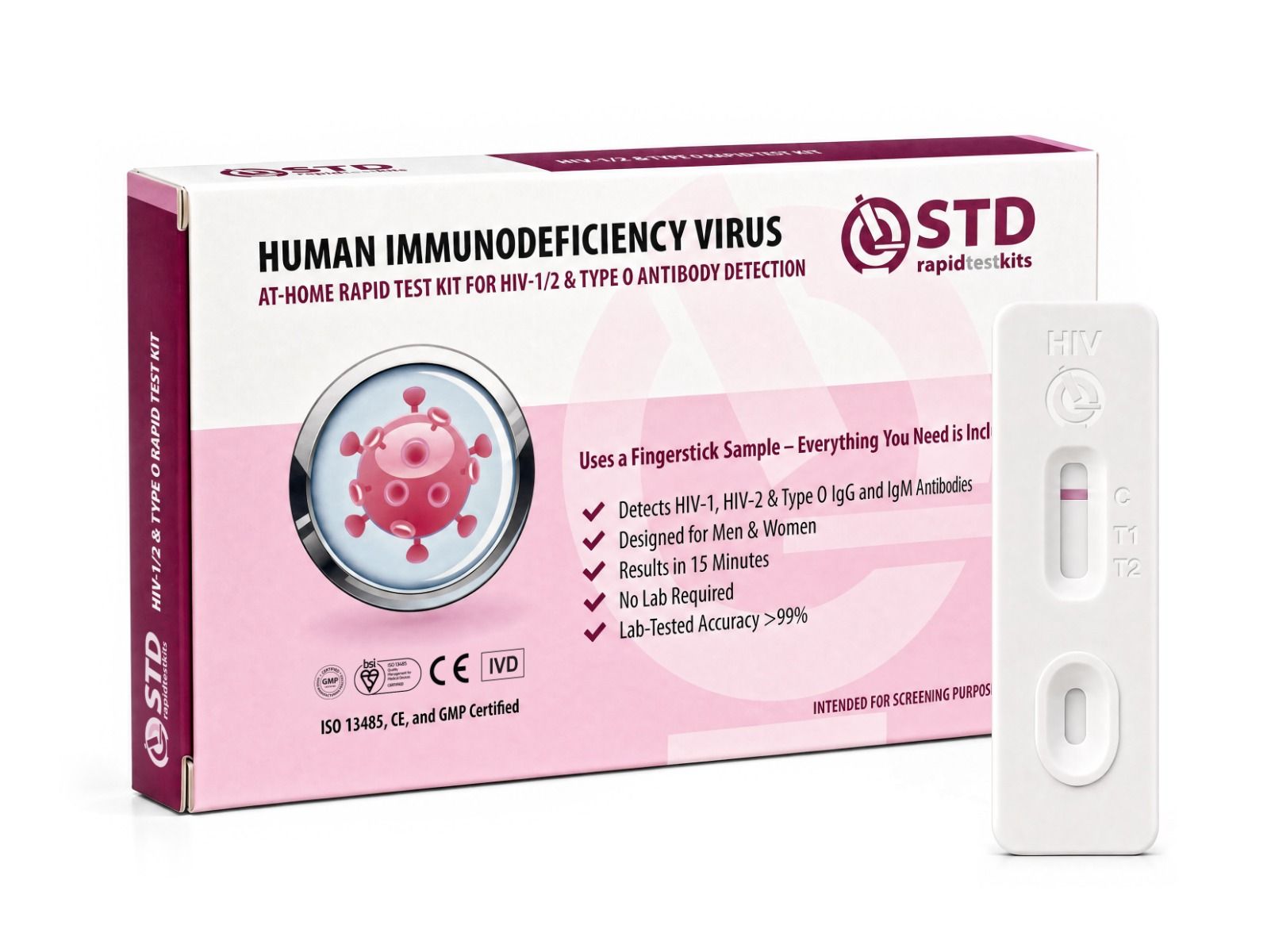
The at-home HIV test sold on this site is a lateral-flow fingerstick antibody test. It checks for antibodies the immune system produces against HIV, the same general chemistry as the rapid tests used in many sexual health clinics. It is built for accessibility and routine screening, not for emergency early-window detection.
The smart frame: rapid home antibody tests are checkpoints, not finish lines. They earn their reliability after about 90 days, which is when the CDC considers a negative antibody test conclusive for ruling out an HIV infection from a specific exposure event (CDC HIV Testing). Inside that window, they are a tool for catching infections from older exposures, monitoring status between routine screens, and giving a fast yes or no when a clinic visit is logistically or emotionally out of reach. Outside their intended use, especially in the first days after a high-risk encounter, they will return false-negative results because antibodies have not yet appeared at detectable levels.
| Time Since Possible Exposure | Best Testing Approach | Where the Home Antibody Test Fits |
|---|---|---|
| Within 72 hours | Clinic visit for PEP evaluation, not testing yet | Wait. Use the home kit at the 12-week mark after PEP finishes. |
| 3 days to 6 weeks | Lab-based 4th Generation antigen/antibody test | Use for a screening signal, then retest at 12 weeks. |
| 6 to 12 weeks | Lab-based 4th Generation or NAAT preferred | Useful as a screening step; retest at 12 weeks for finality. |
| 12 weeks or more | At-home antibody test is reliable | Conclusive for ruling out this specific exposure. |
Important fine print on home antibody tests
Home antibody tests are lateral-flow immunoassays, not NAATs and not PCR. The sensitivity profile is different from lab-grade molecular testing, particularly in asymptomatic infections caught right at the edge of the window period. Any positive result from a home test needs confirmation in a lab with a 4th-generation antigen/antibody assay, followed by an HIV-1/HIV-2 differentiation assay or a NAAT to measure viral load. A negative result inside the window period means antibodies have not been detected yet, not that an infection definitely is not present. This is the largest single source of false reassurance with home testing, and the reason this guide emphasizes timing over result-reading.
The 72-hour clock for post-exposure prophylaxis (PEP)
If a possible HIV exposure happened within the last 72 hours, the right first move is not testing. It is getting to a clinic, an emergency department, or an urgent care provider to start a conversation about post-exposure prophylaxis. PEP is a 28-day course of antiretroviral medication that can prevent HIV from establishing infection if started within 72 hours of the exposure event, and ideally within 24 hours (HIV.gov PEP).
The math on PEP is sharp. Effectiveness drops with each hour of delay after the exposure. After 72 hours, the CDC no longer recommends PEP as a prevention strategy for that specific exposure (CDC MMWR PEP Recommendations). That timing matters more than any rapid test result a person could collect in those first three days. A home test taken 12 hours after a risk event will be negative no matter what, and any minute spent on that test is a minute not spent calling a clinic that can start PEP.
If a possible exposure happened within the last 72 hours, call a clinic, urgent care, or emergency department before doing anything else. PEP started after 72 hours is no longer recommended by the CDC for that specific exposure, and every hour of delay reduces its effectiveness. Testing inside the first three days will not change the prevention math; getting to a provider will.
After completing PEP: the 30-day and 90-day follow-up
What a home test can do well in a PEP scenario is the follow-up. After completing the 28-day PEP course, the CDC recommends HIV testing at 30 days (about 4 weeks) and again at 90 days (about 13 weeks) to confirm the regimen worked (CDC PEP Clinical Guidance). The 90-day follow-up is the point at which an antibody-only home test starts to be reliable. So in a real-world PEP timeline, the rapid home kit is the closing test, not the opening one.
PEP itself can have side effects, mostly nausea, fatigue, and headache, that resolve within the first week or two for most people. Adherence matters: the regimen must be taken daily for the full 28 days for the prevention math to hold. For anyone with repeated exposure risk, the right conversation after the PEP course finishes is whether daily PrEP (pre-exposure prophylaxis) might be a better long-term tool.
What to do if an at-home HIV test reads positive
Treat a positive line on a home rapid HIV test as a strong signal that needs lab confirmation before any treatment decision is made. The standard confirmatory algorithm is a 4th-generation antigen/antibody immunoassay, and if that is positive, a supplemental HIV-1/HIV-2 differentiation assay or a NAAT to measure viral load (CDC HIV Testing). False positives on lateral-flow tests are uncommon but possible, which is why confirmation is the universal next step.
The practical sequence after a positive home test: call a primary care clinic, a sexual health clinic, or a local HIV service organization the same day or the next morning. Most can schedule confirmatory bloodwork inside a week, sometimes same-day. The CDC's national HIV info line (1-800-232-4636) and HIV.gov's testing site locator both connect callers to free or low-cost confirmatory testing and to linkage-to-care services. If the confirmatory test is positive, treatment with daily antiretroviral therapy starts soon after, often within days.
Modern HIV treatment looks very different from the picture many people still carry from the 1990s. ART regimens have shrunk to one or two pills a day for most patients, with minimal long-term side effects in most cases. Life expectancy for people diagnosed and treated promptly is close to that of HIV-negative peers (HIV.gov).
The hardest part of a positive home result is usually the gap between the test and the lab confirmation. That window can run a few days, sometimes a week. National hotlines and patient communities run by people living with HIV offer support during that period. They are not a substitute for clinical care, but they help with the emotional load while clinical care is being arranged.
People living with HIV who take antiretroviral therapy daily and reach an undetectable viral load cannot transmit HIV to sexual partners. This is the U=U principle, confirmed by the PARTNER, PARTNER2, and HPTN 052 studies and endorsed by the CDC, NIH, and over 1,000 public health organizations worldwide. The path from a positive test to an undetectable viral load typically takes a few months on modern ART.
How often to test, and what counts as routine screening
The CDC's baseline recommendation is that everyone aged 13 to 64 get tested for HIV at least once as part of routine healthcare (CDC HIV Screening Guidance). For people at higher risk, including men who have sex with men, people who inject drugs, partners of people living with HIV, and anyone with new or multiple sexual partners, the recommended cadence is every three to six months.
Three months is the right interval for most rapid home tests because it lines up with the antibody window period. A test every three months means that if an infection happened soon after the previous negative test, the next test will catch it inside a window where treatment options, including ultra-early ART, are still highly effective.
Routine screening has a less obvious benefit too. Most new HIV diagnoses in the United States happen in people who had not tested for HIV in over a year, sometimes several years (CDC HIV Surveillance). Regular testing shrinks that gap. It catches infections during the acute phase, when transmission risk is highest but the person is most likely unaware of their status, and most HIV transmissions happen between partners where at least one person did not know their status.
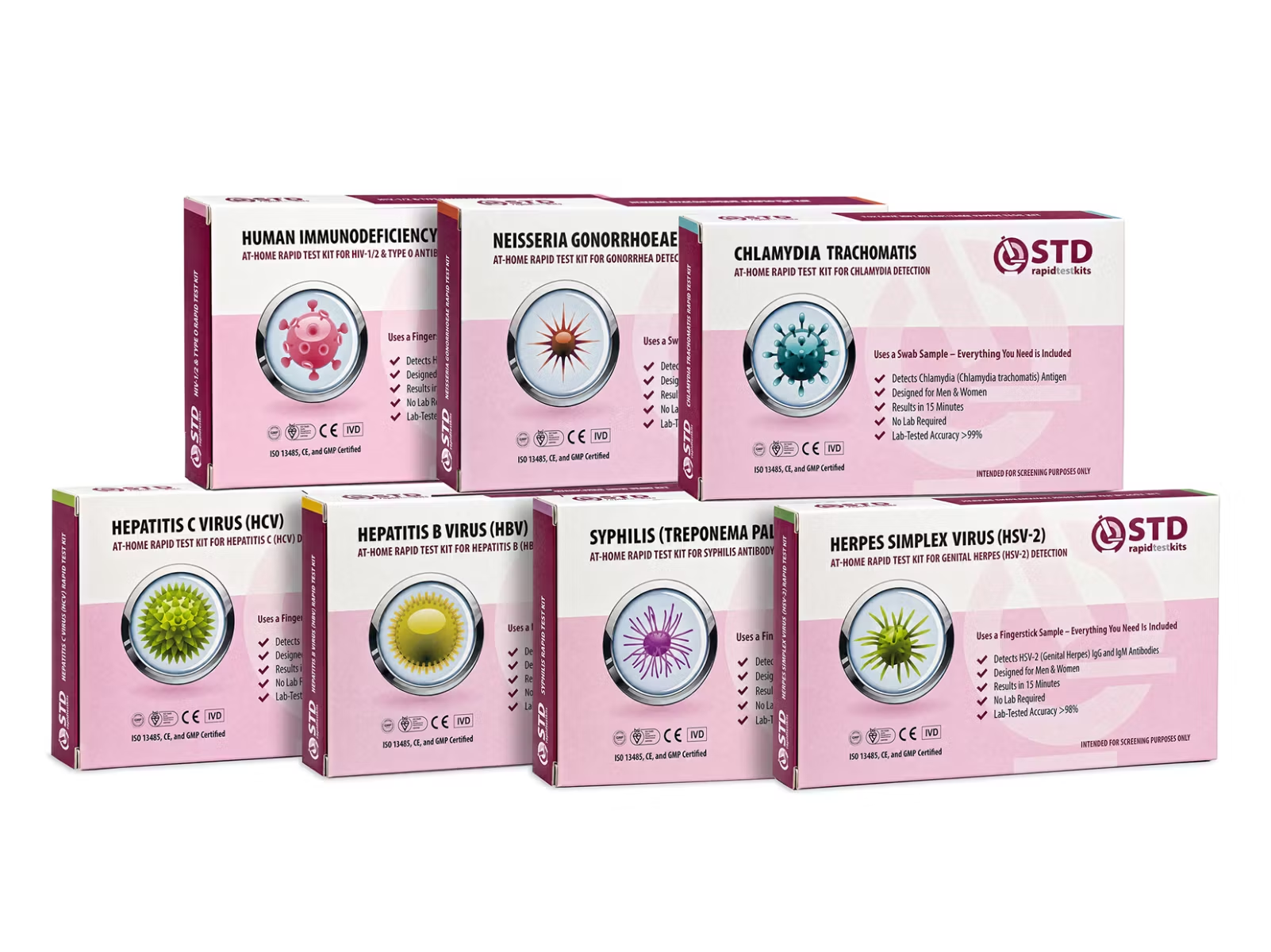
For people on PrEP, the screening rhythm is built into the prescription. Clinic-administered 4th-generation testing every three months is standard. Home tests do not replace that schedule, but they can fill in-between weeks if there has been a missed PrEP dose or a higher-risk exposure between clinic visits. And because PrEP only protects against HIV, regular screening for other STIs (chlamydia, gonorrhea, syphilis, hepatitis B and C) is part of the same cadence.

Why HIV testing gets postponed, and what changes the pattern
Stigma, cost, transportation, and fear of a positive result are the most commonly cited reasons people delay HIV testing in CDC surveys. Home testing addresses several of those barriers directly. The kit ships in plain packaging, runs in 15 to 20 minutes on a fingerstick blood drop, and never appears on a clinic record. For many readers, that combination is what makes regular testing realistic instead of theoretical.
The flip side is that home testing alone does not catch everything. The Amsterdam UMC findings reinforce a point clinicians have made for years: the earlier HIV is caught, the more options remain on the table. A home antibody test cannot catch the first few weeks of an infection. The most useful pattern after a recent risk event starts with a clinic visit during the 72-hour window for PEP evaluation if the exposure is high-risk, followed by a home antibody test at the 12-week mark and a repeat three months after that to close out the screening window.
For readers without a recent risk event, the rhythm is simpler. A home test every three to six months, combined with annual clinic-based testing that covers the full STI panel, is the cadence the CDC recommends for sexually active adults under 65. That cadence catches what needs to be caught. It also normalizes testing, which is probably the single most powerful behavior change available to anyone managing their own sexual health.
FAQs
- How soon after exposure can a home HIV test pick up infection?
- Most rapid home HIV tests detect antibodies, not the virus directly, so they need time for the immune system to build a detectable antibody response. The CDC reports antibody tests can pick up most HIV infections starting about 23 days after exposure, but a negative result is only conclusive at 90 days. For an answer inside the first month, a lab-based 4th-generation antigen/antibody test or a NAAT through a clinic is needed.
- If a recent home HIV test came back negative, am I safe?
- It depends on when the test was taken relative to the exposure. A negative antibody test at 90 days or more is reliable for ruling out HIV from that specific exposure. A negative result in the first few weeks does not rule out infection, because the body has not yet built a detectable antibody response. If the exposure was within the last 12 weeks, retesting at the 90-day mark is the standard CDC recommendation.
- What is PEP and how fast does it need to start?
- PEP (post-exposure prophylaxis) is a 28-day course of antiretroviral medication that can prevent HIV from establishing infection after a high-risk exposure. It must be started within 72 hours of the exposure, and effectiveness drops sharply with every hour of delay. After 72 hours, PEP is no longer recommended for that exposure event. If a possible exposure happened in the last three days, calling a clinic, urgent care, or emergency department is more important than testing.
- What should I do if my home HIV test shows a positive result?
- Treat the result as a strong signal that needs lab confirmation, not a diagnosis. Contact a primary care provider, a sexual health clinic, or a local HIV service organization within the next day or two to schedule a confirmatory 4th-generation antigen/antibody test and, if needed, a NAAT. The CDC's national HIV info line (1-800-232-4636) can help locate free or low-cost confirmatory testing. If the lab confirms HIV, treatment starts soon after, often within days, and can bring viral load to undetectable levels within months.
- How often should sexually active adults test for HIV?
- The CDC recommends everyone aged 13 to 64 test for HIV at least once as part of routine healthcare. People at higher risk, including men who have sex with men, people who inject drugs, partners of people living with HIV, and anyone with new or multiple sexual partners, should test every three to six months. Three months lines up with the antibody window period, so quarterly home testing covers the cadence cleanly.
- Are clinic-based HIV tests really better than home rapid kits?
- They are different tools. Lab-based 4th-generation antigen/antibody tests and NAATs detect HIV earlier in the window period than antibody-only home kits, so they are the right choice within the first few weeks after a potential exposure. Past 12 weeks, a quality home antibody test gives a reliable negative result for that exposure. The two complement each other rather than competing.
- Should I test for other STIs at the same time as HIV?
- Yes. HIV infection often co-occurs with other STIs, and some untreated STIs, especially syphilis, herpes, and gonorrhea, raise the risk of acquiring or transmitting HIV. A combination panel that includes chlamydia, gonorrhea, syphilis, hepatitis B, and hepatitis C alongside HIV is the standard approach for routine sexual health screening. Catching co-infections during the same screening cycle saves time and improves treatment outcomes.
- Does being on PrEP mean I can skip HIV testing?
- No. PrEP requires clinic-administered HIV testing every three months as part of the prescription, both to confirm continued HIV-negative status and to monitor kidney function and other safety markers. Home tests do not replace that schedule, but they can be useful between clinic visits if there has been a missed PrEP dose or a higher-risk exposure event.
How We Sourced This Article: Our article was constructed based on current advice from the most prominent public health and medical organizations, including the U.S. Centers for Disease Control and Prevention, HIV.gov, and recent peer-reviewed research summarized in the Amsterdam UMC research spotlight. It was then molded into simple language based on the situations that people actually experience when deciding whether and when to test.
- U.S. Centers for Disease Control and Prevention. HIV testing overview: test types, window periods, and the point at which each test becomes reliable after exposure.
- U.S. Centers for Disease Control and Prevention. Clinical guidance for post-exposure prophylaxis (PEP), including the 72-hour eligibility window and the 30-day and 90-day follow-up testing schedule after PEP completion.
- HIV.gov. Patient-facing fact sheet on post-exposure prophylaxis: what PEP is, who is eligible, and how to access it quickly after a possible exposure.
- U.S. CDC MMWR Recommendations and Reports, 2025. Antiretroviral postexposure prophylaxis after sexual exposure: the official 72-hour timing rule and follow-up testing protocol.
- Amsterdam UMC, 2025. Research spotlight summarizing the three-year follow-up of patients who started antiretroviral therapy during acute HIV infection, including the six-month immune-marker normalization, the three-year return of monocyte dysregulation, and the underlying HIV reservoir mechanism.
- HIV.gov. Overview of modern HIV treatment, including the U=U (undetectable equals untransmittable) principle and life-expectancy data for people diagnosed and treated promptly.
