Published: July 2025 | Last updated: May 2026 | Editorial review and quality control: Martina N.
Is the new twice-yearly HIV shot really that effective?
Yes. In late-stage trials, lenacapavir (Yeztugo) prevented essentially every infection: zero of 2,134 cisgender women in PURPOSE-1, and two of 2,179 participants across a diverse gender mix in PURPOSE-2. The FDA approved it in June 2025 for HIV-negative adults and adolescents weighing at least 35 kg. You must confirm HIV-negative status with an FDA-approved test before every dose; the shot does not protect against other STIs.
For nearly a decade, HIV pre-exposure prophylaxis meant taking a pill every day. The science worked and the medication worked, yet meaningful drop-off in the first year of use has been a recurring finding across PrEP cohort studies. Daily routines slipped, prescriptions ran out, follow-up labs got skipped, and protection went with them. The FDA's approval of lenacapavir in June 2025, sold as Yeztugo, rewrites that bargain. In two large clinical studies it prevented essentially every HIV infection that would otherwise have happened in high-risk participants. The prevention question shifts from 365 daily decisions to two appointments a year, one private health decision, and no daily reminders.
It is also expensive. Industry pricing reports cite a U.S. list price near $28,000 a year, with coverage that varies by insurer. Generic versions are coming for 120 low and middle income countries, though the rollout is uneven. This article covers how Yeztugo works, who can get it, what it costs, how it compares with the other long-acting injectable PrEP, and what to do before your appointment.
Key takeaways
- Yeztugo is a subcutaneous injection given every six months that reduced HIV infections by close to 100% in late-stage trials.
- You must confirm HIV-negative status with an FDA-approved test before every dose; the drug does not prevent gonorrhea, chlamydia, syphilis, or herpes.
What Yeztugo is, and how it works
Yeztugo is the brand name for lenacapavir, a first-in-class antiretroviral called a capsid inhibitor. Older HIV prevention drugs, like the daily pills Truvada and Descovy, target an enzyme called reverse transcriptase. Lenacapavir does something different. It binds the cone-shaped protein shell that wraps HIV's genetic material (the capsid) and disrupts several stages of the virus's life cycle at once: how the virus enters cells, how it makes copies of itself, and how it integrates into a host cell's DNA. The virus essentially loses the suitcase it needs to travel.
The reason it can be dosed twice a year, instead of daily or every two months, is the formulation. The injection goes under the skin (subcutaneous), usually in the abdomen, and the drug forms a small crystalline depot that releases medication slowly into the bloodstream over about six months. Drug levels stay roughly steady the whole time, with no daily peak-and-trough swings that can drive resistance or side effects.
Lenacapavir was first approved in 2022 for treating multi-drug-resistant HIV under the name Sunlenca. The FDA's June 2025 approval expanded its label to HIV prevention (PrEP) for HIV-negative adults and adolescents weighing at least 35 kilograms (about 77 pounds) at risk of sexually acquired HIV. The World Health Organization issued its own recommendation in July 2025, calling for inclusion in national HIV prevention strategies, especially for people whose adherence to daily oral PrEP is challenging.
Most antiretrovirals target a single step in HIV's life cycle. Lenacapavir is a capsid inhibitor that interferes with at least three: how the virus enters target cells, how it replicates inside them, and how its genetic material integrates into the host DNA. Because no other PrEP or treatment drug targets the capsid, cross-resistance with existing regimens is rare. That multi-stage action is part of what allows it to remain protective at low blood concentrations across a full six-month dosing interval.
How well it worked in the trials
Two Phase 3 studies, PURPOSE-1 and PURPOSE-2, are what got Yeztugo approved. Both compared lenacapavir against once-daily oral PrEP and a background incidence rate (the rate at which similar people in the trial communities were getting HIV without any preventive medication).
PURPOSE-1 enrolled 5,338 cisgender women and adolescent girls aged 16 to 25 in South Africa and Uganda. Of the 2,134 women assigned lenacapavir, zero acquired HIV during the trial period, and an independent monitoring board stopped the trial early in 2024 because the result was so unambiguous. PURPOSE-2 enrolled 3,265 cisgender men, transgender women, transgender men, and gender-diverse people across the United States, Argentina, Brazil, Mexico, Peru, South Africa, and Thailand. Two of 2,179 participants assigned lenacapavir acquired HIV, which works out to about a 99.9% reduction compared to the background incidence rate.
The trial population mix matters. Earlier PrEP trials were dominated by cisgender men who have sex with men. PURPOSE-1 was deliberately weighted toward cisgender women and adolescent girls in two African countries with very high HIV incidence; PURPOSE-2 enrolled a wide gender mix including transgender people. Women, transgender people, and people of color carry a disproportionate share of new HIV diagnoses globally and have historically been under-represented in PrEP research.
One caveat keeps the numbers honest: trial conditions are not real-world conditions. PURPOSE participants received reminders, support, and free product, while out in the world appointments get missed. For context, daily oral Truvada or Descovy taken consistently lowers HIV risk by about 99%, but real-world adherence is the catch. CDC PrEP guidance has long cited the gap between prescribed and actual daily dosing as one of the primary reasons for developing long-acting alternatives. The earlier every-two-month injectable, cabotegravir, cut HIV risk by about 66% compared with daily oral PrEP in the HPTN 083 trial (HIV.gov). Lenacapavir's twice-yearly schedule largely sidesteps that adherence problem because there is nothing to forget between doses. Long-term safety surveillance is ongoing, and the FDA approval came with a Risk Evaluation and Mitigation Strategy program to track real-world outcomes.
| Option | Dosing | Type | Approximate efficacy |
|---|---|---|---|
| Yeztugo (lenacapavir) | Subcutaneous injection every 6 months | Capsid inhibitor | 99.9%+ vs background incidence (PURPOSE-1, PURPOSE-2) |
| Apretude (cabotegravir) | Intramuscular injection every 2 months | Integrase inhibitor | About 66% reduction vs daily oral PrEP (HPTN 083) |
| Truvada or Descovy (oral) | Daily pill | Reverse transcriptase inhibitor | About 99% with consistent daily use |
| Internal or external condoms | Per use | Barrier | About 85% with consistent and correct use (CDC) |
Lenacapavir vs cabotegravir at a glance
Cabotegravir, marketed as Apretude, was the first long-acting injectable PrEP, approved in 2021. It is given as a deep intramuscular injection into the gluteal muscle every two months after a one-month loading interval. Lenacapavir is a subcutaneous injection into the abdominal fat every six months after an oral and injectable loading sequence on the first day. Both reach near-complete efficacy in trials when doses are on time, and both require a confirmed-negative HIV test before each injection. The two drugs differ on dosing burden, what the injection feels like, how long active drug levels persist after a missed appointment (the pharmacokinetic tail), and which other medications they interact with. The comparison below summarizes the practical differences.
Lenacapavir vs Cabotegravir
| Feature | Lenacapavir (Yeztugo) | Cabotegravir (Apretude) |
|---|---|---|
| Dosing burden | 2 clinic visits per year | 6 clinic visits per year |
| Injection site and route | Subcutaneous, into abdominal fat | Intramuscular, into gluteal muscle |
| Injection experience | Most trial participants compared it to an insulin or vaccine shot | Firmer; a deep gluteal shot is less comfortable |
| Pharmacokinetic tail | Longer: convenient on schedule, trickier when stopping | Shorter: tighter window for missed doses, faster off-ramp when stopping |
| Notable drug interactions | Strong CYP3A inducers (rifampin, rifapentine); TB-treatment patients usually stay on oral PrEP | More complex profile with rifampin and certain anticonvulsants |
Both reach near-complete efficacy on schedule; the practical differences are dosing burden, comfort, and missed-dose behavior.
Who can get Yeztugo, and who shouldn't
Yeztugo is approved for HIV-negative adults and adolescents who weigh at least 35 kg (about 77 pounds) and are at risk of sexually acquired HIV. Risk is something a clinician will help you assess; it includes having a partner with HIV who is not virally suppressed, condomless sex with a partner of unknown HIV status, recent bacterial STIs, or sharing injection equipment.
There are several situations where Yeztugo is not the right choice. If a person is already living with HIV, even undiagnosed, lenacapavir given as a single agent can drive rapid development of drug-resistant virus. That is why the pre-injection HIV test is mandatory and not just a paperwork formality. If you have had a serious allergic reaction to lenacapavir or any component of the injection, it is contraindicated.
Pregnancy data is still limited. The PURPOSE trials excluded pregnant participants, so post-marketing data are still being collected. The FDA label does not list pregnancy as a contraindication, but it does not yet make a clear recommendation either. Anyone who is pregnant, trying to become pregnant, or breastfeeding should discuss the timing and risks with their provider. On the reassuring side, pharmacokinetic substudies looked specifically at interactions with hormonal contraception and gender-affirming hormone therapy and found no clinically meaningful conflicts.
Drug interactions matter. Lenacapavir is metabolized through the CYP3A enzyme pathway, which means medications that strongly induce CYP3A (some anticonvulsants like phenytoin and carbamazepine, the antibiotic rifampin, and the herbal supplement St. John's Wort) can lower its concentration to ineffective levels. People with significant liver or kidney disease may need closer monitoring, though dose adjustment is not generally required for mild to moderate impairment.
Starting or continuing Yeztugo while unknowingly HIV-positive can cause the virus to evolve resistance to lenacapavir as a treatment drug, narrowing your future treatment options. Your provider will require an FDA-approved antigen/antibody or HIV RNA test before the first dose and every subsequent dose, every six months for as long as you are on the drug.
The pre-injection HIV test, in practice
The standard test before a Yeztugo dose is a fourth-generation antigen/antibody test, which detects both HIV antibodies and the p24 antigen (a viral protein that shows up earlier than antibodies). Some clinicians add an HIV RNA test for people whose recent exposure history puts them inside the antibody window period.
Window periods matter, and they differ by test type. RNA (NAT) testing can flag HIV from about 10 to 33 days after exposure. Fourth-generation antigen/antibody tests are reliable from roughly 18 to 45 days. Antibody-only tests, including most rapid home tests, work from about 23 to 90 days. If you have had a high-risk exposure within the last few weeks and are starting Yeztugo, your provider may combine tests or delay the first dose until they can confirm a clean status.
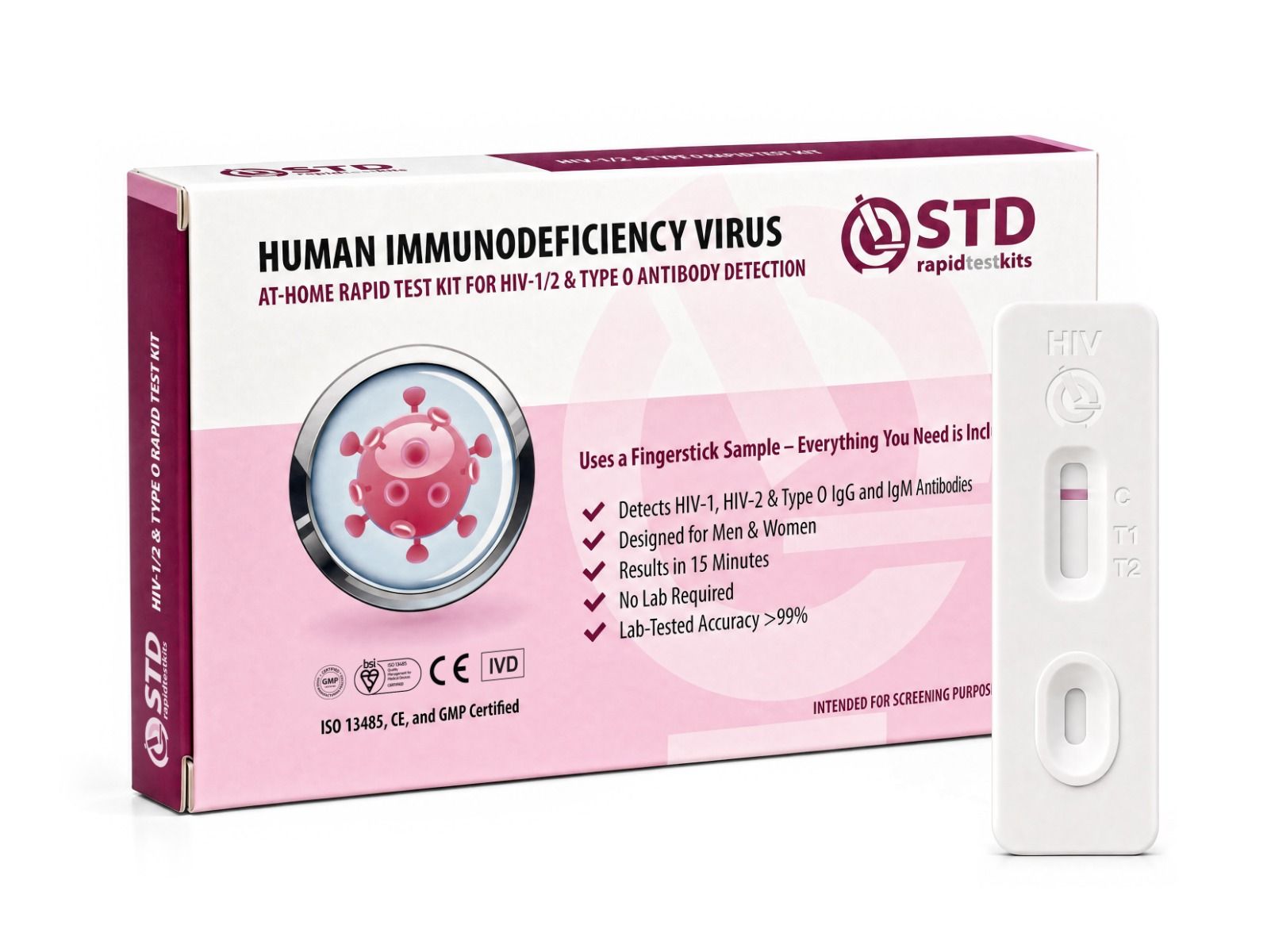
An at-home HIV test is useful for self-screening between clinic visits, but the dose-confirmation test before each Yeztugo injection is something your provider's clinic runs on its own approved assay. The two are complementary: home testing for ongoing reassurance, clinic-grade testing for the dose decision itself.
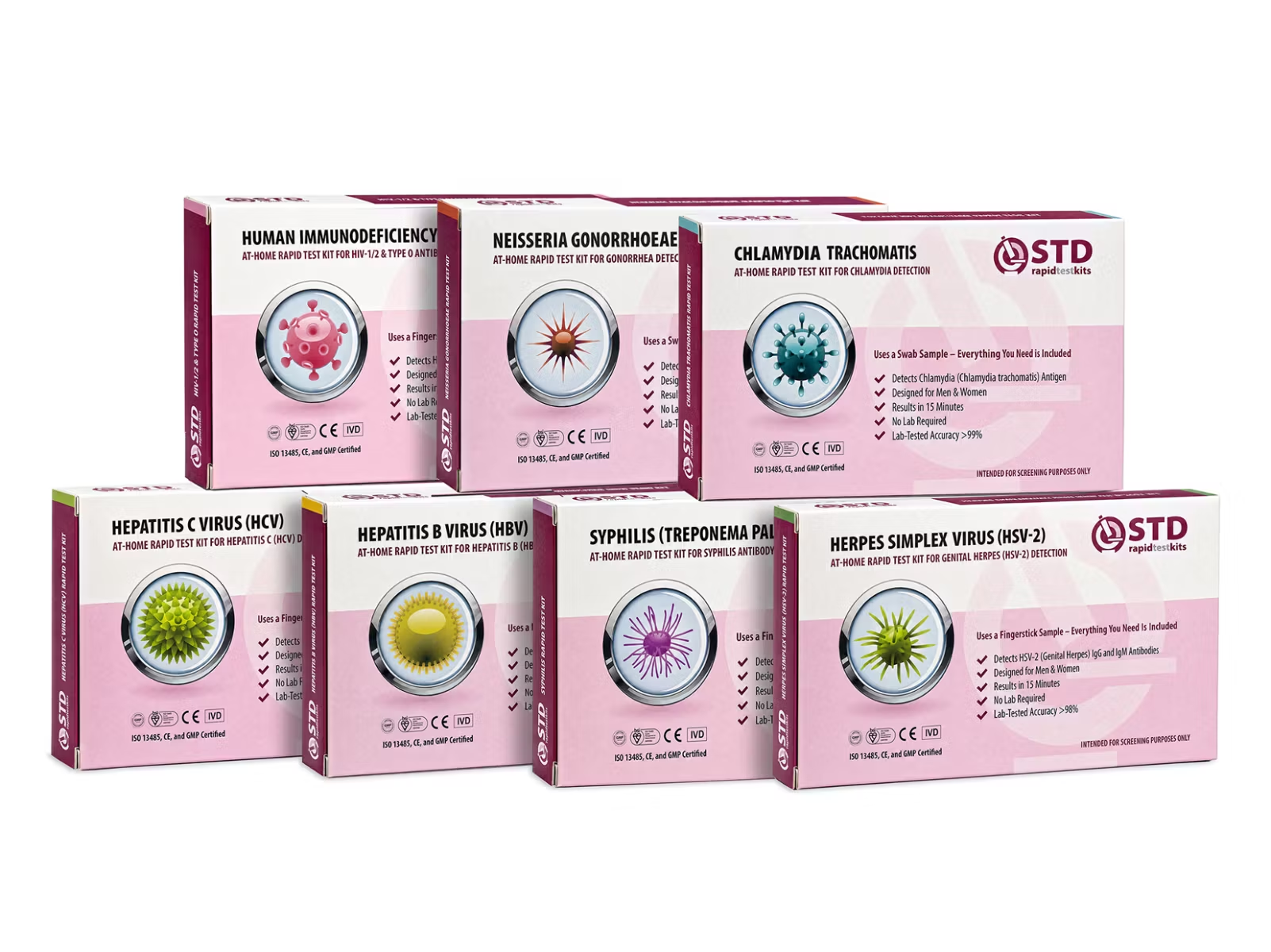
Disclosure: stdrapidtestkits.com publishes this article and sells rapid at-home STI tests; the kits highlighted in the banners below are products on our store.
What Yeztugo costs, and the access gap it has not closed
Gilead has not published a specific retail list price in its FDA approval announcement. Industry pricing trackers (Drugs.com, GoodRx, and trade press as of mid-2025) place the U.S. list price near $28,000 per year, with each dose roughly $14,000; these are pre-formulary estimates that may shift as insurers negotiate coverage. That is meaningfully higher than generic emtricitabine/tenofovir for daily oral PrEP (under $30 a month for the generic) and broadly comparable to brand Descovy (around $26,000 a year list price per industry pricing data, though commonly covered by insurance). Check current insurer formulary information for what you would pay.
For people with private insurance, Medicaid, or Medicare, out-of-pocket costs depend on formulary placement, prior authorization rules, and copay assistance. Gilead's Advancing Access program offers copay help and a patient assistance program for uninsured or underinsured U.S. patients who meet income criteria. The U.S. Ready, Set, PrEP federal program covers PrEP medications at no cost for eligible uninsured people, with Yeztugo coverage rolling out through 2025 and 2026. Broad insurance coverage typically follows a recommendation from the U.S. Preventive Services Task Force; the latest PrEP recommendation is tracked there.
Cost is only one barrier. The U.S. Department of Health and Human Services PrEP coverage tracking has documented for years that a large share of Americans who would benefit from PrEP are not receiving it, with the widest gaps among Black and Hispanic populations. A twice-yearly schedule helps the people for whom daily dosing was the obstacle: those in rural areas far from a pharmacy, people without flexible work schedules, and anyone whose day-to-day mental load already runs at capacity. The same groups, though, can face the most friction reaching a clinic for a supervised injection, so funding and clinic placement shape who benefits. Globally, Gilead has signed royalty-free voluntary licensing agreements with six generic manufacturers to produce lenacapavir for 120 low and middle income countries. The Global Fund and PEPFAR have committed to procuring two million doses for sub-Saharan Africa and other high-burden regions, with target generic pricing under $100 per year, and the first generic shipments are expected to begin reaching countries in 2026 and 2027.
The efficacy question is settled. The harder question is access. A twice-yearly injection only changes population-level outcomes if the people who would benefit can reach a trained injector, get the pre-dose HIV test reliably, and afford the medication. Pricing is one piece of that puzzle. Trained injectors, confirmatory testing capacity, cold-chain logistics, and stigma-free clinics are the rest. Public-health researchers have made the point repeatedly: a breakthrough only matters if it lands in the communities that need it most.
Side effects and what to expect at the appointment
The appointment runs about 30 to 45 minutes. Most of that is the pre-shot HIV test, a brief intake to check for any new health changes since the last visit, and counseling on STI screening and the next dose date. The injection itself is a small subcutaneous shot, similar in feel to an insulin needle, given into the fatty tissue of the lower abdomen. The clinician pinches a fold of belly fat, inserts the needle at a shallow angle, and depresses the syringe over about 30 seconds per site; some protocols use two adjacent injections to deliver the full dose. Same-day return to normal activity is the rule, including exercise and showering, though it helps to avoid tight waistbands directly over the site for the rest of the day. Keep a note of the date and dose of your last injection somewhere accessible, so any clinician you see elsewhere can make safe decisions about other medications and urgent testing.
The most common side effects in the PURPOSE trials were injection-site reactions: pain, swelling, redness, and small nodules at the injection site. Across trials, roughly 10% to 30% of injections produced some form of local reaction, depending on placement, and these were almost always mild to moderate and resolved within a few days to a few weeks. Mild headache, nausea, and fatigue were also reported in the first day or two after dosing. Serious adverse events were uncommon and not significantly different from placebo, with only a small number of allergic reactions and injection-site infections that responded to standard care.
The clinical schedule is straightforward. The first dose is given as both a subcutaneous injection and oral lenacapavir tablets across the first two days, a loading regimen that brings drug levels into the protective range quickly. After that it is one injection every six months, with the pre-dose HIV test at each visit, for as long as the person remains at risk and HIV-negative.
Yeztugo Dosing and Protection Schedule
- Day 0 First visit
Confirmed-negative HIV test, then the first injection plus oral lenacapavir tablets
- Day 2 Oral loading
Oral tablets across the first two days bring drug levels into the protective range quickly
- Month 3 Protected window
Steady drug levels maintain HIV protection through the interval
- Month 6 Next dose due
Repeat HIV test, then the second injection; the cycle continues every six months
After a same-day oral and injectable loading start, protection runs for about six months before the next dose.
How Yeztugo fits with everything else you should be doing
Yeztugo prevents HIV. It does not prevent gonorrhea, chlamydia, syphilis, herpes, HPV, hepatitis B, or hepatitis C. CDC HIV prevention guidance recommends bacterial STI screening every 3 to 6 months for sexually active people on PrEP, regardless of which form of PrEP they use. Rates of bacterial STIs are higher in PrEP users on average (a pattern driven mostly by who chooses PrEP, not by the drug itself), and untreated bacterial STIs can both increase HIV transmission risk and cause complications of their own, including pelvic inflammatory disease, infertility, and the cardiovascular and neurological effects of late-stage syphilis.
Layered prevention in 2026 looks like a small stack of habits: condoms (still the only single intervention that covers HIV plus most other STIs and pregnancy), an injectable or oral PrEP regimen sized to your risk, doxycycline post-exposure prophylaxis (doxy-PEP) for those at meaningful bacterial-STI risk per current CDC guidance, hepatitis B vaccination if you are not already immune, and a regular testing rhythm. That rhythm should not skip the throat and rectum, where many exposures happen; those sites need a clinic swab, which is not something a home blood or genital test covers. The WHO HIV fact sheet lists condoms, PrEP, and regular testing as complementary prevention approaches, and modeling consistently shows the layers are more powerful together than any single layer alone. The CDC additionally recommends hepatitis B vaccination for anyone not already immune, particularly people at ongoing HIV risk.
For the bloodwork-and-genital end of that schedule, home testing has gotten simpler. A combined at-home STI panel screens for the most common bacterial and bloodborne infections from a fingerstick blood draw and a self-collected swab, with results in about 15 minutes and no clinic visit needed between your six-month Yeztugo appointments.
Yeztugo is not PEP, and that distinction matters
If something has already happened (a condom that broke, a sexual assault, a needlestick, an unprotected encounter you regret), Yeztugo is not the right tool. PEP, post-exposure prophylaxis, is. PEP is a 28-day course of antiretroviral medications that has to start within 72 hours of the exposure (the sooner the better; some clinicians will not start it after 72 hours have passed). PEP is available from emergency departments, urgent care clinics, sexual health clinics, and some pharmacies depending on your state.
Yeztugo sits at the opposite end of the spectrum: ongoing pre-exposure prevention for people who are HIV-negative and want to stay that way. The two tools answer different questions. PEP answers "I might have just been exposed, what now?" Yeztugo answers "I have an ongoing risk, how do I stay protected without thinking about it every day?"
If you start Yeztugo and later have a high-risk exposure that you think might fall outside the drug's protective coverage (extremely unlikely with consistent dosing, but possible if a dose was missed), call your provider. They may add PEP for the standard 28-day course as a belt-and-suspenders approach.
Yeztugo (PrEP) vs PEP
| Question | Yeztugo (PrEP) | PEP |
|---|---|---|
| When is it used? | Before exposure, ongoing prevention | After a recent possible exposure |
| Start window | Anytime if HIV-negative and at ongoing risk | Within 72 hours of the exposure |
| Duration | One injection every 6 months while risk continues | 28-day course of daily antiretroviral pills |
| Where to get it | Primary care, sexual health clinics | Emergency departments, urgent care, sexual health clinics |
| Goal | Stay HIV-negative through ongoing protection | Stop a recent exposure from becoming infection |
PrEP is the plan you set up in advance; PEP is the emergency response after a possible exposure.
What this means for HIV prevention going forward
The arc of HIV prevention has been moving toward longer-acting and less stigmatizing options for two decades. Daily oral Truvada was approved for prevention in 2012. Bi-monthly injectable cabotegravir (Apretude) followed in 2021. Yeztugo, at twice a year, is the longest-acting option to date, and it is unlikely to be the last; several investigational long-acting agents, including ultra-long-acting cabotegravir formulations and broadly neutralizing antibody combinations, are in clinical development.
The technology now exists to dramatically reduce new HIV transmissions in the United States and globally. Whether that potential is realized depends less on the drugs and more on whether the people who would benefit can actually get them. In the U.S. that means insurance coverage, copay support, and clinics that can deliver subcutaneous injections in a stigma-free way. Globally it means generic licensing translating into drug on shelves in rural clinics, paired with cold-chain logistics and trained injectors.
If you have thought about PrEP and decided the daily-pill model was not workable for your life, Yeztugo is worth a conversation with your provider. If daily oral PrEP is already working well for you, there is no compelling reason to switch. The right HIV prevention tool is the one you can stay on, and Yeztugo widens that menu for people for whom "every day" was the obstacle. For the practical testing side, home rapid panels cover the most common bacterial and bloodborne infections from a fingerstick or swab, with results in about 15 minutes.
Is Yeztugo Worth a Conversation With Your Provider?
Are you HIV-negative and at ongoing risk of sexually acquired HIV (for example, a partner whose status or viral suppression is unknown, or recent bacterial STIs)?
Yes: You may be a candidate. Ask your provider or a sexual-health clinic about Yeztugo, and plan to confirm a negative HIV test on the day of your first injection.
Has a daily oral PrEP pill been hard to keep up with, or do clinic logistics, cost, and privacy weigh on you?
Yes: Two appointments a year may fit your life better than a daily pill. Raise the cost and insurance-coverage question early, since formulary placement and copay assistance drive what you actually pay.
Is daily oral PrEP already working well for you?
Yes: There is no compelling reason to switch. Keep your routine and your six-month rhythm if you do change, and either way set a calendar reminder for your next dose or refill.
No: Whichever route you choose, keep up routine STI screening every 3 to 6 months, because Yeztugo does not cover gonorrhea, chlamydia, syphilis, or herpes.
Guidance only. A healthcare provider can advise based on your specific situation.
Lenacapavir is a long-acting injectable that has shown high efficacy in preventing HIV infection. WHO recommends offering lenacapavir for HIV prevention as an additional option, particularly to people whose adherence to daily oral PrEP is challenging.
FAQs
- How often do I get the Yeztugo shot?
- Twice a year, every six months. Each appointment includes an HIV-status test before the dose. If you miss your appointment by more than a few weeks, call your provider; you may need an oral lenacapavir bridging dose or to restart with the loading protocol.
- Is lenacapavir more effective than daily PrEP pills?
- Head-to-head trial data do not exist. Both reach near-100% efficacy when doses are on time. The practical difference is that lenacapavir requires only two clinic visits a year, which removes the daily-pill failure mode entirely. People who already take a daily pill reliably get equivalent HIV protection from oral PrEP at considerably lower cost, so the choice often comes down to lifestyle fit and insurance coverage.
- Will Yeztugo protect me against other STIs?
- Only HIV. Gonorrhea, chlamydia, syphilis, herpes, HPV, and hepatitis B and C require separate testing every 3 to 6 months per CDC PrEP guidance. Condoms and barriers remain the primary protection against those infections while on Yeztugo, and doxy-PEP is an additional option for bacterial-STI risk per current CDC guidance.
- What if I forget or miss an appointment?
- Call your provider as soon as you can. Lenacapavir's pharmacokinetic tail means a few weeks late is not the same risk as stopping cold, but you should not rely on residual coverage indefinitely. Depending on how late you are, options include resuming with the next scheduled injection, restarting the oral loading regimen, or bridging with daily oral PrEP for a short period. Your clinic will run an HIV test before re-dosing.
- Can I switch from a daily PrEP pill straight to lenacapavir?
- Yes, after a confirmed-negative HIV test on the day of the first injection. There is no formal washout period required between oral PrEP and the lenacapavir loading sequence.
- Could HIV become resistant to lenacapavir?
- It is uncommon but possible. Resistance risk is highest if someone starts the drug while already HIV-positive (which is why pre-shot testing is mandatory) or if doses are missed and the drug's tail allows a new infection to occur at subtherapeutic levels. Trial data so far have shown very few resistant strains, but vigilance is part of why the dosing protocol is what it is.
- Can I take Yeztugo with hormones or other medications?
- There are no known significant interactions between lenacapavir and most gender-affirming hormone therapies, hormonal birth control, or common antidepressants. The interactions to watch are with strong CYP3A inducers (rifampin, rifapentine, phenytoin, carbamazepine, St. John's Wort) and certain antifungals. Bring a complete medication list to your provider.
- Is Yeztugo safe during pregnancy?
- Talk to your provider before starting or continuing Yeztugo if you are pregnant, planning pregnancy, or breastfeeding. Two practical points to bring up: the PURPOSE trials excluded pregnant participants, so post-marketing data are still being collected, and breastfeeding data are similarly limited. The FDA label does not contraindicate use during pregnancy, but it does not yet make an affirmative recommendation either. For people with ongoing HIV risk during pregnancy, providers often weigh lenacapavir against a well-characterized oral PrEP regimen on an individual basis.
This article was constructed based on current advice from the most prominent public health and medical organizations, including the U.S. FDA, the CDC, the World Health Organization, the U.S. Preventive Services Task Force, and the U.S. National Institutes of Health. The clinical specifics of lenacapavir (Yeztugo) reflect the FDA approval of June 2025, the WHO recommendation of July 2025, and the published Phase 3 trial readouts (PURPOSE-1 and PURPOSE-2). We summarize this guidance in plain English, with attention to the situations people actually face. We do not provide clinical diagnosis. For symptoms or specific health decisions, see a licensed healthcare provider.
- World Health Organization. WHO recommends injectable lenacapavir for HIV prevention, July 2025 announcement covering recommendation rationale and target populations.
- Gilead Sciences. Yeztugo (lenacapavir) FDA approval announcement, June 2025, including dosing schedule, indication, and PURPOSE trial summary (including PURPOSE-2 enrollment of 2,179 participants).
- U.S. Centers for Disease Control and Prevention. HIV resources, surveillance data, and pre-exposure prophylaxis (PrEP) guidance, including the every-3-to-6-months STI screening recommendation for PrEP users and hepatitis B vaccination guidance.
- U.S. Food and Drug Administration. Drug safety, approval announcements, and labeling for HIV prevention medications.
- HIV.gov (U.S. Department of Health and Human Services). Pre-exposure prophylaxis overview, U.S. PrEP coverage gap tracking, and long-acting injectable PrEP efficacy data including the HPTN 083 cabotegravir result.
- U.S. Preventive Services Task Force. Recommendation on pre-exposure prophylaxis to prevent HIV infection, used by U.S. insurers to set PrEP coverage.
- U.S. National Institutes of Health. HIVinfo fact sheets on pre-exposure prophylaxis (PrEP) for HIV prevention.
