Published: September 2025 | Last updated: May 2026 | Editorial review and quality control: Martina N.
What is lenacapavir, and how often do you need it?
Lenacapavir (brand name Yeztugo) is a long-acting injectable for HIV prevention given as one subcutaneous shot every six months after a brief oral loading dose on days 1 and 2. In Phase 3 trials, more than 99.9% of on-schedule recipients remained HIV negative. It prevents only HIV, so STI screening every three to six months stays part of the routine.
Daily PrEP changed HIV prevention in the U.S., and it also left a lot of people behind. Pills get forgotten on a chaotic Tuesday. Refills run out. A pharmacy bottle in a shared apartment can feel exposing. For people dealing with housing instability, work-shift chaos, mental-health load, or providers they never quite trusted, the daily routine itself was where things broke down, even when the willingness to be protected was there.
Lenacapavir, sold in the United States under the brand name Yeztugo, removes that daily routine without giving up protection. One subcutaneous injection every six months. The FDA cleared it for HIV pre-exposure prophylaxis on June 18, 2025, the World Health Organization formally recommended it on July 14, 2025 (WHO 2025), and U.S. clinics rolled it out through the second half of 2025. This guide covers how the shot works in the body, what the PURPOSE trial numbers actually mean, who qualifies, what testing still has to look like, and where the practical access friction sits going into 2026.
Key Takeaways
- Lenacapavir (brand name Yeztugo) was FDA-approved on June 18, 2025 as the first twice-yearly HIV PrEP injection, given as one subcutaneous shot in the abdomen every six months after a short oral loading dose.
- In the PURPOSE 1 and PURPOSE 2 Phase 3 trials, more than 99.9% of on-schedule lenacapavir recipients remained HIV negative, and both trials beat daily oral Truvada in head-to-head comparison.
How Lenacapavir Works in the Body
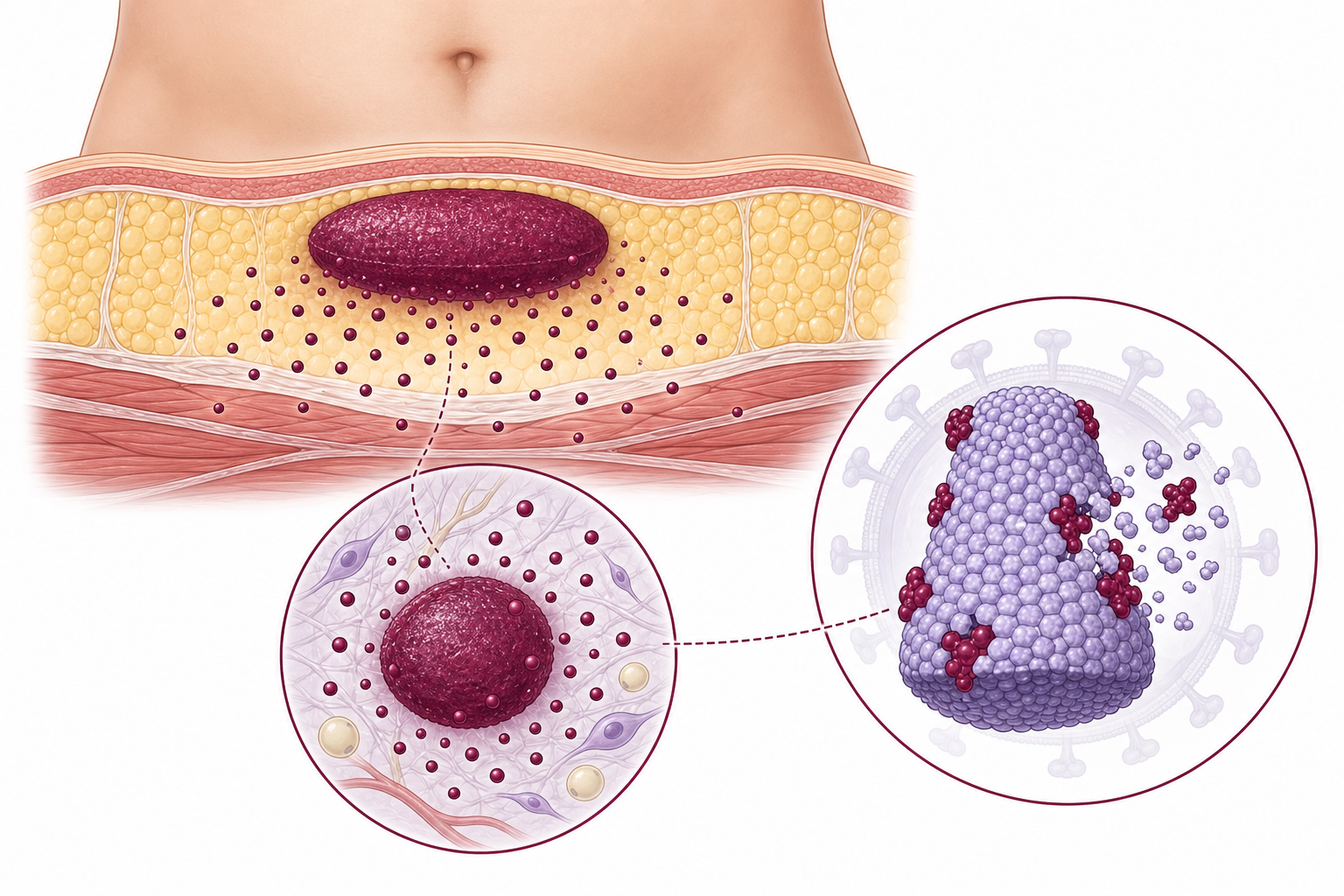
Lenacapavir is a long-acting capsid inhibitor, a relatively new class of HIV medicine. In plain English, it locks onto the cone-shaped protein shell (the capsid) that HIV uses to package and protect its genetic material. Most older HIV medicines disrupt the virus after it has already started copying itself; lenacapavir interferes much earlier in the viral lifecycle, and at multiple points, which is part of why resistance has been slower to emerge in studies.
For prevention, the drug is given as a subcutaneous shot in the lower abdomen. According to Gilead's prescribing information for Yeztugo, the regimen runs in two phases. On day 1, you receive a 927 mg subcutaneous injection plus 600 mg of oral lenacapavir tablets. On day 2, another 600 mg oral tablet. After that, the maintenance dose is a single 927 mg subcutaneous injection every 26 weeks, with a tolerated window of plus or minus two weeks.
The injection forms a slow-release depot under the skin, and plasma drug levels stay in the protective range for the full six-month interval. There is no daily pill, no need to time doses around meals, and no digestive absorption variability to manage.
The same molecule was originally approved in 2022 for HIV treatment in adults with limited treatment options, under the brand name Sunlenca. The safety profile was therefore well characterized before the FDA cleared the prevention indication in June 2025. The World Health Organization followed with a global recommendation in July of the same year (WHO 2025), and the CDC added lenacapavir to its recommended PrEP options shortly after.
The PURPOSE Trial Data the CDC and WHO Cited
Lenacapavir's Phase 3 evidence base sits on two trials, both published in The New England Journal of Medicine and named PURPOSE 1 and PURPOSE 2.
PURPOSE 1 enrolled 2,134 cisgender adolescent girls and young women in sub-Saharan Africa (South Africa and Uganda), populations with high background HIV incidence. There were zero HIV infections in the lenacapavir group during the primary analysis period.
PURPOSE 2 enrolled 2,179 cisgender men who have sex with men, transgender women, transgender men, and gender-nonbinary adults across seven countries. Two HIV infections occurred in the lenacapavir arm, for an efficacy of roughly 99.9%. Both trials beat daily oral Truvada in head-to-head comparison, which is part of why Science named lenacapavir its 2024 Breakthrough of the Year.
What made the trials decision-grade was the combination of effect size and the populations enrolled. Both studies recruited communities with structurally limited PrEP access, included a range of genders and sexual identities, and demonstrated that long-acting dosing kept plasma drug levels high enough to prevent acquisition during the entire interval between shots. HIV.gov reflects the same evidence base in its consolidated PrEP guidance for U.S. patients (HIV.gov PrEP), and the NIH's HIVinfo fact sheet covers the same regulatory and trial framing for clinicians and patients (NIH HIVinfo PrEP).
No PrEP product is 100 percent effective in real-world use, and trial efficacy depends on receiving injections on schedule. The small number of breakthrough infections in trials clustered around two scenarios, both of which are addressable with HIV testing at every visit and a buffered scheduling window: someone was already in the early window of an undetected HIV infection at the time of their first injection, or a follow-up dose was substantially delayed.
PURPOSE 1: 0 of 2,134 cisgender women in sub-Saharan Africa contracted HIV on twice-yearly lenacapavir.
PURPOSE 2: 2 of 2,179 cisgender men and gender-diverse adults across seven countries contracted HIV, for an efficacy of about 99.9%.
Both trials were superior to daily oral Truvada in head-to-head comparison. CDC and WHO endorsements followed in 2025 (<a href="https://www.who.int/news/item/14-07-2025-who-recommends-injectable-lenacapavir-for-hiv-prevention" target="_blank" rel="noopener noreferrer">WHO 2025</a>).
How Lenacapavir Compares to the Other PrEP Options
The U.S. now has four FDA-approved PrEP products. Two are daily oral pills, one is an injection every two months, and lenacapavir is the new every-six-months option. Each one is a real choice, and each one fits a different life.
| PrEP Method | Form | Frequency | Best fit |
|---|---|---|---|
| Truvada or generic emtricitabine/tenofovir disoproxil | Daily oral pill | Every day | Adults and adolescents at risk of HIV through any route who prefer a generic, well-studied pill |
| Descovy (emtricitabine/tenofovir alafenamide) | Daily oral pill | Every day | Adults and adolescents at risk through anal sex or injection drug use; not labeled for receptive vaginal exposure |
| Cabotegravir (Apretude) | Intramuscular injection | Every 2 months after a 1-month start | Adults and adolescents 35 kg or more who want injectable PrEP but prefer shorter intervals |
| Lenacapavir (Yeztugo) | Subcutaneous injection plus oral loading dose | Every 6 months | Adults and adolescents 35 kg or more seeking a twice-yearly option, often after adherence challenges with daily pills |
Who Qualifies for Lenacapavir PrEP
Current FDA labeling and CDC guidance set a few practical criteria. A patient must test HIV-negative immediately before each injection, because giving long-acting HIV drugs to someone already living with HIV can drive resistance to the medicine and complicate future treatment. Patients also need to weigh at least 35 kilograms (about 77 pounds), which covers most adolescents and all adults. There is no upper age limit, and the drug is approved across genders and orientations as long as the prevention indication fits the person's exposure risk.
HIV.gov describes PrEP candidates as any HIV-negative person whose sexual or injection-drug exposure could plausibly include HIV (HIV.gov PrEP). That is intentionally broad. It includes people whose partner's status is unknown, people in serodiscordant relationships, people who use shared injection equipment, sex workers, people who have had a recent bacterial STI, and anyone who has used HIV post-exposure prophylaxis (PEP) more than once in the past year.
Inside that broad eligibility, lenacapavir tends to fit certain groups particularly well. People who have struggled with adherence on oral PrEP, whether the cause is mental-health load, a chaotic schedule, side effects, or pill fatigue, gain the most from twice-yearly dosing. People who want maximum privacy benefit from skipping the daily pill bottle in the medicine cabinet and the monthly pharmacy run. People in unstable housing or with limited storage no longer have to keep anything cold or hide it. People who travel often or live far from a clinic can usually manage two appointments a year. The WHO recommendation specifically named transgender and gender-diverse people among priority populations, and available data do not show clinically significant interactions between lenacapavir and estrogen or testosterone-based gender-affirming hormone regimens, although your prescriber should review current interaction guidance.
Adolescents can receive lenacapavir if they meet the weight cutoff. State minor-consent laws govern whether parental involvement is required. Pregnancy and breastfeeding require shared decision-making with a clinician; lenacapavir data in pregnant patients is still accumulating, but the drug's mechanism does not interact with first-line antiretrovirals, which simplifies management if a patient's HIV status later changes.
If you are uncertain whether your exposure pattern meets the threshold, talking it through with a primary care provider or a sexual-health clinic is the most reliable way to decide. Most clinicians will work through a brief risk-assessment checklist with you rather than turn anyone away.
HIV-negative test required before every dose. Confirmed at each clinic visit, no exceptions.
Minimum weight 35 kg (about 77 pounds). Covers most adolescents and all adults.
Any gender, any orientation. The drug is FDA-approved across the full eligible population, including trans and gender-diverse adults named as a WHO priority population.
No upper age limit. Suitability is based on exposure risk, not age.
Side Effects, Tolerability, and Drug Interactions
Across the PURPOSE trials, lenacapavir was generally well tolerated. The most common adverse event was reaction at the injection site: tenderness, mild redness, occasional firmness, or a small palpable nodule that resolves over weeks. Headache and mild nausea were occasional. Hypersensitivity reactions (rash, fever, swelling, breathing difficulty) were rare but should be treated as urgent. Serious adverse events were rare overall, with no signals of liver toxicity, kidney injury, or major systemic problems in the studies CDC and WHO reviewed. The CDC's broader HIV prevention safety guidance reinforces the same monitoring posture for any long-acting injectable PrEP (CDC HIV basics).
One thing worth knowing: once a depot has formed under your skin, the medication keeps releasing for months. If a real reaction develops, you cannot simply stop and have it gone next week. That long tail is also what makes the prevention work, so it cuts both ways.
Drug interactions are limited but specific. Gilead's label and current CDC guidance flag strong CYP3A inducers, which are medications that accelerate how the liver processes other drugs. These can lower lenacapavir levels enough to weaken protection, so any new prescription, antibiotic course, or supplement is worth cross-checking with your PrEP clinician before you start it. If you are prescribed one of these medications after your injection has already been administered, call your PrEP provider the same day rather than waiting for your next scheduled visit.
Tell your provider before starting if you have a history of severe drug allergies, autoimmune conditions, or significant reactions to prior injections. They will run baseline labs and may set a specific monitoring plan around your first dose.
Strong CYP3A inducers can reduce plasma drug levels enough to weaken HIV protection. Tell your PrEP clinician before starting any of these:
- Phenytoin and carbamazepine (anticonvulsants used for seizures and some chronic-pain conditions)
- Rifampin (antibiotic used for tuberculosis and some other bacterial infections)
- St. John's wort (herbal supplement, often sold over the counter for mood)
Cross-check any new prescription, antibiotic course, or supplement with your PrEP provider before starting it. If one of these is prescribed after your injection has already been given, call the same day.
Cost, Insurance, and Access in 2026
Yeztugo carries a high U.S. list price before insurance or assistance programs are applied. Almost no individual pays that. Under the Affordable Care Act's preventive-services rule, most commercial and Medicaid plans are expected to cover CDC-recommended PrEP medications and the associated lab tests with no out-of-pocket cost. That designation now includes lenacapavir.
Coverage details and prior-authorization rules still vary by plan. In practice, narrow networks and clinics that have not yet onboarded staff to administer subcutaneous injectable PrEP can slow access. Telehealth PrEP providers help bridge the gap by handling the prescription and the labs, then referring to a clinic that performs the injection. Several large telehealth platforms now route lenacapavir prescriptions to nearby community health centers or in-network clinics.
Geographic distribution still matters. Urban areas with established HIV clinics and LGBTQ+ health centers were the first to offer lenacapavir injections. Rural counties, smaller cities, and regions with fewer infectious-disease clinicians have lagged. Mobile clinics, AIDS Drug Assistance Program (ADAP) channels, and some Planned Parenthood affiliates are starting to extend reach. Patients in those regions sometimes drive to a regional injection site twice a year rather than rely on a local primary care clinic. The WHO recommendation specifically called for community-based delivery models, including pharmacy and telehealth-supported pathways for follow-up care, to address exactly this gap. UK readers can find equivalent prescribing routes through the National Health Service (NHS HIV and AIDS), where PrEP access works through specialist sexual-health clinics rather than primary care.
If your insurer or pharmacy benefit manager denies coverage, the manufacturer offers a patient assistance program through Gilead's Advancing Access (1-800-226-2056), which has a free-medication pathway in qualifying cases. State health departments increasingly carry budget lines for PrEP access as well, and HIV.gov maintains a searchable directory of clinics that prescribe and administer PrEP, including the injectable options (HIV.gov PrEP).
If you have commercial insurance: the ACA preventive-services rule means lenacapavir should be covered with $0 cost-sharing. Confirm with your plan that Yeztugo is on the formulary.
If you have Medicaid: coverage is rolling out by state. Your state Medicaid office or a local Ryan White HIV/AIDS Program clinic can confirm current status.
If you are uninsured or underinsured: Gilead's Advancing Access program (1-800-226-2056) reviews applications for patient assistance, including a free-medication pathway in qualifying cases.
If your usual clinic does not offer it: sexual-health clinics, LGBTQ+ community health centers, large academic systems, and Planned Parenthood affiliates are the most likely early-rollout sites.
What to Expect at Your First Visit
The intake for injectable PrEP looks similar to oral PrEP intake with a few extra steps. A clinician will confirm you are not currently living with HIV using a fourth-generation antigen-antibody test (which detects both the virus's proteins and the body's early immune response, catching infections missed by older antibody-only tests), screen for the most common bacterial STIs (gonorrhea, chlamydia, and syphilis at minimum), check kidney function, and assess hepatitis B status. The pre-injection HIV test is not optional, because long-acting drugs cannot be given safely to someone with an unrecognized acute HIV infection.
Once eligibility is confirmed, the regimen starts with the oral loading dose described earlier. A clinician then administers the subcutaneous injection in the lower abdomen. The injection itself takes a minute or two, and most patients feel a brief sting followed by mild pressure as the depot forms under the skin.
Six months later, the visit pattern repeats. Many clinics now pair an antibody assay with an RNA-based test before the next injection, since long-acting drugs can mask early acute infection on antibody tests alone.
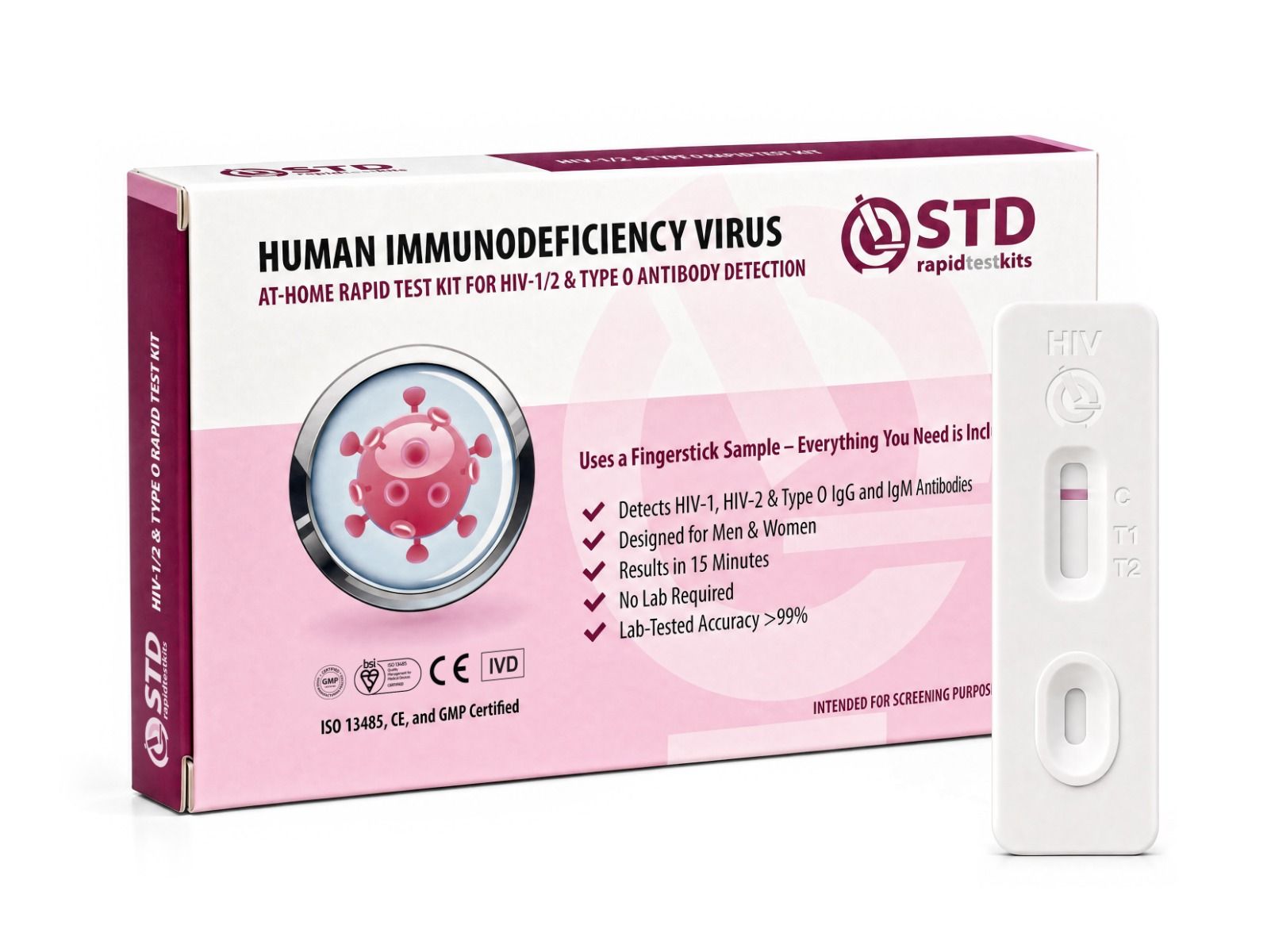
Full disclosure: this site sells rapid at-home STI and HIV tests, and the links in this article go to our own product pages. The at-home at-home HIV antibody test linked below is useful as a private status check between provider visits. Any reactive home result requires confirmation with a clinic-administered lab assay before any dosing decision.
Other STIs Still Need Routine Screening
Lenacapavir prevents HIV. It does nothing for gonorrhea, chlamydia, syphilis, herpes, hepatitis, or HPV. That distinction matters because the same sexual exposures that warrant HIV PrEP often involve some risk of other STIs, and untreated bacterial STIs can cause lasting damage on their own. They can also act as biological cofactors that raise HIV transmission risk if a future partner is positive.
The CDC recommends sexually active PrEP users be screened for gonorrhea and chlamydia at every site of potential exposure (urethral, rectal, pharyngeal as relevant) every three to six months, plus a syphilis blood test in the same interval (HIV.gov PrEP screening). Routine HIV testing remains the backbone of any prevention plan (CDC HIV testing). For most clinics that means quarterly STI labs alongside the lenacapavir injection-prep workup, with a more focused panel at any in-between visits.
The biggest behavior change with twice-yearly PrEP is psychological. A daily pill builds in a small daily nudge to think about sexual health. With one injection every six months, that cue disappears. People in early implementation studies describe forgetting to test for non-HIV STIs entirely between provider visits. A calendar reminder every three to four months for an at-home STI test kit, with results that loop back to your provider when something needs follow-up, closes the gap.
Condoms remain a useful layered tool. They reduce risk of bacterial STIs and herpes transmission in ways PrEP cannot. Conversation with partners about testing history, vaccination status (hepatitis B and HPV in particular), and current treatment is part of the same toolkit, and PrEP does not replace it.
Missed Doses and Switching Between Regimens
The maintenance schedule has a built-in two-week buffer on either side of the six-month mark. Within that window, your next injection is simply your next injection, no special steps required. Past the buffer, the protocol becomes more cautious. Your provider will typically test you for HIV again before re-dosing, may bridge you with daily oral PrEP to cover the gap, and will restart with the standard maintenance dose if the gap is short or repeat parts of the loading regimen if drug levels have dropped substantially.
The right move if you have already missed a dose is the same as if you have just had a possible exposure: get tested, then call your provider. Do not wait for symptoms. Acute HIV often presents with vague flu-like signs (fever, fatigue, lymph-node swelling, sometimes a rash) within two to four weeks of exposure, and it is easy to mistake for almost anything else.
People do change PrEP regimens. Cost, side effects, life circumstances, partner changes, or simply preference can all be reasons. Switching from oral PrEP to lenacapavir is the most common path; you stop the daily pill on the day of your first injection plus loading dose. Switching back to oral PrEP requires more care, because lenacapavir keeps releasing for months after your last shot. Your clinician will start the daily pill at a specific point so coverage stays continuous, and they may extend pill coverage longer than usual to account for the slow tail of the depot. Stopping PrEP entirely after lenacapavir works the same way: there is a long tail, partial protection during that tail, and a real concern about resistance if you contract HIV during it without testing. Plan the off-ramp with a provider, not on your own.
- Within plus or minus two weeks of the scheduled date: proceed normally. Your next injection is just your next injection.
- Past the buffer: call your clinic before coming in. Expect an HIV retest, and possibly a short oral PrEP bridge while drug levels are restored.
- If you had a possible HIV exposure during the gap: get tested first, then call. Do not wait for symptoms; acute HIV often looks like a vague flu.
Choosing the Right PrEP Option for You
There is no single right answer for which PrEP regimen to use. The best one for any given patient is the regimen they will actually take consistently over the time window they need protection. Daily oral pills (Truvada and Descovy) work well for people with a stable medication routine who do not mind a daily reminder of their HIV-prevention status. They are also the only options indicated for on-demand or event-driven dosing in cisgender men who have sex with men, which can suit people whose exposure risk is occasional rather than ongoing.
Cabotegravir (Apretude) is a bimonthly intramuscular injection that suits patients who want to skip daily pills but cannot manage a six-month gap, or who prefer the closer cadence as a built-in reminder to come in for STI screening more frequently. Lenacapavir's two-injection-per-year schedule fits patients who have struggled with adherence on either pill or bimonthly schedules, who travel often, who want maximum privacy, or who simply prefer to make HIV prevention a twice-yearly appointment rather than a recurring household task.
What matters is that some form of PrEP is in place during periods of life when HIV exposure is plausible, and that the regimen chosen is one the patient can sustain without unintended gaps.
Your Next Steps for Starting Lenacapavir
Do you have a confirmed HIV-negative result from a test in the last three months?
Yes: Move to step 2 and contact a PrEP-prescribing provider (primary care, sexual-health clinic, LGBTQ+ health center, or telehealth platform) to request lenacapavir.
No: Use an at-home HIV rapid test or visit a clinic this week to confirm your status. A reactive home result needs lab confirmation before a PrEP appointment.
Has the provider confirmed Yeztugo is the right fit, run baseline labs, and started the two-day oral loading dose?
Yes: Receive your first 927 mg subcutaneous injection on day 1 with the oral tablets, take the second 600 mg oral tablet on day 2, then set a calendar reminder for your maintenance dose 26 weeks out (plus or minus two weeks). Add a separate quarterly reminder for between-visit STI screening.
No: Ask whether oral PrEP (Truvada or Descovy) or cabotegravir (Apretude) fits your situation while you wait for a clinic in your area to start offering lenacapavir, then revisit the switch in six to twelve months.
Practical sequence from interested to dosed. Adapt to your local clinic workflow.
Lenacapavir is the first long-acting injectable for HIV prevention to be administered twice a year. Trial data demonstrate prevention of almost all HIV infections among those at risk, making it a highly effective, long-acting alternative to daily oral pills.
FAQs
- Is lenacapavir actually FDA-approved for HIV prevention?
- Yes. The FDA approved lenacapavir under the brand name Yeztugo on June 18, 2025, for HIV pre-exposure prophylaxis in adults and adolescents weighing at least 35 kg. The same molecule was already approved as Sunlenca for the treatment of multi-drug-resistant HIV in 2022, so its safety profile was well characterized before the prevention indication.
- How often do I need the lenacapavir injection?
- After a brief oral loading dose on day 1 and day 2, you receive one subcutaneous injection every six months (every 26 weeks, with a tolerated window of plus or minus two weeks). Two clinic visits a year, plus the pre-injection HIV test, is the entire regimen once you are established on it.
- How effective is the shot compared to daily PrEP?
- In both Phase 3 PURPOSE trials combined, fewer than 0.1% of participants who received on-schedule injections contracted HIV, a rate superior to daily oral Truvada in direct comparison. The critical variable is on-time dosing; the two breakthrough infections in PURPOSE 2 both involved delayed follow-up injections. Science designated lenacapavir its 2024 Breakthrough of the Year on the strength of those results.
- Does the injection hurt?
- Injection-site reactions are usually mild and short-lived. A brief sting during administration is normal; localized tenderness, mild redness, or a small palpable lump under the skin can linger from a few days to two or three weeks. Severe or worsening pain beyond the first week warrants a call to your clinic.
- Can I still get other STIs while on lenacapavir?
- Every STI other than HIV remains a risk while on lenacapavir, including chlamydia, gonorrhea, syphilis, herpes, hepatitis B and C, and HPV. The CDC recommends STI screening every three to six months while on any PrEP regimen, which is why at-home screening between provider visits is a practical habit for PrEP users.
- Who qualifies for lenacapavir PrEP?
- Adults and adolescents who weigh at least 35 kg (about 77 pounds), test HIV-negative immediately before each dose, and have a plausible HIV exposure risk through sex or injection drug use. There is no upper age limit and no gender or orientation restriction.
- Does lenacapavir interact with gender-affirming hormones?
- Available data do not show clinically significant interactions between lenacapavir and estrogen or testosterone-based hormone regimens. WHO's 2025 recommendation explicitly named transgender people as a priority population for the shot. Always cross-check with your prescriber when adding any new medication.
- What if I miss my six-month appointment?
- Within two weeks of the scheduled date, your next injection proceeds normally. Past that buffer, your provider will test for HIV again, may bridge you with daily oral PrEP for a short period, and will restart on a protocol that depends on how long the gap has been. Do not assume continued protection if you are noticeably late, and call your clinic before walking in.
- Is lenacapavir covered by insurance, and what does it cost?
- Yeztugo carries a high U.S. list price, but almost no individual pays it out of pocket. Under the ACA's preventive-services rule, most commercial and Medicaid plans cover CDC-recommended PrEP at zero cost-sharing, which includes lenacapavir. Uninsured or underinsured patients can apply to Gilead's Advancing Access program (1-800-226-2056), which has a free-medication pathway in qualifying cases.
- Can I switch between lenacapavir and daily PrEP?
- Yes, with planning. Switching from oral PrEP to lenacapavir is straightforward; you stop the daily pill on the day of your first injection plus loading dose. Switching back requires more care because the lenacapavir depot keeps releasing for months. Your clinician will start the daily pill at a specific point so coverage stays continuous, and may keep you on it longer than usual. The same logic applies to stopping PrEP entirely: plan the off-ramp with a provider.
How we sourced this article: We summarized current CDC, WHO, and NHS guidance on injectable HIV PrEP, the published PURPOSE 1 and PURPOSE 2 Phase 3 trial data, FDA labeling for lenacapavir under the brand name Yeztugo, and HIV.gov screening recommendations for sexually active adults. We cross-checked dosing specifics and the FDA approval date of June 18, 2025 against the manufacturer's announcement, and we calibrated the testing-schedule section against current CDC PrEP guidance. We do not provide clinical diagnosis. For an individualized PrEP plan, talk to a licensed prescriber.
- HIV.gov. Pre-exposure prophylaxis (PrEP) overview, including eligibility criteria, screening cadence, and approved oral and long-acting injectable options such as lenacapavir.
- World Health Organization. WHO recommends injectable lenacapavir for HIV prevention, July 14, 2025, including dosing framing, efficacy positioning, priority populations, and call for community-based delivery models.
- Gilead Sciences. Yeztugo (lenacapavir) FDA approval announcement, including the June 18, 2025 approval date, dosing regimen, and PURPOSE 1 and PURPOSE 2 Phase 3 trial efficacy data.
- U.S. Centers for Disease Control and Prevention. HIV basics, transmission routes, prevention framing, and surveillance overview.
- U.S. Centers for Disease Control and Prevention. HIV testing recommendations and the role of routine screening in prevention.
- U.S. National Institutes of Health, HIVinfo. Pre-Exposure Prophylaxis (PrEP) fact sheet covering Yeztugo and Apretude as injectable PrEP options and the role of oral lead-in dosing.
- UK National Health Service (NHS). HIV and AIDS overview, including prevention guidance and PrEP availability in the UK system.
