HIV Symptoms Day by Day: What You Feel After Exposure
What HIV can feel like in the first 30 days, and when to test
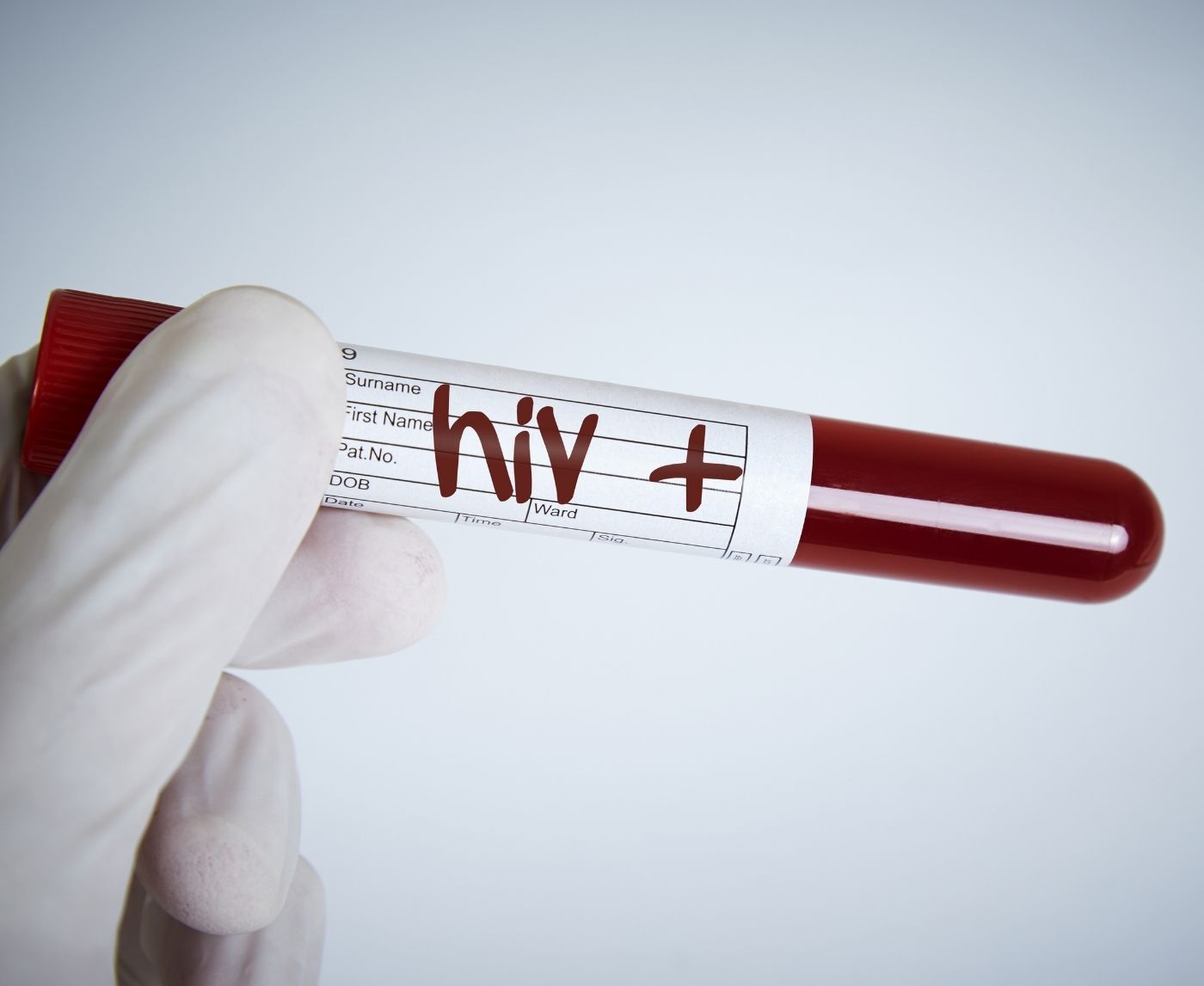



- Acute HIV symptoms typically start 2 to 4 weeks after exposure and look like the flu: fever, sore throat, fatigue, rash, and swollen glands. Roughly one in three people have no acute symptoms at all.
- A negative HIV test before day 14 does not rule out infection. Most labs recommend a 4th-generation antigen-antibody test at day 18 or later, with a follow-up test around day 45 for full reassurance.
Published: November 2025 | Editorial review and quality control: Martina N.
If you've had a possible HIV exposure and you're trying to map out exactly when symptoms might appear, this guide walks the timeline day by day. Acute HIV (the first stage of infection) can produce a flu-like illness about 2 to 4 weeks after exposure, or it can produce no symptoms at all. Both patterns are common, and neither tells you on its own whether you actually have HIV.
What follows is what most people want to know: when symptoms typically start, what they feel like, why an HIV test taken too early can miss infection, and what the CDC and WHO recommend for testing after a possible exposure. Symptoms alone never confirm or rule out HIV. Knowing the rough day-by-day pattern helps you act on facts instead of fear, and helps you book the right test at the right time.
Why Your Body Reacts the Way It Does
HIV is a retrovirus. After it enters the bloodstream, it takes time to find immune cells (specifically CD4 T-cells), insert its genetic material into them, and start replicating. During the first week or so, viral counts in the blood are still climbing. That climb is invisible from the outside: no fever, no rash, no obvious sign that anything is happening.
By the second or third week, the virus is replicating fast enough that the immune system mounts a strong inflammatory response. That response, not the virus itself, produces what clinicians call acute retroviral syndrome (ARS): the bundle of flu-like symptoms most associated with early HIV. After two to four weeks the body partially controls viral counts, the inflammatory response eases, and acute symptoms fade. The virus does not leave the body. It enters a quieter chronic phase that can last years before it visibly damages the immune system.
This is the cycle that makes day-by-day timing so confusing. The symptoms you feel (or don't feel) in the first month come from your immune system's reaction, not directly from how much virus is present. Two people with the same exposure can have very different experiences. One develops textbook ARS at day 10. The other notices nothing at all and only learns they're positive months later through routine screening.
The First 72 Hours: PEP and the Window That Matters Most
Before getting into day-by-day symptoms, the most important window is actually the first 72 hours. If you had a high-risk HIV exposure (condomless sex with a partner known or likely to be HIV-positive and not on suppressive therapy, a needlestick injury, sexual assault), post-exposure prophylaxis (PEP) can prevent infection. PEP is a 28-day course of antiretroviral medication, started ideally within 24 hours and absolutely within 72 hours of exposure.
PEP is taken regardless of symptoms. The CDC recommends it for any qualifying high-risk exposure within the 72-hour window, and it's accessible at most emergency departments and many urgent-care clinics, often on a same-day basis. Effectiveness drops sharply after 72 hours; by day 4 or 5, PEP is no longer indicated and the focus shifts to monitoring and testing.
If you're past the 72-hour mark, the strategy changes: watch for acute symptoms, plan testing at the right windows, and act on results. The day-by-day information that follows assumes you're past the PEP window, or that PEP wasn't medically indicated for your specific exposure.
PEP is the priority for high-risk exposures within the past 72 hours: condomless sex with a partner known or likely HIV-positive and not virally suppressed, a needlestick injury, or sexual assault. Most ER and urgent-care clinics start PEP on a same-day basis, and some pharmacists can dispense it directly in select states. After 72 hours, the strategy shifts to scheduled testing rather than prevention.
Days 1 to 7: The Silent Phase
In the first week after exposure, almost no one feels HIV. If you're feeling off the day after, sweating, sleepless, vaguely sick, that's almost always anxiety, hangover, or the adrenaline crash that comes with worry about exposure. The virus needs days to establish itself before your immune system has anything to react to.
Two practical implications matter here. First, a negative HIV test in the first week is not reassurance. Even the most sensitive nucleic acid tests (NAATs) miss the majority of infections this early. The standard 4th-generation antigen-antibody test, which most labs use, won't reliably detect HIV until at least day 18, per the CDC's testing guidance.
Second, the window matters more than panic. Anything you do in week one (compulsive googling, taking a test the next morning, scrutinizing every sensation) will not give you a real answer. Save your testing energy for the second and third weeks, when results begin to mean something. Use the first week to identify a clinic, order a home test kit, or schedule a lab appointment so you're ready when the testing window opens.
Can I feel HIV symptoms in the first week after exposure?
Almost certainly not. Acute HIV symptoms typically appear 2 to 4 weeks after exposure, peaking around days 15 to 21. About one in three newly infected people never notice acute symptoms at all. The earliest reliable test is a NAAT around day 10 to 14, or a 4th-generation lab antigen-antibody test at day 18 to 21, with a follow-up test at day 45 for full reassurance.
Days 8 to 14: Where Acute Symptoms Often Begin
Around day 8 to 14 is when acute retroviral syndrome most commonly appears. About two-thirds of newly infected people develop noticeable flu-like symptoms in this window, per the HIV.gov symptoms reference. The remaining third, roughly one in three, stay completely asymptomatic.
The symptom cluster looks like the flu. Most people who do feel symptoms get more than one of these in some combination: a fever (often low-grade at 100 to 102°F, occasionally higher), a sore throat that's dry and persistent without white pus patches, deep fatigue that doesn't lift with sleep, body aches and joint pain, headaches, swollen lymph nodes in the neck or armpits or groin, a flat non-itchy rash on the chest or back or upper arms, mouth ulcers near the gums, or GI upset like nausea and diarrhea.
This is the cluster that gets misdiagnosed as flu, COVID, mono, strep, or 'stress.' A clinician seeing one symptom in isolation rarely thinks HIV first. The clue is the combination, especially when there's a recent risk exposure on the table. The frequency table below shows roughly how often each symptom appears in symptomatic acute HIV cases reported in the published literature.
| Symptom | Approximate frequency in symptomatic cases | What it feels like |
|---|---|---|
| Fever | Around 75% | Persistent low-to-moderate, often with chills |
| Fatigue | Around 50% | Heavy, doesn't respond to rest |
| Muscle and joint aches | Around 50% | Body-wide, like a bad flu |
| Rash | Around 50% | Flat red spots on chest or back, doesn't itch, fades on its own |
| Sore throat | Around 40% | Dry, no pus patches, hangs around for days |
| Swollen lymph nodes | Around 40% | Tender, palpable in neck, armpit, or groin |
| Mouth ulcers | Around 30% | Painful, often near the gums or inside cheeks |

Days 15 to 21: When Symptoms Often Peak
If symptoms appeared around day 8 to 12, they tend to peak between days 15 and 21. This is when fevers spike highest, night sweats become noticeable, and rashes are most visible. Some people end up at urgent care thinking they have severe flu or mono. Mono and acute HIV in particular look almost identical from the outside, which is why HIV testing should be on the differential whenever someone tests negative for mono with a flu-like illness and has a recent exposure history.
This is also the window where lab-based 4th-generation HIV tests become reliable. By day 18, most antigen-antibody tests can detect the p24 antigen, which appears earlier than antibodies and stays detectable through the acute phase. NAATs (nucleic acid tests) can detect HIV slightly earlier, often by day 10 to 14, but they're not commonly used for first-line screening because of cost and turnaround time.
If you've had a cluster of symptoms for more than a few days in this window, and there's a possible exposure in the past three weeks, this is the right time to test. Even if symptoms started fading by the time you book the appointment, the test result from this window is still meaningful: a 4th-generation lab test taken between day 18 and 21 catches the large majority of acute infections.
Day 18 to 21 is the earliest reliable window for a 4th-generation lab antigen-antibody test, which catches the large majority of acute infections. NAATs (RNA PCR) can detect HIV slightly earlier (day 10 to 14) but are typically reserved for higher-risk exposures or PEP monitoring. Antibody-only home tests are more useful from week 4 onward.
Days 22 to 30: When Symptoms Fade But the Virus Doesn't
By day 25 or so, most people who had acute symptoms start to feel better. The fever breaks, the rash fades, energy returns. It's tempting to assume the body fought off whatever bug was responsible. That assumption is the most dangerous part of the timeline.
What's actually happening: the immune system has gotten the initial viral surge under control. CD4 cell counts partially recover, viral counts drop from the acute peak, and the inflammatory response eases. The virus has already integrated itself into reservoir cells, where it stays hidden through the chronic stage that follows.
This chronic stage of HIV can last years with no obvious symptoms. During chronic HIV, transmission risk to partners stays elevated even when the person feels healthy and untreated viral loads remain detectable. This is why testing at the 30 to 45 day mark is so important after a possible exposure: it catches the virus after acute symptoms have faded but before the chronic stage causes harm. Antiretroviral therapy started in this window keeps the virus suppressed and brings sexual transmission risk to effectively zero, the U=U principle (undetectable equals untransmittable), per the CDC's HIV treatment guidance and reflected in current global treatment guidelines.
What If You Have No Symptoms at All?
About one in three people with newly acquired HIV report no acute symptoms at all, per the HIV.gov symptoms reference. There's no fever, no rash, no sore throat. This is not unusual and not a sign of a milder infection. The virus is doing the same biological work whether or not you feel it.
The problem is that 'I felt fine' reads as 'I'm probably negative' to most people, even though asymptomatic acute HIV is exactly as transmissible as symptomatic acute HIV. Some studies suggest it may be more transmissible because the person doesn't know to take precautions or to start treatment, which is one reason routine screening is recommended for sexually active adults regardless of how they feel.
If there's been a possible exposure and you don't feel anything, the rule still holds: test at day 18 to 21 with a 4th-generation test, then re-test at day 45 if the first test was negative. The absence of symptoms changes nothing about when to test or which test to use. Symptom-free does not mean infection-free, and waiting for symptoms that may never arrive can cost months of treatable time.
Most people who get HIV experience flu-like symptoms within 2 to 4 weeks after infection. But some people may not feel sick during this stage, or for years afterward.
HIV vs Flu, COVID, and Mono: Why It's So Easy to Miss
The single biggest reason acute HIV gets missed is that it shares almost every symptom with three more common illnesses: seasonal flu, COVID-19, and mono (Epstein-Barr virus). Strep throat is a less common but possible mimic for the sore-throat presentation. The patterns differ in practice in ways worth knowing, summarized in the differential below.
The honest takeaway: symptoms alone never tell you which virus you have. Recent exposure history plus the right test does. If a respiratory or sore-throat illness lingers past its expected duration, or if a strep or mono test comes back negative in someone with a recent risk exposure, HIV testing belongs on the differential.
| Illness | Distinctive features | Typical duration | Ruling-out test |
|---|---|---|---|
| Seasonal flu | Fast onset (24 to 48 hours), heavy respiratory symptoms (cough, congestion, runny nose) | 5 to 7 days | Influenza rapid antigen or PCR |
| COVID-19 | Loss of smell or taste, persistent cough, shortness of breath | Variable, often 5 to 10 days | At-home or PCR COVID test |
| Mono (EBV) | Severe sore throat with white pus patches, prolonged heavy fatigue, swollen posterior lymph nodes | 2 to 4 weeks | Monospot or EBV antibody panel |
| Strep throat | Sudden severe sore throat with white patches, tender front-of-neck nodes, no rash, no body aches | 3 to 7 days on antibiotics | Rapid strep swab |
| Acute HIV | Gradual onset, dry sore throat (no pus), flat non-itchy rash on torso, body-wide aches, swollen nodes | 1 to 2 weeks of acute symptoms | 4th-gen antigen-antibody test from day 18, NAAT from day 10 to 14 |
Testing Windows: When Each HIV Test Becomes Reliable
Three test types are commonly used. Their windows differ.
4th-generation lab antigen-antibody test (HIV-1/2 Ag/Ab combo) is the modern standard at most clinics and labs. It detects the p24 antigen plus antibodies, becomes reliable around day 18, and is fully reliable by day 45. This is what the CDC recommends for routine post-exposure testing.
Nucleic acid test (NAAT or RNA PCR) detects viral RNA directly and becomes reliable around day 10 to 14. It's more expensive and is usually only ordered for high-risk exposures, post-exposure prophylaxis monitoring, or cases where 4th-gen results are ambiguous.
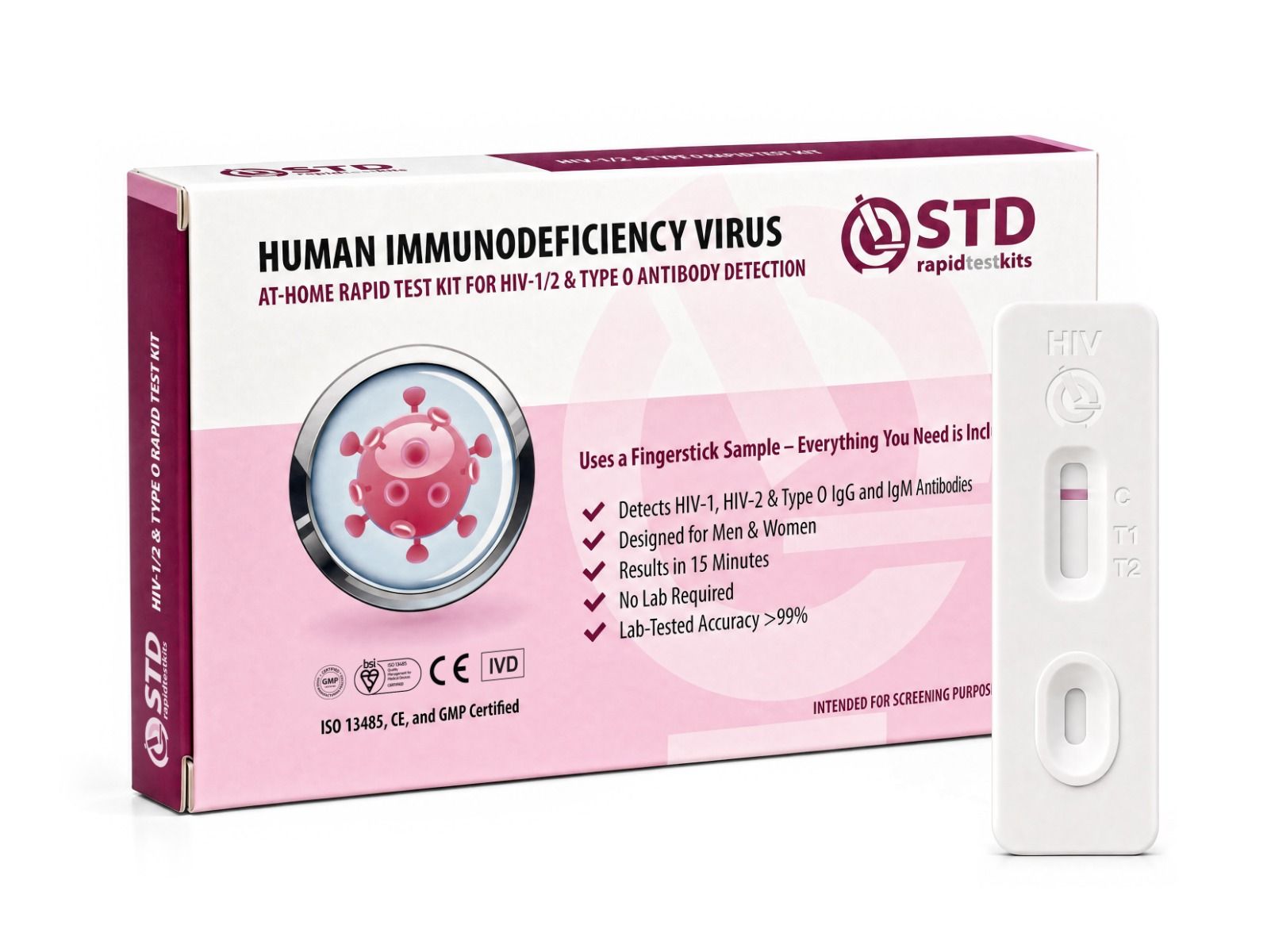
Rapid antibody-only home tests (3rd-generation) detect only antibodies, not the p24 antigen. Their window is longer, typically reliable at 23 to 90 days, with most positives detected by day 45. At-home rapid tests using a fingerstick blood sample fall into this category. They're useful for confirming established infection and routine screening, less useful in the first month after a specific exposure.
A practical timeline for someone with a known exposure: first test at day 18 to 21 using a 4th-generation lab test if accessible, or a NAAT for higher-risk exposures. Follow-up test at day 45, which catches almost all infections. If you're using only an antibody-based home test, a final reassurance test at day 90 is the conservative move, since the antibody-only window extends out to 90 days per the CDC's testing guidance referenced above.
| Test type | Becomes reliable | What it detects |
|---|---|---|
| NAAT (RNA PCR) | Day 10 to 14 | Viral RNA directly |
| 4th-generation lab antigen-antibody | Day 18 to 45 | p24 antigen and antibodies |
| Rapid antibody-only home test | Day 23 to 90 | Antibodies only |
What to Do If Your Test Comes Back Positive
A positive HIV test today is not what it would have been twenty years ago. With modern antiretroviral therapy (ART), HIV is a manageable chronic condition and people on treatment can lead long and healthy lives, per the WHO HIV fact sheet. The treatment plan is straightforward and starts with a confirmatory lab test.
Step 1: Confirm with a lab test. Rapid home tests can occasionally produce false positives. The standard confirmation is an HIV-1 / HIV-2 differentiation immunoassay or, less commonly today, a Western blot, ordered through a clinic or lab.
Step 2: Start ART quickly. Modern ART regimens suppress viral load to undetectable levels (under 200 copies/mL) within weeks to months. At undetectable levels, HIV cannot be sexually transmitted to partners (the U=U principle).
Step 3: Notify partners. Anonymous partner notification services exist in most US states through local health departments, where partners get tested without your name attached. The CDC and many state programs provide direct help with notification messaging.
Step 4: Build your support team. A primary care provider, an HIV specialist, and a mental health professional are all valuable. Living with HIV is medically manageable; the harder work is often emotional and social, and connecting with peer support communities (in person or online) helps significantly.
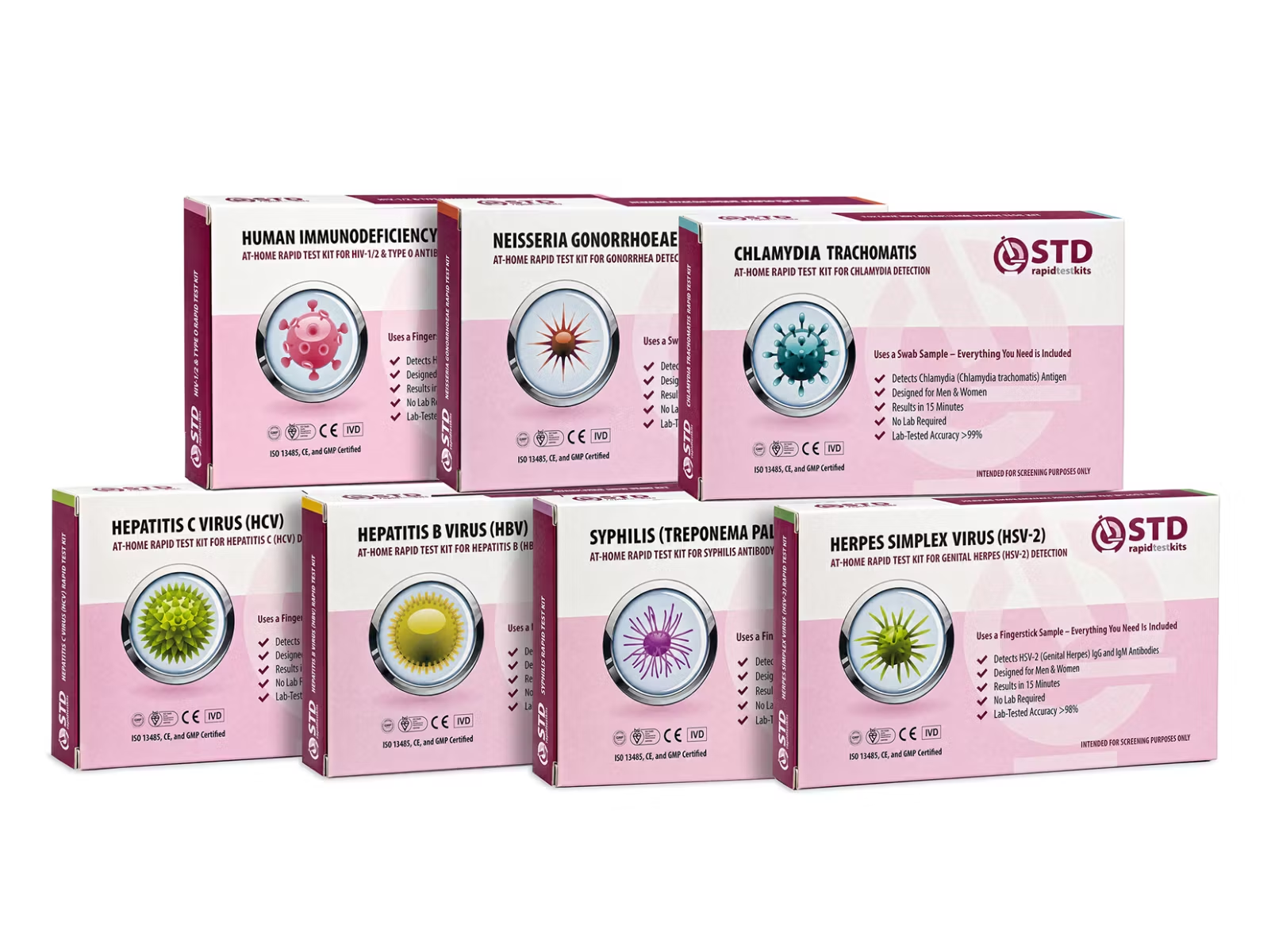
If your exposure also raises concern about other STIs (chlamydia, gonorrhea, syphilis, hepatitis B, hepatitis C, herpes), consider a broader screening panel alongside HIV testing. Many of these share exposure routes and can be present without obvious symptoms.
Frequently Asked Questions
- Can HIV symptoms show up the day after exposure?
- The virus needs time to replicate before the immune system mounts the inflammatory response that causes symptoms, which is why acute HIV symptoms cluster in the 2 to 4 week window after exposure. A symptom felt the next morning is almost always anxiety, hangover, or stress rather than HIV.
- What do early HIV symptoms actually feel like?
- Most often, like a moderate flu that drags on. Fever, sore throat (dry, no pus), deep fatigue, body aches, swollen lymph nodes in the neck or armpits or groin, and sometimes a flat non-itchy rash on the chest or back. The cluster matters more than any single symptom.
- What if I feel completely fine? Could I still have HIV?
- Yes. About one in three people with newly acquired HIV report no acute symptoms at all. Asymptomatic acute HIV is just as transmissible as symptomatic, and it's just as treatable once detected. If there was a real exposure, plan to test at day 18 to 21 and again at day 45 regardless of how you feel.
- I tested at day 10 and it was negative. Am I in the clear?
- At day 10 most HIV tests cannot reliably detect infection, so a negative result is not yet reassurance. A 4th-generation antigen-antibody test becomes reliable around day 18, and a NAAT becomes reliable around day 10 to 14. The conservative path is to retest at day 18 to 21, and again at day 45 if that result is negative.
- What is the HIV rash and what does it look like?
- Acute HIV rash is usually flat, mildly red, and non-itchy. It tends to appear on the chest, back, or upper arms, and fades within a few days to a couple of weeks. Because it doesn't itch and is often subtle, it's easy to miss or attribute to heat or laundry detergent.
- Does the sore throat from HIV feel different from strep?
- Often yes. Strep typically causes a sudden severe sore throat with white pus patches and tender front-of-neck lymph nodes. Acute HIV's sore throat is more often dry, persistent, and accompanied by other body-wide symptoms like fevers and rashes. A negative strep test plus that broader cluster is worth taking seriously.
- What's the most accurate HIV test in the first month?
- After day 18 to 21, a 4th-generation lab antigen-antibody test is the practical standard. NAATs (RNA PCR) can detect infection earlier (around day 10 to 14) but are more expensive and less commonly used for routine screening. Antibody-only home tests are more useful from week 4 onward.
- If symptoms fade, does that mean I've cleared the virus?
- No. The body never clears HIV on its own. When acute symptoms fade, the virus is moving into the chronic stage, where it remains active in reservoir cells and continues to be transmissible. Testing at day 30 to 45 is the way to find out either way.
This article was built from current public-health guidance from the CDC, WHO, NHS, and HIV.gov, supplemented by published systematic reviews of acute HIV symptom prevalence. We focused on what the major health authorities actually say about symptom timing and testing windows, and translated it into plain-English action items for someone trying to make decisions in the first month after a possible exposure. Treatment specifics should always be confirmed with a clinician familiar with your situation.
- U.S. Centers for Disease Control and Prevention. About HIV: symptoms, stages, and what acute HIV looks like.
- U.S. Centers for Disease Control and Prevention. HIV testing overview and recommended windows for 4th-generation antigen-antibody tests, NAATs, and antibody-only tests.
- U.S. Centers for Disease Control and Prevention. HIV treatment overview, antiretroviral therapy, undetectable viral load, and U=U (treatment as prevention).
- HIV.gov. Post-exposure prophylaxis (PEP) eligibility and the 72-hour window after a possible exposure.
- HIV.gov. Symptoms of HIV across acute, chronic, and AIDS stages, including the two-thirds symptomatic prevalence figure.
- World Health Organization. HIV/AIDS fact sheet, including treatment outcomes on antiretroviral therapy.