HIV Stigma and At-Home Testing: How Private Testing Saves Lives
HIV stigma keeps thousands of people from testing, fueling onward transmission and delayed treatment. At-home rapid tests offer a private, judgment-free first step. Here is how stigma operates, why it persists, and how an at-home kit fits alongside clinic and lab care.




- Stigma, not just clinic access, drives many people to delay HIV testing for years, and undiagnosed infection accounts for a disproportionate share of onward transmission.
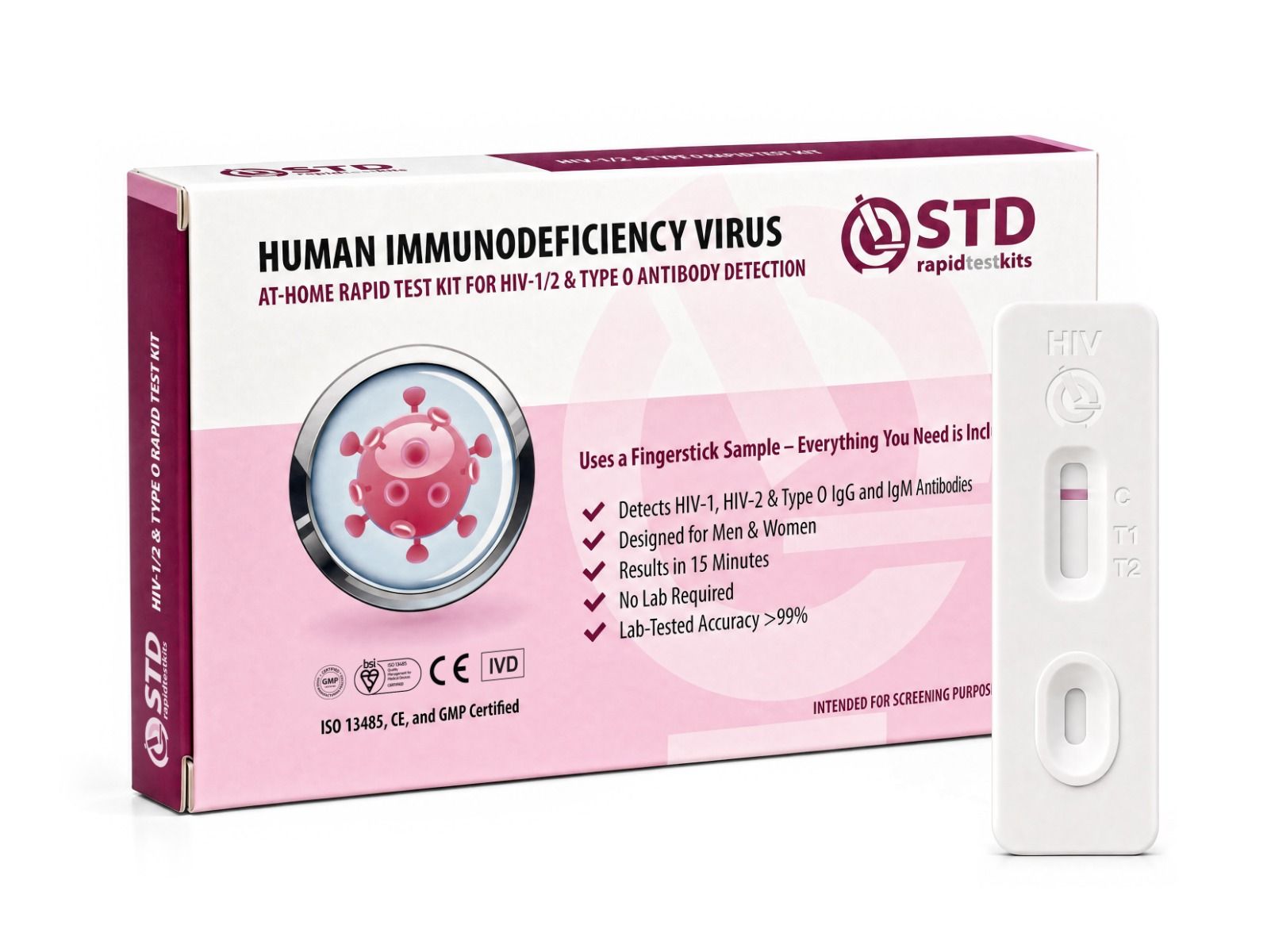
- At-home rapid HIV tests deliver a screening result in roughly 15 to 20 minutes from a fingerstick blood sample, with confirmatory lab testing recommended for any positive result.
Published: November 2025 | Last updated: May 2026 | Editorial review and quality control: Martina N.
HIV care has moved further than many people realize. Antiretroviral therapy can drive the virus down to undetectable levels, and undetectable means untransmittable through sex. At-home rapid tests now deliver a screening result in roughly 15 to 20 minutes from a fingerstick blood sample. Yet thousands of people who could benefit from testing still don't take that first step. According to the U.S. Centers for Disease Control and Prevention, stigma ranks ahead of cost, distance, and access as the barrier that keeps people away from testing (CDC, Let's Stop HIV Together: HIV Stigma). Fear of being seen, judged, or labeled keeps people away from clinics, away from conversations with partners, and away from the simple act of opening a test kit.
This piece looks at why HIV stigma persists, how it costs lives that modern medicine could otherwise save, and where at-home testing fits into a quieter, more private path forward.
Why HIV Stigma Still Blocks Prevention Progress
Public-health agencies have flagged stigma as a measurable barrier to HIV care for decades. The CDC describes HIV stigma as the negative attitudes and beliefs that surround the virus, and it links those attitudes directly to slower diagnosis, slower treatment, and ongoing transmission (CDC, HIV Stigma). When people anticipate judgment from a partner, a coworker, a family member, or a clinician, they often delay testing until symptoms force the issue. By then, the virus may have been transmitted onward more than once.
UNAIDS estimates that globally, roughly 1 in 7 people living with HIV are unaware of their status (UNAIDS Global HIV Fact Sheet). In high-income settings that share is smaller, but it isn't zero, and the undiagnosed group drives transmission heavily because they don't yet have access to the treatment that suppresses the virus to undetectable levels.
Patterns described to advocacy groups and outreach workers tend to rhyme. People cancel a clinic appointment more than once. They search the internet for symptom lists at 2 in the morning. They put a sealed test kit on a bedside table for weeks without opening it. In those moments, the heaviest weight tends to be the prospect of being seen walking into a clinic, or of a partner spotting the kit on a bedside table.
UNAIDS reports that roughly 1 in 7 people living with HIV worldwide do not know their status. Closing that gap is the single largest prevention lever still available, and stigma is the friction that keeps it from closing.
What Stigma Actually Looks Like Day to Day
Stigma isn't always loud. It rarely arrives as a slur. More often it shows up as quiet absence: the friend who pulls back after a confiding conversation, the invasive paper form at a clinic's front desk, the brief question from a primary-care provider that lands in a clipped tone. Each individual moment is small. Together, they teach people to stay quiet.
Researchers studying internalized HIV stigma have repeatedly found that fear of judgment leads people to delay testing until symptoms become impossible to ignore. The CDC notes that stigma can drive avoidance of testing, treatment, and care (CDC, HIV Stigma). Decades of public-health research and community-led reporting have documented that this burden falls disproportionately on people who already face other forms of marginalization, including men who have sex with men, Black and Brown communities, sex workers, and people who inject drugs. Others test once during a crisis and never return, because the experience itself felt marking.
The healthcare environment compounds the problem. Clinics with limited hours, intake forms with invasive yes/no questions, hushed conversations at the desk, and fluorescent waiting rooms together signal that this kind of care is something other.

How At-Home Testing Sidesteps the Shame Barrier
An at-home HIV rapid test is a lateral-flow immunoassay that looks for HIV antibodies in a small drop of blood drawn from a fingerstick. The chemistry is the same family used in lab rapid tests, packaged for self-collection at home. The user pricks a fingertip with the supplied lancet, places a drop of blood on the test cassette, adds the buffer solution, and waits. A screening result typically appears in roughly 15 to 20 minutes (CDC, Self-testing for HIV).
For many people, this is the first HIV test they ever complete. It removes the waiting room, the intake form, and the visible presence in a clinic. It puts decision-making in private hands, on the user's schedule, in the user's space. For populations who have experienced healthcare bias firsthand, that matters. For people who have already tried once and walked out, it offers a quieter second try.
Self-tests are not a replacement for laboratory confirmation. The CDC and FDA both recommend that any positive at-home result be confirmed by a clinical laboratory test, and that anyone with ongoing exposure risk continue regular testing on a schedule (CDC, HIV Testing). What at-home testing does is lower the activation energy for that first step into care.
What the at-home rapid HIV test offers
- Privacy: no clinic, no waiting room, no intake form, no staff visibility on what the test is for.
- Speed: a screening result in roughly 15 to 20 minutes from a single fingerstick blood drop.
- Confirmatory pathway: any reactive result should be confirmed by a clinical laboratory test before treatment decisions.
Choosing Between At-Home, Mail-In, and Clinic Testing
Different testing routes serve different needs. The right choice depends on how recent the exposure was, whether symptoms are present, and how much privacy matters to the person testing. The table below sets out the trade-offs at a glance.
Disclosure: stdrapidtestkits.com sells the at-home rapid HIV tests referenced in this article. Recommendations follow editorial fit for the reader's concern, not commercial benefit.
| Testing Method | Privacy | Speed | Confirmatory Step | Best Fit For |
|---|---|---|---|---|
| At-home HIV rapid test | Very high | Result in 15 to 20 minutes | Yes, if positive | First-time testers, privacy-sensitive users, people delayed by stigma |
| Mail-in lab kit | High | 2 to 5 business days | Yes, if positive | Readers who prefer a lab-processed result |
| Clinic-based test | Lower | Same-visit, sometimes same-hour | Often built into the visit | People with symptoms, recent high-risk exposure, or who want immediate linkage to care |
Why Acting Early on a Positive Result Saves Lives
A positive HIV result, whether from an at-home test or a clinic visit, opens a treatment path that did not exist a generation ago. Modern antiretroviral therapy can suppress the virus to undetectable levels in most people within months, and at undetectable levels the virus is not transmitted through sex. The CDC, WHO, and major HIV care organizations all describe this as the U=U principle, undetectable equals untransmittable (WHO HIV/AIDS fact sheet).
Starting treatment early protects the immune system, reduces viral load, lowers the risk of passing the virus to partners, and improves long-term health outcomes. It also gives a person time to adjust emotionally before symptoms escalate or before relationships are affected.
People who learn their status from a home kit typically follow a short, well-defined pathway into care. The table below outlines the steps.
| Step | Why It Matters | How to Do It |
|---|---|---|
| Confirm a positive home result | Home tests screen; labs confirm | Visit a sexual health clinic or use a telehealth provider |
| Start antiretroviral therapy | Suppresses viral load and protects the immune system | A care team prescribes and monitors, often within days of confirmation |
| Notify recent partners | Lets partners test and consider treatment | Anonymous online tools, scripted messages, or a clinic-supported service |
| Screen for other STIs | Coinfections are common and treatable | Pair confirmatory testing with a broader STI panel |
Stigma Is Structural, Not Just Personal
It is easy to say "don't be ashamed." It is much harder when shame is reinforced by laws, healthcare systems, and social norms. In some jurisdictions, people with HIV can be prosecuted for not disclosing their status to a partner, even when the risk of transmission was negligible. Insurance underwriting still raises questions about PrEP prescriptions in some markets. People have lost jobs, housing, and relationships because their status became visible.
Unconscious bias also persists inside the clinic. Patients from groups that already face stigma elsewhere often experience routine healthcare as one more place to brace for judgment, which makes the proactive testing offer harder to deliver evenly and pushes some people away from care entirely. Those patients are responding rationally to systems that have given many of them good reasons to be wary, and at-home testing can route around those systems when a person needs to act now.
Private testing puts agency in the hands of the person at risk. It says: you deserve answers, you deserve privacy, and you deserve care rather than criminalization.
Stigma that lives in laws and institutions, not only in private attitudes, is part of why private testing channels exist. The CDC consistently identifies stigma reduction as a core pillar of the U.S. national HIV strategy, alongside expanded testing and treatment access.
Why the Numbers Still Demand Action
Globally, UNAIDS reports that nearly 1 in 7 people living with HIV does not know their status (UNAIDS Global HIV Fact Sheet). In some regions, the share is meaningfully higher, particularly among younger populations and men who have sex with men. Delayed diagnosis remains a leading driver of ongoing transmission, because people who don't know their status cannot start the treatment that drives the virus to undetectable.
The medicines themselves work. What lags is access, education, and the social environment that determines whether someone reaches for a test in the first place. UK figures from the NHS and Public Health England consistently show several thousand new diagnoses each year, with a meaningful fraction of those identified at late stages of infection (NHS, HIV and AIDS). Late diagnosis costs both health outcomes and prevention.
Even among those who do get tested, many test only once. One test is a snapshot of one moment in time. Risk changes. Relationships change. PrEP use, condom access, and partner viral load all shape real-world vulnerability. For people whose situations shift, regular testing is the way to stay current with risk that doesn't sit still, and at-home tests make that rhythm low-friction.
Stigma negatively affects the health of people with HIV. People who feel stigmatized may be less likely to get tested, get treatment, take medicine, or stay in care.
When to Test, Retest, or Wait After Exposure
After a potential exposure, the first instinct is often to test immediately. That instinct is understandable, and a same-day test can be a reasonable starting point, as long as it's paired with an understanding of how HIV tests detect the virus. HIV tests look for either the antibodies the body produces in response to the virus, the viral antigen p24, or the virus's genetic material. Each marker appears on a different timeline.
Rapid antibody tests, which most at-home kits use, typically detect HIV between 23 and 90 days after exposure (CDC, HIV Testing). Combined antigen/antibody tests, often available in clinics or some mail-in kits, narrow that window to roughly 18 to 45 days. Nucleic acid tests (NAAT), run only in laboratories, can detect HIV around 10 to 33 days after exposure. The table below summarizes the trade-off.
| Test Type | What It Detects | Typical Detection Window | Where It's Used |
|---|---|---|---|
| Antibody-only rapid | Immune response | 23 to 90 days | Most at-home rapid tests |
| Antigen/antibody (4th generation) | p24 antigen plus antibodies | 18 to 45 days | Clinics and some mail-in kits |
| NAAT (nucleic acid test) | Viral RNA | 10 to 33 days | Hospital or specialty laboratory |
If Your At-Home Test Is Positive: A Calm Roadmap
An at-home positive result can feel like the floor drops out. The most useful first response is to recognize what the test does and doesn't say. An at-home rapid test is a screening tool. A reactive result means HIV antibodies were detected. It does not, on its own, establish a confirmed diagnosis. The CDC and FDA both recommend that every reactive home result be confirmed by a laboratory test (CDC, Self-testing for HIV).
That confirmation step is straightforward. A sexual health clinic, a primary-care provider, or a telehealth service can order the lab-based test that closes the diagnostic loop. Many clinics now offer discreet pathways, including email and telephone booking, that minimize the visible exposure that home testing was meant to avoid in the first place. If the lab test confirms infection, antiretroviral therapy typically starts within days. Most people on modern regimens reach an undetectable viral load within a few weeks to months, and at undetectable levels the virus cannot be passed on through sex.
Support is also available beyond the clinical pathway. Anonymous helplines, peer-support groups, mental-health counselors, and patient-advocacy organizations all exist precisely for this transition, and many people use them in the first few weeks after diagnosis.

Building Testing Into a Routine That Fits Your Life
The longer-term goal is for testing to feel as routine as any other piece of health upkeep. The CDC's general recommendation is at least one HIV test for everyone aged 13 to 64, with annual or more frequent testing for people with ongoing risk factors. For sexually active gay and bisexual men, every 3 to 6 months is a common cadence; the same rhythm works well for anyone with multiple partners, inconsistent condom use, or partners whose status isn't known (CDC, HIV Testing).
At-home testing fits into that routine because it doesn't require carving time out of a workday or sitting in a clinic. It fits between Sunday night and Monday morning, between two relationships, in the quiet moment when a person realizes their last test was longer ago than they remembered. Steady, low-friction testing is what carries the prevention benefit, since any single test only describes one moment in time.
FAQs
- How soon after a possible HIV exposure should I take an at-home test?
- The safest anchor is the 12-week mark, when most at-home rapid antibody tests can be relied on for a confident negative. The underlying reason is that these tests look for HIV antibodies, which typically take 23 to 90 days to appear after exposure. Testing earlier is still useful, but a negative result before week 12 should be followed up at week 4 to 6 and again at week 12. If you have ongoing anxiety, test now, then retest on that schedule.
- What if I have no symptoms? Do I still need to test?
- Yes. HIV can stay symptom-free for years, and many people only learn their status through routine screening rather than feeling unwell. The CDC recommends that every adult and adolescent aged 13 to 64 be tested for HIV at least once, with annual or more frequent testing for those with ongoing risk factors. Feeling well is not a substitute for knowing.
- Does a negative result mean I'm in the clear?
- Not always. A negative result means the test did not detect HIV antibodies at the moment you tested. If the exposure was recent and within the antibody window period, the test may have missed it. Retesting after the window has fully passed is what gives you a result you can rely on.
- What happens if I get a positive result on an at-home test?
- An at-home positive is a strong signal, but it is a screening result rather than a final diagnosis. The CDC and FDA recommend confirming any positive home test with a laboratory test through a clinic, sexual-health service, or telehealth provider. Confirmatory testing is fast, often free or low cost, and is the entry point to treatment that keeps HIV well controlled.
- Will an at-home HIV test show up on my medical record or insurance?
- An at-home test you take privately is not added to your medical record or insurance file unless you choose to share the result. Confirmatory testing through a clinic does create a medical record, though in many jurisdictions HIV care is protected by stronger confidentiality rules than other care.
- Can oral sex transmit HIV?
- The risk from oral sex is much lower than from anal or vaginal sex, but it is not zero, particularly when one partner has bleeding gums, mouth ulcers, or an untreated STI. The CDC describes oral-sex HIV transmission as rare but documented. If oral sex is part of unprotected encounters, regular testing remains a reasonable habit.
- How often should I test if I have multiple partners?
- For sexually active gay and bisexual men and for anyone with multiple or anonymous partners, the CDC recommends testing every 3 to 6 months. The same cadence makes sense for anyone with new or changing partners, inconsistent condom use, or partners whose status is not known.
- Are at-home rapid HIV tests as accurate as lab tests?
- FDA-cleared at-home rapid HIV tests are highly sensitive and specific when used after the antibody window has passed, but laboratory tests, including newer combined antigen/antibody and NAAT assays, can detect HIV earlier and serve as the confirmatory standard. The most reliable approach is to use an at-home test for the first read and laboratory testing for confirmation of any reactive result.
How we sourced this article: We summarized current guidance from the U.S. Centers for Disease Control and Prevention, the World Health Organization, UNAIDS, the U.K. National Health Service, and the U.S. Food and Drug Administration. We focused on stigma research and HIV self-testing guidance, prioritized organizational root and category pages over individual studies, and described the at-home rapid kits we sell in plain language that matches what the test technology actually does.
- U.S. Centers for Disease Control and Prevention. Let's Stop HIV Together: HIV Stigma. Describes how stigma affects testing, treatment, and care.
- U.S. Centers for Disease Control and Prevention. Self-testing for HIV. Guidance on at-home HIV rapid tests and confirmatory testing pathways.
- U.S. Centers for Disease Control and Prevention. HIV Testing. Recommended testing schedules, test types, and detection windows.
- World Health Organization. HIV/AIDS fact sheet. Global picture of HIV, U=U principle, and prevention strategy.
- UNAIDS. Global HIV Fact Sheet. Most-recent global estimates including the share of people living with HIV who are unaware of their status.
- U.K. National Health Service. HIV and AIDS. Overview of HIV symptoms, testing, and treatment for U.K. readers.