Herpes, HIV, or Ingrown Hair? Why Your Groin Lymph Nodes Are Swollen
You’re in the bathroom, one leg propped on the tub, heart racing. There’s a small lump in your groin that wasn’t there last week. It’s tender when you press it. You replay everything in your head, last weekend, that hookup, the razor you used in a rush. Now your brain has gone straight to worst-case scenario. Herpes? HIV? Something you missed?
Take a breath. Swollen lymph nodes in the groin are common. They can show up for reasons that are sexual, non-sexual, totally boring, or temporarily dramatic. The key is understanding what your body is reacting to, and what that lump actually means.
14 February 2026
17 min read
702
Quick Answer: Swollen groin lymph nodes are most often caused by infection or inflammation in the lower body, including skin irritation, shaving cuts, fungal infections, or STDs like herpes or syphilis. HIV can cause lymph node swelling, but isolated groin swelling alone is rarely the only sign.
Your Lymph Nodes Are Not the Enemy
Lymph nodes are tiny immune checkpoints. Think of them as neighborhood security guards stationed throughout your body. When something suspicious shows up, bacteria from an ingrown hair, a viral infection, even a friction burn, they swell as they filter out trouble.
The groin contains a cluster called the inguinal lymph nodes. They drain the legs, genitals, lower abdomen, and buttocks. So if something happens anywhere in that zone, those nodes are often the first responders.
A swollen node usually feels like a small, movable lump under the skin. It may be tender. It may not. It may last a few days or a few weeks depending on what triggered it.
Table 1: Common Causes of Swollen Groin Lymph Nodes
Figure 1. Differential overview of swollen inguinal lymph nodes.
Cause
Typical Trigger
Other Symptoms
How Long It Lasts
Ingrown hair / shaving irritation
Recent shaving or friction
Red bump, localized tenderness
Several days to 2 weeks
Fungal infection (jock itch)
Moisture, sweating
Itchy rash, peeling skin
Until treated
Herpes
Skin-to-skin sexual contact
Painful blisters or sores
Nodes swell during outbreak
Syphilis
Sexual exposure
Painless sore (chancre)
Weeks if untreated
HIV (early)
High-risk exposure
Flu-like illness, multiple swollen nodes
1–3 weeks in acute phase
Skin infection / cellulitis
Cut or wound
Warmth, redness, fever
Improves with treatment
The Ingrown Hair Panic Spiral
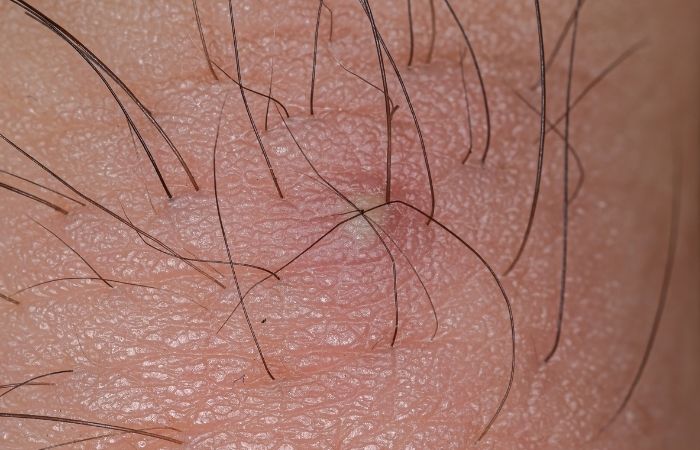
It usually starts small. You shaved in a hurry before a date. The razor dragged a little. Two days later, you feel a tender bump near your bikini line or along the base of your penis. You press it. It hurts. Then you notice a second deeper lump under the skin nearby.
This is where anxiety fills in the blanks. But here’s what’s actually happening most of the time: a clogged follicle becomes inflamed. Bacteria sneak in. Your immune system reacts. The nearby lymph node swells because it’s doing its job.
If the bump on the surface looks like a pimple or ingrown hair and the deeper lump is movable and slightly sore, that pattern often points to localized skin irritation rather than a systemic STD.
Herpes can absolutely cause swollen groin lymph nodes. But it usually doesn’t act alone.
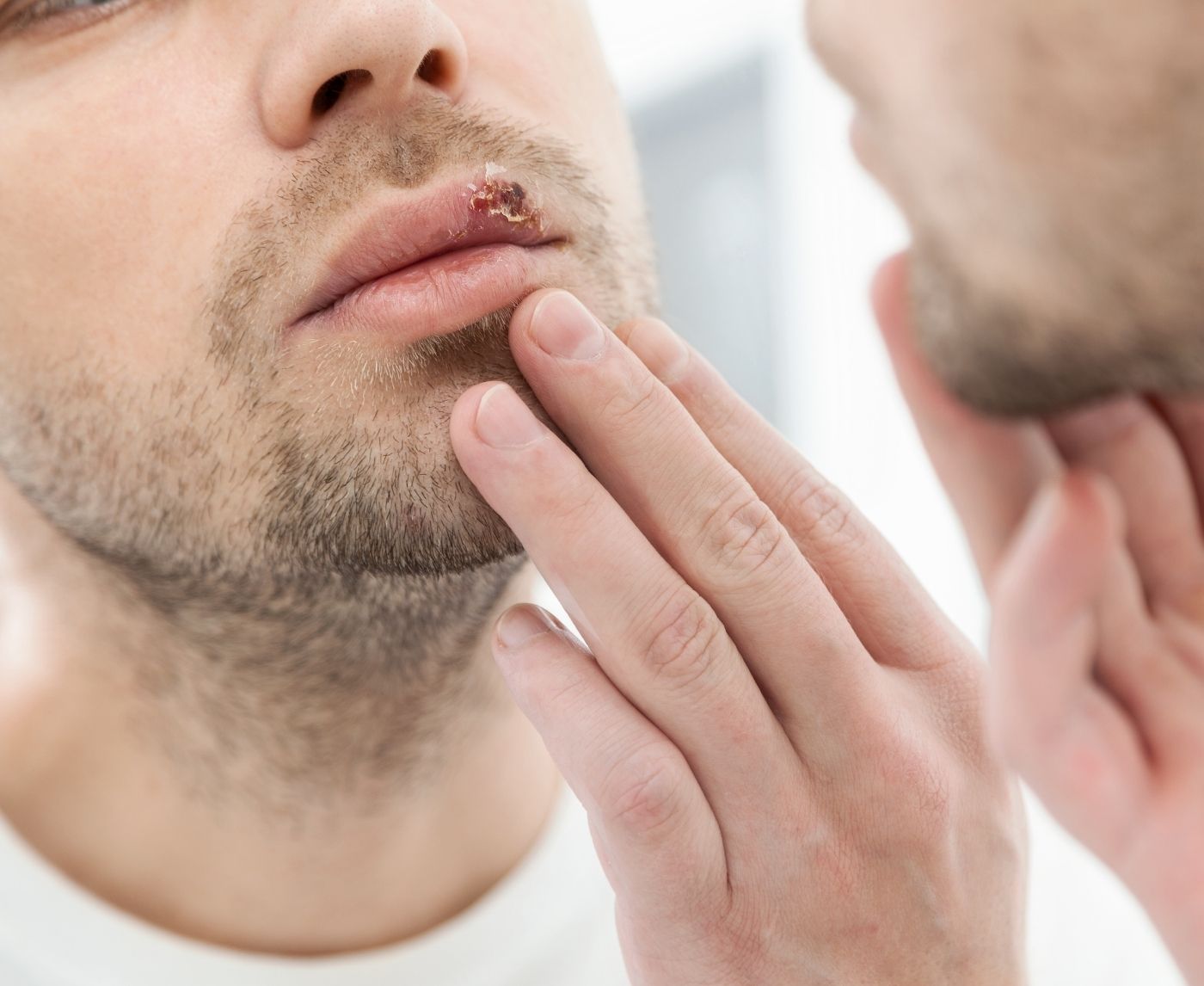
Picture this instead: a tingling or burning sensation before visible sores appear. Small fluid-filled blisters cluster together. They break, forming shallow ulcers that sting when urine touches them. Around the same time, groin lymph nodes may become tender and enlarged.
During a first outbreak, some people also feel flu-like symptoms. Fever. Body aches. Fatigue. The nodes swell because the virus is active, and your immune system is responding aggressively.
If you only have a single deep lump without surface sores, and no skin changes develop within a few days, it becomes less likely that herpes is the culprit.
When It’s HIV (And Why Google Makes This Scarier Than It Is)
Let’s talk about the one everyone fears.
Acute HIV infection can cause swollen lymph nodes. But here’s what matters: they are typically not limited to just the groin. They often appear in the neck, underarms, and other areas simultaneously.
Early HIV symptoms resemble the flu. Fever, sore throat, rash, muscle aches. This usually occurs two to four weeks after a high-risk exposure. A single isolated groin node, without systemic symptoms, is not the classic presentation.
That doesn’t mean ignore risk. It means interpret symptoms in context. Testing is about clarity, not panic.
Table 2: STD-Related Lymph Node Patterns
Figure 2. How different STDs typically affect lymph nodes.
STD
Node Location
Pain Level
Accompanying Signs
Herpes
Groin (often both sides)
Tender
Blisters, sores
Syphilis
Groin
Usually painless
Painless chancre
HIV
Multiple body areas
Variable
Flu-like illness
Chlamydia / Gonorrhea
Occasional mild swelling
Mild or none
Discharge, burning urination
What If It’s Not an STD at All?
Not every swollen lymph node in the groin has a sexual backstory. Sometimes the explanation is almost annoyingly ordinary. A tiny cut from shaving. Friction from a long run. A fungal rash from sweating through tight gym shorts. Your immune system does not care whether the trigger was romantic or mundane. It reacts the same way.
Imagine this: you shaved quickly before a weekend trip. The blade tugged more than it should have. Two days later, there is a red bump along the hairline. By day three, you notice a deeper ache in the crease of your thigh. That deeper ache is your lymph node responding to local inflammation, not necessarily an STD.
Fungal infections like jock itch can also inflame nearby nodes. So can minor skin infections, insect bites, or even a splinter in your foot. The groin drains the legs. People forget that part. A scrape on your ankle can absolutely trigger swelling higher up.
How Long Should a Groin Lymph Node Stay Swollen?
This is where anxiety often spikes. You check it daily. You press it to see if it hurts less. You measure it in your head.
Most reactive lymph nodes shrink within one to three weeks once the triggering issue settles. If the swelling gradually decreases, becomes less tender, and no new symptoms appear, that trend is reassuring. Your body fought something off and is powering down.
If a node continues enlarging, becomes rock-hard, is fixed in place, or persists beyond a month without improvement, that is when medical evaluation becomes important. Persistent lymphadenopathy deserves a closer look, even if it turns out to be harmless.
Table 3: When to Watch, When to Test, When to See a Doctor
Figure 3. Practical decision guide for swollen groin lymph nodes.
There is a very specific type of panic that hits after sex. Maybe the condom slipped. Maybe it was a new partner. Maybe you do not actually know their testing history as well as you thought.
Then three days later, your groin feels tender. This is where timing matters. Many STDs have window periods. Herpes symptoms often appear within two to twelve days after exposure. Early HIV symptoms usually show up two to four weeks later. Syphilis sores typically develop around three weeks after exposure.
If a lymph node swells within forty-eight hours of sex, that timing alone makes most STDs less likely. The immune system usually needs more time. Immediate swelling more commonly reflects friction, minor trauma, or an unrelated infection.
This is why testing should follow science, not fear. Testing too early can produce false reassurance. Testing at the right window gives real clarity.
Testing: Calm, Strategic, Not Reactive
If you are worried about an STD, guessing rarely helps. Testing does. Modern at-home testing is discreet, accurate, and far less intimidating than sitting in a clinic waiting room replaying your life choices.
You can explore options at STD Rapid Test Kits. If you are unsure which infection to test for, a broader panel often reduces second-guessing. Many people choose a combo option like the Combo STD Home Test Kit to cover common infections in one step.
Peace of mind is not dramatic. It is practical. When your brain is looping through worst-case scenarios at midnight, having an actual result changes everything.
Micro-Scene: The Result That Changed the Story
Marcus found a swollen node four days after a hookup. He spiraled hard. Googled for hours. Convinced himself it was HIV. By week two, he ordered a test kit instead of another late-night search session.
The result was negative. The lymph node shrank a week later. It turned out to be a small infected hair follicle he had not even noticed.
What changed was not just the result. It was the shift from guessing to knowing.
What Your Body Is Actually Telling You
A swollen groin lymph node is a sign of immune activity. It does not automatically translate to an STD. It does not automatically mean disaster. It means your body noticed something and responded.
The key questions are these: Are there visible sores? Is there discharge? Is there fever or widespread node swelling? Did the timing line up with a realistic incubation period? If those answers lean toward concern, testing is wise. If not, observation may be reasonable.
You deserve information without shame attached. Bodies react. Skin gets irritated. Viruses exist. None of that defines your worth.
When It’s Actually Something More Serious (And Why That’s Rare)
Let’s zoom out for a second. Because once you’ve ruled out shaving irritation, minor skin infections, and common STDs, your brain might leap to darker corners of the internet. Cancer. Autoimmune disease. Catastrophe.
Slow down.
Most swollen groin lymph nodes are reactive. That means they’re responding to something temporary and localized. Cancerous lymph nodes are typically hard, non-tender, fixed in place, and progressively enlarging over time. They don’t usually show up overnight after a hookup or a gym session. They don’t shrink over two weeks. They don’t fluctuate with skin irritation.
And here’s something people forget: if something systemic and serious is happening, it almost never limits itself to one tiny node in your groin. There are usually other signs. Fatigue that doesn’t make sense. Night sweats. Unexplained weight loss. Multiple enlarged nodes in different areas.
If your only symptom is one tender lump that you discovered because you were already scanning your body for danger, odds are overwhelmingly in your favor.
The Difference Between Painful and Painless Swelling
Pain tells a story. Tender lymph nodes often signal inflammation. Infection. Something active and recent. When you press it and it feels sore, that usually means your immune system is currently engaged.
Painless swelling can mean different things. Some infections, like early syphilis, can cause firm but non-tender lymph nodes near a painless sore. Other times, painless swelling just means the inflammation is mild.
Picture two scenarios. In the first, there’s a razor burn that got slightly infected. The node is tender and warm. In the second, someone has a painless genital ulcer and notices firm nodes on both sides. Context changes everything.
The node itself is only part of the equation. The surrounding symptoms tell the fuller story.
Ava noticed her swelling only on the right side. Immediately, she thought asymmetry meant something sinister. Bodies, however, are rarely symmetrical in their responses.
If the irritation, infection, or skin issue is more pronounced on one side, the nearby lymph nodes can swell more on that side too. It doesn’t mean the other side is “hiding” something. It just means that immune drainage isn’t perfectly balanced.
In her case, the culprit was a small fungal rash she hadn’t even connected to the swelling. Once treated, the node gradually softened and shrank.
Timing Is Everything: Incubation vs. Reaction
There are two clocks running in your body when it comes to infection. One is incubation time, which is how long it takes a pathogen to cause noticeable symptoms. The other is immune reaction time, which is how long it takes your lymph nodes to respond.
For most bacterial STDs like chlamydia or gonorrhea, swollen groin nodes are not the primary symptom. You’re more likely to notice discharge, burning urination, or pelvic discomfort. Lymph node swelling is not typically the first headline.
Herpes tends to declare itself within two to twelve days. Syphilis often shows up around three weeks. Early HIV symptoms appear two to four weeks post-exposure and usually include multiple systemic signs.
If your swelling showed up the day after sex, that timeline leans away from classic STD presentation. Your immune system usually needs more runway.
Table 4: Symptom Timeline After Potential Exposure
Figure 4. Typical symptom timing for common infections affecting groin lymph nodes.
Condition
Typical Onset After Exposure
Common First Signs
Lymph Node Role
Herpes
2–12 days
Tingling, blisters
Tender nodes during outbreak
Syphilis
~3 weeks
Painless sore
Firm nodes nearby
HIV
2–4 weeks
Flu-like illness
Multiple swollen areas
Ingrown hair / skin infection
1–5 days
Localized redness
Single reactive node
The Emotional Pattern: Why We Jump to STDs First
There’s something deeply human about this pattern. You have sex. You feel vulnerable afterward. Then your body does something unexpected. Suddenly it feels connected.
Our brains are wired to connect recent events with new sensations. It’s protective, but not always accurate. The mind says, “This must be because of that.” The body might simply be reacting to a razor, a friction burn, or a minor infection that would have happened anyway.
Sex carries emotional charge. So symptoms that appear near sexual experiences feel heavier than they objectively are.
When Testing Becomes Empowerment Instead of Panic
Testing should not feel like punishment. It should feel like clarity.
If you had a genuine risk exposure and the timing lines up with realistic incubation periods, testing is responsible. If you are spiraling and can’t focus because you keep checking the lump every hour, testing can provide psychological relief even if the likelihood is low.
At-home options exist for exactly this reason. You control the environment. You control the timing. You control who sees the results. That autonomy matters.
And here’s the grounded truth: most swollen groin lymph nodes are not caused by HIV. Many are not caused by any STD at all. But guessing won’t calm you. Information will.
What Happens If You Ignore It?
In many cases, nothing dramatic. The node shrinks. Life moves on. You forget it ever existed.
In cases where an STD is present and untreated, other symptoms typically develop. Sores. Discharge. Systemic illness. Your body rarely whispers forever without eventually raising its voice.
Ignoring is different from observing. Observing means giving it time while paying attention to new changes. Ignoring means refusing to look even when the story evolves.
Choose observation. Choose strategy. Not avoidance.
The Takeaway Before the FAQs
A swollen lymph node in your groin is a signal, not a verdict. It tells you your immune system noticed something. It does not automatically label you. It does not automatically condemn you.
Look at timing. Look at accompanying symptoms. Look at trends. Then decide whether to monitor, test, or see a clinician.
Your body is not out to betray you. It is trying to protect you. The more you understand how it works, the less scary a small lump becomes.
FAQs
1. Okay, be honest. What are the odds this is actually HIV?
I know where your brain went. It always goes there first. But isolated groin lymph node swelling by itself, without fever, rash, sore throat, or swollen nodes in your neck and armpits, is not the classic early HIV picture. Acute HIV usually feels like a rough flu that hits two to four weeks after a real risk exposure. One lonely lump a few days after sex? That story usually belongs to something less dramatic.
2. If it’s herpes, wouldn’t I definitely see blisters?
Most of the time, yes. Herpes tends to announce itself with tingling, burning, then visible blisters or shallow sores. During a first outbreak, lymph nodes can swell and feel tender. But here’s the key: the node swelling usually shows up alongside skin changes, not instead of them. If your skin looks completely normal after several days, herpes becomes less likely.
3. It doesn’t hurt much. Does that make it worse?
Not automatically. Pain level alone doesn’t tell the whole story. Some infections cause tender nodes. Others don’t. Even something simple like a mild fungal rash can cause a firm, barely noticeable lump. What matters more is timing, associated symptoms, and whether the swelling is improving or getting bigger.
4. Can shaving really cause this much drama?
Absolutely. Tiny razor nicks are microscopic doorways for bacteria. Your immune system responds, and the nearest lymph node joins the party. It can feel unfair. You shaved for smooth confidence and ended up with anxiety instead. But yes, something that small can absolutely trigger swelling.
5. I found it right after sex. Is that too soon for an STD?
In many cases, yes. Most sexually transmitted infections need several days to weeks before symptoms appear. If you noticed swelling within 24 to 72 hours, friction, minor trauma, or a skin issue is statistically more likely. Your body doesn’t usually mount a visible lymph node response to a brand-new viral infection overnight.
6. What if I don’t have any sores, discharge, or fever, just the lump?
Then we zoom out. No other symptoms and no high-risk exposure? Monitoring for a week or two is often reasonable. Had a potential exposure and can’t shake the worry? Testing gives clarity. The goal isn’t to prove you did something wrong. It’s to stop the guessing spiral.
7. How long before I should start worrying?
If the node is gradually shrinking over two to three weeks, that’s reassuring. If it’s growing, becoming hard and fixed, or hanging around past a month without change, it deserves medical evaluation. Not panic. Just a professional look.
8. Can anxiety make lymph nodes swell?
Anxiety can make you hyper-aware of every sensation in your body. It can make you press the area ten times a day. That repeated poking can keep it irritated. But anxiety alone does not enlarge lymph nodes. There’s always a physical trigger somewhere, even if it’s minor.
9. Should I keep touching it to check if it’s still there?
I get the urge. Truly. But constant pressing can keep it tender longer. Check once a day at most. Then let it be. Your immune system works better without commentary.
10. What’s the smartest move if I’m stuck in my head about it?
Replace guessing with information. Think about timing. Look for other symptoms. And if testing would help you sleep, do it. Discreet options exist for a reason. Clarity is grounding. Fear thrives in uncertainty.
You Deserve Clarity, Not Catastrophe
A swollen lymph node in your groin can feel like a flashing red warning light. Most of the time, it is a yellow one. Slow down. Assess symptoms. Think about timing. Then act strategically.
If testing will calm your mind and protect your partners, do it. Discreet, accurate options are available through at-home combo STD testing. Knowledge is not scary. Uncertainty is.
Take control of the story. Your body is communicating, not condemning.
How We Sourced This Article: This guide was built the way good sexual health advice should be: grounded in science, filtered through real human experience, and stripped of fear-based noise. We reviewed current clinical guidance from the Centers for Disease Control and Prevention, the World Health Organization, the NHS, and Mayo Clinic to clarify how lymph nodes function, how common STDs present, and what typical symptom timelines look like. We also examined peer-reviewed research on lymphadenopathy and early HIV presentation to make sure the timing and risk explanations reflect modern data, not outdated internet myths.
Dr. F. David, MD is a board-certified infectious disease specialist focused on STI prevention, diagnosis, and treatment. He blends clinical precision with a no-nonsense, sex-positive approach and is committed to expanding access to discreet testing.
Reviewed by: Jordan M. Reyes, PA-C | Last medically reviewed: February 2026
This article is meant to give you information, not to give you medical advice.








 For Men & Women
 Results in Minutes
 No Lab Needed
 Private & Discreet