







Quick Answer: Yes, it is technically possible to get HIV from oral sex, but the risk is extremely low compared to vaginal or anal sex. Most cases of HIV transmission occur through unprotected anal or vaginal intercourse, not oral sex.
“Low Risk” Doesn’t Mean “No Risk”, But It Also Doesn’t Mean “Likely”
When health organizations describe HIV from oral sex as “low risk,” they aren’t dodging the question. They’re being statistically precise. In decades of global research, documented cases of HIV transmission through oral sex are rare, especially when compared to other sexual activities.
Here’s what that means in practical terms. If two strangers had unprotected anal sex, that carries a measurable and significantly higher transmission probability per exposure. Oral sex sits dramatically lower on that scale. Not zero. But low enough that many large studies struggle to isolate cases where oral sex was the only confirmed exposure.
To understand where oral sex actually falls, look at this comparison.
| Sexual Activity | Estimated Risk Per Exposure | Relative Risk Level |
|---|---|---|
| Receptive anal sex | Highest measurable risk | High |
| Insertive anal sex | Lower than receptive anal, but significant | Moderate to High |
| Receptive vaginal sex | Moderate measurable risk | Moderate |
| Insertive vaginal sex | Lower than receptive vaginal | Moderate to Low |
| Oral sex (giving or receiving) | Very low; difficult to quantify | Low |
The important part is perspective. Oral sex consistently ranks at the bottom of transmission likelihood. That’s not internet reassurance. That’s epidemiological pattern over time.
Giving vs Receiving Oral: Does It Change the Risk?
Now let’s get specific. Because people rarely ask this in abstract terms. They ask, “I gave oral. Am I at risk?” Or, “They gave me oral. Could I get HIV from that?” The direction matters.
If you are receiving oral sex, meaning someone’s mouth is on your genitals, the risk of HIV transmission to you is considered extremely low. Saliva itself contains enzymes that inhibit HIV. The virus does not transmit efficiently through intact oral tissue.
If you are giving oral sex to someone with HIV, especially if they ejaculate in your mouth, the theoretical risk increases slightly. But even then, transmission is uncommon. The virus would need to get into your bloodstream, which usually happens through open sores, bleeding gums, or a lot of inflammation in the mouth.
| Scenario | Risk Level | Why |
|---|---|---|
| Receiving oral sex | Extremely low | Saliva inhibits virus; limited exposure pathway |
| Giving oral without ejaculation | Very low | Minimal fluid exposure |
| Giving oral with ejaculation | Low but slightly higher | Exposure to semen increases theoretical risk |
| Giving oral with bleeding gums or sores | Low to slightly elevated | Open tissue may allow bloodstream access |
Picture this. You flossed too aggressively that morning. Your gums bled. Now it’s midnight and your brain is replaying that detail like it’s a crime scene. But here’s the grounding truth: minor gum irritation alone does not automatically translate to transmission. The virus concentration, exposure duration, and presence of untreated HIV in the partner all matter.
Fear zooms in. Science zooms out.

People are also reading: Can Vaccines Reactivate Herpes or HIV? Immune Facts vs Fear
What About Swallowing? What About Pre-Cum?
This is where shame often creeps in. People whisper this question even when they’re alone. “Does swallowing increase HIV risk?”
Semen can contain HIV if the person is HIV-positive and not on effective treatment. Swallowing theoretically exposes the throat and digestive tract to the virus. However, stomach acid rapidly inactivates HIV. The lining of the mouth and throat is more resistant to infection than rectal or vaginal tissue.
Pre-ejaculate fluid can contain HIV, but typically in lower concentrations than semen. Again, transmission via oral sex remains rare overall.
Now let’s add an important layer: if a person living with HIV is on consistent treatment and has an undetectable viral load, they do not sexually transmit the virus. This principle is widely known as U=U, meaning undetectable equals untransmittable. In that context, the risk from oral sex drops even further.
Can You Get HIV in Your Throat?
Another spiral point: “I have a sore throat after oral sex. Is that HIV?”
Acute HIV symptoms, when they occur, typically resemble the flu. Fever. Swollen lymph nodes. Fatigue. Rash. A sore throat alone, especially without other systemic symptoms, is far more likely to be irritation, a common viral infection, allergies, or even anxiety amplifying body awareness.
HIV does not establish infection in the throat the way gonorrhea or chlamydia can. Those bacteria can live in the pharynx. HIV is different. It infects immune cells throughout the body after entering the bloodstream.
You wake up the next morning hyperaware. Every swallow feels dramatic. Every tickle feels suspicious. Anxiety sharpens sensation. But isolated throat discomfort, particularly within days of exposure, is not how HIV typically announces itself.
When Should You Test After Oral Sex?
Testing is where fear transforms into clarity. But timing matters. Test too early, and you risk a false negative. Test at the right window, and your result carries real reassurance.
HIV tests detect either antibodies, antigens, or viral RNA. Each has its own window period. Understanding that window is what turns midnight panic into a concrete plan.
| Test Type | What It Detects | Typical Detection Window | When Results Are Most Reliable |
|---|---|---|---|
| RNA (NAT) test | Viral genetic material | 10–33 days | 3–4 weeks post exposure |
| 4th generation antigen/antibody test | p24 antigen + antibodies | 18–45 days | 4–6 weeks post exposure |
| Rapid antibody test | Antibodies only | 23–90 days | 6–12 weeks post exposure |
If your exposure was oral sex only, and no other higher-risk activities occurred, most clinicians would classify your overall risk as extremely low. Still, if testing will calm your mind, timing it properly matters more than testing immediately.
This is where at-home options can feel empowering. You don’t have to sit in a waiting room rehearsing explanations. You can order discreetly through STD Rapid Test Kits and choose the method that aligns with your timing and comfort.
Peace of mind is not dramatic. It’s practical.
Check Your STD Status in Minutes
Test at Home with Remedium7-in-1 STD Test Kit
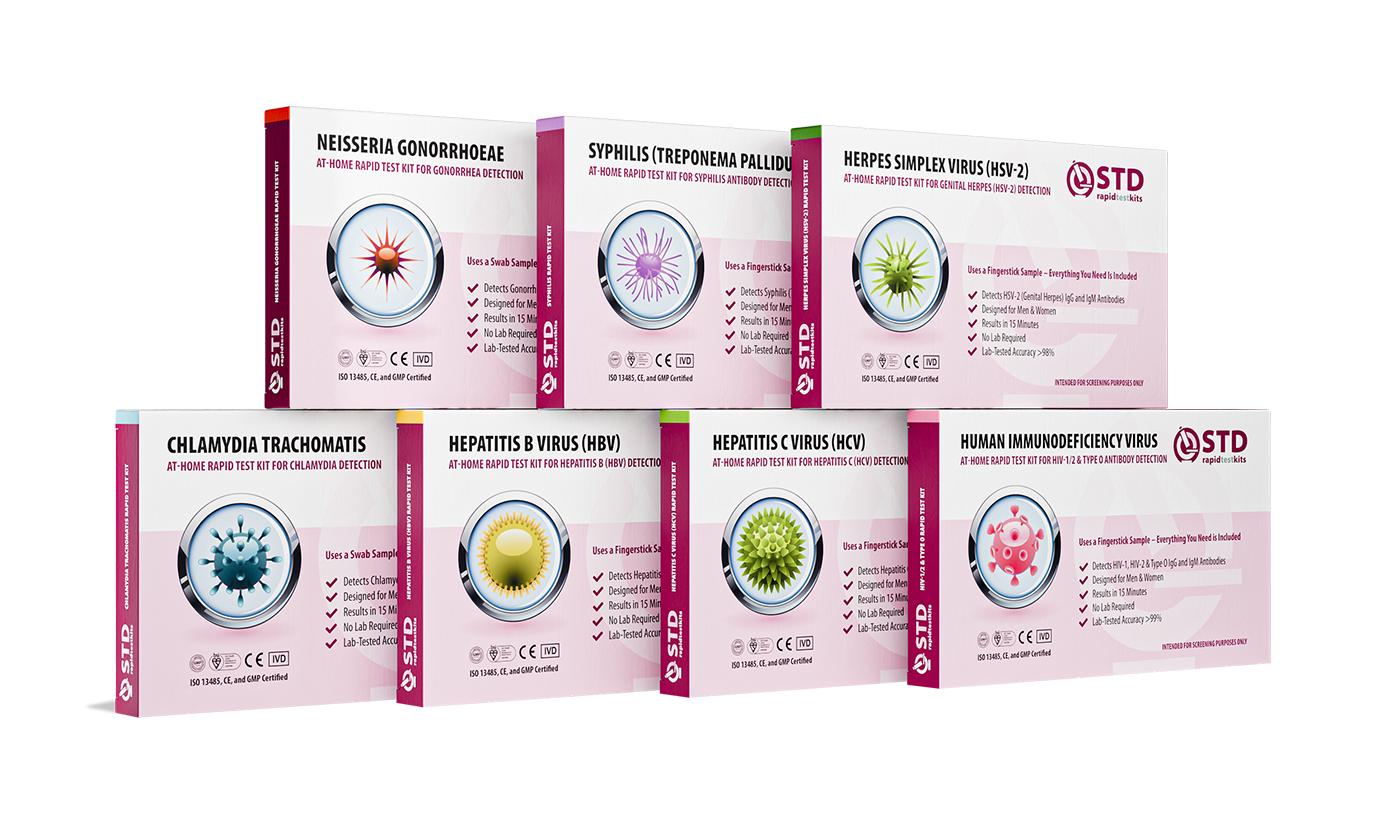
 For Men & Women
 Results in Minutes
 No Lab Needed
 Private & Discreet
Order Now $129.00 $343.00
For all 7 tests
Rapid Test vs Lab Test: What Actually Gives You Reliable Answers?
You’re not just asking, “Can you get HIV from oral sex?” You’re asking, “How do I make sure I’m okay?” That’s a different question. And it deserves a clear answer.
There are two main paths people consider after a low-risk exposure like oral sex. One is clinic-based laboratory testing. The other is at-home testing, either rapid or mail-in. The difference isn’t about legitimacy. It’s about timing, sensitivity, and what kind of reassurance you need.
Imagine two people. One sits in a clinic at week five after exposure, heart pounding in a plastic chair. The other orders a discreet kit online and tests at home, in their own bathroom, with music playing. Both are making responsible choices. The key is whether the test matches the timeline.
| Testing Method | Privacy Level | Detection Sensitivity | Best Used When |
|---|---|---|---|
| Rapid antibody test (fingerstick or oral swab) | Very high | High after window period | 6–12 weeks post exposure for strongest reassurance |
| 4th generation lab test | Moderate | Very high | 4–6 weeks post exposure |
| RNA/NAT lab test | Moderate | Very high (early detection) | 3–4 weeks post exposure if anxiety is high |
If your only exposure was oral sex, most clinicians would not consider you in a high-risk category. That doesn’t invalidate your anxiety. It just contextualizes it. Testing at the right time transforms uncertainty into something measurable.
If you prefer privacy, you can explore discreet options through STD Rapid Test Kits, including rapid HIV tests designed for home use. The key is aligning your test type with the correct window period.
Why Anxiety After Oral Sex Can Feel Bigger Than the Risk
There’s a psychological pattern here. Oral sex often feels “safer” culturally. So when someone worries afterward, the fear can feel disproportionate. That mismatch between expectation and anxiety fuels spirals.
You might find yourself Googling “HIV from blowjob” or “HIV anxiety after oral sex” repeatedly. Each search gives partial reassurance. But none of them feel final. Because reassurance doesn’t stick when your brain is hunting for worst-case scenarios.
Micro-scene. It’s day three. You notice a mild headache. You immediately connect it to acute HIV symptoms. Then you read that early symptoms usually appear two to four weeks after infection. Now you’re counting days. Now every sensation feels amplified.
Here’s the grounded truth: the vast majority of HIV transmissions occur through unprotected anal or vaginal intercourse. Oral sex sits dramatically lower on that risk hierarchy. If there was no ejaculation, no visible blood, and no known untreated HIV status involved, your statistical risk is extremely small.
Anxiety fills silence with danger. Data fills silence with proportion.
People are also reading: What to Do When Someone Sleeps With You Knowing They’re Infected
What Actually Increases Risk During Oral Sex?
Let’s be specific instead of vague. Risk is not evenly distributed. Certain conditions increase theoretical transmission probability, even though overall oral risk remains low.
| Factor | Why It Matters | Risk Impact |
|---|---|---|
| Partner not on HIV treatment and detectable viral load | Higher virus concentration in fluids | Increases baseline risk |
| Ejaculation in the mouth | Greater fluid exposure | Slightly higher risk |
| Open sores or bleeding gums | Direct bloodstream access | Theoretically increases risk |
| Presence of other STDs | Inflammation can increase susceptibility | Elevates vulnerability |
Notice what’s not on that table. Saliva. Casual contact. Kissing. Sharing drinks. These do not transmit HIV. The virus does not survive well in saliva, and it requires specific pathways into the bloodstream.
If your partner is living with HIV and on consistent treatment with an undetectable viral load, the risk of sexual transmission is effectively zero. That principle has been supported across multiple long-term studies.
What If the Person’s Status Was Unknown?
This is the part that lingers. You didn’t ask. Or maybe you did, and you weren’t sure you believed the answer. Not knowing someone’s HIV status doesn’t automatically mean high risk. HIV prevalence varies by population, geography, and behavior patterns. Statistically, the probability that a random partner has untreated HIV is lower than anxiety often assumes.
Still, if uncertainty keeps buzzing in your head, testing gives you something tangible. Something finite. Something that ends the spiral.
If you’re inside the ideal window period, consider a lab-based 4th generation test for earlier reassurance. If you’re past six weeks, a rapid antibody test can provide reliable clarity. You can find discreet options like the HIV Rapid Test Kit designed for private home use.
You deserve information, not insomnia.
If a Test Comes Back Positive
This section is not here to scare you. It’s here to ground you. Even though oral transmission is rare, if a test ever does come back positive, HIV today is a manageable chronic condition. Treatment is highly effective. People living with HIV who adhere to medication can expect near-normal life expectancy.
Picture someone sitting in their car after seeing a result. Hands shaking. Heart racing. Then they call a clinic. They start treatment. Months later, their viral load becomes undetectable. They live their life. They date. They work. They exist fully.
The narrative around HIV is decades outdated. Modern treatment transforms outcomes dramatically. Early testing simply means early care.
Check Your STD Status in Minutes
Test at Home with Remedium6-in-1 STD Test Kit
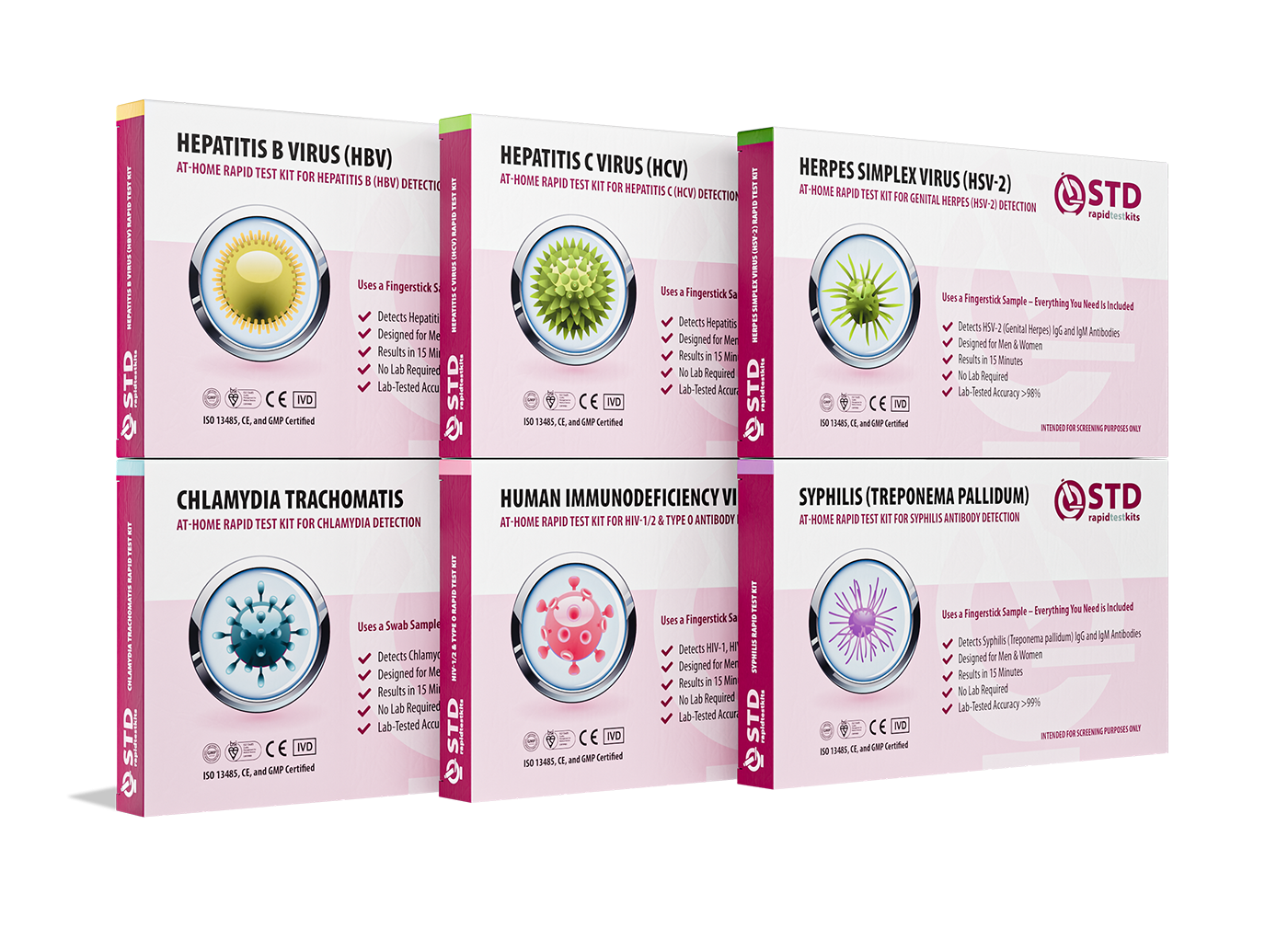 For Men & WomenResults in MinutesNo Lab NeededPrivate & Discreet
Order Now $119.00 $294.00
For all 6 tests
The Part No One Talks About: The Mental Aftermath
Here’s something clinicians see constantly but rarely say out loud: sometimes the anxiety after oral sex has less to do with actual HIV risk and more to do with uncertainty. You didn’t ask their status. Or you did, but now you’re replaying their tone. Or maybe it was spontaneous, and you’re not used to stepping outside your usual boundaries. The brain fills informational gaps with worst-case narratives.
I’ve seen people test three times after a low-risk exposure because the first negative felt “too early,” the second felt “too convenient,” and the third was finally accepted. Not because the science changed. Because their nervous system needed repetition to calm down. That doesn’t make you irrational. It makes you human.
Risk is mathematical. Anxiety is emotional. Those two systems don’t always talk to each other.
If you’re stuck in that loop right now, here’s a grounded approach. First, identify what actually happened, not what your fear is inventing. Was there ejaculation? Was there visible blood? Was this your only exposure? Then compare it to what we know about transmission probabilities. In most oral-only scenarios, the statistical risk is extremely low. Once you reach the appropriate testing window and receive a negative result, that answer is medically reliable.
Clarity ends spirals. But only if you let it.
FAQs
1. Can you get HIV from receiving oral sex?
If someone performed oral sex on you, your risk of getting HIV from that encounter is considered extremely low. HIV does not transmit efficiently through saliva, and the exposure pathway just isn’t strong in that direction. If you’re replaying the night wondering whether you missed something, pause. This scenario sits at the very bottom of the risk scale.
2. Can you get HIV from giving oral sex?
It’s technically possible, but uncommon. The risk is a little higher if ejaculation happened and the partner had untreated HIV with a viral load that could be found. Even then, documented transmission from oral sex alone is uncommon. Not oral sex, but unprotected anal or vaginal sex is the most common way for people to get HIV around the world.
3. Does swallowing semen make HIV transmission more likely?
Swallowing may slightly increase theoretical exposure compared to no ejaculation, but overall oral transmission remains low. Stomach acid inactivates the virus quickly. If your brain keeps zooming in on that detail, remember this: exposure does not equal infection. Multiple biological steps would need to line up.
4. What if I had bleeding gums or a small cut in my mouth?
This is a common late-night spiral detail. Minor gum irritation or a small cut does not automatically mean transmission. Yes, open tissue could make someone more likely to get sick, but the amount of virus they were exposed to, how long they were exposed, and how well their partner is being treated are all very important. A small mouth sore alone does not transform a low-risk act into a high-risk one.
5. Can saliva transmit HIV?
No. Saliva by itself does not transmit HIV. The virus doesn't live long in saliva, and it doesn't spread through kissing, sharing drinks, or touching someone else. If you’re worrying because you tasted pre-ejaculate or saliva mixed with fluids, understand that saliva alone is not an effective transmission route.
6. How likely is HIV from oral sex compared to other sexual activities?
Oral sex is much safer than anal or vaginal sex without protection. That doesn’t mean “zero,” but it does mean the probability is significantly smaller. If you’re ranking exposures in your head, oral sex sits near the bottom.
7. I have a sore throat after oral sex. Is that HIV?
A sore throat alone, especially within a few days of exposure, is not typical of early HIV infection. Acute HIV symptoms, when they occur, usually resemble a flu-like illness and appear two to four weeks after infection. Anxiety, seasonal viruses, dry air, even dehydration can cause throat discomfort. Context matters.
8. How soon should I test for HIV after oral sex?
Timing matters more than speed. A 4th generation lab test is most reliable around four to six weeks after exposure. Rapid antibody tests are strongest at six to twelve weeks. Testing too early may give a false negative and prolong your stress instead of resolving it.
9. If my partner is on HIV treatment, can I still get it from oral sex?
If your partner is on consistent treatment and has an undetectable viral load, they do not sexually transmit HIV. This principle, often summarized as undetectable equals untransmittable, is backed by large long-term studies. In that case, your risk from oral sex is effectively zero.
10. Should I test even if the risk feels low?
If testing will help you sleep again, yes. Low risk does not mean you’re irrational for wanting clarity. Testing is not an admission of guilt. It’s a health decision. And once you test at the right window, the spiral usually stops.
You Deserve Clarity, Not Catastrophes
If your only exposure was oral sex, your statistical risk of HIV is very low. That’s not dismissive. That’s grounded in decades of data. But anxiety doesn’t always respond to statistics alone.
If knowing for sure would let you sleep again, take that step. Choose the right window. Use a reliable test. Explore discreet options at STD Rapid Test Kits and move from “what if” to “I know.”
You don’t need to spiral. You need information. And now you have it.
How We Sourced This Article: We built this guide using current guidance from major public health authorities, peer-reviewed transmission studies, and long-term outcome research on HIV risk by exposure type. We reviewed epidemiological data comparing per-act transmission probabilities, examined clinical testing window recommendations, and cross-checked evolving evidence around U=U (undetectable equals untransmittable). We also analyzed real-world patient questions and lived-experience reporting to reflect how people actually think and search when anxiety hits at midnight.
Sources
1. World Health Organization – HIV Fact Sheet
5. HIV.gov – How Is HIV Transmitted?
6. Mayo Clinic – HIV/AIDS Symptoms and Causes
About the Author
Dr. F. David, MD is a board-certified infectious disease specialist focused on STI prevention, diagnosis, and treatment. He blends clinical precision with a sex-positive, stigma-free approach to sexual health education.
Reviewed by: A. Martinez, NP | Last medically reviewed: February 2026
This article is only meant to give you information and should not be used as medical advice.


