







Quick Answer: Testing positive after antibiotics can happen if you retest too soon. Many STDs leave behind residual genetic material or antibodies that tests can detect for weeks after successful treatment. Most infections require a specific retest window for accurate results.
This Isn’t Failure, It’s Biology
When people hear “positive,” they imagine something active and contagious. But modern STD tests are incredibly sensitive. For infections like Chlamydia and Gonorrhea, most tests look for genetic fragments using nucleic acid amplification technology. That means even after bacteria are dead, their genetic material can linger in the body briefly. The test doesn’t know whether the bacteria are alive; it only knows it sees DNA.
I once spoke with a patient who retested for Chlamydia five days after finishing doxycycline. “I thought I was being responsible,” she said. “I wanted proof it was gone.” Her retest came back positive. She panicked, assumed the medication failed, and almost asked for a second antibiotic course. Two weeks later, at the proper retest interval, the result was negative. Nothing had failed. The test was simply too early.
This is where confusion begins. Many people assume antibiotics work instantly and that testing negative should happen immediately. In reality, your immune system and your body’s natural clearing processes need time to remove the remnants that tests can detect.
Why Tests Stay Positive After Treatment
Different infections leave behind different footprints. Some leave genetic material for a short window. Others leave antibodies that remain for life. Understanding which category your infection falls into changes everything about when to retest.
| Infection | What the Test Detects | Why It Can Stay Positive | When Retesting Is Reliable |
|---|---|---|---|
| Chlamydia | Bacterial DNA (NAAT) | Residual non-living DNA fragments | About 3–4 weeks after treatment |
| Gonorrhea | Bacterial DNA (NAAT) | Residual DNA after bacteria are killed | About 2–3 weeks after treatment |
| Trichomoniasis | Parasite DNA or antigen | Temporary lingering detection markers | Approximately 3 weeks after treatment |
| Syphilis | Antibodies | Antibodies may remain for life | Follow-up titers at 6 and 12 months |
| HIV | Antibodies / Antigen | Antibodies persist even when controlled | Based on clinical follow-up guidance |
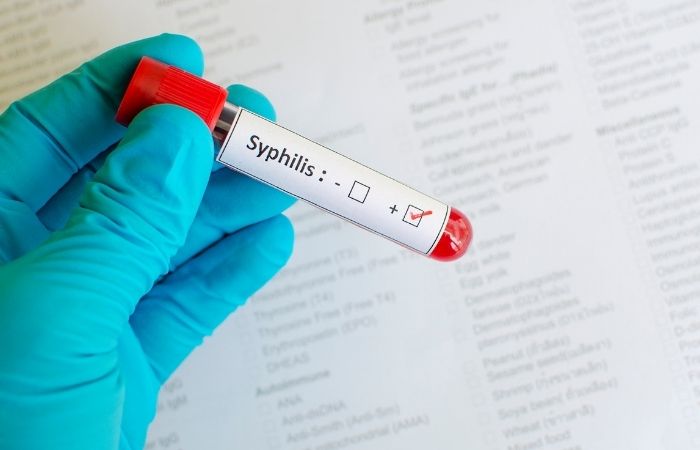
Notice the difference. For bacterial infections like Chlamydia and Gonorrhea, the issue is residual DNA. For infections like Syphilis, the issue is antibodies that remain as part of immune memory. A positive antibody test after treatment does not mean you are still infectious. It means your immune system remembers the infection.
This is why the phrase “test of cure” applies only to certain infections and only at certain times. Testing too soon is not proactive, it is misleading.
People are also reading: I Thought It Was Nothing. It Was Herpes. And the Closest Clinic Was Closed.
Reinfection or Treatment Failure? Two Very Different Stories
Let’s imagine two scenarios.
In the first, someone completes treatment for Gonorrhea, abstains from sex, and retests at the correct interval. The result is positive again. That situation raises the question of treatment failure or antibiotic resistance, which is rare but possible and requires clinical follow-up.
In the second scenario, someone completes treatment, resumes sex with an untreated partner a week later, and tests positive a month afterward. That is not treatment failure. That is reinfection.
The emotional experience feels the same. The biology is completely different.
| Feature | Reinfection | Treatment Failure |
|---|---|---|
| Sex after treatment | Yes, typically with untreated partner | No sexual exposure |
| Timing of positive result | Usually weeks later | May appear at proper retest window |
| Frequency | Common | Uncommon |
| Next step | Retreat and treat partners | Clinical evaluation and alternative therapy |
I’ve had patients whisper, “Did the antibiotics just not work on me?” The truth is that most repeat positives are reinfections, not resistance. That is not a moral judgment. It simply reflects that partner treatment is sometimes delayed, awkward, or incomplete.
When to Retest After STD Treatment (By Infection)
Now we get to the question that matters most: when should you retest? Not based on anxiety. Not based on impatience. Based on biology.
For Chlamydia, routine retesting is recommended about three months after treatment to check for reinfection. A test-of-cure earlier than that is generally unnecessary unless you are pregnant or symptoms persist. Testing within three weeks of finishing antibiotics can produce a false positive because of leftover DNA.
For Gonorrhea, similar guidance applies. A retest at three months is standard to ensure you were not reinfected. Testing earlier than two weeks can give unreliable results.
For Trichomoniasis, retesting is often recommended within three months, especially for women, because reinfection rates are significant.
For Syphilis, the process is different. You are not looking for a negative test. You are looking for a drop in antibody titers over time. Follow-up blood work at six and twelve months tracks treatment success.
If you’re unsure about timing or want a discreet way to retest from home, you can explore options at STD Rapid Test Kits. Choosing the right window before ordering can prevent unnecessary stress and confusion.
When Retesting Too Soon Backfires
There is a very specific kind of anxiety that kicks in after treatment. It sounds like this: “I just need to know.” You tell yourself you will feel calm once you see a negative result. So you test again five days later. Or seven. Or ten. And instead of calm, you get another positive.
This is the moment where biology and psychology collide. The medication may have done its job perfectly. The bacteria may be gone. But molecular tests are so sensitive that they can detect microscopic fragments that have not yet cleared. Those fragments are harmless. They are not infection. They are debris.
One patient described it to me like checking a campfire after pouring water on it. “The flames were out,” he said, “but I kept poking the ashes looking for smoke.” Retesting too early is exactly that. You are looking at ashes, not flames.
The “Test of Cure” Myth
Many people believe every STD requires a “test of cure.” That phrase sounds official and reassuring. In reality, most uncomplicated cases of Chlamydia and Gonorrhea do not require immediate test-of-cure retesting unless you are pregnant, symptoms persist, or adherence to medication was uncertain.
Instead, public health guidance emphasizes retesting at about three months to catch reinfection. That distinction matters. A test-of-cure confirms the infection cleared. A three-month retest checks whether you were exposed again. Those are not the same goal.
For Syphilis, there is no simple negative-after-treatment milestone. Antibody levels decline gradually, and doctors monitor trends rather than looking for disappearance. For HIV, follow-up testing depends on treatment plans and viral load monitoring rather than simple antibody reversal.
If you retest too early for the wrong reason, you may misinterpret normal biological processes as medical failure. That misunderstanding fuels unnecessary fear.
Check Your STD Status in Minutes
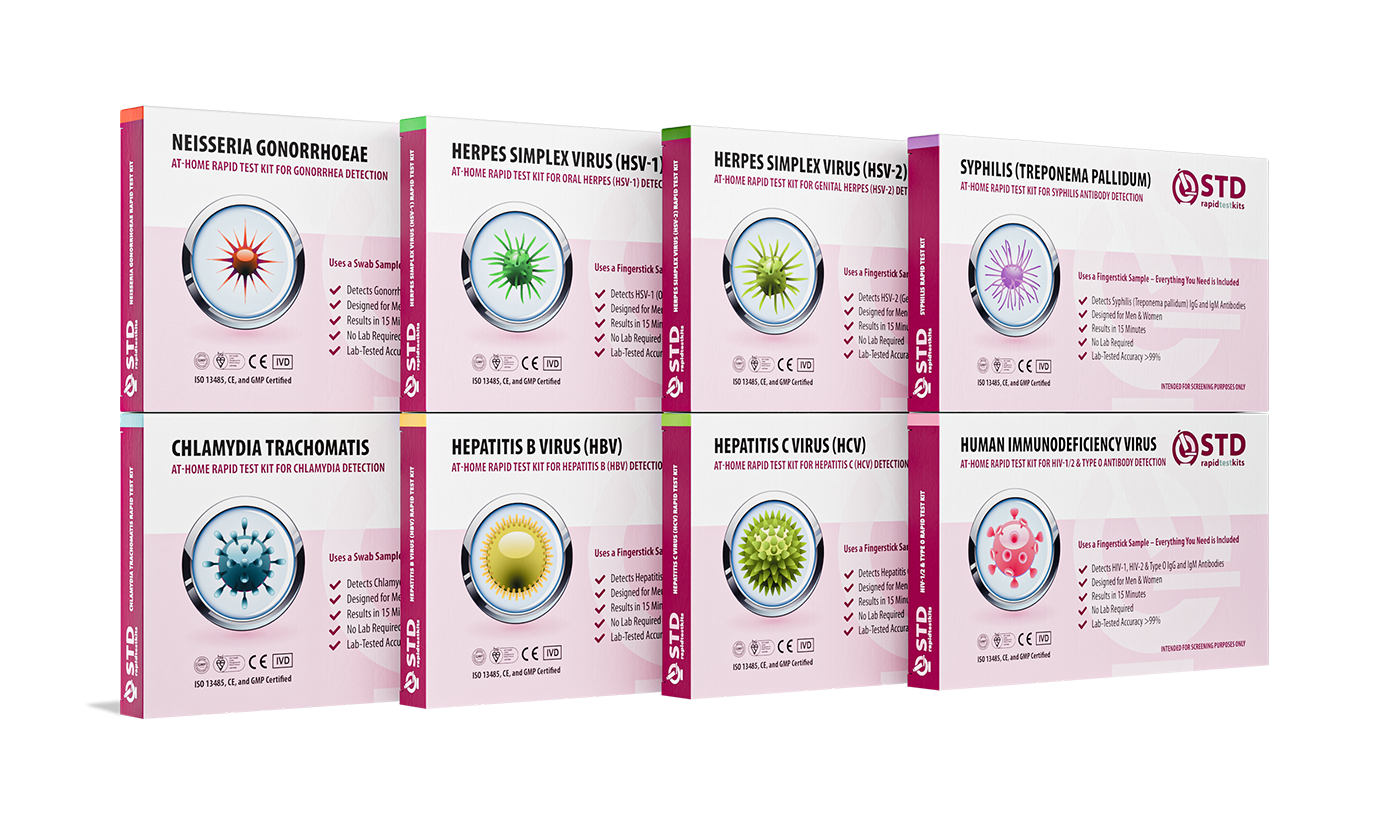
Test at Home with Remedium8-in-1 STD Test Kit
 For Men & Women
 Results in Minutes
 No Lab Needed
 Private & Discreet
Order Now $149.00 $392.00
For all 8 tests
The Three-Month Rule That Surprises People
Let’s talk about something that surprises almost everyone: even when treatment works, reinfection is common. Not because people are reckless. Not because they do not care. Because partners are sometimes untreated, conversations are delayed, or assumptions are made.
A woman once told me she assumed her partner “must have handled it.” He assumed she had told him he needed medication. Neither confirmed. Three months later, both tested positive again. It was not antibiotic resistance. It was miscommunication wrapped in embarrassment.
That is why three-month retesting is recommended for infections like Chlamydia, Gonorrhea, and Trichomoniasis. It acts as a safety net.
| Infection | Immediate Test-of-Cure Needed? | Routine Retest Interval | Special Notes |
|---|---|---|---|
| Chlamydia | No (unless pregnant or symptoms persist) | 3 months | Avoid testing before 3–4 weeks |
| Gonorrhea | Sometimes, depending on treatment | 3 months | Resistance rare but monitored |
| Trichomoniasis | Not usually | 3 months | Reinfection rates significant |
| Syphilis | Follow-up blood titers | 6 and 12 months | Antibodies may remain detectable |
| HIV | Clinical follow-up | Based on provider plan | Monitoring viral load, not just antibodies |
This table is not meant to overwhelm you. It is meant to give you control. When you know the timing, you stop reacting emotionally and start acting strategically.
What If Symptoms Are Gone but the Test Is Positive?
Symptoms are unreliable narrators. Many infections are asymptomatic. Others improve quickly once antibiotics reduce inflammation, even before every bacterial fragment is cleared. Feeling better does not always equal microbiological clearance, and lingering positive tests do not always equal active infection.
A college student once told me, “The burning stopped in two days. That’s why I thought I was cured.” She tested again a week later and panicked at a positive result. But the medication had worked. The timeline simply had not finished.
Symptoms disappearing is good news. It just is not the whole story.
Retesting at Home: Privacy Without Panic
For many people, returning to a clinic feels uncomfortable. Maybe you live in a small town. Maybe you share insurance with family. Maybe you just want control over the process. Retesting from home can offer that autonomy, if you respect timing.
Ordering an at-home kit immediately after finishing antibiotics may give you information that is technically accurate but emotionally misleading. Waiting until the appropriate window protects you from unnecessary stress.
If you are approaching the recommended retest interval and want discreet options, you can consider the Combo STD Home Test Kit. It screens for multiple common infections privately, allowing you to confirm status without sitting in a waiting room replaying every decision you have made.
The goal is not constant testing. The goal is strategic testing.
When a Second Positive Really Does Need Attention
There are situations where a repeat positive deserves immediate follow-up. Persistent symptoms that worsen. No sexual exposure since treatment. Correct medication taken exactly as prescribed. In those cases, clinical evaluation matters.
Antibiotic resistance in Gonorrhea exists, though it remains uncommon in most settings. Treatment adjustments may be necessary if resistance is suspected. For Syphilis, rising antibody titers instead of declining ones signal the need for reassessment.
But remember this: the majority of repeat positives fall into two categories, testing too early or reinfection. Not failure. Not personal deficiency. Not catastrophe.
The Emotional Aftermath No One Talks About
Testing positive once is stressful. Testing positive twice can feel devastating. It can trigger shame, anger toward a partner, or self-blame. I have watched people spiral over a line on a test strip.
Here is what matters: sexual health is not a moral scoreboard. It is maintenance. Just like dental cleanings. Just like annual checkups. Sometimes you fix something, and you check again to make sure everything is stable.
Retesting is not punishment. It is closure.

People are also reading: Living with HIV in 2025: Why It’s Nothing Like It Used to Be
How to Approach Retesting Without Spiraling
Retesting should feel like a checkpoint, not a cliff edge. The healthiest mindset is structured and boring. You mark your calendar. You avoid sex until partners are treated. You wait the recommended interval. Then you test once, at the right time, instead of five times in panic.
I remember a man who ordered three separate tests within two weeks because he “couldn’t handle not knowing.” Every early test gave him conflicting emotional signals. When he finally waited the full interval and tested again, the result was negative. The weeks of fear had not changed the outcome. They had only amplified the noise.
The science of retesting is steady and predictable. The anxiety around it is not. Your job is to follow the biology, not the panic.
Step-by-Step Retesting Strategy After Treatment
Start by confirming that you completed the full antibiotic course exactly as prescribed. Partial treatment can complicate interpretation. If you missed doses or stopped early, speak with a clinician before retesting because timing recommendations may shift.
Next, consider whether you had sexual contact after treatment but before your partner was treated. If the answer is yes, reinfection becomes the most likely explanation for a later positive result. That does not mean you failed. It means coordination matters.
Then calculate the correct retest window based on your specific infection. For most bacterial infections, waiting at least three to four weeks before a test-of-cure prevents residual DNA confusion. For routine reinfection screening, three months is often the recommended interval.
If you prefer privacy and control, you can plan your retest using a discreet at-home option from STD Rapid Test Kits. Ordering strategically rather than urgently makes the experience calmer and clearer.
Antibiotics Do Not “Hide” Infections
A persistent myth suggests that antibiotics can mask an infection and make tests unreliable. In reality, antibiotics kill susceptible bacteria. They do not conceal them from detection. If a test stays positive after a certain amount of time, it means that either genetic fragments are still clearing or the person has been reinfected.
Another misconception is that taking antibiotics for unrelated conditions will distort STD testing. Standard antibiotic courses for unrelated illnesses do not typically create false negatives in modern molecular tests. If anything, early partial treatment without proper dosing is more likely to complicate outcomes.
Accuracy improves when timing is respected. That principle applies whether testing in a clinic or at home.
Special Situations That Change the Timeline
Pregnancy is one situation in which an earlier test-of-cure may be advised for infections such as Chlamydia. The stakes are different, and providers may check for clearance sooner.
People with weakened immune systems may also need to be watched more closely. A healthcare provider should make sure that your follow-up plans are right for you if your immune system is weak.
For Syphilis, rising antibody titers instead of declining ones over months signal concern. The expectation is gradual reduction, not immediate disappearance. Watching trends rather than single results prevents misinterpretation.
And for HIV, retesting decisions depend on viral load monitoring and treatment adherence. Antibody presence alone does not define active transmission risk in treated individuals.
Check Your STD Status in Minutes
Test at Home with Remedium6-in-1 STD Rapid Test Kit
 For Men & WomenResults in MinutesNo Lab NeededPrivate & Discreet
Order Now $119.00 $294.00
For all 6 tests
What to Do If You’re Still Positive at the Right Time
If you waited the recommended interval, abstained from sex, ensured partner treatment, and still test positive, that is the moment to seek medical evaluation. It does not mean catastrophe. It means clarity is needed.
Bring your timeline. Bring your medication history. Bring honesty about sexual exposure. Healthcare providers are not there to judge; they are there to solve problems. Most second positives are straightforward to manage once context is clear.
If reinfection occurred, treatment again is usually simple. If resistance is suspected, alternative regimens are available. The key is not avoidance. It is engagement.
FAQs
1. I took all my antibiotics exactly like I was supposed to. Why is my test still positive?
First, good. You finished the meds. That matters. Now here’s the part no one explains well: for infections like Chlamydia or Gonorrhea, the test is often looking for genetic fragments. Think microscopic “crime scene tape” left behind after the bacteria are already dead. Your body is still cleaning up. If you tested too soon, especially within two to three weeks, you may be seeing leftovers, not a live infection.
2. Okay, but how soon is too soon to retest?
If you’re dealing with something like Chlamydia, anything under three weeks can get messy in terms of interpretation. It’s not dangerous to test earlier, it’s just confusing. For routine reinfection checks, that three-month mark is the quiet hero. It’s the point where you’re not just checking “Did it clear?” but “Did anything new happen?”
3. My symptoms disappeared in two days. Doesn’t that mean I’m cured?
Symptoms are dramatic. Bacteria are not. Pain and discharge can calm down quickly because inflammation drops fast once antibiotics kick in. That doesn’t mean every microscopic fragment has packed its bags yet. Feeling better is a great sign. It’s just not the final chapter.
4. What if I didn’t have sex again and I’m still positive at the right retest time?
That’s when we slow down and get curious, not scared. True treatment failure is uncommon, but it deserves evaluation. A clinician might review the medication you took, confirm dosing, and sometimes repeat testing with a different method. This isn’t about blame. It’s about solving a puzzle with better lighting.
5. Be honest, how common is reinfection?
More common than people admit. Not because anyone is reckless. Because conversations are awkward. Maybe your partner said, “Yeah, I’ll handle it,” and you both assumed the other followed through. Three months later, surprise. Reinfection is usually a communication gap, not a biological betrayal.
6. Does a positive syphilis test ever turn negative?
Not always. And that freaks people out. Syphilis antibody tests can stay positive for life, even after perfect treatment. Doctors don’t look for the line to disappear. They look for antibody levels to drop over time. It’s less like flipping a switch and more like watching a dimmer slowly lower.
7. If I’m embarrassed to go back to a clinic, is it okay to retest at home?
Yes, if you respect timing. Privacy is valid. Autonomy is powerful. Just make sure you’re not testing out of panic five days after finishing antibiotics. Order strategically, not emotionally.
8. Can antibiotics for something else mess up my STD test?
This is a common late-night Google spiral. Standard antibiotics for unrelated infections don’t usually “hide” STDs from modern molecular tests. If anything, incomplete or incorrect dosing complicates things more than unrelated prescriptions do.
9. I tested positive twice and feel ashamed. What does that say about me?
It says you’re human. Sexual health isn’t a purity contest. It’s maintenance. People get cavities twice. They get colds twice. They can get reinfected, too. The goal isn’t perfection. It’s awareness, treatment, and moving forward.
10. What’s the calmest, smartest move right now?
Mark your calendar for the correct retest window. Make sure partners were treated. Avoid sex until both of you are clear. Then test once, at the right time. Not five times in a panic spiral. One informed test is worth more than three anxious ones.
You Deserve Clarity, Not Confusion
The hardest part of retesting is rarely the swab or the blood sample. It is the waiting. It is the mental loop of “What if?” It is the way one thin line on a test strip can feel like a verdict.
But sexual health is not a verdict. It is an ongoing practice. You treat. You wait. You retest at the right time. You communicate with partners. You move forward.
If you are approaching your recommended retest window and want to take control privately, the Combo STD Home Test Kit offers discreet screening for common infections from home. Your results are yours. Your timeline is yours. Your health is yours.
How We Sourced This Article: This guide integrates guidance from leading public health authorities, peer-reviewed infectious disease research, and clinical practice standards related to STD treatment follow-up. We focused on timing recommendations, reinfection data, and diagnostic test mechanics to ensure clarity without alarmism.
Sources
1. CDC Sexually Transmitted Infections Treatment Guidelines
4. World Health Organization STI Fact Sheet
6. Mayo Clinic Syphilis Diagnosis and Treatment
7. PubMed Clinical Research Database
About the Author
Dr. F. David, MD is a board-certified infectious disease specialist focused on STI prevention, diagnosis, and treatment. He combines clinical precision with a sex-positive, stigma-free approach to expand access and understanding.
Reviewed by: Dr. Amanda L. Carter, MD, MPH | Last medically reviewed: September 2025
This article is for informational purposes and does not replace medical advice.


