Published: August 2025 | Last updated: May 2026 | Editorial review and quality control: Martina N.
An HIV diagnosis in 2025 sits in a very different place than it did even a decade ago. Effective single-tablet regimens, twice-monthly injections, and now twice-yearly prevention shots have rewritten what daily care looks like. The science behind U=U (undetectable equals untransmittable) means that people on effective therapy do not pass the virus to sexual partners. Life expectancy for someone diagnosed early and treated consistently is approaching the general population's. None of that erases the emotional weight of a positive test, or the stigma that still lingers in many communities. The practical picture today is far more livable than the early-epidemic headlines ever suggested, and most readers who land on this page after a scare want the unvarnished update on where things actually stand.
The piece below is a calm walk-through of what has changed: how treatment works, what U=U means in everyday life, how testing options have multiplied, and what the data say about life with HIV after a diagnosis. It is not a substitute for clinical care. If you have symptoms that concern you, or you think you might have been exposed, get tested and see a clinician.
Key Takeaways
- People who start antiretroviral therapy early and reach an undetectable viral load do not transmit HIV through sex, and most live within a few years of average life expectancy.
- Treatment options in 2025 range from a single daily pill to a long-acting injection every two months, and at-home rapid tests make it possible to check your status before you ever set foot in a clinic.
Early signs and the fatigue question
One of the most-searched HIV phrases each year is some variation of “does HIV make you tired.” It often does, especially during what clinicians call acute HIV infection, the first few weeks after the virus enters the body. During this window, the immune system mounts a strong response that can look and feel like a bad flu: persistent fatigue, swollen lymph nodes (often in the neck or armpit), low-grade fever, mouth ulcers, sore throat, headaches, and a non-itchy rash on the trunk. Some people develop nausea, joint pain, or unexplained weight loss in the same window.
Most people who acquire HIV develop flu-like symptoms within 2 to 4 weeks of infection, according to the CDC overview of HIV. Others feel nothing at all, or chalk it up to a passing virus. Early signs are non-specific, easily blamed on stress, work, or seasonal illness, and they fade within a few weeks even though the virus is still replicating quietly.
After the acute window, HIV enters a clinically latent stage that can last years without obvious symptoms. People go to work, exercise, have sex, and feel essentially fine. The virus continues to multiply and slowly damage the immune system. Without treatment, this stage can run roughly 10 years on average before progressing to advanced HIV. With effective treatment, progression is preventable, often indefinitely.
Fatigue can have dozens of explanations, and most of them are not HIV. After a possible exposure (condomless sex with a new or unknown-status partner, shared injection equipment, or a known partner with HIV who is not virally suppressed), an HIV test is the only way to get a definite answer.
Post-exposure prophylaxis (PEP) is a 28-day antiretroviral course that significantly reduces the chance of HIV taking hold after an exposure, but it must be started within 72 hours, and the sooner the better. PEP is available at most emergency departments, many urgent-care clinics, and some pharmacies. If the clock matters, do not wait for symptoms or a test result; call a clinician now and ask about PEP eligibility.
U=U: the science of undetectable equals untransmittable
The acronym U=U stands for undetectable equals untransmittable. It describes one of the most consequential findings in modern infectious disease: when a person living with HIV takes antiretroviral therapy (ART) consistently and the virus in their blood is suppressed to a level too low for standard lab tests to detect, they do not pass HIV to sexual partners.
This is not a marketing slogan. It rests on three large prospective studies (PARTNER, PARTNER2, and Opposites Attract) that together followed thousands of mixed-status couples across years of condomless sex. The combined transmission count when the partner with HIV was virally suppressed was zero. The CDC HIV treatment page states the conclusion plainly: people with HIV who take their medication as prescribed and keep an undetectable viral load will not transmit HIV through sex.
How fast does undetectable happen? With modern integrase-inhibitor regimens, viral load typically drops sharply within the first few weeks of treatment, and most people reach undetectable (commonly defined as fewer than 200 copies of viral RNA per milliliter of blood) within about 6 months of starting consistent ART. Many reach it inside 8 to 12 weeks. The exact timeline depends on starting viral load, the regimen, and day-to-day adherence.
A few caveats matter. U=U has been demonstrated for sexual transmission specifically. It does not extend to transmission through shared injection equipment, where viral suppression also reduces risk substantially but the evidence base is different. Pregnancy and breastfeeding are separate clinical conversations with their own pathways, but in short: an HIV-positive pregnant person on suppressive ART can reduce vertical transmission to under 1 percent in most settings, and many give birth to HIV-negative babies.
The everyday impact is hard to overstate. A diagnosis no longer closes the door on sex, dating, or partnered intimacy. It means starting treatment, getting suppressed, and rebuilding a sexual life that, on the data, is safe for everyone involved.
People who take HIV medicine as prescribed and get and keep an undetectable viral load have effectively no risk of transmitting HIV to their HIV-negative sexual partners through sex.
Life expectancy and the new normal
The blunt headline of older HIV coverage was that the diagnosis took years off a life. That was true in the 1980s and through much of the 1990s. It is no longer true in the same way today.
People diagnosed with HIV in high-income countries who start ART early and maintain viral suppression can now expect to live close to a normal lifespan. Multiple large cohort studies have shown this trend, with several finding life expectancy within roughly 5 to 10 years of the general population for those diagnosed in their 20s and 30s and treated consistently. The remaining gap is driven partly by delayed diagnosis (people diagnosed late, with already-damaged immune systems, do measurably worse) and partly by cardiovascular and metabolic conditions linked to long-term HIV and some older medications.
Over half of people with diagnosed HIV in the United States are now aged 50 or older, per CDC HIV facts and statistics. That demographic shift has changed what care looks like. Modern HIV clinics screen for and manage heart disease risk, bone density, kidney function, certain cancers, and mental health alongside viral suppression. Many people on long-term ART also see endocrinologists, dermatologists, or cardiologists as part of routine care, the same way someone with treated hypertension would.
A few quality-of-life realities worth naming: people with HIV get married, have biological children, raise families, work in every profession, travel internationally (a small number of countries still maintain HIV-related entry restrictions, though most have rescinded them), and retire. Aging with HIV brings its own questions, but they are familiar ones (memory, mobility, social connection) rather than the catastrophic decline associated with untreated infection.
The emotional reframe matters. A diagnosis at 25 is not a countdown clock. It is the start of a long-running medical relationship that, with consistent treatment, looks much like any other chronic condition requiring daily attention.
Life with HIV in 2025: the data picture
- Over half of people with diagnosed HIV in the United States are now aged 50 or older, per CDC HIV surveillance data.
- Cohort studies put life expectancy within roughly 5 to 10 years of the general population for people who start ART early and maintain viral suppression.
From dozens of pills to one injection: how treatment evolved
In the mid-1990s, HIV treatment commonly meant a daily handful of pills, sometimes 20 to 30 tablets across multiple drug classes, with strict timing, food restrictions, and a long list of side effects ranging from nausea and diarrhea to lipodystrophy and vivid dreams. People burned out on adherence within months, and the virus rebounded.
The current standard of care is a single tablet, taken once a day, that combines two or three active medications. Most newer regimens pair an integrase strand transfer inhibitor (such as bictegravir or dolutegravir) with one or two nucleoside reverse transcriptase inhibitors. Side effects are generally mild and short-lived, and adherence rates are far higher than in the early multi-pill era.
For people who prefer not to take a daily pill, long-acting injectables now exist. Cabenuva (cabotegravir + rilpivirine) was approved in 2021 and is given as two injections every two months after a short oral lead-in period. Patients who switch to it often report a strong preference for the freedom of not seeing pills on their bedside table, even at the cost of regular clinic visits.
Lenacapavir (Sunlenca) is a capsid inhibitor approved in 2022 for treatment-experienced people with multi-drug-resistant HIV. It is dosed by injection every six months alongside an oral regimen and is the longest-acting treatment option currently available. In June 2025, the FDA approved lenacapavir under a different brand name, Yeztugo, for HIV prevention, making it the first twice-yearly injectable PrEP. (More on prevention below.)
For many people newly diagnosed in 2025, “starting treatment” is one pill a day with very few side effects, and the medication can be switched, simplified, or shifted to injection later without losing viral suppression.
Knowing your status: the case for testing
About 13 percent of people living with HIV in the United States, roughly 1 in 8, do not know they have it, per CDC HIV facts and statistics. That gap is one of the biggest drivers of new transmissions. People who do not know their status cannot start treatment, and untreated HIV is far more transmissible than treated HIV.
Testing options in 2025 are wider than they have ever been. Standard antibody tests at a clinic or community testing site detect HIV antibodies and become reliably positive about 23 to 90 days after exposure, depending on the assay. Fourth-generation antigen/antibody combination tests, the current laboratory standard, can detect infection earlier, often within 18 to 45 days. Nucleic acid tests (NAT or RNA-PCR) can detect the virus itself as early as roughly 10 to 33 days after exposure and are typically used for confirmatory testing or in high-risk acute scenarios.
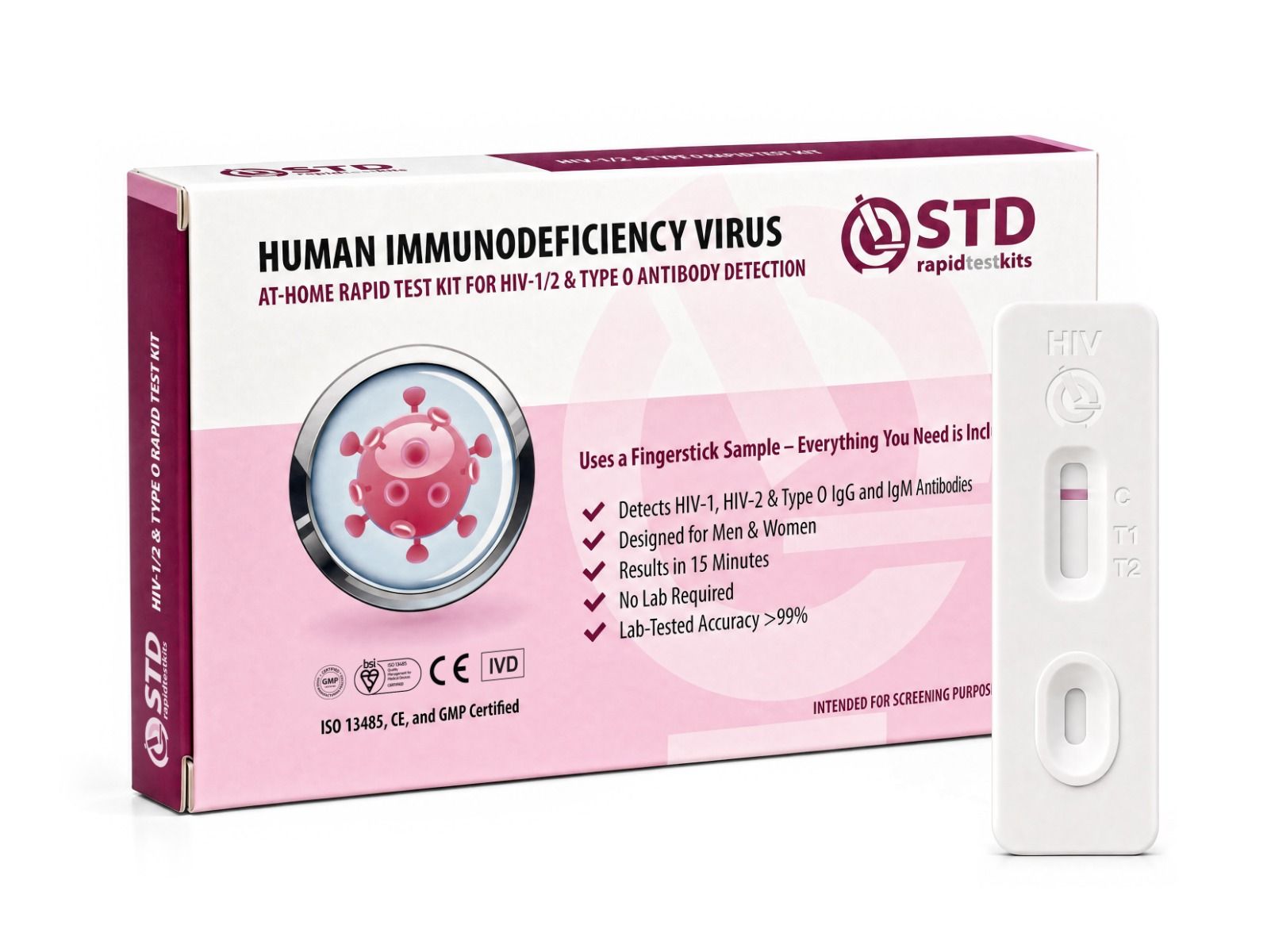
At-home rapid tests use lateral-flow chemistry on a fingerstick blood drop or oral fluid sample and deliver a result in under 20 minutes. They are HIV-antibody screening tests, which means their window period is similar to lab antibody tests (best read at 90 days after exposure for confidence), and any positive result needs lab confirmation. Their value is privacy, speed, and the option to test on your own timeline. A negative rapid test taken inside the window period is not definitive, so retesting at the 90-day mark is the safer way to rule out a recent exposure.
The CDC recommends that everyone aged 13 to 64 get tested for HIV at least once as part of routine healthcare, with annual testing for people in higher-risk categories (sexually active gay and bisexual men, people with new or multiple partners, people who inject drugs, people who exchange sex for money or housing) and quarterly testing for some.
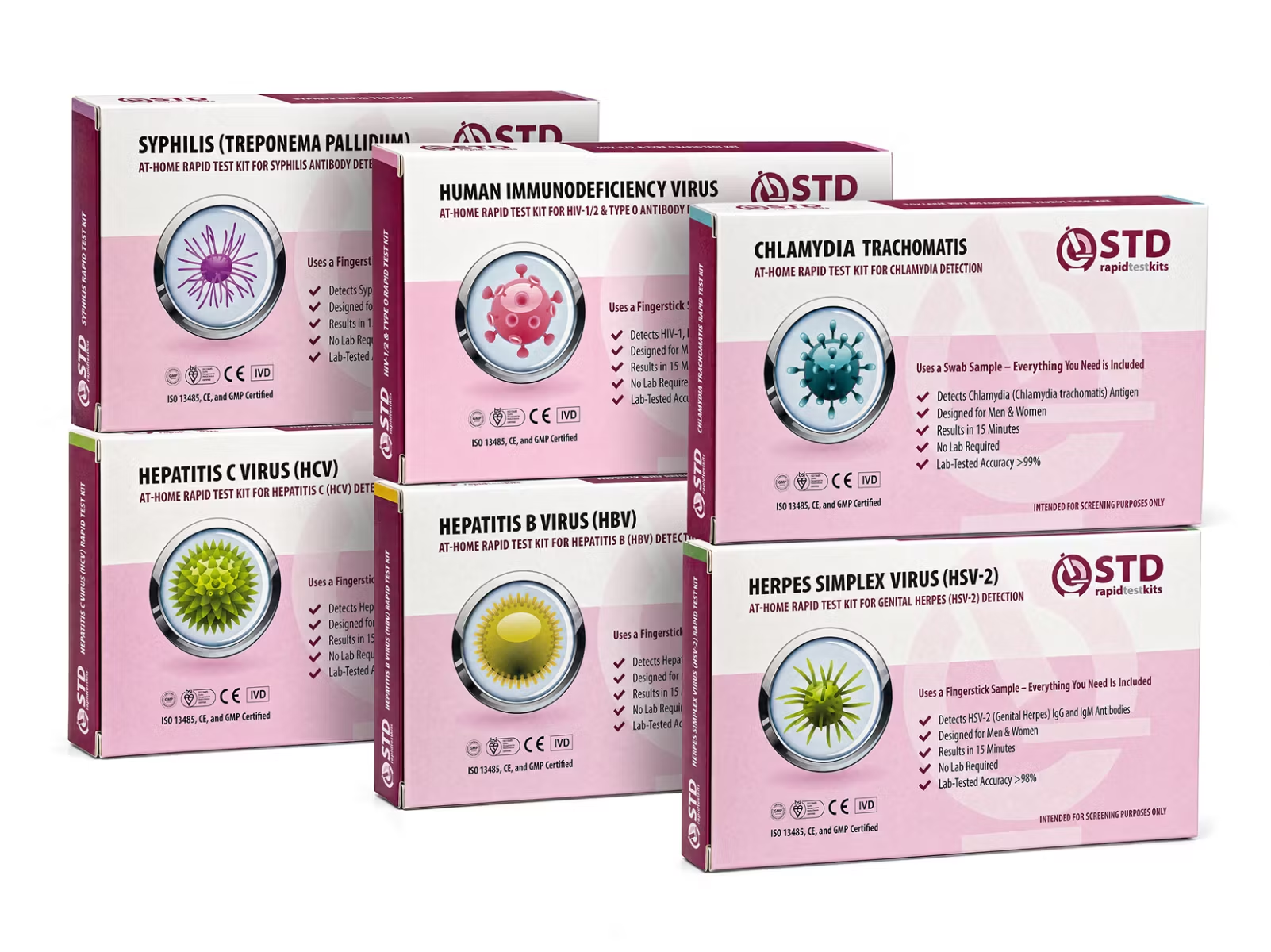
Note: stdrapidtestkits.com sells the at-home HIV rapid test linked below and several other STI panels; the product descriptions are the site's own.
Disclosure, dating, and stigma in 2025
Once treatment is in motion and viral load is suppressed, the next set of questions is usually social. Who do you tell, how, and when? There is no single right answer, and the legal landscape varies by country and U.S. state. Some U.S. states still criminalize HIV non-disclosure even when there is no realistic risk of transmission, so checking local law is part of the decision. Most public health authorities recommend disclosure to current and ongoing sexual partners as a matter of informed consent, regardless of legal exposure.
Stigma has decreased measurably in major cities over the last decade, but it has not disappeared, and internalized shame remains common, particularly among Black and Latino communities and among LGBTQ+ people already navigating stigma on other axes. People newly diagnosed often describe a sharp drop in self-worth that has nothing to do with their actual prognosis. Therapy with a counselor familiar with HIV, peer support groups, and conversations with long-term survivors all help close that gap faster than working through it alone.
Dating apps have started to catch up. Several major platforms (including Grindr, Hornet, and Lex) now let users share U=U status or filter for serodifferent matches. Community-led campaigns continue to push back on outdated “clean only” language, which many platforms have explicitly added to their content policies as problematic.
Disclosure conversations tend to work best with three components: the facts (current viral load, on-treatment status, what U=U means in plain English), an invitation for questions, and time for the other person to process. Rehearsing the lines out loud or with a friend first makes the real conversation calmer. Some people disclose early in dating, on the second or third date; others wait until intimacy is on the table. Both approaches are defensible, and the right timing depends on context, comfort, and the kind of relationship being built.
What no longer holds up, given the U=U evidence, is treating an undetectable partner as an inherent risk. The data do not support that framing, and the persistence of dating-app stigma is now a public-health issue more than a personal one.

Prevention in 2025: PrEP, PEP, and what's new
If you are HIV-negative and want to stay that way, the prevention toolkit has also expanded significantly.
Pre-exposure prophylaxis (PrEP) is daily medication that prevents HIV infection in people without HIV. The original PrEP option, Truvada (tenofovir disoproxil fumarate + emtricitabine), is now available as a generic and remains highly effective when taken as prescribed. Descovy is a newer single-tablet option with a different tenofovir formulation that has milder kidney and bone effects for some patients. Both are highly effective at preventing HIV when taken consistently, per the CDC HIV prevention page.
For people who would rather not take a daily pill, Apretude (long-acting injectable cabotegravir) was approved in 2021 and is given as an injection every two months. It was the first injectable PrEP and has shown equal or better effectiveness than oral PrEP in large studies, partly because adherence is built into the dosing schedule rather than into daily memory.
Yeztugo (lenacapavir) was approved in June 2025 by the FDA as the first twice-yearly injectable PrEP, given subcutaneously every six months. In the Phase 3 PURPOSE-1 trial, lenacapavir showed 100 percent efficacy among cisgender women, and PURPOSE-2 demonstrated about 99 percent efficacy across cisgender men and gender-diverse people. The dosing interval is the longest of any current HIV prevention option.
Post-exposure prophylaxis (PEP) covers the emergency scenario: you think you may have been exposed in the last 72 hours, and there is no time for a PrEP plan. PEP is a 28-day course of antiretroviral medication that significantly reduces the chance of seroconversion if started within 72 hours of exposure, and the sooner the better. PEP is available at most emergency departments and many urgent-care clinics; some pharmacies can also dispense it on the same day.
Condoms still work, of course. Combined with PrEP on the HIV-negative side or U=U on the partner's side, they offer layered prevention that approaches absolute risk reduction for HIV. Most public-health experts now talk about prevention as a combination strategy rather than as any single tool.
Sex and intimacy after diagnosis
A positive result changes the inputs to intimacy, often by prompting more honest conversations than existed before the test.
Once viral load is suppressed and U=U applies, condomless sex with HIV-negative partners is safe from an HIV-transmission standpoint. Condoms still matter for other STIs and for pregnancy prevention, so the conversation does not end with HIV. Many people newly diagnosed report that the first 6 to 12 months of post-diagnosis intimacy felt more deliberate than what came before, with honest conversations about consent, status, and pleasure built into the relationship from the start.
Psychologically, rebuilding intimacy after a diagnosis often takes longer than reaching viral suppression. Anxiety around intimacy, libido changes (which can come from the diagnosis itself, the stress of disclosure, certain medications, or co-occurring depression), and worry about partner reactions are all common and usually temporary. Trauma-informed therapists, peer support groups, and structured patient-led communities exist in most major cities and online for people working through this. The body usually catches up to the science once the brain has had time to integrate the new reality.
For mixed-status couples (sero-different relationships), the planning is often more practical than people expect. The partner with HIV takes their medication; the partner without HIV may or may not take PrEP, depending on preference; periodic viral-load checks confirm continued suppression; and the sexual relationship continues, often without barrier methods. The evidence base is strong enough that most clinics now counsel couples on this configuration as standard practice rather than as an experimental edge case.
Pleasure and a functioning sex life remain accessible after a diagnosis. The path back may include therapy, peer support, or a few months of patience with one's own emotional adjustment.
Three pieces, repeated as a routine:
- Partner with HIV: consistent daily ART (or injectable schedule), aimed at and maintained at undetectable viral load.
- Partner without HIV: optional daily, injectable every two months, or twice-yearly lenacapavir PrEP, depending on preference and access.
- Both partners: periodic labs every 3 to 6 months on the HIV-positive side to confirm continued suppression; routine STI screening on both sides.
Why testing still matters when you feel fine
One of the most persistent HIV myths is “you would know if you had it.” Most people would not, at least not for several years.
After the acute window passes, HIV typically enters a long asymptomatic stage. The immune system continues to take quiet damage; the person continues to feel essentially normal. By the time clear symptoms appear (recurrent infections, weight loss, persistent fatigue, advanced disease), the virus has had a long head start on the immune system, and treatment outcomes are measurably worse than for people who start ART soon after seroconversion.
Routine testing exists to catch this asymptomatic-stage problem. The CDC's recommended cadence is built around the fact that scheduled checks find infections that symptoms would not.
If you have had a possible exposure, the decision is not really between testing and ignoring it. The decision is between testing now (and adjusting next steps based on the result) or testing later (with the same information arriving later, sometimes too late for PEP, sometimes too late for the early-ART benefit). Rapid at-home tests make the logistical part of that decision easier. Lab-based testing or a clinic visit makes the answer more conclusive, particularly inside the window period when home antibody tests can still miss recent infection.
Testing after a possible exposure is a practical tool: the result opens every option that follows, from PEP within 72 hours to early ART if positive, to a confident sex life if the test is negative. If the article above has raised more questions than it has answered, that is normal, and a clinician or an at-home test is usually the cleanest next step.
| Who | Recommended HIV testing frequency |
|---|---|
| Everyone aged 13 to 64 | At least once as part of routine healthcare |
| Sexually active gay and bisexual men, people with new or multiple partners, people who inject drugs, people who exchange sex | At least once a year, more often if exposure risk is ongoing |
| Some higher-risk groups (per individual CDC and clinician guidance) | Every 3 to 6 months |
| Anyone with a possible recent exposure | Test now plus a 90-day follow-up to confirm a negative result |
Frequently Asked Questions
- What does U=U actually mean?
- U=U stands for undetectable equals untransmittable. When a person living with HIV takes antiretroviral therapy consistently and their viral load drops below 200 copies/mL, they cannot transmit HIV to sexual partners. This is established science, supported by three large studies (PARTNER, PARTNER2, and Opposites Attract) that recorded zero transmissions when the HIV-positive partner was virally suppressed.
- How long after exposure does HIV show up on a test?
- Fourth-generation lab tests, the modern clinical standard, can confirm HIV from about 18 days post-exposure and are reliable by day 45. At-home antibody rapid tests work on a slower schedule and reach full reliability around 90 days. NAT/RNA-PCR is the earliest option (10 to 33 days) and is usually reserved for confirmation or acute exposure workups.
- Can you live a normal life with HIV in 2025?
- Yes, when treatment starts early and is taken consistently. Cohort data put life expectancy within 5 to 10 years of the general population for people diagnosed in their 20s or 30s and well-treated thereafter. Most of the remaining gap is explained by late diagnosis and age-related conditions, both of which are increasingly managed inside HIV care itself.
- What does HIV treatment look like in 2025?
- For most newly diagnosed people, treatment is a single tablet taken once a day, combining two or three medications. People who prefer not to take daily pills can switch to Cabenuva (an injection every two months) after a short oral lead-in. Lenacapavir (Sunlenca) is a twice-yearly injection used in treatment-experienced patients with drug resistance.
- Is PrEP the same as HIV treatment?
- No. PrEP (pre-exposure prophylaxis) is preventive medication taken by HIV-negative people to keep them HIV-negative. ART (antiretroviral therapy) is treatment medication for people who already have HIV. PrEP options in 2025 include daily Truvada or Descovy pills, Apretude injections every two months, and Yeztugo (lenacapavir) injections every six months.
- What is the difference between HIV and AIDS?
- HIV is the virus that infects and damages the immune system. AIDS (acquired immunodeficiency syndrome) is the most advanced clinical stage of untreated HIV infection, defined by a CD4 count below 200 cells/mm³ or the presence of specific opportunistic infections. With consistent modern treatment, most people with HIV never progress to AIDS.
- Can you test for HIV at home?
- Yes. Fingerstick or oral fluid, result in under 20 minutes. The catch: at-home tests detect antibodies and are most accurate when read at least 90 days after a possible exposure. Any positive home result needs lab-based confirmation through a clinic.
- Do I have to tell sexual partners I have HIV?
- Legally, it depends on the country or U.S. state. Some jurisdictions still criminalize HIV non-disclosure even when there is no realistic transmission risk. Ethically, most public-health authorities recommend disclosure to current and ongoing sexual partners as part of informed consent. U=U has changed that conversation by giving people a clear, evidence-based answer about transmission risk.
- U.S. Centers for Disease Control and Prevention. About HIV, including the stages of infection, acute symptoms, and progression timelines.
- U.S. Centers for Disease Control and Prevention. HIV treatment and the evidence base for undetectable equals untransmittable (U=U).
- U.S. Centers for Disease Control and Prevention. HIV facts and statistics, including the share of people living with HIV in the U.S. who do not know their status and the age demographics of people living with HIV.
- U.S. Centers for Disease Control and Prevention. HIV prevention overview: PrEP, PEP, and combination prevention strategies.
- U.S. Department of Health and Human Services. HIV.gov portal: treatment, prevention, and care resources, including U=U and long-acting injectable updates.
- World Health Organization. HIV fact sheet: global epidemiology, treatment, and prevention guidance.
