
Published: November 2025 | Last updated: April 2026 | Editorial review and quality control: Martina N.
Trichomoniasis is the most common curable sexually transmitted infection in the United States, and most people who carry it never feel a thing. The CDC counts more than two million infections nationally and notes that about seventy percent of people with trich never develop symptoms (CDC, About Trichomoniasis). That silent pattern is the real prevention challenge: you cannot defend against what you do not know is there.
This guide is built for the moment between exposure and certainty. It covers what genuinely lowers your risk during sex, why routine testing matters even when you feel fine, and what the CDC and NHS recommend for treatment and partner notification. We sell at-home rapid tests for trichomoniasis, but only a vaginal self-swab version. We will be honest about who that fits and who needs a clinic instead.
How do you prevent trichomoniasis?
Two pillars work together. Use latex or polyurethane condoms consistently and correctly during vaginal sex; this is the single biggest behavior change that lowers transmission. Pair barrier use with routine STI screening, because roughly seven of ten people with trichomoniasis have no symptoms and can pass it on without knowing. If a test comes back positive, both you and any current sexual partners need treatment at the same time so reinfection does not undo it.
Key takeaways
- About 70% of trichomoniasis infections cause no symptoms, so consistent condom use and routine STI screening have to work together. Picking just one usually isn't enough.
- Trich is curable with prescription antibiotics, but reinfection within three months happens to about one in five people unless every recent partner is treated at the same time.
Why prevention is unusually hard with trichomoniasis
Trichomoniasis is caused by a single-celled parasite called Trichomonas vaginalis. It is not a bacterial infection like chlamydia or gonorrhea, and not a virus like herpes or HIV. The CDC describes it as the most common curable sexually transmitted infection in the country (CDC, About Trichomoniasis), with more than two million infections in the United States in a typical year. In 2020, the World Health Organization estimated 156 million new trichomoniasis infections globally among adults aged 15 to 49 (WHO STI fact sheet).
Trichomoniasis is unusually hard to prevent because of one statistic in particular. The CDC reports that about 70 percent of people who have trich have no signs or symptoms at all. Most people who pass it on do not know they are infected, which means the common-sense strategy of avoiding partners who appear unwell fails entirely. Effective prevention has to assume any sexually active person could be a silent carrier, including yourself, and treat barrier protection plus routine testing as the standard, not the exception.
Two more details to anchor before we move on. First, women are diagnosed with trichomoniasis more often than men, but men carry and transmit it at similar underlying rates with even fewer symptoms. Second, untreated infection can persist for months or years, so an exposure now can quietly affect partners much later.
How trichomoniasis spreads (and what does not transmit it)
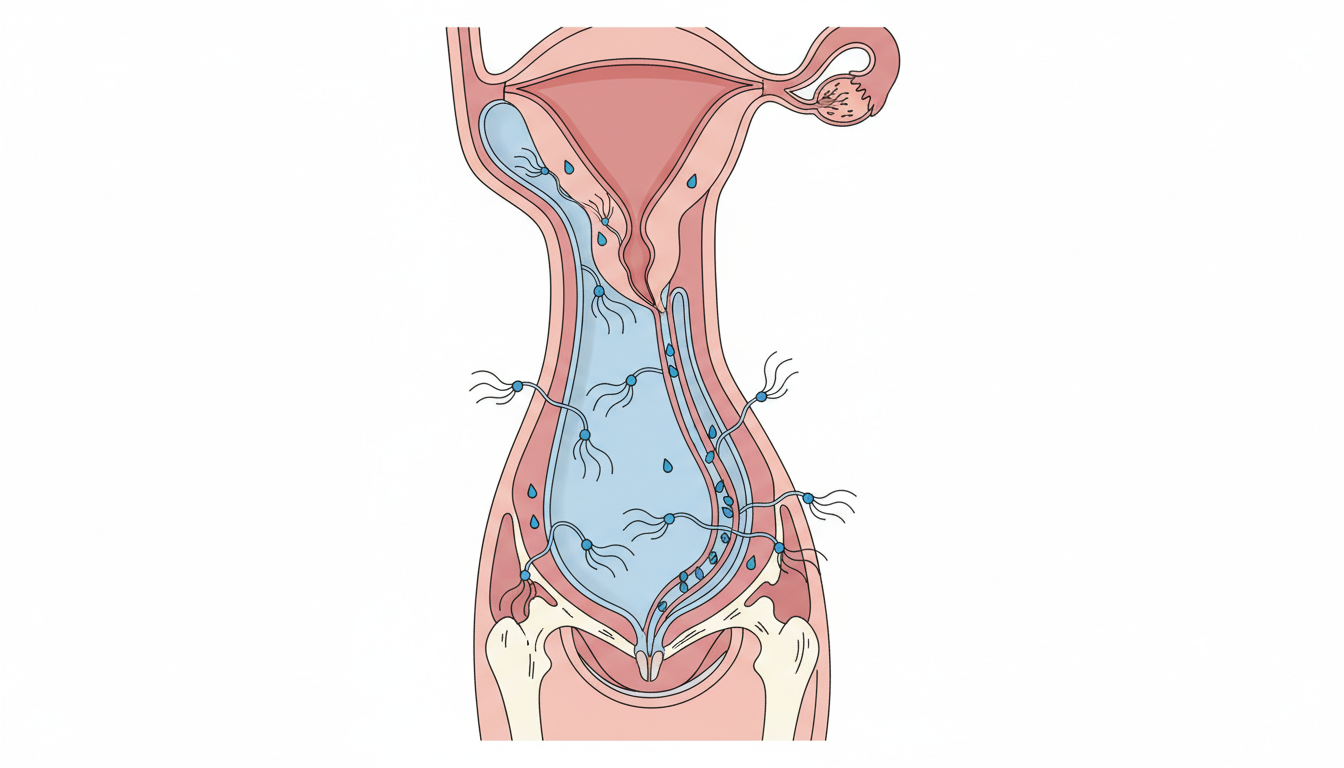
Vaginal intercourse is the main route. The parasite needs urogenital tissue to survive, so it transmits when penile-vaginal sex creates direct contact between the penis and the vaginal canal or vulva. The NHS confirms vaginal sex and shared unwashed sex toys as the two documented transmission paths (NHS, Trichomoniasis).
What does not transmit trichomoniasis matters just as much, because misinformation drives needless anxiety. Toilet seats, public restrooms, towels, shared bedding, and swimming pools do not spread it. The parasite cannot survive long outside the warm, moist environment of human urogenital tissue. Casual contact, hugging, kissing, and sharing utensils are not concerns. Oral sex and anal sex do not commonly spread genital trich because the parasite does not establish infections in the throat, mouth, or rectal lining the way it does in the vagina or urethra.
Sex toys are a real and overlooked path, though. If a toy is used vaginally with one partner and then used vaginally with another without thorough cleaning or a fresh condom over it, transmission is plausible. The simplest fix is to wash toys with soap and water between uses or change condoms on shared toys.
Most prevention guidance focuses on intercourse, but unwashed shared sex toys are a documented transmission path that bypasses condom protection entirely. If you share toys, wash them with soap and water between users or place a fresh external condom on the toy for each person.
The symptoms most people miss
Even when symptoms do appear, they are easy to mistake for something else. The CDC notes that signs typically show up 5 to 28 days after exposure, though some people develop symptoms much later or never at all.
In women, the classic pattern (when it shows up) is a yellow-green vaginal discharge that may look frothy and carry a strong fishy odor (NHS). Other common signs include genital itching or irritation, pain or burning during urination, and pain during vaginal sex. Discharge can also be thin and clear, which is why people commonly assume it is a yeast infection or a normal cyclical change and move on without testing.
In men, symptoms when present are usually a thin discharge from the urethra, irritation inside the penis, and burning during urination or after ejaculation. Most men with trichomoniasis have no symptoms whatsoever. Because men are not routinely screened for trich in standard STI panels, asymptomatic male carriers are a major reason the infection keeps circulating in heterosexual networks.
One pattern worth flagging: trichomoniasis symptoms can come and go on their own. The infection itself does not clear, but irritation may quiet down for weeks at a time and then flare. People often interpret a quieter phase as healing and skip testing. The infection remains transmissible regardless.
Trichomoniasis does not resolve on its own. The CDC is explicit that prescription antibiotic treatment is required to clear the parasite. Self-resolution of symptoms is common and misleading; the infection persists and stays transmissible to partners until treated.
Six safe-sex practices that genuinely lower risk
These are the behaviors with actual evidence behind them, ordered roughly by how much each one reduces risk.
- Use external or internal condoms during vaginal sex, every time. Latex or polyurethane condoms are the single most effective behavioral tool. They are not 100 percent because the parasite can transmit through skin areas the condom does not cover, but consistent use lowers risk substantially. The NHS recommends external (male) or internal (female) condoms for trichomoniasis prevention.
- Get screened on a schedule, not just when worried. The NHS suggests a yearly STI test for sexually active people, with additional testing whenever you have a new partner. Higher-risk situations (multiple recent partners, a partner who tested positive, condomless sex outside a tested monogamous arrangement) warrant testing every three to six months.
- Talk to partners before sex about testing. "When was your last STI panel and what did it cover?" is awkward for about ten seconds and then it is over. The conversation is also a useful filter: someone who refuses to have it is telling you something about how they handle other risk decisions.
- Do not share unwashed sex toys. Either wash them with soap and water between users, or place a fresh condom on the toy before each use.
- Reduce concurrency. Overlapping sexual relationships create more transmission opportunities than the same number of sequential ones. Keeping partnerships sequential where possible, with testing in between, lowers cumulative exposure.
- Stay sober enough to use protection correctly. Alcohol and substance use are associated with skipped condoms and unintended exposure. Plan barrier methods ahead of time so they are not a decision you have to make while impaired.
Use a condom during vaginal sex, every time, from start to finish. Of all six practices above, this single behavior change is the one with the strongest evidence base for lowering trichomoniasis transmission, and it works regardless of whether you or your partner know your STI status.
Barrier protection and testing: how they work together
Some people treat this as an either-or choice, but the two approaches address different parts of the same problem. Barrier methods reduce the chance of transmission during a given sexual encounter; testing catches infections that did slip through, before they spread further. Used together, they lower both incoming and outgoing risk for you and your partners.
| Approach | What it does | Main limitation |
|---|---|---|
| External or internal condoms | Physical barrier reducing direct genital contact during vaginal sex | Does not cover all skin around the genitals |
| Mutual monogamy with tested partners | Removes new exposure once both partners test negative | Only works if both partners are honest about outside contact |
| Routine STI screening | Detects asymptomatic infections before partners are exposed | A single negative does not predict future status; needs repeating |
| Limiting concurrent partners | Lowers cumulative transmission opportunity | Does not protect within any specific encounter |
| Sex toy hygiene | Closes one specific transmission route | Narrow scope; most cases come from intercourse itself |
Why testing is the prevention pillar most people skip
Standard STI panels at most clinics cover chlamydia, gonorrhea, HIV, and syphilis. Trichomoniasis is often not included by default, even for women, unless you specifically ask or the clinic uses a multiplex test that bundles it. This is one reason CDC prevalence estimates and reported case counts diverge so widely; many cases are not even being looked for.
The CDC recommends that all sexually active women under age 25 be screened annually for chlamydia and gonorrhea, and that women with risk factors (multiple partners, a partner with an STI, condomless sex) extend that to include trichomoniasis. For women living with HIV, the CDC recommends annual trichomoniasis screening regardless of symptoms because of how often the two co-occur.
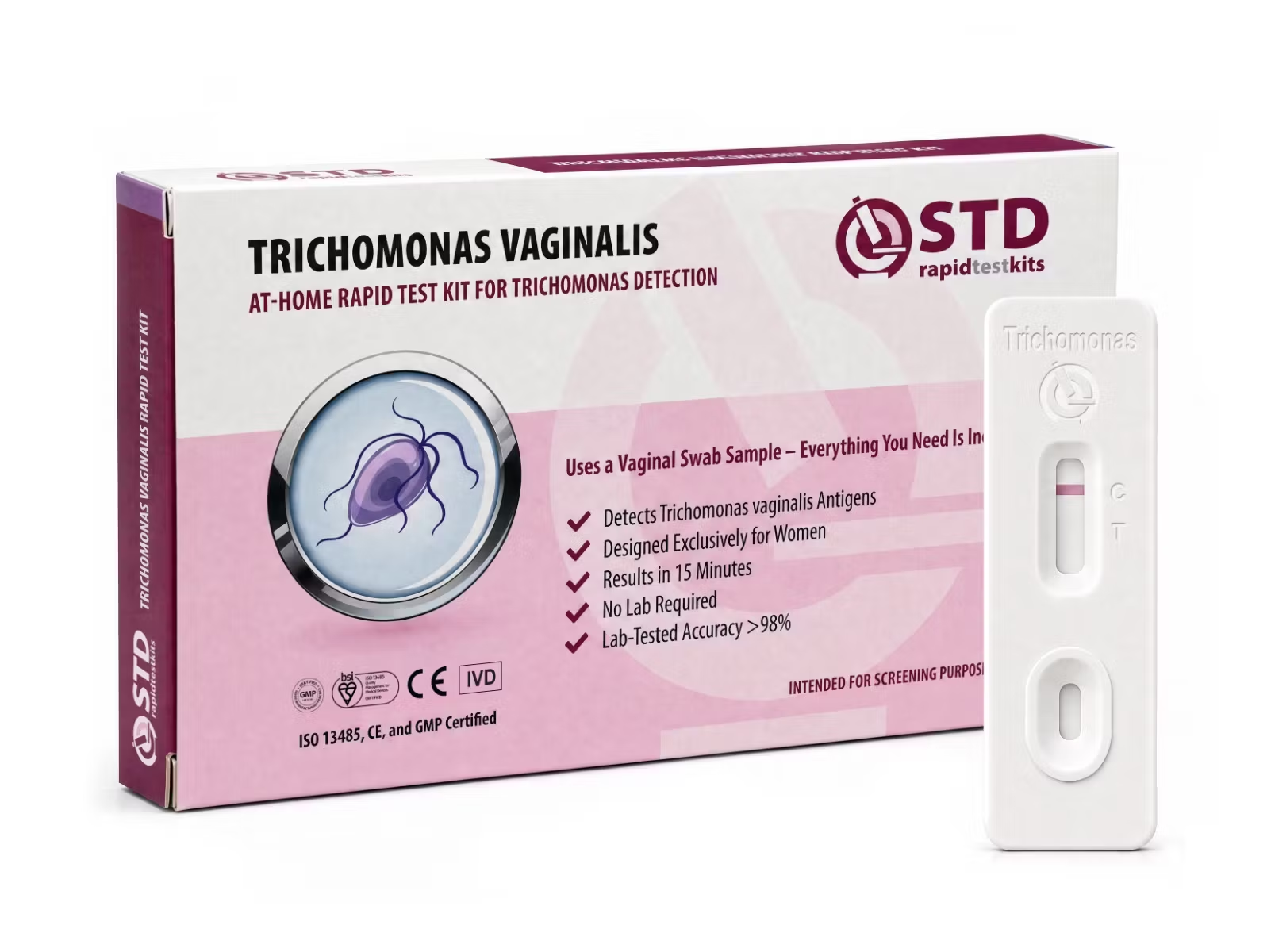
Home testing fills a real gap when you would otherwise skip testing entirely. The barriers most people cite (taking time off work, awkward clinic conversations, the wait for results) disappear with a self-collected swab and a 15-minute lateral-flow result. The kit catches the infection at home, which gives you the information needed to decide whether to seek treatment and notify partners.
Our at-home rapid trichomoniasis test is a vaginal self-swab, validated for female anatomy only. Men who suspect exposure should see a clinic for a urethral swab or a NAAT urine test; we do not currently sell a male-compatible trichomoniasis home kit.
Three concrete clinic-visit barriers disappear with a self-collected vaginal swab kit: time off work for an appointment, an awkward conversation with a clinician you may not know, and the wait of several days for lab results. Replacing those with a 15-minute lateral-flow result at home is what closes the screening gap for the people who would otherwise put testing off until symptoms force the issue.
Treatment: what clears the infection
Trichomoniasis is one of the simpler STIs to treat once it is found. The 2021 CDC STI Treatment Guidelines updated the recommended regimen, so older articles online may quote outdated dosing.
For women, the CDC now recommends metronidazole 500 mg taken orally twice a day for seven days. The single 2 gram dose that was the standard for years was downgraded for women after data showed the multi-dose protocol reduced treatment failure compared to the single-dose approach (CDC STI Treatment Guidelines, Trichomoniasis).
For men, the recommendation is still metronidazole 2 grams orally as a single dose. Tinidazole 2 grams as a single dose remains an alternative for either sex when metronidazole is not tolerated. Both medications require avoiding alcohol during and shortly after the course because of a disulfiram-like reaction (nausea, vomiting, and flushing that occur when these antibiotics interact with alcohol).
Partner treatment is the part most often skipped. Every current sexual partner needs antibiotics at the same time, even those without symptoms or a positive test. The CDC calls this presumptive expedited partner therapy, and it is the only reliable way to break the reinfection cycle. The CDC also recommends that women retest about three months after treatment, since reinfection occurs in roughly one in five people within that window.
Treatment is fast, the prescription is inexpensive, and the failure rate is low when the multi-dose protocol is followed. The main reasons people stay infected are skipped doses, untreated partners, or a brand-new exposure after the antibiotics finished.
| Group | First-line CDC regimen | Alternative |
|---|---|---|
| Women | Metronidazole 500 mg orally twice daily for 7 days | Tinidazole 2 g orally as a single dose |
| Men | Metronidazole 2 g orally as a single dose | Tinidazole 2 g orally as a single dose |
| Pregnancy | Metronidazole 500 mg orally twice daily for 7 days | Discuss with prenatal provider; metronidazole considered safe across trimesters |
Trichomoniasis during pregnancy
Pregnant women with untreated trichomoniasis face elevated risk of preterm delivery and low birth weight. The CDC notes that babies born to mothers with active trich are more likely to weigh less than 5.5 pounds and to be born early (CDC fact sheet).
The reassuring side: metronidazole has been studied extensively in pregnancy and is considered safe by both the CDC and most obstetric guidelines, including during the first trimester. If a prenatal screen comes back positive, treating the infection during pregnancy is the standard of care, and treating the partner concurrently is part of the protocol so reinfection does not happen mid-pregnancy.
If you are trying to conceive or are early in pregnancy and concerned about possible exposure, talk to your obstetric provider about adding a trichomoniasis screen to your prenatal panel; it is not always included by default.
If you find out you are pregnant and a screen comes back positive, the CDC's 2021 STI Treatment Guidelines recommend metronidazole 500 mg twice daily for 7 days, and the medication is considered safe for use across all trimesters. Untreated infection carries the documented risks of preterm delivery and low birth weight, so the balance of evidence supports treating during pregnancy rather than waiting until after delivery.
Trich rarely travels alone: co-infection risk
Trichomoniasis disrupts vaginal flora and creates microscopic genital inflammation, which makes the tissue more permissive to other pathogens. The CDC describes the mechanism plainly: trich can cause genital inflammation, making it easier to acquire HIV or to pass it to a sex partner.
People diagnosed with trichomoniasis also commonly test positive for chlamydia, gonorrhea, or bacterial vaginosis at the same visit. The overlap is partly a shared-risk-factor effect (the behavioral pattern that produced one infection often produced others), and partly a biological effect (one infection can promote another by disturbing local tissue defenses).
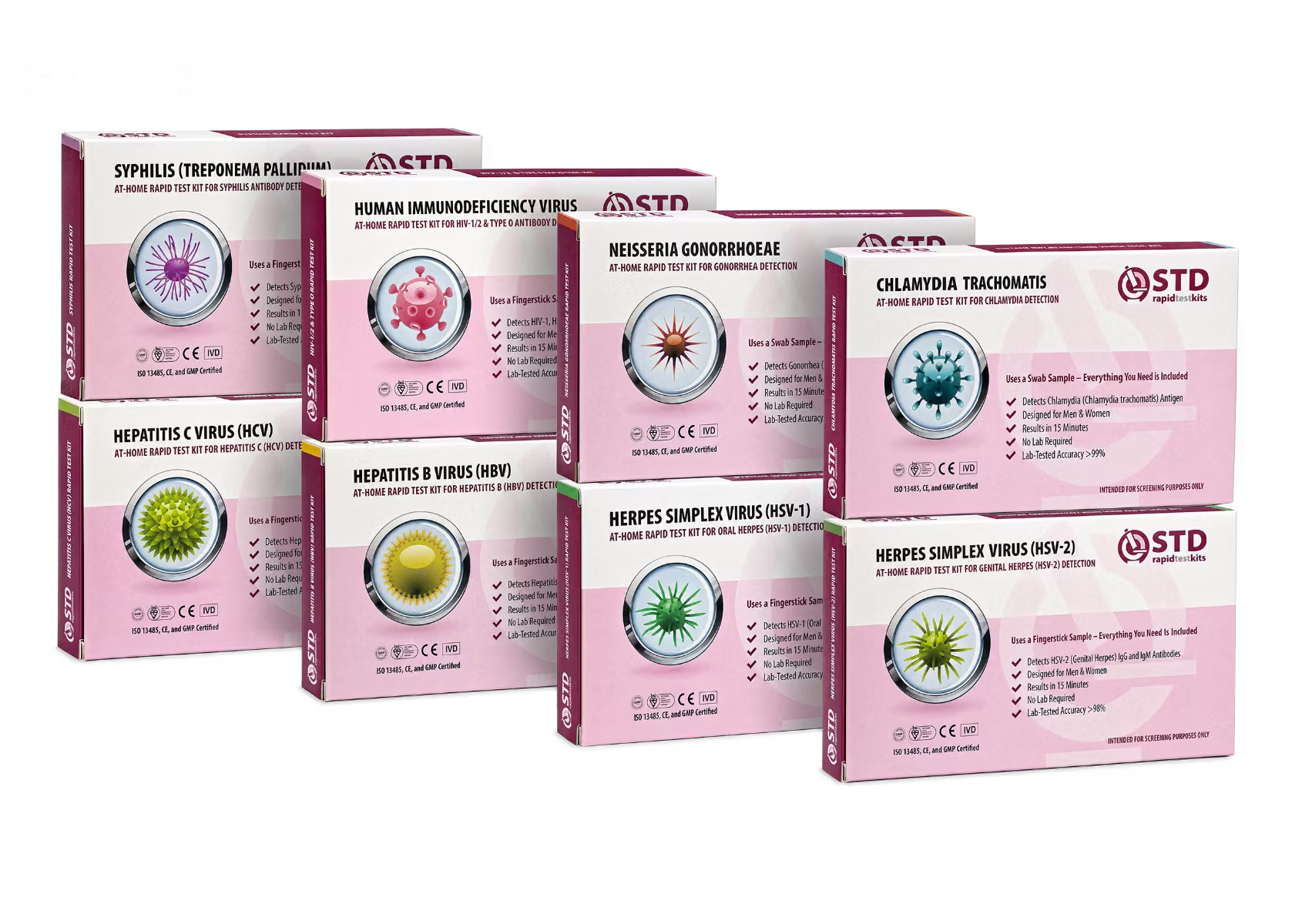
Practically, this is why a positive trichomoniasis test is a useful prompt to test for the rest of the standard panel. A multi-infection home kit covers more ground in one collection, which is convenient when you would otherwise need separate appointments or separate single-infection kits.
What to test for alongside trichomoniasis
- Chlamydia and gonorrhea: both share transmission patterns with trich and frequently co-occur, especially in women under 25.
- HIV: untreated trich can raise the chance of acquiring or passing HIV per the CDC; an HIV screen at the same time is standard practice.
- Bacterial vaginosis: not an STI, but commonly disrupted alongside trich because both involve changes in vaginal flora.
Five common myths, briefly debunked
"You can catch it from a toilet seat." Vanishingly unlikely. The parasite cannot survive long on dry surfaces and there are essentially no documented non-sexual transmission cases.
"No symptoms means no infection." Roughly seven of ten people with trich are asymptomatic per the CDC. Symptoms are not a reliable signal in either direction.
"Only women get trichomoniasis." Women are diagnosed more often, partly because they are screened more often and because their symptoms are more recognizable. Men carry and transmit at similar underlying rates.
"If symptoms ease, the infection is gone." Not the case. Symptoms can come and go while the infection persists. Antibiotic treatment is required.
"Condoms make trich impossible." Condoms substantially reduce risk but do not eliminate it, because the parasite can transmit through genital skin not covered by the condom. Combine condoms with routine testing.
Trich can cause genital inflammation, making it easier to get HIV, or pass it to a sex partner.
Frequently asked questions
- How long after exposure can trichomoniasis be detected?
- Symptoms, when they show up, typically appear 5 to 28 days after exposure per the CDC. For testing accuracy, most lateral-flow swab tests are reliable from about a week post-exposure forward; if you test very early and the result is negative, repeat in two to three weeks before assuming you are clear.
- Will trichomoniasis go away on its own?
- No. The CDC and NHS both state that trichomoniasis does not resolve without treatment. Symptoms may quiet down on their own, which is misleading, but the parasite remains and the infection stays transmissible until prescription antibiotics clear it.
- Are at-home rapid trichomoniasis tests accurate?
- Lateral-flow swab tests are effective for home screening. Set expectations correctly: they are useful for catching infections you would otherwise miss because you have no symptoms, but they are not equivalent to the laboratory NAAT test that clinics use as the diagnostic gold standard. Check the product label for the specific sensitivity and specificity figures, and treat any positive home result as a prompt for clinic confirmation before starting prescription treatment.
- Can men test for trichomoniasis at home?
- Not with our kit, and currently no FDA-validated male trichomoniasis home test exists on the consumer market. Men who suspect exposure need a clinic visit for either a urethral swab or a NAAT urine test, both of which are quick and inexpensive at most sexual-health clinics.
- Do both partners really need to be treated at the same time?
- Yes, and skipping this step is the main reason reinfection rates stay so high. About one in five treated people is reinfected within three months when partners are not treated concurrently. The CDC recommends presumptive expedited partner therapy specifically to break this cycle.
- What complications can untreated trichomoniasis cause?
- Two well-documented effects per the CDC. First, untreated trich during pregnancy is associated with preterm delivery and low birth weight (under 5.5 pounds). Second, the genital inflammation trich causes can make it easier to acquire HIV or pass HIV to a sex partner. Treating the infection promptly removes both pathways.
- Is trichomoniasis transmitted through oral or anal sex?
- Genital trichomoniasis is overwhelmingly a vaginal-sex infection. The parasite does not establish reliable infections in the throat or rectum the way some bacterial STIs do. Oral and anal exposure are not common transmission paths.
- Should I test if my partner tested positive but I have no symptoms?
- Yes. The CDC recommends presumptive treatment of partners regardless of symptoms because asymptomatic carriage is so common, and a screening test confirms whether you also need to be retested in three months.
- U.S. Centers for Disease Control and Prevention. About Trichomoniasis fact sheet. Source for U.S. prevalence (more than two million infections), the 70 percent asymptomatic rate, the 5 to 28 day symptom window, the 1-in-5 three-month reinfection figure, HIV-acquisition facilitation through genital inflammation, and pregnancy complications including preterm delivery and low birth weight under 5.5 pounds.
- U.S. Centers for Disease Control and Prevention. STI Treatment Guidelines, Trichomoniasis. The 2021 update to the recommended regimens for women (metronidazole 500 mg twice daily for seven days), men (single 2 g dose), and pregnancy, plus partner-treatment and three-month retesting guidance.
- World Health Organization. Sexually transmitted infections (STIs) fact sheet. WHO 2020 estimate of 156 million new trichomoniasis infections globally among adults aged 15 to 49.
- U.K. National Health Service. Trichomoniasis. Symptom descriptions in women and men (including yellow-green frothy discharge with fishy odor), transmission routes, and prevention guidance including external and internal condom use.
