






Quick Answer: A faint line on a Trichomoniasis rapid test usually indicates a positive result, even if it’s hard to see. False negatives are more likely when you test too early, test incorrectly, or the infection is low-level or asymptomatic.
Why This Article Exists (And Why It Matters)
We wrote this because too many people are gaslit by their own test results, or their providers. You’re not imagining things. Trichomoniasis can hide, it can linger without symptoms, and yes, it can cause a faint test result that still means “positive.”
This article is for you if you're looking at your test with doubt in your chest, or wondering whether to trust that negative result even though your symptoms haven’t gone away. If you’ve ever asked “can a faint line still mean I have an STD?”, you’re in the right place.
We’ll break down how trich tests work, what faint lines actually mean, what causes false negatives, when to retest, and what kind of testing is most accurate. You'll leave with clarity, not just about your result, but about what to do next.
People are also reading: How to Talk to Your Teen About STD Testing (Without Freaking Out)
How Trichomoniasis Rapid Tests Work (Without the Jargon)
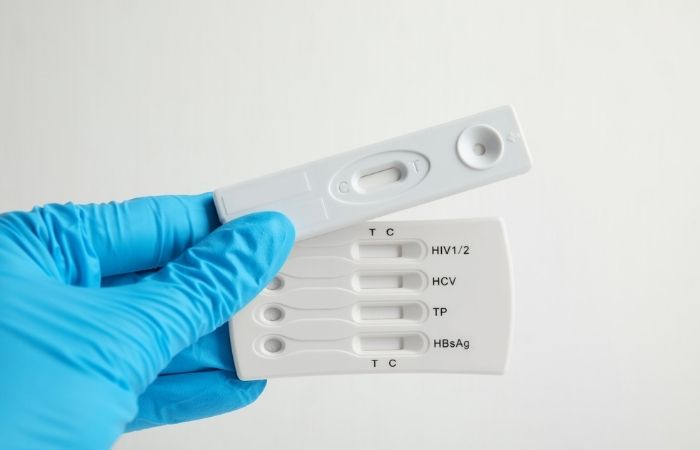
Trichomoniasis is caused by a microscopic parasite called Trichomonas vaginalis. Rapid tests look for antigens, specific proteins made by the parasite that can be detected in urine or vaginal fluid. The test uses a lateral flow mechanism, kind of like a pregnancy test, and displays a line when those antigens are present.
Here’s where it gets tricky: antigen levels can fluctuate. If you catch the infection early, or test after it’s already started clearing, your body may not shed enough of the parasite to produce a strong result. That’s when you get the dreaded faint line or, worse, a misleading negative.
Unlike NAAT or PCR lab tests that amplify DNA material to near-certain levels of detection, at-home rapid tests depend on what's in your sample, right now, in real time. That’s why timing and technique matter so much.
For high-sensitivity options, consider a discreet mail-in test or combo panel. STD Rapid Test Kits offers both rapid and lab-grade test kits depending on your needs. You can order a Trichomoniasis rapid test kit here if you haven’t tested yet.
Faint Lines: Why They Happen (And Why They’re Often Real)
Let’s say your test strip shows a faint line. Not bold, not screaming “positive”, just a whisper of color. Does it count?
Yes. In most rapid antigen tests, any line in the test zone, even faint, is considered a positive. That’s because antigen presence doesn’t always create a strong reaction, especially if the infection is recent or your body has already started clearing it. The line reflects the test detecting something. And that something usually means Trichomonas is there, even if the test isn’t shouting it.
That said, there’s a difference between a faint line and a testing error. Discoloration, smearing, or drying artifacts can create misleading visuals. If the test is expired, stored improperly, or interpreted outside the result window (usually 5–15 minutes after application), that can produce what’s known as a “ghost line.” That one? Not reliable.
But a valid faint line within the test window? Don’t ignore it. It might be your body’s early warning system.
False Negatives: How They Happen (And When to Retest)
It's not uncommon for trichomoniasis tests to come back negative when they shouldn't. The journal Sexually Transmitted Infections published a study in 2022 that found that rapid antigen tests missed up to 18% of confirmed cases when used outside the best testing window.
Most false negatives come from:
- Testing too soon: The infection hasn't grown enough to be found.
- Low parasite load: This is especially true in cases where there are no symptoms or after only part of the treatment.
- Mistakes in technique include not having enough samples, not swabbing correctly, or mixing things up.
- Kits that have expired or packaging that has been damaged by heat: Heat-sensitive strips can break down over time.
The best way to do it? If you tested less than 7 days after being exposed or if your symptoms don't go away after a negative result, test again in 14 to 21 days. If you have symptoms or have had multiple partners, it's also a good idea to think about getting a lab-based NAAT (Nucleic Acid Amplification Test) to confirm the diagno
How Accurate Are Trichomoniasis Rapid Tests?
| Test Type | Sample | Sensitivity | Specificity | When to Use |
|---|---|---|---|---|
| Rapid Antigen Test | Vaginal swab or urine | 82–90% | 95–98% | Immediate results at home |
| NAAT (Lab-Based) | Swab or urine | 95–99% | 98–99% | Highest accuracy; confirmatory |
Figure 1. Comparison of Trichomoniasis test types. Sensitivity measures true positives. Specificity measures true negatives. Source: CDC and peer-reviewed testing evaluations.
Order Now $33.99 $49.00 Check Your STD Status in Minutes
Test at Home with Remedium
Trichomoniasis Test Kit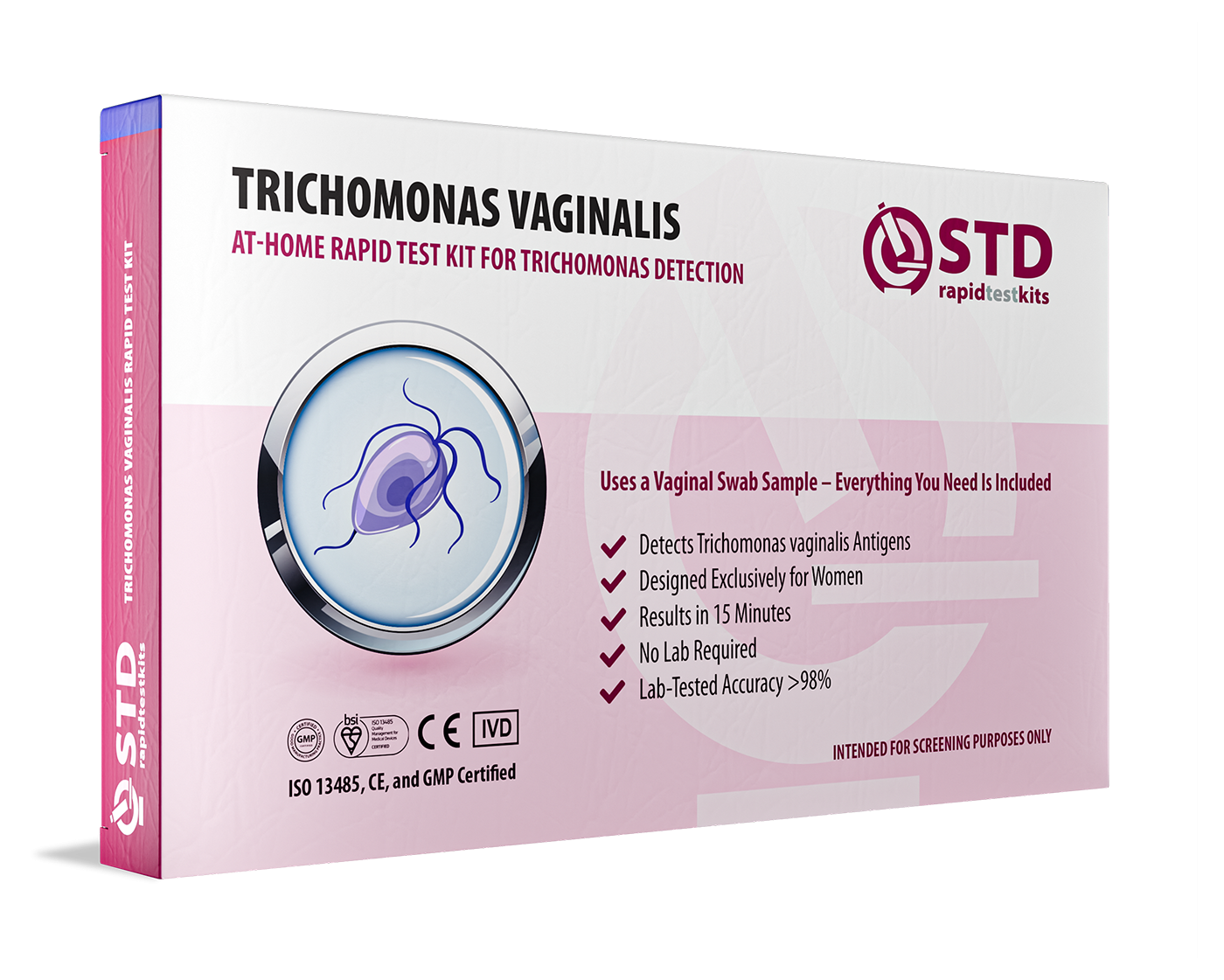
 For Women
 Results in Minutes
 No Lab Needed
 Private & Discreet
Window Periods and Why Timing Messes With Results
Timing isn’t just a technical detail, it’s everything when it comes to Trichomoniasis testing. If you test too early, the parasite may not have reproduced enough to be picked up by a rapid test. Too late, and your immune system may already be clearing it, lowering detectable levels of antigens.
That in-between window? That’s the sweet spot. But it’s different for everyone depending on immune response, menstruation, medications, and even douching (yes, really).
The Trichomoniasis incubation period is typically 5 to 28 days. But antigen-based rapid tests are most accurate after the 10–14 day mark. That’s when parasite levels are highest and least likely to be missed by a swab.
| Timeline After Exposure | What’s Happening in the Body | Test Reliability |
|---|---|---|
| 0–5 Days | Parasite may not be detectable yet | Low |
| 6–13 Days | Infection developing; some antigen present | Moderate, may require retest |
| 14+ Days | Parasite load peaks; antigens detectable | High |
Figure 2. Estimated trichomoniasis testing window. Individual accuracy depends on sample quality and test type.
When a Negative Doesn’t Match Your Body: Real Stories
Ty, 28, tested negative after a hookup where the condom slipped. “I had this constant irritation, like a UTI but weirder. The test said negative. I felt crazy.” Ty waited another week, tested again, and this time, the faintest of lines appeared. A confirmatory NAAT test proved it: positive for Trichomonas vaginalis.
"I kept second-guessing myself. I was ready to just let it go, but something kept telling me to try again."
Stories like Ty’s aren’t uncommon. In fact, many trich cases are only caught on the second (or third) round of testing. This isn’t about paranoia, it’s about pattern recognition. If something feels off, it probably is.
Maya, 34, saw a ghost line on her rapid test after a trip to visit an old partner. “I thought maybe I smudged it. It was barely visible. But I didn’t feel right.” Maya chose to act on the faint result, and follow-up testing confirmed she had trich, even without classic symptoms.
"No one teaches you how to trust your body when the test is whispering instead of shouting."
Let their stories be your reminder: your body isn’t lying. When in doubt, test again, or confirm with a lab.
At-Home vs. Lab Testing: What’s Best If You’re Not Sure?
It depends on what you need most: privacy, speed, or certainty.
If you need quick peace of mind, say, before a weekend trip or after a recent scare, a rapid at-home test can give you a read within 15 minutes. Just know: if the result is negative but your symptoms persist, follow up. That first test might be wrong, especially if you took it too early.
If you're looking for definitive results or have already gotten confusing answers, consider a lab-based NAAT test. These use molecular amplification (like PCR) to detect even tiny amounts of Trich DNA. They're more expensive, but far more reliable, especially for asymptomatic cases.
Some people choose both: a rapid test for immediate insight, followed by a mail-in NAAT for confirmation. If you want to try that approach, you can order a Trich rapid test kit now and get a lab test later if needed.
Whatever you do, don’t rely on one test to tell the whole story. Testing is a conversation, not a final verdict.
Can You Still Have Trich and Test Negative?
Yes, and here’s why:
Trichomoniasis doesn’t always scream. About 70% of people infected with trich are asymptomatic. That means no discharge, no burning, no signs. And if your body isn’t shedding a lot of parasite material into your urine or vaginal fluid, antigen tests might not catch it.
Other reasons for a negative result when trich is present:
- You're menstruating: Blood can interfere with antigen detection in vaginal swabs.
- You've douched or used vaginal meds: These can reduce detectable antigens.
- You're taking antibiotics: Even if not for trich, certain antibiotics can reduce the parasite load.
If you’ve tested negative and still feel something is off, you are not overreacting. You're being careful, and that’s smart. Waiting 7–10 days and retesting may give you the answer that makes more sense.
Need a second opinion? Don’t wait and wonder. Get a second test or confirm through a lab, peace of mind is worth it.
People are also reading: HPV Reactivation After 40: Myth or Medical Fact?
Confirmatory Testing: When You Should Get a Second Opinion
If you’ve taken a rapid test and the line was faint, or missing altogether, but you still have symptoms, this is where confirmatory testing steps in. The gold standard for diagnosing Trichomoniasis is a lab-based NAAT (Nucleic Acid Amplification Test), which detects the parasite’s DNA with extremely high accuracy.
So when is a second test worth it?
If your first result was:
- Faintly positive: NAAT can confirm whether the line was a true positive.
- Negative, but symptoms persist: Lab tests are essential to rule out false negatives.
- Inconclusive or expired kit: Definitely test again using a verified method.
Many at-home test kits now include instructions on how to get a lab confirmation if needed, or offer mail-in NAAT kits directly. STD Rapid Test Kits provides both rapid and lab-backed solutions, shipped discreetly.
The rule is simple: If you're unsure, retest. Trust doesn't come from ignoring doubt. It comes from checking twice when something matters.
Post-Treatment Testing: What If You Already Took Antibiotics?
This one’s tricky. If you’ve taken antibiotics (whether for trich or another infection), your test result might be skewed. Some antibiotics reduce parasite levels enough to cause a false negative, even if you're not fully cleared.
The CDC recommends waiting 7 to 14 days after treatment to retest for Trichomoniasis, especially if you didn’t get a lab confirmation beforehand. Why? Because fragments of the parasite or residual inflammation may still be detectable for a short time, and you don’t want to misread a lingering antigen as a reinfection, or vice versa.
Timing after treatment matters. Here's a guide to help you plan:
| Post-Treatment Day | Testing Recommendation | Why It Matters |
|---|---|---|
| 1–6 Days | Don’t test yet | Antigen levels may be suppressed or distorted |
| 7–13 Days | OK to test if symptoms persist | May still detect lingering infection or confirm clearance |
| 14+ Days | Best time to confirm cure | Allows for most accurate result and avoids false signals |
Figure 3. Recommended testing window after Trichomoniasis treatment. Adjust based on individual symptoms and provider guidance.
Discreet Retesting: You’re Allowed to Check Twice
People often feel bad about retesting because they think they are paranoid or overreacting if they need to confirm something. Let's put an end to that right now. It's not a sign of weakness to retest. That's a sign of love. Especially when dealing with something like Trichomoniasis, where it's easy to misread the results and miss the symptoms.
If you don’t want to go back to a clinic, or if access is an issue, you can order a new test kit from home. Shipping is discreet, and no one has to know you tested twice. Or three times. Or needed that extra confirmation before texting your partner.
Retesting is self-protection, not a confession.
Check Your STD Status in Minutes
Test at Home with Remedium3-in-1 STD Test Kit
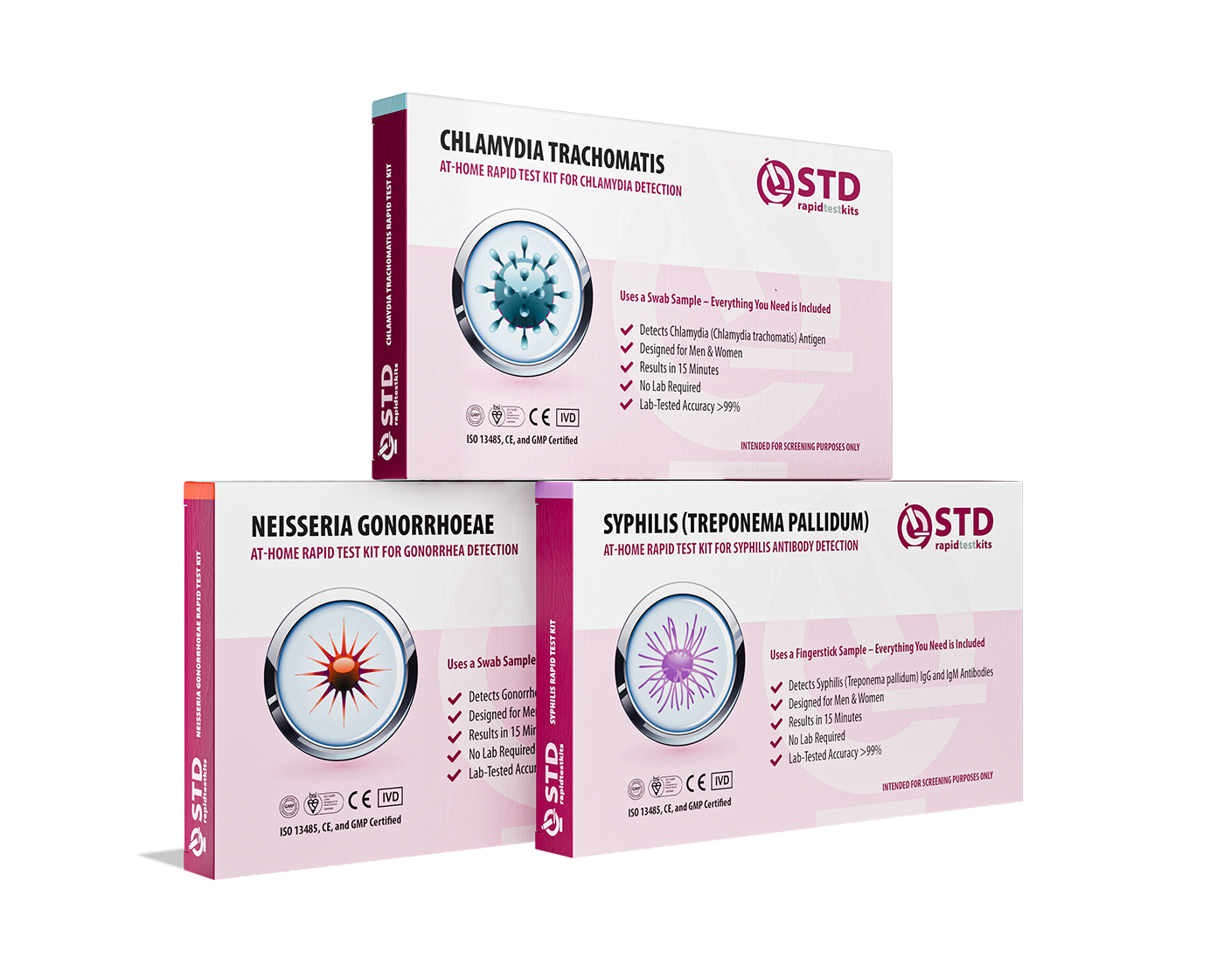
 For Men & WomenResults in MinutesNo Lab NeededPrivate & Discreet
Order Now $69.00 $147.00
For all 3 tests
What If the Line Disappears After 30 Minutes?
This is one of the most confusing parts of rapid STD testing, and it’s critical.
Most rapid test kits have a fixed result window, usually between 5 and 15 minutes. If you read the test after that window, the result may no longer be valid. Faint lines can disappear due to drying or chemical changes. That doesn’t mean you weren’t positive, it just means you missed the readable window.
Always read your test in the recommended time frame listed in the instructions. If you're unsure, or forgot to set a timer, consider retesting to avoid relying on an invalid result. The last thing you want is a ghost line that faded just before you looked.
Sexual Partners and the "What If I’m Wrong?" Loop
Sometimes, the fear isn’t about being infected, it’s about being wrong. What if you tell your partner you might have trich, and you were mistaken? What if they get mad? What if you ruin the relationship?
We hear this every day. And here’s what we tell people: you’re not responsible for being perfect. You’re responsible for being careful, honest, and informed. Telling a partner that you had a confusing or borderline test result isn’t a betrayal. It’s respect.
Trich is highly transmissible, even without symptoms. And it often isn’t caught in the first round of testing. Sharing that you’re retesting or waiting on confirmation isn't drama. It’s part of being sexually ethical.
FAQs
1. Can you have trich and feel totally fine?
You can, and that’s exactly why it slips under the radar. Trich is a master of disguise. Up to 70% of people who carry it never show symptoms. No burn. No itch. Nothing. That doesn’t mean it’s harmless, just sneaky. And still transmissible.
2. That line was so faint I had to squint. Does it even count?
If there’s a line, even a faint, ghostly one, it usually counts. These tests don’t throw random lines for fun. Faint = positive, in most cases. Think of it like your body whispering instead of shouting. If the whisper says “positive,” you listen.
3. I tested negative, but I’m still itchy. Am I just being paranoid?
Not at all. You know your body better than any plastic strip. If your symptoms are still hanging around after a negative result, it might’ve been too early to detect, or the test just missed it. Trich can play hide and seek. Follow your gut and retest.
4. I was on antibiotics for something else. Can that mess with my test?
Yes. Even unrelated antibiotics can lower parasite levels enough to create a false negative. It doesn’t mean you’re cured, just quiet. Best move? Wait about a week after finishing meds before testing, unless symptoms come roaring back sooner.
5. What if I tested while on my period?
It happens. But blood can interfere with the sample, especially in vaginal swabs. If the result was unclear or invalid, wait a few days and try again. Hormones and blood shouldn’t get the final say on your sexual health.
6. Can I trust an at-home test?
Mostly, yes, if you follow the instructions to a T. Trich rapid tests are surprisingly good, but not perfect. They catch most cases, but if your test is negative and something still feels off, that’s your cue to double-check with a lab test (NAAT). Home tests are a first step, not a last word.
7. Do I really have to tell my partner about this?
We won’t sugarcoat it: it’s awkward. But also respectful, protective, and kind. You don’t need to have a Nobel-worthy speech. Just honesty. “Hey, I had a test that might mean trich. I’m getting it checked again, I just wanted you to know.” That’s real intimacy.
8. What happens if I ignore trich?
It doesn’t always blow up immediately, but it can linger. Untreated trich can increase your risk of HIV, cause pelvic issues, and silently pass to others. The good news? It’s one of the easiest STDs to treat, just one round of antibiotics in most cases. No judgment. Just treat it.
9. Can I test again just for peace of mind?
Yes. Please do. Retesting isn’t overkill, it’s smart. Especially with STDs like trich, where timing and sample quality can mess with results. If you’re spiraling over that result, give yourself a second look. You’re not being dramatic. You’re being thorough.
10. How do I know if I got reinfected or if the treatment didn’t work?
This one’s messy. Trich can come back if your partner wasn’t treated, or if the meds didn’t fully clear it. If symptoms return a few weeks after finishing antibiotics, don’t assume you're in the clear. Retest. If positive, get treated again (and make sure partners are, too). It’s not failure, it’s just a redo.
You Deserve Answers, Not Assumptions
If you’re here, chances are you’re not just looking for “a result.” You’re looking for clarity. Maybe peace of mind. Maybe a way to explain the weird symptoms, or the lack of them. Whatever brought you here, know this: you’re not overreacting. You’re paying attention to your body, your partners, and your future. That’s something to be proud of.
Don’t wait and wonder, get the clarity you deserve. This at-home combo test kit checks for the most common STDs discreetly and quickly. One test could change everything.
How We Sourced This Article: We combined CDC guidance, peer-reviewed studies on rapid test sensitivity, and real user experiences to build this guide. In total, over fifteen resources were referenced. Below are six of the most relevant. All external links were verified to ensure accuracy and open in new tabs.
Sources
1. CDC Trichomoniasis Treatment Guidelines
2. Mayo Clinic: Trichomoniasis Overview
3. Planned Parenthood: What is Trichomoniasis?
4. Trichomoniasis - STI Treatment Guidelines (CDC)
5. Trichomoniasis (MedlinePlus)
About the Author
Dr. F. David, MD is a board-certified infectious disease specialist focused on STI prevention, diagnosis, and treatment. He blends clinical precision with a no-nonsense, sex-positive approach and is committed to expanding access for readers in both urban and off-grid settings.
Reviewed by: Dr. Ayana Malik, MPH | Last medically reviewed: February 2026
This article is for informational purposes and does not replace medical advice.


