







Quick Answer: Some STDs, especially chlamydia and gonorrhea, can damage sperm quality or block sperm transport, potentially lowering IVF success if untreated or undiagnosed. Testing and treatment can reduce this risk.
Who This Is For (And Why Men Are Often Left Out)
If you’re a man prepping for IVF, thinking about sperm freezing, or just wondering why your semen analysis came back with “low motility” or “abnormal morphology,” this article is for you. It’s also for anyone who’s ever Googled “can an old STD mess up my sperm?” at 2AM and didn’t get a real answer.
Maybe you didn’t even know you had an STD. Half of all chlamydia cases in men are asymptomatic. That means no discharge, no pain, just quiet inflammation, sometimes lasting long enough to damage the epididymis or scar the urethra. It doesn’t always hurt. It doesn’t always warn you. But it can still reduce your chances of conception, especially when IVF success depends on every percent of quality.
We’re going to walk through the science of sperm damage, the emotional rollercoaster of male fertility testing, what the research really says about STDs and IVF outcomes, and what you can do now to protect your sperm, your future kids, and your peace of mind.
People are also reading: HPV Reactivation After 40: Myth or Medical Fact?
Can an STD Really Mess With My Sperm?
Yes, and not just in dramatic, worst-case scenarios. Certain sexually transmitted infections (STIs) can harm sperm in subtle but serious ways:
| STD | Main Risk to Sperm | Can Be Asymptomatic? | Impact on IVF? |
|---|---|---|---|
| Chlamydia | Blocks sperm transport via epididymal scarring | Yes – often no symptoms | Yes – linked to reduced success rates |
| Gonorrhea | Inflammation can cause sperm DNA damage | Sometimes – mild symptoms only | Yes – affects sperm count and motility |
| Herpes | Indirect; inflammation may impair sperm function | Yes – oral or genital | Unclear – more research needed |
| Trichomoniasis | Linked to lower sperm motility and morphology | Yes – usually undiagnosed in men | Possibly – needs more data |
| HIV | May affect sperm quality, especially untreated | Yes | Yes – especially without antiretroviral therapy |
Figure 1. Overview of how various STDs can impact male sperm quality and IVF outcomes. Adapted from CDC, NIH, and peer-reviewed fertility studies.
This isn’t about fear, it’s about function. Semen isn’t just about quantity. IVF clinics measure total sperm count, forward progression, motility, and morphology (shape). Inflammation from infections can compromise one or all of these, often without symptoms.
“My First IVF Cycle Failed. They Found Chlamydia in My Semen.”
Kevin, 37, had been trying for a baby with his wife for over a year. They did everything, tracked ovulation, cut alcohol, got bloodwork. But it wasn’t until they did a full fertility workup before IVF that the surprise hit: Kevin tested positive for chlamydia.
“I hadn’t cheated. I hadn’t even felt sick. But apparently I’d had it for a long time, and it was showing up in my semen sample. I was shocked. Then I was furious, mostly at myself.”
Their first round of IVF failed. Post-analysis showed poor motility and borderline morphology. After a course of antibiotics and a 90-day sperm health protocol, they tried again, with improved counts and a successful embryo transfer.
“No one told me my sperm could be sick. That an old infection could still live in my body and hurt our chances. I would’ve tested years ago if I’d known.”
Kevin’s story isn’t rare. Semen infections can persist or resurface even in men who think they’re healthy. Regular STD testing, even if you feel fine, can change the outcome of an entire fertility journey.
Check Your STD Status in Minutes
Test at Home with RemediumPapillomavirus (HPV) Test
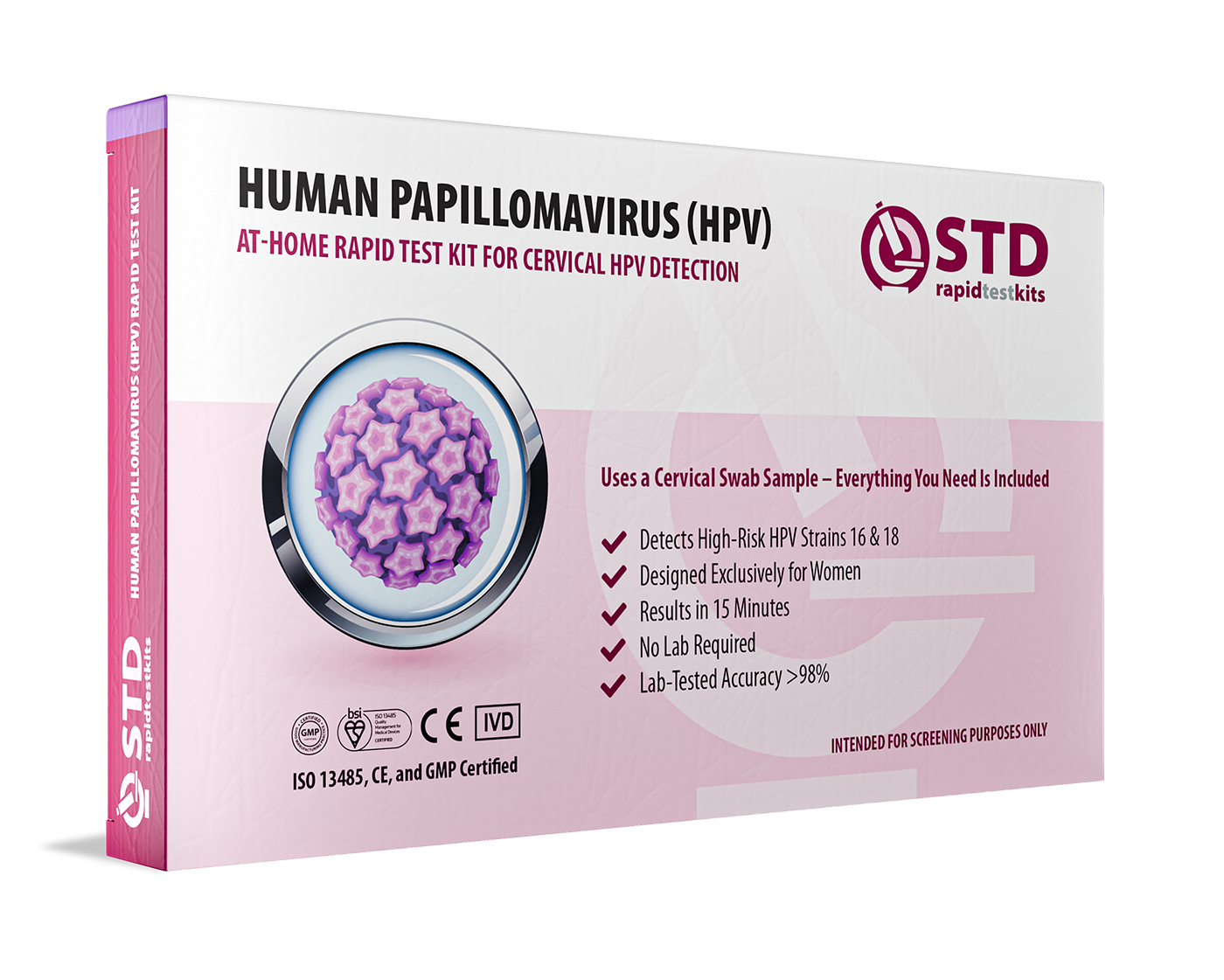
 For Women
 Results in Minutes
 No Lab Needed
 Private & Discreet
Order Now $33.99 $49.00
What the Research Actually Says About STDs and Male Infertility
A 2021 meta-analysis in the journal Andrology found that men with a history of chlamydia or gonorrhea were significantly more likely to have impaired sperm parameters, even after treatment. The study showed reduced motility and higher rates of DNA fragmentation.
Another study in the Journal of Reproductive Immunology linked trichomoniasis with increased oxidative stress in semen, which damages sperm membranes and affects fertilization success. And while herpes and HIV are less directly linked to fertility, chronic inflammation from any viral STD can interfere with reproductive function, especially if left unmanaged.
What’s clear is this: STDs are not just a sexual health issue. They are a reproductive health issue. And for men trying to conceive, especially through IVF, where every sperm matters, knowing your infection history is a game-changer.
How Long Does It Take Sperm to Recover After an STD?
Sperm doesn’t bounce back overnight. After treatment for infections like chlamydia, gonorrhea, or trichomoniasis, it can take up to 72–90 days for new sperm to develop. That’s because sperm production, called spermatogenesis, works on a cycle, roughly three months from start to finish.
Even after you take antibiotics, your older, potentially damaged sperm may still show signs of inflammation, abnormal shape, or low motility. That’s why fertility doctors often recommend waiting a full cycle before attempting IVF or sperm freezing. If you test positive and immediately freeze, you might be banking sperm that’s still impaired.
Some clinics run repeat semen analyses 4–6 weeks after treatment, then again at 3 months if counts were low. It’s not overkill, it’s strategy. Especially when you’re spending thousands on IVF, the goal isn’t just sperm, it’s viable sperm.
Sperm Testing Timeline After an STD
| Time Point | What's Happening | Recommended Action |
|---|---|---|
| During Infection | Inflammation affects sperm motility, morphology | Do not freeze sperm yet; treat infection first |
| 2 Weeks After Treatment | Initial recovery phase, old sperm still present | Retest for STD clearance; wait before freezing |
| 6 Weeks Post-Treatment | Mid-cycle; some improvement in sperm parameters | Optional semen analysis if urgent IVF timeline |
| 90 Days After Treatment | Full new sperm cycle completed | Ideal window for sperm freezing or IVF attempt |
Figure 2. Timeline of sperm recovery after STD treatment. Based on sperm cycle length and clinical retest guidelines.
This timeline isn't a punishment; it's a plan. If you rush into IVF before the quality of the sperm gets better, you may have low fertilization rates or cycles that don't work. Taking care of your body can make the difference between heartbreak and hope.
Don’t Wait and Wonder, Test Before You Freeze
If you're considering sperm freezing, IUI, or IVF, you deserve clarity before you commit. Many people assume their sperm is “fine” just because they feel fine, but asymptomatic STDs are a leading cause of unexplained male infertility. The damage is often invisible until it shows up in lab numbers, or failed cycles.
This at-home combo test kit checks for the most common STDs affecting male fertility, including chlamydia, gonorrhea, and trichomoniasis. It’s discreet, accurate, and puts your reproductive health back in your hands.
Peace of mind is just one test away. Don’t guess, know.
“I Froze My Sperm Without Testing. I Regret It.”
Marc, 31, was diagnosed with cancer and rushed to bank sperm before starting chemo. No one mentioned STD screening. Months later, when he and his partner tried IVF using that frozen sample, the fertilization rate was abnormally low.
“I remember the nurse looking confused. She said my sperm count was decent, but motility was way off. I’d had gonorrhea a few years earlier but thought it was cleared. I never followed up.”
Post-fertilization analysis showed high rates of DNA fragmentation, likely from past infection. By the time they found out, the frozen batch had already been used.
“No one told me this stuff could still be in my body. If I’d done a $50 test kit before freezing, it could have changed everything.”
Marc’s story is exactly why proactive testing matters, not just for yourself, but for your future family.
People are also reading: It Looked Like Herpes, Then It Vanished. Should I Be Worried?
Do Clinics Require STD Testing for IVF?
Yes, and not just for the person carrying the pregnancy. Most fertility clinics require both partners to test for HIV, Hepatitis B, Hepatitis C, and syphilis before any IVF procedure. Some also require proof of recent chlamydia and gonorrhea testing, especially if sperm will be cryopreserved or used in ICSI (intracytoplasmic sperm injection).
Why? Because even a dormant infection can compromise egg fertilization, embryo quality, or lab safety. The IVF lab is a controlled environment. Contaminated samples can shut down operations. This isn’t personal, it’s protocol.
Don’t wait for a clinic to tell you. Testing early gives you time to treat, recover, and plan, without derailing your IVF timeline. And if you’re in a new relationship or using a known donor, STD testing is part of basic due diligence.
Need a place to start? STD Test Kits has a range of tests designed for discreet pre-IVF screening, so you can protect your chances without judgment or delay.
The Emotional Cost of Being “The Problem”
For many men, the word “infertility” feels like an accusation. Add in the idea that an old STD might be the cause, and the shame can hit hard, and silent. Fertility conversations still center women, leaving men to quietly Google phrases like “can gonorrhea ruin sperm forever?” or “did I ruin our chances?”
The truth is more complicated, and more hopeful. While some STDs can impair sperm production or cause scarring that blocks sperm transport, these effects are often reversible with treatment, time, and support. But the silence around male sexual health makes it easy to spiral into guilt instead of action.
“I felt like I had wrecked everything,” said Andre, 34, after discovering his low sperm count was linked to a prior untreated chlamydia infection. “We were doing IVF and I was the one holding us back. I didn’t even know I’d had it.”
It’s not just about testing positive, it’s about what that means for your identity, your partnership, and your future. That’s why early screening and honest conversation can be such powerful tools. They shift the story from blame to preparation. From fear to choice.
STDs, Inflammation, and Why Sperm Is So Sensitive
Unlike eggs, which are protected inside the ovaries, sperm is constantly exposed to the environment of the body, and that includes infection and inflammation. The reproductive tract is lined with delicate tissues that can easily become inflamed if an STD goes untreated. That inflammation releases cytokines and free radicals that damage sperm DNA, reduce motility, and alter morphology.
Even if an infection is mild or symptom-free, the inflammation can linger. A 2022 study from Human Reproduction found that chronic low-grade inflammation from persistent STIs led to decreased sperm counts in men previously considered “unexplained infertile.”
Some infections, like trichomoniasis, can cause this damage over months or even years without any obvious symptoms. Others, like herpes, may trigger flare-ups that coincide with transient dips in sperm quality. In each case, the sperm are reacting, not to the virus itself, but to the body’s immune response.
The takeaway? Sperm health is fragile. Testing and treating even “harmless” STDs isn’t about judgment, it’s about protecting one of the most sensitive processes in the human body.
Can Untreated STDs Cause Permanent Infertility?
Yes, but not always. The risk depends on how long it lasts and how bad it is. The longer an infection goes untreated, the more damage it can do, especially if it spreads to the testicles, epididymis, or prostate. Epididymitis and other conditions can completely stop sperm transport, which can cause azoospermia (no sperm in semen).
But here’s the hope: even if past damage occurred, some men regain fertility after treatment and lifestyle support. Semen parameters can improve dramatically over 3 to 6 months post-treatment. Others pursue surgical sperm retrieval or donor options. But testing early gives you options. Waiting only narrows them.
“If I had known I needed to retest, I would’ve done it. I just thought ‘no symptoms’ meant no problem,” said Raj, 36, who was diagnosed with post-infectious epididymal scarring during IVF prep.
That’s why this guide exists, to catch the damage before it becomes irreversible. To give men a map before they get lost in the system.
Check Your STD Status in Minutes
Test at Home with Remedium3-in-1 STD Test Kit
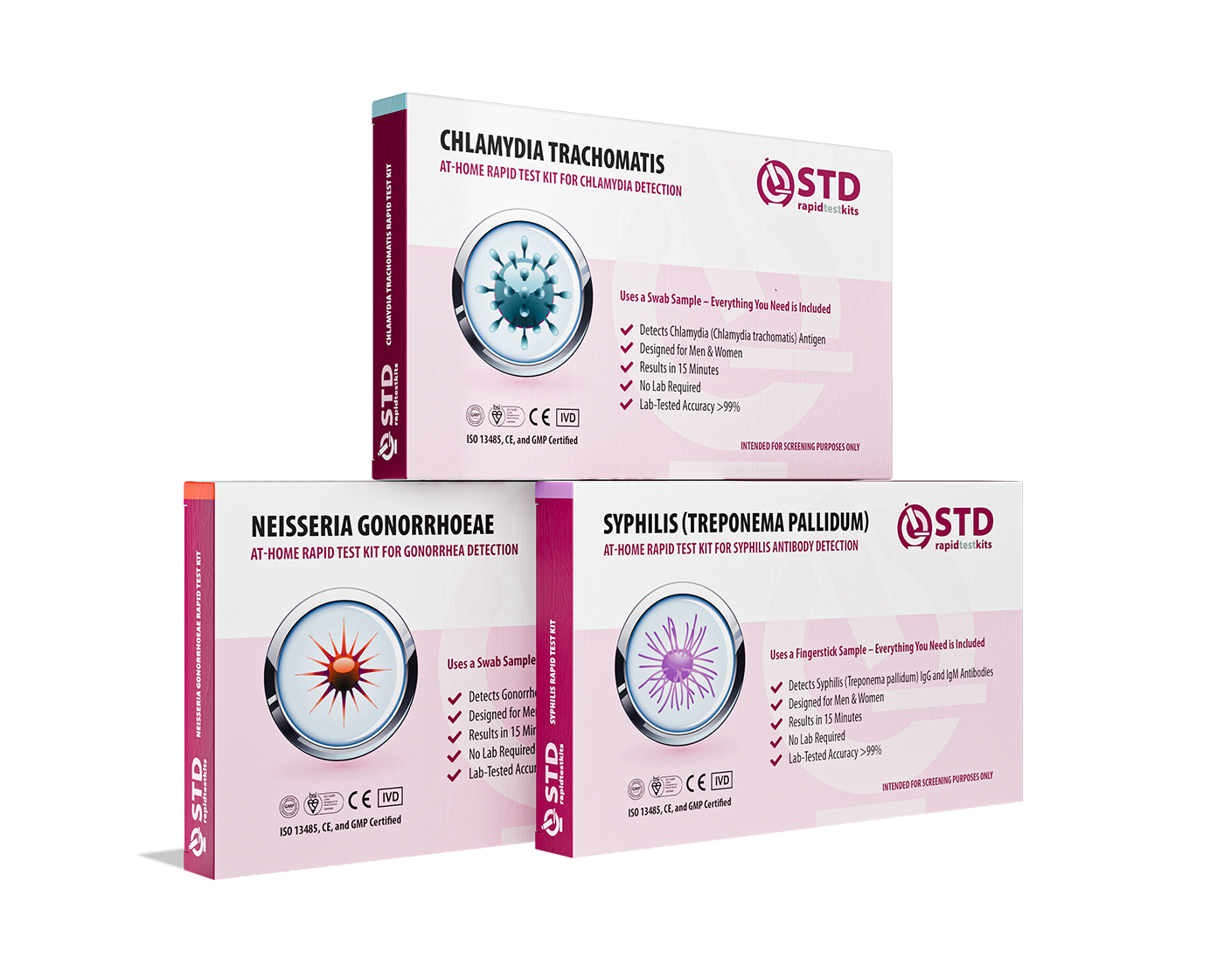
 For Men & WomenResults in MinutesNo Lab NeededPrivate & Discreet
Order Now $69.00 $147.00
For all 3 tests
FAQs
1. Can a past STD still mess with my sperm, even if I got treated?
Honestly? Sometimes, yeah. Just because the infection is gone doesn’t mean the damage vanished with it. Infections like chlamydia and gonorrhea can leave behind scarring or mess with sperm production, especially if they were hanging around for a while before you noticed. Think of it like water damage: even if the leak is fixed, the wall might still be soft.
2. How long should I wait to freeze sperm after treating an STD?
Aim for at least 90 days. That’s how long it takes your body to produce a brand-new batch of sperm. Anything sooner, and you’re likely freezing some of the older, possibly damaged swimmers. If time is tight, talk to your doc, but if you can wait, do.
3. Do I really need STD testing if I’m already doing IVF?
Yep. Not only do most clinics require it, but it’s one of those rare moments in life where knowing too much is way better than not knowing enough. Some infections can fly under the radar with zero symptoms and still wreck your chances. Testing now means fewer regrets later.
4. I had herpes years ago. Should I be worried?
Not necessarily. Herpes isn’t usually a major sperm saboteur, but outbreaks cause inflammation, and inflammation can mess with motility. Some studies show minor dips in quality during flares, but nothing permanent. Just be honest with your clinic so they can factor it in.
5. What’s a semen infection, and how’s that different from an STD?
Great question. A semen infection isn’t always an STD, it might just be lingering bacteria, dead white blood cells, or leftover inflammation. But even that can hurt sperm function. It’s like static in the signal. A post-treatment semen culture can help sort it out.
6. Gonorrhea scared me straight. Do I still need to test again?
If you're heading into IVF, absolutely. Even if you treated it, you want confirmation that it’s truly gone, and to assess if it left behind any lasting impact. Don’t assume a past prescription equals current peace of mind.
7. Can antibiotics fix damaged sperm?
They’ll knock out the infection, but they won’t undo scarring or revive damaged sperm cells. That said, your body can bounce back. Give it a few months, clean up your habits, hydrate, and maybe throw in some antioxidants. Plenty of guys see real improvement post-treatment.
8. Is there a test to check how “healthy” my sperm really is?
Oh yeah, look into a DNA Fragmentation Index (DFI) test. It digs deeper than the usual count/motility stuff and shows if your sperm’s genetic material is intact. Especially helpful if you’ve had infections, exposure to toxins, or mystery IVF failures.
9. Can you still have kids after a bad STD?
In most cases, yes. It might take longer, or need some medical backup (hello, ICSI), but it’s not game over. The key is knowing what’s going on before you waste time, money, and hope. Many guys go from “this might be over” to “we’re pregnant” in one cycle, with the right info and support.
10. Do I have to tell my partner I had an STD before?
You don’t have to, but you probably should. Especially if you’re trying to make a baby together. Most clinics require testing anyway, and trust goes a long way during IVF. The right person won’t judge you. They’ll be glad you spoke up.
You Deserve Answers, Not Assumptions
Male infertility isn’t always about lifestyle or genetics. Sometimes, it’s about a silent infection no one warned you about. But knowing your STD status isn’t a threat, it’s a tool. It’s how you protect your future family, your partner, and yourself from unnecessary setbacks.
If you’ve ever been unsure, anxious, or afraid to ask, this is your sign to take the next step. This discreet at-home test kit checks for the most common STDs that affect male fertility. Fast, accurate, and private, because taking care of your sperm should be easy, not embarrassing.
How We Sourced This Article: We combined current guidance from leading medical organizations with peer-reviewed research and lived-experience reporting to make this guide practical, compassionate, and accurate. In total, around fifteen references informed the writing; below, we’ve highlighted six of the most relevant and reader-friendly sources. Every external link in this article was checked to ensure it leads to a reputable destination and opens in a new tab, so you can verify claims without losing your place.
Sources
1. WHO – Infertility Fact Sheet
2. Diagnosis and treatment of infertility in men: AUA/ASRM guideline (Part I, 2020)
3. Infertility (WHO Fact Sheet)
4. Getting Tested for STIs (CDC)
5. Chlamydial Infections - STI Treatment Guidelines (CDC)
6. Epididymitis - STI Treatment Guidelines (CDC)
About the Author
Dr. F. David, MD is a board-certified infectious disease specialist focused on STI prevention, diagnosis, and treatment. He blends clinical precision with a no-nonsense, sex-positive approach and is committed to expanding access for readers in both urban and off-grid settings.
Reviewed by: Dr. Naomi Gutierrez, MD, Reproductive Endocrinologist | Last medically reviewed: February 2026
This article is for informational purposes and does not replace medical advice.


