







Quick Answer: STD cases are rising fast in 2026 due to delayed testing, asymptomatic spread, and decreased condom use. Many infections go unnoticed until they’re passed on, making regular testing essential even when you feel fine.
The STD Surge by the Numbers
In 2023, the U.S. saw over 2.5 million reported cases of chlamydia, gonorrhea, and syphilis combined. That number jumped again in 2024. And by mid-2026, projections are already on track to hit an all-time high. The rise isn’t subtle, it’s steep, especially among Gen Z and millennial age groups. Cities like Atlanta, Miami, and Las Vegas are experiencing increases of 20–35% compared to pre-pandemic baselines.
But it’s not just about raw numbers. What’s more alarming is how many cases are flying under the radar. Many STDs are asymptomatic or show up as minor symptoms people confuse with something else, yeast infection, razor burn, heat rash, or even allergies. That delay in recognition means more time to spread the infection unknowingly.
| STD | Reported U.S. Cases (2025) | Estimated Unreported Cases | % Increase Since 2020 |
|---|---|---|---|
| Chlamydia | 1.8 million | ~2.5 million | +24% |
| Gonorrhea | 770,000 | ~1.1 million | +38% |
| Syphilis | 190,000 | ~300,000 | +76% |
Table 1: U.S. STD Statistics – Comparison between reported and estimated actual cases, reflecting trends from CDC surveillance and independent epidemiology reviews.
Why Now? The Real Drivers Behind the Surge
It’s tempting to blame one cause, like dating apps or condom fatigue, but the truth is more layered. Multiple trends collided after the pandemic, and the aftermath hasn’t settled. Start with delayed care. In 2020–2022, many clinics shut down or cut STD testing appointments. Routine checkups were missed, treatments delayed, and exposure windows widened.
Then came the shift in behavior. Hookup culture hasn’t slowed down, in fact, many people are dating more than ever thanks to travel rebounds and social media-fueled connection. But that increase in sexual activity wasn’t matched with prevention habits. Condom use dropped. People assumed monogamy when they didn’t have “the talk.” And because so many infections are symptom-free, a lot of people didn’t realize they were passing something on.
Here’s where it gets especially tricky: the rise in asymptomatic transmission. According to the World Health Organization, up to 70% of chlamydia and trichomoniasis infections in women show no symptoms. Men are more likely to notice symptoms with gonorrhea, but even that isn’t guaranteed. That means your partner could have an active infection, feel nothing, and still pass it on.
Combine all of that with decreased public awareness, overwhelmed clinics, and stigma that still prevents people from being honest, and you’ve got a perfect storm for the current epidemic.

People are also reading: Syphilis With No Symptoms? Here's Why It Happens
It’s Not Just Urban or Young People Anymore
There’s a dangerous myth that STDs only affect people who are young, promiscuous, or living in big cities. The data tells a different story. Rural areas saw some of the sharpest increases from 2022 to 2025, particularly in southern and midwestern states where healthcare access is limited and stigma is higher. And the age bracket of new diagnoses is stretching wider, more people in their 40s and 50s are testing positive, often after new relationships post-divorce or loss.
Take Carla, 46, who divorced after 20 years and re-entered the dating world cautiously. She hadn’t had an STD test since college, assuming monogamy had her covered. But after a persistent burning sensation, her doctor diagnosed her with gonorrhea. “I was stunned,” she said. “I hadn’t even thought about testing. I never thought it could be that way. Her story shows that in 2026, testing isn't just for teens or people who use Tinder; it's for everyone.
Men who have sex with men (MSM) remain disproportionately affected by syphilis and HIV outbreaks, but hetero transmission is driving much of the recent rise. Recent spikes in cases also show that Black, Latino, and Indigenous communities are overrepresented. This is closely related to gaps in access and systemic barriers to care.
How the Symptoms Are Evolving (Or Hiding)
In 2026, one of the biggest challenges is that most people don’t recognize they have an STD. The classic signs, burning while peeing, genital sores, discharge, still exist, but they aren’t as universal as people think. More often, the symptoms are subtle, delayed, or dismissed as something else.
That same itch Tyler had could’ve been a dozen things: laundry detergent, friction, stress. He didn’t connect it to an STD until a partner got tested. “I felt fine,” he said. “I thought if it was something serious, I’d know.” But infections like HPV and herpes can lie dormant. Some strains of chlamydia only cause mild irritation, and by the time symptoms show, complications like pelvic inflammatory disease may have already begun.
In other words, waiting for symptoms is no longer a safe strategy. If you’ve had a new partner, if protection was inconsistent, or if your partner hasn’t been tested in the last six months, the only way to be sure is to test.
Testing Isn’t Optional Anymore, It’s the Only Way to Know
In a world where STDs are rising but symptoms are disappearing, testing has become the most important, and most underused, tool for sexual health. Yet far too many people still think testing is only for those who feel sick, or who have “something to confess.” This thinking is not just outdated, it’s dangerous.
The truth is, testing is care. It’s not about blame, it’s about knowing what’s happening inside your body. And in 2026, with rates soaring and asymptomatic spread accelerating, routine testing should be as normalized as dental checkups or STI-aware sexting. Especially with affordable, private at-home test kits available, there’s no reason to wait until you’re in pain or panicked.
You can order a discreet kit like this combo test that checks for multiple STDs at once, from the privacy of home. For anyone navigating new relationships, non-monogamy, or just the real messiness of modern dating, this is peace of mind on demand.
Check Your STD Status in Minutes
Test at Home with Remedium6-in-1 STD Rapid Test Kit

 For Men & Women
 Results in Minutes
 No Lab Needed
 Private & Discreet
Order Now $119.00 $294.00
For all 6 tests
What the Data Shows About Condom Use and Risk Gaps
One under-discussed driver of the STD spike is the quiet decline of condom use, especially among younger people. Multiple surveys since 2020 have documented the trend: Gen Z is having plenty of sex, but condom use is down, both in casual hookups and within “situationships.” The reasoning? Many report feeling awkward bringing it up. Others rely on birth control for pregnancy prevention and mistakenly assume that covers STDs too. Some think “they look clean,” or confuse monogamy with safety.
Here’s where the numbers get stark: according to the CDC’s Youth Risk Behavior Survey, less than half of sexually active high school students reported using condoms the last time they had sex. Among college-aged adults, the number isn't much higher. And among adults in non-traditional relationship setups (like open relationships or polyamory), testing protocols are inconsistent at best.
| Age Group | Condom Use (Last Encounter) | Testing in Last 12 Months |
|---|---|---|
| 15–19 | 47% | 22% |
| 20–29 | 39% | 28% |
| 30–49 | 32% | 14% |
| 50+ | 22% | 6% |
Table 2: Condom use and annual STD testing by age group, per CDC and Kaiser Family Foundation aggregated data (2024–2025).
In a cultural moment where communication is more fluid but boundaries are often blurred, risk lives in silence. Condoms matter. But so does clarity, testing is a key part of consent in 2026.
Delays, Denials, and Ghost Symptoms: A Modern Epidemic
Meet Alex, 29. After a string of casual hookups, he noticed a sore on his lip. He assumed it was a cold sore, treated it with OTC cream, and moved on. Weeks later, after a partner disclosed a herpes diagnosis, Alex got tested, and his result came back positive too. “I had no idea it was connected,” he admitted. “No one ever talked about oral herpes being an STD.”
This kind of ghost symptom, a mild flare-up or barely-there irritation, is increasingly common. Infections are presenting in unexpected ways, especially oral and anal infections that don’t follow the “typical” symptom patterns. That’s why standard genital-only tests may miss the full picture. Testing by site (oral, anal, genital) is essential if your sexual practices involve more than just vaginal intercourse.
The delay in connecting those symptoms, or denying they’re a big deal, is how outbreaks quietly grow. It’s not a failure of responsibility. It’s a lack of awareness, and it’s costing us our safety net.
That’s where solutions like multi-site at-home testing are changing the game. With no appointment and full privacy, people are finally testing not just because they’re scared, but because they care about their bodies, their partners, and their autonomy.
What You Can Do Right Now (Even If You’re Not Sure)
Even if you haven’t had any recent symptoms or risky encounters, it’s still worth asking: when was your last test? Has your partner been tested? Are you relying on assumptions instead of information?
The 2026 STD surge isn’t just about sex. It’s about systems, education, access, shame. But personal action still matters. If you can test, test. If you’re not sure how, start with something small. Order a kit. Talk to your partner. Ask your provider. You don’t need to wait for fear or urgency to act. Prevention isn’t just condoms, it’s curiosity. It’s compassion.
Whether it’s a tickle, a hunch, or just responsible curiosity, testing at home can take five minutes and change everything. One result can calm a spiral. One test can stop a chain of transmission. And in a year like this one, that matters more than ever.
The Role of Trust, Assumptions, and Emotional Risk
Jessica, 35, had been seeing someone for six months. They hadn’t defined the relationship, but things felt exclusive. “We weren’t using condoms anymore,” she said. “I assumed we were both clean.” When she went in for a routine pap smear, her gynecologist suggested an STI panel. The result? Positive for chlamydia. Her partner hadn’t cheated, but he’d never tested either. His last test was three years ago.
This story isn’t about blame. It’s about assumption, and how easily it substitutes for trust. In 2026, people are increasingly navigating situationships, polycules, long-distance pairings, and post-divorce rediscoveries. And with those comes emotional complexity: testing can feel like you’re accusing someone, even when you’re just trying to stay safe. But reframing testing as care instead of accusation is the cultural shift we need.
Because STDs don’t care if you’re in love. They don’t wait until you define the relationship. They pass silently between bodies, unnoticed and untreated, until someone takes the step to look. That doesn’t make you dirty, it makes you responsible.

People are also reading: HIV, Syphilis, and Chlamydia in Pregnancy: Your Testing Checklist
Is It Safe to Assume You're Negative If You Feel Fine?
Short answer: no. The longer version is this, many of the most common STDs today don’t cause obvious symptoms, especially early on. Chlamydia and gonorrhea often present with nothing more than mild irritation, if that. HPV can take years to reveal itself. HIV may stay silent for months or even years while still being transmissible.
By the time symptoms do emerge, complications may already be underway: pelvic inflammatory disease, epididymitis, infertility, chronic pain, or elevated risk of other infections. The body doesn’t always scream when something is wrong. Sometimes, it whispers, or says nothing at all. That’s why testing on a schedule, not just based on symptoms, is the new standard of care in a post-2025 world.
If your last test was over a year ago, or if you’ve changed partners, had unprotected sex, or simply can’t remember your status, it’s time. Not because you’re unsafe. Because you’re smart.
STDs in 2026: What’s Changing in the Medical Landscape
Beyond the personal choices, there are shifts happening in medicine, too. Clinics are seeing higher demand for rapid testing and mobile options. Pharmacies in many states now offer expedited STD panels. And telehealth providers can prescribe treatment within hours of a confirmed result.
But access isn’t always equal. Rural counties continue to suffer from underfunded sexual health programs, and public health cuts in 2024 have left many testing centers struggling. That’s why at-home kits, especially FDA-cleared rapid tests, are filling the gap. You don’t need an appointment. You don’t need to explain yourself to anyone. You can test where you live, work, or even travel, because yes, infections happen on vacation too.
It’s not just about convenience. It’s about safety that fits into your life instead of asking you to put everything on hold.
Check Your STD Status in Minutes
Test at Home with Remedium8-in-1 STD Test Kit
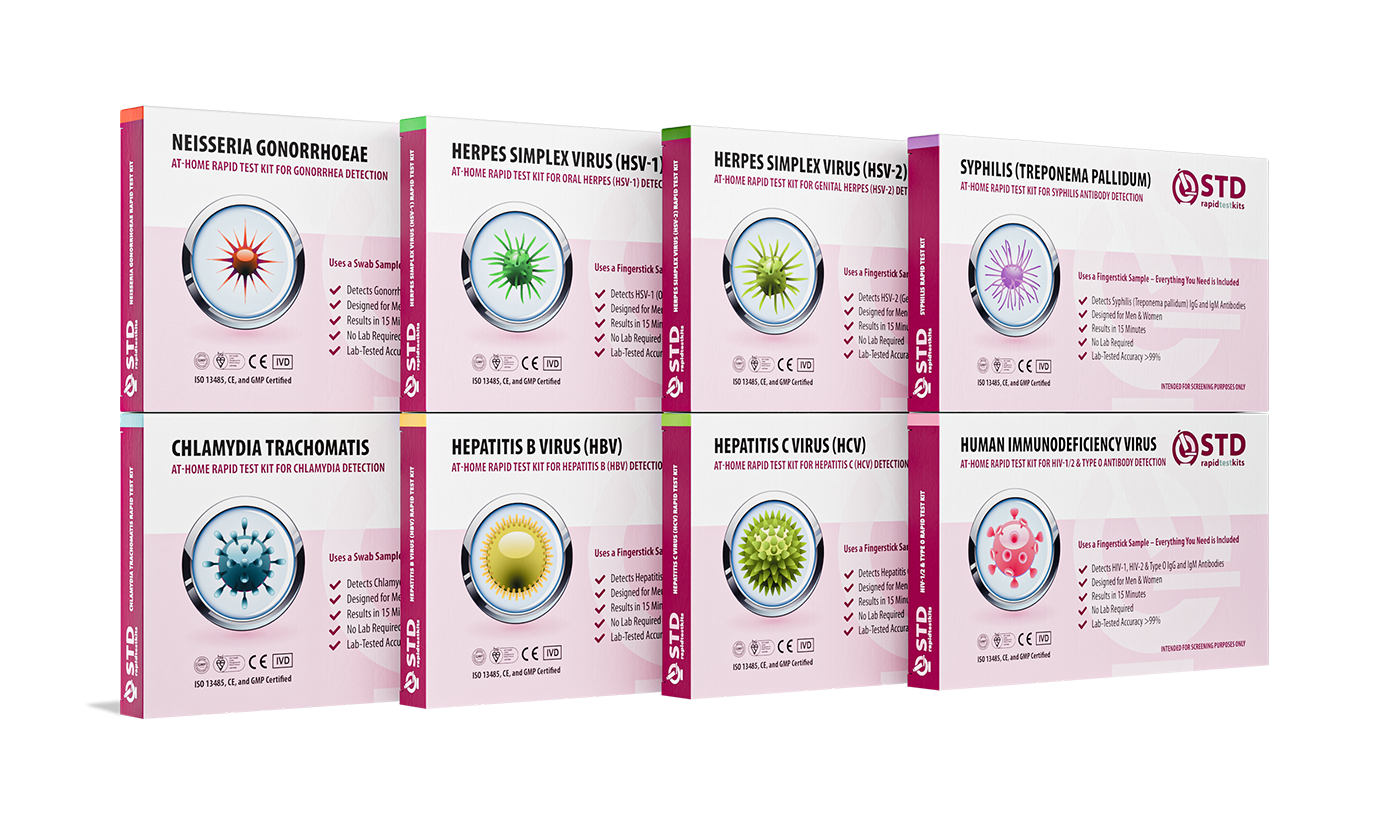 For Men & WomenResults in MinutesNo Lab NeededPrivate & Discreet
Order Now $149.00 $392.00
For all 8 tests
Why Prevention Now Means More Than It Did a Decade Ago
In 2016, the talk around STDs still centered on abstinence in some school districts. In 2026, we’re facing a reality where personal prevention is the last firewall against a public health crisis. Vaccines like HPV and Hepatitis B offer powerful protection, but only if you’ve received them. Condoms still block many infections, but only if they’re used every time, and correctly. And testing? Testing is now the thread that ties all of prevention together.
Because testing creates awareness. It gives you the power to treat, disclose, protect, and plan. And when done routinely, say, every six months if sexually active, it catches what symptoms won’t. That’s not alarmist. That’s just science.
In a moment where misinformation, delay, and hookup fatigue can all fuel the fire, knowledge is your cool-down. No panic. No shame. Just data, choice, and next steps.
Need to take that first step? Our homepage has everything you need, including fast shipping, discreet packaging, and expert-reviewed kits for chlamydia, gonorrhea, syphilis, and more.
FAQs
1. How bad is the STD situation in 2026, really?
It’s not just clickbait. Rates for infections like chlamydia, gonorrhea, and syphilis have hit historic highs. That means more people are getting infected, often without knowing it, and yes, it can happen even if you’re “careful.”
2. Can you have an STD and feel totally fine?
Totally. In fact, it’s more common than not. Up to 70% of people with chlamydia have no symptoms at all. That’s why the phrase “I feel fine, so I must be clean” doesn’t cut it anymore. You could feel great and still pass something on.
3. How soon after sex can you test?
Depends on the infection. Some STDs show up on tests within a week, others take a bit longer. Think 7–14 days for chlamydia and gonorrhea, 3–6 weeks for syphilis, and at least 2 weeks for HIV antigen tests. If you test too early, you might need a follow-up test just to be sure.
4. Are at-home STD tests actually legit?
Yes, if they come from reliable sources. Tests that the FDA has approved, like those from STD Rapid Test Kits, are accurate as long as you follow the directions and test at the right time after being exposed. They are quick, private, and a good choice if you want answers without having to wait in a waiting room.
5. Do condoms really prevent all STDs?
Condoms are superheroes, but they’re not invincible. They protect against most STDs, especially ones spread by fluids like HIV or gonorrhea. But infections like HPV or herpes can still pass through skin-to-skin contact, meaning if it’s not covered, it’s still technically fair game.
6. What’s the deal with oral sex, safe or risky?
It’s lower risk, but not no-risk. STDs like gonorrhea, herpes, and even syphilis can be transmitted through oral sex. You can absolutely get an infection from giving or receiving. So if you're going downtown, testing still matters.
7. What if I’m in a long-term relationship? Do I still need to test?
Maybe. If you and your partner were both tested recently and are monogamous, the risk is low. But if you’re non-monogamous, newly exclusive, or just haven’t talked testing in a while, it’s a good move. Relationships are built on trust, and testing is a form of care, not suspicion.
8. I tested positive. Now what?
First, breathe. Seriously. A positive result doesn’t mean your life is over. Most STDs are treatable, and even lifelong infections like herpes or HIV are manageable with today’s meds. Get confirmatory testing if needed, talk to your partners, and start treatment. You’ve got options. You’ve got time. And you’re not alone.
9. How do I tell someone they might have been exposed?
It’s awkward, but also kind of heroic. Choose a private time. Be direct but gentle, “Hey, I tested positive for [infection] and wanted you to know so you can get tested too.” You can even use anonymous notification tools if you’re not safe or ready to have that convo in person.
10. What’s the best way to stay ahead of all this?
Build testing into your routine. Treat it like dental cleanings, annoying but necessary. Every 6 months is solid if you're sexually active. If you're with multiple partners or navigating non-monogamy, quarterly is even better. And don’t wait for symptoms, test because you deserve clarity, not because you’re scared.
You Deserve Answers, Not Assumptions
In a year when STDs are rising faster than ever, and symptoms are fading into the background, it’s easy to feel overwhelmed. But you’re not powerless. You’re not broken. And you’re not alone. We take back control through testing, even when things are uncertain. It's how we move from silence to clarity, from fear to care.
Don’t wait for symptoms that may never come. Don’t assume you’re safe because you "seem fine." Peace of mind is one test away. This combo STD home test kit checks for the most common infections from the privacy of home, no judgment, no clinic lines, no guesswork.
How We Sourced This Article: We combined current guidance from leading medical organizations with peer-reviewed research and lived-experience reporting to make this guide practical, compassionate, and accurate.
Sources
1. CDC – STD Surveillance Data
3. CDC – Condom Use and Youth Risk Behavior Survey
4. Healthy People 2030: Sexually Transmitted Infections
5. The Growing Epidemic of Sexually Transmitted Infections in ... (NIH PMC)
6. Sexually Transmitted Infections (PAHO/WHO)
About the Author
Dr. F. David, MD is a board-certified infectious disease specialist focused on STI prevention, diagnosis, and treatment. He blends clinical precision with a no-nonsense, sex-positive approach and is committed to expanding access for readers in both urban and off-grid settings.
Reviewed by: Dr. Renee Sandoval, MPH | Last medically reviewed: February 2026
This article is for informational purposes and does not replace medical advice.


