







Quick Answer: After group sex, test for chlamydia and gonorrhea after 7–14 days, and for HIV, syphilis, and herpes after 3–6 weeks. Earlier tests may be useful but can miss early-stage infections.
This Guide Is for You If You’re Wondering, “Was That Risky?”
Some people plan their group sex nights weeks in advance, negotiating boundaries and sharing recent STD test results over encrypted chats. Others walk into it at a festival, a sex party, a cabin trip, or after an emotionally-charged night out. Both deserve care, clarity, and zero judgment. Maybe you used protection, sometimes. Maybe you didn’t. Maybe someone said they were clean. Maybe they were. Maybe they weren’t. Whatever the situation, if you’re questioning whether to get tested after group sex, the answer is almost always: yes. And the sooner you get informed, the better you’ll feel.
Take Ravi, 32, who hooked up with a group of friends after a music festival. “We all knew each other. We’d talked about testing. But the next morning, I couldn’t stop thinking about the moment someone used the same toy without cleaning it. That haunted me more than the sex itself.” Ravi ended up testing too early, got a false negative, and later tested positive for gonorrhea, which he only caught because his throat started burning.
Whether you’re feeling fine or already experiencing symptoms, this guide will cover which STDs to test for, what the timelines actually mean, and how to make testing less scary (even if things got a little messy). Testing is care, not confession. It’s also the fastest way to turn anxiety into action.
Window Periods Matter More Than Who Said They Were “Clean”
Here’s the hard truth: someone can get tested, show you a clean panel, and still transmit an STD a day later, because most tests aren’t instant in detecting infection. The period between exposure and when a test can reliably detect that infection is called the window period, and it varies by pathogen, test type, and your own body.
If it’s been less than a week since your group encounter, your tests might still miss early-stage infections, even if you already have symptoms. That doesn’t mean testing now is useless, but it does mean you may need to retest later. To keep it simple, here’s how long you typically need to wait for an accurate result:
| STD | Minimum Testing Time | Best Accuracy Window | Typical Test Type |
|---|---|---|---|
| Chlamydia | 7 days | 14+ days | NAAT (urine or swab) |
| Gonorrhea | 7 days | 14+ days | NAAT (urine, throat, rectal swab) |
| Syphilis | 3 weeks | 6 weeks | Blood antibody test |
| HIV | 2 weeks (NAAT) | 4–6 weeks | Antigen/antibody or RNA |
| Herpes (HSV) | 3 weeks (if symptomatic) | 6+ weeks (if asymptomatic) | Blood IgG, or lesion swab |
| Trichomoniasis | 5 days | 2 weeks | Rapid antigen or NAAT |
Figure 1. Post-exposure STD window periods for common infections transmitted through group sex. If testing early, retesting is often necessary.
Even with symptoms, testing too soon can give you false peace of mind. And even without symptoms, you could unknowingly pass something on. That’s why repeat testing, or testing at both the early and late window, is often recommended after high-risk encounters like group sex.
Need help figuring out which kit is right for your timeline? This combo home STD test checks for the most common infections, shipped discreetly and easy to use alone or with a partner.

People are also reading: Men Get Yeast Infections Too, And It’s Not an STD
What If Everyone Was Tested Before? (And Why You Might Still Need to Be)
Here’s a scenario we hear a lot: “Everyone shared their test results before the party. Do I still need to test?” The short answer? Probably, yes. Test results only reflect the moment the sample was taken. If someone got exposed after that, or tested too early themselves, their status could change quickly. Window periods still apply, and oral, anal, or toy-based contact can all transmit infections even without penetration.
Elena, 27, joined a group hookup during Pride weekend. “We all showed screenshots of recent STD panels. It felt safe. But three days later, someone in the group texted us they had tested positive for chlamydia, likely from a partner they'd seen after their last test but before our hookup. I felt betrayed, but mostly I just panicked.” Elena tested negative at first, but followed up at two weeks and caught the infection before symptoms started.
That second test? It made all the difference. She avoided complications, and could tell her next partner the truth, with confidence. That’s what testing is about. Not guilt. Not punishment. Just power.
We’ll get into symptoms next, but remember: you can have gonorrhea, chlamydia, herpes, or even HIV and feel absolutely nothing. That doesn’t make you lucky. It just makes you more likely to pass it on without knowing. Testing, even when you think it’s not “needed,” is part of harm reduction, for you and everyone you touch.
Symptoms or No Symptoms: When Silence Is a Symptom Too
“But I feel fine.” It’s probably the most common sentence whispered into a pillow post-hookup. And that’s the problem, most STDs don’t announce themselves right away, especially in the early days after exposure. In some cases, they never do.
Let’s look at DeShawn, 41. After a weekend at a private group event, he noticed a faint burning while peeing but chalked it up to dehydration. “I didn’t want to be the guy texting everyone about an itch,” he says. Weeks later, he tested positive for chlamydia and had to circle back with multiple partners, some of whom had no symptoms at all and didn’t believe they needed testing.
Many STDs, including chlamydia, gonorrhea, and trichomoniasis, are frequently silent in the first few weeks. That’s especially true for oral and rectal infections, which often show zero symptoms. In group sex scenarios, where partners may engage in multiple forms of contact, mouth to genitals, genitals to anus, shared toys, these “silent” infections spread easily.
Just because you don’t see or feel something doesn’t mean you’re clear. And just because someone else says they’re clean doesn’t mean they’re in the clear either. That’s not judgment. That’s just biology, timelines, and truth.
Check Your STD Status in Minutes
Test at Home with Remedium6-in-1 STD Rapid Test Kit

 For Men & Women
 Results in Minutes
 No Lab Needed
 Private & Discreet
Order Now $119.00 $294.00
For all 6 tests
What Tests to Include After a Group Hookup
The instinct is often to grab the quickest test you can find. But not all kits are created equal, and not all exposures call for the same panels. Here’s how to think about what you need to test for based on what actually happened.
If you had any oral, anal, vaginal, or skin-to-skin contact during group sex, a “full panel” is the safest bet. That typically includes testing for:
- Chlamydia
- Gonorrhea
- Syphilis
- HIV
- Herpes (HSV-2 primarily)
- Trichomoniasis (especially for vaginal exposures)
And if your group encounter involved toy sharing, rimming, or ejaculation in/around the mouth or anus, you should consider multi-site testing, especially for gonorrhea and chlamydia, which often infect the throat and rectum silently.
At-home kits can make this process easier. Many now offer oral and rectal swabs, or mail-in options that let you test multiple sites from home. Just make sure the kit you choose matches the type of exposure you had. If in doubt, go broad. No one ever regretted knowing more.
This combo test kit offers detection for the most common infections transmitted through oral, vaginal, and anal sex. It’s FDA-approved and arrives in plain packaging, because your next steps should be private, not panicked.
The False Reassurance Trap (and How to Avoid It)
Let’s say you got tested yesterday and the result came back negative. Relief, right? Maybe. But it depends on when you tested relative to when the exposure happened. If it was only a few days ago, you might be sitting on a false negative, a test result that says “no infection,” but only because the infection hasn’t developed enough for detection.
This is especially common with HIV tests taken before the 2-week mark, or syphilis tests done before antibodies have formed. Rapid tests are fantastic tools for peace of mind and accessibility, but they rely on thresholds. If your body hasn’t reached them, the test doesn’t catch it, even if something’s brewing under the surface.
| Infection | Risk of Early False Negative | Suggested Retest Timing |
|---|---|---|
| HIV | High (if tested < 2 weeks) | Retest at 4 and 6 weeks |
| Syphilis | Moderate (if < 3 weeks post-exposure) | Retest at 6 weeks |
| Herpes | Very high (blood tests may not show early) | Retest at 8–12 weeks |
| Chlamydia/Gonorrhea | Low after day 7 | Confirm with follow-up if symptoms develop |
Figure 2. Common false negative risks and follow-up testing recommendations after potential exposure during group sex.
The best strategy? If you test within a few days of group sex and results are negative, use that data cautiously. Retest after the window period closes, especially if someone in the group tests positive or you start noticing symptoms. Early tests are like checking the oven five minutes in. Doesn’t mean the cake isn’t baking. Just means it’s not ready yet.
If your head keeps spinning, peace of mind is one test away. STD Rapid Test Kits offers fast, discreet options that meet you where you are, even if that’s still stuck between “probably fine” and “can’t stop thinking about it.”

People are also reading: "I Thought It Was an Ingrown Hair”, Stories from the Syphilis Surge
Timing Your Test: When to Test Now, When to Wait
When it comes to testing after group sex, time matters more than panic. If it’s been fewer than 5 days since the encounter, you can still test, but keep in mind that most tests won’t catch early infections. That doesn’t mean testing is pointless, it can serve as a baseline, especially for infections like chlamydia and gonorrhea that become detectable within the first week.
But the most accurate window for nearly all STDs is two to six weeks after exposure. If you're within that sweet spot, now's the time to test and actually trust the results.
Jasmine, 24, had a three-way hookup with two people she’d met at a conference. Everyone was tipsy, boundaries got fluid, and dental dams weren’t exactly top of mind. “I tested the next day because I panicked,” she admits. “Negative. But a week later I started spotting, and that’s when I knew something was off.” A second test confirmed trichomoniasis. If she had waited just a few days longer to test, she might’ve saved herself the confusion, and the false sense of safety.
If you're feeling anxious but you’re still within the early window, go ahead and test now, but make a plan to test again after the window closes. That second test is what catches what the first one might miss.
Remember: you don’t need symptoms to justify testing. You just need an experience that gave you pause.
What If You Test Positive?
The first rule of testing positive after group sex? Breathe. Most STDs are treatable. And even the ones that aren’t curable, like herpes or HIV, are entirely manageable with today’s medications.
But the emotional part? That’s real. Guilt, fear, shame, anger, those might hit you before you even finish reading the result. And that’s okay. This isn’t about being “dirty” or irresponsible. It’s about a virus or bacteria doing what it does, regardless of how many partners you had, how loved you felt, or how well-intentioned everyone was.
Chris, 36, saw the faint line on his syphilis rapid test while sitting in his car outside a pharmacy. “I stared at it for like 20 minutes. It was surreal. I wasn’t mad at anyone. I just wanted someone to tell me what to do.” He ended up texting his primary partner, then booking a telehealth appointment through a local clinic. He got treated that week.
If you test positive, here’s what usually comes next:
- Confirm with a lab-based test (especially for syphilis, herpes, or HIV)
- Notify partners (there are anonymous tools to help)
- Begin treatment, if applicable (some STDs like chlamydia and gonorrhea are cured with a single antibiotic dose)
- Retest after treatment to confirm clearance (typically 3–4 weeks later)
- Take a beat for self-care, because emotional fallout is real
STD Rapid Test Kits also offers access to follow-up options if your result is positive and you need to confirm or plan next steps. You’re not stuck, and you’re not the only one.
Check Your STD Status in Minutes
Test at Home with Remedium8-in-1 STD Test Kit
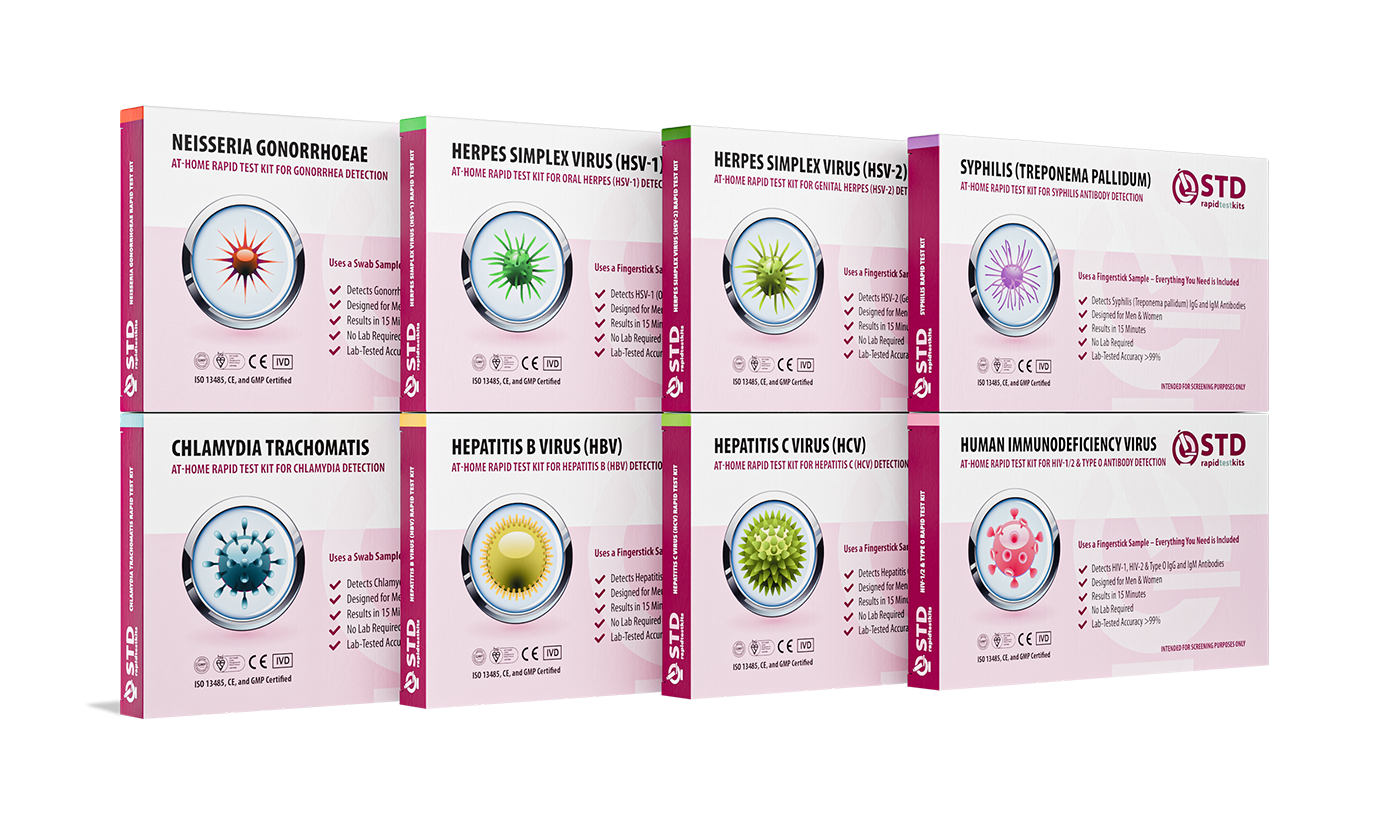 For Men & WomenResults in MinutesNo Lab NeededPrivate & Discreet
Order Now $149.00 $392.00
For all 8 tests
Privacy, Shipping, and Testing from Anywhere
One of the most beautiful things about modern sexual health care is that you don’t need a clinic to take control. You can order a full test kit to your door, discreetly packaged, with clear instructions and zero awkward conversations. Whether you live in a dorm, an RV, or a house full of roommates, your health can be handled privately.
Most test kits ship within 24 hours and arrive in 2–3 business days. If you’re traveling or living off-grid, you can pre-plan delivery or send it to a trusted friend. Results are yours and yours alone. You decide who sees them, when, and how.
And if you do test positive, many platforms offer free consults or support for connecting to treatment, without ever walking into a waiting room. That’s what health autonomy looks like.
Whether this was your first group experience or your fiftieth, testing doesn’t make you paranoid. It makes you prepared. Your body deserves clarity. So does your peace of mind.
FAQs
1. What if everyone said they were tested, do I really still need to test?
Yep. And here’s why: someone can test on a Monday, hook up on a Wednesday, and still bring something to the party on Friday. Test results are time stamps, not force fields. Even if it felt like a “safe group,” biology doesn’t read chat logs. Get tested anyway, early if you’re anxious, again later for accuracy.
2. How soon is too soon to get tested after group sex?
Think of it like waiting for a photo to develop. Testing in the first 3–5 days can feel productive, but it might miss the infection entirely. For things like chlamydia or gonorrhea, a solid test window starts around day 7. For syphilis or HIV, 3–6 weeks gives you the clearest picture. If you're testing early, plan to retest later, it’s not overkill, it’s smart.
3. Do I need to test for herpes after every group hookup?
Not necessarily. If you didn’t notice symptoms and haven’t had high-risk contact like oral-to-genital without barriers, you might skip it. But if you’re prone to cold sores or touched someone else’s, the risk is real. Herpes tests can be murky (especially blood tests), so talk to your provider or choose a kit that explains what kind of herpes testing it includes.
4. Can I really get something even if we all used protection?
Totally. Condoms are fantastic, but they don’t cover everything, literally. Skin-to-skin infections like herpes and HPV can still spread during oral, grinding, or toy-sharing. Protection lowers risk, it doesn’t erase it.
5. What about toys? We didn’t have direct contact, just shared gear.
That still counts. Shared toys can pass on chlamydia, gonorrhea, herpes, and more, especially if they weren’t sanitized between partners. Think of it like sharing a toothbrush you didn’t rinse. If it went from one body to another without a barrier or cleaning, testing’s wise.
6. Can I use an at-home test after something like this, or do I need a clinic?
At-home tests work great, as long as you choose the right one for the exposure type and time frame. Look for multi-site or combo tests if your group sex involved different kinds of contact (oral, anal, vaginal). If you’re within the window period and using a reputable test, you’re good. For early HIV or unclear results, a clinic follow-up might still help.
7. What if someone in the group tests positive later? Am I definitely exposed?
Not automatically, but it raises the stakes. If one person tests positive for something like syphilis or gonorrhea, and you had any shared contact, direct or indirect, it’s time to test again, even if you already did. And remember, it’s not about blame. It’s about not being the last person in the chain who didn’t know.
8. How do I tell someone I tested positive if I don’t even know their name?
It happens more often than you'd think. Apps like TellYourPartner.org or anonymous SMS tools can help you send a heads-up without outing yourself. If you're part of a group thread, you can post a respectful, general alert. "Hey, heads up, someone tested positive for X. Recommend testing." That’s not drama. That’s community care.
9. Should I avoid sex until all my tests come back?
If you can, yeah. Not forever, just long enough to get clarity. If abstinence isn’t in the cards, double up on protection and let your partner know you're mid-testing. It's not a turn-off, it’s a turn-on that you’re handling your health like a boss.
10. Why do I feel so anxious even though nothing’s wrong (yet)?
Because your body had a big, wild, vulnerable experience, and your brain is catching up. Testing isn’t just about infection. It’s about restoring a sense of control. So breathe, test smart, and remember: being worried doesn’t mean you did something wrong. It just means you care.
Don’t Let the Worry Spiral, Here’s Your Next Step
Group sex isn’t shameful. But the aftershocks, especially the silent, internal kind, can shake anyone. Testing isn’t about regret. It’s about respect, for your body, your partners, and your peace of mind.
Don’t wait and wonder, get the clarity you deserve. This home test kit checks for the most common STDs quickly and without drawing attention to itself. Results can guide your next steps, and help you reconnect with partners from a place of care, not fear.
How We Sourced This Article: We used the most up-to-date advice from major medical groups, peer-reviewed research, and lived-experience reports to make this guide useful, kind, and correct.
Sources
1. CDC: STD Screening Recommendations
2. An Overview of STD Testing at Mayo Clinic
4. CDC's Suggestions for STI Screening
5. Sexually Transmitted Infection (STI) Tests – MedlinePlus
6. Chlamydia – StatPearls (NIH/NCBI)
7. When Do I Need to Test? – GetCheckedOnline
8. STI Testing and the Window Period – Tulane University
9. How long does it take for an STD to show up? – Medical News Today
About the Author
Dr. F. David, MD is a board-certified infectious disease specialist focused on STI prevention, diagnosis, and treatment. He blends clinical precision with a no-nonsense, sex-positive approach and is committed to expanding access for readers in both urban and off-grid settings.
Reviewed by: A. Liu, MPH | Last medically reviewed: January 2026
This article is for informational purposes and does not replace medical advice.


