





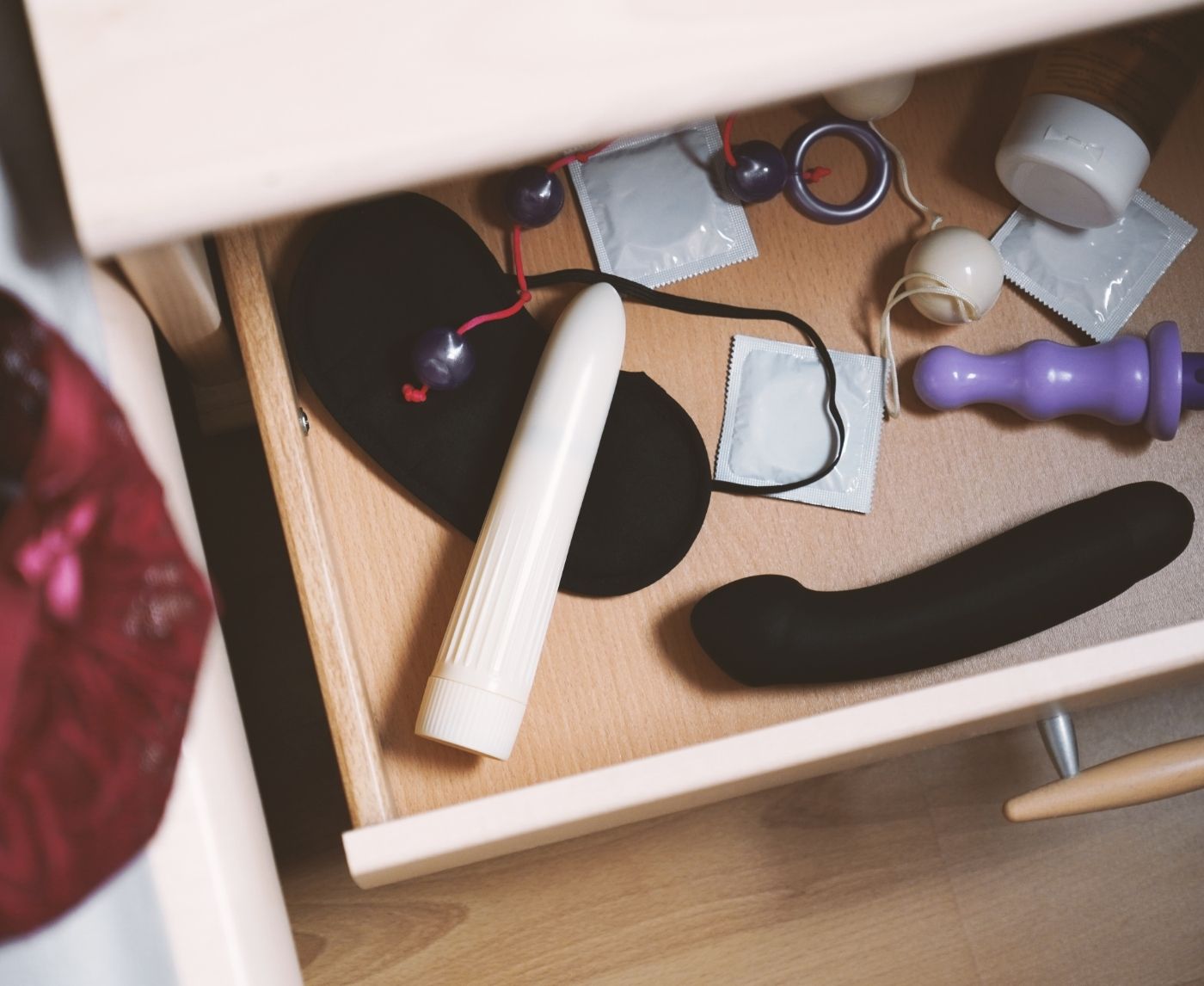

Quick Answer: Yes, you can get an STD from shared sex toys, especially at play parties or group events where toys are passed between partners. Infections like chlamydia, herpes, HPV, and even gonorrhea can be transmitted through mucosal contact, surface residue, or improper cleaning.
Why Toy Safety Feels Like Common Sense, Until It Isn’t
There’s a strange kind of confidence that kicks in at group events where everyone seems informed and respectful. After all, toys aren’t bodies. They’re objects. And when someone unpacks a sleek, medical-grade silicone toy with a wipe in hand, it feels responsible, even clinical. The truth is, even the most hygienic scenes can leave room for exposure.
One 2022 study on HPV transmission found viral DNA present on sex toys up to 24 hours after use, even after surface cleaning. And it’s not just HPV. Mucus, blood, and vaginal fluids can all harbor infections like gonorrhea, trichomoniasis, and herpes simplex virus. These fluids often remain invisible, especially under dim lighting or on darker-colored toys. The sensation of safety doesn’t always match the science.
Jess, 36, shared a moment from a kink retreat: “We were doing a round-robin scene with impact and sensation play. Everyone was great about communication. But halfway through, someone used the same wand on me that had just been used on someone else’s genitals. They wiped it down, but I kept wondering, was that enough?”
How STDs Can Live on Toys, Even Without Penetration
The assumption that toys are safe unless inserted deeply is dangerously misleading. Many STDs don’t require penetration at all, they spread via contact with mucous membranes or tiny abrasions in the skin. Think of it like lipstick: even if you wipe it off, it can still stain. Fluids that carry STDs can linger on rubber, silicone, glass, and even leather, and certain pathogens survive longer than you might think.
For example, chlamydia trachomatis has been shown to survive outside the human body for up to two to three hours in moist environments. Herpes simplex virus may remain infectious on surfaces for several hours under the right conditions. If a toy is used vaginally, then orally, or passed from one person’s rectum to another’s vulva without a proper wash, it’s not just a “vibe kill”, it’s a real transmission risk.
Let’s look at how common STDs can transmit via toys:
| STD | Can It Spread via Toys? | Transmission Route |
|---|---|---|
| Chlamydia | Yes | Mucus from vaginal, anal, or urethral fluids on shared surfaces |
| Herpes (HSV-1 & HSV-2) | Yes | Skin contact or fluid on toys contacting mucosa |
| HPV | Yes | Viral particles on surface of toys (especially warts) |
| Gonorrhea | Yes | Urethral, anal, or vaginal fluid contact on shared objects |
| Trichomoniasis | Yes | Protozoan transmission through contaminated sex toys |
Figure 1. Toy-based transmission routes for common STDs. Shared surfaces with even trace biological material can enable transmission without direct contact.
What catches people off guard is that this kind of transmission doesn’t always feel “dirty” or unsafe in the moment. In play party settings, it can be wrapped in intention, trust, and assumed cleanliness. But biology doesn’t care how safe it felt. It only takes one microscopic trace of infected fluid and a vulnerable mucosal surface to make transmission possible.
People are also reading: Chlamydia in Women vs. Men: How It Damages Fertility Differently
The Toy Rotation Myth: Why “Quick Wipes” Aren’t Enough
At many group sex events, you’ll see toys being wiped with alcohol pads, rinsed in sinks, or rotated out between partners. It creates an illusion of sanitation, but depending on the toy’s material and the infection, that “clean” feeling might not be enough. Certain bacteria, viruses, and parasites don’t go quietly, especially when hiding in porous materials or toy seams.
Marcus, 29, shared this from a dungeon party: “They had a huge bucket of toy cleaning wipes, and people were respectful, everyone wiped down their gear. But I still tested positive for trichomoniasis two weeks later. The nurse said it could have come from shared gear.”
The issue isn’t bad intentions, it’s bad assumptions. Silicone may be non-porous, but it can still trap microscopic particles. Wipes help, but unless you’re using a toy-safe disinfectant with full coverage, timed contact, and drying, there’s risk. And let’s be real, at most parties, no one’s waiting five minutes for something to air dry.
So When Should You Test After a Group Sex Event?
The urge to test the next morning is common, and understandable. But most rapid or lab-based STD tests have a window period, meaning there’s a gap between when you were exposed and when a test can accurately detect an infection. Testing too soon may lead to false reassurance.
Here’s the general rule: if it’s been less than five days since the event, your test likely won’t catch new infections unless symptoms are already present. Between 7 to 14 days, some infections like chlamydia and gonorrhea may start showing up, but a follow-up test is usually still recommended. After 14 days, you’re closer to peak accuracy, but even then, it depends on what you're testing for.
Consider the story of Alana, who tested negative for gonorrhea six days after a queer sex party. “I was anxious and thought I could get peace of mind quickly,” she said. “But the nurse told me to test again in two weeks. I did, and that’s when the positive came back.”
That two-step process, testing early, then retesting at the right window, isn’t overkill. It’s smart. Many STDs don’t show symptoms at all, so retesting ensures that if something’s brewing, you’ll catch it before it spreads to others or causes complications.
Check Your STD Status in Minutes
Test at Home with Remedium6-in-1 STD Test Kit
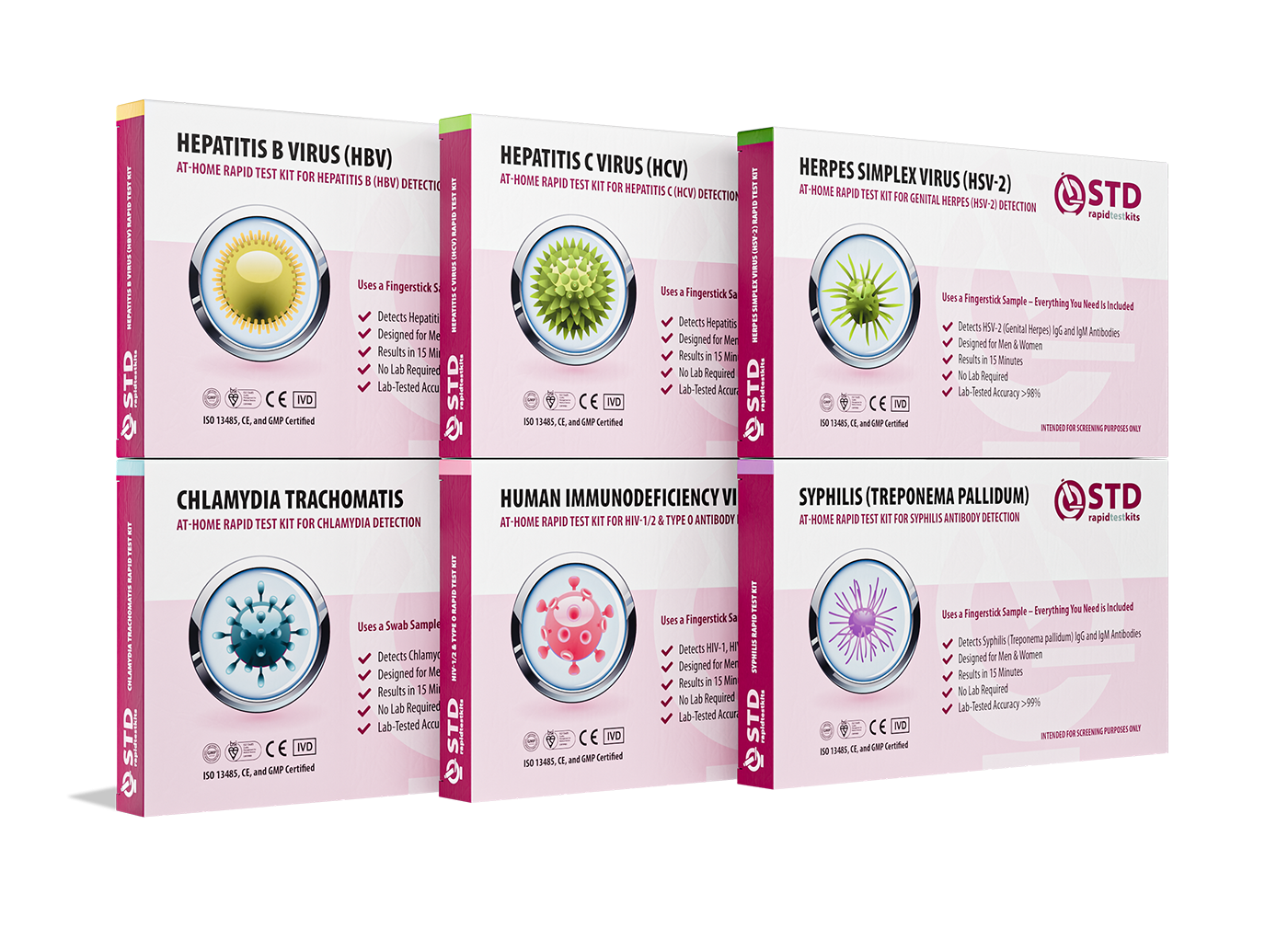
 For Men & Women
 Results in Minutes
 No Lab Needed
 Private & Discreet
Order Now $119.00 $294.00
For all 6 tests
Window Periods for Common STDs After Toy Transmission
Even though the transmission route is through objects, the incubation and detection timelines don’t change. What matters is when your body starts reacting, and when the test can pick that up. Below is a table adapted for people concerned about toy-related exposure at events like group sex parties, kink dungeons, or swinger meetups.
| STD | Minimum Time to Test | Best Accuracy Window | Retesting Recommended? |
|---|---|---|---|
| Chlamydia | 7 days | 14–21 days | Yes, especially if early negative |
| Gonorrhea | 5–7 days | 10–14 days | Yes |
| Herpes (HSV) | 2–12 days (symptoms) | 3+ weeks for blood antibody test | Yes if symptomatic or uncertain |
| Trichomoniasis | 7–10 days | 14–21 days | Often needed |
| HPV | Varies (can be months) | Not reliably testable unless lesions | Only via pap/visual exam |
Figure 2. Testing windows for STD detection after sex toy exposure. Some infections may appear earlier with symptoms, but confirmatory retesting improves accuracy.
Tests like the Combo STD Home Test Kit cover multiple infections at once, which is ideal after group scenarios where the exact type of contact might be hard to trace. And because the test is done at home, you can do the first test soon, then order a second for two weeks later if needed, without facing awkward repeat clinic visits.
If your head keeps spinning, peace of mind is one test away. This discreet combo kit covers the basics and gives you a private way to get answers, on your own terms.
“But We Used Condoms on Toys”, Why That’s Not Always Enough
Condoms absolutely reduce the risk of transmission, but only when used consistently, correctly, and swapped out between partners. At many group scenes, people place a condom on a dildo or wand, but forget to change it between users. Or worse, they handle the base of the toy (which isn’t covered) and then touch a partner’s genitals. The moment fluid transfers, the barrier no longer protects.
Rae, 41, shared: “I thought we were being careful, we used condoms on the toys and wiped them down. But it was hectic, and in the moment, I realized afterward we hadn’t changed the condom between partners. Two weeks later, I had an itchy discharge. I tested positive for chlamydia.”
This isn’t about blame, it’s about realism. Parties are chaotic. People forget. Heat-of-the-moment decisions don’t always match best practice. That’s why testing after a play party isn’t just about fear, it’s about care. For yourself, and for your partners.
People are also reading: Why Condoms Can’t Block Every STD
What Toy Hygiene Should Look Like, Even at a Play Party
In a perfect world, each toy would have its own station, sterilization gear, and clearly labeled barriers for each partner. But group settings are messy, literally and figuratively. So the goal isn’t perfection. It’s harm reduction.
That means washing toys with warm water and soap between each use, yes, every single time. If that’s not available, use a medical-grade toy cleaner and let it sit for the recommended contact time before wiping. And always, always change condoms between partners, ideally without touching the base of the toy with bare hands that have been anywhere near genitals or lube.
One sex educator at a New York kink collective put it this way: “We tell our guests to treat every toy like it just came out of someone’s butt, because honestly, it might have.” It’s graphic. It’s funny. And it sticks.
Creating “clean hands” zones, keeping wipes, gloves, and gloves nearby, and assigning a “sanitation switch” to oversee cleaning during scenes might sound intense, but in the play world, these small steps are signs of care, not buzzkills.
What If You Start Feeling Symptoms After a Play Party?
It might start as a weird itch. A small sore. Discharge that wasn’t there before. Or nothing at all, just a feeling that something’s off. Here’s the hard truth: some STDs don’t cause obvious symptoms right away. Others mimic things like irritation from lube, latex sensitivity, or even friction burns from toys.
If you’re feeling something unusual in the days or weeks after a group event, especially if toys were shared, it’s okay to take it seriously without spiraling. Most STDs are treatable. What matters is catching them early.
Herpes can show up as a single sore mistaken for a shaving cut. Chlamydia can cause low-key discharge and go unnoticed for weeks. Trichomoniasis might just feel like an itchy imbalance. None of these signs mean you were reckless. They mean you’re paying attention. And that’s powerful.
Consider journaling your symptoms with dates, even if you think they’re small. That way, if you do test or visit a provider, you’ll have concrete info to share. And if you need privacy? You can test yourself at home and skip the waiting room entirely.
Whether it’s a bump or a question mark, you deserve to know. This at-home test kit lets you check for multiple STDs discreetly and quickly.
Check Your STD Status in Minutes
Test at Home with Remedium7-in-1 STD Test Kit
 For Men & WomenResults in MinutesNo Lab NeededPrivate & Discreet
Order Now $129.00 $343.00
For all 7 tests
The Emotional Hangover: Shame, Regret, and STD Stigma
For many people, the fear of having an STD after a group event isn’t just physical, it’s emotional. The “I should have known better” voice creeps in fast. But here’s the reality: group sex doesn’t make you reckless. Using toys doesn’t make you irresponsible. STDs don’t care how educated, queer-positive, or careful you are, they care about biology, not morality.
Lena, 33, describes the aftermath of her first play party like this: “It was beautiful and freeing, and then I spiraled. I started itching a week later, and immediately thought, ‘I ruined everything.’ I hadn’t. But the fear was so loud, I almost didn’t get tested.”
That fear keeps people from seeking care. It keeps people silent. And it feeds the false idea that only “dirty” or “careless” people get infections. The truth is, even the most conscious, thoughtful participants can walk away with an STD. The difference is whether they know what to do next.
If you’re reading this and feeling shame, pause. You deserve support, not judgment. Testing isn’t a confession. It’s care.
If it helps: around 1 in 5 people in the U.S. has an STD at any given time according to the CDC. You’re not alone, and you’re not broken.
FAQs
1. Can you actually get an STD from a sex toy?
Yes, and it surprises a lot of people. It’s not the toy itself, it’s the body fluids that stick around on it. If a toy touches someone’s vagina, anus, or mouth and then goes to another person without being cleaned or protected with a new condom, that’s a direct path for things like chlamydia, gonorrhea, or even herpes.
2. How long can an STD “live” on a toy?
It depends on the infection, the surface, and how moist it stays. Some bacteria die quickly once exposed to air, but not all. Herpes and HPV have both been shown to hang out on nonporous toys for hours. So if that dildo made the rounds during the party, don’t assume it was “clean” just because it looked dry.
3. What if someone wiped it down between uses?
A quick wipe helps, but it’s not magic. Most sanitizing wipes need to stay wet on the surface for at least 30 seconds (some up to 10 minutes) to really kill anything. At a party, people rarely wait that long. Plus, lube, skin folds, and the base of toys are often missed. So yeah, wiping helps, but it’s not a guarantee.
4. Isn’t it overkill to get tested if I didn’t even have “sex”?
Define “sex.” Because lots of STDs don’t care if there was penetration. If there was genital contact, mucosal exposure, toy sharing, or even intense external play, it’s smart, not paranoid, to test. Think of testing as part of aftercare. You had a great time, now give your body the same attention you gave your scene partner.
5. I didn’t feel anything weird, do I still need to test?
That’s the tricky part. Most STDs don’t throw big red flags. Chlamydia and gonorrhea can live in your system for weeks or months with zero symptoms. You don’t need to feel sick to be infected, or to pass it to someone else. Silence doesn’t equal safety.
6. What’s the ideal time to test after a play party?
If you’re super anxious, go ahead and test after 7 days, but plan to retest around 2 to 3 weeks later for accuracy. That gives your body enough time to develop detectable markers if something’s there. It’s not about overtesting. It’s about peace of mind that actually means something.
7. Do condoms on toys prevent all risk?
They help a lot, but only if changed between partners. Reusing the same condom, or touching the base with fluidy hands, kind of cancels the protection. Also, some people forget that oral play counts too. If that toy goes from vagina to mouth without a swap or rinse, you’re still in the risk zone.
8. Can I clean toys at a party without killing the vibe?
Honestly? Yes, and doing it confidently can actually boost trust. Have your own wipes, gloves, or cleaner on hand. Ask for a clean surface. Say, “Mind if I sanitize this real quick?” It shows you care about your partners. In many communities, that’s hot. Thoughtful is sexy.
9. What test should I use if I’m worried about toy exposure?
A panel that checks for multiple infections is your best bet. Something like the Combo STD Home Test Kit covers common bacterial STDs and doesn’t require a clinic visit. You swab, send, and wait for results, without anyone in the waiting room judging your bruises or asking invasive questions.
10. What if I test positive? Do I tell everyone I touched?
You only need to notify people who may have been exposed. That might mean the person who used the toy before you, or after you, or someone you directly had contact with. Use anonymous notification tools if you want. Most STDs are treatable. The hardest part is often making the call, but it’s also the most respectful move you can make.
Don’t Regret It Later, Get Clarity Now
If you’ve ever walked away from a play party wondering what might come next, you’re not alone. Shared toys, even with wipes and condoms, carry risks that don’t get talked about enough. You don’t need to spiral, but you do deserve clarity.
Getting tested isn’t about shame. It’s about knowing where you stand, protecting the people you play with, and giving yourself peace of mind. Your health is important, no matter if it's your first group event or your fiftieth.
Don't wait and wonder; get the answers you need. This at-home combo test kit quickly and discreetly checks for the most common STDs.
How We Sourced This Article: We combined current guidance from leading medical organizations with peer-reviewed research and lived-experience reporting to make this guide practical, compassionate, and accurate.
Sources
1. CDC – STD Surveillance Report 2021
2. Planned Parenthood – STDs and Safer Sex
3. CDC – Women Who Have Sex with Women and Sexually Transmitted Infections
5. CDC – About Sexually Transmitted Infections (STIs)
6. Mayo Clinic – Sexually Transmitted Diseases: Symptoms & Causes
7. NIH/PMC – Sexual Practices, Risk Perception and Knowledge Related to STD Transmission
8. NIH/PMC – Sexual Enrichment Aids and STI Risk Study
9. WHO – Sexually Transmitted Infections Fact Sheet
About the Author
Dr. F. David, MD is a board-certified infectious disease specialist focused on STI prevention, diagnosis, and treatment. He blends clinical precision with a no-nonsense, sex-positive approach and is committed to expanding access for readers in both urban and off-grid settings.
Reviewed by: Claire L. Martinez, NP | Last medically reviewed: January 2026
This article is only for information and should not be used as medical advice.


