






Quick Answer: Yes, you can get an STD even if you use a condom correctly every time. Condoms block most fluid-borne infections like HIV, gonorrhea, and chlamydia, but they can’t fully prevent skin-to-skin infections like herpes, HPV, syphilis, or molluscum contagiosum if the infected skin isn’t covered. They’re highly effective,just not perfect,which is why layering protection (condoms, vaccines, regular testing) gives you the best defense.
Why Condoms Can’t Block Every STD
I thought I was doing everything right. Every time I had sex, I reached for a condom. No exceptions. No excuses. So when my doctor told me I had tested positive for herpes, I stared at the floor, replaying every moment in my head. Had one slipped off? Broken? Was my partner lying about their history? The truth turned out to be far less dramatic and far more unsettling,sometimes, you can do “everything right” and still get an STD.

People are also reading: How Socioeconomic Factors Influence STD Rates Worldwide
The Condom Myth Most People Believe
For years, we’ve been told condoms are the gold standard for safe sex,and they are, for a lot of infections. They drastically reduce the risk of HIV, gonorrhea, chlamydia, and trichomoniasis. But “reduce” doesn’t mean “eliminate,” and that’s where the misunderstanding happens. Many STDs spread through skin-to-skin contact, not just fluids. If the infected area isn’t covered by the condom, there’s still a clear path for transmission.
That’s how I learned herpes doesn’t care how careful you are if the sores or viral shedding happen outside the covered zone. The same goes for human papillomavirus (HPV), syphilis in certain stages, and molluscum contagiosum. Condoms are powerful, but they aren’t magic force fields.
What Condoms Actually Do Well
This isn’t an anti-condom article,far from it. Condoms remain one of the most effective tools we have for cutting STD risk, especially for infections that spread via semen, vaginal fluids, or blood. They block fluid exchange, reduce direct mucous membrane contact, and act as a barrier against bacteria and viruses that can only travel through those fluids.
Used consistently and correctly, they slash HIV transmission risk by about 90–95%, and they’re similarly protective for gonorrhea and chlamydia. For these infections, condoms are the star player in your safer-sex toolkit. The problem is when people assume that protection extends equally to every single STD, regardless of how it’s transmitted.
The Skin-to-Skin Transmission Gap
Some STDs don’t need fluids at all,they just need contact between infected skin and your skin. That’s why oral sex can pass herpes or HPV even without penetration. Condoms, whether male or female, don’t always cover the entire area where the virus or bacteria might be present. If a syphilis sore is on the upper thigh, a herpes lesion is on the pubic mound, or genital warts are near the base of the penis, there’s no barrier in place to stop skin-to-skin spread.
This is also why certain STDs show up in places people don’t expect, like the anus, perineum, scrotum, or vulva. These areas may never be in direct contact with semen or vaginal fluids, but they can still be contagious. That gap in coverage is one of the main reasons people walk out of a clinic saying, “But I used protection,how did this happen?”
Check Your STD Status in Minutes
Test at Home with Remedium3-in-1 STD Test Kit
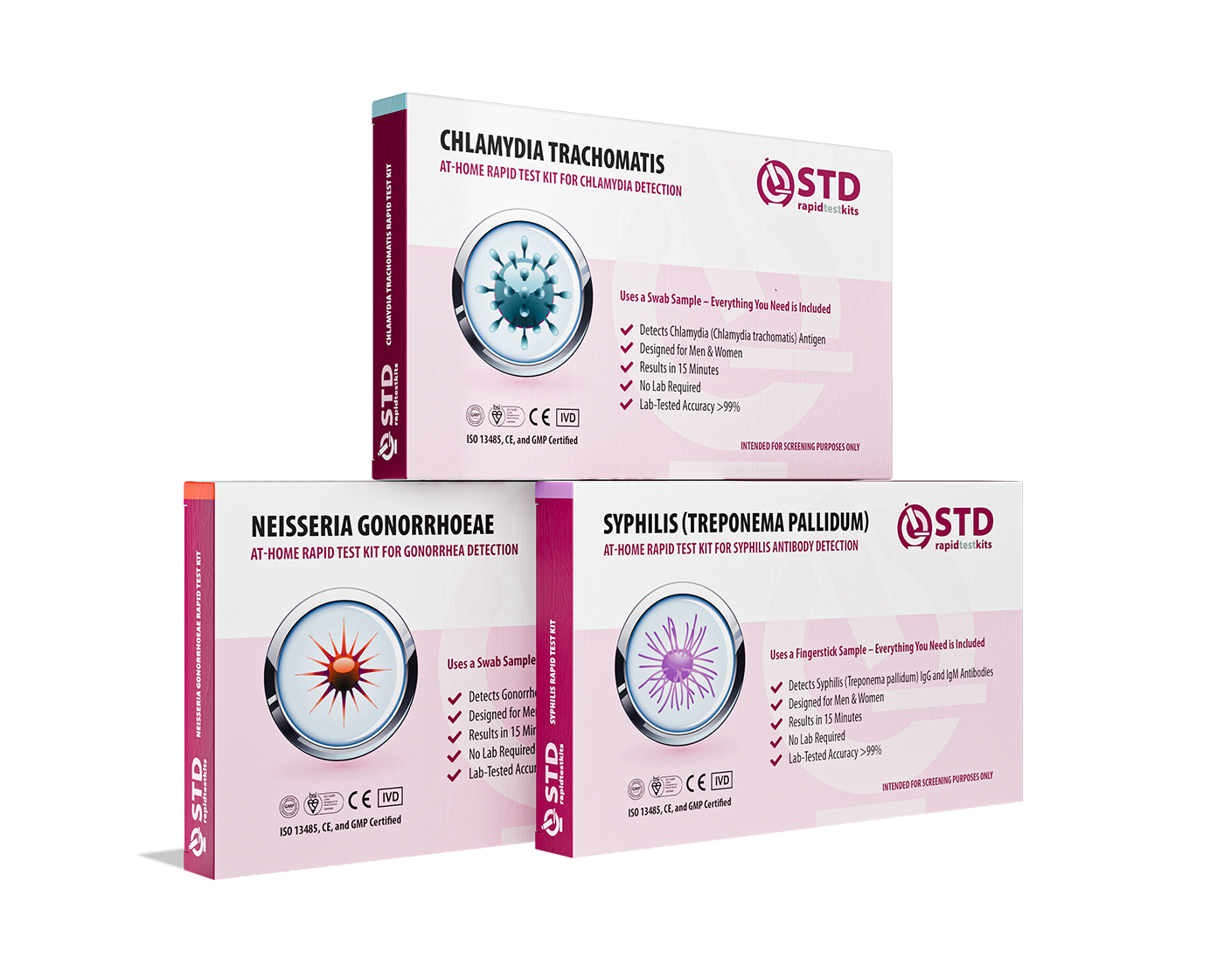
 For Men & Women
 Results in Minutes
 No Lab Needed
 Private & Discreet
Order Now $69.00 $147.00
For all 3 tests
When Protection Isn’t the Whole Story
Danny was convinced his positive HPV test meant his partner had cheated. He had used condoms every time in his current relationship. But when he sat down with a sexual health nurse, she explained something that blew his mind: HPV can live on skin that isn’t covered by the condom, and it can show up months or even years after exposure. “It was like finding out there’s a fine print no one told me about,” he said.
Then there’s Karla, who swore she had a yeast infection after noticing redness and a small bump on her vulva. Tests came back positive for genital herpes. She had only had protected sex, but her partner had an oral cold sore a few days before they were intimate. She didn’t realize oral herpes could be passed to the genitals through oral sex,even when no fluids were exchanged.
The Condom Failure Myth
When people hear “condoms don’t stop all STDs,” they often jump to the idea that condoms are breaking or slipping more than they should. In reality, most high-quality condoms don’t fail under normal use. The bigger issue is coverage,not breakage. Think of it like wearing gloves to chop chili peppers: they protect your hands, but if you touch your arm or face, you can still get burned. Condoms do their job in the zone they cover. Outside that zone, you’re on your own.
That’s not to say human error never plays a role. Putting a condom on late, taking it off early, using the wrong lubricant, or storing condoms somewhere hot (like a car) can weaken their protection. But even the most perfect use won’t make them a universal shield against every infection.
The Emotional Fallout
Discovering you have an STD after you’ve been careful is a special kind of gut punch. For some, it feels like their trust in their own choices has been broken. Others start questioning their partner’s honesty. And almost everyone runs into the stigma that paints STDs as a “punishment” for being reckless,which makes no sense when you’ve been anything but reckless.
This is where the emotional work starts. Understanding that “safer sex” is not the same as “risk-free sex” can take some of the sting out of a diagnosis. It reframes it from a moral failure into what it actually is: a common health event that can happen to anyone with a body and a sex life.

People are also reading: Comparison of Various Kinds of Home Testing STDs Based on Their Features, Accuracy, and Cost
STDs That Can Slip Past the Barrier
Some infections just don’t play by the “fluids only” rule.
Herpes simplex virus (HSV-1 and HSV-2) can be passed from any skin where the virus is active, even without visible sores.Human papillomavirus (HPV) is so common and so stealthy that most sexually active people will get it at some point, with or without condoms. Syphilis in its early stages can appear as a single sore on skin that’s never touched by a condom. And molluscum contagiosum, a poxvirus, spreads easily through skin contact, showing up as small, dome-shaped bumps.
These infections exploit the gaps: the upper thighs, the base of the penis, the pubic mound, the perineum. If infected skin meets skin, the bacteria or virus has a potential path,condom or not. This is why people are sometimes shocked to test positive for herpes or HPV after years of consistent condom use.
Why Skin-to-Skin Transmission Works This Way
Skin-to-skin STDs don’t need to get inside your bloodstream to start trouble. The virus or bacteria just needs to touch living skin cells that it can infect. That’s why even a fleeting brush of skin in the right place can be enough. For herpes and HPV, viral “shedding” can happen when there are no symptoms at all. With syphilis, the sore itself is highly contagious, but painless,so you might not notice it on yourself or a partner.
Condoms still help in these situations by reducing the amount of contact. Covering more skin means fewer opportunities for the germs to move from one person to another. But they can’t be everywhere at once, and that’s the honest limitation.
Stacking Your Protection
The safest sex isn’t about one single magic tool,it’s about layering your defenses. Condoms or dental dams are your first line, but you can add more. If you’re not in a mutually monogamous relationship, regular STD testing,at home or in a clinic,keeps you informed about your own status and your partner’s. Vaccines for HPV and hepatitis B take two major infections off the worry list entirely. And talking openly with partners about recent symptoms or outbreaks may feel awkward, but it’s a lot less awkward than explaining a surprise diagnosis later.
This isn’t about killing the mood,it’s about building trust and making choices together. I’ve seen couples get more turned on by negotiating their boundaries and safety than they ever did from pretending risk didn’t exist. Safety and intimacy can absolutely coexist if you let them.
Check Your STD Status in Minutes
Test at Home with RemediumPapillomavirus (HPV) Test
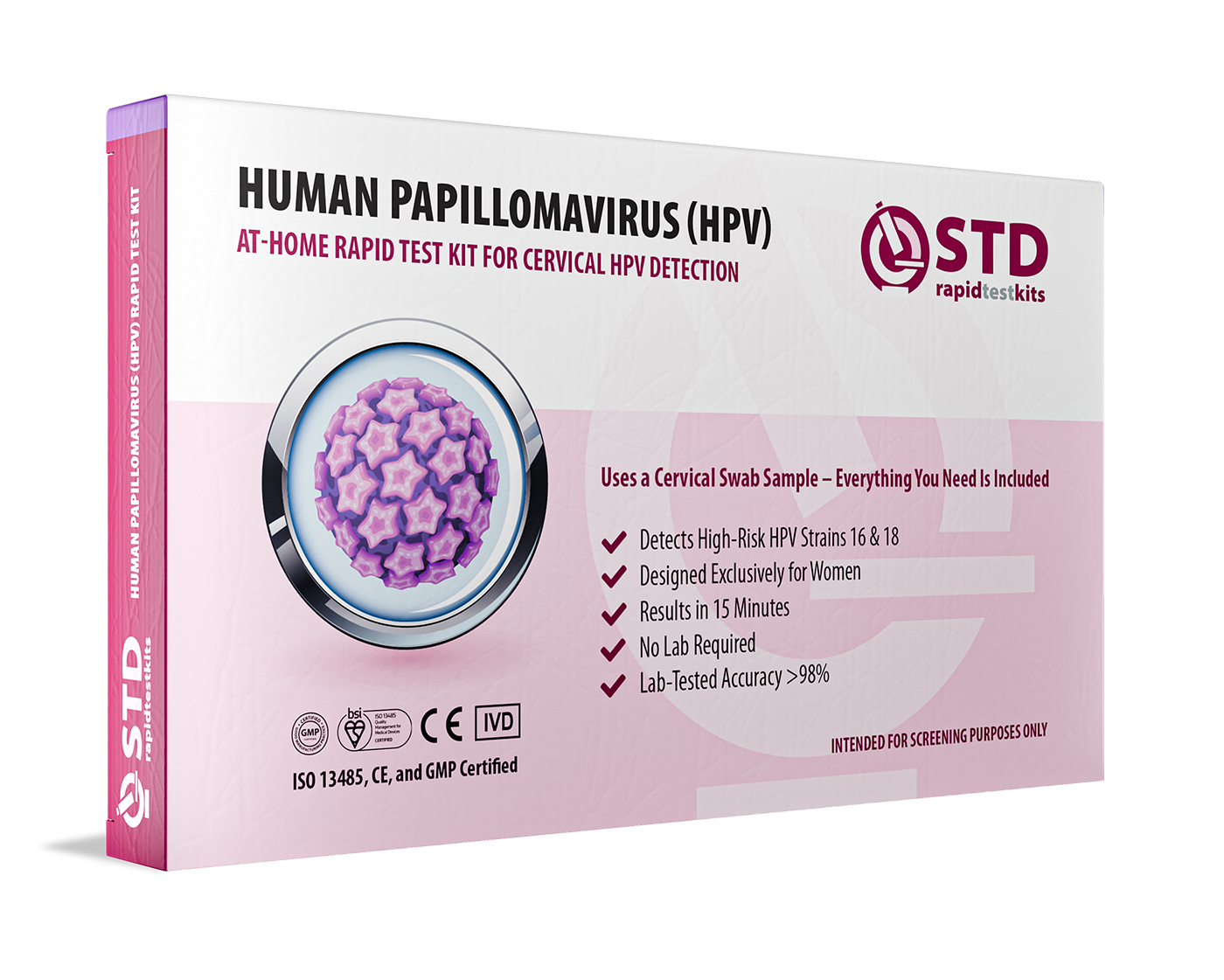
 For WomenResults in MinutesNo Lab NeededPrivate & Discreet
Order Now $33.99 $49.00
FAQs
1. So condoms don’t work?
They absolutely do, for a lot of things. Think of them like a great raincoat: you’ll stay dry in most storms, but if the wind blows rain sideways (skin-to-skin contact), you can still get wet. For HIV, gonorrhea, and chlamydia, they’re a powerhouse. For herpes, HPV, and a few others, they’re good… but not perfect.
2. Which STDs can I still get with a condom?
Herpes, HPV, syphilis, and molluscum contagiosum are the main ones. They live on skin, not just in fluids which means that you can still catch the disease even if you wear a condom.
3. What about oral sex?
Yep, transmission can still happen. A cold sore on the mouth (oral herpes) can pass to genitals during oral, even with no visible sore. HPV works the same way. Dental dams and condoms help, but they’re not foolproof.
4. If condoms aren’t perfect, why should I use them?
Huge point: they slash your risk for many infections and make skin-to-skin STDs harder to spread. It’s not an all-or-nothing deal. Every layer of protection matters, and condoms are a big one.
5. How do I protect myself better?
Stack your safety. Keep condoms or dental dams in play, get vaccinated for HPV and hepatitis B, and test regularly. Talk with partners, yes, even the awkward stuff. A 2-minute chat can save you months of stress.
6. Does it mean my partner cheated if I got an STD?
Not necessarily. Some infections can hang out for months or years before showing up. That surprise test result could be from a long-ago encounter, not last week.
7. Can condoms break without me noticing?
Rarely, but yes. Sometimes it’s a small tear, or it slips off without you realizing. That’s why it’s worth checking before and after, and storing condoms somewhere cool, not in your wallet or car.
8. Can I still get pregnant and an STD at the same time?
Unfortunately, yes. If a condom fails or slips, there’s a double risk. And if it stays on but the STD is skin-to-skin, pregnancy protection doesn’t mean infection protection.
9. Are female condoms better at preventing STDs?
Female condoms cover more skin outside the genitals, which reduces the risk for certain infections, but they're still not 100% effective.
10. So am I doomed if I have sex?
Not at all. Most sexually active adults will encounter an STD at some point, and most are treatable or manageable. The goal isn’t fear, it’s awareness, so you can have the sex you want without the surprises you don’t.
The Bottom Line
Condoms are one of the best tools we have for preventing many STDs, but they’re not a magic cloak. They shine at blocking fluid-borne infections like HIV, gonorrhea, and chlamydia. They help with skin-to-skin STDs but can’t stop what they don’t cover. Knowing that isn’t meant to scare you,it’s meant to put you in charge. When you understand how these infections spread, you can make choices that feel good and keep you healthy.
If you’ve ever had that “but I used protection” moment in a clinic, you’re not alone. It doesn’t mean you were reckless or careless,it means you’re human, and biology is complicated. The best next step is clarity: get tested, get treated if you need to, and keep building a safer-sex toolkit that works for your body and your relationships.
Sources
2. WHO – Sexually Transmitted Infections Overview
3. Planned Parenthood – Safer Sex
4. Sexually Transmitted Infections Journal – Condom Use and STI Risk Reduction


