







Quick Answer: STD testing may still be necessary even after years of abstinence, especially if you were never tested after your last sexual encounter. Some infections stay silent for years without symptoms and can only be detected with screening.
Why This Article Matters: Real People, Real Gaps
Kira, 42, hadn’t had sex since her divorce six years ago. She was focused on parenting, rebuilding, staying afloat. When she finally met someone new, she decided to do the “responsible thing” and get tested, mostly for her partner’s peace of mind. But her chlamydia test came back positive. “I thought it was a mistake,” she said. “I haven’t been with anyone. Not even a kiss.” Her infection had likely been present for years, silently sitting in her reproductive tract, undetected and untreated.
Stories like Kira’s aren’t rare. Many STDs, including chlamydia, gonorrhea, herpes, and HPV, can stay in the body for years without obvious signs. Sometimes they cause low-grade symptoms that get mistaken for something else. Other times, they stay completely invisible until they trigger complications, like infertility, pelvic pain, or inflammation that gets flagged during a Pap smear or fertility evaluation.
There’s a reason the CDC recommends screening not just based on current behavior but past risk factors too. It’s not about punishing your past, it’s about protecting your present. Whether your last partner was a decade ago, or you’ve just entered a new phase of dating, testing is an act of care, for yourself and anyone you might be intimate with next.
The Dormancy Dilemma: STDs That Linger
Not all STDs vanish just because time passes. Some stay dormant. Others stay undiagnosed. A few, like herpes and HPV, can reactivate long after you think the chapter is closed. Even infections like chlamydia and gonorrhea, often considered “acute”, can stay asymptomatic and persist in the body, especially in the throat or rectum where symptoms are less likely to be noticed.
Julio, 35, had a few casual partners during his twenties and then entered a long celibate period for religious reasons. When his fiancée asked him to get tested before their wedding, he agreed, but was blindsided by a positive result for gonorrhea. “I didn’t even know that was possible. I hadn’t been with anyone in four years.” His infection was likely from an old partner and had quietly persisted in his rectum without symptoms.
The myth that “no symptoms = no STD” is one of the biggest barriers to public health. Here’s how long some common infections can hide before causing obvious signs, or complications:
| STD | Can It Stay Asymptomatic? | Dormancy Potential | Reactivation Risk |
|---|---|---|---|
| Chlamydia | Yes, especially in women | Months to years | Not typical, but complications can emerge later |
| Herpes (HSV-1/2) | Yes, common | Lifelong virus | High, reactivation triggered by stress or illness |
| HPV | Yes | Months to decades | Yes, especially high-risk strains |
| Gonorrhea | Yes, particularly in rectal or throat infections | Several months or more | Not typical; risk lies in unnoticed persistence |
| Syphilis | Yes, after initial stage | Years (latent phase) | Yes, can progress to tertiary stage |
Table 1. How long some STDs can remain without symptoms, and what that means for abstinent individuals.

People are also reading: How to Tell If You Have Chlamydia, Even Without Obvious Symptoms
Testing After Years of No Sex: What to Expect
If you’re wondering whether testing “still works” after a long dry spell, the answer is yes. In fact, this kind of delayed testing can uncover long-standing infections that have quietly persisted or complications that may be linked to an old exposure.
But the testing experience can feel confusing, especially if the last time you got tested was in a clinic before rapid home tests were even a thing. Today, you have more discreet options. You can test at home using FDA-approved rapid kits or mail-in services, or go to a clinic for a full panel. Depending on how comfortable you are, how much privacy you need, and what kinds of infections you want to test for, the best choice will be different.
Here’s how different methods compare when testing long after exposure:
| Test Type | Best For | Privacy | Detection Ability (After Years) |
|---|---|---|---|
| Rapid At-Home Kits | Quick results, low-stigma testing | Very High | Good for persistent infections like syphilis, HIV, HSV |
| Mail-In Lab Kits | Full-panel testing without clinic | High | High sensitivity across common STDs |
| Clinic or Telehealth Lab Orders | If symptoms are present or confirmatory testing needed | Moderate | Gold standard for thorough screening |
Table 2. Testing methods and how they perform after long abstinent periods.
Still not sure which test fits your situation? If you’re simply looking for peace of mind after years of celibacy or want to clear the slate before a new partner, a Combo STD Home Test Kit is a discreet and comprehensive way to start.
Check Your STD Status in Minutes
Test at Home with Remedium8-in-1 STD Test Kit
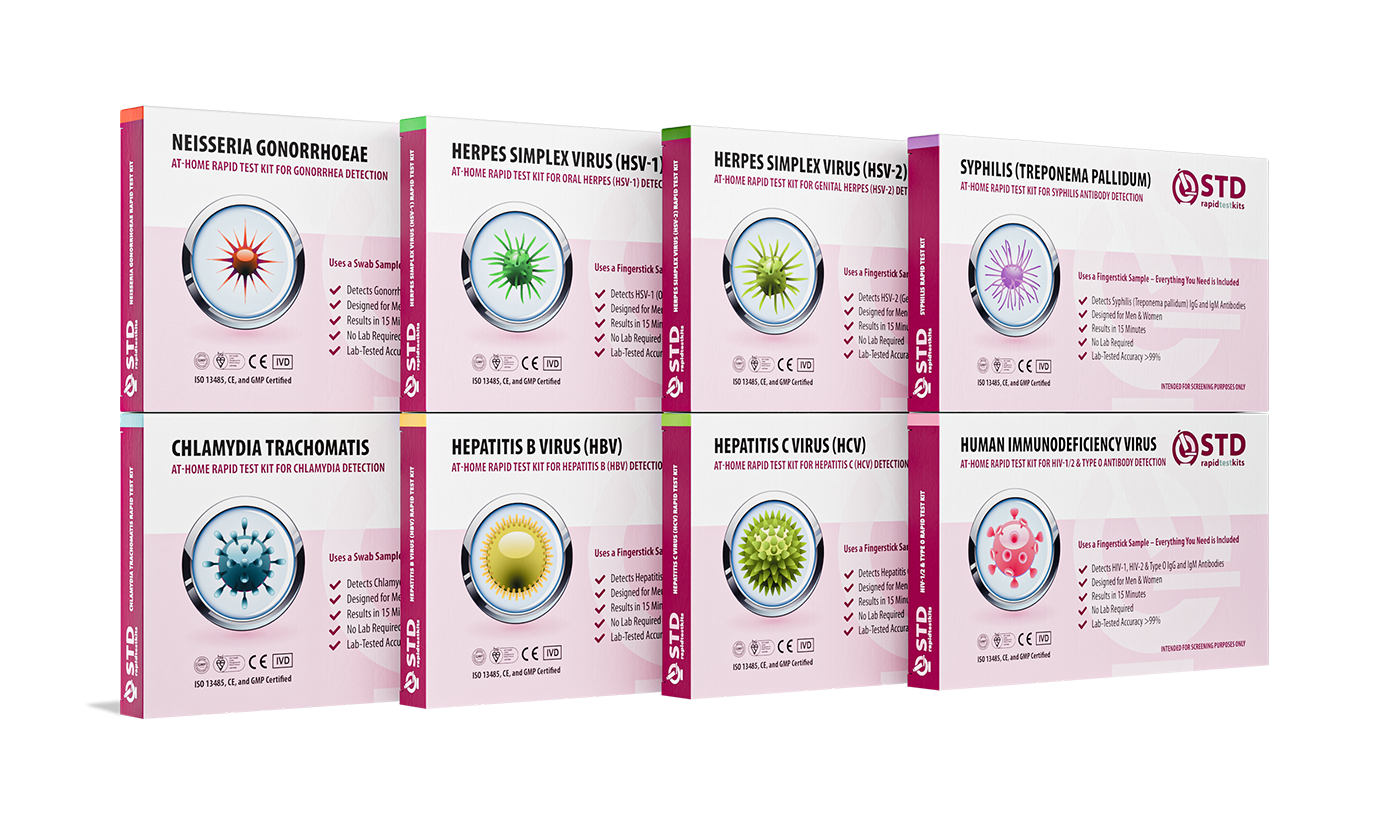
 For Men & Women
 Results in Minutes
 No Lab Needed
 Private & Discreet
Order Now $149.00 $392.00
For all 8 tests
Before the Next Chapter: Testing as a Reset
Let’s say you’ve been abstinent for a long time. You’re about to start something new, a relationship, a hookup, a one-time experiment. Maybe it’s the first time in years you’ve even considered getting naked with someone else. The thought alone can be thrilling, nerve-wracking, or downright terrifying. But somewhere between anticipation and anxiety, there’s a question that keeps popping up: “Should I get tested first?”
Nash, 28, had spent four years avoiding sex entirely after a string of bad relationships and one painful STI scare that left him ashamed and withdrawn. When he finally felt ready to reconnect with someone, he realized he had no idea where he stood medically. “I hadn’t had sex in forever, but I never tested after the last time. What if I was carrying something without knowing?” He ordered a discreet at-home kit and tested positive for HSV-2. “It sucked, but honestly? I felt weirdly relieved. Like at least now I knew. I could tell my partner with facts, not fear.”
Testing before becoming sexually active again isn’t just responsible, it’s empowering. It clears the emotional clutter. It protects your future partner. And it signals that your health, and theirs, matters. It doesn’t matter how long it’s been since your last encounter. What matters is that you enter the next one with clarity, not assumptions.
Remember: you don’t need to explain your whole history to test. You don’t need to prove you’re “worthy” of care. You’re allowed to want answers without drama. And if it’s been years since your last test, that doesn’t make you negligent, it makes you human.
Why STDs Don’t Magically Disappear
Here’s a hard truth: time does not kill all infections. If an STD was never treated, it likely didn’t go away on its own, especially bacterial infections like syphilis or chlamydia. Some viral infections, like herpes or HPV, can appear to go dormant for years and then resurface when your immune system is stressed. Others, like HIV, can stay in the body for years without obvious symptoms, and only routine testing can detect them early.
Dana, 33, tested positive for syphilis during a blood donation screening. She hadn’t had sex in nearly a decade. “I thought it was a mistake,” she said. “I was shocked. I had no symptoms, no reason to even worry.” She later remembered a one-night stand when she was 24, during a year she didn’t have access to healthcare. Her infection had likely stayed in the latent stage for years, no sores, no signs, but active in her blood. Thankfully, it was still treatable.
This is why “I feel fine” isn’t a good enough reason to skip testing. STDs don’t follow our emotional timelines. They don’t vanish when we become celibate, and they don’t care how long it’s been since your last encounter. They respond to one thing: whether or not you’ve been tested and treated.
Abstinence may lower your risk of new infections, but it doesn’t retroactively treat past ones. And that’s the crucial difference. Abstaining from sex is a choice. Testing is a tool. The two are not interchangeable.
False Negatives, Retesting, and the “Too Late” Myth
There’s a misconception that if you didn’t test soon after sex, it’s “too late.” That’s false. In fact, in some cases, testing years later can be even more reliable, because the infection has had time to fully develop antibodies or show markers that labs can detect.
However, some rapid tests (especially antibody-based ones) may not pick up past infections if your body has cleared the immune response over time or if you’ve already been treated unknowingly (as can happen with chlamydia treated via unrelated antibiotics). That’s where follow-up or lab-based confirmation comes in.
Also, some tests are more accurate than others, which is something to keep in mind. Home test kits are accurate when used correctly, but no test is perfect. A negative result after abstinence is often very reassuring, but if you have unexplained symptoms, or a partner tests positive, a clinic visit or mail-in lab test might be worth the follow-up.
So what’s the ideal retest timeline for someone who’s been abstinent?
| Time Since Last Sexual Activity | Recommended Testing Action | Why It Matters |
|---|---|---|
| 0–6 months | Test if you haven't already screened | Still within the best time frame for finding most STDs |
| 6 months – 2 years | Test, especially if never tested post-encounter | Silent infections may have persisted unnoticed |
| 2+ years | Test before reentering sexual activity or for peace of mind | Latent or asymptomatic infections can still be present |
Table 3. Suggested testing guidelines for those abstinent for extended periods.
If you’re hovering in that gray zone of “has it been too long?”, know this: testing now is still worth it. It can rule out complications, provide closure, and reset your health baseline. Even if everything comes back negative, that result is valuable. It gives you proof. Confidence. Something concrete to carry into your next chapter.
If your head is spinning, peace of mind is one test away. STD Rapid Test Kits offers discreet, lab-backed home testing you can do on your own timeline, no awkward waiting room, no judgment, no assumptions.
Shame, Silence, and the Weight of “Too Late”
Sometimes the hardest part isn’t the test itself, it’s what we make the test mean. For people who’ve been abstinent for years, getting tested can feel like digging up old shame. Maybe you were cheated on. Maybe your past involved survival sex, unsafe choices, or just plain confusion. Maybe you were never told what testing looked like because your community didn’t talk about it. Abstinence, for many, becomes not just a break from sex, but from the fear and messiness attached to it.
Arun, 46, spent years in a conservative faith community where sex before marriage was considered taboo. After leaving that environment and coming out as bisexual, he wanted to date again, but felt frozen. “I didn’t want to explain why I was getting tested now, when I hadn’t been with anyone in so long. It felt like admitting I’d done something wrong, even though I hadn’t.” What helped him move forward wasn’t a negative test, it was reframing the entire process as self-respect, not self-incrimination.
Testing after abstinence isn’t an accusation. It’s not a confession. It’s a way of saying: I matter. My body matters. My health, even after years of neglect, matters. And the more we normalize that mindset, the more we remove the shame that keeps people silent and sick.
There is no “too late” to check in on your sexual health. There is only before and after, and after includes relief, empowerment, and closure.

People are also reading: This STD Can Cause Bleeding After Sex, And You Might Not Know It
What If You Test Positive After Years?
This is the scenario most people fear: getting back into testing, only to discover you’ve been carrying something all this time. The truth? It happens. And you will survive it.
Most STDs are treatable. Some, like herpes or HPV, are manageable but not curable, and knowing your status allows you to manage outbreaks, reduce transmission, and make informed choices with partners. Others, like chlamydia, gonorrhea, or syphilis, can be cleared with a short course of antibiotics. Even HIV, when diagnosed early, is highly treatable and compatible with a long, healthy life.
Mei, 39, tested positive for HPV during a routine Pap smear after over five years of sexual inactivity. “I was stunned. I didn’t even remember who I could have gotten it from. But my doctor reassured me that HPV is incredibly common, and that my body could still clear it on its own.” Her story isn’t rare. Roughly 80% of sexually active people will get HPV at some point. Some of us just find out late.
If you test positive, don’t spiral. Breathe. Make a plan. Ask questions. And remember: you are not dirty, broken, or doomed. You are informed. And that alone makes you safer than you were yesterday.
If you're ready to take that step, consider a Herpes 1 & 2 Test Kit or explore the full range of discreet STD home tests based on your past exposure or concerns.
Check Your STD Status in Minutes
Test at Home with Remedium7-in-1 STD Test Kit
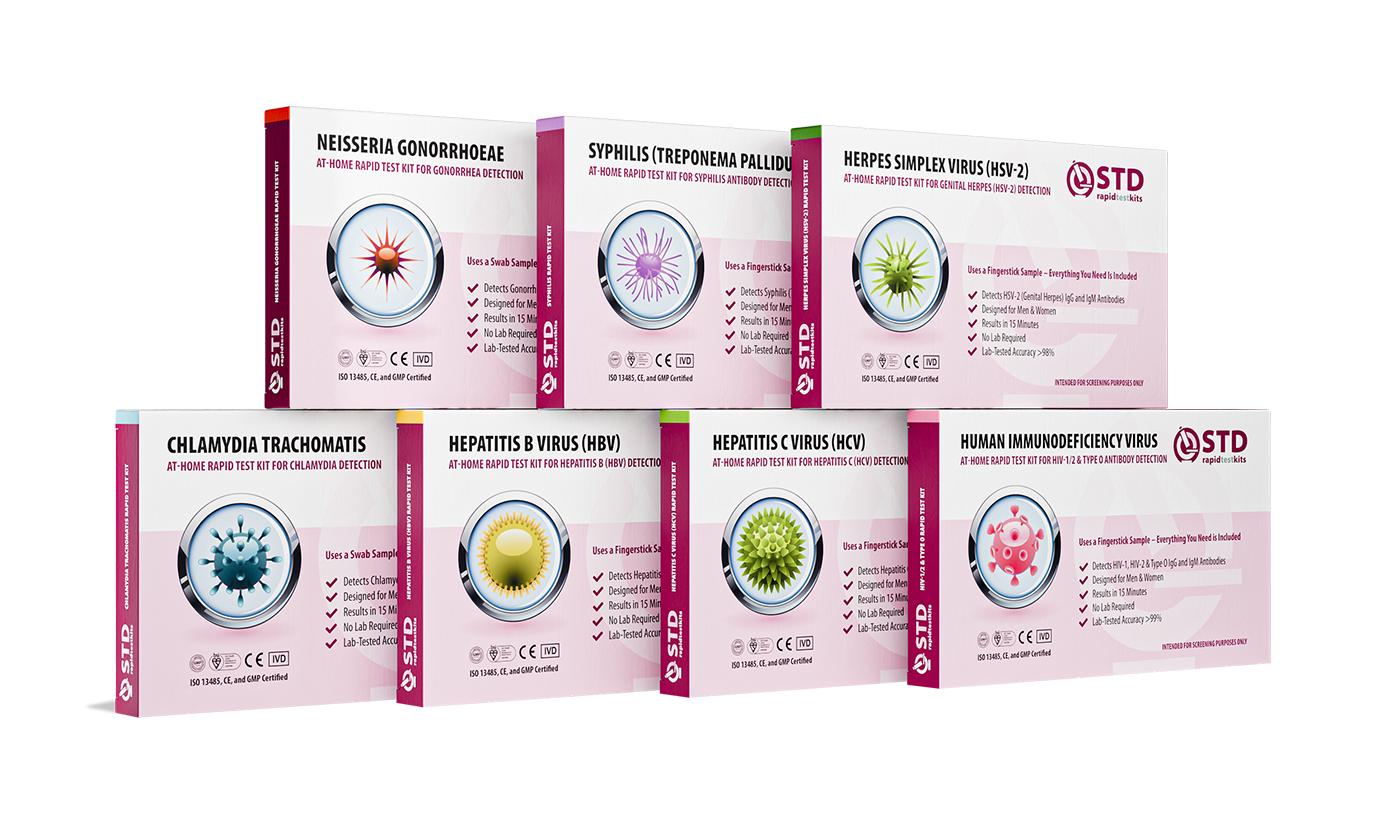 For Men & WomenResults in MinutesNo Lab NeededPrivate & Discreet
Order Now $129.00 $343.00
For all 7 tests
The Emotional Payoff of Knowing
What people rarely talk about is the emotional high of a clean result, even years after your last encounter. The relief. The clarity. The sense of being back in your own body, without doubts gnawing at you. It’s not just a physical status check, it’s a psychological one too.
Testing is often framed as fear-based: find out what’s wrong. But it’s just as valid to test to confirm what’s right. To erase lingering “what ifs.” To go into your next relationship with confidence, not caveats. To sleep better. To close a chapter you never fully realized was open.
Leo, 31, had a negative panel after seven years of abstinence. “It was almost anticlimactic. But I felt clean, not in a moral way, but in a mental way. Like I didn’t owe anyone an explanation anymore. I was just...me again.”
Whether you’re about to start something new, processing the past, or simply curious about your current status, testing can be a powerful act of self-reclamation. It doesn’t have to be scary. It can be liberating.
Don’t wait and wonder. Get clarity, even if it’s been years. Your story is still unfolding, and this chapter starts with knowledge.
FAQs
1. I haven’t had sex in years. Why would I even need to test?
Because your body doesn’t follow a calendar. If you were never tested after your last sexual encounter, even if it was years ago, an infection could still be sitting quietly in your system. Some STDs, like chlamydia or HPV, can cause zero symptoms for a long time. Testing isn’t about your recent behavior, it’s about your last known exposure. Think of it like clearing your browser history before starting fresh.
2. Isn’t it too late to do anything if I did catch something a long time ago?
Nope. In fact, in many cases, testing now is exactly what helps you avoid long-term complications. A positive result just means you finally know what’s been going on in your body. For things like syphilis or herpes, catching it late is still way better than never.
3. How accurate are home STD tests if I haven’t had sex in, say, five years?
Very accurate, especially for long-standing infections like HIV, syphilis, and herpes, which show up clearly on antibody-based tests. A rapid test done now will detect what it’s meant to detect, no matter how old the exposure was. Just make sure you follow the instructions exactly. And if anything feels off or unclear, follow up with a lab test or provider. You’ve waited this long, you deserve accurate answers.
4. What if I test positive and can’t even remember who gave it to me?
You wouldn’t be the first, and you won’t be the last. STDs don’t come with timestamps or receipts. If it’s been years, your focus doesn’t need to be on blame, it’s on treatment and what comes next. Plenty of people test positive and have no idea when or how it happened. That doesn’t make you careless. It makes you human.
5. Does being celibate mean I’m totally safe now?
You’re lowering your risk, yes, but being abstinent now doesn’t erase what might’ve happened before. Some infections can hang around undetected for years. If you’ve never tested post-exposure, you’re still flying blind. Testing isn’t just for people who are currently having sex, it’s for people who’ve ever had sex.
6. Will a doctor think it’s weird that I want an STD test after years of nothing?
Not at all. Many providers actually appreciate it, it shows you're proactive and thoughtful. If anyone gives you a side-eye, they’re the problem, not you. And if you’re nervous about judgment? That’s what at-home tests are for. No receptionist. No awkward questions. Just you, your health, and a little plastic cassette that tells the truth.
7. Can I get a false positive because it’s been so long?
It’s rare, but technically possible, especially with antibody-based tests if you had an infection that cleared naturally or was unknowingly treated. That’s why confirmation tests exist. If a result surprises you, don’t panic. Re-test, follow up, and move forward. A false positive doesn't define you; it's just a way to get to the truth.
8. What if I test negative, does that mean I’m totally good to go?
In most cases, yes! A clean test result after long-term abstinence is a beautiful, glorious green light. But keep in mind: if symptoms pop up later, or if you start a new relationship, it’s smart to retest. Your status is a snapshot, not a lifetime badge. Stay curious about your body. It’ll thank you.
9. I was in a monogamous relationship the whole time. Do I still need to test?
If you never tested during or after that relationship, it’s still worth considering, especially if you suspect your partner may not have been monogamous too. Infidelity happens. So do unintentional exposures. Testing now is a way to close that chapter fully, with no lingering question marks.
10. This feels scary. Is it okay that I’m nervous?
Yes. Totally. Testing, even years later, can feel like opening a door you shut a long time ago. But it’s also one of the most compassionate things you can do for yourself. You’re not weird, you’re not late, and you’re definitely not alone. Nervousness just means you care. And that’s always a good sign.
Before You Panic, Here’s What to Do Next
Let’s drop the guilt. Let’s skip the shame. You don’t owe anyone a perfect past to deserve clarity now. If you’ve been abstinent for months or years and never got tested after your last sexual encounter, it’s not too late. It’s never too late. Knowing your status is a gift to your future self, and to anyone you may be intimate with next.
Don’t overthink it. Don’t keep Googling in the dark. Order a discreet, trusted kit from a company that respects your privacy. This at-home combo test kit checks for the most common STDs quietly and quickly, so you can move forward with confidence.
How We Sourced This Article: We combined current guidance from leading medical organizations with peer-reviewed research and lived-experience reporting to make this guide practical, compassionate, and accurate.
Sources
1. CDC – STD Screening Recommendations
3. Planned Parenthood – Get Tested
4. About Sexually Transmitted Infections (STIs) | CDC
5. STI Screening Recommendations | CDC
6. Screening for Genital Herpes | CDC
7. Asymptomatic Sexually Transmitted Diseases: The Case for Routine Screening | PubMed
8. Sexually Transmitted Infections (STIs) Overview | NCBI Bookshelf
9. Sexually Transmitted Infections Prevalence, Incidence, and Cost Estimates | CDC
10. Implementation Considerations for Asymptomatic STI Management | NCBI Bookshelf
About the Author
Dr. F. David, MD is a board-certified infectious disease specialist focused on STI prevention, diagnosis, and treatment. He blends clinical precision with a no-nonsense, sex-positive approach and is committed to expanding access for readers in both urban and off-grid settings.
Reviewed by: A. Bernal, MPH, CST | Last medically reviewed: January 2026
This article is meant to give information and should not be taken as medical advice.


