






Quick Answer: If a condom broke during sex, testing is recommended for most STDs starting 7–14 days after exposure, with a retest at 30–90 days for accuracy. Immediate testing may offer peace of mind, but it can miss early infections.
Why This Guide Matters, And Who It’s For
If you're reading this, chances are you're not a risk-taker. You're someone who tried to protect yourself or your partner. You used a condom. You communicated. Maybe you even got tested a few months ago. But now that thin layer of latex failed, and your sense of safety cracked with it.
This guide is for people who are anxious after a sexual encounter where the condom broke, whether it was a hookup, a long-term partner, or someone new. It’s for those who feel overwhelmed, confused about what counts as “risky,” and unsure when or how to act. It’s also for anyone who doesn't feel comfortable going into a clinic and wants to understand their options from home.
We’ll walk you through what counts as an STD risk after a condom break, how long to wait before testing, what type of test to choose, and what to do if symptoms show up, or don’t. This isn’t about scaring you. It’s about handing back your sense of control.
Let’s Talk About Risk, What Actually Happens When a Condom Breaks?
There’s a common misconception that condoms offer total protection. While they significantly reduce the risk of most STDs and HIV, they’re not a guarantee. When a condom breaks, the body fluids you were trying to keep separated, semen, vaginal fluids, sometimes even blood, can come into contact. Skin-to-skin transmission is also back in play.
Here’s what one reader told us: “It broke near the end. We didn’t even notice until after. I felt sick, like I’d failed somehow, even though I’d done everything right.” That reaction? Totally normal. And no, you didn’t fail. You just joined a very common club. According to the CDC, condom failure rates during vaginal intercourse can be as high as 13% with typical use. And failure includes more than just full-on rips. Slippage, partial unrolling, or unnoticed damage all count.
What matters now is understanding which infections could be transmitted during this exposure. Here’s a breakdown:
| STD | Transmitted via Fluids? | Skin-to-Skin Transmission? |
|---|---|---|
| Chlamydia | Yes | No |
| Gonorrhea | Yes | No |
| HIV | Yes | No |
| Herpes (HSV-1 & HSV-2) | No | Yes |
| Syphilis | Yes | Yes |
| HPV | No | Yes |
| Trichomoniasis | Yes | No |
Figure 1: Modes of transmission for common STDs after condom failure.
So yes, even if your partner “pulled out” or it happened near the end, fluid exposure and skin contact mean STD transmission is still possible. That doesn’t mean it happened, but it does mean testing is the next smart move.
People are also reading: Red Eyes and a Sore Throat? It Could Be Chlamydia
Timing Is Everything: When Can You Actually Test?
After the condom breaks, most people want to act immediately. That urgency makes sense, it’s a form of control in a situation that suddenly feels unsafe. But here’s the hard truth: Testing too early can give you false reassurance. That's because each STD has a different "window period," which is the time between when you are exposed to it and when the infection can be found.
For example, let's look at this: Malik had sex with a new partner and used a condom, but he felt it tear in the middle. He went to a clinic the next morning, tested negative for everything, and thought he was in the clear. But two weeks later, he developed discharge and pain. A second test revealed gonorrhea.
The issue? His first test was too early. The infection hadn’t incubated enough to show up. That first result was a “false negative.”
To avoid what Malik went through, here’s a general breakdown of when each infection becomes detectable:
| STD | Earliest Detection | Best Time to Test |
|---|---|---|
| Chlamydia | 7 days | 14 days |
| Gonorrhea | 5–7 days | 14 days |
| Syphilis | 3 weeks | 6 weeks |
| HIV (Ag/Ab Test) | 18–45 days | 6 weeks+ |
| Trichomoniasis | 5 days | 14 days |
| Herpes | 4–6 days (only if symptomatic) | 3 months (for antibody test) |
Figure 2: When common STDs become detectable after exposure.
So, should you test right away? You can, but understand that if it’s been less than 5 days, most infections won’t show up yet. Early testing can help establish a baseline or ease anxiety, but plan to test again at the optimal time window.
Check Your STD Status in Minutes
Test at Home with Remedium6-in-1 STD Test Kit
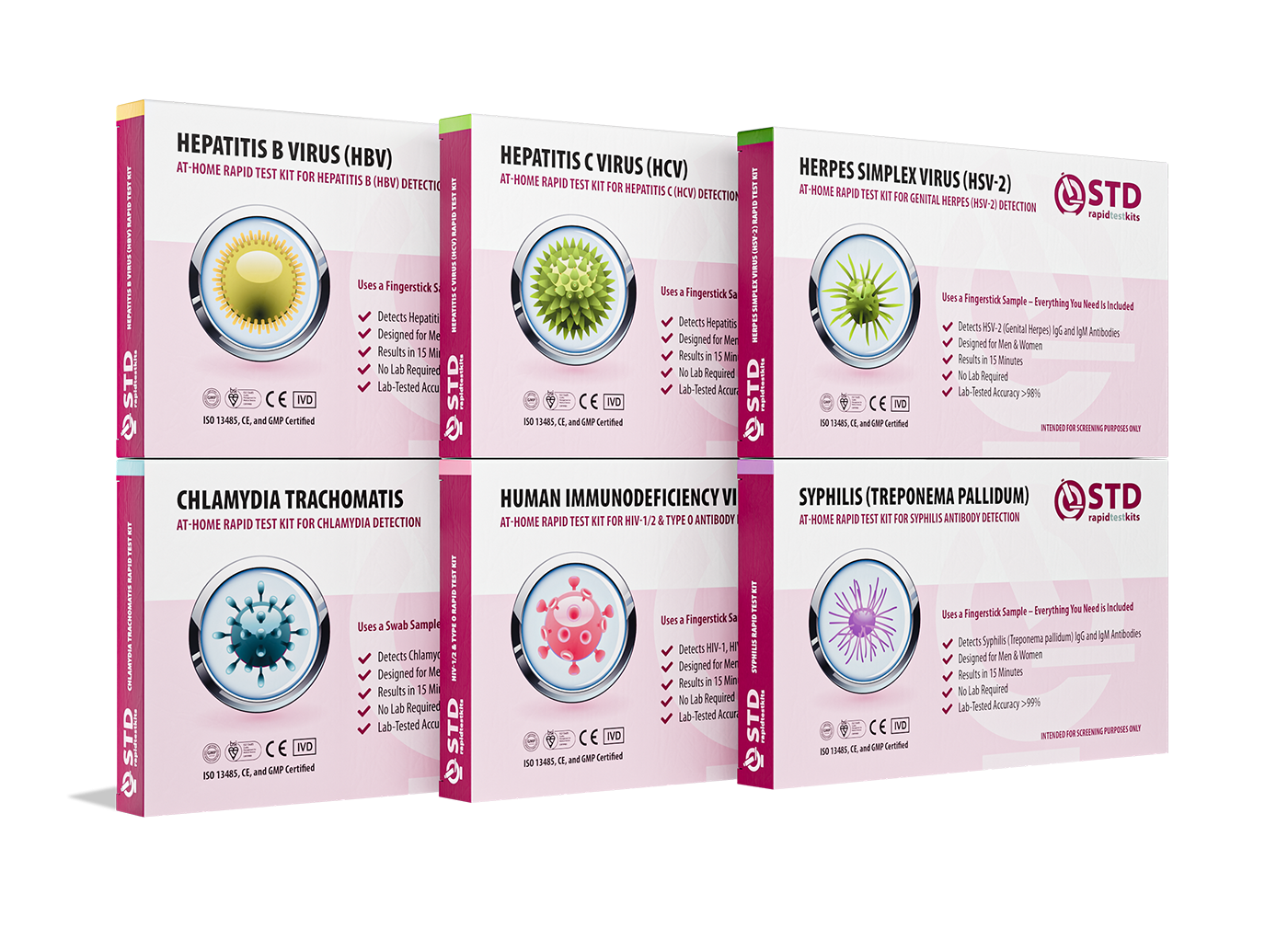
 For Men & Women
 Results in Minutes
 No Lab Needed
 Private & Discreet
Order Now $119.00 $294.00
For all 6 tests
Choosing the Right Test: At-Home, Lab, or Clinic?
Let’s go back to your situation. The condom broke, your mind’s racing, and you want answers fast, but also privately. That moment, standing in your bathroom, phone in hand, Googling "emergency STD testing", is where many people make their first real choice: clinic visit or at-home test?
Clinic testing has its strengths. If you're dealing with symptoms, like burning, discharge, ulcers, or a rash, you should consider in-person testing. A clinician can examine you, swab or culture visible symptoms, and prescribe treatment immediately if needed. You’re not just getting results, you’re getting support. But for many people, clinics come with barriers: long wait times, lack of privacy, judgmental front desks, even fear of being seen by someone you know.
That’s where at-home testing comes in. There’s the mail-in lab kit, where you collect your sample (urine, swab, or fingerstick) and send it off. Then there’s the rapid test kit, where results appear in minutes without leaving your house. For those without symptoms, these options can be life-changing.
One reader told us, “I live in a small town where the only clinic is run by my aunt’s friend. I couldn’t deal with that. I needed something private.” She ordered a combo STD rapid test, followed the steps at home, and got peace of mind that night.
Each option has trade-offs, so here’s how they compare:
| Test Type | Speed | Privacy | Accuracy | Best For... |
|---|---|---|---|---|
| At-Home Rapid Test | 15–20 minutes | Very High | Moderate to High | Quick reassurance, no symptoms |
| Mail-In Lab Test | 2–5 days | High | High | Full-panel testing, still private |
| Clinic Visit | Same day to 1 week | Low to Moderate | Very High | Visible symptoms or high risk |
Figure 3: Comparing speed, privacy, and accuracy of test types.
If your exposure was recent and you’re symptom-free, a rapid at-home test might be your first step. Just be prepared to retest if symptoms show up later, or if your initial window was too early. You can order a discreet kit from STD Rapid Test Kits, and many of them include instructions tailored to recent exposures like yours.
Should You Retest? What to Know If the First Test Is Negative
Let’s say you’ve already tested, maybe it was this morning. The results came back negative. Now what?
This is where a lot of people get stuck. They want to believe the test. They need to believe it. And yet, a whisper of doubt creeps in. “What if it was too soon?” “What if it missed something?”
That doubt isn’t paranoia, it’s informed caution. Every test has limits, especially when done during the early part of the window period. Just like a pregnancy test taken two days after sex can miss a result, STD tests also rely on your body developing enough of a signal (like antibodies or bacterial load) to register. It’s science, not shame.
Here’s how to think about retesting:
If you tested before the 14-day mark for infections like chlamydia, gonorrhea, or trichomoniasis, it’s smart to retest at two weeks, especially if you remain asymptomatic. For HIV or syphilis, your best accuracy usually comes after 6 weeks or even 3 months, depending on the test type.
We talked to Dani, who tested with a rapid kit at day 6 post-condom break. Negative. But she retested at day 21, after some burning during urination, and got a positive result for chlamydia. She said, “I’m glad I listened to my gut. If I’d just taken that first test as the final answer, I might have passed it on.”
This isn’t about planting fear. It’s about offering a full picture. Testing is a process, not a one-time event, especially after recent exposure.
Symptoms or No Symptoms, Why Silence Isn’t Always Safe
One of the most dangerous myths around STD exposure is that if you feel fine, you must be fine. That’s not how most infections work. In fact, up to 80% of people with chlamydia and nearly 50% of those with gonorrhea have no noticeable symptoms. HIV can remain silent for years. And herpes often presents with symptoms so mild people confuse them with razor burn or an ingrown hair.
If you’re asymptomatic after a condom break, it doesn’t mean you’re in the clear. It just means you need to use testing as your tool for certainty.
We heard from one reader, a 28-year-old nonbinary artist who noticed nothing after a condom failed during a weekend hookup. “I waited three weeks, tested with a mail-in panel, and got a positive result for trich,” they shared. “I had no symptoms. None. If I hadn’t tested, I never would have known.”
That’s the takeaway here: The absence of symptoms is not the absence of infection. Whether you feel totally fine or are spiraling through every twinge, testing is your bridge from fear to fact.
Let’s now look at how long infections take to appear in the body, and how long they stay undetectable. We’ve got a visual timeline coming next that can help you see where you fall in the post-exposure window.
People are also reading: No Symptoms, Still Infected: How Chlamydia Hides in Plain Sight
Post-Exposure Timeline: What Happens in the Days After?
After a condom breaks, your body doesn’t hit “infected” or “not infected” like flipping a switch. There’s a silent phase, the incubation period, where your immune system is reacting, bacteria may be multiplying, or viruses begin to replicate. This is why early testing can give false negatives. You need enough of the infection to be detectable by your test, and that takes time.
Here’s a simplified narrative timeline based on current clinical guidance. Match it to your situation to estimate your next step:
| Time Since Condom Break | What’s Happening | Testing Guidance |
|---|---|---|
| 0–3 Days | Most infections not yet detectable | Consider testing for baseline only; not diagnostic |
| 4–7 Days | Early incubation; some infections may show symptoms | Early test possible for chlamydia/gonorrhea, but retest recommended |
| 8–14 Days | Window period closes for many bacterial STDs | Ideal testing window for trichomoniasis, gonorrhea, and chlamydia |
| 3–6 Weeks | Viruses like HIV or syphilis begin to appear in blood | Ag/Ab tests or syphilis antibody screens most accurate |
| 8–12 Weeks | Maximum accuracy for HIV, syphilis, herpes antibody | Final confirmatory test if initial was negative |
Figure 4: Post-condom break STD testing timeline by infection stage.
What this timeline shows is that there’s no shame in testing more than once. If anything, it's the smartest thing you can do. One test gives you a snapshot. Two gives you a story. If you're unsure where you fall, remember: peace of mind is one test away, but staying safe might mean retesting after your first check-in.
Your Life, Your Privacy: Testing On Your Terms
Not everyone has the option, or desire, to visit a clinic after a condom break. We’ve heard from college students afraid of being seen in student health, people in relationships who can’t explain a test without outing a hookup, and rural folks who would have to drive two hours just to access care.
Case in point: Alex, 32, was on a road trip with friends when his condom broke with a Tinder match. “There was no way I was going to a clinic in a town where I didn’t know anyone. I ordered a test to be shipped to my next stop. It arrived before I did.”
That flexibility matters. You should be able to access care that works with your lifestyle, not against it. Whether you’re traveling, closeted, non-monogamous, or simply value discretion, at-home STD test kits are a way to take your health seriously without anyone else knowing. Shipping is discreet. Billing is anonymous. And results are yours alone.
If you’re still spiraling, take one step forward: order a test. You can choose a single infection like chlamydia or go for a combo panel that checks for the most common infections. Either way, you’re acting. And that counts for a lot.
Check Your STD Status in Minutes
Test at Home with Remedium8-in-1 STD Test Kit
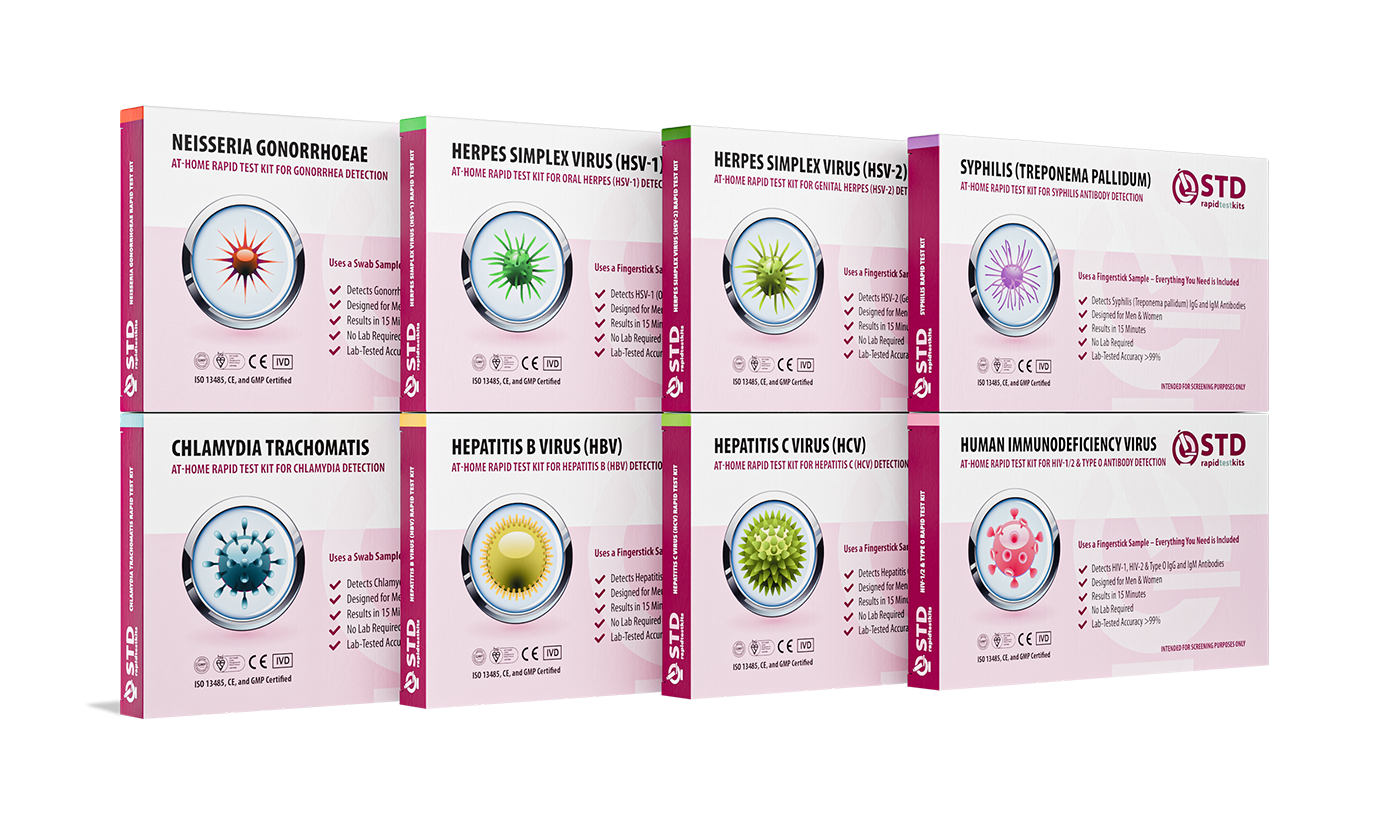 For Men & WomenResults in MinutesNo Lab NeededPrivate & Discreet
Order Now $149.00 $392.00
For all 8 tests
If You Test Positive, Here’s How to Handle It
No one plans for this part. But sometimes, even with precautions, even when you act quickly, the result you hoped wouldn’t come… does. That little word “positive” shows up on your screen. It hits like a punch. Then the thoughts flood in. “How?” “Who gave this to me?” “Who do I tell?” “What now?”
Take a breath. You are not alone. You are not dirty. You are not ruined. The overwhelming majority of STDs are curable or manageable. Treatment is routine. You can still have healthy sex, relationships, children, and freedom. But first, let’s walk through what happens next.
Let’s say you tested positive for chlamydia. You can follow up with a virtual provider, fill a prescription, and start antibiotics that same day. If it’s syphilis or HIV, you may need further confirmatory testing, but modern treatments are effective, accessible, and often free through public health clinics.
One reader shared this: “I tested positive for gonorrhea, and honestly, I was devastated. But my doctor said it was common, treatable, and gone after one shot. I told my partner, we both got tested, and now we’re closer than ever.”
That’s the reality we want to anchor in: Testing is not the scary part. Ignoring it is. If you test positive, you get the chance to treat, to notify partners, and to prevent complications down the road.
STD Rapid Test Kits offers multiple follow-up resources, including discreet retesting kits and information on how to talk to partners. This isn’t just about results. It’s about resolution, and recovery.
FAQs
1. It only broke at the end, am I really at risk?
Yes, really. Even if the condom didn’t break until the last few thrusts, that’s still enough time for fluids to mix or skin-to-skin contact to happen. If there was penetration, there was risk. It doesn’t mean you’re definitely infected, it just means testing is smart, not overreacting.
2. My test came back negative after 5 days. Am I good?
Not quite. A negative that early is like checking your bank account before the paycheck clears. Some infections, like chlamydia and gonorrhea, might show up in a week, but others, like syphilis or HIV, take longer. You might just be testing too soon to catch anything real. Retest at the two-week mark, and again around six weeks if you want full peace of mind.
3. I feel totally fine, do I still need to test?
That’s the trickiest part: most STDs don’t scream. They whisper. Or they say nothing at all. Up to 80% of people with chlamydia have zero symptoms. Same goes for trich and even HIV in early stages. Testing when you feel fine is actually the move, it means you’re proactive, not paranoid.
4. Can I really trust a rapid at-home test?
For the big-name infections like HIV, syphilis, chlamydia, and gonorrhea? Yes, especially if you follow the instructions to the letter and test at the right time. They're not a gimmick. Just know that no test is perfect, and you may still need a retest later if symptoms pop up or exposure was very recent.
5. Could I get HIV from this one-time condom break?
It’s possible, but don’t spiral. The actual risk depends on a lot, like your partner’s status, viral load, the kind of sex you had, and whether there were any open sores or bleeding. Receptive anal sex carries the highest risk, followed by vaginal. That said, if it’s within 72 hours of exposure, talk to a doctor about PEP, it can help stop HIV before it starts.
6. Do I have to tell the person I slept with?
Legally? Probably not. Ethically? It depends. If you test positive, letting your partner(s) know gives them a shot at early treatment too. You can use anonymous text tools or scripts if it feels too awkward to say out loud. Think of it less like a confession and more like a courtesy, it’s something you’d want someone to do for you.
7. I already tested negative, can I hook up again?
Only if your partner also tested negative or was treated. Otherwise, it’s like drying off after a swim and jumping right back in. Reinfection happens more than you’d think, especially when one person tests and the other doesn’t. If you're planning to reconnect, make sure you’re both on the same testing timeline.
8. Will anyone see my results?
Nope. Not your mom, not your ex, not your job. At-home test results are private, full stop. If you test through a clinic and the infection is reportable (like HIV or syphilis), the health department might be looped in for tracking, but they don’t notify your workplace, friends, or family. Your body, your business.
9. Does pulling out reduce STD risk if the condom breaks?
We wish. Pulling out helps reduce pregnancy risk, but it doesn’t stop the spread of infections like herpes, HPV, or gonorrhea. Those can be transmitted before ejaculation, sometimes before arousal is even obvious. Pulling out + broken condom = still test.
10. How can I avoid this mess next time?
Real talk? Use lube to reduce friction, check condom expiration dates, and don’t keep them in your wallet (heat weakens latex). Make STD testing part of your normal routine, not just something you panic-Google when things go wrong. And if you’re sleeping with multiple partners, get into a rhythm of regular testing. Your future self will thank you.
One Moment of Panic Doesn’t Define You
You did what you were supposed to. You used protection. You cared about safety. The condom broke, and that’s not your fault. What matters now isn’t shame or blame. It’s choice. You get to choose how you respond, how you care for yourself, and how you move forward with clarity.
Whether you're still spiraling or already waiting for test results, know this: getting tested doesn’t make you “dirty.” It makes you informed. It means you’re someone who listens to their body and honors their health.
Don’t wait and wonder, get the clarity you deserve. This home test kit checks for the most common STDs quickly and without drawing attention to itself.
How We Sourced This Article: To make this guide accurate, compassionate, and useful, we integrated peer-reviewed research, lived experience reporting, and the most recent recommendations from top medical organizations.
Sources
1. CDC – STD Prevention and Condom Use
2. NHS – STIs and When to Get Tested
4. CDC – STD Prevention Overview
5. Mount Sinai – Sexually Transmitted Diseases (STDs)
6. Healthdirect Australia – Sexually Transmitted Infections (STIs)
About the Author
Dr. F. David, MD is a board-certified infectious disease specialist focused on STI prevention, diagnosis, and treatment. He blends clinical precision with a no-nonsense, sex-positive approach and is committed to expanding access for readers in both urban and off-grid settings.
Reviewed by: A. Morales, MPH | Last medically reviewed: January 2026
This article is for informational purposes and does not replace medical advice.


