






Quick Answer: Not all STDs cause burning or itching. You can test positive for infections like chlamydia, gonorrhea, or even herpes with no obvious symptoms at all. Subtle signs like spotting, fatigue, or a sore throat after oral sex are often missed.
What If It Doesn’t Hurt? The Problem With “Classic” STD Symptoms
Most people assume that an STD will make itself known, burning during urination, itching genitals, a dramatic rash. But here’s the truth: a huge percentage of chlamydia and gonorrhea cases are totally asymptomatic, especially in the early stages. According to the CDC, up to 70% of women and 50% of men with chlamydia never have symptoms at all.
So what happens instead? For some, it’s spotting between periods, especially after sex. For others, it’s fatigue that feels like just another long week. Maybe a sore throat lingers longer than usual after a hookup. None of it screams "STD," and that’s the danger, it doesn’t have to feel dramatic to be real.
Case in point: Jordan, 32, thought he had a mild cold. He’d given oral sex at a party the weekend before and chalked the throat pain up to allergies. When it didn’t go away after 10 days, he got tested, expecting strep. The result? Oral gonorrhea.
Table: Common STD Symptoms That Don’t Include Burning or Itching
| Symptom | Possible STD(s) | Often Overlooked As |
|---|---|---|
| Unusual vaginal bleeding (not during period) | Chlamydia, Gonorrhea | Hormonal fluctuation, stress |
| Sore throat after oral sex | Gonorrhea, Chlamydia, Herpes | Cold, strep, allergies |
| Lower back pain or pelvic discomfort | Chlamydia, Trichomoniasis | UTI, period cramps |
| Fatigue or low energy | HIV, Syphilis | Burnout, poor sleep |
| Genital sores with no itching | Herpes, Syphilis | Ingrown hairs, shaving irritation |
Figure 1. Commonly overlooked STD symptoms that do not involve burning or itching.
Micro-Scene: “I Only Got Tested Because of My Friend”
Nina, 27, had never tested positive for an STD. She had one steady partner, and they used condoms “most of the time.” She felt fine, no symptoms at all. Then a close friend confided she’d tested positive for trichomoniasis after a partner cheated. Nina decided to test out of solidarity. The test came back positive.
She was stunned. She’d had no clue. No odor, no discomfort, no discharge. Just an infection sitting quietly, ready to become a problem. That’s the part most people don’t understand: you don’t have to feel sick to be carrying something that matters.
If you wait for burning or itching, you might never test at all.
People are also reading: TikTok Said It Was Just a Rash. My Doctor Said Herpes.
Why Some STDs Stay “Silent” for Weeks (or Months)
Every STD has a different incubation period (the time from exposure to first symptoms) and a “window period” (when it becomes detectable by tests). But in many cases, even when the infection is fully active, your body might not react in obvious ways. That’s especially true for chlamydia, HPV, and early-stage HIV.
Sometimes, it’s your immune system keeping things quiet. Other times, it’s the location of the infection, oral, rectal, or deep in the cervix, where symptoms might not be felt right away. This is why testing isn’t about whether you feel “off.” It’s about timing and risk.
Let’s look at how long common STDs can go without showing signs:
| STD | Can Be Asymptomatic? | When Symptoms Usually Appear (if ever) |
|---|---|---|
| Chlamydia | Yes (70%+ in women) | 1–3 weeks (or never) |
| Gonorrhea | Yes (often in throat or rectum) | 2–7 days |
| Trichomoniasis | Yes | 5–28 days |
| Herpes (HSV-2) | Yes, especially in first exposure | 2–12 days (can lie dormant) |
| HIV | Often, for weeks or months | 2–4 weeks (flu-like symptoms) |
Figure 2. Common STDs and their silent timelines.
Order Now $119.00 $294.00 Check Your STD Status in Minutes
Test at Home with Remedium
6-in-1 STD Test Kit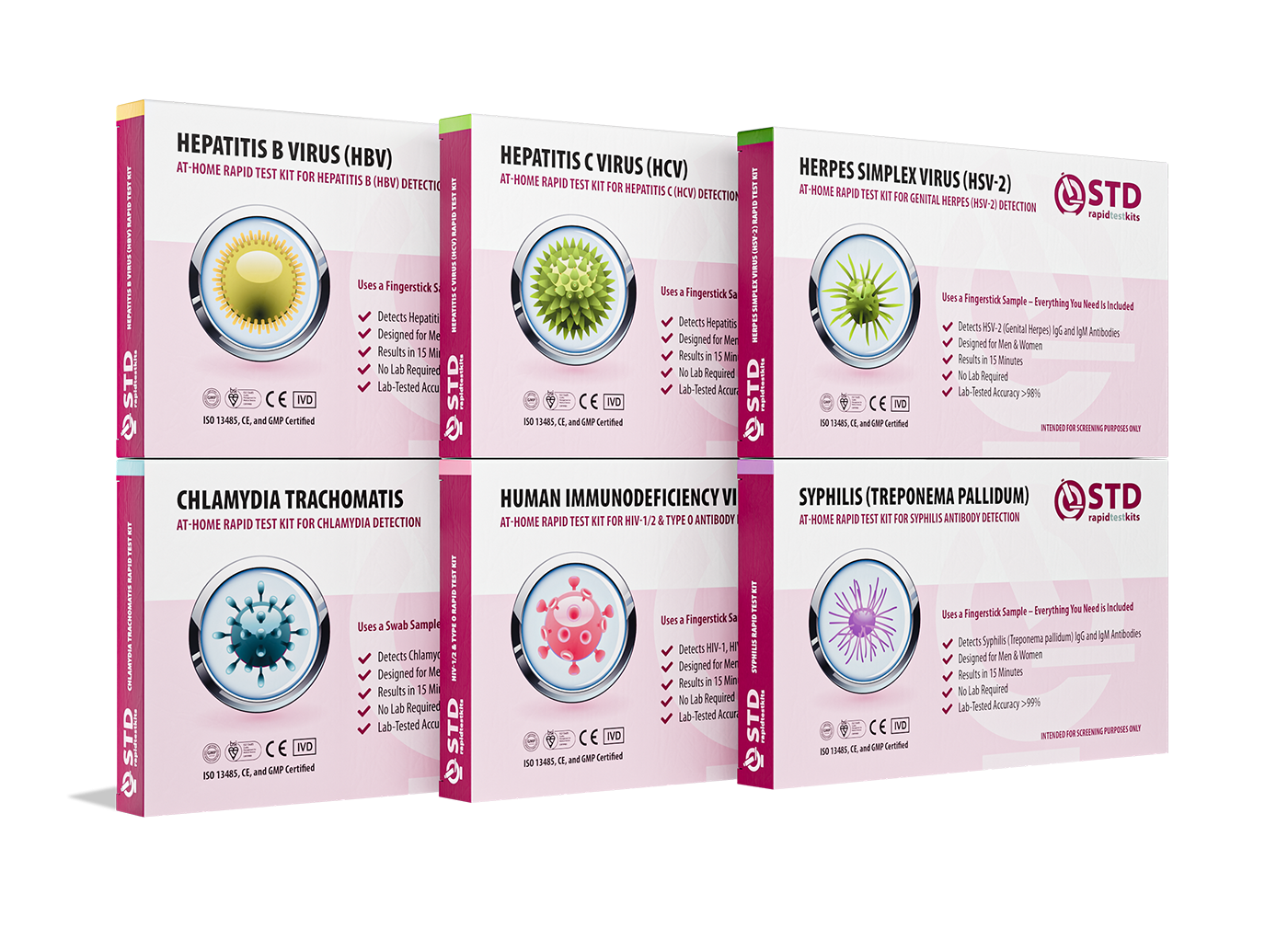
 For Men & Women
 Results in Minutes
 No Lab Needed
 Private & Discreet
For all 6 tests
This Isn’t Just a Yeast Infection (Or a UTI)
Here’s the tricky part: a lot of STD symptoms don’t just feel “mild.” They feel like something else entirely. When the itching or odor does show up, people often assume it’s a yeast infection. When there’s pelvic pressure or urgency to pee, most think it’s a UTI. But self-diagnosis can delay real answers.
Case in point: Reema, 22, had what she swore was a yeast infection, itching, thick discharge, nothing too painful. She used an over-the-counter cream. It helped a little, but the symptoms returned. A few weeks later, her doctor told her it wasn’t yeast. It was trichomoniasis.
Trich is one of those infections that often feels like something else, or nothing at all. The same is true for early-stage syphilis, which can show up as a single, painless sore that’s often mistaken for a scratch, razor bump, or hemorrhoid. Herpes can start with general tingling, flu-like malaise, or one faint blister that never breaks. Even gonorrhea can settle in the throat and just feel like a sore spot after too much karaoke.
Why Self-Doubt Delays Testing (And How to Push Through)
One of the most common reasons people delay testing is that they don’t want to “overreact.” You feel something odd, maybe it’s spotting, maybe it’s fatigue, but you’re not in pain, so you decide to wait. That waiting can turn a treatable infection into a bigger problem.
And let’s be real: getting tested feels loaded. There’s stigma. There’s fear. There’s the voice in your head saying “But I’m probably fine.” This is especially true when the symptoms don’t match what you were taught to expect. You may not want to seem dramatic or paranoid.
But getting tested isn’t an accusation. It’s an act of care, both for yourself and for any current or future partners. And it’s private. With at-home testing options now FDA-approved and available discreetly online, you don’t even have to leave the house to get answers.
If you're questioning whether it’s “worth it” to test, here’s the truth: the risk of not knowing is far greater than the discomfort of finding out. Because untreated STDs can lead to pelvic inflammatory disease, fertility issues, chronic pain, and a higher chance of transmission, even if they never burned or itched.
When to Test If You Have No Obvious Symptoms
Let’s say you had unprotected sex. Or protected sex, but something went wrong. Maybe a condom slipped, or oral was involved. You don’t feel pain. No rash. But something in you is still uneasy. When should you test?
The answer depends on the infection’s window period, the time it takes for the STD to be reliably detectable. Testing too early can miss an infection, even if it’s already active in your body. Testing too late can allow complications to begin. Here's a general guide:
| Time Since Exposure | Best Action |
|---|---|
| 0–5 Days | Wait to test unless symptoms are severe or there was assault. Too early for most tests. |
| 6–13 Days | Some STDs like chlamydia and gonorrhea may show up. Still may need a retest later. |
| 14–30 Days | Most STDs become detectable by this point. Ideal window for at-home combo testing. |
| 1–3 Months | Best timing for HIV, syphilis, and confirmatory testing if unsure. |
Figure 3. When to test based on exposure, even without symptoms.
If you're already feeling anxious or confused, this is the moment to act. You don’t need to wait for something to burn to get clarity.
The Combo STD Home Test Kit covers multiple infections at once, including those that often stay silent. It’s private, quick, and ships discreetly. If your head keeps spinning, peace of mind is one test away.
How to Interpret Weird Symptoms, Even If They Don’t Seem “STD-ish”
Here’s what no one tells you: some STD symptoms aren’t just mild, they’re weird. Jaw pain from swollen lymph nodes. Fever with no clear cause. A metallic taste in your mouth. Even eye inflammation (called conjunctivitis) can happen in rare gonorrhea cases.
Sam, 36, kept getting canker sores and swollen gums. He had no genital symptoms and no recent sex that seemed risky. But a partner had tested positive for HSV-1, and Sam’s oral issues had a pattern. An oral herpes test confirmed it. The connection had never occurred to him.
If something feels off, and the usual explanations don’t add up, it’s worth considering STD testing as part of the differential. You don’t have to be in pain to be in the early stages of an infection.
“But I Feel Fine”, Processing a Positive STD Test Without Symptoms
There’s a strange kind of disorientation that hits when you test positive for an STD… but don’t feel sick. It’s like your brain doesn’t know where to file the information. If there was no burning, no sores, no noticeable change, how can this be real?
For some, the disbelief quickly turns to guilt. Did I miss the signs? Did I put someone else at risk? For others, it’s anger. At themselves, at a partner, at the world for not teaching them that you can carry an infection without symptoms.
But here’s what matters most: you're not dirty. You're not broken. You didn’t “fail” by getting an STD. In fact, the only failure would be not knowing. The fact that you tested, even when it didn’t feel urgent, is a sign of care, not recklessness.
Micro-scene: After his positive test for gonorrhea, Jason sat in his car staring at the result on his phone. He hadn’t told his current partner yet. There had been no symptoms. No clues. He considered ghosting the whole situation, but instead, he texted her: “Hey, I just got tested, and I need to talk. It’s treatable. But I want you to know.” Her response? “Thanks for telling me. I’ll get checked too.”
This is what growth looks like. Not perfection. Not pain. Just truth, and forward motion.
People are also reading: I Asked Reddit About My STD Symptoms. Here’s What Happened
Do You Need to Retest? Here’s When It Matters
Retesting after an asymptomatic diagnosis depends on two factors: what the infection was, and what you’ve done since.
If you were treated for something like chlamydia or gonorrhea, a retest is usually recommended after three months, not because the treatment didn’t work, but because reinfection is common, especially in the absence of symptoms. If your partner wasn’t treated, or you’re unsure about a new hookup, you’re still at risk.
If you weren’t treated, because the test was inconclusive, or it was too early to detect something, you may be advised to retest in 2–4 weeks. This is especially true with HIV and syphilis, where early testing might miss infection.
Retesting isn’t about paranoia. It’s about peace of mind.
Return to STD Rapid Test Kits to explore discreet options for retesting at home. No appointments. No judgment. Just clarity.
Partner Talk: What If They Don’t Have Symptoms Either?
This is one of the most common traps: you test positive, but your partner says they feel fine, so they assume they’re negative. Unfortunately, that’s not how STDs work. Many infections, especially trichomoniasis and HPV, are silent carriers. They can pass between people without causing obvious signs in either.
Sylvia, 30, had been with her boyfriend for nine months. Her pap smear came back abnormal. Follow-up revealed high-risk HPV. He was stunned, he’d never had symptoms. But he also never got tested. Turns out, most cisgender men won’t show symptoms from HPV, yet can carry and transmit it. Their mutual testing afterward helped them both plan next steps.
If you’ve tested positive, it’s not just your right, but your responsibility, to let your partners know. Scripts, anonymous notification tools, and even health department services exist to help. But silence only continues the cycle.
Check Your STD Status in Minutes
Test at Home with Remedium8-in-1 STD Test Kit
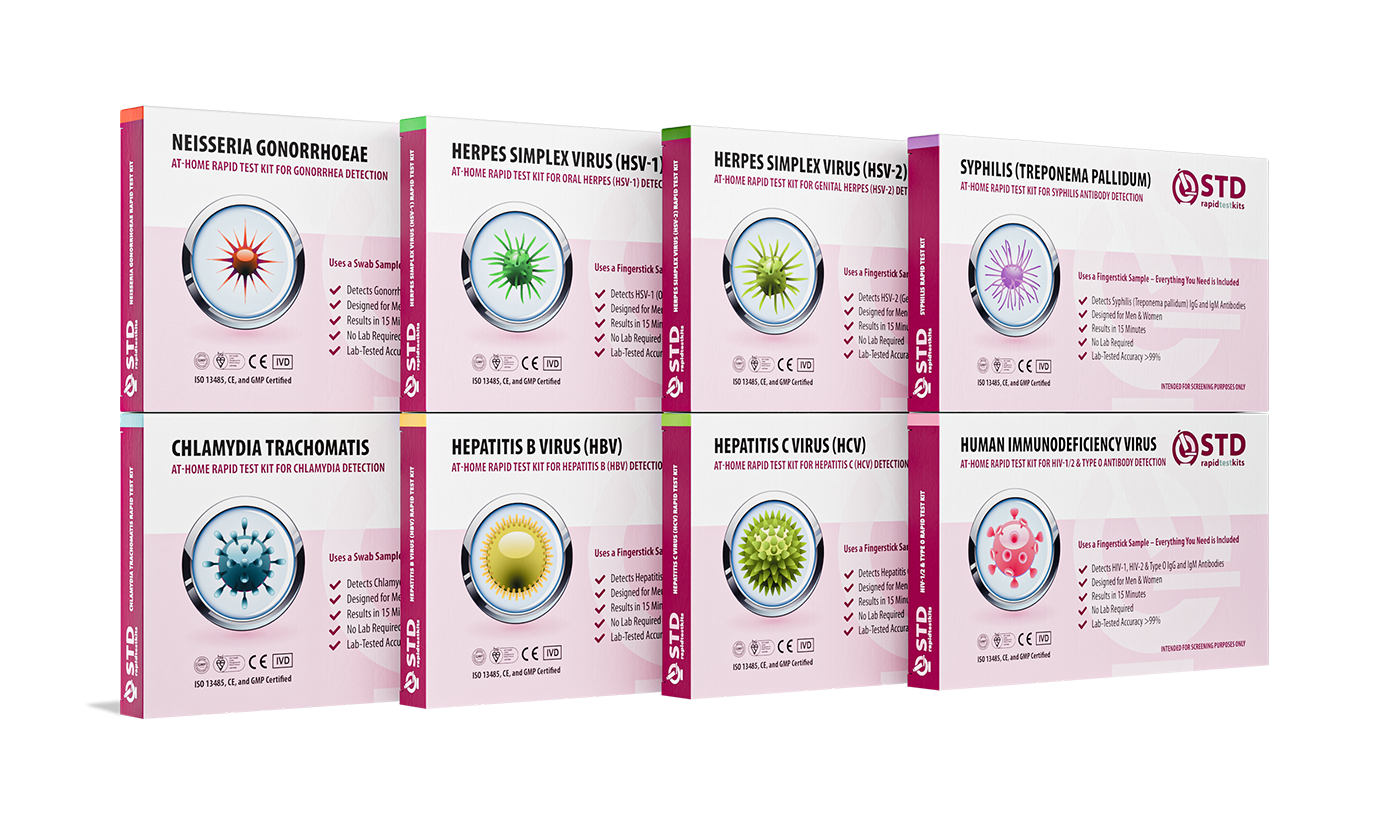 For Men & WomenResults in MinutesNo Lab NeededPrivate & Discreet
Order Now $149.00 $392.00
For all 8 tests
Your Body, Your Business: How Discreet Testing Can Change the Game
In a perfect world, testing would be easy, routine, and shame-free. But for many, the idea of walking into a clinic and asking for an STD panel still feels daunting. That’s where at-home kits step in, not just for convenience, but for empowerment.
Whether you live in a rural area, have insurance challenges, or just want privacy, rapid home testing lets you skip the awkward waiting room. You collect your own sample, follow clear instructions, and get results without anyone else in the room.
And if you’re still feeling anxious after that first kit? There’s no rule saying you can’t test again. In fact, retesting during new relationships or after risky exposure is part of smart, ongoing care.
Remember: You don’t need permission to know your own body. Testing doesn’t mean you expect the worst, it means you respect yourself enough to check.
FAQs
1. Can you really have an STD and feel totally fine?
Oh, 100%. In fact, most people who test positive for chlamydia or HPV had no clue anything was wrong. No pain, no weird discharge, just vibes. That’s the danger, if you're waiting for drama, you might miss what’s quietly brewing.
2. I didn’t see any sores… could it still be herpes?
Yep. Herpes doesn’t always come in hot with blistered fanfare. Some people feel a little tingling, or mistake the first outbreak for a razor bump that never opens. Others? No symptoms at all. That’s why so many folks don’t know they’re carrying it until they test.
3. What if my only symptom is a sore throat?
That can absolutely be an STD flag, especially after oral sex. Gonorrhea and chlamydia can settle in your throat and just chill there like a mild cold. If you’ve hooked up recently and the scratchiness lingers, testing’s a good call.
4. I thought I had a yeast infection. Turns out it wasn’t. How?
You’re not the first. Trichomoniasis loves to cosplay as a yeast infection, itchy, funky discharge, maybe a little irritation. But if that OTC cream doesn’t fix it, don’t wait weeks to find out. Get checked.
5. How long should I wait to test after sex?
Depends on what you’re testing for. Some STDs show up on tests after a week. Others, like HIV or syphilis, take a few weeks to become detectable. Fourteen days is a solid baseline if you're symptom-free but still nervous.
6. My partner says they’re clean. Do I still need to test?
Listen, we love a trustworthy partner, but unless they’ve tested recently and for everything, there’s no guarantee. Plenty of STDs stay quiet, especially in people with penises. Testing is how you show up for yourself, not doubt them.
7. Do I have to retest after treatment?
If you were treated for chlamydia or gonorrhea, yes. Retesting in three months is usually recommended, even if you took the meds and feel fine. Reinfection happens more often than people think, especially in steady partnerships where both folks weren’t treated at once.
8. What if my symptoms disappear, am I good?
Not always. Some infections fade into the background but stay active. Syphilis, for instance, can come and go in stages. Herpes might go quiet between outbreaks. If you never confirmed with a test, assume the story’s not over yet.
9. Is at-home testing legit or just a gimmick?
It’s legit, especially from trusted providers. At-home kits use similar tech to what clinics do, and when you follow the instructions properly and time your test well, they’re highly accurate. Plus, you get privacy and speed, which clinics can’t always guarantee.
10. I’m scared of testing. What if I can’t handle the result?
That fear is real, and you’re not alone in it. But knowing is power. A positive test doesn’t mean your life is over; it means your next chapter includes answers, treatment, and control. Whatever it says, you’ve already done the brave part by asking.
You Deserve Answers, Not Assumptions
You don’t have to wait for burning, itching, or panic to take your sexual health seriously. Some infections show up quietly. Some don’t show up at all. That doesn’t make them any less real, or less worthy of attention.
Testing is not about fear. It’s about clarity. It’s about not guessing. Whether you’ve noticed something subtle or just want peace of mind, the answer starts with a simple step: know your status.
Don’t wait and wonder, get the clarity you deserve. This at-home combo test kit checks for the most common STDs discreetly and quickly.
How We Sourced This Article: We combined current guidance from leading medical organizations with peer-reviewed research and lived-experience reporting to make this guide practical, compassionate, and accurate.
Sources
2. Know the Facts | CDC STI Awareness
3. The CDC's information about sexually transmitted infections (STIs)
4. Getting Tested for STIs | CDC
5. CDC: Gonococcal Infections in Teens and Adults
6. Sexually Transmitted Infections - StatPearls | NCBI Bookshelf
About the Author
Dr. F. David, MD is a board-certified expert in infectious diseases who works to prevent, diagnose, and treat STIs. He blends clinical precision with a no-nonsense, sex-positive approach and is committed to expanding access for readers in both urban and off-grid settings.
Reviewed by: L. Morado, RN, MPH | Last medically reviewed: January 2026
This article is only for informational purposes and should not be taken as medical advice.


