
Published: November 2025 | Last updated: May 2026 | Editorial review and quality control: Martina N.
It's two in the morning. You noticed something on your skin in the bathroom mirror, and your fingers found Reddit before they found a doctor. Within an hour, dozens of strangers have weighed in. Some are kind. Some sound certain. A few might even be right. The rest are a coin toss with your peace of mind on the table.
Reddit has quietly become one of the internet's busiest unofficial symptom checkers. It's anonymous, fast, and free of waiting-room fluorescent lights. But the same qualities that make it feel safe also make it risky when the question is whether you might have an STD. This piece walks through what Reddit threads can and can't do for you, what the evidence says about crowd-sourced health advice, and how to tell the difference between emotional support and a real answer.
Key Takeaways
- Reddit can offer empathy and shared experience, but it cannot diagnose an STD. Visual symptom photos are unreliable even for trained clinicians.
- Most STIs have a window period. A negative test taken too soon after a worrying exposure does not mean you are clear.
Why Reddit Feels Safer Than the Clinic
The pull is obvious. A subreddit doesn't bill your insurance, doesn't make you undress under cold lights, and doesn't ask the awkward follow-up question about how many partners you've had. You can post anonymously at 2 a.m. and have sixty replies by sunrise. For people carrying shame or fear, that can feel like the first place anyone has been kind about a sexual-health worry.
The replies often feel less judgmental than a rushed appointment. They use plain language. They start with “me too” instead of “you should know your risks.” That emotional acknowledgment matters, and it is a real thing Reddit does well.
The trouble is that what feels reassuring is not the same thing as what is correct. Upvotes track relatability and writing style, not medical accuracy. Posts titled “Am I screwed?” or “Herpes or just a pimple?” attract hundreds of replies, but few commenters cite sources, and almost none ask the questions a clinician would, like exact timing of exposure, what kind of test was taken, or whether symptoms moved or recurred. The thread fills with confidence faster than it fills with information.
People often leave a thread calm enough to skip testing. Public-health agencies consistently flag testing delay as one of the largest barriers to early treatment for treatable infections like chlamydia and gonorrhea (CDC, About Sexually Transmitted Infections).
Most bumps, rashes, and discharge changes have an everyday explanation: ingrown hairs, friction, a yeast irritation, hormonal shifts. Reddit threads are often right about that. The problem is that the small percentage that are not benign look identical from the outside, which is why testing is the way to separate them.
What Reddit Can't See in a Photo
One of Reddit's most common formats is the photo thread: “Is this herpes or razor burn?” Replies fill in minutes and often contradict each other. What many people don't realize is that even trained clinicians struggle with visual-only diagnosis of STIs from phone pictures with no clinical context.
Take herpes simplex virus. The textbook image is a tight cluster of fluid-filled blisters, but early outbreaks can show up as a single sore, a faint red patch, cracked skin, or nothing visible at all. A bump that looks like herpes might actually be an ingrown hair, folliculitis, a yeast irritation, molluscum contagiosum, or contact dermatitis. The CDC's clinical guidance is explicit that confirming herpes requires either a swab from an active sore for laboratory testing or a type-specific blood test, not visual review (CDC Herpes Treatment Guidelines).
Other common confusions land the same way. Syphilis can begin as a single painless ulcer that disappears on its own within a few weeks, while the infection itself stays active and progresses through later stages. HPV warts can look like skin tags or harmless bumps. Chlamydia and gonorrhea are often visually invisible, especially in women, who are frequently asymptomatic (NHS).
The table below shows how easily everyday skin and genital changes overlap with both benign causes and infections that need treatment.
| Symptom | Possible non-STI causes | STIs that cannot be ruled out visually |
|---|---|---|
| Small red bump | Ingrown hair, folliculitis, allergic reaction | Herpes, syphilis, HPV |
| Itching without rash | Dry skin, soap irritation, yeast imbalance | Chlamydia, trichomoniasis |
| Unusual discharge | Yeast infection, bacterial vaginosis, hormonal shift | Gonorrhea, chlamydia, trichomoniasis |
| Burning during urination | UTI, dehydration, bladder irritation | Gonorrhea, chlamydia, herpes |
The Patterns That Lead Reddit Threads Astray
Read enough threads in r/STD or the women's-health subreddits and the same patterns repeat. Three are worth naming because they cause the most preventable harm.
The first is friction-burn confidence. A person posts about a raw patch on the inner thigh after sex. Replies call it friction burn or chafing, and the original poster steps away reassured. Two or three weeks later a clearer ulcer or cluster of blisters appears, by which time the infection has had a chance to be transmitted onward. Genital herpes regularly presents like simple irritation in the first outbreak, and clinicians see this misread often enough that NHS guidance explicitly warns against assuming benign causes for any new genital sore (NHS).
The second is the discharge guesswork. Someone describes new discharge after a recent partner. Reply threads run through yeast, bacterial vaginosis, and “normal cycle changes,” and may even insist “no way it's chlamydia with that color.” Discharge color is a notoriously poor diagnostic clue. Chlamydia and gonorrhea can produce minimal or no visible discharge change, and they are also frequent causes of pelvic inflammatory disease when left untreated. Annual screening with a swab catches what visual self-assessment cannot (CDC).
The third is the false-clearance test. Someone tests three to five days after a worrying exposure, gets a negative result, and posts asking if they are “in the clear.” Reddit replies often say yes. The biology says no. Most STIs have a window period during which the body has not yet produced detectable antibodies, antigens, or bacterial loads. A negative test taken inside that window is an inconclusive result, not a clean bill of health (CDC, HIV Testing).
Each pattern shares a common shape. Reddit responds to what someone wants to hear, and the underlying biology then continues on its own schedule, regardless of what the thread concluded.
Can Reddit reliably tell me whether I have an STD?
No. Reddit is useful for emotional support and shared experience, but it cannot diagnose an STD. The only reliable way to confirm or rule out a sexually transmitted infection is laboratory testing, or a validated rapid test taken after the appropriate window period for that infection. Treat threads as company while you wait for results, not as a substitute for the test itself.
Many STIs do not cause symptoms, so the only way to know is to get tested.
Why a Negative Test Too Soon Doesn't Mean Safe
Timing matters more than almost anything else in STI testing. Many Reddit threads fail because the people in them don't account for the window period, which is the time between exposure and when a test can reliably detect an infection.
A test taken too early can return a false negative even when infection is already present. The body simply hasn't yet produced detectable amounts of the marker the test is looking for. Antibody-based tests need time for the immune system to seroconvert. Antigen and nucleic-acid tests detect earlier but still have minimum windows. Lateral-flow rapid tests, including the at-home kits sold on this site, have window periods that are similar to or slightly longer than lab versions of the same chemistry.
The table below summarizes typical earliest reliable testing times for common infections, drawn from current CDC guidance. These are general windows; individual product inserts may differ slightly, and some assays detect earlier than others (CDC).
| Infection | Earliest reliable test | Best time to test |
|---|---|---|
| Chlamydia (swab) | 1 to 2 weeks | 2 weeks |
| Gonorrhea (swab) | 1 to 2 weeks | 2 weeks |
| Syphilis (blood antibody) | 3 to 6 weeks | 6 to 12 weeks |
| HIV (Ag/Ab combo) | 18 to 45 days | 6 to 12 weeks |
| HIV (rapid antibody) | 23 to 90 days | 12 weeks |
| HSV-2 (IgG blood) | 6 to 12 weeks | 12 to 16 weeks |
When One Concern Becomes Several
One of the reasons Reddit threads get tangled is that a single worrying exposure rarely raises a single question. A condom slip, a one-night encounter, a partner with a history they didn't fully disclose, all of these can put more than one infection on the table at once. People often pick the scariest one and ignore the others, then test for that single infection and feel finished. The math doesn't work that way.
Most clinical screening guidance for sexually active adults recommends testing for the cluster of common infections together, especially after a known exposure or new partner (CDC). Multi-panel rapid kits exist for exactly this reason. They cover the most commonly missed infections in a single sitting, which keeps a person from coming back three times for three separate tests, and from ignoring the infection that turns out to matter.
This site sells at-home rapid test kits; the option below is one of our own products, recommended when a single exposure raises questions about more than one infection at once.

What Reddit Is Genuinely Good For
Reddit is not the villain in this story. The same anonymity and emotional honesty that produce bad medical advice also produce something genuinely valuable. People panicking about their bodies often need to hear, before anything else, that they are not the only person who has ever felt this way. The “me too” chorus on a subreddit can break the loop of shame fast enough that someone who would otherwise have ignored a symptom for months now feels willing to test.
Threads about treatment side effects, partner conversations, the experience of waiting for results, and the practical realities of living with a chronic infection like HSV-2 are also where Reddit shines. These are areas where lived experience genuinely adds something a clinic visit cannot. A clinician can tell you that valacyclovir is well tolerated; a thread of two hundred replies can tell you what the first month actually felt like for people who took it.
The mistake is treating Reddit as a diagnostic tool when its real strength is community. Used well, a thread can be the thing that pushes you to test, that helps you find words for the partner conversation, or that reminds you that an STI diagnosis is no moral verdict. Used poorly, it becomes the reason a treatable infection sits in your body for months while you re-read a stranger's reassurance.
The framework worth holding onto is simple. If you're looking for emotional support, Reddit can help. If you're looking for a diagnosis, Reddit cannot. If you're unsure whether your symptom counts as an STI risk at all, a clinician phone line, a telehealth visit, or a validated symptom checker is the better next step.
Get tested. That's the only way to know.

Where Reddit Threads Mislead Most Often
When advice goes wrong on Reddit, it usually goes wrong in predictable ways. Confident replies often state windows shorter than the actual biology, conflate distinct infections, or make sweeping claims based on a single past experience. A user who once had herpes might say a stranger's bump “looks exactly like mine.” A user who never tested but stayed asymptomatic might tell a panicking poster they are “definitely fine.” These are personal stories presented as universal truth.
The gap between lay-forum advice and clinician-reviewed guidance from the CDC, NHS, Planned Parenthood, and Mayo Clinic is structural. Editorial standards on those sites require sourcing and medical review before a claim is published. Forum replies require neither. The most common categorical errors that show up in symptom threads include underestimating incubation periods, conflating yeast infections with STIs, assuming that a one-time exposure cannot transmit infection, and misidentifying the symptoms of one infection as another.
The smartest replies on any STI subreddit tend to share a single line: get tested, that's the only way to know. Anything more confident than that, from a stranger reading a phone photo, is still a guess.
Testing Without the Clinic Visit
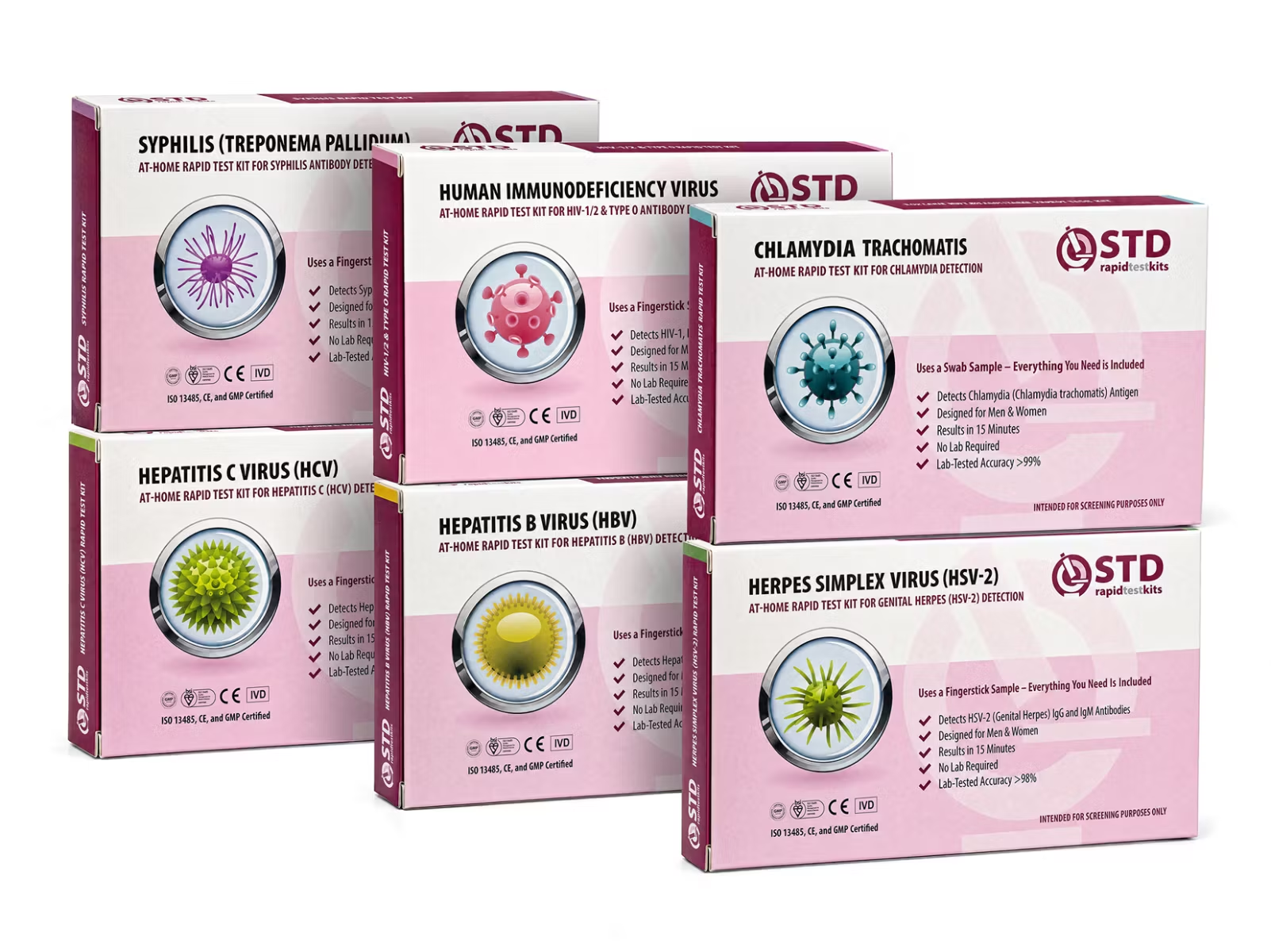
For people who genuinely want to know but dread the clinic, at-home rapid testing has narrowed the gap between “I want to know” and “I know.” A discreet kit ships in unmarked packaging, runs from a self-collected swab or a fingerstick blood sample, and produces a result in around fifteen minutes for most lateral-flow assays. Multi-panel kits cover several infections in one sitting, which is the right shape for a worrying exposure that put more than one risk on the table.
At-home tests don't replace clinic visits. A positive result on any rapid test should be confirmed by a healthcare provider, who can prescribe treatment, screen for related infections, and discuss notifying partners. But a negative result taken at the right time is real information, and a positive result taken at home means a person can walk into the clinic with a starting point instead of an empty form.
One practical note worth keeping in mind. The herpes rapid panel commonly available for home use is an HSV-2 antibody test, which means it tests for systemic immune response after seroconversion, not for the active lesion you might be looking at. Antibody-based tests need the full window period to be meaningful. At-home kits are convenient screening tools; lab NAATs offer higher analytical sensitivity for active infections, and the two work alongside each other in different roles.
Combining Community Support With Real Answers
The healthiest pattern is to use both. Read the threads if they help you feel less alone. Take what you learn about other people's experiences and let it lower the bar to action. Then close the tab and take a test, because no comment thread can swab your throat, look at your discharge under a microscope, or process a blood sample.
If a Reddit thread has talked you out of testing, that's the moment to notice. The thread does not have to be wrong, and the people in it do not have to be unkind, for that outcome to be a bad one. Tests cost less than the weeks of unease that a thread can create. They also cost less than treating a complication that quiet, untreated infection can cause.
If a thread has talked you into more anxiety than you started with, that's also useful information. The next step is not another thread. It's a test, a conversation with a clinician, or a phone call to a public-health line.
Bottom Line
Reddit has no access to a swab result, a blood antibody marker, or the timing of your exposure. What it has is whatever you chose to type into a textbox. That gap between input and conclusion is the reason threads can sound certain about a situation no one in them has actually examined. What Reddit can offer is connection with people who have been scared in the same way, and that is genuinely worth something.
Use it for that part. The clinical part belongs to a test.
1. Note the date of your last possible exposure. The right time to test depends on it.
2. Decide whether you want one test (for the specific infection that worries you) or a multi-panel kit (for several at once after a higher-risk exposure).
3. If a positive result comes back, call a clinician or telehealth service for confirmation, treatment, and partner-notification support.
FAQs
- Can Reddit actually diagnose an STD?
- Reddit lacks everything a real diagnosis actually requires: a swab from an active lesion, a blood marker, your exact exposure timing, and a trained clinician interpreting all three together. A confident reply from a stranger with none of that information is still a guess, no matter how many upvotes it has.
- Why do people trust Reddit more than doctors sometimes?
- Anonymity, plain language, and the absence of insurance billing or judgment. For people carrying shame about a sexual-health worry, that combination genuinely feels safer in the moment. Reddit can deliver emotional safety. Only a test can deliver diagnostic certainty.
- Is it risky to post photos of your symptoms on Reddit?
- There are two risks. The privacy risk is that screenshots live forever and can be re-shared outside the original subreddit. The medical risk is that a rash, sore, or bump can look like ten different things depending on lighting, angle, and skin tone. Even trained clinicians often need a swab or blood test to be sure.
- My test came back negative, but Reddit says I should be fine. Can I trust that?
- Only if the test was taken after the relevant window period for that infection. A negative chlamydia or gonorrhea test taken three days after a worrying exposure has low information value; the bacterial load may not have reached detection threshold yet. The test cannot yet detect at that point, which is different from saying infection is absent.
- What if my symptoms went away? Can I skip testing?
- Not safely. Several infections produce a brief symptom episode that resolves on its own while the underlying infection continues. Syphilis is the classic example: the primary chancre often disappears within a few weeks, even though the infection is still active and progressing. If a symptom appeared after a possible exposure, it counts.
- Reddit said my bump was just razor burn. Could that be right?
- It could be, and razor burn is genuinely common. The problem is that razor burn and early herpes can look nearly identical, and so can ingrown hairs, folliculitis, and contact dermatitis. The way to know which one it is, is a swab from an active lesion or a type-specific blood test, not crowd opinion.
- How soon can I get reliable results from a home test?
- Two weeks for chlamydia and gonorrhea swabs. Three to six weeks for syphilis blood tests. Twelve weeks for full HIV antibody clearance, with combo Ag/Ab tests detecting earlier. Test once now if it would lower your anxiety, then retest at the longer window if there is genuine concern.
- Is Reddit good for anything in this space?
- Yes. For breaking the silence around testing, for hearing what treatment side effects actually feel like, for finding language for partner conversations, and for realizing you are not the only person who has ever been scared at 2 a.m., Reddit can be powerful. It is a community tool. Just don't treat emotional relief as medical clearance.
- U.S. Centers for Disease Control and Prevention. About Sexually Transmitted Infections. Overview of common STIs, screening recommendations, and the role of testing for asymptomatic adults.
- World Health Organization. Sexually Transmitted Infections fact sheet. Global guidance on STI burden, transmission, and the role of timely diagnosis.
- U.S. Centers for Disease Control and Prevention. Genital Herpes Treatment Guidelines. Diagnostic approach for HSV including swab and type-specific serology, and limits of visual diagnosis.
- U.S. Centers for Disease Control and Prevention. HIV Testing. Window-period guidance for antibody, Ag/Ab combo, and nucleic-acid HIV tests.
- National Health Service. Sexually Transmitted Infections (STIs). Patient-facing guidance on common STIs, when to get checked, and why a clinician's exam is needed for any new genital sore.
- Mayo Clinic. Patient-facing topic library covering symptoms and overlap of major STIs with non-STI causes that make testing necessary.
- Planned Parenthood. Patient-facing guidance on common infections, testing options, and partner notification.
- MedlinePlus, U.S. National Library of Medicine. Sexually Transmitted Infections. Plain-language summary of STI types, testing, and treatment.
