Published: August 2025 | Last updated: May 2026 | Editorial review and quality control: Martina N.
You felt something. A bump, a patch of redness, a tingle that was not there last week. So you did what most people do at 11 PM: you opened TikTok and Reddit. Within minutes, strangers told you it was definitely razor burn, probably stress, or just your underwear riding up. The replies felt confident. The likes felt reassuring. But the symptom is still there in the morning.
This article walks through what those bumps, rashes, and itches can actually mean, why social media gets sexual health wrong so often, and how to figure out your next step without guessing your way through a forum thread.
Key Takeaways
- Many STIs, including herpes, chlamydia, and syphilis, can look like everyday skin irritation or cause no symptoms at all. Visual diagnosis from a phone screen misses the cases that matter most.
- Window periods, asymptomatic infection, and individual variation mean only a lab test or clinically validated rapid test can confirm what is going on. A confident reply on a forum is not a substitute.
Why "It's probably nothing" gets so many upvotes
TikTok and Reddit are not medical platforms. They are engagement platforms. A confident answer ("that's razor burn for sure, bro") gets the click, the comment, the upvote. A measured answer ("this could be several things, including a couple that need testing, here is how to tell") gets scrolled past. Over time, the loud, simple, wrong replies pile up, and the careful ones disappear.
That matters because of how people search for STI information. Health content is one of the most-consumed categories on short-video and forum platforms, and for a topic loaded with shame, the pull toward a screen feels stronger than the pull toward a clinic. Many readers reach for a phone before they reach for a doctor, because the phone feels less judgmental.
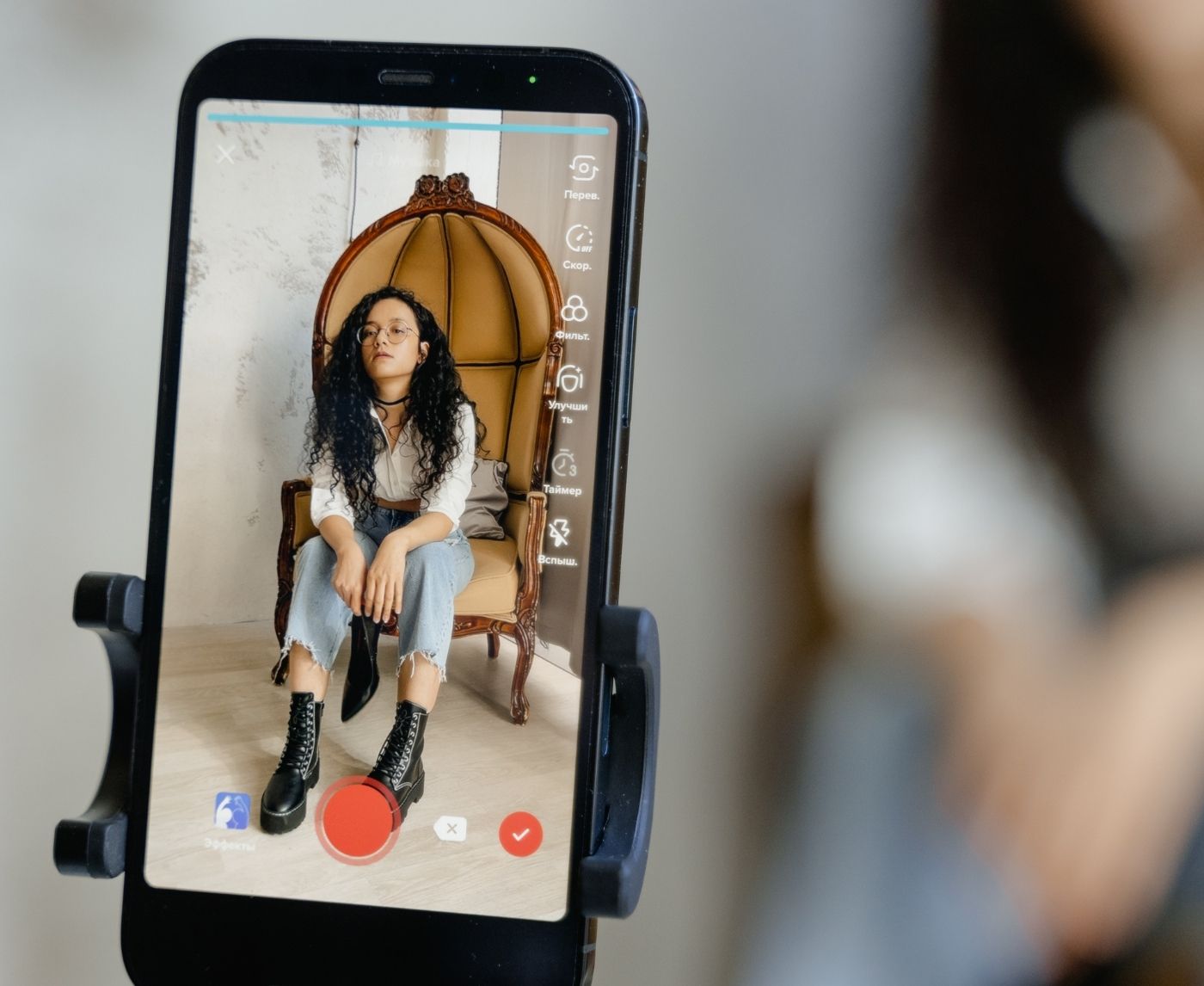
The algorithm does not check sources. It checks watch time. So a creator who says "if it does not itch, it is not herpes" with a clean-looking face and a bright ring light can outperform every CDC fact sheet in the world. That is not the creator's fault. It is the structure of the platform.
Algorithmic feeds optimize for watch time. A confident wrong answer with good lighting gets surfaced. A careful answer with caveats gets buried. The result: the loudest takes on sexual health are usually the simplest, and the simplest are usually wrong. When you are deciding whether to test, treat the comment section as opinion, not data.
What herpes actually looks like, and what gets mistaken for it
Genital herpes does not have one consistent look. According to the CDC, many people with HSV-2 have no symptoms at all, and those who do often have such mild signs that they mistake them for something else, like a pimple or an ingrown hair (CDC, Genital Herpes). When symptoms do appear, the classic pattern is small clusters of fluid-filled blisters on or around the genitals, anus, or mouth, which then break open into shallow ulcers and crust over within a week or two.
The visual confusion happens because several harmless or unrelated conditions look similar in the first 48 hours. Folliculitis (an infected hair follicle) can produce a single red bump with a white tip. Razor burn produces clusters of small inflamed spots along a shaving line. Friction blisters from tight clothing or vigorous sex can form clear, fluid-filled vesicles that look almost identical to early herpes lesions. And syphilis, in its primary stage, can produce a single painless ulcer (a chancre) that the CDC notes typically lasts three to six weeks and heals on its own even though the infection continues to spread inside the body (CDC, Syphilis).
None of these can be reliably told apart from a phone photo. The gallery below shows the visual range a clinician would consider when someone describes "a bump down there."
Can TikTok or Reddit diagnose my symptoms?
No. Visual diagnosis from a phone is not reliable for any STI, even by trained clinicians. Several conditions, including early herpes, primary syphilis, folliculitis, friction blisters, and HPV warts, can look nearly identical in the first 24 to 48 hours. The CDC recommends testing for anyone with a new genital symptom or a recent exposure, regardless of how the symptom looks.
The myths that delay testing the most
Some myths are harmless. "Cranberry juice prevents UTIs" is mostly wishful thinking, but it does not put anyone in danger. Other myths get people hurt, because they convince readers that they do not need to test, and the infection keeps moving in the meantime. Here is a short list of the ones that show up most often in social media comment threads, and what current clinical guidance says.
| Viral myth | What the evidence says |
|---|---|
| "If it does not hurt, it is not herpes." | Many first-episode and recurrent outbreaks are painless or only mildly itchy. The CDC notes that most people with HSV-2 either have no symptoms or have signs so mild they go unnoticed. |
| "You would know if you had chlamydia." | Chlamydia frequently causes no symptoms in either men or women, and the CDC describes asymptomatic infection as common in both sexes. Untreated, it can cause pelvic inflammatory disease and tubal damage. |
| "Red bumps after sex are just razor burn." | Could be razor burn. Could also be early herpes, folliculitis, syphilis chancre, or HPV. A clinician or a clinically validated test is the only way to tell. |
| "You cannot get an STI from oral sex." | Oral sex can transmit chlamydia, gonorrhea, herpes, syphilis, and, less commonly, HIV. Pharyngeal infections often have no symptoms. |
| "If your test was negative once, you are fine." | STIs reset with new exposures, and window periods mean a test taken too early can miss an active infection. Retest after each new partner if your exposure profile changes. |
Window periods, the part TikTok almost never mentions
A "window period" is the gap between when an infection is contracted and when a test can reliably detect it. Testing before the window closes can produce a false negative, which gives a reader exactly the answer they want ("I'm fine") at exactly the wrong time. The window varies by infection and by test technology, so the right approach is to know which one you are testing for.
For chlamydia and gonorrhea, the CDC describes nucleic acid amplification tests (NAATs) as the recommended diagnostic (CDC, Chlamydia). Specific detection windows vary by laboratory and assay; follow the instructions for use of your particular test rather than a single rule of thumb. For HIV, the CDC's testing page states that an antigen-antibody lab test usually detects infection 18 to 45 days after exposure, while antibody tests can take 23 to 90 days (CDC, HIV Testing).
For syphilis, the CDC notes that the primary chancre appears within weeks of exposure and lasts three to six weeks even without treatment (CDC, Syphilis). Blood-test reactivity develops over that same window, so syphilis serology is most reliable from the primary-stage timeframe onward; testing within the first few days of exposure can miss a new infection.
Herpes blood antibody tests are the slowest of the common screens. CDC testing guidance describes seroconversion as a process that can take up to 16 weeks or longer after a new exposure to show on current tests (CDC, Genital Herpes Testing). A herpes blood test taken three days after a hookup, no matter how confidently a TikTok video promises a quick answer, will almost always miss a brand-new infection.
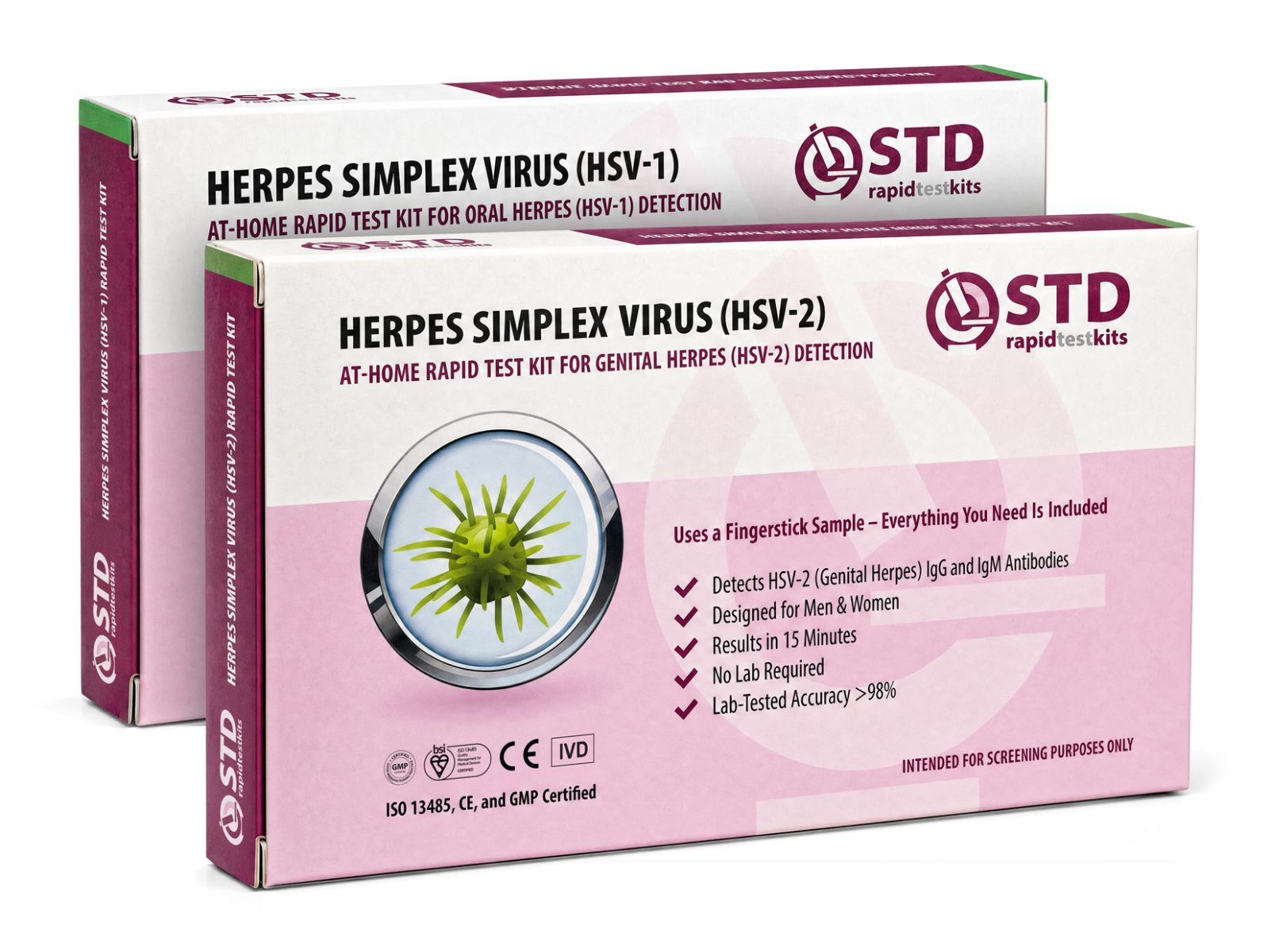
The kits we sell are rapid lateral-flow tests that you run at home. They are screening tools. For chlamydia and gonorrhea, our swab-based rapid tests use the same sample type as lab NAATs but a different chemistry, and a positive result is worth confirming at a clinic. For herpes, our test is a fingerstick blood antibody test, not a swab of a lesion, so it answers "have I been exposed to HSV at any point" rather than "is this specific bump herpes." For a fresh lesion you want examined this week, a clinician with a viral swab and PCR is the right tool.
Why Reddit talks people out of testing
Reddit threads about possible STI symptoms tend to follow a predictable arc. Someone posts a vague description or a fuzzy photo. Ten replies, mostly anonymous, say some version of "that looks normal," "you're overthinking it," or "I had the same thing and it was nothing." The original poster feels relieved. They do not test. Weeks later, sometimes they come back to update the thread, sometimes they don't.
The problem is not that those commenters are lying. Most of them genuinely believe what they are saying. But none of them have the original poster's lab results, sexual history, or clinical exam in front of them. They are pattern-matching on a phone photo, often in low light, and applying their own past experience to someone else's body. That is not how medicine works, and it is not how STI risk works either.
Clinicians who work in sexual health clinics describe the same pattern coming in the door over and over: a patient who waited because online consensus told them they were fine, and whose treatable infection has now moved into a stage that requires more aggressive care. Chlamydia that could have been cleared with a single course of antibiotics becomes pelvic inflammatory disease. Primary syphilis that could have been treated with one penicillin shot becomes secondary syphilis with a body rash and a longer treatment course. Early herpes that could have been managed with antivirals from day one becomes a more painful first outbreak.
Many people who have herpes do not know it. Some have no symptoms. Others have symptoms so mild they do not notice them or mistake them for another skin condition.
What testing positive means in practice
The fear that drives a lot of "is this an STI?" anxiety is not really about the symptom. It is about what a positive result would mean. Reddit threads about "what to do if I test positive" usually spin out into worst-case scenarios. The real picture is more boring, and more manageable, than the panic suggests. The table below summarizes how the most common diagnoses are typically handled, drawing on CDC treatment guidance. HPV vaccination follows ACIP guidance: routine vaccination through age 26, with adults aged 27 through 45 advised to discuss the decision with their doctor based on individual risk (CDC, HPV Vaccines).
| Infection | First-line treatment | Outcome |
|---|---|---|
| Chlamydia | Doxycycline for seven days (azithromycin as an alternative in pregnancy) | Cured within one to two weeks of finishing the course |
| Gonorrhea | Single ceftriaxone injection | Cured within one to two weeks; retest in three months |
| Syphilis | Penicillin injection(s), dosing depends on stage | Cured; earlier stage means simpler treatment |
| Genital herpes (HSV) | Antiviral medications (acyclovir, valacyclovir, famciclovir) | Not curable but manageable; antivirals shorten outbreaks and reduce transmission |
| HPV | Most infections clear on their own; warts can be removed; cervical screening catches persistent strains | About 90% clear within one to two years; vaccination available routinely through age 26 and via shared decision-making through age 45 |
Why home testing matters when clinics feel impossible
One thing social media rarely engages with is access. Getting to a clinic during business hours means taking time off work. Sitting in a waiting room means risking being recognized. Sliding-scale clinics exist in most metro areas, but rural readers and readers on certain insurance plans often run into long appointment waits or out-of-pocket costs that feel impossible.
At-home rapid tests do not replace a clinic visit when a clinic visit is what the situation needs (a fresh lesion that can be swabbed, an exam that requires a speculum, a confirmation of a positive result). What they do is collapse the decision tree from "will I test someday" to "I am testing now, in my bathroom, in fifteen minutes, and I will know more than I did before I started." For a reader who has been spiraling on Reddit for two weeks, that shift matters.
Use an at-home rapid kit when you want a baseline screen, a private result, or a reassuring negative within a known window. Go to a clinic when you have an active sore that can be swabbed for PCR, when you need to confirm a positive rapid result, or when the test you need is not one we sell (throat swabs, rectal swabs, urine NAATs, or anything requiring a speculum exam).

FAQs
- Can TikTok or Reddit help me figure out if I have an STI?
- They can help you feel less alone. They cannot tell you what you have. Many STIs look like ordinary skin irritation in the first 48 hours, and several harmless conditions look like STIs. Visual diagnosis from a phone, even by an expert, is not reliable. The only way to confirm is testing.
- How soon after a possible exposure can I test?
- It depends on the infection and the specific test. Detection windows vary by laboratory and by assay technology. Per CDC guidance, HIV antigen-antibody tests usually detect infection 18 to 45 days after exposure, while antibody-only tests can take 23 to 90 days. Herpes blood antibody tests can take up to 16 weeks or longer for seroconversion. For chlamydia and gonorrhea, follow your kit's instructions for use on timing. Testing too early can produce a false negative.
- Does a condom protect me from herpes and HPV?
- Condoms reduce risk for herpes and HPV but do not eliminate it, because both can transmit through skin-to-skin contact in areas a condom does not cover. They are still worth using. Just do not treat them as a guarantee.
- I only had oral sex. Do I still need to test?
- Yes. Chlamydia, gonorrhea, herpes, and syphilis can all transmit through oral sex, in both directions (from mouth to genitals and from genitals to mouth). Pharyngeal infections frequently have no symptoms, which is the main reason CDC guidelines recommend extragenital testing for people with high-risk exposures.
- My test was negative but I still feel something. What now?
- Two main possibilities. One: you tested before the window period closed and the infection is real but not yet detectable. Retest after the appropriate window for that infection. Two: it is not an STI. Yeast infections, bacterial vaginosis, allergic reactions to soap or laundry detergent, eczema, lichen sclerosus, and friction injuries all cause genital symptoms. A clinician can examine you and order broader tests.
- Are at-home rapid STI tests accurate?
- Good ones are reliable as screening tools when used in the right window. The kits we sell are lateral-flow rapid tests, which are a different technology from the NAATs used in clinic labs (lab NAATs have higher analytical sensitivity, especially in asymptomatic infections). A positive at-home result is worth confirming with a lab. A negative at-home result close to the end of the window period is reassuring but not definitive.
- How do I tell a partner if I test positive?
- Direct and short usually works best. State what you tested positive for, what treatment looks like, and what it means for them in practical terms (do they need to test, do they need treatment, when can you safely have contact again). Many people respond with concern rather than judgment. Anonymous partner-notification services exist if you cannot face it in person.
- Where can I get tested without it being a whole thing?
- At-home rapid kits ship discreetly and let you test on your own timeline. Local sexual health clinics and Planned Parenthood offer free or sliding-scale testing in most U.S. metro areas. Most large urgent-care chains will also test, though out-of-pocket costs vary. Pick the route that makes you most likely to follow through.
You deserve answers, not a comment thread
If you came here because a TikTok or a Reddit comment made you feel either too worried or too reassured to act, the move now is the same either way: get a real data point. A clinic visit is one option. A clinically validated rapid test at home is another. Either is better than another two weeks of scrolling.
Whatever the result, you will be making the next decision based on something more reliable than upvotes.
How we sourced this article: Our article was constructed based on current advice from the most prominent public health and medical organizations, primarily the U.S. Centers for Disease Control and Prevention, then translated into plain language for the situations readers actually face. Every numeric claim, window period, and ACIP age threshold was verified against the cited CDC page at the time of writing.
- U.S. Centers for Disease Control and Prevention. About Genital Herpes. Symptom variation, asymptomatic infection, manageability, and transmission basics.
- U.S. Centers for Disease Control and Prevention. Genital Herpes Testing. Antibody test windows and seroconversion timing for HSV.
- U.S. Centers for Disease Control and Prevention. About Syphilis. Primary chancre presentation and the three-to-six-week natural-history window.
- U.S. Centers for Disease Control and Prevention. About Chlamydia. General framing for asymptomatic infection and recommended testing approach.
- U.S. Centers for Disease Control and Prevention. HIV Testing. Window-period framing for antigen-antibody (18-45 days) and antibody-only (23-90 days) tests.
- U.S. Centers for Disease Control and Prevention. HPV Vaccines. ACIP recommendation for routine vaccination through age 26 and individual decision-making through age 45.
